





| Research Article | ||
Open Vet. J.. 2025; 15(7): 3072-3079 Open Veterinary Journal, (2025), Vol. 15(7): 3072-3079 Research Article Physiological responses of catfish liver to katuk extract, turmeric powder, and vitamin C supplementation in the diet during ovarium developmentAwaludin Awaludin1 , Wasmen Manalu2* , Andriyanto Andriyanto2 , Agus Oman Sudrajat3 and Joni Haryadi41Doctoral Student, School of Veterinary Medicine and Biomedical Sciences, IPB University, Bogor, Indonesia 2Division of Physiology, School of Veterinary Medicine and Biomedical Sciences, IPB University, Bogor, Indonesia 3Department of Aquaculture, Faculty of Fisheries and Marine Science, IPB University, Bogor, Indonesia 4Research Institute for Ornamental Fish Culture, Depok, Indonesia *Corresponding Author: Wasmen Manalu. Division of Physiology, School of Veterinary Medicine and Biomedical Sciences, IPB University, Bogor, Indonesia. Email: wasmenmanalu [at] ymail.com Submitted: 16/03/2025 Revised: 11/06/2025 Accepted: 16/06/2025 Published: 31/07/2025 © 2025 Open Veterinary Journal
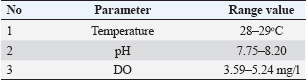
ABSTRACTBackground: The success of reproduction in oviparous animals is determined by the optimum vitellogenin deposition in the follicles. Vitellogenin is synthesized by hepatocytes in response to estrogen stimulation. Hepatocyte functionalities are important for the production of vitellogenin. This research was designed to increase liver function using catfish as a model. Aim: Hepatocyte function can be improved by katuk extract, turmeric powder, and vitamin C supplementation. Methods: The experiment consisted of eight treatments and three repetitions. The treatments were administered for 8 weeks. The parameters measured were the hepatosomatic index (HSI), histology of the liver, concentrations of serum glutamic pyruvic transaminase (SGPT), serum glutamic oxaloacetic transaminase (SGOT), and superoxide dismutase (SOD). Results: HSI in catfish supplemented with a combination of katuk extract, turmeric powder, and vitamin C showed the highest values. The liver histology of catfish supplemented with turmeric powder showed the lowest level of hepatocyte vacuolization compared with the findings for all treatments without turmeric supplementation. The SOD values were increased in the groups of catfish supplemented with turmeric powder with SGPT, whereas the SGOT values were decreased compared with those of catfish without turmeric powder supplementation. Conclusion: It is concluded that turmeric powder supplementation can improve hepatocyte capacity and function to support vitellogenin synthesis to be deposited in growing and developing oocytes. This research will increase the production of farmed fish. Keywords: Catfish, Hepatocyte health, Katuk, Tumeric powder, Vitamin C. IntroductionIn the year of 2022, production of catfish in international markets was dominated by Pangasianodon hypophthalmus with the level of 2,520,400 tonnes compared to Clarias sp. with the level of 1,249,000 tonnes (FAO, 2023), with the highest production being contributed by Vietnam. The production of P. hypophthalmus in Indonesia in the year 2022 increased to 340,444.02 tons from 332,022.98 tons in the year 2021 by 2.54%, and this production is only used to meet the requirements of the local market. Catfish production currently does not have global competition; therefore, it must increase production to fill the international market. The liver is an organ with important roles in physiological processes, such as detoxification and immune responses, and as a center of metabolism that plays an important role in biological processes (Wolf and Wolfe, 2005; Xu et al., 2018). The livers of female fish and oviparous animals have high estrogen receptor concentrations; thus, the liver can be stimulated by estrogen to synthesize and secrete vitellogenin in high numbers and concentrations (Sumpter and Jobling, 1995). Vitellogenin is a material synthesized by hepatocytes following stimulation with estradiol that is further transported and deposited in the follicles (Mommsen and Walsh, 1988; Sullivan and Yilmaz, 2018). The production of vitellogenin during vitellogenesis is highly determined by the number and function of hepatocytes and the amount of estradiol that stimulates hepatocytes. The capacity of hepatocytes to synthesize vitellogenin is highly determined by the number of hepatocytes, the functionality of each cell, and the availability of materials used to synthesize vitellogenin. Curcuma longa supplementation can reduce the occurrence of oxidative stress, inflammation, and insulin resistance, which are important factors in the maintenance of liver health and the whole fish’s performance (Júnior et al., 2020; Abbas et al., 2021; Aminuddin et al., 2023). In addition, the safety of using C. longa in fish has been evaluated to provide more support for its potential applications in aquaculture (De Moraes França Ferreira et al., 2017). Abdelkhalek et al. 2021 reported that curcumin was able to reduce serum alanine aminotransferase activity, indicating a protective effect against liver function and oxidative stress markers in tilapia (Oreochromis niloticus). Zhang et al. 2021 also reported that curcumin could maintain liver health in carp, and the antioxidant properties of curcumin contributed to liver health and performance improvement. Curcumin supplementation increases liver enzyme levels and reduces steatosis in patients with annon-alcoholic fatty liver disease (Nouri‐Vaskeh et al., 2020; Safari et al., 2023). Katuk leaves contain sterol with estrogenic activity that stimulates vitellogenin synthesis by hepatocytes. The use of katuk leaves in the animals showed the phytoestrogenic activity. Curcumin supplementation improves the function of hepatocytes to synthesize vitellogenin (Dewi et al., 2018). Turmeric powder also has estrogenic activity that can stimulate vitellogenin synthesis in improved hepatocytes. Vitamin C (ascorbic acid) has also been implicated in hormonal regulation. It enhances the absorption and efficacy of various nutrients and may play a role in the synthesis and metabolism of steroid hormones, including estradiol. Studies have shown that vitamin C can influence the expression of enzymes involved in estrogen metabolism, potentially increasing estradiol levels (Gorkom et al., 2019). Vitamin C’s antioxidant properties may also protect estrogen from oxidative degradation, further supporting its activity (Meng, 2023). Physiological parameters and liver histology are indications of permanent destruction in exposed fish, implying the importance of liver health in fish (Topic Popovic et al., 2023). The liver is also a digestive and metabolism organs that is important in the growth and development of teleost fish (Ren et al., 2022) and oviparous animals. Use of turmeric powder, katuk extract, and vitamin C will improve liver performance to produce vitellogenin, which stimulates the disruption of hepatocytes. This discovery is important in liver physiology and health in general in oviparous animals. Materials and MethodsMaterialsThe equipmentThe equipment used in this study included: 2 ml syringe (TP® Disposable Syringe 1 ml, 26G x 1/2”), micropipette (Axygen, USA), microtip (Axygen, USA), microtube (Axygen, USA), stereo microscope (Stemi DV4, Zeiss, Germany), and centrifuge (Centrifuge TCT12-V, MKE, China). The materialsMaterials used in this experiment are 24 adult female catfish (P. hypophthalmus) obtained from Sukamandi Fish Breeding and Research Center, Subang, West Java, Indonesia, 70% ethanol, feed, egg albumin, katuk leaves from Tarakan, North Kalimantan, Indonesia, turmeric powder from Balai Penelitian Tanaman Obat dan Aromatik (Balitro) Kemtan, Cimanggu Bogor, vitamin C (Luwei Pharmaceutical Group), and hematoxylin eosin. MethodsPreparation of the maintenance pondThe experimental catfish were maintained in the ponds with a size of 10 × 8 × 1 m using a waring with the size of 3 × 3 × 0.5 m. Preparation of katuk leaf extract and turmeric powderKatuk leaves were extracted using a maceration method with 70% ethanol solution. Katuk leaves were wind dried for 1 week. The dried leaves were then blended until smooth and then soaked in 70% ethanol at a 1:3 ratio for 3 days. After 3 days, the extract was filtered using filter paper. The solution was then evaporated to separate the extract from the solvent. The extract in the form of a paste was then frozen dry for 1 week until the extract hardened. The turmeric powder used was obtained from Balai Penelitian Tanaman Rempah dan Obat (BALITRO) Cimanggu, Bogor, Indonesia. Experimental feed preparationThe feed used is commercial, combined with katuk extract, turmeric powder, and vitamin C. The commercial feed used was HI-PRO-VITE 781. One kilogram of feed was mixed with one egg in 100 ml of water with katuk extract, turmeric powder, and vitamin C, then mixed and air dried at room temperature. Experimental designThe experimental fish used in this experiment are mature female catfish. The number of experimental catfishes used was 24. The broodstock used was unmated mature female fish obtained from BRPI Sukamandi, West Java Province, Indonesia. The experimental catfish were maintained in the pond at a size of 10 × 8 × 1 m using a waring with the size of 2 × 3 × 0.5 m each, with three mature female catfish. The catfishes were given feed at a dose of 5%/BW with a frequency of morning and afternoon feeding. The experimental fish were maintained and given the treatment for 8 weeks. The feed used in the experiment was commercial feed supplemented with katuk leaf extract at a dose of 0.6 g/kg feed, turmeric powder at a dose of 48 g/kg feed (Dewi et al., 2018), and vitamin C at a dose of 599 mg/kg feed (Sarmento et al., 2018). This experiment used a completely randomized design with eight treatments and three repetitions. CON: control group of catfish without katuk leaf extract, turmeric powder, and vitamin C supplementation. SA: catfish supplemented with katuk leaf extract at a dose of 0.6 g/kg feed. TU: catfish supplemented with turmeric powder at a dose of 4.8 g/kg feed. VC: catfish supplemented with vitamin C at a dose of 599 mg/kg feed. SATU: catfish supplemented with katuk extract at a dose of 0.6 g/kg feed and turmeric powder at a dose of 4.8 g/kg feed. SAVC: catfish supplemented with katuk leaf extract at a dose of 0.6 g/kg feed and vitamin C at a dose of 599 mg/kg feed. Turmeric and vitamin C (TUVC): catfish supplemented with turmeric powder at a dose of 4.8 g/kg feed and vitamin C at a dose of 599 mg/kg feed. COM: catfish supplemented with a combination of katuk leaf extract at a dose of 0.6 g/kg feed, turmeric powder at a dose of 4.8 g/kg feed, and vitamin C at a dose of 599 mg/kg feed. The feed used in the experiment was commercial feed for catfish mixed with katuk leaf extract, turmeric powder, and vitamin C, using one egg albumin in 1 kg of feed. Parameters measurementsAt the end of the experiment, the blood samples of experimental catfish were taken from the tail at a volume of 3 ml for each catfish, and then the collected blood samples were centrifuged at a speed of 3,000 rpm at temperature of 4oC for 20 minutes then the serum was collected for measurement of concentrations of serum glutamic pyruvic transaminase (SGPT), serum glutamic oxaloacetic transaminase (SGOT), and superoxide dismutase (SOD). Concentrations of SGPT and SGOT indicate liver cell destruction. In contrast, the concentration of SOD indicates antioxidant activity. Catfish liver was isolated to measure the hepatosomatic index (HSI) and liver histology using hematoxylin eosin with a thickness of 5 µm at an enlargement of 40×. Analysis of SGPT and SGOT was analyzed using the Reitman and Frankel Method. For the analysis of liver SOD concentrations, 1 g of sliced liver was used under cold conditions. The measurements of liver SOD concentrations were conducted to measure the activity of lipid peroxidation in the hepatocytes, which was obtained from TBA (tiobarbituric) method. Water qualityIn this experiment, water quality was measured to maintain the environmental conditions of the place where the experimental catfish was maintained. The experimental catfish were reared in controlled media for 8 weeks. The quality of the maintenance water is monitored daily. The catfish broodstock media used in each treatment group are presented in Table 1. The observation parameters were temperature, pH, and DO in the optimum range for the growth and reproduction of catfish. Table 1. Water quality parameters.
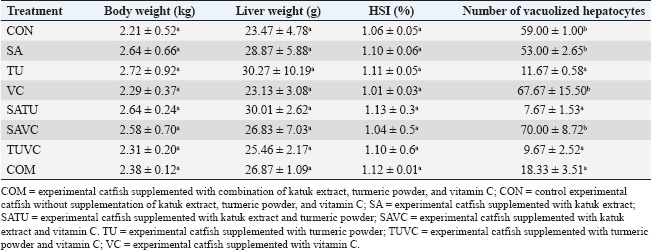
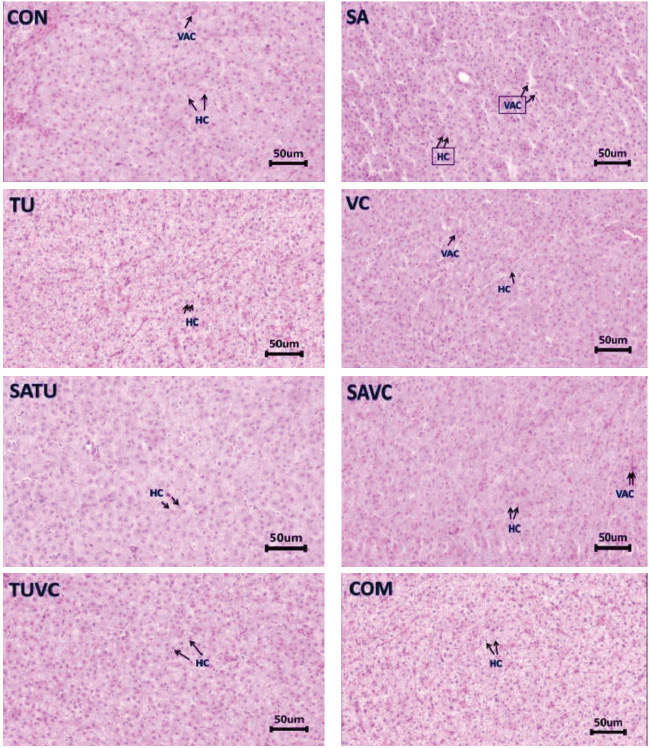
Analysis dataThe histology and liver pictures data were provided descriptively in the figures. Growth- and reproductive-related data were collated in MS. Excel 2010 (Microsoft, USA) and statistically evaluated using one-way ANOVA in SPSS ver. 25 (IBM, USA). The SD was determined to define the range of means, and the p value was set to 0.05 to test for significant results. Mean values were determined using Tukey’s test. Ethical approvalAll animal experiments were conducted under the guidelines of the animal ethics commission of the School of Veterinary Medicine and Biomedical Sciences, IPB University, number 059/KEH/SKE/VI/2023 has approved procedures for handling and caring experimental animals. ResultsBody weight, liver weight, hepatosomatic index, and liver histologyObservation of body weight, liver weight, and HSI values at the end of 8 weeks of rearing of experimental catfish with the addition of katuk extract, turmeric powder, and vitamin C are presented in Table 2. The results observation of body weight were in the range of 2.21–2.29 kg, liver weights were in the range of 23.13–30.27 g, and HSI values were in the range of 1.01%–1.13%, and those results were statistically not significant among treatments. Even though the HSI of experimental catfish were not statistically different, the highest HSI value was found at SATU (combination of administration of katuk extract and turmeric powder) treatment with an average value of 1.13% ± 0.02%, and the lowest value was found at VC (administration of vitamin C) treatment with an average value of 1.01% ± 0.03%. Histological observation of the liver tissue of the experimental catfish was conducted to evaluate any indications of damage to the liver cells during the vitellogenesis process (Fig. 1). Histological examination of catfish liver tissue is essential in understanding fish’s reproductive dynamics and liver health. Compared with the liver tissue of catfish after the administration of katuk extract, turmeric powder, and vitamin C, hepatocyte cells experienced necrosis. In each treatment group, several cells experienced hepatocyte vacuolization (VAC), such as in the CON, SA, VC, and SAVC groups. In treatment with the addition of turmeric powder, many hepatocyte cells did not experience VAC. By supplementing feed with the addition of turmeric powder, the histological appearance showed that fewer cells experienced hepatocyte VAC. Based on statistical testing, the number of liver cells that experienced VAC showed a significant difference (p < 0.005) between treatments. The lowest number of VAC cells was observed in the SATU treatment (7.67 ± 1.53), and the highest number was observed in the SAVC treatment (70.00 ± 8.72). This indicates that supplementing turmeric powder in the experimental catfish feed during vitellogenesis can improve liver cell functions and increase the synthesis capacity of liver cells to produce vitellogenin, which is the raw material for egg yolk formation in catfish larvae. Table 2. Body weight, liver weight, hepatosomatic index (HSI), and number of vacuolized hepatocytes in experimental catfish supplemented with katuk leaf extract, turmeric powder, and vitamin C.
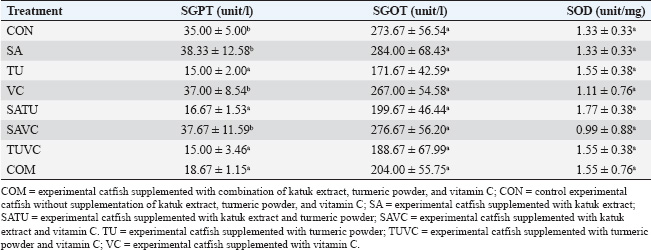
SOD, SGPT, and SGOT levelsThe results of observations of SOD, SGPT, and SGOT levels in experimental catfish supplemented with katuk extract, turmeric powder, and vitamin C for 8 weeks are presented in Table 3. The results of statistical analysis showed that the addition of katuk extract, turmeric powder, and vitamin C was not significantly different (p > 0.05) on SOD and SGOT levels but had a significant effect (p < 0.05) on SGPT levels. Adding turmeric powder to each treatment group reduced the plasma SGOT and SGPT levels of the catfish compared to the control group without turmeric powder supplementation. Based on the results of observations, the SOD value was found to be around 0.99–1.55 units/mg. The highest SOD levels were found in the treatment group with the addition of turmeric (TU) and the addition of TUVC at 1.55 units/mg, and the lowest was found in the treatment group with the addition of katuk extract and vitamin C (SAVC) at 0.99 units/mg. In the treatment group with the addition of turmeric powder, the SOD value was increased compared with that in the group without turmeric supplementation. SGPT levels ranged from 15.00 to 38.33 units/mg. The lowest SGPT levels were found in the treatment group with the addition of TU, and the addition of TUVC was 15.00 units/mg, and the highest was found in the treatment group with the addition of katuk extract (SA) at the level of 38.33 units/mg. Statistically, all treatment groups with the addition of turmeric powder were significantly different (p < 0.05) compared to those without turmeric powder supplementation. The control group was not statistically significantly different (p > 0.05) in all treatment groups without turmeric supplementation. Statistically, SGOT levels were not significantly different between the treatment groups, but they differed numerically. Based on these observations, the range of SGOT value is 171.67–284.00 units/mg. The lowest SGOT level in the treatment group with the addition of TU was 171.67 units/mg, and the highest was found in the treatment group with the addition of SA, that is, 284 units/mg. The SGOT levels were lower in each treatment group with the addition of turmeric than in the treatment group without turmeric powder. DiscussionThe HSI value is an indicator of the amount of energy reserves allocated for reproduction. The highest HSI value was found in the treatment group supplemented with katuk extract and turmeric powder in the feed (SATU), with an average of 1.13% compared with the other treatments. The HSI value tended to increase with each treatment; this is suspected to occur during vitellogenin synthesis. Fish liver contains high concentrations of estrogen receptors, which can synthesize large amounts of vitellogenin if stimulated by estrogen (Sumpter and Jobling, 1995). The increase in the HSI of catfish observed in this research can be applied to wild oviparous animals to support the reproduction process, to maintain a normal population, and biodiversity.
Fig. 1. Liver histology of experimental catfish. COM=experimental catfish supplemented with combination of katuk extract, turmeric powder, and vitamin C; CON=control experimental catfish without supplementation of katuk extract, turmeric powder, and vitamin C; HC=hepatocyte; SA=experimental catfish supplemented with katuk extract; SATU=experimental catfish supplemented with katuk extract and turmeric powder; SAVC=experimental catfish supplemented with katuk extract and vitamin C. TU=experimental catfish supplemented with turmeric powder; TUVC=experimental catfish supplemented with turmeric powder and vitamin C; VAC=vacuolized hepatocyte; VC=experimental catfish supplemented with vitamin C. Table 3. Liver SOD and blood SGPT and SGOT concentrations in experimental catfish supplemented with katuk leaf extract, turmeric powder, and vitamin C.
Turmeric has long been believed to be good for liver health and performance because it contains curcumin, which has hepatoprotective activity. Turmeric also has potential in biological processes, including reproductive function in fish. Previous results (Dewi et al., 2018) showed that turmeric powder can improve reproductive performance in catfish and in the process of vitellogenesis and gonad development. In addition, phenolic compounds derived from C. longa have anti-inflammatory and antioxidant properties, which have implications for modulating physiological and biochemical processes related to reproductive function (Ghaneifar et al., 2020). It is essential to evaluate the suitability of turmeric as a fish feed and its overall impact on fish health, particularly reproduction. These turmeric effects can also be applied in all oviparous animals to improve liver function and support reproduction to maintain a stable population, especially in wild oviparous animals with reproduction problems, to maintain biodiversity. The active compounds in turmeric have potential implications for increasing vitellogenin synthesis and liver function in fish to understand the mechanisms and potential impact of turmeric supplementation on reproduction and overall health. The SOD value in the treatment group of experimental catfish supplemented with turmeric powder increased, whereas the SGPT and SGOT content decreased. This result agrees with that reported by Mainassy et al. (2022), who found that supplementation of curcumin analogs in feed significantly increased SOD values and reduced SGPT and SGOT levels. Curcumin has been shown to modulate the expression of various enzymes and proteins involved in liver function, such as SOD, glutathione (GSH), and liver enzymes, such as SGPT and SGOT (Ciftci et al., 2011; Sehgal et al., 2012; Putra et al., 2018; He et al., 2022; Pawar et al., 2022). This evidence demonstrates that curcumin plays a role in regulating the action of enzymes in the liver, antioxidant activity, and various signaling pathways involved in liver health and disease. The hepatoprotective effects of this agent make it a candidate for preventing and treating liver disorders. These effects also have great potential for use in wild oviparous animals to maintain reproduction processes and support a stable population, and to maintain normal biodiversity. Katuk leaves (Sauropus androgynus) contain secondary metabolite compounds such as sterol compounds, tannins, saponins, terpenoids, and phenols (Awaludin et al., 2020). Potential estrogenic effects on S. androgenus have an impact on the reproductive process, and katuk extract has direct and indirect effects on the reproductive system, which is related to estrogen receptors; apart from that, it also contains isoflavone compounds and acts as an agent similar to estrogen and phytoestrogen, which show potential estrogenic properties (Susilowati et al., 2020). Each treatment group, with the addition of katuk extract, showed high HSI values, which proves that the estrogen compounds contained in katuk extract stimulate the growth and development of the liver of catfish. Supplementation of an estrogenic compound to catfish feed will stimulate hepatocytes to synthesize and secrete vitellogenin, which will be used for ovary development and as raw material for egg yolk. Optimizing water quality parameters, such as temperature, pH, and DO, is essential to encourage optimum gonad development and successful reproduction of catfish and oviparous animals. According to Basiita and Rajts (2021), suitable parameters for growth and reproduction in catfish maintenance media are temperature 25℃–30℃, pH 6.5–8.5, and DO of >3 mg/l. These parameters play a role in creating an environment conducive to parents’ physiological needs and behavior, which ultimately contributes to the successful spawning and reproduction of catfish and wild oviparous animals. ConclusionBased on our research results, the addition of katuk extract, turmeric powder, and vitamin C to the broodstock feed can improve liver performance in synthesizing vitellogenin by reducing SGPT and SGOT levels, increasing SOD values, and reducing the number of cells undergoing vacuolation. AcknowledgmentsThe authors express their gratitude to the Center for Education Financial Services, Beasiswa Pendidikan Indonesia (BPI) 2021, Ministry of Education of the Republic of Indonesia, which collaborates with the Indonesia Endowment Fund for Education (LPDP), Ministry of Finance of the Republic of Indonesia, for their generous financial support. Conflict of interestAll authors declare that they have no conflicts of interest. FundingThe research was supported by a grant from the Center for Education Financial Services, Beasiswa Pendidikan Indonesia (BPI) 2021, Ministry of Education of Republic of Indonesia, in collaboration with the Indonesia Endowment Fund for Education (LPDP), Ministry of Finance of Republic of Indonesia, with Contract Number: 1054/J5.2.3./BPI.06/10/2021. Author’s contributionsAll authors have contributed to the final manuscript. The contributions of each author are as follows. Awaludin Awaludin performed the experiment, analyzed the data, and wrote the first version of the manuscript. Joni Haryadi wrote and reviewed the first version of the manuscript, reviewing and editing. Wasmen Manalu designed the study and wrote the first version of the manuscript. Agus Oman Sudrajat designed the study, reviewed the first version of the manuscript, and approved the manuscript for publication. Andriyanto Andriyanto reviewed and approved the first version of the manuscript for publication. Data availabilityAll data are available in the manuscript. ReferencesAbbas, W., Khan, R.A., Baig, M.T., Shaikh, S, A. and Kumar, A. 2021. Role of Curcuma longa in type 2 diabetes and its associated complications. J. Pharm. Res. Int. 33(42B), 369–376. Abdelkhalek, N., El‐Adl, M., El‐Ashram, A., Othman, M., Gadallah, H., El‐Diasty, M., Dawood, M.A.O., Almeer, R. and Abdel Daim, M. 2021. Immunological and antioxidant role of curcumin in ameliorating fipronil toxicity in Nile tilapia (Oreochromis niloticus). Aquacult. Res. 52(6), 2791–2801. Aminuddin, M., Sargowo, D., Sardjono, T. and Widjiati, W. 2023. Curcuma longa supplementation reduce MDA, TNF-α, and IL-6 levels in a rat model exposed to soot particulates. Open Vet J. 13(1), 11–19. Awaludin, A., Kartina, K., Maulianawati, D., Manalu, W., Andriyanto, A., Septiana, R., Arfandi, A. and Lalang, Y. 2020. Phytochemical screening and toxicity of ethanol extract of Sauropus androgynus. Biodiversitas 21(7), 2966–2970. Basiita, R.K. and Rajts, F. 2021. Better management practices for African catfish (Clarias gariepinus) spawning and fingerling production in the Democratic Republic of Congo: CGIAR Research Program on Fish Agri-Food Systems. Guidelines: FISH-2021-01. Malaysia. Ciftci, O., Ozdemir, I., Tanyildizi, S., Yildiz, S. and Oguzturk, H. 2011. Antioxidative effects of curcumin, β-myrcene and 1,8-cineole against 2,3,7,8-tetrachlorodibenzo- p -dioxin-induced oxidative stress in rats liver. Toxicol. Ind. Health. 27(5), 447–453. De Moraes França Ferreira, P., Condessa, S.S., Rocha, J.S., Caldas, D.W., Gomes, J.R., Soares, M.T., Cardoso, A.J.S. and Zuanon, J.A.S. 2017. Is the use of turmeric in the diet safe for fish? Aquacult. Res. 48(9), 4623–4631. Dewi, C.D., Ekastuti, D.R., Sudrajat, A.O. and Manalu, W. 2018. Improved vitellogenesis, gonad development and egg diameter in catfish (Pangasianodon hypophthalmus) supplemented with turmeric (Curcuma longa) powder. Aquacult. Res. 49(2), 651–658. FAO. 2023. International markets for fisheries and aquaculture products (4–2023). GLOBEFISH. Rome, Italy: FAO. Ghaneifar, Z., Yousefi, Z., Tajik, F., Nikfar, B., Ghalibafan, F., Abdollahi, E. and Momtazi‐Borojeni, A.A. 2020. The potential therapeutic effects of curcumin on pregnancy complications: novel insights into reproductive medicine. IUBMB Life 72(12), 2572–2583. Gorkom, G., Lookermans, E., Elssen, C. and Bos, G. 2019. The effect of vitamin c (ascorbic acid) in the treatment of patients with cancer: a systematic review. Nutrients 11(5), 1–977. He, Y., Fu, Z., Dai, S., Yu, G. and Ma, Z. 2022. Dietary curcumin supplementation can enhance health and resistance to ammonia stress in the greater amberjack (Seriola dumerili). Front. Mar. Sci. 9(1), 1–15. Júnior, A.S.S., Aidar, F.J., Santos, J.L.D., Estevam, C.D.S., Dos Santos, J.D.M., De Oliveira, E.S.A.M., Lima, F.B., De Araújo, S.S. and Marçal, A.C. 2020. Effects of resistance training and turmeric supplementation on reactive species marker stress in diabetic rats. BMC Sports Sci. Med. Rehabil. 12(1), 1–12. Mainassy, M.C., Manalu, W., Yanto, A., Sudrajat, A.O., Kapelle, I.B.D. and Gunadi, B. 2022. The curcumin analogue supplementation could improved liver performance to support reproduction of red tilapia (Oreochromis niloticus). Jur Vet. 23(2), 217–227. Meng, X. 2023. Comparing the interactions of nitrendipine with lysozyme or human serum albumin and the effects of vitamin c and naringin on these interactions by spectroscopy and molecular docking methods. Luminescence 39(1), 4618. Mommsen, T.P. and Walsh, P.J. 1988. 5 Vitellogenesis and oocyte assembly. Fish Physiol. 11(1), 347–406. Nouri-Vaskeh, M., Afshan, H., Mahdavi, A.M., Alizadeh, L., Fan, X. and Zarei, M. 2020. Curcumin ameliorates health-related quality of life in patients with liver cirrhosis: a randomized, double-blind placebo-controlled trial. Complement Ther Med. 49(2), 1–7. Pawar, H. D., Mahajan, U.B., Nakhate, K.T., Agrawal, Y.O., Patil, C.R., Meeran, M.F.N., Sharma, C., Ojha, S. and Goyal, S.N. 2022. Curcumin protects diabetic mice against isoproterenol-induced myocardial infarction by modulating CB2 cannabinoid receptors. Life 12(5), 1–14. Putra, A., Antari, A.D., Kustiyah, A.R., Intan, Y.S.N., Sadyah, N.A.C., Wirawan, N., Astarina, S., Zubir, N. and Munir, D. 2018. Mesenchymal stem cells accelerate liver regeneration in acute liver failure animal model. Biomed Res and Ther. 5(11), 2802–2810. Ren, X., Liu, J., Ndandala, C.B., Li, X., Guo, Y., Li, G. and Chen, H. 2022. Physiological effects and transcriptomic analysis of sbgnrh on the liver in pompano (Trachinotus ovatus). Front. Endocrinol. 13(1), 1–13. Safari, Z., Bagherniya, M., Khoram, Z., Ebrahimi Varzaneh, A. Heidari, Z., Sahebkar, A. and Askari, G. 2023. The effect of curcumin on anthropometric indices, blood pressure, lipid profiles, fasting blood glucose, liver enzymes, fibrosis, and steatosis in non-alcoholic fatty livers. Front. Nutr. 10(1), 1–10. Sarmento, N.L.A.F., Martins, E.F.F., Costa, D.C., Mattioli, C.C., Da Costa Julio, G.S., Figueiredo, L.G., Luz, M.R. and Luz, R.K. 2018. Reproductive efficiency and egg and larvae quality of Nile tilapia fed different levels of vitamin C. Aquaculture 482(1), 96–102. Sehgal, A., Kumar, M., Jain, M. and Dhawan, D. 2012. Piperine as an adjuvant increases the efficacy of curcumin in mitigating benzo (a) pyrene toxicity. Human. Exp. Toxicol. 31(5), 473–482. Sullivan, C.V. and Yilmaz, O. 2018. Vitellogenesis and yolk proteins, fish. Encyclopedia of reproduction. Academic Press. Sumpter, J.P. and Jobling, S. 1995. Vitellogenesis as a biomarker for estrogenic contamination of the aquatic environment. Environ. Health Perspect. 103(7), :173–178. Susilowati, R., Khoiriyah, L. and Hikmah, E.M. 2020. Estrogenic effect of the leaves from katuk (Sauropus androgynus L. Merr) on vaginal and endometrial atrophy in perimenopausal mice. Pharmacogn. J. 12(2), 240–245. Topic Popovic, N., Čižmek, L, Babić, S., Strunjak-Perović, I. and Čož-Rakovac, R. 2023. Fish liver damage related to wastewater treatment plant effluents. Environ. Sci. Pollut. Res. 30(1), 48739–48768. Wolf, J.C. and Wolfe, M.J. 2005. A brief overview of nonneoplastic hepatic toxicity in fish. Toxicol. Pathol. 33(1), 75–85. Xu, H., Wang, C., Zhang, Y., Wei, Y. and Liang, M. 2018. Moderate levels of dietary arachidonic acid reduced lipid accumulation and tended to inhibit cell cycle progression in the liver of Japanese seabass Lateolabrax japonicus. Sci. Rep. 8(1), 1–13. Zhang, Y., Song, L., Guo, H., Wu, J., Wang, X. and Yao, F. 2021. Effects of curcumin on growth and liver-protection in common carp, (Cyprinus carpio). Pak. J. Zool. 53(4), 1–10. | ||
| How to Cite this Article |
| Pubmed Style Awaludin A, Manalu W, Andriyanto A, Sudrajat AO, Haryadi J. Physiological responses of catfish liver to katuk extract, turmeric powder, and vitamin C supplementation in the diet during ovarium development. Open Vet. J.. 2025; 15(7): 3072-3079. doi:10.5455/OVJ.2025.v15.i7.18 Web Style Awaludin A, Manalu W, Andriyanto A, Sudrajat AO, Haryadi J. Physiological responses of catfish liver to katuk extract, turmeric powder, and vitamin C supplementation in the diet during ovarium development. https://www.openveterinaryjournal.com/?mno=247615 [Access: June 26, 2026]. doi:10.5455/OVJ.2025.v15.i7.18 AMA (American Medical Association) Style Awaludin A, Manalu W, Andriyanto A, Sudrajat AO, Haryadi J. Physiological responses of catfish liver to katuk extract, turmeric powder, and vitamin C supplementation in the diet during ovarium development. Open Vet. J.. 2025; 15(7): 3072-3079. doi:10.5455/OVJ.2025.v15.i7.18 Vancouver/ICMJE Style Awaludin A, Manalu W, Andriyanto A, Sudrajat AO, Haryadi J. Physiological responses of catfish liver to katuk extract, turmeric powder, and vitamin C supplementation in the diet during ovarium development. Open Vet. J.. (2025), [cited June 26, 2026]; 15(7): 3072-3079. doi:10.5455/OVJ.2025.v15.i7.18 Harvard Style Awaludin, A., Manalu, . W., Andriyanto, . A., Sudrajat, . A. O. & Haryadi, . J. (2025) Physiological responses of catfish liver to katuk extract, turmeric powder, and vitamin C supplementation in the diet during ovarium development. Open Vet. J., 15 (7), 3072-3079. doi:10.5455/OVJ.2025.v15.i7.18 Turabian Style Awaludin, Awaludin, Wasmen Manalu, Andriyanto Andriyanto, Agus Oman Sudrajat, and Joni Haryadi. 2025. Physiological responses of catfish liver to katuk extract, turmeric powder, and vitamin C supplementation in the diet during ovarium development. Open Veterinary Journal, 15 (7), 3072-3079. doi:10.5455/OVJ.2025.v15.i7.18 Chicago Style Awaludin, Awaludin, Wasmen Manalu, Andriyanto Andriyanto, Agus Oman Sudrajat, and Joni Haryadi. "Physiological responses of catfish liver to katuk extract, turmeric powder, and vitamin C supplementation in the diet during ovarium development." Open Veterinary Journal 15 (2025), 3072-3079. doi:10.5455/OVJ.2025.v15.i7.18 MLA (The Modern Language Association) Style Awaludin, Awaludin, Wasmen Manalu, Andriyanto Andriyanto, Agus Oman Sudrajat, and Joni Haryadi. "Physiological responses of catfish liver to katuk extract, turmeric powder, and vitamin C supplementation in the diet during ovarium development." Open Veterinary Journal 15.7 (2025), 3072-3079. Print. doi:10.5455/OVJ.2025.v15.i7.18 APA (American Psychological Association) Style Awaludin, A., Manalu, . W., Andriyanto, . A., Sudrajat, . A. O. & Haryadi, . J. (2025) Physiological responses of catfish liver to katuk extract, turmeric powder, and vitamin C supplementation in the diet during ovarium development. Open Veterinary Journal, 15 (7), 3072-3079. doi:10.5455/OVJ.2025.v15.i7.18 |


