





| Research Article | ||
Open Vet. J.. 2026; 16(2): 1230-1242
Open Veterinary Journal, (2026), Vol. 16(2): 1230-1242 Research Article Farmers’ perceptions towards the effects of goat management system characteristics and the practices related to carob (Ceratonia siliqua L.) dietary incorporation on feed intake and weight gain of goats: Survey resultsAbdaiem Titaf1,2*, Brahim Hamad1,3 and Leyla Hadef1,31Department of Agronomy, Faculty of Natural and Life Sciences, University of El Oued, El Oued, Algeria 2Laboratory of Biology, Environment and Health, Faculty of Natural and Life Sciences, University of El Oued, El Oued, Algeria 3Laboratory of Hygiene and Animal Pathology, Institute of Veterinary Sciences, University of Tiaret, Tiaret, Algeria *Corresponding Author: Abdaiem Titaf. Department of Agronomy, Faculty of Natural and Life Sciences, University of El Oued, El Oued, Algeria. Emails: titafabdaiem [at] gmail.com; titaf-abdaiem [at] univ-eloued.dz Submitted: 19/09/2025 Revised: 27/12/2025 Accepted: 12/01/2026 Published: 28/02/2026 © 2026 Open Veterinary Journal
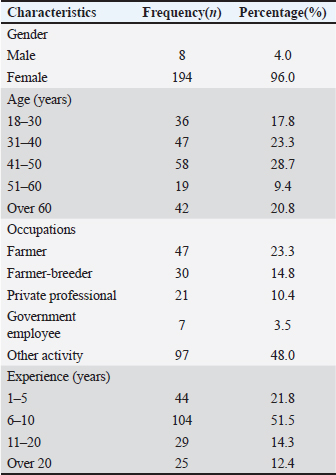
AbstractBackground: The livestock management practices, especially those related to animal rearing systems and their feeding, are a fundamental element for the sustainability of this crucial activity for the people living in challenging areas with harsh environmental conditions and poor natural resources. Aim: This study aims to interpret the farmers’ perceptions regarding the influence of goat management practices and dietary carob (Ceratonia siliqua L.) supplementation on key production performance indicators, including feed intake and weight gain. Methods: Research was performed using a standardized questionnaire with 202 goat keepers (a total livestock population of 9.627 goats) in the Béchar district (Southwestern Algeria), between March 2025 and June 2025. Results: Feeding practices that combined pasture grazing with concentrated supplements significantly increased feed intake (χ2=42.24; P < 0.05) and weight gain (χ2=82.39 ; P < 0.05) of goats compared to rationed diet and unrestricted grazing practices. Similarly, according to farmers’ opinions, the semi-intensive management system (farming system where the animal flocks are let loose for a grazing period of some time and supplementary feed and fodder is provided to the animals with the inclusion of housing, health care, and breeding management) was identified as the most effective goat raising method, which significantly improves feed intake (χ2=25.74; P ˂ 0.05) and weight gain (χ2=77.35; P ˂ 0.05) compared to intensive and pastoral systems. The native breeds such as Arbia, Mekatia, and M›Zabia demonstrated remarkable efficiency (P ˂ 0.05) in feed intake and weight gain compared to exotic goat breeds. The respondents incorporated carob into the goats› diet primarily due to its nutritional benefits (59.4%), local availability (17.8%), health benefits (12.4%), and cost effectiveness (10.4%). Moreover, the participants believed that the incorporation of carob in the goat ration with a daily quantity of “less than 50 g”, as a pulp, and during the spring season significantly (P ˂ 0.05) improves the feed intake and the weight gain. Conclusion: This study provides a comprehensive understanding regarding the opinions of farmers towards the influence of the feeding and rearing practices on goat feed intake and weight gain, as well as the optimal strategies for carob supplementation. This may be used in feeding strategies to enhance carob consumption and increase its inclusion in goat diets across similar agro-ecological settings. Keywords: Breeds, Carob, Feeding practices, Goat, Weight gain. IntroductionGoat farming is crucial for food security and rural economies, particularly in arid and hilly regions (Day et al., 2025). There are an estimated 1 billion goats worldwide (FAOSTAT, 2023a), providing milk and meat to millions of people. They are particularly suited to harsh environmental conditions due to their physiological adaptations, such as efficient utilization of lignocellulosic material and resilience to extreme climates (Kerven, 2024). Algeria has approximately 4.8 million goats (MADR, 2017), concentrated in semi-arid and mountainous areas. Annual production reaches 35.000 tons of goat meat, while the dairy sector generates 200 million L/year, mostly consumed raw or processed hand-crafted milk (cheeses, fermented milk), which does not meet local demand (FAOSTAT, 2023b). Understanding of management and rearing practices of various goat breeds kept under the different management systems is very important to design and implement appropriate farming and management interventions (Getaneh et al., 2022). The state’s efforts to import high-performing goats such as Saanen and Alpine breeds without considering their food requirements and the ability to adapt to the local environment have led to failed experiments. As well as such practice may lead to the extinction of the Algerian local breeds. The clear performance of local breeds in terms of resilience and weight gain can be due to the fact that these local breeds are adapted to local conditions (resistance to parasites, feed efficiency). The Arbia breed is renowned for its hardiness in semi-arid areas (Aissaoui et al., 2019). On the genetic side, local breeds possess adaptive markers, notably alleles associated with frugality (LEP, GHR, etc.), which enable them to enhance poor diets and adapt to environmental stresses (Zhu et al., 2025). On the physiological side, its effectiveness in temperature regulation (less oxidative stress, excellent sweating, thermoregulation) allows them to maintain metabolic homeostasis in summer with high temperatures (Silanikove, 2000). The conditions of rearing are often very challenging due to a lack of technical control, insufficient rainfall, reduced livestock populations, limited natural fodder and food resources, and poor livestock management, particularly in Algeria’s arid areas (Eulmi et al., 2024; Meziane et al., 2024). Moreover, the understanding of the goat production potential in terms of its characteristics and productivity in Algeria is limited (Ouchene-Khelifi et al., 2021). Conversely, research conducted by Permana et al. (2025) suggests that carob may serve as a viable and sustainable source of energy in the diets of ruminants. On a similar note, a previous investigation has validated that the addition of carob to goat diets positively impacts various performance metrics, including growth rates, milk yield, and overall health and well-being (Hassan et al., 2016). Studies have shown that carob pods can increase nutrient intake and metabolic efficiency in lactating goats through increasing rumen fermentation (Hassan et al., 2016). Very few studies have been conducted in the Algerian context to interpret the opinions of the farmers regarding the influence of the rearing practices and feeding strategies on production performance indicators, especially the feed intake and the weight gain in goats. Therefore, extensive research interests have been carried on to investigate the possibility of carob use as an alternative feedstuff in feeding livestock, but few studies have focused on determining the adequate amount related to this practice. Given the circumstances of goat farming in Algeria as a whole and in the district of Béchar, mainly characterized by a deficiency of green fodder resulting from drought and the deterioration of natural vegetation, this study aims to determine if introducing tannin-rich carob into goats’ diets might alleviate these deficiencies and boost productive performance. Specifically, the objectives are to identify the characteristics of goat management systems, assess the utilization of tannin-rich carob in goat feed. Additionally, it aims to determine the farmers’ perception related to the impact of incorporating tannin-rich carob on the feed intake and body weight of goats, as well as to identify the optimal feeding strategy to enhance external production outcomes. Materials and MethodsStudy areaThe district of Béchar is situated 950 kilometers south of the capital, Algiers, in Algeria’s southwest, at 31° 37’5.697” N latitude and 2° 12’51.563” W longitude. The region has a continental desert climate. Two categories of zones exist (ANDI, 2013). The transition zone experiences extreme temperatures, reaching +45°C in summer and dropping to 2°C–3°C in winter, with an annual precipitation of approximately 60 mm and frequent, often severe sandstorms at speeds of up to 100 km/h. The desert zone is characterized by a yearly precipitation of approximately 40 mm and frequent sandstorms. According to DSA (2024) the district of Béchar encompasses a total agricultural area of nearly 2 million hectares, of which only 3% (60.000 hectares) is considered valid. The remainder consists of pastures and rangelands. The livestock sector comprises a workforce of approximately 74.000 animals, with nearly 61.000 goats. Goats rank second after sheep, which number 255.000, and precede camels at 19.500 and cattle at 2.930. This sector is characterized by semi-intensive and extensive farming practices, primarily focused on mixed production of meat and milk. Participants and questionnaireA questionnaire was administered to 202 goat keepers, representing approximately 9.627 goats (15.7% of the total population of goat in the district of Béchar), randomly selected from 11 municipalities: Abadla (16 respondents), Arg-Feradj (7), Béchar (30), Beni-Ounif (25), Boukayess (13), Lahmer (36), Meridja (13), Mechera-Houari-Boumedien (11), Moughel (27), Kenadsa (18), and Taghit (6). Firstly, a preliminary version of the questionnaire has been prepared in coordination with the farmers. The consistency of the questionnaire was pretested in a pilot study that was performed by distributing the prepared version of the questionnaire to 20 farmers to ensure the validity of the questionnaire, and no improvements were required. The survey was conducted via face-to-face interviews with the volunteer goat keepers between March 2025 and June 2025. Every goat keeper who took part in the survey did so of their own free will, and their verbal consent was obtained at the beginning of the survey. To gather credible information, only goat keepers aged 18 and older were selected to participate in the survey and collect data. Table 1 shows the sociodemographic characteristics of the survey participants. The survey aimed to determine keepers› observations and opinions on goat management system practices and the addition of carob as a supplement, as well as its impact on production performance. The opinions of goat keepers and their observations towards the feed intake and weight gain of goats in their goat rearing conditions, including goat management system, feeding method, and breeds exploited, as well as the changes in these features after the addition of carob in the ration. Table 1. Socio-demographic characteristics of interviewed goat keepers.
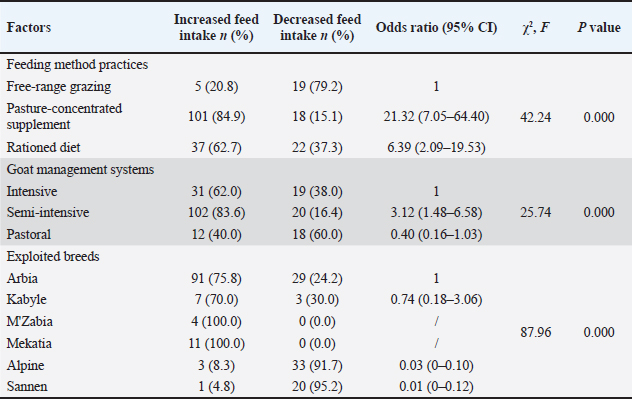
The questionnaire is structured with both closed multiple-choice questions and open-ended questions (questions without alternative answers). It is formed by closed-choice survey questions that were used for nominal variables, such as “yes” or “no” “female” or “male” “increases” or “decreases” and for multi-part data, which included lists of options from which goat keepers could select items such as “free grazing” or “pasture-concentrated supplement” or “rationed diet”. The first section of the survey encompassed fundamental information about the goat keepers, including their gender, age, occupation, breeding experience, breeding location, and non-breeding activities. The second part addressed goat management system characteristics, including goat rearing system, feeding practices, utilized breeds, and herd size. The third element encompassed information regarding feeding management and the utilization of carob, such as the quantity and form of carob incorporated into rations, the season of carob application, and the rationale for its use. The fourth segment sought to assess production performance, encompassing goat feed intake and weight gain, based on goat keepers’ observations. The respondents were classified into two principal categories based on their perception of their goat’s feed intake and weight gain: satisfied respondents (those expressing positive perception toward feed intake and weight gain improvement) and dissatisfied respondents (those indicating a negative perception of these traits). The two questions that were used to perform this classification were: Are you satisfied with the feed intake of your goats? and Are you satisfied with the weight gain of your goats? The poll was conducted anonymously, and all obtained information was handled confidentially. Statistical analysisData were analyzed using SPSS version 23.0. The chi-square test or Fisher’s exact test was applied to assess the association between goat management system characteristics, carob incorporation practices, and goat feed intake and weight gain. The appropriate test for each variable was selected following Negrini (2020) . Fisher’s test was performed if more than 20% of the cells had expected frequencies <5. Meanwhile, the Chi-square one was used when less than 20% of the cells have expected frequencies <5. Univariable logistic regression models were then used to examine the associations between each presumed factor and the farmers’ perception regarding the feed intake and the weight gain of their goats. The odds ratio (OR) and 95 % confidence intervals (CI) were calculated by pairwise comparing 2 groups at a time to assess the severity of associations between the investigated factors related to goat management practice characteristics and those associated with the incorporation of carob in the goats’ diet, as well as the respondents’ observations of changes in feed intake and weight gain. In all tests, a significance criterion of P < 0.05 was established. Ethical approvalNot needed for this study. ResultsTable 2 summarizes the farmers’ opinions regarding the effect of the investigated goat management practice characteristics on goat feed intake. According to our findings, three feeding method practices were identified, with concentrated pasture-based supplementation being the most widespread, accounting for 58.9% (119 goat keepers) of the total (Table 2). Furthermore, our results confirm that the farmers believed that the feeding strategies have a significant impact on goat feed intake (χ2=42.24; P < 0.05), with notable differences between the rationed diet, pasture supplemented with concentrates, and free-range grazing. Regarding the goat management systems, three different types were noted in the survey: intensive, semi-intensive, and pastoral, with a clear dominance of the semi-intensive type (122 out of 202 respondents) as presented in Table 2. According to the farmers’ perception, the goat’s feed intake was significantly different (χ2=25.74; P ˂ 0.05) according to the management system. Whereas, the goats reared in a semi-intensive system showed an increase in their feed intake compared to those managed under intensive or pastoral rearing systems. On the other hand, the present study found that the farmers perceived that the Arbia breed was the most prevalent among the surveyed respondents, with a rate of 59.4% (n=120) as presented in Table 2. Our results clearly demonstrated a significant disparity (χ2=87.96; P < 0.05) in feed intake between the imported and native goat breeds. Table 2. Farmers’ perception regarding the effect of goat management system characteristics on goat feed intake.
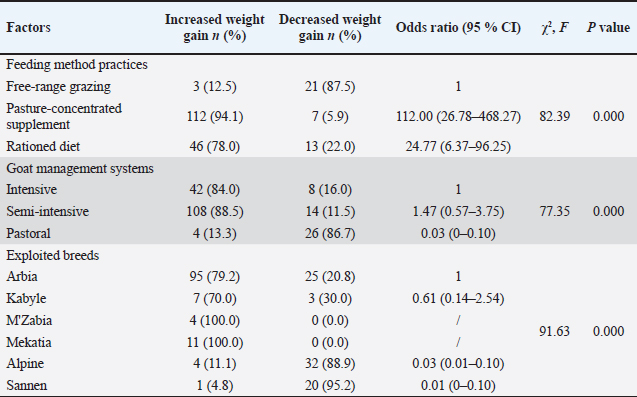
The farmers’ perception related to the influence of goat management system characteristics related to feeding methods, husbandry systems, and the breeds raised on weight gain is illustrated in Table 3. Meanwhile, the observed significant effect (P < 0.05) of the previous factors assessed in our study underscores the relevance of these factors in enhancing the productive performance of goats in such arid areas. According to farmers’ declaration, it was apparent that the feeding practice associated with pasture and concentrate supplementation was more effective (χ2=82.39; P < 0.05) in improving weight gain than the restricted diet, as well as free-range grazing. Table 3. Farmers’ perception regarding the effect of goat management system characteristics on goat weight gain.
Compared to the poor weight gain performance of the pastoral rearing system reported by the majority of respondents who adopted this system (86.7%) or the drawbacks of the intensive rearing system (16.0%), the semi-intensive system provides a high-performing compromise between zootechnical productivity and animal welfare (88.5%). Our study revealed that the farmers perceived a clear performance of local breeds in terms of resilience and weight gain which ossille from 70.0% for the Kabyle breed and reached 100.0% for the M’Zabia and Mekatia compared to very weak weight gain retain for the Saanen and Alpine breeds (4.8%) and (11.1%), respectively.
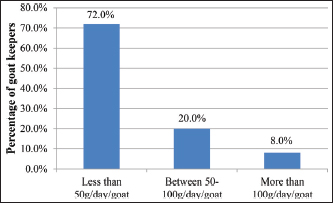
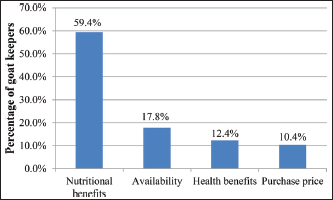
Fig. 1. Dosage levels of carob adopted in goat rearing practices. The analysis of carob usage patterns among respondents revealed three different dosage levels adopted in goat rearing practices (Fig. 1). Among the 202 surveyed goat keepers 72.0% disclosed that the amount of carob added in the ration of their goats was less than 50g/day/goat. Besides, 20.0% of them preferred to add a concentration ranging between 50 and 100 g/day/goat, whereas the remaining 8.0% were provided a quantity more than 100 g/day/goat; each, without doubt, has varying effects on animal welfare and production performance. Regarding the reasons for using carob. The majority of interview goat keepers (59.4%) use carob for its nutritional advantages, with 17.8% citing its availability, 12.4% for its health benefits, and 10.4% for its purchasing price (Fig. 2).
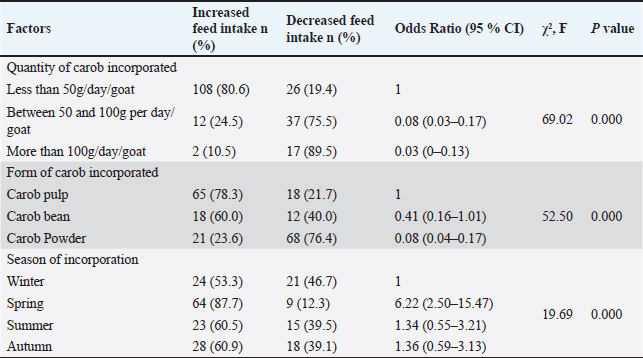
Fig. 2. The main reasons for using the carob. The results of our study related to the farmers’ opinions regarding the practice of carob incorporation showed a clear association (P ˂ 0.05) between the amount, the form, and the season of carob addition and the feed intake of goats (Table 4). Among the respondents who added less than 50 g/day/goat, 80.6% reported a significant increase in feed intake (χ²=69.02; P < 0.05). On the other side, a noticeable percentage across who provided a medium (between 50 and 100g/day/goat) or high concentration (more than 100 g/day/goat) disclosed that these cause a remarkable decrease on the feed intake of goats (75.5%) and (89.5%), respectively. According to goat keepers goats’ feed intakes are also greatly affected by the shape of carob (χ2=52.50; P < 0.05). Pulp of carob was reported to be the most preferred adding form for feed intake increasing (78.3%) as compared to carob bean (60.0%) or carob powder (23.6%). Table 4. Farmers’ perception regarding the effect of carob incorporating quantity, form, and season on goat feed intake.
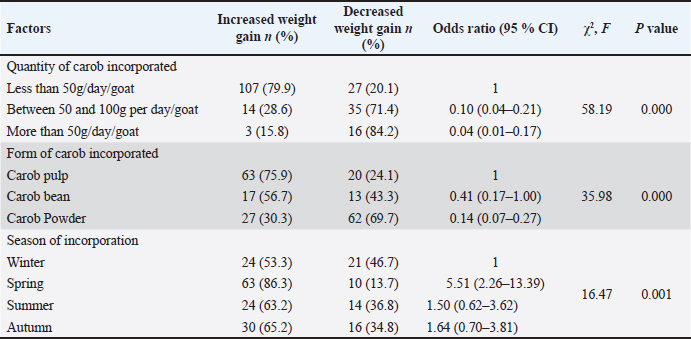
The respondents perceived that the effect of carob supplementation was more pronounced (χ2=19.69; P < 0.05) during spring compared to the other seasons. 87.7% of the goat keepers who added the carob to the ration of their goat during spring highlighted a notable rise in goat feed intake as compared to 60.9%, 60.5% and 53.3% throughout autumn, summer, and winter, respectively. According to the opinions of the respondents, a significant effect (P < 0.05) of the quantity, form, and season of carob use on goat weight gain was also observed (Table 5). Addition of ≥50 g/day/goat negatively affected weight gain (71.4%), whereas <50 g/day/goat significantly enhanced weight gain (79.9%), compared to 50–100 g/day (28.6%) or >100 g/day (15.8%). Table 5. Farmers’ perception regarding the effect of carob incorporating quantity, form, and season on goat weight gain.
The participants perceived that the form of carob was another determinant factor influencing weight gain. Pulp, which is high in simple sugars and easily digestible, improved weight gain (75.9%) compared to beans (56.7%) or powder (30.3%). Seasonal effects were most pronounced during spring (χ²=16.47; P < 0.05). DiscussionThe high odds ratios for supplemented and rationed diets, compared to free-range grazing practice, indicate a significant increase in eating incentive. This result corresponds with the conclusions of Zhang et al. (2017) who emphasized that the feed intake and feed efficiency of ruminants are improved by balanced diets that integrate concentrates and forages. Moreover, concentrate supplements enhance nutrient digestion, hence augmenting feeding incentive, as demonstrated by De Costa et al. (2021). Furthermore, Silanikove et al. (2006) demonstrated that energy supplements increase ruminal microbial activity, thereby allowing for larger intake. These results highlight the importance of nutritional balance in maximizing feed intake and complement the findings of Lu (2011) on diet optimization in goat husbandry. Notwithstanding the apparent benefits of rationed and supplemented meals, practical or economic constraints may limit their uptake, particularly in pastoral settings. The results of our study are similar to those of Wang et al. (2024) this meta-analysis indicates that goats raised in semi-intensive systems consume more than those raised in intensive and pastoral systems. Researchers suggest that this difference is due to a better balance between the availability of natural resources and feed supplementation. These results are similar to those of Palsaniya et al. (2023) and Valentine et al. (2023) who state that semi-intensive systems offer the best balance between behavioral freedom and food security, which may reduce goat stress and encourage them to eat more. In contrast, pastoral livestock farming practices are often limited by resource variation and availability, high-value forage species are being replaced by resilient plants, less nutritious, directly impacting livestock productivity and pastoralist livelihoods as shown by previous reports (Ouédraogo et al., 2021; Ouali et al., 2023; Bambara et al., 2024). Tölü (2025) also showed that goats raised under semi-intensive conditions did not exhibit many stereotypical behaviors, suggesting that they were more satisfied with their meals. In another study, Cooke et al. (2024) demonstrate that the performance weakness of the pastoral management system is due to its reliance on natural resources that are often variable and of poor quality. These limits make it harder to obtain essential nutrients, which is why our study showed that goat’s feed intake decreased. As regards Arbia breed prevalence in the study area, according to Kadi et al. (2019) this breed is characterized by its remarkable resilience and adaptability to the harsh conditions of arid regions, rendering it a significant and essential asset for keepers living in these areas. Due to its genetic adaptation to local conditions, the local breeds, especially the Arbia, displayed higher feed intake than the other exotic breeds, such as the Alpine and the Saanen breed. This was corroborated by Laouadi (2019) who reported that this native breed has particular rumen and metabolic adaptations that maximize their use of subpar forages. In the same trend, Hooper et al. (2021) found that the exotic breeds, such as the Saanen and Alpine, are less effective in restrictive environments despite being productive. This may support the significance of considering gene-environment (G × E) interactions when selecting a breed, as demonstrated by these findings. As described by Tesema and Kebede (2022) when an animal’s genotype aligns with the available resources, feed intake and feed performance are maximized. The better performance of the feeding practice associated with pasture and concentrate supplementation in improving weight gain is the result of various mechanisms working together. First, the food is easier to digest because it contains soluble nitrogen and energy that is readily available. This compensates for the fact that natural forages lack many nutrients during the dry season (Capstaff and Miller, 2018). Abidi et al. (2021) demonstrate that small ruminants supplemented with vetch (a legume) exhibit a 3 times greater weight gain (164–152 g/day) compared to those fed only free-range grazing with wheat stubble (49.5 g/day), indicating an improvement in digestion and ingestion. In addition, the same author reported that insufficient free grazing, resulting in weight loss, was observed until the addition of a concentrated supplement. The second approach is to reduce the number of parasites in the gut by administering supplements rich in condensed tannins, which increases the energy available for growth (Gazzonis et al., 2023). Free-range grazing is often associated with irregular forage availability, especially during the summer in arid areas (Boval and Dixon, 2012). Goats may also expend more energy, with movements in search of food, which reduces their weight gain (Silanikove, 2000). The addition of concentrate supplements (rich in protein and energy) covers the nutritional deficits of free-range grazing alone. This is consistent with the recommendations of the NRC (2007) which emphasize the importance of feed supplements for better growth. The semi-intensive goat management system provides controlled access to a varied diet in terms of both quantity and quality (Tiezzi et al., 2019), while physiologically allowing for a moderate level of activity and reduced movement, which promotes myogenesis without inducing metabolic stress (Singh et al., 2023). Secondly, compared to the more restrictive conditions of the intensive farming system, very low cortisol levels (up to −30%) indicate excellent behavioral adaptation in goats and less stress from an endocrine perspective (Gregurić Gračner et al., 2018). The uncontrolled importation of foreign breeds into unsuitable agro-ecological environments is therefore counterproductive. A related strategy is to consider targeted hybridization with local breeds to combine the productivity of specialized foreign breeds with the vigor of endemic breeds (Oyieng et al., 2025). The use of carob in a low ratio to goats in our study for most of the respondents may suggest a traditional approach adopted in rearing management due to the breeders’ concerns about the negative effect of feeding tannin-based feedstuffs on nutrient intake. In this context, Biner et al. (2007) reported that at a slight concentration level, the nutritional effect of carob may be limited. Still, it affects palatability thanks to its simple carbohydrates (sucrose and fructose).A recent study by Kurt (2025) corroborates that the use of low quantities of carob (< 5% of dry matter) does not alter the digestibility of rations in ruminants, which explains the absence of digestive disorders in goats supplemented with these amounts. On the other hand, 20% of the respondents attributed their preference for using carob in medium quantities to the improvement in digestibility and increased energy intake. Carob is rich in soluble fiber (pectins) and polyphenols, which can have a positive impact on ruminal fermentation when it is used with a reasonable amount (Hassan et al., 2016; Richane et al., 2022). The study of Hassan et al. (2016) showed that a 6%–8% carob intake in goat rations increases milk production in goats, thanks to the proper functioning of rumen microorganisms. However, this effect is linked to the balance of the rations, especially in protein and energy, to counteract the inhibitory effect of tannins on the degradation of dietary proteins (Stobiecki and Makkar, 2004). The negative and potentially dangerous impact of the condensed tannins contained in carob may explain why a minority of goat keepers preferred to incorporate this ingredient at a higher concentration (more than 100 g/day/goat) in the ration at high doses. According to Ayadi et al. (2014) the addition of a condensed tannin rate (15% DM) negatively affects feed intake and milk production, but improves the milk composition in unsaturated fatty acids. These compounds make proteins more challenging to digest and can have adverse effects on nutrition. However, this effect can be mitigated by adding soluble nitrogen (such as urea) or taninase (Martello et al., 2020). An analysis of why respondents add carob (Ceratonia siliqua L.) to goat diets highlights some interesting patterns in the feed they choose. The association of the large majority of the surveyed with the use of carob and its nutritional benefits may suggest that the people are starting to realize how nutritious carob is, thanks to its high levels of soluble sugars, fiber, minerals, and bioactive compounds (Basharat et al., 2023). Carob pod flour is particularly known to aid ruminants in digesting their food more effectively and utilizing their feed more efficiently (Richane et al., 2022). On the other hand, the carob tree grows naturally in Mediterranean regions, particularly in Algeria, where it is found either naturally or is only partially cultivated (Gadoum et al., 2021). This is why people are interested in it. Because it is available locally, it is easier to use in large or mixed livestock systems, which lowers the cost of logistics. Some respondents also reported that carob is beneficial for one’s health. This opinion aligns with the findings of several recent studies, which have demonstrated that its components, including condensed tannins and polyphenols, possess antioxidant, antimicrobial, and antidiarrheal properties (Chaalal et al., 2023; Pelegrin-Valls et al., 2023). These beneficial effects make carob even more valuable for promoting gut health and reducing the need for antibiotics in farm animals. There is additional health benefits associated with carob tannin. For example, it can lower the amount of internal parasites. Gazzonis et al. (2023) suggest that tropical tannins increase the host’s resistance and resilience to nematodes. Finally, only a few respondents mentioned the price as a reason for using carob, which suggests that money is not the primary reason people use it. Direct access to resources (such as local harvests or donations) or a qualitative rather than quantitative valuation of food could explain this situation (Blanco-Jimenez et al., 2024). As regards our results regarding the effect of carob concentrations on the feed intake of goats. Accordingly, Hassan et al. (2016) found that low doses of polyphenols, like those in carob, make ruminants hungry by activating taste receptors. Still, high doses stop them from eating because they are astringent (Battelli et al., 2024). As described by Rodríguez-Solana et al. (2021) also shows that high doses of soluble dietary fiber, like the kind found in carob, It can speed up the feeling of satiety, which supports our findings. These observations suggest that carob can alter the hunger sensation in goats, and the effectiveness of this effect depends on the amount consumed. Our results are in keeping with what has been found before: when condensed tannins are present in high amounts (>55 g CT/kg DM) (Mkhize et al., 2018). These results have been linked to lower nutritional intake and digestibility (Mezzomo et al., 2011; Wang et al., 2018; Nawab et al., 2020). The fact that pulp is better than powder for feed intake improvement aligns with Zhao et al.’s (2011) research, which demonstrated that the texture of feed has a significant impact on how long goats chew and how well they digest it. Pulp is rougher, which makes chewing last longer and stimulates salivation more, helping you digest food more effectively and increasing your feed intake. Powder, on the other hand, can lower ruminal activity because its particles are so small, which is why the feed intake goes down (Al Rharad et al., 2025). These results suggest that food formulations should be changed based on the shape of the ingredients. Changes in seasonal energy metabolism may explain why the effect of carob supplementation was more pronounced in goat feed intake during the spring season, as well as the availability of other forages or changes in feeding behaviour and physical activity during different seasons. The seasonal changes were seen as aligning with Al Rharad et al.’s (2025) research on the energy requirements of goats at different times of the year. In the spring, when animals are lactating and mating, their metabolisms speed up. Arnold (2020) reported that the decrease in feed intake in winter may be due to reduced physical activity and limited access to fresh forages. These results demonstrate the importance of considering seasonal physiological cycles when creating diet plans. The dose-dependent effect of carob supplementation in goats’ weight gain may be caused by condensed tannins and insoluble fibre, which are known to inhibit the digestion of proteins and carbohydrates (Battelli et al., 2024). Ghzayel et al. (2025) demonstrated that consuming a high amount of carob, which contains a high concentration of tannins, makes it more difficult for nutrients to be digested and less energy to be absorbed. A recent study by Battelli et al. (2024) also found that adding condensed tannins could lower ruminal fermentation which supports our findings. Tannins form complexes with proteins that don’t dissolve, making them more challenging to break down in the rumen (Tian et al., 2024). Insoluble fibre makes food stay in the digestive system longer, which makes people less likely to eat it (Zhu et al., 2025). According to a study by Ghzayel et al. (2025) eating more than 60 g/d of carob made organic matter less digestible by 12%. Contrary to Ayadi et al. (2014) who determined that inclusion of condensed tannin at a modest level of 5% concentrated DM results in lean and dry meat, the survey results suggest that weight gain is improved with the addition of less than 50 g of tannin-rich condensed carob to the diet. To avoid antinutritional effects, a moderate amount of supplementation (<50 g/d) may be best. The results of our study regarding the effect of carob format on weight gain of goats are in line with what Fujita et al. (2021) found, that processed forms of carob (like powder and extracts) made their low-calorie effects stronger because they had more polyphenols, which led to preventing or reducing weight gain by improving fat metabolism and appetite control. A similar study, conducted by Yanza et al. (2021) found that the use of tannin extract as a dietary additive could slow down ruminal fermentation and make the food less palatable. This explains why goats that ate carob powder did not do as well. These observations highlight the importance of selecting the correct type of carob forms. Ruminants used raw forms (pulp, whole pods) more effectively than extracts or powders, according to a meta-analysis by Kelln et al. (2020). Carob flour decreased dry matter intake in goats by 15% (Silanikove et al., 2006). While the powder may be suitable for specific applications (such as a low-calorie supplement), the pulp appears to be better suited for growth diets. The seasonal changes of carob supplementation’s effect on weight gain may be linked to the availability of food, since spring forages are easier to digest (they have more soluble proteins), which makes the effect of carob stronger (Bohnert et al., 2011). They are also linked to metabolic disorders; the winter photoperiod changes hormone production (melatonin, IGF-1), which changes how muscles build up (Jin et al., 2013). These results are consistent with the work of Tsevegemed et al. (2019) who highlighted seasonal variations in ruminant weight gain, with spring being the most favourable period. Another study on goats (Rhind et al., 2002) also indicated the interaction between the season and the composition of diets, and thus, carob could be better used in balanced spring rations. On the other hand, another study with dairy goats (Menci et al., 2021) indicated that tannin-enriched diets were more effective in the warm season (better ruminal accommodation). Conversely, during winter, tannins increase the energy requirements (thermoregulation), which is why there is reduced performance (Kelln et al., 2011). The study’s limitations encompassed the subjectivity of data and the possibility of potential bias, emphasizing the need for caution in generalizing the results obtained. Additionally, the relatively small sample size surveyed (n=202) may represent another constraint. It is, therefore, recommended that future studies be conducted on a more representative and larger population size to enhance the robustness and applicability of the findings. ConclusionThe research study concluded that the participants perceived that the feeding practices incorporating pasture and concentrate supplementation, semi-intensive systems, and the rearing of indigenous breeds like Arbia and M’Zabia are key to the success of goat rearing activities in arid areas. According to them, the inclusion of tannin-rich carob in moderate amounts (less than 50 g) as a pulp form during the spring season resulted in positive effects on production performance, as evidenced by enhanced voluntary feed consumption and weight gain in goats. Conversely, the farmers perceived that the incorporation of tannin-rich carob in excessive amounts (more than 50 g/kg DM) produced adverse outcomes, characterized by reduced feed intake and diminished weight gain in the goats. The most effective way to utilise tannin-rich carob in goat rations to optimise goat production performance is through the integration of strategies that combine semi-intensive systems, supplemented feeding methods, and adapted breeds. This will sustainably increase goat productivity. Further research is needed, particularly regarding the optimal dosage of carob to administer for positive outcomes. Further research could examine how its use affects animal productivity and the environment over time. AcknowledgmentsThe authors express their gratitude to the goat keepers and the team members who contributed to making this study possible. FundingThe authors declare that this research did not receive specific funding. Authors’ contributionsAT: Conceptualization, investigation, formal analysis, writing- original draft, resources, and visualization; BH: Conceptualization, methodology, formal analysis, writing- original draft, writing-review & editing, resources, visualization, and supervision; LH: Conceptualization, methodology, writing-review & editing, resources, and visualization. Conflicts of interestThe authors declare no conflict of interest. Data availabilityAll data supporting the findings of this study are available within the manuscript. ReferencesAbidi, S., Benyoussef, S. and Ben Salem, H. 2021. Foraging behaviour, digestion and growth performance of sheep grazing on dried vetch pasture cropped under conservation agriculture. J. Anim. Physiol. Anim. Nutr. 105(1), 51–58; doi:10.1111/jpn.13456 Aissaoui, M., Deghnouche, K., Boukhalfa, H.H. and Saifi, I. 2019. Growth performance of goat local breed reared in Southeastern Algeria. World J. Environ. Biosci. 8(2), 59–66. Al Rharad, A., El Aayadi, S., Avril, C., Souradjou, A., Sow, F., Camara, Y., Hornick, J.L. and Boukrouh, S. 2025. Meta-analysis of dietary tannins in small ruminant diets: effects on growth performance, serum metabolites, antioxidant status, ruminal fermentation, meat quality, and fatty acid profile. Animals 15(4), 596; doi:10.3390/ani15040596 ANDI. 2013. Monograph of the wilaya of Béchar. Available via https://interieur.gov.dz/Monographie/article_detail.php?lien=1198&wilaya=8 Arnold, W. 2020. Review: seasonal differences in the physiology of wild northern ruminants. Animal 14(S1), s124–s132; doi:10.1017/S1751731119003240 Ayadi, M., Arakrak, A., Chriyaa, A., El Otmani, S., Chentouf, M., Zantar, S. and Bouassab, A. 2014. Effets des tanins condensés de la pulpe de caroube sur la production et la qualité du lait et de la viande caprine. Options. Médit. Série. A. Sémin. Médit. 108, 127–134. Bambara, G.T., Kiema, A., Bougouma-Yameogo, V.M., Ouedraogo, A. and Sanfo, A. 2024. Dynamics of sudanian pastures: the case of Niassa pastoral zone in Burkina Faso. Past. Res. Policy Pract. 14, 13041; doi:10.3389/past.2024.13041 Basharat, Z., Afzaal, M., Saeed, F., Islam, F., Hussain, M., Ikram, A., Pervaiz, M.U. and Awuchi, C.G. 2023. Nutritional and functional profile of carob bean (Ceratonia siliqua): a comprehensive review. Int. J. Food Prop. 26(1), 389–413; doi:10.1080/10942912.2022.2164590 Battelli, M., Colombini, S., Crovetto, G.M., Galassi, G., Abeni, F., Petrera, F., Manfredi, M.T. and Rapetti, L. 2024. Condensed tannins fed to dairy goats: effects on digestibility, milk production, blood parameters, methane emission, and energy and nitrogen balances. J. Dairy Sci. 107(6), 3614–3630; doi:10.3168/jds.2023-24076 Biner, B., Gubbuk, H., Karhan, M., Aksu, M. and Pekmezci, M. 2007. Sugar profiles of the pods of cultivated and wild types of carob bean (Ceratonia siliqua L.) in Turkey. Food Chem. 100(4), 1453–1455; doi:10.1016/j.foodchem.2005.11.037 Blanco-Jimenez, K.Y., Montalvan-Meza, M.E., Esparza-Huamanchumo, R., Romo-Roman, P.C. and Mougenot, B. 2024. Evaluation of the socioeconomic impacts of the production of carob pod derivatives in two rural communities in Peru. Rev. Gest. Soc. Ambient. 18(7), e04625; doi:10.24857/rgsa.v18n7-086 Bohnert, D.W., Delcurto, T., Clark, A.A., Merrill, M.L., Falck, S.J. and Harmon, D.L. 2011. Protein supplementation of ruminants consuming low-quality cool-or warm-season forage: differences in intake and digestibility. J. Anim. Sci. 89(11), 3707–3717; doi:10.2527/jas.2011-3915 Boval, M. and Dixon, R.M. 2012. The importance of grasslands for animal production and other functions: a review on management and methodological progress in the tropics. Animal 6(5), 748–762; doi:10.1017/S1751731112000304 Capstaff, N.M. and Miller, A.J. 2018. Improving the yield and nutritional quality of forage crops. Front. Plant Sci. 9, 535; doi:10.3389/fpls.2018.00535 Chaalal, M., Ydjedd, S., Chemache, L., López-Nicolás, R., Sánchez-Moya, T., Frontela-Saseta, C., Ros-Berruezo, G. and Kati, D.E. 2023. Evaluation of the antimicrobial potential of digested and undigested carob phenolic extracts: impact on selected gut microbiota. Acta Alimentaria 52(4), 612–622; doi:10.1556/066.2023.00172 Cooke, A.S., Machekano, H., Ventura-Cordero, J., Louro-Lopez, A., Joseph, V., Gwiriri, L.C., Takahashi, T., Morgan, E.R., Lee, M.R.F. and Nyamukondiwa, C. 2024. Opportunities to improve goat production and food security in Botswana through forage nutrition and the use of supplemental feeds. Food Secur. 16(3), 607–622; doi:10.1007/s12571-024-01452-1 Day, R., Mohamed-Brahmi, A., Aribi, F. and Jaouad, M. 2025. Sustainable goat farming in southeastern Tunisia: challenges and opportunities for profitability. Sustainability 17(8), 3669; doi:10.3390/su17083669 De Costa, E.I., Ribiero, C.V.D.M., Silva, T.M., Ribeiro, R.D.X., Vieira, J.F., De O. Lima, A.G.V., Barbosa, A.M., Silva Júnior, J.M.D., Bezerra, L.R. and Oliveira, R.L. 2021. Intake, nutrient digestibility, nitrogen balance, serum metabolites and growth performance of lambs supplemented with Acacia mearnsii condensed tannin extract. Animals’. Feed Sci. Technol. 272, 114744; doi:10.1016/j.anifeedsci.2020.114744 DSA. 2024. Directorate of Agricultural Services of the wilaya of Béchar. DSA. Eulmi, H., Deghnouche, K. and Gherissi, D.E. 2024. Dairy cattle breeding practices, production and constraints in arid and semi-arid Algerian bioclimatic environments. Int. J. Environ. Stud. 81(3), 1238–1255; doi:10.1080/00207233.2023.2228616 FAOSTAT. 2023a. Global goat population statistics. Available via https://www.fao.org/faostat/fr/#data/QCL FAOSTAT. 2023b. Annual production of goat milk and meat in Algeria. Available via https://www.fao.org/faostat/fr/#data/QCL Fujita, K., Norikura, T., Matsui-Yuasa, I., Kumazawa, S., Honda, S., Sonoda, T. and Kojima-Yuasa, A. 2021. Carob pod polyphenols suppress the differentiation of adipocytes through posttranscriptional regulation of C/EBPβ. PLos One. 16(3), 248073; doi:10.1371/journal.pone.0248073 Gadoum, A., Chahbar, M., Adda, A., Sahnoune, M. and Aid, F. 2021. Morphometrical variation of carob tree (Ceratonia siliqua L.) in Algeria. Genet. Biodiv. J. 5(2), 103–115. Gazzonis, A.L., Panseri, S., Pavlovic, R., Zanzani, S.A., Chiesa, L., Rapetti, L., Battelli, M., Villa, L. and Manfredi, M.T. 2023. In vitro evaluations and comparison of the efficacy of two commercial products containing condensed tannins and of saifoin (Onobrychis viciifolia scop.) hay against gastrointestinal nematodes of goats. Animals 13(3), 547; doi:10.3390/ani13030547 Getaneh, M., Taye, M. and Kebede, D. 2022. Management system and breeding practices of indigenous goat types in selected districts of East Gojjam Zone, Amhara Region, Ethiopia. Cogent. Food. Agric. 8(1), 2071514; doi:10.1080/23311932.2022.2071514 Ghzayel, S., Ammar, H., Zoabi, H., Abou Aziz, B., Kholif, A.E., Adegbeye, M.J., Ben Abdallah, R., De Haro-martí, M., Lopez, S. and Chahine, M. 2025. Chemical composition, in vitro gas production, and nutrient degradability of carob leaves as a sustainable feed for ruminants in Tunisia and Palestine. Front. Vet. Sci. 12, 1433814; doi:10.3389/fvets.2025.1433814 Gregurić Gračner, G., Paviči., Žužul, S., Dovč, A., Lončarić, N., Grizelj, J., Lipar, M. and Gračner, D. 2018. Monitoring saliva cortisol level in dairy goats during April, May and July in a semi-intensive rearing system. Vet. Stanica. 49, 179–185. Hassan, A.A., Yacout, M.H., Khalel, M.S., Adrian, T.R., Dorina, M. and Magdalena, T.R. The economic effect of a daily supplementation of carob pods (Ceratonia siliqua L.) on rumen fermentation and lactating goats performance. International Conference Risk in Contemporary Economy,2016 Dunarea de Jos University of Galati, Faculty of Economics and Business Administration Galaţi, Romania: Editura Universităţii “Dunărea de Jos”., pp 531–537. Hooper, H.B., Dos Santos Silva, P., De Oliveira, S.A., Merighe, G.K.F., Titto, C.G. and Negrão, J.A. 2021. Long-term heat stress at final gestation: physiological and heat shock responses of Saanen goats. Int. J. Biometeorol. 65(12), 2123–2135; doi:10.1007/s00484-021-02175-0 Jin, J., Sawai, K. and Hashizume, T. 2013. Effects of photoperiod on secretory patterns of growth hormone in adult male goats. Anim. Sci. J. 84(12), 790–797; doi:10.1111/asj.12073 Kadi, S.A., Mouhous, A., Djellal, F., Gani, F. and Fiouane, E.R. 2019. Characterization of goat breeding in the desert region of Bechar in Algeria. Options. Médit. Série. A. Sémin. Médit. 123, 415–418. Kelln, B.M., Lardner, H.A., Mckinnon, J.J., Campbell, J.R., Larson, K. and Damiran, D. 2011. Effect of winter feeding system on beef cow performance, reproductive efficiency, and system cost. Prof. Anim. Sci. 27(5), 410–421; doi:10.15232/S1080-7446(15)30513-1 Kelln, B.M., Penner, G.B., Acharya, S.N., Mcallister, T.A. and Lardner, H.A. 2020. Impact of condensed tannin-containing legumes on ruminal fermentation, nutrition, and performance in ruminants: a review. Can. J. Anim. Sci. 101(2), 210–223; doi:10.1139/cjas-2020-0096 Kerven. 2024. Contribution of goats to climate change: how and where?. Past. Res. Policy. Pract. 14, 13988; doi:10.3389/past.2024.13988 Kurt, Ö. 2025. Effects of carob (Ceratonia siliqua L.) pod supplementation of lamb diets on in vitro methane production, digestion, and microbial yield. J. King. Saud. Univ. Sci. 37, 2852024; doi:10.25259/JKSUS_285_2024 Laouadi, M. 2019. Caractérisation et gestion des principales ressources génétiques caprines locales en Algérie: Cas de la région de Laghouat. Thèse de doctorat, École Nationale Supérieure Vétérinaire, Alger. Lu, C.D. 2011. Nutritionally related strategies for organic goat production. Small. Ruminant. Res. 98(1-3), 73–82; doi:10.1016/j.smallrumres.2011.03.022 MADR. 2017. Ministère de l’Agriculture et du Développement Rural. Available via https://fr.madr.gov.dz/statistiques-agricoles/ Martello, H.F., De Paula, N.F., Teobaldo, R.W., Zervoudakis, J.T., Fonseca, M.A., Cabral, L.S., Rocha, J.K.L., Mundim, A.T. and Moraes, E.H.B.K. 2020. Interaction between tannin and urea on nitrogen utilization by beef cattle grazing during the dry season. Livest. Sci. 234, 103988; doi:10.1016/j.livsci.2020.103988 Menci, R., Natalello, A., Luciano, G., Priolo, A., Valenti, B., Farina, G., Caccamo, M., Niderkorn, V. and Coppa, M. 2021. Effect of dietary tannin supplementation on cow milk quality in two different grazing seasons. Sci. Rep. 11(1), 19654; doi:10.1038/s41598-021-99109-y Meziane, R., Mouss, A.K., Hammouche, D., Boughris, M. and Boughris, F. 2024. Practical management of sheep farming in eastern Algeria: situation, constraints and perspectives. World’s. Vet. J. 14(3), 389–399; doi:10.54203/scil.2024.wvj46 Mezzomo, R., Paulino, P.V.R., Detmann, E., Valadares Filho, S.C., Paulino, M.F., Monnerat, J.P.I.S., Duarte, M.S., Silva, L.H.P. and Moura, L.S. 2011. Influence of condensed tannin on intake, digestibility, and efficiency of protein utilization in beef steers fed high concentrate diet. Livestock Sci. 141(1), 1–11; doi:10.1016/j.livsci.2011.04.004 Mkhize, N.R., Heitkӧnig, I.M.A., Scogings, P.F., Dziba, L.E., Prins, H.H.T. and De Boer, W.F. 2018. Effects of condensed tannins on live weight, faecal nitrogen and blood metabolites of free-ranging female goats in a semi-arid African savanna. Small Ruminant Res. 166, 28–34; doi:10.1016/j.smallrumres.2018.07.010 Nawab, A., Tang, S., Gao, W., Li, G., Xiao, M., An, L., Wu, J. and Liu, W. 2020. Tannin supplementation in animal feeding; mitigation strategies to overcome the toxic effects of tannins on animal health: a review. J. Agric. Sci. 12(4), 217; doi:10.5539/jas.v12n4p217 Negrini. 2020. Teachers’ attitudes towards educational robotics in compulsory school. Ital. J. Educ. Technol. 28(1), 77–90; doi: 10.17471/2499-4324/1136 NRC. 2007. National Research Council. Nutrient requirements of small ruminants: sheep, goats, cervids, and new world camelids. Washington, DC: National academies press, pp: 298. Ouali, M., Belhouadjeb, F.A., Soufan, W. and Rihan, H.Z. 2023. Sustainability evaluation of pastoral livestock systems. Animals 13(8), 1335; doi:10.3390/ani13081335 Ouchene-Khelifi, N.A., Ouchene, N. and Lafri, M. 2021. Characterization and typology of goat production systems in Algeria based on producers survey. Bull. Natl. Res. Cent. 45(1), 22; doi:10.1186/s42269-020-00480-z Ouédraogo, K., Zaré, A., Korbéogo, G., Ouédraogo, O. and Linstädter, A. 2021. Resilience strategies of West African pastoralists in response to scarce forage resources. Pastoralism 11(1), 16; doi:10.1186/s13570-021-00210-8 Oyieng, E., Ojango, J.M.K., Gauly, M., Mrode, R., Dooso, R., Okeyo, A.M., Kalinda, C. and König, S. 2025. Evaluating reproduction traits in a crossbreeding program between indigenous and exotic sheep in semi-arid lands. Animal 19(1), 101391; doi:10.1016/j.animal.2024.101391 Palsaniya, D.R., Kumar, S., Das, M.M., Rai, S.K., Kumar, T.K., Kumar, S., Chaudhary, M., Chand, K., Ahmed, A., Sahay, C.S. and Kumar, P. 2023. Rain water harvesting, agroforestry and goat based intensification for livelihood resilience in drought prone rainfed smallholder farming system: a case for semi-arid tropics. Agrofor. Syst. 97(8), 1405–1419; doi:10.1007/s10457-023-00863-x Pelegrin-Valls, J., Álvarez-Rodríguez, J., Martín-Alonso, M.J., Aquilué, B. and Serrano-Pérez, B. 2023. Impact of carob (Ceratonia siliqua L.) pulp inclusion and warm season on gastrointestinal morphological parameters, immune-redox defences and coccidiosis in concentrate-fed light lambs. Res. Vet. Sci. 163, 104969; doi:10.1016/j.rvsc.2023.104969 Permana, I.G., Salehudin, S., Evvyernie, D. and Rosmalia, A. 2025. In vitro assessment of carob (Ceratonia siliqua L.) as a sustainable energy source in dairy ration. In Proc. IOP Conference Series: Earth and Environmental Science, IOP Publishing, Bogor, Indonesia, 1484(1), pp 12–18. doi: 10.1088/1755-1315/1484/1/012008 Rhind, S.M., Archer, Z.A. and Adam, C.L. 2002. Seasonality of food intake in ruminants: recent developments in understanding. Nutr. Res. Rev. 15(1), 43–65; doi:10.1079/NRR200236 Richane, A., Ismail, H.B., Darej, C., Attia, K. and Moujahed, N. 2022. Potential of Tunisian carob pulp as feed for ruminants: chemical composition and in vitro assessment. Trop. Anim. Health Prod. 54(1), 58; doi:10.1007/s11250-022-03071-4 Rodríguez-Solana, R., Romano, A. and Moreno-Rojas, J.M. 2021. Carob pulp: a nutritional and functional by-product worldwide spread in the formulation of different food products and beverages. A review. Processes 9(7), 1146; doi:10.3390/pr9071146 Silanikove, N. 2000. The physiological basis of adaptation in goats to harsh environments. Small. Ruminant. Res. 35(3), 181–193; doi:10.1016/S0921-4488(99)00096-6 Silanikove, N., Landau, S., Or, D., Kababya, D., Bruckental, I. and Nitsan, Z. 2006. Analytical approach and effects of condensed tannins in carob pods (Ceratonia siliqua) on feed intake, digestive and metabolic responses of kids. Livest. Sci. 99(1), 29–38; doi:10.1016/j.livprodsci.2005.05.018 Singh, R., Singh, V. and Beigh, S.A. 2023. Effect of parity on non-esterified fatty acid, oxidant/antioxidant status, and zinc and copper levels around periparturient period in Beetal goats of Himalayan Region. J. Anim. Physiol. Anim. Nutr. 107(2), 418–427; doi:10.1111/jpn.13738 Stobiecki, M. and Makkar, H.P.S. 2004. Recent advances in analytical methods for identification and quantification of phenolic compounds. In Recent Advances of Research in Antinutritional Factors in Legume Seeds and Oil Seeds. Hill, M.M., Pedrosa, C.C. and Burbano, M. (eds), Toledo, Spain: Wageningen Academic Publishers, pp: 11–28. Tesema, Z. and Kebede, D. 2022. Do crossbreeding using exotic breeds in goat is the right solution for a low-input production system in Ethiopia?: a Review. Agric. Rev. 43(1), 11–19; doi:10.18805/ag.R-183 Tian, K.E., Aldian, D., Luo, G., Sossou, A. and Yayota, M. 2024. Condensed tannin-induced variations in the rumen metabolome and the correlation with fermentation characteristics in goats. Anim. Sci. J. 95(1), e13925; doi:10.1111/asj.13925 Tiezzi, F., Tomassone, L., Mancin, G., Cornale, P. and Tarantola, M. 2019. The assessment of housing conditions, management, animal-based measure of dairy goats’ welfare and its association with productive and reproductive traits. Animals 9(11), 893; doi:10.3390/ani9110893 Tölü, C. 2025. Effects of forage-to-concentrate ratio on abnormal stereotypic behavior in lambs and goat Kids. Animals 15(7), 963; doi:10.3390/ani15070963 Tsevegemed, M., Norovsambuu, T., Jordan, G. and Schlecht, E. 2019. Feed intake of small ruminants on spring and summer pastures in the Mongolian Altai Mountains. Sustainability 11(20), 5759; doi:10.3390/su11205759 Valentine, M.E., McRoberts, K.C., Thonney, M.L. and Cherney, D.J. 2023. Effects of implementing a semi-stall-feeding system on goat kid survival and farmer adoption in western Odisha. Indian. J. Small. Rumen. 29(1), 126–133; doi:10.5958/0973-9718.2023.00007.7 Wang, S., Terranova, M., Kreuzer, M., Marquardt, S., Eggerschwiler, L. and Schwarm, A. 2018. Supplementation of pelleted hazel (Corylus avellana) leaves decreases methane and urinary nitrogen emissions by sheep at unchanged forage intake. Sci. Rep. 8(1), 5427; doi:10.1038/s41598-018-23572-3 Wang, W., Zhang, X., Wei, H., Wang, S., Ye, Y., He, L., Zhang, K., Lu, Y., Zhang, Z. and Huang, Y. 2024. Effects of feeding systems on the growth performance, carcass characteristics, and meat quality in sheep: a meta-analysis. Animals 14(18), 2738; doi:10.3390/ani14182738 Yanza, Y.R., Fitri, A., Suwignyo, B., Elfahmi., Hidayatik, N., Kumalasari, N.R., Irawan, A. and Jayanegara, A. 2021. The utilisation of tannin extract as a dietary additive in ruminant nutrition: a meta-analysis. Animals 11(11), 3317; doi:10.3390/ani11113317 Zhang, J., Shi, H., Wang, Y., Li, S., Cao, Z., Ji, S., He, Y. and Zhang, H. 2017. Effect of dietary forage to concentrate ratios on dynamic profile changes and interactions of ruminal microbiota and metabolites in Holstein heifers. Front. Microbiol. 8, 2206; doi:10.3389/fmicb.2017.02206 Zhao, X.H., Zhang, T., Xu, M. and Yao, J.H. 2011. Effects of physically effective fiber on chewing activity, ruminal fermentation, and digestibility in goats. J. Anim. Sci. 89(2), 501–509; doi:10.2527/jas.2010-3013 Zhu, L., Tang, L., Zhang, K., Nie, H., Gou, X., Kong, X. and Deng, W. 2025. Genetic and epigenetic adaptation mechanisms of sheep under multi-environmental stress environment. Int. J. Mol. Sci. 26(7), 3261; doi:10.3390/ijms26073261 | ||
| How to Cite this Article |
| Pubmed Style Titaf A, Hamad B, Hadef L. Farmers’ perceptions towards the effects of goat management system characteristics and the practices related to carob (Ceratonia siliqua L.) dietary incorporation on feed intake and weight gain of goats: Survey results. Open Vet. J.. 2026; 16(2): 1230-1242. doi:10.5455/OVJ.2026.v16.i2.41 Web Style Titaf A, Hamad B, Hadef L. Farmers’ perceptions towards the effects of goat management system characteristics and the practices related to carob (Ceratonia siliqua L.) dietary incorporation on feed intake and weight gain of goats: Survey results. https://www.openveterinaryjournal.com/?mno=285134 [Access: June 22, 2026]. doi:10.5455/OVJ.2026.v16.i2.41 AMA (American Medical Association) Style Titaf A, Hamad B, Hadef L. Farmers’ perceptions towards the effects of goat management system characteristics and the practices related to carob (Ceratonia siliqua L.) dietary incorporation on feed intake and weight gain of goats: Survey results. Open Vet. J.. 2026; 16(2): 1230-1242. doi:10.5455/OVJ.2026.v16.i2.41 Vancouver/ICMJE Style Titaf A, Hamad B, Hadef L. Farmers’ perceptions towards the effects of goat management system characteristics and the practices related to carob (Ceratonia siliqua L.) dietary incorporation on feed intake and weight gain of goats: Survey results. Open Vet. J.. (2026), [cited June 22, 2026]; 16(2): 1230-1242. doi:10.5455/OVJ.2026.v16.i2.41 Harvard Style Titaf, A., Hamad, . B. & Hadef, . L. (2026) Farmers’ perceptions towards the effects of goat management system characteristics and the practices related to carob (Ceratonia siliqua L.) dietary incorporation on feed intake and weight gain of goats: Survey results. Open Vet. J., 16 (2), 1230-1242. doi:10.5455/OVJ.2026.v16.i2.41 Turabian Style Titaf, Abdaiem, Brahim Hamad, and Leyla Hadef. 2026. Farmers’ perceptions towards the effects of goat management system characteristics and the practices related to carob (Ceratonia siliqua L.) dietary incorporation on feed intake and weight gain of goats: Survey results. Open Veterinary Journal, 16 (2), 1230-1242. doi:10.5455/OVJ.2026.v16.i2.41 Chicago Style Titaf, Abdaiem, Brahim Hamad, and Leyla Hadef. "Farmers’ perceptions towards the effects of goat management system characteristics and the practices related to carob (Ceratonia siliqua L.) dietary incorporation on feed intake and weight gain of goats: Survey results." Open Veterinary Journal 16 (2026), 1230-1242. doi:10.5455/OVJ.2026.v16.i2.41 MLA (The Modern Language Association) Style Titaf, Abdaiem, Brahim Hamad, and Leyla Hadef. "Farmers’ perceptions towards the effects of goat management system characteristics and the practices related to carob (Ceratonia siliqua L.) dietary incorporation on feed intake and weight gain of goats: Survey results." Open Veterinary Journal 16.2 (2026), 1230-1242. Print. doi:10.5455/OVJ.2026.v16.i2.41 APA (American Psychological Association) Style Titaf, A., Hamad, . B. & Hadef, . L. (2026) Farmers’ perceptions towards the effects of goat management system characteristics and the practices related to carob (Ceratonia siliqua L.) dietary incorporation on feed intake and weight gain of goats: Survey results. Open Veterinary Journal, 16 (2), 1230-1242. doi:10.5455/OVJ.2026.v16.i2.41 |


