




| Research Article | ||
Open Vet. J.. 2025; 15(10): 5078-5096 Open Veterinary Journal, (2025), Vol. 15(10): 5078-5096 Research Article Suitability assessment protocol for the release of raptors for rehabilitation: Based on the Delphi method of animal-focused welfare indicatorsFlorencia Astorga Artigas and Cristian Ugaz Ruiz*1Master’s Program in Animal Welfare and Applied Ethology, Faculty of Veterinary Medicine and Agronomy, Universidad de las Américas, Santiago, Chile *Corresponding Author: Cristian Ugaz Ruiz. Faculty of Veterinary Medicine and Agronomy, Universidad de las Américas, Santiago, Chile. Email: cugaz [at] udla.cl Submitted: 22/01/2025 Revised: 01/09/2025 Accepted: 09/09/2025 Published: 31/10/2025 © 2025 Open Veterinary Journal
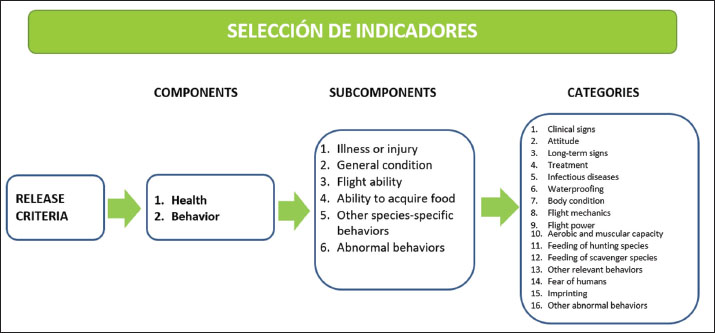
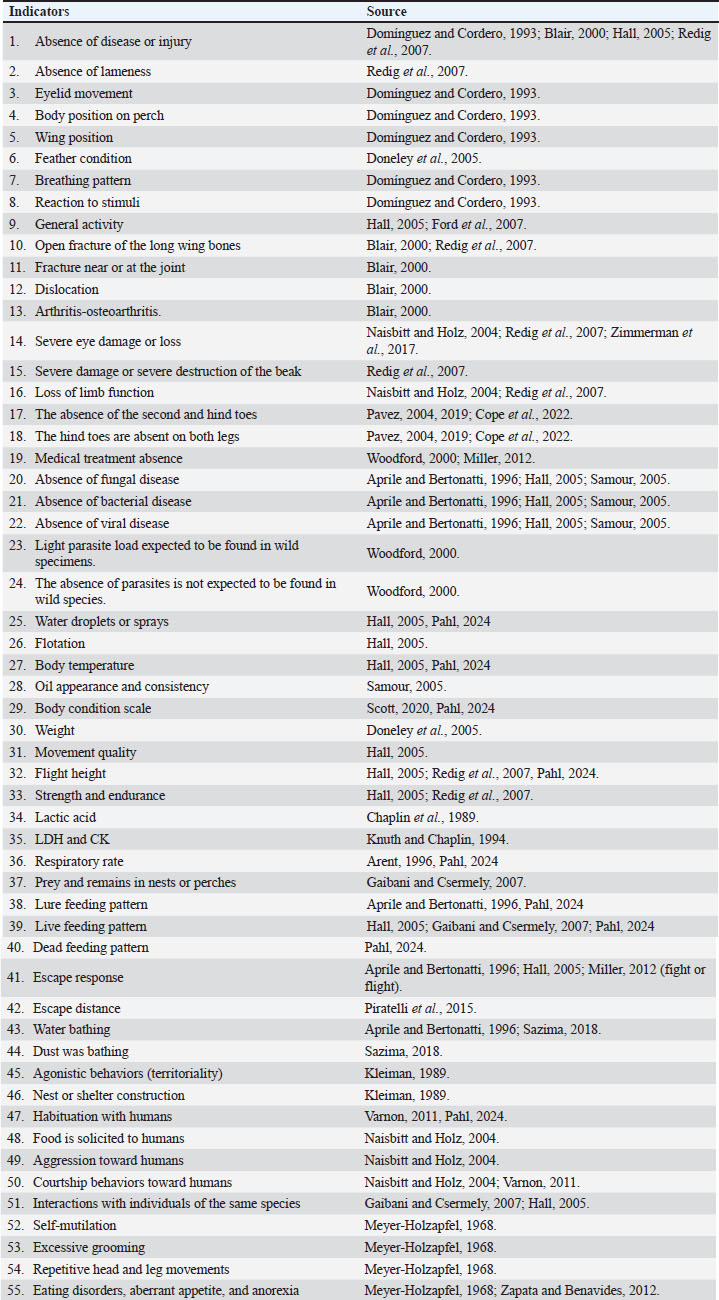
AbstractBackground: Wild animal rehabilitation enhances individual welfare and supports the long-term viability of wild populations. However, inappropriate practices can negatively impact the ecosystem or result in the animal dying after release. The scientific literature provides extensive documentation of care commonly applied in the rehabilitation of raptors (e.g., absence of injuries or diseases, hunting ability, and flight ability). However, others lack scientific support and have only been mentioned in essays and guides. Aim: This study involved developing a welfare and suitability assessment protocol for the release of raptors from specialized rescue and rehabilitation centres. The protocol evaluates whether birds entering rehabilitation are suitable for release back into the wild. Methods: To identify welfare assessment criteria for raptors, the Delphi method was used with a panel of 24 expert professionals with experience in raptor conservation and rehabilitation. They identified critical welfare indicators for the assessment and incorporation of birds into rehabilitation and release programs, including health, behavior, and injuries. Some indicators were selected, and others were discarded based on their applicability and relevance to a raptor center. Finally, a second survey of the same experts resulted in a theoretical welfare protocol for raptor rehabilitation prior to release. Results: Fifty-five indicators covering health, flight, treatment, feeding, and behaviour were obtained, reviewed, and evaluated by experts. Based on their experience, the experts discarded ten indicators as being either inapplicable or providing unreliable results for release. This resulted in a system of 45 reliable and applicable indicators for deciding whether to release a rehabilitated raptor (body condition, weight, lure feeding pattern, and so on). The first phase provides guidelines for validation in rescue centres to calculate the reliability, repeatability, and reproducibility of the indicators and the instrument as a whole. Conclusion: Rehabilitation is often a lengthy process requiring thorough physical and behavioural assessments. It is irresponsible and detrimental to the animal’s welfare to release individuals into the wild who subsequently die of starvation or are unable to adapt to an unfamiliar environment. Keywords: Birds of prey, Animal welfare, Rehabilitation, Pre-release, Indicators. IntroductionNative species provide fundamental ecosystem services to human society. They may be important in fire prevention, disease control, atmospheric composition, soil and water quality, control of invasive species, and maintenance of local biodiversity (Sergio et al., 2008; Estes et al., 2011; Ebrahimi et al., 2024). In recent decades, there has been a clear loss of biodiversity on a global scale (Estes et al., 2011; Sequeira and Techera, 2023). The top predator community is one of the first components of natural ecosystems to be affected by environmental and ecological changes (Ray et al., 2005; Ribeiro-Souza et al., 2024). Any alteration that negatively affects lower trophic levels or the quality of reproductive habitats will put the population viability at risk. The same sensitivity, however, gives them the virtue of being reliable indicators of environmental quality and ecosystem health (Miller et al., 2001; Abrham et al., 2024). Birds are apex predators that play crucial roles in ecosystems. Their presence and abundance in a particular area are often linked to sites that are most ecologically productive. By preying on more abundant prey species, they promote population regulation at lower levels of the trophic web, and their remains and regurgitates indirectly provide essential resources for other species, thus maintaining or increasing biological diversity at the local scale (Sergio et al., 2008; Alvarado et al., 2016; Cope et al., 2022). In addition, they are important regulators of species harmful to forestry and livestock activities, such as rodents, lagomorphs (hares and rabbits), and insects, and efficient regulators of rodents that transmit infectious diseases (Figueroa et al., 2001; Ostfeld and Holt, 2004; McClure et al., 2022). The absence of these birds can lead to the release of pest organisms and population irruption of animals of zoonotic importance. The emergence of many diseases of zoonotic origin is favored by the absence of reservoir predators (Alvarado et al., 2016; Cope et al., 2022). The main causes of population decline and local extinction of top predators are environmental pollution, habitat modification and reduction, extermination of their prey, human persecution, and indiscriminate use of pesticides (Rivas and Figueroa, 2009; Long et al., 2020; Cope et al., 2022). Rehabilitation of prey birdsThe causes of the entry of birds of prey to rehabilitation centers are most often due, directly or indirectly, to anthropogenic factors due to increased urbanization and industrialization of agriculture, including birds stolen from their nests, injuries caused by hunters, and accidents due to collisions on the road, fences, or power lines. To a lesser extent, birds have been affected by natural causes such as falls from nests, starvation, weakening, and infections in individuals that have not adequately developed their abilities to compete in the environment (Naisbitt et al., 2004; Pavez, 2004; Maphalala et al., 2021; ; Cope et al., 2022). Wildlife rehabilitation and release aims to reestablish viable populations of species through the improvement of individual welfare and re-establishment of physical and behavioral characteristics of wild animals (Dubois, 2003; Lozano-Ortega, 2004) and acts as compensation for the negative impact of humans on nature and wildlife. In addition, it contributes to the knowledge of wild species in terms of behavior, physiology, and nutrition (Dubois, 2003; Montesdeoca et al., 2017; Maphalala et al., 2020; Lukesova et al., 2021; Mullineaux and Pawson, 2024). A not minor percentage of birds received in rehabilitation centers are not recoverable; these animals can be destined for education programs or non-invasive research (Lozano-Ortega, 2003; Pavez, 2004; Thompson et al., 2013; Pavez, 2019). Before considering the release of wild animals, it is necessary to evaluate aspects of welfare, conservation, and the provenance of specimens and diseases (IUCN, 2000). Biological and nonbiological factors should be considered in the assessment. These factors include the physical and behavioral fitness of the animal, life stage, release strategies, and release site (Miller, 2012; Coccocetta et al., 2022; Mullineaux and Pawson, 2023). Rehabilitation and release will be successful when the animal does not negatively impact the ecosystem, survives in its habitat, and is reproductively successful (Aprile and Bertonatti, 1996; Coccocetta et al., 2022; Mullineaux and Pawson, 2023). An animal showing poor welfare indicates that its physiological or psychological needs are not being met (Mason and Veasey, 2010). Identifying the causes that generate low welfare allows us to intervene and promote rehabilitation and reintegration of the individual into the natural environment (Lozano-Ortega, 2004; Mullineaux and Pawson, 2023). International organizations such as the IUCN and CITES have postulated guidelines for the release of wild animals into the wild to reduce the probability of negatively affecting the target ecosystems (IUCN/SSC, 2013; CITES, 1997). The contact of wild species with humans and domestic animals increases the probability of contracting and spreading diseases that are absent in free-living populations, which could have devastating consequences for them. Likewise, the behavior and physical condition of the animals may have been modified or deteriorated during their stay in captivity to a level incompatible with life in the wild (IUCN, 2000; Coccocetta et al., 2022; Willette et al., 2023; Pahl, 2024). Inadequate rehabilitation practices can lead to the death of the animal after release, either due to the inability to obtain food, disease, lack of ability to survive in the environment, or attacks by predators, conspecifics, or humans (Russon, 2008; Cope et al., 2022; Pahl, 2024). Release criteriaBefore releasing animals into the wild, aspects related to welfare, conservation value, energy costs, and diseases should be considered. The survival prospects of released animals should be similar to those of wild animals of the same sex and age, and the release should be carried out only if it does not threaten wild populations, and this action contributes to the conservation of the species (IUCN, 2000). To determine whether an animal is suitable for release, physical and behavioral evaluations are required. Often, a great deal of time and effort is spent in the early stages of rehabilitation, with little attention given to the final processes, such as release and follow-up (Hall, 2005). Establishing a protocol will help in initial treatment decisions, care during rehabilitation, and preparation for release (Miller, 2012; Diehl and Stokhaug, 2013). The most important criteria reported in the literature that should be considered in the release of raptors during rehabilitation are as follows: Complete recovery from the injury or illness (Blair, 2000; Arent et al., 2001; Hall, 2005; Miller, 2012). Before an individual is considered for release, the injury or illness for which he or she entered the facility must be completely resolved and must manifest no signs of secondary complications (Arent et al., 2001; Diehl and Stokhaug, 2013; Pahl, 2024). Full wing and tail plumage with sufficient waterproofing (Arent et al., 2001; Miller, 2012). The bird should not be released if it has broken wings or tail feathers, as this can reduce its ability to fly (Arent et al., 2001; Maphalala et al., 2020). Absence of physical signs that can be maintained in the long term (Arent et al., 2001; Hall, 2005; Diehl and Stokhaug, 2013). Not under medical treatment (Miller, 2012; Maphalala et al., 2020). Normal laboratory test results without the presence of infectious diseases (IUCN, 2000; Arent et al., 2001; Miller, 2012; Diehl and Stokhaug, 2013; Pahl, 2024). In general, baseline values for a basic blood test in raptors are hematocrit between 35% and 45%, total protein between 3.0 and 4.5 g/dl, and a leukocyte count of less than 20,000 (Arent et al., 2001) Adequate physical condition (Arent et al., 2001; Naisbitt et al., 2004; Miller, 2012). The bird should be of appropriate weight according to species, sex, and age (Miller, 2012; Thompson et al., 2013; Maphalala et al., 2020). The condition of the legs and claws should be adequate. The individual should not be released if he/she shows signs of pododermatitis until treatment and healing (Arent et al., 2001). Adequate flight ability (Arent et al., 2001; Miller, 2012; Maphalala et al., 2020). The bird must demonstrate a normal flight mechanism, including wing extension and flexibility, leg position, tail maneuverability, and feather position during flight. In addition, it must have sufficient flight power to meet the characteristics of the species. An individual should not be released if it does not possess the muscle power, aerobic capacity, and flight mechanism appropriate for the species’ lifestyle (Arent et al., 2001; Pahl, 2024). Appropriate foraging, capture, and feeding behaviors (Arent et al., 2001; Miller, 2012). Individuals younger than 1 year must demonstrate the ability to hunt live prey (Arent et al., 2001; Diehl and Stokhaug, 2013; Pahl, 2024). Demonstrate species-specific behaviors (Arent et al., 2001; Pavez, 2004; Miller, 2012; Pavez, 2019). The bird should not be released if it is imprinted with a human (Diehl and Stokhaug, 2013). Recovery of the natural fear of people (Royal Society for the Prevention of Cruelty to Animals, 2007; Royal Society for the Prevention of Cruelty to Animals, 2010). Demonstrate the absence of abnormal behaviors (Aprile and Bertonatti, 1996; Naisbitt et al., 2004). Present an adequate age for survival (Miller, 2012). Materials and MethodsConsidering the above information, the objective of this study was to validate a selection of animal welfare indicators (defined as how accurately the criterion indicates animal welfare status) that would allow relating the reported criteria for the release of rehabilitated animals through a survey of raptor experts using the Delphi method to develop a protocol for assessing the suitability of raptors that have entered a rehabilitation process to be returned to the wild. Expert consultation, Delphi methodThe Delphi method is widely used and accepted for collecting data from expert respondents in their fields of expertise. The technique is designed as a group communication process that aims to achieve a convergence of opinions on a specific real-world topic; unlike other data collection and analysis techniques, it employs multiple interactions designed to develop a consensus on a specific topic. The feedback process allows and encourages selected Delphi participants to reevaluate their initial judgments about the information provided in previous iterations (Hsu and Sandford, 2007). Using this method, the systematization of the evaluation of the collected background information was performed. Once the indicators were selected and grouped, 24 experts with experience in raptor conservation and rehabilitation were consulted and asked to give their opinions on each indicator using a checklist. Experts were defined as individuals with experience in the rehabilitation management and/or veterinary care of raptors or in the science of welfare as it relates to raptors. In selecting respondents, we considered that an expert would spend most of his or her time working with raptors, e.g., a researcher, a manager of a rehabilitation and rescue center or center for birds under human care, or someone in charge of releasing rehabilitated raptors. The responses were grouped as follows: the proposed indicator i) applies, ii) applies with modification, and iii) does not apply. The first two scores were considered for the inclusion of the indicator in the protocol. In addition, additional recommendations from professionals who contributed to the development of the protocol were compiled. Consultations were conducted in person via remote means (e-mail, video call, and video conference). Once the information had been compiled, the percentage of applicability of each indicator was obtained, based on the consideration of each expert who considered the indicator to be applicable, out of the total number of those surveyed. For an indicator to be considered accepted, it had to have a minimum consensus of 60% applicability. This percentage was obtained from previous research in which Delphi consultations had been used (Keeney, 2001; Campos-Luna et al., 2019). In the case of modifications, at least two experts had to agree on the same comment. However, each expert’s point of view was taken into account when making comments or recommendations. These were complemented by a subsequent literature review in the case of indicators when information was scarce. Once the review was completed, the survey was repeated with the experts to evaluate the finalized protocol, for which each indicator had to be approved at 100% applicability. ValorizationFinally, it was defined whether the indicator is exclusive or not in the evaluation process, according to the recommendations of the professionals interviewed, based on the level of importance of each one of them in the rehabilitation and release process. This, providing an applicable tool, gives priority to the most relevant indicators when deciding whether or not the individual is fit to be released, ensuring that release decisions are based on evidence and compliance with minimum welfare and survival standards. This evaluation combined an analysis of physical and behavioral aspects by assigning a weight or score to each indicator according to its relative importance in the rehabilitation and release process. Ethical approvalNot needed for this study. ResultsIndicator selectionAfter of exhaustive bibliographic review of scientific articles, books, and gray literature of protocols, recommendation guides, manuals, essays, guidelines, and rehabilitation programs of wildlife rescue centers, zoos, and governmental agencies, the indicators were selected based on the animal of importance for the taxonomic group under study (Table 1). This selection was made based on the release criteria for birds of prey in rehabilitation mentioned above, which were then classified into two components (health and behavior), six subcomponents (disease or injury, general condition, flight ability to acquire food, other species-specific behaviors, and abnormal behaviors), and 16 categories (clinical signs, attitude, signs that can be maintained long-term, treatment, infectious diseases, waterproofing, body condition, flight mechanics, flight power, aerobic and muscular capacity, feeding of hunter species, feeding of scavenger species, other behaviors, fear of humans, imprinting with humans, and other abnormal behaviors) (Fig. 1).
Fig. 1. Grouping the indicators into 2 components, 6 subcomponents, and 16 categories. Group of indicators by application category for each assessment item to quantify welfare and release criteria in working order. Break down the animal inspection into components, subcomponents, and categories. Table 1. Bibliographic references of selected indicators.
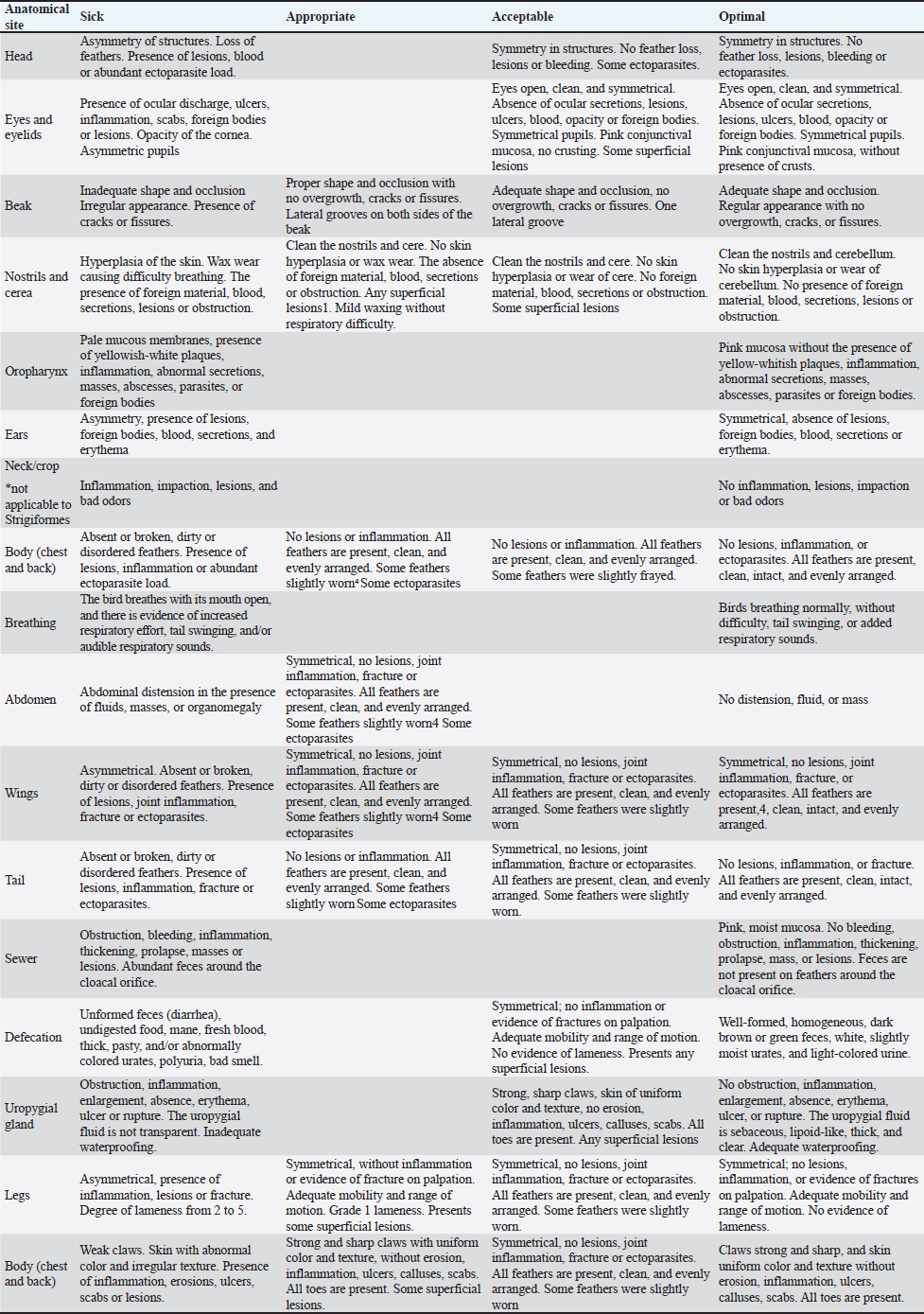
Elaboration of complementary materialsDue to the complexity of the evaluation of the six indicators, these were complemented with explanatory tables that describe in detail the evaluation, which are: i) absence of injury or disease; ii) absence of lameness; iii) body condition scale; iv) feeding sequence with lure; v) feeding sequence with live prey; vi) feeding sequence with dead prey. Absence of injury or diseaseFor this item, a table (Table 2) describes the clinical findings observed in the bird of prey according to the anatomical site. These were classified into four categories: sick; adequate; acceptable; and optimal. To consider the possibility of releasing the individual, it was proposed that the animal must show at least an “adequate” condition. If the bird presents any of the conditions described in the “sick” column, the condition must be resolved Table 2. Description of possible clinical findings observed in prey birds according to anatomical site.
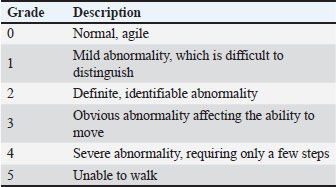
LamenessFor this item, the lameness scale of the Welfare Quality® evaluation protocol for poultry was used (Welfare Quality® Consortium, 2009). This indicator is dependent on the absence of lesions (Table 3). Table 3. Welfare quality lameness scale, 2009.
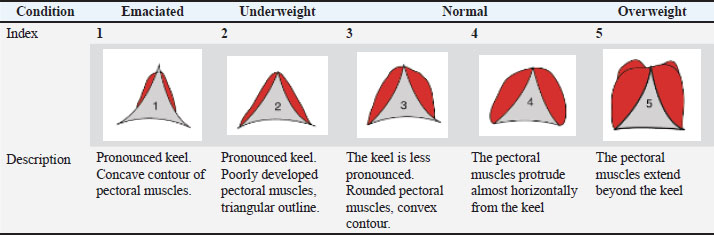
Body condition scaleA body condition scale from 1 to 5 was developed, represented by a cross-section of the sternum and pectoral muscles, with a brief description (Table 4). Table 4. Body condition scale. Cross-sectional image of the sternum and pectoral muscles.
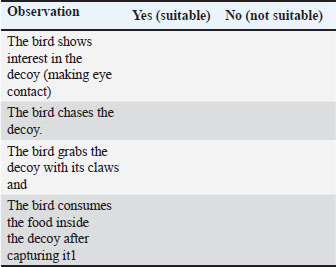
Lure feeding sequenceThe use of decoys encourages the development of innate skills and cognitive and autonomous behaviors by simulating natural prey. In addition, the use of this technique allows the development of a dynamic experience that keeps birds in free life at both a mental and physical level. This activity enables the development of an essential technique for the recovery and adaptation of these birds in controlled environments. Studying and verifying how a bird responds to a decoy helps evaluate its vision, reflexes, and physical capacity. If the bird exhibits difficulty interacting with the decoy, it may indicate physical or psychological problems that require further handling and care. For this evaluation, the sequence of behaviors expected to be observed in a bird of prey at the time of a decoy test was described (Table 5). Table 5. The sequence of feeding behaviors expected to be observed in a bird at the time of a lure test Leyhe and Ritchison, (2004).
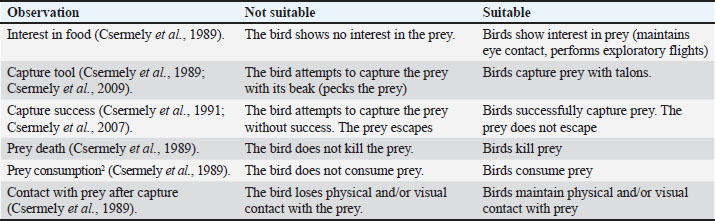
Live prey feeding sequenceDuring the rehabilitation process, birds must demonstrate efficient capture and consumption of live prey, which is essential to reactivate their natural hunting instincts, which may be weakened during the rehabilitation period. Hunting behaviors strengthen the claws, beaks, and flight muscles of birds, helping them to regain their optimal physical condition. If the bird exhibits difficulty in hunting, it may indicate physical (such as injury) or psychological problems that require rehabilitation. For the identification of this parameter, the sequence of feeding behaviors expected to be observed in the bird at the time of the live prey test was described (Table 6). Birds that have recovered their hunting behavior for live prey are more likely to survive and reproduce after release, contributing to the conservation of their populations since these birds will be better prepared to compete with other predators for resources. Table 6. Sequence of feeding behaviors observed during the live prey test.
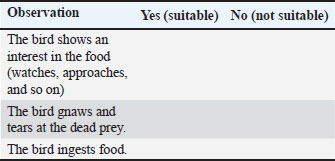
Feeding sequence with dead preyThe development of dead prey-feeding behavior in raptors is a key tool in the rehabilitation process, especially for recovering species that require rebuilding their physical strength and skills before release. Assessing the behavior of the dead prey feeding sequence in rehabilitating raptors is essential to determine their health status, progress, and readiness for reintegration into the wild. This evaluation provides key information about the physical, psychological, and behavioral well-being of the bird, and knowing how it handles and tears dead prey allows the evaluation of the functionality of its beak, claws, and motor coordination. For this purpose, he described the sequence of feeding behaviors expected to be observed in individuals of the family Cathartidae (Table 7). Table 7. Sequence of feeding behaviors in scavenging raptors (Cathartidae)
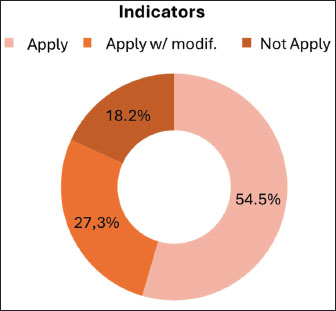
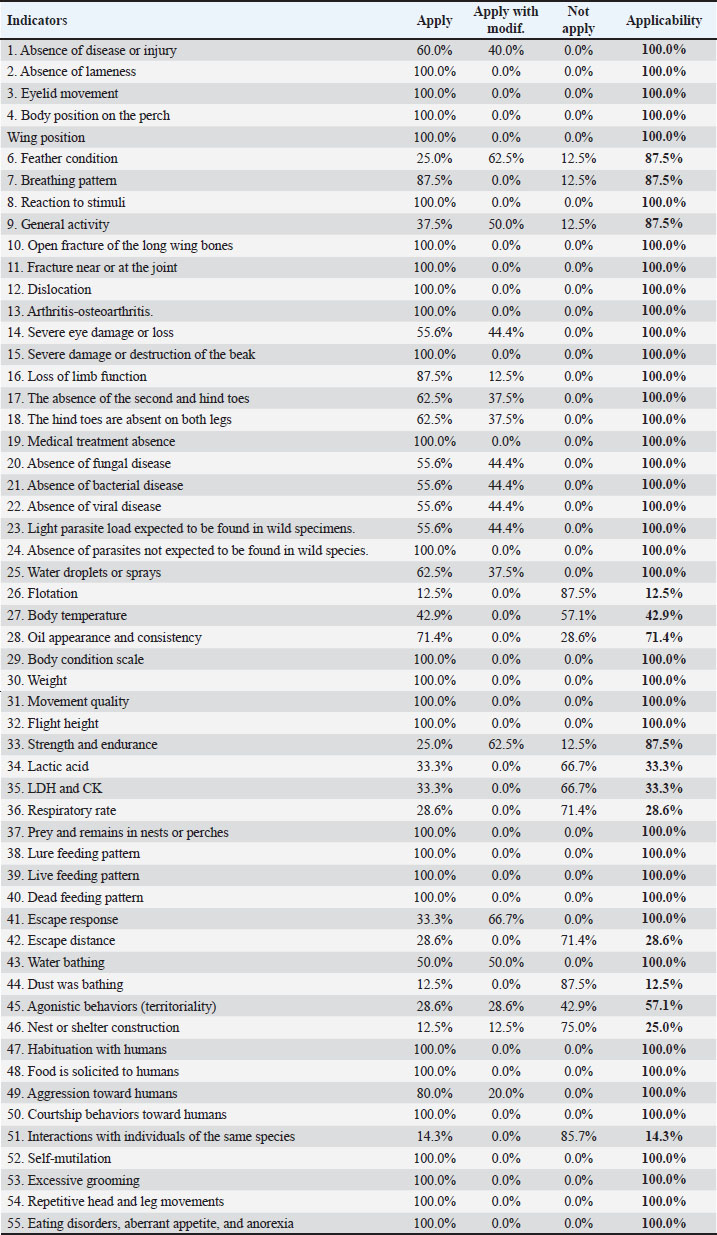
Elaboration of the protocolAccording to the literature review focused on release criteria for birds of prey from different authors and years of publications, 55 animal-based indicators were selected (Table 1). Table 8 shows the percentages of applicability given by experts for each indicator. Of the indicators presented in the first instance, 54.5% were “applicable”, which corresponded to 30 indicators. Some 27.3% of the indicators were considered as “applicable with modifications”, equivalent to 15 indicators, and 18.2% of the indicators were considered by the experts as “not applicable”, leaving 10 indicators outside the protocol (Fig. 2).
Fig. 2. Percentage of indicators that apply, apply with modification, and do not apply. Percentage of approval, approval with modification, and rejection of the indicators proposed to the experts in the Delphi method process for the evaluation of the indicators. A total of 54.5% of the indicators were approved without comments, 27.3% were approved with some modification, and 18.2% were rejected by the experts interviewed. DiscussionApproved indicators with modificationsAbsence of disease or injuryThirty percent of the experts interviewed added some comment or modification to the clinical evaluation table (Table 3). Thirty percent agreed that the absence of a toe could be accepted depending on the species and the results of the evaluations, making it necessary to evaluate on a case-by-case basis. This will be discussed in more detail in the indicator “absence of the second toe and hind toe on both legs” and “absence of the hind toe on both legs”. Forty percent agreed on the importance of plumage conditions, especially primary and tail feathers. This coincides with Samour (2005), who stated that the integrity of primary and tail feathers is of utmost importance for flight and performance in raptors destined for release into the wild. Muñoz-Pedreros and Ruiz (2004) further commented that the survival of raptors depends on their ability to fly. Thus, the state of their plumage and their level of performance will determine the difference between successful birds and those destined to die. However, the specialists surveyed mentioned that some worn or even missing feathers could be accepted in individuals who demonstrate adequate flight ability. According to Naisbitt et al. (2004), a raptor suitable for release must have perfect feather condition, with no broken or missing feathers other than those that have been naturally shed. However, Blair (2000) stated that birds of prey should not be released if they have more than four broken feathers on each wing. This agrees with Domínguez and Cordero (1993), who found that the lack of three or four primary remiges makes flight impossible in almost all species. Feather condition62.5% of the experts interviewed made modifications to this indicator. Doneley et al. (2005) mentioned that sick birds ruffle their feathers to maintain body heat; however, the consultants agreed that some birds normally ruffle their feathers temporarily, either in certain climatic conditions (e.g., cold) or when they feel threatened (e.g., nocturnal raptors). It is necessary to specify that the ruffling of feathers in healthy animals should not be permanent, unlike in sick animals. General activityHall (2005) noted that sick birds are quiet and sleep more, whereas an animal in good condition is active (jumping, flying, shaking, preening, escaping, eating, and so on). However, 50% of the consultants commented on the importance of knowing the times of activity and the biology of the species to avoid biases, since evidence of an inactive bird at the time of observation does not necessarily mean that it is sick. Ford et al. (2007) also stated that if an animal looks asleep or “frozen” it may be a stress response. Therefore, this indicator was suggested as “nonexcludable” within the evaluation process. Severe damage to one or both eyesAdmissions to rehabilitation centers for ocular trauma are frequent in birds (Pauli et al., 2007; Maphalala et al., 2020; Lukesova et al., 2021). Their flying and swift nature particularly exposes them to traumatic collision injuries (Pavez, 2004; Pavez, 2019; Cococcetta et al., 2022). Individuals with severe bilateral eye damage are not released; however, there is controversy regarding the release of those with severe visual impairment in one eye (Pauli et al., 2007). Birds of prey have more developed visual acuity than many species. They possess adaptations that allow them to obtain high image resolution, calculate visual depth, and estimate the distance of objects while hunting (Muñoz-Pedreros and Ruiz, 2004; Alvarado et al., 2016). Vision is undoubtedly very important for capture activities in the raptor, although this may be species-dependent, being more important in diurnal than nocturnal raptors, the sequelae and loss of ecological hunting skills vary depending on the level of impairment (Davidson, 1997; Moore et al., 2017; Zimmerman et al., 2018). For Blair (2000), severe damage or loss of one or both eyes indicates that the bird will not be able to adequately assess distances to attack its prey and will therefore not be able to hunt successfully. However, 44.4% of the experts consulted commented that severe damage or loss of one eye should be evaluated case by case, since it depends on the species and the structure affected, suggesting that owls’ and owls (strigiformes) vision does not have the same relevance as in diurnal birds of prey, in which the loss of vision in one eye is disabling. Some authors (Muñoz-Pedreros and Ruiz, 2004; Jones et al., 2007) have noted that nocturnal raptors are characterized by an acoustic orientation, whereas diurnal raptors are adapted to a visual orientation. In Strigiformes, the asymmetrical position of their ears allows them, through triangulation, to calculate precisely where the sound is coming from and then dart to their prey (Alvarado et al., 2016), and they improve depth calculation with lateral movements of their heads (Muñoz-Pedreros and Ruiz, 2004; Kane and Zamani, 2014; Figueroa et al., 2017). Although some have suggested that a bird with vision loss in one eye will be at an obvious disadvantage compared with other predators, it has also been mentioned that unilateral vision loss in nocturnal raptors may have less impact on hunting and survival ability than diurnal raptors (Pauli et al., 2007; Moore et al., 2017; Zimmerman et al., 2017). However, in the rehabilitation process, this must be carefully evaluated because an individual demonstrating adequate flight and hunting ability in a controlled situation does not necessarily translate into successful survival skills in the wild. Maneuverability and obstacle avoidance ability must also be considered (Pauli et al., 2007; Zimmerman et al., 2017; Ribeiro et al., 2024). Determining the release suitability of a raptor with eye damage is not easy; the assessment must consider aspects such as the size and location of the lesion, chronicity, hunting style of the species, age, and presence of concomitant lesions or diseases (Davidson, 1997; Pauli et al., 2007; Zimmerman et al., 2017; Maphalala et al., 2020; Ribeiro et al., 2024). Among the most conclusive considerations are a thorough ophthalmological examination and rehabilitation experience as fundamental tools to determine if the individual will survive in the wild; however, further follow-up studies of these specimens are required to establish objective release criteria (Pauli et al., 2007; Zimmerman et al., 2017; Maphalala et al., 2020). Absence of the second and hind toes and absence of the hind toe on both legs37.5% of the specialists interviewed for this study commented that in individuals of the family Cathartidae, the hind and second toes are not as relevant to their survival as they are in hunting raptors, where these toes are vital for grasping and killing prey (Cope et al., 2022; Rozsypalová et al., 2024). Naisbitt et al. (2004) mention that for a bird of prey to be a viable candidate for release, it must be able to use both legs without permanent defects in them. However, for Domínguez and Cordero (1993) reported that birds with poorly specialized tarsi and claws for hunting, such as scavengers, could survive without complete functional recovery provided they demonstrated locomotion capacity. Other authors have mentioned that female birds of prey can be released with a lower degree of recovery in their legs (absence of a toe, nail, or lack of mobility in any of them) due to their greater corpulence, but not the absence of a limb since it is usually accompanied by a greater risk of infections and injuries in the healthy limb (Lukesova et al., 2021; Pahl, 2024). Absence of fungal, bacterial, and viral diseasesSamour (2005) stated that laboratory tests are an essential component of raptor medicine and, according to IUCN (2000) recommendations, should be performed before releasing an animal. However, 44.4% of the specialists interviewed for this study suggested modifying these three indicators for “absence of clinical signs” of the disease because they consider that the performance of specific laboratory tests for certain microorganisms means a higher cost for the rehabilitation centers, and this may cause them not to perform them. In addition, the authors noted that some microorganisms are difficult to diagnose and that it is expected to find a certain level of infectious agents in a subclinical form. Several authors agree with this statement, mentioning that wild animal populations maintain a certain level of infectious microorganisms; however, these do not usually cause damage as long as the defense mechanisms of the organism act adequately. When natural or artificial factors, such as old age, starvation, captivity, or stress, weaken an animal’s defense mechanisms, pathologies may manifest (Pavez, 2004; Pavez, 2019; Willete et al., 2023; Pahl, 2024). From the diagnostic point of view, consideration should be given to fungal, bacterial and viral diseases, which are often overlooked, although they are more frequently present than diagnosed in captive raptors, including aspergillosis and candidiasis; chlamydiosis and fowl cholera; avian pox (diphtheria) and herpes virus, respectively (Cooper, 2002; Samour, 2005; Arent, 2001; Redig et al., 2007). A slight parasite load is expected to be found in wild specimens44.4% of the experts interviewed considered that this indicator is difficult to evaluate since there are no studies on many species, and several of those that do exist are captive values. However, they considered it important to include it, specifying the species of parasites described in the literature. Endoparasites are frequent in birds that feed on prey. In some populations, up to 90% of individuals have been detected in the presence of helminths (Krone, 2007). In Chile, there are published studies regarding the presence of endoparasites in two species of raptors, the Daptrius chimango and the Falco tinnunculus, which describe 10 species of endoparasites, including protozoa, nematodes, cestodes, and trematodes (Moreno and González-Acuña, 2015). In addition, as in Geranoaetus polyosoma, a wide diversity of parasites has been reported, according to Grandón-Ojeda et al. (2019), who found five species of parasites, including three species of chewing lice (Degeeriella fulva, Colpocephalum turbinatum, Craspedorrhynchus sp.), a roundworm (Procyrnea sp.), and a spiny-headed worm (Centrorhynchus sp.). Four of these species: Craspedorrhynchus sp., Colpocephalum turbinatum, Procyrnea sp., and Centrorhynchus sp.—are new records for this bird. In diurnal raptors from Austria and Bosnia-Herzegovina examined by PCR and sequencing, individuals infected with haemosporidian parasites, such as Leucocytozoon, Plasmodium, and Haemoproteus, have been detected (Harl et al., 2022). Some common ectoparasites include mites of the genus Knemidocoptes, which produce scabs or desquamations on their legs and beaks. In the Harris Hawk (Parabuteo unicinctus), parasites such as Colpocephalum nanum and Nosopon chanabense, feather mites, and Pseudalloptinus sp. have been reported, and the presence of diverse endo- and ectoparasites in this species could be explained by its generalist diet (Oyarzun-Ruiz et al., 2022). Parasitic species of chewing lice (Order Phthiraptera) have been detected, with the genera Degeriella, Colpocephalum, and Strigiphilus being the most represented (Moreno and González-Acuña, 2015). In North American ticks, Argas radiatus and Argas ricei are common in nests, spoiling adults, and nestlings (Justice-Allen et al., 2016; Latas et al., 2020). The presence of these ectoparasites is normal in birds if the parasite load is low, but if for some reason they weaken, massive infestations occur, which can affect the whole body of the bird or a particular area (Pavez, 2004; Pavez, 2019; Pahl, 2024). Water sprayThe integrity of the flight feathers is important, and the insulating capacity of the plumage is adequate to avoid heat loss through the skin (Domínguez and Cordero, 1993; Rogalla et al., 2021; Terrill and Shultz, 2023). Hall (2005) noted that birds that have been in a hospital environment for a long time can lose the waterproofing ability of their feathers. When a bird has adequate waterproofing, water drains away, and the feathers remain dry (Terrill and Shultz, 2023). 37.5% of the experts interviewed added some modifications to this indicator, mainly because in some species it is more relevant than in others. In addition, it is essential to verify that the bird exhibits normal preening behavior after being sprayed with water, or at least shaking its feathers, which is a more reliable indicator of preening behavior. Strength and enduranceThis evaluation should be performed once the bird has already demonstrated adequate flight mechanics; otherwise, it will not have flight power (Hagen et al., 2024). Strength is related to the development of the wing-driving musculature in the sternal region (pectoral muscles) (Domínguez and Cordero, 1993). It should be observed if the bird touches the ground with its wings and makes a great effort to gain lift and tires quickly, as evidenced by panting tachypnea and resistance to flying. The climatic factor should be taken into consideration, as the bird may be panting due to heat (Arent et al., 2001; Pahl, 2024). Endurance is defined as the amount of time an individual can sustain the power of flapping flight, which varies depending on the flight and hunting styles of each species. If the bird is in good physical condition, it should demonstrate different flight styles, which will vary with age and even sex (Arent et al., 2001; Pahl, 2024). 62.5% of the professionals interviewed made some comments concerning this indicator. Of these, 25% commented that species that are more gliding (such as those of the family Cathartidae and eagles) do not depend so much on muscular capacity for their success, being more relevant in these species the evaluation of the quality of movement than endurance. Muñoz-Pedreros and Ruiz (2004, 2019) mention that these birds of large body size have convex wings and do not perform agile maneuvers at high speeds, so they mainly practice observation flights at high altitudes taking advantage of air currents. For the evaluation of this indicator, some of the specialists interviewed favored the tethered flight technique, while others preferred evaluation in an exercise aviary. Mikula (2010) reported that the technique of flying with a fixator allowed us to observe and fully evaluate the physical capacity and flying ability of the bird, without limitations on the size of the enclosure. However, it requires a large investment of time, patience, understanding the natural behavior of the species, and training of the personnel performing the test (proper training methods and safe handling techniques) To evaluate an aviary, an enclosure as large as possible is required, which should be at least 30 meters long × 6 m wide × 4 m high to provide a minimum of exercise (Domínguez and Cordero, 1993; Redig et al., 2007). Some of the interviewees commented that the advantage of this technique is that it does not require training in training methods, and the time investment is lower; however, the size and design requirements of the enclosure vary according to the species, which can involve a high investment cost. Escape responseIf the animal has been in captivity for a long period, an assessment of the individual’s level of habituation and the presence of aversion and flight behaviors should be performed (Woodford, 2000; Reding et al., 2007; Greggor et al., 2021). 66.7% of the experts interviewed made some modifications to this indicator, mentioning that the response of some individuals to human presence does not always vanish, as it varies depending on the species. Some raptors raise their wings to look bigger; other species that live near urban areas are more tolerant of human presence, and some nocturnal raptors can acquire a freezing attitude when they perceive a threat. Ford et al. (2007) also agreed, commenting that if the animal looks asleep or “frozen” it may be a stress response. Greggor et al. (2021) reported that an immediate flight response is essential for survival. However, Aprile and Bertonatti (1996) described that in the presence of humans, it is possible to observe behaviors of rejection, “distrust” or aggressive attitudes. In addition, it is optimal to verify that, in the set enclosures, the animals hide among the vegetation or run inside the enclosure when faced with our presence (Greggor et al., 2021; Roberts and Luther, 2023). In general, all interviewees agreed that it is expected that the bird will at least be wary of human presence. However, the size of the enclosure should also be considered. If the enclosure is very large, the animal may need to be approached to evaluate its response. Conversely, if the enclosure is very small, the animal may react by freezing because it has no place to flee (Aprile and Bertonatti, 1996; Greggor et al., 2022; Roberts and Luther, 2023). Another recommendation made by the interviewees was that this evaluation should be carried out in the final stages of the process, because if the bird feels cornered and is physically limited or very weak, it could manifest a frozen state in the face of human presence, biasing the result of the evaluation (Greggor et al., 2022; Greggor et al., 2021; Roberts and Luther, 2023). This coincides with Botreau et al. (2007), who defined that the evaluation of fear in humans should be carried out in animals that do not present lesions that invalidate their flight because health and flight reaction are dependent, as animals with any lesion that affects their locomotion will have less capacity to escape than healthy animals. Aggression toward humansFor Varnon (2011), attacks against humans could indicate imprinting if they are interpreted as intraspecific aggression; however, they could also indicate a lack of imprinting if they are interpreted as avoidance behaviors. Naisbitt et al. (2004) mention that aggressive behaviors toward humans in the presence of food are typically exhibited by imprinted individuals, unlike those raised by their parents, who do not display such aggressive behaviors toward humans. Birds of prey are naturally aggressive and territorial nature (Pavez, 2004; Pavez, 2019; Canney et al., 2022). Because of this, 20% of the interviewees mentioned that it is important to specify that abnormal aggression occurs when humans do not seek interaction, and a bird that does this is most likely imprinted. Aggressive behaviors can manifest in the form of vocalizations, pecking, feather-ruffling, craggy posture, and so on, depending on the species (Canney et al., 2022). Rejected indicatorsThe indicators of “interaction with individuals of the same species, nest or shelter construction, dust baths, agonistic behavior or territoriality, flight distance, respiratory frequency, LDH, CK, lactic acid, body temperature and flotation” were rejected because they did not meet the minimum acceptance criterion of 60% (Table 8), which in most cases corresponded to the subjectivity of the data provided, from the physical condition according to the activity they are performing, the changes that these indicators may present when the animal is handled, behaviors specific to the species and/or associated with the bird’s previous experiences, or simply because they are not related to the fundamental activities of raptor species for their subsistence in the wild. Table 8. Percentage of applicability of indicators.
ConclusionAfter an exhaustive search, it became evident that several animal-based indicators can be applied to evaluate whether a bird of prey is suitable for release into the wild. Some have been widely described by various authors, and the importance of including them in the evaluation process has been emphasized (e.g., absence of injury or disease, hunting ability, and flight ability); however, others lack scientific support and have been mentioned by some authors in essays and guidelines for recommendations. Using the Delphi methodology to consult recognized specialists to determine the inclusion of the indicators has been the first stage of validation of the protocol, which allowed us to identify the suitability of the indicators, from the feasibility of applying it to the feasibility of measuring what we expect it to measure. Each of the experts provided insight into various methods for assessing the feasibility of releasing a rehabilitated bird of prey, giving us confidence that the established indicators will effectively improve the welfare of the released birds. Since this is a theoretical model, field tests are still needed to determine observer reliability and to conduct additional consultations based on the modifications made. However, consensus among specialists provides a crucial foundation for advancing the care of prey birds. The application of the Delphi method made it possible to discard 10 indicators evaluated by experts who considered that they were not applicable when assessing a release or rehabilitation, especially due to the suitability of the test or the changes presented by the animals when handled or evaluated for the release processes. Animal welfare implicationsRehabilitation of a raptor is most often a lengthy process, requiring careful physical and behavioral evaluation, and hard work to minimize the chances of imprinting or anything that might decrease its chances of release. Before considering the release of wild animals for rehabilitation or rescue, it is necessary to evaluate aspects of welfare during their stay under the care of humans, the contribution to the conservation of the individual to be released, and the origin of the specimens to be released so that it does not alter the ecological balance of the niches and diseases it may carry and generate a health crisis among the animals in the area. An animal that shows poor welfare suggests that there are physiological or psychological needs that are not being met, and this will have repercussions at the moment of deciding to release it or when it is released. Identifying the causes that generate a low degree of welfare during the rehabilitation period allows us to intervene and promote rehabilitation and reinsertion according to the ecological needs of the species of the individual to the natural environment. The release of individuals who later die of starvation or are not able to adapt to an unfamiliar environment into the wild is irresponsible and detrimental to the conservation and welfare of the animal. AcknowledgmentsThe authors would like to thank the professionals who dedicated part of their time and knowledge unselfishly to participate in this evaluation through the Delphi method and to provide their recommendations for each step of the process described above; their contribution has been very valuable for the preparation of this document: Christian González, Cristian Brito, Charif Tala, Eduardo Pavez, Ernesto Domínguez, Francisca Izquierdo, Hernán Lorca, Jaime Samour, Jürgen Rottman, Luis Carrasco, Maicha Bassin, Olivia Blank, Valeria Aguilar, and Roberto Aguilar. Conflict of interestThe authors declare no conflict of interest. FundingThis research did not receive any specific grant. Authors’ contributionsFlorencia Astorga Artigas: Information research, interviews with experts, analysis, and drafting. Cristian Ugaz: Information research, analysis, and writing. Data availabilityAll data supporting the findings of this study are available in the manuscript. Any clarification on the results of this study is available from the authors. ReferencesAbrham, M., Norén, K., Bartolomé Filella, J., Angerbjörn, A., Lecomte, N., Pečnerová, P., Freire, S. and Dalerum, F. 2024. Properties of vertebrate predator-prey networks in the high Arctic. Ecol. Evol. 14, e11470; doi:10.1002/ece3.11470 Alvarado, S., Figueroa, R., Valladares, P., Carrasco-Lagos, P. and Moreno, R. 2016. Preys birds of Metropolitan Region of Santiago, Chile. Chile. SEREMI del Medio Ambiente. Región Metropolitana, Santo Tomas University and University of Chile. p. 132. Available via https://bibliotecadigital.ciren.cl/handle/20.500.13082/31932 Aprile, G. and Bertonatti, C. 1996. Manual of fauna rehabilitation technical bulletin No. 31, FVSA, Buenos Aires, Argentina. Arent, L., Goggin, R. and Raptor Center. 2001. Reconditioning raptors: a training manual for the creance technique. University of Minnesota, College of Veterinary Medicine, Raptor Center. Blair, S. 2000. Caring for Raptors (Birds of Prey) 7th edition. In: Caring for Wild Birds in Captivity Series (ADELAIDE AND ENVIRONS). Bird Care and Conservation Society of South Australia. Botreau, R., Veissier, I., Butterworth, A., Bracke, M. and Keeling, L. 2007. Definition of criteria for overall assessment of animal welfare. Anim. Welf. 16(2), 225–228; doi:10.1017/S0962728600031390 Campos-Luna, I., Miller, A., Beard, A. and Leach, M. 2019. Validation of mouse welfare indicators: a Delphi consultation survey. Sci. Rep. 9, 1–11; doi:10.1038/s41598-019-45810-y Canney, A.C., Mcgough, L.M., Bickford, N.A. and Wallen, K.E. 2022. Systematic map of human-raptor interaction and coexistence research. Animals 12(1), 45; doi:10.3390/ani12010045 Chaplin, S., Mueller, L. and Degernes, L. 1989. Physiological assessment of rehabilitated raptors prior to release. Wildl. J. 12(7-8), 17–18. CITES. 1997. Disposal of Confiscated Live Specimens of Species Included in the Appendices Resolution Conf. 10.7 (Rev. CoP15). Cococcetta, C., Coutant, T., Collarile, T., Vetere, A., Di Ianni, F. and Huynh, M. 2022. Causes of Raptor Admission to the Wildlife Rehabilitation Centre in Abruzzo (Central Italy) from 2005-2016. Animals 12(15), 1916; doi:10.3390/ani12151916 Cooper, J. 2002. Infectious Diseases, Excluding Macroparasites.In Birds of Prey: health and Disease. Cooper. and Ed. Blackwell Science, pp: 84–104. https://doi.org/10.1002/9780470752319.ch6 Cope, H.R., Mcarthur, C., Dickman, C.R., Newsome, T.M., Gray, R. and Herbert, C.A. 2022. A systematic review of factors affecting wildlife survival during rehabilitation and release. PLos One 17(3), 265514; doi:10.1371/journal.pone.0265514 Csermely, D., Mainardi, D. and Agostini, N. 1991. Predatory behaviour in captive wild buzzards (Buteo buteo). Birds Prey Bull. 4, 133–142. Csermely, D., Mainardi, D. and Agostini, N. 1989. The predatory behaviour of captive wild kestrels (Falco tinnunculus). Italian J. Zool. 56(4), 317–320. Csermely, D., Bonati, B. and Romani, R. 2009. Predatory behaviour of common kestrels (Falco tinnunculus) in the wild. J. Ethol. 27(3), 461–465. doi: 10.1007/s10164-008-0143-7 Davidson, M. 1997. Ocular Consequences of Trauma in Raptors. Seminars Avian Exotic Pet Med. 6(3), 121–130; doi:10.1016/S1055-937X(97)80019-9 Diehl, S. and Stokhaug, C. 2013. Release Criteria for Rehabilitated Wild Animals. Wildl. Rehabil. Bull. 30(2), 24–35; doi:10.53607/wrb.v30.71 Domínguez, J. and Cordero, J.M. 1993 Rehabilitation of injured wild birds, limb fracture repair techniques, technical manual. First edition. Ed. Fondo Natural - Avila Spain. Pp. 45-73 Doneley, B., Harrison, G., Lightfoot, T. 2005. Physical Examination. In: Harrison G and Lightfoot T (eds.) Clinical Avian Medicine, Spix Publishing. Dubois, S. 2003. A survey of wildlife rehabilitation goals, impediments, issues, and success in British Columbia, Canada. MS Thesis. The University of British Columbia, Canada. Ebrahimi, I., Dai, R., Kazemi, F. and Seifii, A. 2024. Selecting a flagship species for Arjan International Wetland in Iran. J. Wildl. Biod. 8(4), 329–348; doi:10.5281/zenodo.13835306 Estes, J.A., Terborgh, J., Brashares, J.S., Power, M.E., Berger, J., Bond, W.J., Carpenter, S.R., Essington, T.E., Holt, R.D., Jackson, J.B.C., Marquis, R.J., Oksanen, L., Oksanen, T., Paine, R.T., Pikitch, E.K., Ripple, W.J., Sandin, S.A., Scheffer, M., Schoener, T.W., Shurin, J.B., Sinclair, A.R.E., Soulé, M.E., Virtanen, R. and Wardle, D.A. 2011. Trophic Downgrading of Planet Earth. Science 333(6040), 301–306; doi:10.1126/science.1205106 Figueroa, R., Corales, E., Cerda, J., Saldivia, H. 2001. Rodents, raptors and carnivores of Aysén. Servicio Agrícola y Ganadero, Gobierno Regional de Aysén, Coyhaique, Chile. 195 pp Figueroa, R.A., Alvarado, O.S., Corales, S.E., González-Acuña, D., Schlatter, V.R. and Martínez, P.D.R. 2017. The Owls of Chile.In Neotropical Owls. Enriquez. and P Springer, pp: 159–290. https://doi.org/10.1007/978-3-319-57108-9_7 Ford, S., Chitty, J. and Jones, M. 2007. Raptor medicine and case management. In Proceedings of the 2007 Annual Conference and Expo of the Association of Avian Veterinarians, Providence, RI. Gaibani, G. and Csermely, D. 2007. Behavioral studies.In Raptor Research and Management Techniques. Eds., Bird, D.M. and Bildstein, K.L. Raptor Research Found., pp: 117–28. Grandón-Ojeda, A., Cortés, P., Moreno, L., Kinsella, J.M., Cicchino, A., Barrientos, C. and González-Acuña, D. 2019. Gastrointestinal and external parasites of the Variable hawk Geranoaetus polyosoma (Accipitriformes: accipitridae) in Chile. Rev. Bras. Parasitol. Vet. 28(3), 376–382; doi:10.1590/S1984-29612019045 Greggor, A.L., Masuda, B., Gaudioso-Levita, J.M., Nelson, J.T., White, T.H., Shier, D.M., Farabaugh, D.M. and Swaisgood, R.R. 2021. Pre-release training, predator interactions and evidence for persistence of anti-predator behavior in reintroduced `alalalā, Hawaiian crow. Glob. Ecol. Conserv. 28, e01658; doi:10.1016/j.gecco.2021.e01658 Greggor, A.L., Masuda, B., Sabol, A.C. and Swaisgood, R.R. 2022. What do animals learn during anti-predator training? Testing for predator-specific learning in ‘alalā (Corvus hawaiiensis). Behav. Ecol. Sociobiol. 76, 165; doi:10.1007/s00265-022-03273-8 Hagen, C.A., Goodell, J.M., Millsap, B.A. and Zimmerman, G.S. 2024. ‘Dead birds flying’: can North American rehabilitated raptors released into the wild mitigate anthropogenic mortality?. Wildlife Biol. 5, 1283; doi:10.1002/wlb3.01283 Hall, E. 2005. Release considerations for rehabilitated wildlife. In Proceedings of the 3rd National Wildlife Rehabilitation Conference, Surfers Paradise, Queens-land, Australia. pp. 1–12. Available via https://www.awrc.org.au/uploads/5/8/6/6/5866843/awrc_elizabeth_hall.pdf. Harl, J., Himmel, T., Valkiūnas, G., Ilgūnas, M., Nedorost, N., Matt, J., Kübber-Heiss, A., Alic, A., Konicek, C. and Weissenböck, H. 2022. Avian haemosporidian parasites of accipitriform raptors. Malar. J. 21(1), 14; doi:10.1186/s12936-021-04019-z Hsu, C. and Sandford, B.A. 2007. The Delphi Technique: making Sense of Consensus. Pract. Asses. Res. Eval. 12(1), 10; doi:10.7275/pdz9-th90 IUCN. 2000. Guidelines for the Placement of Confiscated Animals. Approved by the 51st meeting of the IUCN Council, Gland, Switzerland, 2000. IUCN/SSC. 2013. Guidelines for Reintroductions and Other Conservation Translocations Version 1.0. Gland, Switzerland: IUCN Species Survival Commission. Jones, M.P., Pierce, K.E. and Ward, D. 2007. Avian Vision: a Review of Form and Function with Special Consideration to Birds of Prey. J. Exot. Pet Med. 16(2), 69–87; doi:10.1053/j.jepm.2007.03.012 Justice-Allen, A., Orr, K., Schuler, K., Mccarty, K., Jacobson, K. and Meteyer, C. 2016. Bald Eagle nestling mortality associated with Argas radiatus and Argas ricei tick infestation and successful management with nest removal in Arizona, USA. J. Wildl. Dis. 52(4), 940–944; doi:10.7589/2015-10-271 Kane, S.A. and Zamani, M. 2014. Falcons pursue prey using visual motion cues: new insights from animal-borne cameras. J. Exp. Biol. 217(2), 225–234; doi:10.1242/jeb.092403 Keeney, S., Hasson, F. and Mckenna, H.P. 2001. A critical review of the Delphi technique as a research methodology for nursing. Int. J. Nurs. Stud. 38, 195–200; doi:10.1016/S0020-7489(00)00044-4 Kleiman, D.G. 1989. Reintroduction of captive mammals for conservation. Bioscience 39(3), 152–161; doi:10.2307/1311025 Knuth, S. and Chaplin, S. 1994. The effect of exercise on plasma activities of lactate dehydrogenase and creatine kinase in red-tailed hawks (Buteo jamaicensis). J. Raptor Res. 28(1), 27–33; Krone, O. 2007. Endoparasites. In: Bird D and Bildstein K (eds) Raptor Research and Management Techniques. Hancock House Publishers, British Columbia, pp. 318-328. Latas, P., Auckland, L.D., Teel, P.D. and Hamer, S.A. 2020. Argas (persicargas) giganteus soft tick infection with Rickettsia hoogstraali and relapsing fever borrelia on wild avian species of the desert southwest, USA. J. Wildl. Dis. 56(1), 113–125; doi:10.7589/2018-11-275 Leyhe, J.E. and Ritchison, G. 2004. Perch Sites and Hunting Behavior of Red-tailed Hawks (Buteo jamaicensis). J. Raptor Res. 38(1), 19–25; Long, R.B., Krumlauf, K. and Young, A.M. 2020. Characterizing trends in human-wildlife conflicts in the American Midwest using wildlife rehabilitation records. PLos One 15(9), e0238805; doi:10.1371/journal.pone.0238805 Lozano-Ortega, I. 2004. Wildlife rescue and reinsertion in the Neotropics, the new millennium. Proceedings: Wildlife Management in Latin America. Bogotá, Colombia. Lozano-Ortega, I. 2003. The importance of rehabilitation in wildlife release.In Manejo de Fauna Silvestre en Amazonía y Latinoamérica, selección de trabajos del V Congreso Internacional CITES. Polanco-Ochoa, R Bogotá. Bogotá, Colombia: CITES Publisher, pp: 360–446. Lukesova, G., Voslarova, E., Vecerek, V. and Vucinic, M. 2021. Causes of admission, length of stay and outcomes for common kestrels in rehabilitation centres in the Czech Republic. Sci. Rep. 11, 17269; doi:10.1038/s41598-021-96688-8 Maphalala, M.I., Monadjem, A., Bildstein, K.L., Hoffman, B. and Downs, C. 2021. Causes of admission to a raptor rehabilitation centre and factors that can be used to predict the likelihood of release. Afr. J. Ecol. 59(2), 510–517; doi:10.1111/aje.12851 Mason, G.J. and Veasey, J.S. 2010. What do population-level welfare indices suggest about the well-being of zoo elephants?. Zoo. Biol. 29(2), 256–273; doi:10.1002/zoo.20303 McClure, C., Potier, S. and Barber, J. 2022. Applied Studies of Raptor Sensory Ecology are Rare. J. Raptor Res. 56(4), 490–495; doi:10.3356/JRR-22-41 Meyer-Holzapfel, M. 1968. Abnormal behaviour in zoo animals.In Abnormal behaviour in animals. Fox, M.W Philadelphia: W.B. Saunders Company, pp: 476–503. Mikula, F. 2010. Free flight training of raptors for release: why don’t they just fly away?. In the National Wildlife Rehabilitation Conference, Adelaide. https://www.awrc.org.au/adelaide-2010.html Miller, B., Dugelby, B., Foreman, D., Martinez Del Rio, C., Noss, R., Phillips, M., Reading, R., Soulé, M., Terborgh, J. and Willcox, L. 2001. The importance of large carnivores to healthy ecosystems. Endangered Species Update 18(8), 202–210. Miller, E. 2012. Minimum Standards for Wildlife Rehabilitation 4th edition. National Wildlife Rehabilitators Association, St. Cloud, MN, United States. 116 pp Montesdeoca, N., Calabuig, P., Corbera, J.A., Cooper, J.E. and Orós, J. 2017. Causes of morbidity and mortality, and rehabilitation outcomes of birds in Gran Canaria Island, Spain. Bird Study 64(4), 523–534; doi:10.1080/00063657.2017.1411464 Moore, B.A., Teixeira, L.B.C., Sponsel, W.E. and Dubielzig, R.R. 2017. The consequences of avian ocular trauma: histopathological evidence and implications of acute and chronic disease. Vet. Ophthalmol. 20(6), 496–504. Moreno, L. and González-Acuña, D. 2015. Parasites of Chilean raptors: a review. Boletín Chileno De Ornitología 21(1-2), 93–102. Mullineaux, E. and Pawson, C. 2024. Trends in Admissions and Outcomes at a British Wildlife Rehabilitation Centre over a Ten-Year Period (2012–2022). Animals 14(1), 86; doi:10.3390/ani14010086 Muñoz-Pedreros. and Ruiz, J. 2004. Characteristics and adaptations of birds of prey.In Aves Rapaces de Chile. Muñoz-Pedreros, A., Rau, J. and Yáñez, J Valdivia, Chile: CEA Ediciones, pp: 15–28. Naisbitt, R., Holz, P., Naisbitt, R. and Holz, P. 2004. The Injured Raptor.In Captive Raptor: management and Rehabilitation. Naisbitt, R. and Holz, P Surrey, Canada: Hancock House Pub Ltd., pp: 23–54. Ostfeld, R.S. and Holt, R.D. 2004. Are predators good for your health? Evaluating evidence for top-down regulation of zoonotic disease reservoirs. Front. Ecol. Environ. 2(1), 13–20. Oyarzún-Ruiz, P., Cifuentes-Castro, C., Varas, F., Grandón-Ojeda, A., Cicchino, A., Mironov, S. and Moreno, L. 2022. Helminth and ectoparasitic faunas of the Harris’s hawk, Parabuteo unicinctus (Accipitriformes: accipitridae), in Chile: new data on host-parasite associations for Neotropical raptors. Rev. Bras. Parasitol. Vet. 31(3), 7522; doi:10.1590/S1984-29612022046 Pahl, A. 2024. Raptor rehabilitation in Florida: admission reasons, care duration, and release rates during the last fifteen years. Raptor J. 18(1), 85–98; doi:10.2478/srj-2024-0009 Pauli, A., Klauss, G., Diehl, K. and Redig, P. 2007. Clinical Techniques: considerations for Release of Raptors with Ocular Disease. J. Exot. Pet Med. 16(2), 101–103; doi:10.1053/j.jepm.2007.03.009 Pavez, E. 2004. Center for Birds of Prey.In Aves Rapaces de Chile. Muñoz-Pedreros, A., Rau, J., Yáñez. and J Valdivia, Chile: CEA Ediciones, pp: 299–326. Pavez, E. 2019. Center for birds of prey. 2nd ed. In: Eds., Muñoz-Pedreros, A., Rau, J., Yáñez, J. and Valdivia, J. CEA Ediciones pp: 427–446. Piratelli, A.J., Favoretto, G.R. and Maximiano, M.F.D.A. 2015. Factors affecting escape distance in birds. Zoologia 32(6), 438–444; doi:10.1590/S1984-46702015000600002 Ray, J., Redford, K., Steneck, R., and Berger, J. 2005. Large carnivores and the conservation of biodiversity. Washington, DC: Island Press, p: 526. Redig, P., Arent, J., Lopes, H. and Cruz, L. 2007. Rehabilitation.In Raptor research and management techniques. Eds., Bird, D.M. and Bildstein, K.L Washington, D.C: Raptor Research Foundation, pp: 411–23. Ribeiro, L., Casero, M., Nunes, C., Ribeiro, M., Sargo, R., Silva, F., Correia, E. and Pinto, M.D.L. 2024. Ocular Lesions in Birds of Prey in Portugal: a Retrospective Study. Birds 5(4), 637–647; doi:10.3390/birds5040043 Ribeiro-Souza, P., Haji, J., Oshima, J., Lima, F., Lima-Silva, B., Pires, J., Ribeiro, M. and Graipel, M. 2024. Under pressure: suitable areas for neotropical cats within an under protected biodiversity hotspot. Remote Sens. Appl. 34(1), 101155; doi:10.1016/j.rsase.2024.101155 Rivas, T., and Figueroa, R. 2009. Birds of prey of the Nahuelbuta Range and its Surroundings. Fondo de Protección Ambiental (FPA) CONAMA, Región del Bío-bio, Chile, 60 pp. Roberts, J.L. and Luther, D. 2023. An exploratory analysis of behavior-based and other management techniques to improve avian conservation translocations. Biol. Conserv. 279, 109941; doi:10.1016/j.biocon.2023.109941 Rogalla, S., Shawkey, M.D., Vanthournout, B. and D’Alba, L. 2021. Thermoregulation and heat exchange in ospreys (Pandion haliaetus). J. Therm. Biol. 96, 102857; doi:10.1016/j.jtherbio.2021.102857 Royal Society for the Prevention of Cruelty to Animals (RSPCA). 2007. Animal Welfare Act 2006: Guidance for Wildlife Rehabilitators. Royal Society for the Prevention of Cruelty to Animals (RSPCA). 2010. Establishment Standards for Wildlife Rehabilitation. Horsham, UK. Rozsypalová, L., Literák, I., Raab, R., Peške, L., Krone, O., Škrábal, J., Gries, B. and Meyburg, B.U. 2024. Survival of White-tailed Eagles Tracked After Rehabilitation and Release. J. Raptor Res. 59(1), 1–16; doi:10.3356/jrr2417 Russon, A.E. 2008. Orangutan rehabilitation and reintroduction: successes, failures, and role in conservation. In Orangutans: geographic Variation in Behavioral Ecology and Conservation. Wich, S.A., Utami Atmoko, S.S., Mitra Setia, T. and Van Schaik, C.P. Oxford Academic, pp: 327–50; doi: 10.1093/acprof:oso/9780199213276.003.0023 Samour, J. 2005. Management of Raptors.In Clinical Avian Medicine. Harrison, G. and Lightfoot, T Lake Worth, Florida: Spix Publishing, pp: 915–56. Available via Sazima, I. 2018. Stay clean: dust and water bath among Polyborinae falcons. Atualidades Ornitológicas 205, 11–15. Scott, D. 2020. Handling and physical examination.In Raptor medicine, surgery and rehabilitation. Scott D (ed) 3rd, CABI editions, pp: 1–10; doi: 10.1079/9781789246100.0001 Sequeira, A.M.M. and Techera, E.J.E. 2024. Lessons from a Rubik’s Cube to solve the biodiversity crisis. Conserv. Biol. 19, e14416; doi:10.1111/cobi.14416 Sergio, F., Caro, T., Brown, D., Clucas, B., Hunter, J., Ketchum, J., Mchugh, K. and Hiraldo, F. 2008. Top predators as conservation tools: ecological rationale, assumptions and efficacy. Annu. Rev. Ecol. Evol. Syst. 39, 1–19; doi:10.1146/annurev.ecolsys.39.110707.173545 Terrill, R.S. and Shultz, A.J. 2023. Feather function and the evolution of birds. Biol. Rev. 98(2), 540–566; doi:10.1111/brv.12918 Thompson, L.J., Hoffman, B. and Brown, M. 2013. Causes of admissions to a raptor rehabilitation centre in KwaZulu-Natal, South Africa. Afr. Zool. 48(2), 359–366; doi:10.1080/15627020.2013.11407603 Varnon, C. 2011. A stimulus control analysis of imprinting in a human-reared pigeon. M.S. thesis, University of North Texas, Denton, TX. Available via https://digital.library.unt.edu/ark:/67531/metadc84297/ Welfare Quality® Consortium. Welfare Quality® Assessment Protocol for Poultry (Broilers, Laying Hens) [Internet]. Lelystad, Netherlands: Welfare Quality® Consortium; 2009. Available via https://www.welfarequalitynetwork.net/media/1293/poultry-protocol-watermark-6-2-2020.pdf Willette, M., Rosenhagen, N., Buhl, G., Innis, C. and Boehm, J. 2023. Interrupted Lives: welfare Considerations in Wildlife Rehabilitation. Animals (Basel). 13(11), 1836; doi:10.3390/ani13111836 Woodford, M.H. 2000. Quarantine and health screening protocols for wildlife prior to translocation and release into the wild. Published jointly by the IUCN Species Survival Commission’s Veterinary Specialist Group, Gland, Switzerland, the Office International des Epizooties (OIE), Paris, France, Care for the Wild, U.K., and the European Association of Zoo and Wildlife Veterinarians, Switzerland. Available via https://digitalcommons.unl.edu/cgi/viewcontent.cgi?article=1032andcontext=zoonoticspub Zapata, B. and Benavides, D. 2012. Manual of technical criteria for the control of wildlife centers. Ethology and Animal Welfare Unit, School of Veterinary Medicine, Universidad Mayor, Santiago, Chile. Zimmerman, J., Sainsbury, A.W. and Williams, D.L. 2018. Is it advisable to rehabilitate and release owls with monocular vision? Int. J. Avian Wildlife Biol. 3(1), 5–13; doi: 10.15406/ijawb.2018.03.00044 | ||
| How to Cite this Article |
| Pubmed Style Artigas FA, Ruiz CU. Suitability assessment protocol for the release of raptors for rehabilitation: Based on the Delphi method of animal-focused welfare indicators. Open Vet. J.. 2025; 15(10): 5078-5096. doi:10.5455/OVJ.2025.v15.i10.26 Web Style Artigas FA, Ruiz CU. Suitability assessment protocol for the release of raptors for rehabilitation: Based on the Delphi method of animal-focused welfare indicators. https://www.openveterinaryjournal.com/?mno=238860 [Access: June 26, 2026]. doi:10.5455/OVJ.2025.v15.i10.26 AMA (American Medical Association) Style Artigas FA, Ruiz CU. Suitability assessment protocol for the release of raptors for rehabilitation: Based on the Delphi method of animal-focused welfare indicators. Open Vet. J.. 2025; 15(10): 5078-5096. doi:10.5455/OVJ.2025.v15.i10.26 Vancouver/ICMJE Style Artigas FA, Ruiz CU. Suitability assessment protocol for the release of raptors for rehabilitation: Based on the Delphi method of animal-focused welfare indicators. Open Vet. J.. (2025), [cited June 26, 2026]; 15(10): 5078-5096. doi:10.5455/OVJ.2025.v15.i10.26 Harvard Style Artigas, F. A. & Ruiz, . C. U. (2025) Suitability assessment protocol for the release of raptors for rehabilitation: Based on the Delphi method of animal-focused welfare indicators. Open Vet. J., 15 (10), 5078-5096. doi:10.5455/OVJ.2025.v15.i10.26 Turabian Style Artigas, Florencia Astorga, and Cristian Ugaz Ruiz. 2025. Suitability assessment protocol for the release of raptors for rehabilitation: Based on the Delphi method of animal-focused welfare indicators. Open Veterinary Journal, 15 (10), 5078-5096. doi:10.5455/OVJ.2025.v15.i10.26 Chicago Style Artigas, Florencia Astorga, and Cristian Ugaz Ruiz. "Suitability assessment protocol for the release of raptors for rehabilitation: Based on the Delphi method of animal-focused welfare indicators." Open Veterinary Journal 15 (2025), 5078-5096. doi:10.5455/OVJ.2025.v15.i10.26 MLA (The Modern Language Association) Style Artigas, Florencia Astorga, and Cristian Ugaz Ruiz. "Suitability assessment protocol for the release of raptors for rehabilitation: Based on the Delphi method of animal-focused welfare indicators." Open Veterinary Journal 15.10 (2025), 5078-5096. Print. doi:10.5455/OVJ.2025.v15.i10.26 APA (American Psychological Association) Style Artigas, F. A. & Ruiz, . C. U. (2025) Suitability assessment protocol for the release of raptors for rehabilitation: Based on the Delphi method of animal-focused welfare indicators. Open Veterinary Journal, 15 (10), 5078-5096. doi:10.5455/OVJ.2025.v15.i10.26 |


