





| Research Article | ||
Open Vet. J.. 2025; 15(6): 2602-2609 Open Veterinary Journal, (2025), Vol. 15(6): 2602-2609 Research Article Hematological and serum biochemical profiles at the time of artificial insemination based on pregnancy outcomes in repeat breeder beef cowsFika Yuliza Purba1,2*, Muhammad Ayub1, Muhammad Rizky Trimulya Putra1, Dwi Kesuma Sari1, Muhammad Ardiansyah Nurdin1,2, Andi Ariyandy3, Muhammad Muflih Nur1,2, Irwan Ismail1,2, Sri Gustina4, Subaedy Yusuf2,51Veterinary Medicine Study Program, Faculty of Medicine, Universitas Hasanuddin, Makassar, Indonesia 2Center for Research and Development of Livestock Resources and Tropical Animals, Universitas Hasanuddin, Makassar, Indonesia 3Physiology Department, Faculty of Medicine, Universitas Hasanuddin, Makassar, Indonesia 4Animal Science and Technology Master’s Program, Faculty of Animal Science, Universitas Hasanuddin, Makassar, Indonesia 5Agricultural Science Doctoral Program, Postgraduate School, Universitas Hasanuddin Makassar, Indonesia * Correspondence to: Fika Yuliza Purba. Veterinary Medicine Study Program, Faculty of Medicine, Universitas Hasanuddin, Makassar, Indonesia. Email: fikapurba [at] med.unhas.ac.id Submitted: 09/02/2025 Revised: 02/05/2025 Accepted: 13/05/2025 Published: 30/06/2025 © 2025 Open Veterinary Journal
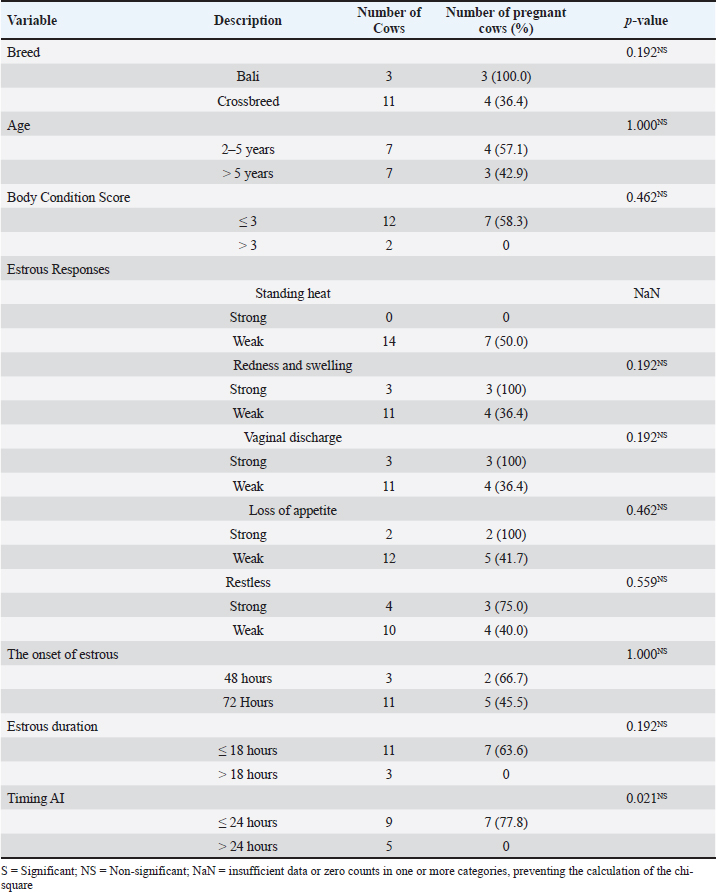
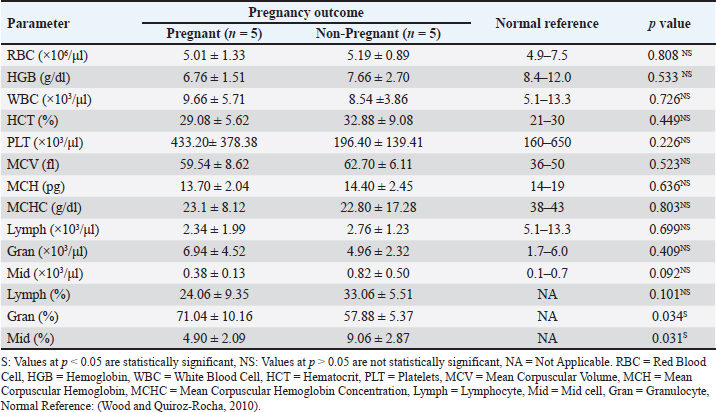
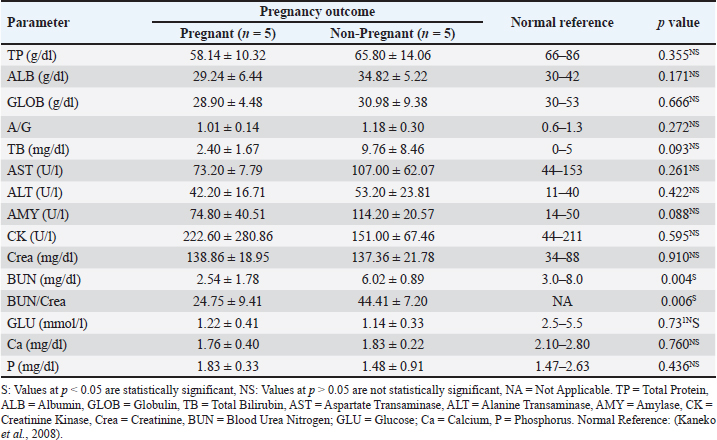
AbstractBackground: Repeat breeder cows (RBCs) are characterized by failure to conceive at least 3 times without anatomical or infectious abnormalities. This condition presents a major challenge to farm fertility and profitability. Aim: This study aimed to evaluate hematological and serum biochemical profiles at the time of artificial insemination (AI) to identify potential indicators of subfertility and the association with pregnancy rate. Methods: A total of 14 RBCs received estrous synchronization protocol comprising 2 doses of 500 µg Cloprostenol at 11-day intervals, followed by AI within 72 hours after the second injection. Pregnancy was diagnosed 60 days after insemination, and the outcome was analyzed descriptively. Factors affecting pregnancy were analyzed using Fisher’s exact test, while hematological and serum biochemical parameters were compared between pregnant and nonpregnant cows in the next estrous cycle using the t-test. Results: These results showed that 7 out of 14 cows (50%) were pregnant. Among the variables assessed, the timing of AI significantly affected pregnancy rates. Analysis of the hematological profile revealed significant differences in the percentage of granulocytes and midcells between pregnant and nonpregnant cows. Furthermore, biochemical profiles showed that the levels of blood urea nitrogen (BUN) and the BUN/creatinine ratio were considerably higher in nonpregnant cows (p < 0.05). Conclusion: This study suggests that physiological conditions during AI affect pregnancy outcomes in RBCs. In addition to management practices, these results provided valuable information regarding the diagnosis of fertility problems in RBCs receiving AI. Keywords: Artificial insemination, Biochemical profile, Estrous synchronization, Hematological profile, Repeat breeding.. IntroductionLivestock development is critical to national economic success because the demand for animal protein rises along with the population, money, and public awareness of the need for nutritious food. However, the beef cattle sector is facing issues such as increased market competition, high food and fuel prices, and a global climate emergency. In this context, it is imperative that farms operate with maximum efficiency and profitability, with a primary emphasis on identifying nonproductive animals to mitigate potential financial losses. Poor reproductive performance remains a major problem in livestock production. Among the reproductive disorders in dairy cows is repeated breeding, in which animals show normal estrus signs but repeatedly fail to become pregnant after at least three attempts (Jeong and Kim, 2022). Repeat breeding leads to significant economic losses and has been thoroughly examined in several countries and locations. Worldwide prevalence has been reported to range between 5% and 36% (Asaduzzaman et al., 2017; Deka et al., 2021), reaching approximately 62% in Indonesia (Yusuf et al., 2012). Research on repeat breeding syndrome has predominantly concentrated on dairy cows, largely due to organized reproductive management practices that enable effective monitoring of these animals, as well as the accessibility of estrus and insemination records. In contrast, beef cattle are generally raised in extensive systems, which complicates the tracking of reproductive parameters. Nevertheless, the significance of livestock in the livelihoods of smallholders globally is widely acknowledged (Banda and Tanganyika, 2021). Multiple elements contribute to the manifestation of repeat breeding syndrome, including clinical endometritis (Jeong and Kim, 2022), nutritional inadequacies (Talukdar et al., 2016), irregular heat behavior or ineffective heat detection (Cummins et al., 2012; Sood et al., 2015), mismanagement during artificial insemination (AI) (Walsh et al., 2011), and endocrine disorders (Sood et al., 2015; Kafi et al., 2017). Pertaining to hormonal changes, factors such as increased progesterone levels, irregular follicular development, postponed ovulation, and diminished oocyte quality have been recognized as contributors to subfertility in repeat breeder heifers (Båge et al., 2002). Furthermore, these factors are modulated by a range of risk elements that lead to imbalances and the prevalence of repeat breeding syndrome, which encompass age, parity, body condition, milk production, environmental factors, and peri- and postpartum imbalances (Eshete et al., 2023). The complex origins of repeat-breeding syndrome encompass factors associated with nutrition and metabolism. Although the precise mechanisms remain incompletely elucidated, research has investigated how nutritional deficiencies influence hormonal levels, oocyte quality, and embryonic development. Conditions such as obesity or malnutrition may result in reproductive impairment and subfertility, primarily due to insufficient metabolic activity, which is intricately linked to adipose tissue and neuroendocrine regulation (Meikle et al., 2018). The evaluation of hematological and biochemical profiles provides a basic description of the physiological and metabolic status of animals. Studies have shown that repeat breeder cows (RBCs) had lower levels of glucose (Widayati et al., 2018; Thasmi et al., 2020), total protein (TP), and total cholesterol but higher levels of urea nitrogen (Widayati et al., 2018) compared to fertile cows. Additionally, higher values of gamma-glutamyltransferase levels have been observed in RBCs, which is an indicator of hepatic abnormalities, suggesting the importance of liver function in repeat breeding (Jung et al., 2021). High serum urea and cholesterol levels along with low glucose and TP levels were also observed (Barson et al., 2019). The results showed that nutritional imbalance clearly affected reproductive performance and may contribute to repeat breeding syndrome. Therefore, this study aimed to evaluate the effectiveness of AI following estrous synchronization and to examine hematological and biochemical profiles at the time of AI based on pregnancy outcomes of RBCs. This would contribute to the improvement of fertility in cows, enhancing the economic income of farmers. Materials and MethodsAnimalsThis study was conducted in Takalar Regency, South Sulawesi, Indonesia, using beef cows from traditional farms. A total of 14 RBCs diagnosed by a local veterinarian were used as samples. Furthermore, the cows were semi-intensively managed and fed roughage. The animals used in this study calved at least once to prove their reproductive capacity. Ethical approvalAll procedures performed in this study involving animals were reviewed and approved by the Animal Ethics Committee of the Veterinary Hospital, Hasanuddin University (Approval No. 006/UN4.1.RSHUH/B/ PP36/2025). The study was conducted in accordance with ethical standards for the care and use of animals in research. Case definition and study designRBCs were characterized by failure to conceive after at least 3 inseminations, despite the absence of clinical abnormalities. The study aimed to (1) evaluation of estrous response and conception rate (CR) after synchronization followed by AI and (2) assessment of hematological and biochemical profiles based on pregnancy outcome. For evaluating the successful rate of estrous synchronization and AI, cows were divided into pregnant (n = 7), and nonpregnant (n = 7) groups. Hematological and biochemical profiles were assessed from only five pregnant and nonpregnant cows, respectively. In this study, the factors affecting CR were breed, age, body condition score, estrous response, onset of estrous, estrous duration, and timing of AI. Estrous synchronization and AIEstrous synchronization of RBCs was conducted using two intramuscular injections of 250 µg/ml of Cloprostenol (Juramate®️, Jurox Animal Health, Rutherford, NSW, Australia) at a dose of 2 ml/head administered 11 days apart. Estrous signs were observed twice daily, and AI was performed within 72 hours after the second injection. Pregnancy was confirmed 60 days after AI using an ultrasound examination by a veterinarian. Blood sampling and analysisIn this study, blood sampling was conducted during AI, and a total of 10 samples, each measuring 5 ml, were drawn directly from the jugular vein and placed into a blood-collecting vial containing the anticoagulant ethylene diamine tetraacetic acid (EDTA) for subsequent hematological evaluation. Furthermore, an additional 10 samples were collected from the same site into a vial that did not contain any anticoagulant and was intended for biochemical analysis. To ensure the preservation of sample integrity, all specimens were transported to the laboratory in a cool box. Hematological and biochemical parameters were measured using a previously reported method (Purba et al., 2024). Statistical analysisData were analyzed using IBM SPSS Version 26 and presented in tabulated form. The first service CR was descriptively assessed by dividing the number of RBCs being pregnant by all the synchronized cows. Factors affecting CR were analyzed using Fisher’s exact -test, while differences in hematological and biochemical profiles between pregnant and nonpregnant cows were evaluated using the t-test. ResultsFirst service CR and its associated factorsThe effectiveness of estrous synchronization and AI was assessed using the first service CR and its related factors. Approximately 50% (7/14) of CR was produced from the first insemination following estrous synchronization. Factors affecting CR are described in Table 1, and observations showed no significant relationships between breed, age, body condition score, estrous responses, onset of estrous, estrous duration, and CR in RBCs. However, most cows with strong estrous responses became pregnant after insemination. The timing of AI was significantly related to pregnancy outcomes. All pregnant cows were inseminated within 24 hours of estrous detection. Hematological Profiles of RBCs According to Pregnancy OutcomeHematological and biochemical profiles were assessed from five pregnant and nonpregnant cows, respectively. The hematological profile (Table 2) showed that hemoglobin (HGB) in both groups was lower, but MCV was higher than the normal reference. The number of midcells was marginally higher in the nonpregnant group. Furthermore, the percentage of granulocytes and midcells was significantly different between the groups. The pregnant cows had a higher percentage of granulocytes but a lower percentage of mid-cells. Serum biochemical profiles of RBCs according to pregnancy outcomeSerum biochemical examination showed low TP, glucose, and calcium levels, whereas alanine aminotransferase, amylase, and creatinine levels were greater in both groups than in the normal reference (Table 3). Additionally, the nonpregnant cows had greater BUN levels and a higher BUN/Crea ratio, reflecting a significant difference between the groups. DiscussionThis study focused on beef cows managed under a traditional farming system. We diagnosed cows as repeat breeders by a local veterinarian, following 3–7 times of AI without being pregnant despite the absence of reproductive disorders. In addition to presenting valuable data, several limitations introduced potential biases. First, the sample size was constrained by the number of available cases in the field. Second, both local and crossbreed cows were included, which may have different physiological conditions affecting hematological and blood biochemical profiles. Third, some farmers were unwilling to provide specific information on cow conditions, making data collection challenging. In this study, RBCs were synchronized with the double injection of synthetic prostaglandin to induce corpus luteum regression. This facilitates the removal of progesterone negative feedback control and promotes the development of follicles for the next wave. Bihon et al. (2021) reported that prostaglandin-based estrus synchronization programs were effective for cycle control in the responsive phase of the cycle (Bihon and Assefa, 2021). In another study, the estrous response following PGF2α injection in Bali cows was 100%, with 77% CR (Mukkun et al., 2021). Most cows showed weak signs of estrous, namely standing heat, redness and swelling, vaginal discharge, loss of appetite, and restlessness, after the second injection of PGF2α. All cows with strong signs of estrous, such as redness and swelling, vaginal discharge, and loss of appetite, became pregnant after insemination. However, no significant relationship was observed between estrous responses and pregnancy outcomes. These results demonstrate the importance of the responses as factors affecting pregnancy outcomes. Approximately 50% of pregnancy was recorded among RBCs, which was lower than the 77% CR reported in normal cyclic cows following prostaglandin treatment (Mukkun et al., 2021). This result is in line with other reports in which RBCs were reported to have lower CRs than normal cyclic cows (Jung et al., 2021). Furthermore, previous studies evaluating the Co-Synch (Kothandaraman et al., 2023) and Ovsynch plus CIDR protocols (Patil et al., 2021) reported improved estrous expression, extended estrous duration, and higher CRs of 50.97% and 60%, respectively. In line with these results, estrous synchronization with double PGF2α protocol was used to enhance fertility. This study identified AI timing as the only significant factor influencing pregnancy outcomes. All pregnant cows were inseminated within 24 hours after estrous detection, in line with the theory that ovulation occurs 24–33 hours after estrous onset and 15–22 hours after its end (De Rensis et al., 2024). Furukawa et al. (2022) reported CRs of 57.1, 37.7, and 30% when AI was performed between 4 hours before and 4 hours after the end of estrous, 4–12 hours before, and 12–20 hours after the end of estrous, respectively (Furukawa et al., 2022). These data showed that the best time for insemination was between 4 and 12 hours after the end of estrous. Among the challenges when considering optimal AI timing is the large variation in the estrous duration interval. In this study, the inseminators used the well-established “a.m.–p.m. insemination rule,” where cows in estrus during the morning were inseminated in the afternoon and vice versa. Table. 1. Factors affecting pregnancy outcomes in RBCs treated with AI.
Table. 2. Hematological parameters (mean ± SD values) in RBCs based on pregnancy outcomes
Table. 3. Serum biochemical parameters (mean ± SD values) in RBCs based on pregnancy outcomes
Hematological and biochemical profiles were assessed to determine the physiological conditions of the beef cows at the time of insemination and the effects on pregnancy outcomes. From the hematological results, all pregnant and nonpregnant cows showed lower concentrations of HGB, higher MCV, and lower MCHC than the normal reference. Many variables contributed to the thresholds and width of reference intervals, including age, sex, stress, diet, body condition, reproductive status, recent activity, hydration, ambient temperature, and altitude (Wood and Quiroz-Rocha, 2010). In line with Yuherman et al. (2017), cows with reproductive failure had low HGB, HCT, and WBC levels, indicating a deficiency in some essential dietary nutrients (Yuherman et al., 2017). These findings were also confirmed by Sabasthin et al. (2012), who reported that repeat breeder buffaloes had significantly lower HGB than cycling and pregnant buffaloes (Sabasthin et al., 2012). Cattle in subtropical and tropical regions are subjected to several stress factors, namely seasonally poor nutrition, parasites, blood-sucking insects, high temperatures, and high humidity (Chen et al., 2023). This study revealed lymphocytopenia in all beef cows, regardless of pregnancy status. Leukogram assessments are indicated for various purposes, including diagnostic evaluations, general health assessments, disease monitoring, and therapeutic interventions. Lymphocytopenia may arise from several factors, such as acute stress, viral or bacterial infections, immune suppression, chronic renal failure, and the administration of corticosteroids (Jones and Allison, 2007; Wood and Quiroz-Rocha, 2010). Furthermore, the percentage of granulocytes was higher in pregnant cows than in non-pregnant cows. Meanwhile, the percentage of midcells was higher in nonpregnant cows. The findings indicated the presence of a stress leukogram, which was defined by an increase in neutrophils, a decrease in lymphocytes, a reduction in eosinophils, and, in some cases, an elevation in monocyte levels. This condition may be induced by exposure to either endogenous or exogenous corticosteroids (Jones and Allison, 2007). Biochemical profile showed low protein, glucose, and calcium levels and high ALT, amylase, and creatinine levels compared with the normal references, regardless of pregnancy status. Furthermore, the BUN and BUN/ Crea ratio levels were higher in the nonpregnant group. Blood biochemical analysis related to repeat breeding has been well-documented worldwide (Das et al., 2009; Sabasthin et al., 2012; Amle et al., 2014; Guzel and Tanriverdi, 2014; Barui et al., 2015; Diah Tri Widayati et al., 2017; Tombuku et al., 2017; Widayati et al., 2018; Barson et al., 2019; Thasmi et al., 2020; Jung et al., 2021). Most studies reported lower serum protein, glucose, and cholesterol (Sabasthin et al., 2012; Tombuku et al., 2017; Amle et al., 2014; Barson et al., 2019), while others did not observe any differences between fertile and repeat breeder animals (Diah Tri Widayati et al., 2017; Jung et al., 2021; Ravenska et al., 2024). Significantly higher BUN and BUN/Crea ratio levels were observed in the nonpregnant group. The same results have been documented in previous studies (Amle et al., 2014; Diah Tri Widayati et al., 2017). The main cause of high circulating urea is an excess intake of total N, including rumen-degradable protein (Laven et al., 2007). High protein intake during milk production and the catabolism of amino acids from tissue proteins under energy deficit conditions can lead to increased urea production. An association between elevated urea levels and decreased fertility rates has been well documented, as the increase in BUN reduces the binding of LH and decreases progesterone, prostaglandin, and pH, thereby decreasing fertility (Rajendran et al., 2022). Similar to other studies, elevated and diminished levels of circulating urea have been linked to decreased fertility in dairy cows, notably resulting in an extended interval between calving and conception (Wathes et al., 2007). However, these results are inconsistent between trials and the relationship between fertility and protein metabolism remains unestablished. Laven et al. (2007) concluded that much of the deleterious effect of increased intakes of degradable protein was probably mediated by postprandial increases in ammonia (Laven et al., 2007). An alternative mechanism that has been suggested is that an increased intake of dietary protein may lead to a reduction in uterine pH or modify other characteristics of the uterine environment during the early luteal phase, thereby creating conditions that are less conducive to embryo survival (Gunaretnam et al., 2013). In contrast to the majority of earlier research, Cheng et al. (2015) proposed that fluctuations in circulating urea levels could be attributed to metabolic variations, particularly those linked to lipid metabolism in postpartum dairy cows (Cheng et al., 2015). The results of this study suggest that reproductive disturbances are most likely associated with a lack of proper feed and a deficiency of essential nutrients. Livestock raised on small farms is almost entirely dependent on feeds consisting of grass and crop residues. Supplementation of ruminants with concentrated feeds or minerals is not common practice. The cows with reproductive failure are normally fed more low-quality forages, such as rice straw, which contains low protein and high fiber. While variations in urea nitrogen levels have been described between repeat breeders and healthy cows, this metric lacks sufficient precision for definitive diagnosis. Numerous deficiencies or diseases can alter biochemical indicators in cattle, making this approach a less reliable diagnostic technique. Consequently, it is crucial to deepen our understanding of the mechanisms underlying fertility disorders, create innovative diagnostic tools to identify specific causal factors and establish new therapeutic strategies aimed at restoring fertility. ConclusionIn conclusion, estrous synchronization with double injection of PGF2α protocol was used to treat RBCs, leading to 50% of pregnancies and affected by the timing of AI. In addition, nonpregnant cows exhibit elevated levels of BUN and BUN/creatinine ratios, which may be attributed to deficiencies in essential nutrients. Preventive strategies were deemed more advantageous for managing repeat breeding given the difficulties associated with obtaining a precise diagnosis. AcknowledgmentsThe authors are grateful to the veterinary assistant of the Department of Livestock and Animal Health of Takalar District for assisting in sample collection. FundingThis study was supported and funded by the Faculty of Medicine, Universitas Hasanuddin through the Decree of the Dean of Faculty of Medicine No. 08831/UN4.6/ PT/2024. Author’s ContributionFYP designed the study. FYP, MA, and MRTP conducted the study, analyzed the data, and wrote the manuscript. FYP, MAN, MMN, and SG supervised the study. FYP, DKS, AA, II, and SY reviewed and revised the manuscript. Conflict of InterestThe authors declare no conflict of interest. Data AvailabilityAll data supporting the results are available. ReferencesAmle, M. Patodkar, V. Shelar, R. Birade, H. Serum biochemical levels of repeat breeder cross bred cows under rural condition of Satara district of Maharashtra. Int. J. Adv. Vet. Sci. Technol. 109-113 Asaduzzaman, K.M., Bhuiyan, M.M.U., Rahman, M.M. and Bhattacharjee, J. 2017. Prevalence of repeat breeding and its effective treatment in cows at selected areas of Bangladesh. Bangladesh J. Vet. Med. 14, 183–190. Båge, R., Gustafsson, H., Larsson, B., Forsberg, M. and Rodríguez-Martínez, H. 2002. Repeat breeding in dairy heifers: follicular dynamics and estrous cycle characteristics in relation to sexual hormone patterns. Theriogenology 57, 2257–69. Banda, L.J. and Tanganyika, J. 2021. Livestock provide more than food in smallholder production systems of developing countries. Anim. Front. 11, 7–14. Barson, R., Padder, S., Sayam, A., Rahman, M., Bhuiyan, M. and Bhattacharjee, J. 2019. Comparison of serum glucose, urea nitrogen, cholesterol and total proteins in crossbred repeat breeder and normally cyclic cows. J. Adv. Vet. Anim. Res. 6, 82–87. Barui, A., Batabyal, S., Ghosh, S., Saha, D. and Chattopadhyay, S. 2015. Plasma mineral profiles and hormonal activities of normal cycling and repeat breeding crossbred cows: a comparative study. Vet. World. 8, 42–45. Bihon, A. and Assefa, A. 2021. Prostaglandin based estrus synchronization in cattle: a review. Cogent. Food. Agric. 7, 1932051. Chen, Y.-H., Chen, Y.-M., Tu, P.-A., Lee, K.-H., Chen, J.-Y. and Hsu, J.-T. 2023. Effect of supplementing vitamin E, selenium, copper, zinc, and manganese during the transition period on dairy cow reproductive performance and immune function. Vet. Sci. 10, 225. Cheng, Z., Oguejiofor, C., Swangchan-Uthai, T., Carr, S. and Wathes, D. 2015. Relationships between circulating urea concentrations and endometrial function in postpartum dairy cows. Animals 5, 748–773. Cummins, S.B., Lonergan, P., Evans, A.C.O. and Butler, S.T. 2012. Genetic merit for fertility traits in Holstein cows: II. Ovarian follicular and corpus luteum dynamics, reproductive hormones, and estrus behavior. J. Dairy Sci. 95, 3698–3710. Das, J.M., Dutta, P., Deka, K.C., Biswas, R.K., Sarmah, B.C. and Dhali, A. 2009. Comparative study on serum macro and micro mineral profiles during oestrus in repeat breeding crossbred cattle with impaired and normal ovulation. Livest. Res. Rural Dev. 21, 107. De Rensis, F., Dall’Olio, E., Gnemmi, G.M., Tummaruk, P., Andrani, M. and Saleri, R. 2024. Interval from oestrus to ovulation in dairy cows—A key factor for insemination time: a review. Vet. Sci. 11, 152. Deka, R.P., Magnusson, U., Grace, D., Randolph, T.F., Shome, R. and Lindahl, J.F. 2021. Estimates of the economic cost caused by five major reproductive problems in dairy animals in Assam and Bihar, India. Animals 11, 3116. Diah Tri Widayati, Maulida, N. and Adiarto. 2017. Blood biochemical profile of repeated breeding friesian holstein grade cows in the dairy processing unit faculty of animal science Gadjah Mada University. Seventh Int. Semin. Trop. Anim. Prod. 7, 151–155. Eshete, T., Demisse, T., Yilma, T. and Tamir, B. 2023. Repeat breeding and its’ associated risk factors in crossbred dairy cattle in northern central highlands of Ethiopia. Vet. Med. Int. 2023, 1176924. Furukawa, E., Kanno, C., Yanagawa, Y., Katagiri, S. and Nagano, M. 2022. Relationship between the timing of insemination based on estrus detected by the automatic activity monitoring system and conception rates using sex-sorted semen in Holstein dairy cattle. J. Reprod. Dev. 68, 405–412. Gunaretnam, I., Pretheeban, T. and Rajamahendran, R. 2013. Effects of ammonia and urea in vitro on mRNA of candidate bovine endometrial genes. Anim. Reprod. Sci. 141, 42–51. Guzel, S. and Tanriverdi, M. 2014. Comparison of serum leptin, glucose, total cholesterol and total protein levels in fertile and repeat breeder cows. Rev. Bras. Zootec. 43, 643–647. Jeong, J.-K. and Kim, I.-H. 2022. Risk factors for repeat breeder dairy cows and their impacts on reproductive performance. Korean J. Vet. Res. 62, e15. Jones, M.L. and Allison, R.W. 2007. Evaluation of the ruminant complete blood cell count. Vet. Clin. North. Am. Food. Anim. Pract. 23, 377–402. Jung, M.Y., Kang, S., Lim, D.-H., Kim, T.-I., Lee, K. and Ha, S. 2021. Serum biochemical profiles of repeat breeder holstein friesian cows. Korean J. Vet. Serv. 44, 239–246. Kafi, M., Azari, M., Chashnigir, O., Gharibzadeh, S., Aghabozorgi, Z., Asaadi, A. and Divar, M.R. 2017. Inherent inferior quality of follicular fluid in repeat breeder heifers as evidenced by low rates of in vitro production of bovine embryos. Theriogenology 102, 29–34. Kaneko, J., Harvey, J. and Bruss, M. 2008. Clinical biochemistry of domestic animals, 6th ed. Academic Press, San Diego, CA. Kothandaraman, S., Gnanasekar, R., Varadharajan, A., Vijayalakshmi, R. and Saravanan, K. 2023. Comparative efficacy of different oestrous synchronization protocols on estrus induction response and conception rate in repeat breeder dairy cows. Uttar Pradesh. J. Zool. 44, 109–116. Laven, R.A., Scaramuzzi, R.J., Wathes, D.C., Peters, A.R. and Parkinson, T.J. 2007. Recent research on the effects of excess dietary nitrogen on the fertility of dairy cows. Vet. Rec. 160, 359–62. Meikle, A., de Brun, V., Carriquiry, M., Soca, P., Sosa, C., Adrien, M. de L., Chilibroste, P. and Abecia, J.-A. 2018. Influences of nutrition and metabolism on reproduction of the female ruminant. Anim. Reprod. 15, 899–911. Mukkun, R.R.L., Yusuf, M., Toleng, A.L., Sonjaya, H. and Hasrin. 2021. Effectiveness of estrous synchronization using prostaglandin (PGF2á) in Bali cows. IOP Conf. Ser. Earth. Environ. Sci. 788, 012138. Patil, S.S., Tandle, M.K., Bijurkar, R.G., Patil, N.A., Kumar, D., Kulkarni, S. and Kumar, S.N. 2021. Efficacy of co-synch plus CIDR and double PG plus GnRH protocols in repeat breeder cows. Int. J. Curr. Microbiol. Appl. Sci. 10, 1623–1629. Purba, F.Y., Apada, A.M.S., Ariyandy, A., Ismail, I. and Yusuf, S. 2024. Hematological and biochemical profile of bali cattle affected by foot and mouth disease at different infection stages. Adv. Anim. Vet. Sci. 12, 1002–1009. Rajendran, D., Gowda, N.K.S., Rao, S.B.N., Babu, P.E., Manimaran, A. and Kumaresan, A. 2022. Nutritional strategies to improve reproductive efficiency in cattle and buffaloes, In: Current concepts in bovine reproduction. Eds., Kumaresan, A. and Srivastava, A.K. Berlin: Springer, pp: 47–67. Ravenska, K.Z., Laksmi, D.N.D.I. and Kendran, A.A.S. 2024. Blood glucose and cholesterol levels of Bali cattle that experienced repeated breeding, in the Village of Sobangan, Mengwi District, Badung Regency, Bali. Bul. Vet. Udayana 16, 926–934. Sabasthin, A., Kumar, V.G., Nandi, S. and Murthy, V.C. 2012. Blood haematological and biochemical parameters in normal cycling, pregnant and repeat breeding buffaloes (Bubalus bubalis) maintained in isothermic and isonutritional conditions. Asian Pac. J. Reprod. 1, 117–119. Sood, P., Zachut, M., Dube, H. and Moallem, U. 2015. Behavioral and hormonal pattern of repeat breeder cows around estrus. Reproduction. 149, 545–554. Talukdar, D.J., Talukdar, P. and Ahmed, K. 2016. Minerals and its impact on fertility of livestock: a review. Agric. Rev. 37, 331–336. Thasmi, C.N., Husnurrizal, H., Akmal, M., Wahyuni, S. and Siregar, T.N. 2020. Detection of serum macro minerals concentration in repeat breeding aceh cattle. J. Kedokt. Hewan. 14, 25–28. Tombuku, A.T., Widayati, D.T. and Maharani, D. 2017. Blood biochemical profile of bali cattle with repeated breeding condition. Vet. Pract. 10(1), 45–48. Walsh, S.W., Williams, E.J. and Evans, A.C.O. 2011. A review of the causes of poor fertility in high milk producing dairy cows. Anim. Reprod. Sci. 123, 127–138. Wathes, D.C., Bourne, N., Cheng, Z., Mann, G.E., Taylor, V.J. and Coffey, M.P. 2007. Multiple correlation analyses of metabolic and endocrine profiles with fertility in primiparous and multiparous cows. J. Dairy Sci. 90, 1310–1325. Widayati, D.T., Bintara, S., Natawihard, I. and Maharani, D. 2018. Blood biochemical profile in fertile and repeat breeder ongole cross breed cows. Pak. J. Biol. Sci. 21, 166–170. Wood, D. and Quiroz-Rocha, G. 2010. Normal hematology of cattle. In: Schalm’s veterinary hematology, in: Schalm’s Veterinary Hematology. Wiley, Ames, IA, pp. 829–835. Yuherman, R., Kurnia, Y.F. and Indahwati, K. 2017. Hematological and mineral profiles of reproductive failure of exotic breed cattle in Payakumbuh, West Sumatra, Indonesia. Pak. J. Biol. Sci. 20, 390–396. Yusuf, M., Rahim, L., Asja, M.A. and Wahyudi, A. 2012. The incidence of repeat breeding in dairy cows under tropical condition. Media Peternak. 35, 28–31. | ||
| How to Cite this Article |
| Pubmed Style Purba FY, Ayub M, Putra MRT, Sari DK, Nurdin MA, Ariyandy A, Nur MM, Ismail I, Gustina S, Yusuf S. Hematological and serum biochemical profiles at the time of artificial insemination based on pregnancy outcomes in repeat breeder beef cows. Open Vet. J.. 2025; 15(6): 2602-2609. doi:10.5455/OVJ.2025.v15.i6.31 Web Style Purba FY, Ayub M, Putra MRT, Sari DK, Nurdin MA, Ariyandy A, Nur MM, Ismail I, Gustina S, Yusuf S. Hematological and serum biochemical profiles at the time of artificial insemination based on pregnancy outcomes in repeat breeder beef cows. https://www.openveterinaryjournal.com/?mno=241838 [Access: June 26, 2026]. doi:10.5455/OVJ.2025.v15.i6.31 AMA (American Medical Association) Style Purba FY, Ayub M, Putra MRT, Sari DK, Nurdin MA, Ariyandy A, Nur MM, Ismail I, Gustina S, Yusuf S. Hematological and serum biochemical profiles at the time of artificial insemination based on pregnancy outcomes in repeat breeder beef cows. Open Vet. J.. 2025; 15(6): 2602-2609. doi:10.5455/OVJ.2025.v15.i6.31 Vancouver/ICMJE Style Purba FY, Ayub M, Putra MRT, Sari DK, Nurdin MA, Ariyandy A, Nur MM, Ismail I, Gustina S, Yusuf S. Hematological and serum biochemical profiles at the time of artificial insemination based on pregnancy outcomes in repeat breeder beef cows. Open Vet. J.. (2025), [cited June 26, 2026]; 15(6): 2602-2609. doi:10.5455/OVJ.2025.v15.i6.31 Harvard Style Purba, F. Y., Ayub, . M., Putra, . M. R. T., Sari, . D. K., Nurdin, . M. A., Ariyandy, . A., Nur, . M. M., Ismail, . I., Gustina, . S. & Yusuf, . S. (2025) Hematological and serum biochemical profiles at the time of artificial insemination based on pregnancy outcomes in repeat breeder beef cows. Open Vet. J., 15 (6), 2602-2609. doi:10.5455/OVJ.2025.v15.i6.31 Turabian Style Purba, Fika Yuliza, Muhammad Ayub, Muhammad Rizky Trimulya Putra, Dwi Kesuma Sari, Muhammad Ardiansyah Nurdin, Andi Ariyandy, Muhammad Muflih Nur, Irwan Ismail, Sri Gustina, and Subaedy Yusuf. 2025. Hematological and serum biochemical profiles at the time of artificial insemination based on pregnancy outcomes in repeat breeder beef cows. Open Veterinary Journal, 15 (6), 2602-2609. doi:10.5455/OVJ.2025.v15.i6.31 Chicago Style Purba, Fika Yuliza, Muhammad Ayub, Muhammad Rizky Trimulya Putra, Dwi Kesuma Sari, Muhammad Ardiansyah Nurdin, Andi Ariyandy, Muhammad Muflih Nur, Irwan Ismail, Sri Gustina, and Subaedy Yusuf. "Hematological and serum biochemical profiles at the time of artificial insemination based on pregnancy outcomes in repeat breeder beef cows." Open Veterinary Journal 15 (2025), 2602-2609. doi:10.5455/OVJ.2025.v15.i6.31 MLA (The Modern Language Association) Style Purba, Fika Yuliza, Muhammad Ayub, Muhammad Rizky Trimulya Putra, Dwi Kesuma Sari, Muhammad Ardiansyah Nurdin, Andi Ariyandy, Muhammad Muflih Nur, Irwan Ismail, Sri Gustina, and Subaedy Yusuf. "Hematological and serum biochemical profiles at the time of artificial insemination based on pregnancy outcomes in repeat breeder beef cows." Open Veterinary Journal 15.6 (2025), 2602-2609. Print. doi:10.5455/OVJ.2025.v15.i6.31 APA (American Psychological Association) Style Purba, F. Y., Ayub, . M., Putra, . M. R. T., Sari, . D. K., Nurdin, . M. A., Ariyandy, . A., Nur, . M. M., Ismail, . I., Gustina, . S. & Yusuf, . S. (2025) Hematological and serum biochemical profiles at the time of artificial insemination based on pregnancy outcomes in repeat breeder beef cows. Open Veterinary Journal, 15 (6), 2602-2609. doi:10.5455/OVJ.2025.v15.i6.31 |


