





| Research Article | ||
Open Vet. J.. 2025; 15(6): 2831-2839 Open Veterinary Journal, (2025), Vol. 15(6): 2831-2839 Research Article Effects of grind carob seeds supplementation in the diet of domestic male rabbits, injected with alloxan, on some productive, physiological, and histological traitsMajid J. Al Saadi1*, Lateef I. Hadi2, Ghalib Alkaisse3 and Jassim E.Q. Al Musawi11Department of Veterinary Public Health, College of Veterinary Medicine, University of Baghdad, Baghdad, Iraq 2Department of Anatomy and Histology, College of Veterinary Medicine, Thi-Qar University, Nasiriyah, Iraq 3Head of Scientific Affairs Department, National University of Science and Technology, Nasiriyah, Iraq *Corresponding Author: Majid J. Al-Saadi. Department of Veterinary Public Health, College of Veterinary Medicine, University of Baghdad, Baghdad, Iraq. Email: majid.j [at] covm.uobaghdad.edu.iqb Submitted: 02/03/2025 Revised: 06/05/2025 Accepted: 17/05/2025 Published: 30/06/2025 © 2025 Open Veterinary Journal
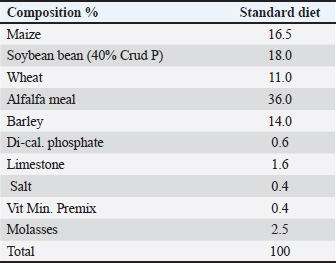
AbstractBackground: Many types of medicinal plants have a positive effect when added as feed additives in the diets of animal models, particularly experimental diabetic animals. Aim: This research aimed to investigate the impact of adding two levels of grind carob seeds to the diet on the growth of domestic male rabbits. Method: 20 male domestic growing rabbits were used and divided into four groups. The first group was fed a basal diet without any treatment and kept as control negative (first treatment), the second group was alloxan injected to induce experimental diabetes and received a basal diet, while third and fourth groups also induced diabetes by alloxan injected and fed a same Basale diet including 1% and 3% grind carob seeds to each group, respectively. Results: The results showed that animals in both the third and fourth groups revealed gradual improvement in general health status with the progress of the experimental period especially in body weight and, feed intake, while there was a decrease in cortisol and glucagon hormone levels and depression in both glucose and insulin ranges in compare to control positive (diabetic group); whereas, the control negative group was still in normal standard health status. Conclusion: From the present results it might be concluded that the grinded carob seed supplementation appeared to have obvious positive effects in the two groups suffering from experiment diabetic mellitus, due to avoiding those animals from the deleterious effects of such illness, especially in the group that received 3% carob seed. Keywords: Basal diet, Carob seeds, Diabetic mellitus, Feed intake, Health status. IntroductionRabbits are Microlivestock animals known mainly for their prolific nature and are considered an ideal and lucrative means of food production in many countries (Yasmin et al., 2018). They are reared by a small-scale farmer and serve as the source of food for the family, while if it is a commercial business it helps in the massive production of food and creation jobs. Rabbit meat has a higher protein, energy, calcium, and vitamin content than other types of animal meat (Fidan et al., 2020), while having lower cholesterol, fat, and sodium levels. Diabetes mellitus (DM) is a common chronic metabolic illness. It is regarded as one of the major illnesses of our day and should not be disregarded because it damages and malfunctions several organ systems, particularly insulin-dependent diabetes (type I) caused by loss or destruction of the pancreatic β-Langerhans islet cells, resulting in a complete shortage of insulin (Emran et al., 2023). Many traditional plants were utilized for medical purposes before the prehistoric era. Every part of a medicinal plant has potential medicinal properties and is mainly used for the development of health care in their daily life (Rahman et al., 2021). Carob (Ceratonia siliqua L.), part of the Leguminosae family, is an evergreen tree extensively grown in the Mediterranean region (Dahmani et al., 2023; Zhao et al., 2023) and serves as an excellent source of protein, being abundant in nonessential as well as essential amino acids. It also affects the activities of superoxide dismutase and catalase enzymes, potentially improving their effectiveness in eliminating reactive oxygen species (Basharat et al., 2023). Carob fruit extract provides an excellent source of insoluble fiber and proanthocyanidin, which are linked to strong antidiabetic effects and decrease postprandial glycemia and lipemia (Macho-González et al., 2017). Therefore, the main objective of this study is to examine the impact of carob seed grinding in the diets of male rabbits with alloxan-induced DM on some physiological and productive traits. Materials and MethodsThis research was conducted at the Experimental Unit of the Animal House, College of Veterinary Medicine, University of Baghdad, over a period ranging from (20 November 2023 to 30 January 2024). The experimental methods were carried out following the Anim Ethics Committee rules, University of Baghdad. Experimental animalsRabbits were bought from different local markets. All animals were healthy and clinically free of external parasites, with a weight of approximately 1,300 g, treated against internal parasites and coccidiosis. They were housed individually in cages close tightly (50 × 50 × 40 cm) and measured, during the study period (from 2 January to 17 February 2024). Carob seeds processingCarob samples were collected from different areas with local carob trees. Impurities were eliminated, and the seeds were detached from the pulp before being dried in an oven at 40°C. Ultimately, a fine-dried powder was prepared and mixed to create homogeneous samples. The powder was combined with wet pellets (soaked in water) to produce a paste-like material that was processed through an electric meat grinder to form new pellets incorporating the ground carob seed powder. The updated feed pellets were combined with carob seed powder using the following formula: 15 g of ground carob seeds mixed with 1,000 g of the basal diet, which was kept as pellets. Induce diabeticAfter an overnight fast, rabbits were given a subcutaneous injection of 150 mg/kg/BW of Alloxan monohydrate (Sigma, Germany) dissolved in 0.9% NaCl normal saline. This caused the rabbits to develop diabetes. However, the animals in the control group were given only normal saline. Because Alloxan can cause large pancreatic insulin release, which can lead to lethal hypoglycemia, the animals were given a 5% dextrose solution for the next 24 hours after receiving Alloxan treatment. After 48 hours, the animals’ ability to induce diabetes was evaluated, and they were given a week to stabilize their blood glucose levels. Animals considered diabetic at day five if their blood glucose level was 200 mg/dl or greater were utilized in the Keys investigation (Al-Bert et al., 2014). Experimental designA total of 20 male rabbits of 2–3 months aged, approximately 1,300 g weight were selected, acclimated for 7 days, followed by an experimental period of 45 days, then divided randomly into four equal groups. The first received basal diets without any treatment and was kept as the control positive group. In Group 2, the animals received a standard basal diet) of grinding carob seeds, and using Alloxan-induced diabetes with 150 mg/kg subcutaneously and kept as the control negative group (Diabetic), In Group 3 the rabbits received, slandered basal diet and treated with 1%, (10 g per 1 kg of grinding carob seed powder and injected with 150 mg/kg by Alloxan subcutaneously, while in Group 4 rabbits received a slandered basal diets including 3%, (30 g per 1 kg) and injected 150 mg/kg with Alloxan subcutaneously, the fodder and water supplied adlibitum. Throughout the experimental period (Table 1). Table 1. Ingredient of the standard diet.
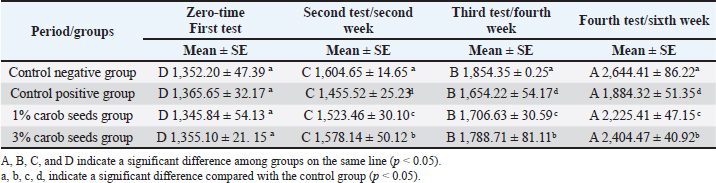
Feed intakeThroughout the research period, each group of animals was kept in separate cages. The rabbits were given a specific and exact amount of the diet, and the diet that was left over was carefully noted to calculate the feed intake (EL-Rify et al., 2016). Blood samplingBlood samples from each group of animals were obtained through heart puncture using a sterile syringe at 2-week intervals during the experiment. Sterilization was performed on the puncture area while the animals were still alive and then transferred to sterile vials. A volume of 3 ml of blood was gathered and kept in a sterilized gel container free of anticoagulants for separate blood serum to assess Glucagonm, cortisol, Insulin hormones, and glucose levels. Serum samples were obtained via centrifugation (at 3,000 rpm) for 10 minutes and kept at temperatures ranging from 16°C to 20°C for later use. The majority of biochemical assays and blood analyses were performed in the Labs of the College of Veterinary Medicine. Histologic samplingAt the end of the experiment, two animals from each group were sacrificed, pieces of two cubic centimeters were taken from the liver, testes, kidneys, and small intestines, fixed with 4% formaldehyde for 48 hours, dehydrated with ethanol, and immersed in paraffin. Sections were cut using a microtome machine in 5 μm slices. Sections observed as a slide under a microscope after staining with hematoxylin and eosin stain. Four to eight fields of each section and at least per animal, were examined using the microscope under (40×) (Olympus, Japan). Statistical analysisThe results were analyzed using Duncan’s test as per the method suggested by de Smith (2021). The means were considered significantly different. The least significant difference test (one-way ANOVA) was applied for a significant comparison between mean variables in the present study (De Smith, 2021). Ethical approvalThe procedures approved by the Ethics Committee of the College of Veterinary Medicine, University of Baghdad (No. 7/28.12.2023) ResultsBody weight and feed intakeThe findings about the body weight of animals in Table 2 showed, that values of all groups including treated groups increased gradually with time due to normal growth with age progress, but there were obvious significant differences between groups starting from the first to last test, when control positive group appeared a significant (p < 0.05) decrease vales compared with all groups especially control negative group (nondiabetic), while the other two treated groups (diabetic) received 1% and 3% carobs, respectively, revealed gradual improvements status compared with control negative particularly the 3% carob, in last third test, approximately resemble (nondiabetic) animals in control negative group. Table 2. Effect of carob seed powder in the diet of male rabbits on body weight (g).
In the same line, feed intake levels (Table 3) recorded, a significant (p < 0.05) decline in the control positive (diabetic) group compared to all treated (diabetic and received 1% and 3% carob) groups, including control positive especially in last third test, and the positive control (diabetes) group appeared significantly decreased (p < 0.05) compared to all treated (diabetic and given 1% and 3% carob) groups, included control positive (healthy animals), particularly in last test. Table 3. Effect of grind carob seeds in the diet of male rabbits on feed consumption (g/day).
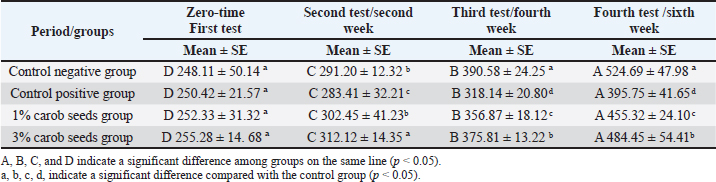
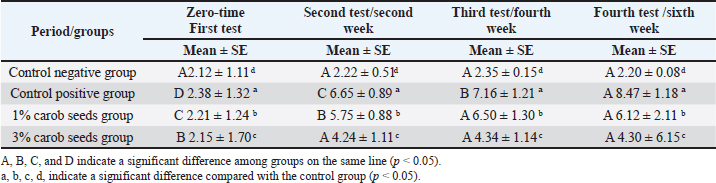
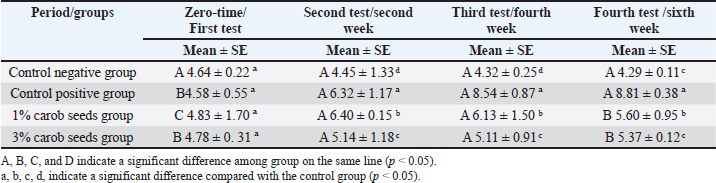
Glucagon and cortisol hormonesIn contrast to body weight and feed intake values, the data results from testing of both glucagon and cortisol hormone levels (Table 4 and Table 5), showed significant (p < 0.05) elevation in the control positive group compared to all groups including the two diabetic (received 1% and 3% carob seeds, respectively), while the control negative (nondiabetic) group which did non received any feed supplements recorded significant (p < 0.05) lowest values during the two tests. Table 4. Effect of carob seed powder in the diet of male rabbits on glucagon hormone levels (picogram/ml).
Table 5. Effect of carob seed powder in the diet of male rabbits on cortisol hormone levels (picogram/ml).
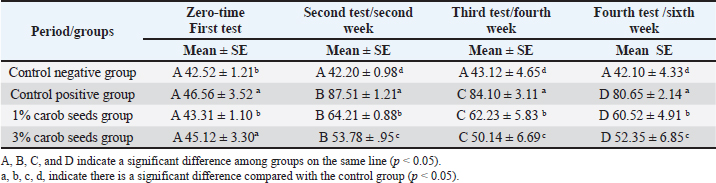
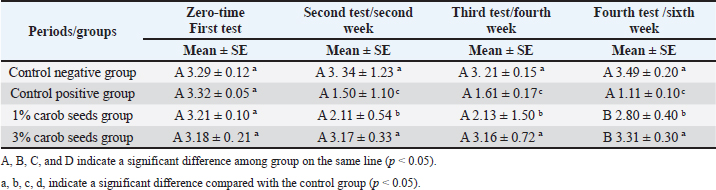
Blood serum glucose and insulin hormoneIn serum glucose levels, the control negative (diabetic) group, as well as the two treated (diabetic) groups, received 1% or 3% carob seeds (Table 6 and Table 7), revealed significant (p < 0.05) high levels compared with control negative or healthy animals, started from first to last third test, on the other side insulin hormone levels in all diabetic groups including received both carob seeds levels recorded a significant (p < 0.05) lowest ranges in comparative by the negative control group (nondiabetic). Table 6. Effect of carob seed powder in the diet of male rabbits on blood serum glucose levels (mmol/l).
Table 7. Effect of carob seed powder on insulin hormone levels (IU/dl) in male rabbits.
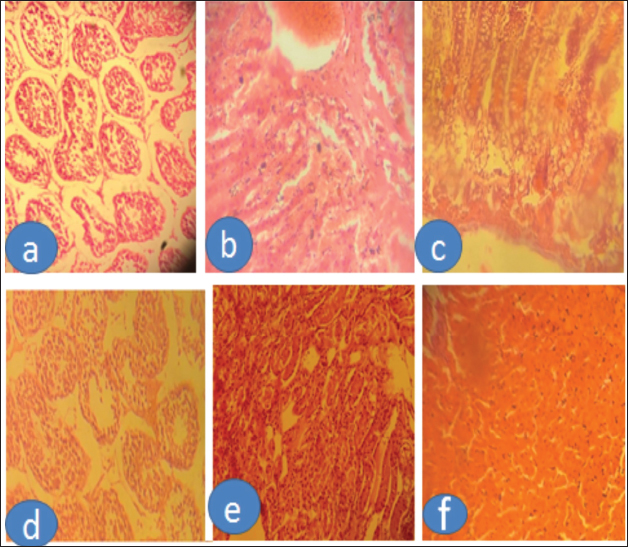
Histological findingsThe histological results showed noticeable changes in the tissues of different organs as a result of Alloxan injection (diabetes) (Fig. 1).
Fig. 1. (a). Histologic section of rabbit testis, alloxan injected (diabetic) after 2 months of 3% carob seed treatment, showed normal testicular tissue, active spermatogonia, and testicular tubules (40×). (b). Histologic section of the liver of alloxan injected rabbit (diabetic) after 2 months of 3% carob treatment, showed normal liver tissue patterns with normal hepatic cord and centrilobular appearance (40×). (c). Histologic section of the small intestine of alloxan injected rabbit (diabetic) after 2 months of 3% carob treated, appeared normal cell of the basement membrane of villi with normal goblet cell (40×). (d). Histologic section of rabbit testis, alloxan injected (diabetic) after 2 months, showed destruction of testicular tubules with fragile of testicular tissue and disappeared of sertoli cell (40×). (e). Histologic sections of the liver of alloxan injected rabbit (diabetic) after 2 months of 3% carob treated, showed normal kidney tissue patron with normal glomerular and normal longitudinal tubules of cortex areas (40×). (f). Histologic section of the liver of alloxan injected rabbit (diabetic) after two, abnormal liver tissue patron appearance with disorganized hepatic cord and destruction of centrilobular hepatic cord (40×). DiscussionBody weight and feed intakeThese results were closely in agreement with many studies that demonstrated how carobs and their derivatives can improve overall health and aid in the prevention of some chronic illnesses, acting as anti-proliferative and apoptotic activity against cancerous cells (Agnoletti et al., 2018), and suggested treatment diarrhea symptoms, antihyperlipidemic even antidiabetic benefits effects because of their rich antioxidants, polyphenols, and high fiber content (Brassesco, et al., 2021). In the same context, many researchers have reported that carb powder serves a significant amount of vitamins C, D, E, B6, and folic acid, while providing lower amounts of vitamins A, B2, Niacin, and B12. Additionally, Carob oil consists of 18 fatty acids with linoleic, oleic, stearic acid, and palmitic making up 40.45%, 11.01%, and 3.08%, respectively (Ayad et al., 2024). Moreover, Crob and its components play a beneficial role in the treatment of gastrointestinal disorders (Basharat et al., 2023). However, these positive effects might avoid many deleterious effects, especially diabetic mellitus and its health disturbances. Feed intakeIn the same line, feed intake levels (Table 3 recorded a significant (p < 0.05) decline in the control positive (diabetic) group compared to all treated (diabetic and received 1% and 3% carob) groups including control positive especially in last third test, and the positive control (diabetes) group appeared significantly decreased (p < 0.05) compared to all treated (diabetic and given 1% and 3% carob) groups, included control positive (healthy animals), particularly in last test. These results indicated that Carob pod powder is typically made by drying, milling, and roasting, which guarantees a high phenolic content and preferred sensory characteristics. (Gioxari et al., 2022). However, high tannin levels cause excess astringency (Nasar-Abbas et al., 2016; Palaiogianni et al., 2022). Additionally, dietary fiber may have chemopreventive effects on some malignancies, especially those of the gastrointestinal tract (Chait et al., 2020). According to Fidan et al. (2020) and Higazy et al. (2018), the carob pods’ high content of carbs (45%) and significant protein (6.83%) were responsible for their rich nutritional worth. Reduced lipid content (0.6%) and increased dietary fiber content (Nasar-Abbas et al., 2016). Moreover, carob contains a high concentration of tannins (3%–4%) (Ben Othmen et al., 2021). While ripe fruit has significant levels of Gallic acid, which is caused by the enzymatic hydrolysis of gallotannins in immature fruit, unripe carobs have higher concentrations of phenolic acids, polyphenols, flavonoids, and tannins exhibit stronger in vitro antioxidant potential (Kyriacou et al., 2021). The protein level of carob is especially high in both necessary and nonessential amino acids, making it a good source of protein (Basharat et al., 2023). It is necessary to mention that the protein fraction in carob seeds contains significant amounts of both essential and nonessential amino acids, such as lysine and arginine (Dahmani et al., 2023). Approximately 4.45% of ground carob flour contains glutelin (68%), albumin, and globulin (32%) (Dahmani et al., 2023) 2. One characteristic of carob seeds is their high amount of protein (25.7% ± 0.18%). A moderate protein concentration (18.6% ± 0.3%) was found in organically grown carob seeds (Mahtout et al., 2018). Carob pods are a high-energy meal that is perfect for animal nutrition because of their exceptional metabolizable energy content (Gioxari et al., 2022). Therefore, using carob by-products as a rabbit food source may benefit the intestinal flora (Juhász et al., 2023). Revealed gradual improvements in status compared with control negative, particularly the 3% carob, in the last third test, these values approximately resemble normal or nondiabetic animals in the control negative group. Glucagon and cortisol hormonesIt is feasible to say that carob pods boost feed intake and efficiency, improve rabbit performance traits, and positively change the gut microbiota (Rtibi et al., 2021). Numerous studies demonstrate that using carob has a beneficial effect on animal nutrition because of its high content of gross energy and fiber (Gioxari, et al., 2022), and phenolic acid gentisic acid, together with the flavonoids myricetin, naringenin, and kaempferol, which are frequently present in carob fruit, have anticancer effects in vitro by triggering cell cycle arrest and caspase-dependent cell death program (Stavrou et al., 2018). Furthermore, According to Nasar-Abbas et al. (2016), carob extract has several positive impacts on overall health, including decreasing cholesterol in those with hypercholesterolemia. Additionally, carob contains an important nutritional compound (tannins), which are astringent compounds present in a variety of plants (Rtibi et al., 2017). In the same line, many researchers recorded that, serine, glutamic acid alanine, arginine, glycine histidine, aspartic acid threonine, tyrosine, methionine, valine, proline, isoleucine, leucine, cysteine, phenylalanine, and lysine are among the 17 residues that make up carob (Smith, 2022). Specifically, over 57% of the pods’ whole amino acid content is composed of asparagine, aspartic acid, glutamic acid, alanine, valine, and leucine (Higazy et al., 2018). Various pharmacological activities, such as anti-inflammatory, antibacterial, antiulcer, antidiarrheal, and antioxidant properties, are believed to be present in carob (Dahmani et al., 2023) 3. Some investigations have demonstrated that the carob tree possesses several pertinent bioactivities, such as cytotoxic, depressive, and antioxidant properties (Juhász et al., 2023). In addition, traditional medicine uses the carob tree’s leaves and/or fruits as an analgesic to cure diabetes (Moumou et al., 2023). The carob tree’s fruits and leaves have phenolic chemicals and proteins, as well as antibacterial, antiproliferative, and antioxidant properties (El-Haddad et al., 2022). These compounds might play an important positive role in protecting the general health status from disturbances and deleterious effects that might be caused by diabetic effects. Blood serum glucose and insulin hormoneAccording to such results, it can be concluded that the carob has potential in the management of DM by lowering blood glucose levels, due to its positive effects as anti-inflammatory and anti-oxidative stress (Unuofin and Lebelo, 2020; Gorai and Vashisth, 2022). Moreover, it also showed neuroprotective mechanisms by easing inflammatory responses, enhancing anti-oxidative properties, and regulating transcription and transduction pathways, thereby aiding in the prevention of any deleterious effects of DM (Ritika et al., 2022). In the same contest, according to Palaiogianni et al. (2022) and Chait et al. (2020), carob pods are distinguished by having a high sugar content (over 50%), with approximately 75% or more of those sugars being sucrose or 24.7% and 68.38% sugar content (Dahmani et al., 2023). Because all of its portions, pods, leaves, flowers, seeds, woody roots, and bark are highly beneficial and have a significant variety of contexts, it is, therefore, frequently used in old-style medication to treat a wide range of illnesses, including diabetes, hypertension, and gastrointestinal issues (Kyriacou et al., 2021). Locust bean gum, a water-soluble mucus found in the endosperm of seeds, is a polymer (galactomannan) composed of 80%–84% D-mannose and 16%–20% D-galactose. It is a natural addition made from seed processing (Papaefstathiou et al., 2018). In addition to its antihypertensive, depressive, anti-obesity, and antihyperglycemic properties, carob trees (Dahmani et al., 2023) 5. However, very little is known about the phenolic profiles of carob in both soluble and nonsoluble fractions. Therefore, it is essential to look into the antioxidant activity of soluble-free, soluble conjugated, and bound phenolics to better understand the possible health advantages of carob consumption (Alonso et al., 2020). Furthermore, the bioaccessibility of bioactive polyphenols and how they are processed in the human body determine their health advantages (Chait et al., 2020). According to Goulas et al. (2016), carob fruits have a complex blend, carbohydrates and fibers, which are monitored by a wide variety of polyphenols. Carob fruit has a high nutritional value and is an essential source of sugar. According to previous studies, the amount of carbohydrates in cultivated plants ranges between 40 and 55 g/100 g–1 dm (Basharat et al., 2023). Sugar composition indicates that carob sucrose, which can reach 52 g/100 g–1 dm, is an essential source of CHO (Richane et al., 2022). The concentrations of fructose and glucose can reach up to 1.8–12.5 g, 100 g–1 dm, 1.8–10.2 g, and 100 g–1 dm, respectively (Goulas et al., 2016). Based on all these facts it can be concluded that carob plays an impact role as a strong scavenging action on free radicals and reactive oxygen species, along with its concentration-dependent inhibition of myeloperoxidase, an activity which is a side effect of diabetic mellitus negative effects are responsible for its antioxidant activity (Di Martino et al., 2019). One of the mechanisms of the main antioxidant is that it prevents a deleterious chain of reactions of lipid peroxidation, thereby reducing the negative effects of cytotoxic compounds and finally scavenging the free radicals (Norton et al., 2022). Therefore, it has been demonstrated that carob extract affects the activities of Superoxide dismutase and catalase, which may improve their functionality and capacity to remove reactive oxygen species. Results from the deleterious effects of DM were evaluated (Rtibi et al., 2017). Including higher activity against most general bacterial infections, particularly Enterococcus spp (Dahmani et al., 2023). Histological findingIn general, there were no differences between the treated and nontreated groups in gross or microscopic lesions, Figure 1 and still in normal appearance in all slide sections except the control positive or diabetic group which suffers from deleterious effects of such experimental diabetic effects results from alloxan injection which appeared disorganized hepatic cord and destruction of centrilobular hepatic cord in liver tissues, while there were destruction of testicular tubules with fragile of testicular tissue and disappeared of sertoli cells in testis tissue. ConclusionMale rabbits fed 1% and 3% carob seeds showed significant improvements in some of the physiological, productive, as well as histologist features. Therefore, to prevent or avoid the negative effects of DM in domestic male rabbits as well as another experimental laboratory model of animals, dry ground carob may be added to the diet as feed additives, particularly at a ratio of 3%. AcknowledgmentsThanks to the College of Veterinary Medicine at the University of Baghdad, this research was supported. Conflict of interestThe author declares that there is no conflict of interest. FundingThis research did not receive any specific grant. Author contributionThe idea was designed by M.J. The finished draft was written collaboratively by all authors and approved. Data availabilityData availability all data supporting the findings of this study are available in the manuscript, and no additional data sources are required. ReferencesAgnoletti, F., Brunetta, R., Bano, L., Drigo, I. and Mazzolini, E. 2018. Longitudinal study on antimicrobial consumption and resistance in rabbit farming. Int. J. Antimicrob. Agents 51, 197–205; doi:10.1016/j.ijantimicag.2017.10.007 Al-Bert, B.B., Derraik, J.G. and Brennan, C.M. 2014. A higher omega-3 index is associated with increased insulin sensitivity and a more favorable metabolic profile in middle-aged overweight. Sci. Rep. 4, 6697. Available via https://www.nature.com/ articles/srep06697 Alonso, M.E., González-Montaña, J.R. and Lomillos, J.M. 2020. Consumers’ concerns and perceptions of farm animal welfare. Animals 10, 385; doi:10.3390/ ani10030385 Ayad, R., Ayad, R., Zineddine, L. and Berghida, N.E.H. 2024. Algerian wild green carob (Ceratonia siliqua L.): physicochemical characteristics and antioxidant potency. Bull. Chem. Soc. Ethiop. 38(1), 187–198; doi:10.4314/bcse.v38i1.14 Basharat, Z., Afzaal, M., Saeed, F., Islam, F., Hussain, M., Ikram, A. and Awuchi, C.G. 2023. Nutritional and functional profile of carob bean (Ceratonia siliqua): a comprehensive review. Int. J. Food Prop. 26(1), 389–413; doi:10.1080/10942912.2022.2164590 Ben Othmen, K., Garcia-Beltrán, J.M., Elfalleh, W., Haddad, M. and Esteban, M.á. 2021. Phytochemical compounds and biological properties of carob pods (Ceratonia siliqua L.) extracts at different ripening stages. Waste Biomass Valor. 12, 4975–4990; doi:10.1007/s12649-021-01352-x Brassesco, M.E., Brandao, T.R., Silva, C.L. and Pintado, M. 2021. Carob bean (Ceratonia siliqua L.): a new perspective for functional food. Trends Food Sci. Technol. 114, 310–322; doi:10.1016/j. tifs.2021.05.037 Chait, Y.A., Gunenc, A., Bendali, F. and Hosseinian, F. 2020. Simulated gastrointestinal digestion and in vitro colonic fermentation of carob polyphenols: bioaccessibility and bioactivity. LWT 117, 108623; doi:10.1016/j.lwt.2019.108623 Dahmani, W., Elaouni, N., Abousalim, A., Akissi, Z.L.E., Legssyer, A., Ziyyat, A. and Sahpaz, S. 2023. Exploring carob (Ceratonia siliqua L.): a comprehensive assessment of its characteristics, ethnomedicinal uses, phytochemical aspects, and pharmacological activities. Plants 12(18), 3303; doi:10.3390/plants12183303 De Smith, M.J. 2021. Statistical Analysis Handbook: A comprehensive handbook of statistical concepts, techniques, and software tools. UK: Winchelsea Press. Available via https://www.statsref.com Di Martino, G., Crovato, S., Pinto, A., Dorotea, T., Mascarello, G., Brunetta, R., Agnoletti, F. and Bonfanti, L. 2019. Farmers’ attitudes towards antimicrobial use and awareness of antimicrobial resistance: a comparative study among Turkey and rabbit farmers Italian. J. Anim. Sci. 18, 194–201; do i:10.1080/1828051X.2018.1504236 El-Haddad, A.E., Gendy, A.M., Amin, M.M., Alshareef, W.A. and El Gizawy, H.A. 2022. Comparative characterization of carob pulp and seeds extracts: HPLC, antimicrobial, anti-inflammatory, and cytotoxic studies. Egypt. J. Chem. 65(10), 279–284; doi:10.21608/ejchem.2022.116534.5265 EL-Rify, A., Abd El-Hamid, M.H. and Abd El-Majeed, A.A. 2016. Effect of some treatments on chemical composition and quality properties of saidy date fruit (Phoenix dactylifera L.) during storage Ramadan, assiut. J. Agric. Sci. 47(5), 107–124. Available via http://www.aun.edu.eg/faculty_agriculture Emran, H., Khyreia, H. and Abeer, M. 2023. The histomorphological appearance of the testes in Alloxan-induced diabetic rabbits. Ibero Am. J. Biotechnol. Life Sci. 8(4), 19; doi:10.21931/ RB/2023.08.04.19 Fidan, H., Stankov, S., Petkova, N., Petkova, Z., Iliev, A., Stoyanova, M., Ivanova, T., Zhelyazkov, N., Ibrahim, S. and Stoyanova, A. 2020. Evaluation of chemical composition, antioxidant potential, and functional properties of carob (Ceratonia siliqua L). Seeds. Food Sci. Technol. 57, 2404–2413; doi:10.1007/s13197-020-04274-z Gioxari, A., Amerikanou, C., Nestoridi, I., Gourgari, E., Pratsinis, H., Kalogeropoulos, N. and Kaliora, A.C. 2022. Carob: a sustainable opportunity for metabolic health. Foods 11(14), 2154; doi:10.3390/ foods11142154 Gorai, B. and Vashisth, H. 2022. Progress in simulation studies of insulin structure and function. Front. Endocrinol. 13, 908724; doi:10.3389/ fendo.2022.908724 Goulas, V., Stylos, E., Chatziathanasiadou, M.V., Mavromoustakos, T. and Tzakos, A.G. 2016. Functional components of carob fruit: linking the chemical and biological space. Int. J. Mol. Sci. 17(11), 1875; doi:10.3390/ijms17111875 Higazy, M., ELDiffrawy, E., Zeitoun, M., Shaltout, O. and El-Yazeed, A. 2018. Nutrients of carob and seed powders and their application in some food products. J. Adv. Agr. Res. 23(1), 130–147. Juhász, á., Molnár-Nagy, V., Bata, Z., Tso, K.H. and Posta, K. 2023. Phytobiotic-prebiotic feed additive containing a combination of carob pulp, chicory, and fenugreek improve growth performance, carcass traits, and fecal microbiota of fattening pigs. Animals 13(23), 3621; doi:10.3390/ani13233621 Kyriacou, M.C., Antoniou, C., Rouphael, Y., Graziani, G. and Kyratzis, A. 2021. Mapping the primary and secondary metabolomes of carob (Ceratonia siliqua L.) fruit and its postharvest antioxidant potential at critical stages of ripening. Antioxidants 10(1), 57; doi:10.3390/antiox10010057 Macho-González, A., Garcimartín, A., López-Oliva, M.E., Bertocco, G., Naes, F., Bastida, S. and Benedi, J. 2017. Fiber-purified extracts of carob fruit decrease carbohydrate absorption. Food Funct. 8(6), 2258–2265; doi:10.1016/j.jff.2019.103600 Moumou, M., Mokhtari, I., Milenkovic, D., Amrani, S. and Harnafi, H. 2023. Carob (Ceratonia siliqua L.): a comprehensive review on traditional uses, chemical composition, pharmacological effects, and toxicology (2002-2022). J. Biol. Act. Prod. Nat. 13(3), 179–223; doi:10.1080/22311866.2023.2237481 Nasar-Abbas, S.M., E-Huma, Z., Vu, T.H., Khan, M.K., Esbenshade, H. and Jayasena, V. 2016. Carob kibble: a bioactive-rich food ingredient. Compr. Rev. Food Sci. Food Saf. 15(1), 63–72; doi:10.1111/1541-4337.12177 Norton, L., Shannon, C., Gastaldelli, A. and DeFronzo, R.A. 2022. Insulin: the master regulator of glucose metabolism. Metabolism 129, 155142; doi:10.1016/j.metabol.2022.155142 Palaiogianni, A., Stylianou, M., Sarris, D. and Agapiou, A. 2022. Carob-agro-industrial waste and potential uses in the circular economy. In Mediterranean fruits bio-wastes: chemistry, functionality, and technological applications. Eds., Ramadan, M.F. and Farag, M.A. Cham, Switzerland: Springer, pp: 765–797; doi:10.1007/978-3-030-84436-3_33 Rahman, M.S., Hossain, K.S., Das, S., Kundu, S., Adegoke, E.O., Rahman, M.A. and Pang, M.G. 2021. Role of insulin in health and disease: an update. Int. J. Mol. Sci. 22(12), 6403; doi:10.3390/ ijms22126403 Richane, A., Ismail, H.B., Darej, C., Attia, K. and Moujahed, N. 2022. The potential of Tunisian carob pulp as feed for ruminants: chemical composition and in vitro assessment. Trop. Anim. Health Prod. 54(1), 58; doi:10.1007/s11250-022-03071-4 Ritika, H. and Kishor, N. 2022. Modeling of factors affecting investment behavior during the pandemic: a grey-DEMATEL approach, J. Financ. Serv. Mark. 28, 222–235; doi: 10.1057/s41264-022-00141-4 Rtibi, K., Selmi, S., Grami, D., Amri, M., Eto, B., El-benna, J., Sebai, H. and Marzouki, L. 2017. Chemical constituents and pharmacological actions of carob pods and leaves (Ceratonia siliqua L.) on the gastrointestinal tract: a review, Biomed. Pharmacother 93, 522–528; doi: 10.1016/j. biopha.2017.06.088 Smith, M.V. 2022. Textbook of rabbit medicine-e-book. London, UK: Elsevier Health Sciences. Available via https://shop.elsevier.com › books › varga-smith Stavrou, I.J., Christou, A. and Kapnissi-Christodoulou, C.P. 2018. Polyphenols in carobs: a review on their composition, antioxidant capacity and cytotoxic effects, and health impact. Food Chem. 269, 355–374; doi:10.1016/j.foodchem.2018.06.152 Unuofin, J.O. and Lebelo, S.L. 2020. Antioxidant effects and mechanisms of medicinal plants and their bioactive compounds for the prevention and treatment of type 2 diabetes: an updated review. Oxid. Med. Cell. Longev. 2020, 1356893. doi:10.1155/2020/1356893 Yasmin, D., Zulfikar, K.M. and Motasim, S. 2018. Effects of composted and powdered bones meal on the growth and yield of Amaranthus cruentus. Asian J. Res. Crop Sci. 2(3), 1–9; doi: 10.9734/ AJRCS/2018/45241 Zhao, Q., Wang, Z., Wang, X., Yan, X., Guo, Q., Yue, Y. and Yuan, Y. 2023. The bioaccessibility, bioavailability, bioactivity, and prebiotic effects of phenolic compounds from raw and solid-fermented mulberry leaves during in vitro digestion and colonic fermentation. Food Res. Int. 165, 112493; doi:10.1016/j.foodres.2023.112493 | ||
| How to Cite this Article |
| Pubmed Style Al-saadi MJ, Hadi LI, Alkaisse G, Al-musawi JEQ. Effects of grind carob seeds supplementation in the diet of domestic male rabbits, injected with alloxan, on some productive, physiological, and histological traits. Open Vet. J.. 2025; 15(6): 2831-2839. doi:10.5455/OVJ.2025.v15.i6.52 Web Style Al-saadi MJ, Hadi LI, Alkaisse G, Al-musawi JEQ. Effects of grind carob seeds supplementation in the diet of domestic male rabbits, injected with alloxan, on some productive, physiological, and histological traits. https://www.openveterinaryjournal.com/?mno=245411 [Access: June 27, 2026]. doi:10.5455/OVJ.2025.v15.i6.52 AMA (American Medical Association) Style Al-saadi MJ, Hadi LI, Alkaisse G, Al-musawi JEQ. Effects of grind carob seeds supplementation in the diet of domestic male rabbits, injected with alloxan, on some productive, physiological, and histological traits. Open Vet. J.. 2025; 15(6): 2831-2839. doi:10.5455/OVJ.2025.v15.i6.52 Vancouver/ICMJE Style Al-saadi MJ, Hadi LI, Alkaisse G, Al-musawi JEQ. Effects of grind carob seeds supplementation in the diet of domestic male rabbits, injected with alloxan, on some productive, physiological, and histological traits. Open Vet. J.. (2025), [cited June 27, 2026]; 15(6): 2831-2839. doi:10.5455/OVJ.2025.v15.i6.52 Harvard Style Al-saadi, M. J., Hadi, . L. I., Alkaisse, . G. & Al-musawi, . J. E. Q. (2025) Effects of grind carob seeds supplementation in the diet of domestic male rabbits, injected with alloxan, on some productive, physiological, and histological traits. Open Vet. J., 15 (6), 2831-2839. doi:10.5455/OVJ.2025.v15.i6.52 Turabian Style Al-saadi, Majid J., Lateef I. Hadi, Ghalib Alkaisse, and Jassim E. Q. Al-musawi. 2025. Effects of grind carob seeds supplementation in the diet of domestic male rabbits, injected with alloxan, on some productive, physiological, and histological traits. Open Veterinary Journal, 15 (6), 2831-2839. doi:10.5455/OVJ.2025.v15.i6.52 Chicago Style Al-saadi, Majid J., Lateef I. Hadi, Ghalib Alkaisse, and Jassim E. Q. Al-musawi. "Effects of grind carob seeds supplementation in the diet of domestic male rabbits, injected with alloxan, on some productive, physiological, and histological traits." Open Veterinary Journal 15 (2025), 2831-2839. doi:10.5455/OVJ.2025.v15.i6.52 MLA (The Modern Language Association) Style Al-saadi, Majid J., Lateef I. Hadi, Ghalib Alkaisse, and Jassim E. Q. Al-musawi. "Effects of grind carob seeds supplementation in the diet of domestic male rabbits, injected with alloxan, on some productive, physiological, and histological traits." Open Veterinary Journal 15.6 (2025), 2831-2839. Print. doi:10.5455/OVJ.2025.v15.i6.52 APA (American Psychological Association) Style Al-saadi, M. J., Hadi, . L. I., Alkaisse, . G. & Al-musawi, . J. E. Q. (2025) Effects of grind carob seeds supplementation in the diet of domestic male rabbits, injected with alloxan, on some productive, physiological, and histological traits. Open Veterinary Journal, 15 (6), 2831-2839. doi:10.5455/OVJ.2025.v15.i6.52 |


