





| Research Article | ||
Open Vet. J.. 2025; 15(6): 2762-2773 Open Veterinary Journal, (2025), Vol. 15(6): 2762-2773 Research Article The effect of mangosteen rind extract nanocapsule as a feed additive on the growth performance and blood lipid profile of broiler chickenAndri Kusmayadi1*, Richa Mardianingrum2, Dwi Wijayanti1, Yanti Yanti31Department of Animal Science, Faculty of Agriculture, Universitas Perjuangan Tasikmalaya, Tasikmalaya, Indonesia 2Department of Pharmacy, Faculty of Health Science, Universitas Perjuangan Tasikmalaya, Tasikmalaya, Indonesia 3Department of Mechatronics Engineering, Faculty of Engineering, Universitas Mayasari Bakti, Tasikmalaya, Indonesia *Corresponding Author: Andri Kusmayadi. Department of Animal Science, Faculty of Agriculture, Universitas Perjuangan Tasikmalaya, Tasikmalaya, Indonesia. Email: andrikusmayadi [at] unper.ac.id Submitted: 23/03/2025 Revised: 05/05/2025 Accepted: 06/05/2025 Published: 30/06/2025 © 2025 Open Veterinary Journal
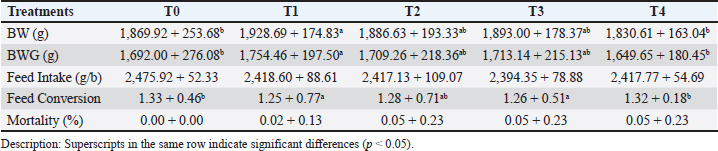
AbstractBackground: Nanoencapsulation technology has great potential as an innovation in animal feed, especially as a natural supplement to replace antibiotics and improve livestock health. With this technology, the bioactive benefits of mangosteen rind can be utilized more optimally, opening up new opportunities in the sustainable livestock industry, especially for poultry nutrition. Aim: This study aimed to examine the effect of adding mangosteen rind extract nanocapsule (MREN) as a feed additive and to determine its optimal level for improving the growth performance and blood lipid profile of broiler chicken. Methods: The research design was completely randomized with a one-way pattern. There were 300 DOC unsexed Cobb strain broiler chickens grouped into 5 feed treatments: T0:100% basal feed (BF) as a negative control, T1:100% BF + zinc-bacitracin 50 ppm (positive control), T2: BF + 0.1% MREN, T3: BF + 0.2% MREN, and T4: BF + 0.3% MREN. The treatment was repeated 6 times and each experimental cage was filled with 10 broiler chickens. The maintenance was conducted for 35 days to observe the growth performance and blood lipid profile of broiler chickens. Results: The results showed that the addition of mangosteen rind extract nanocapsules had a significant effect on the body weight, body weight gain (BWG), and feed conversion ratio and blood lipid profile of broiler chickens (triglycerides and HDL). Feed treatments containing 0.1% and 0.2% mangosteen rind extract nanocapsules (T2 and T3) produced better growth performance than T0 with an increase in body weight, BWG, and feed conversion has a value of 16.71–23.08 g, 17.26–21.14 g, and 0.05–0.07, respectively. For the blood lipid profile, T4 treatment at a dose of 0.3% was able to decrease triglyceride levels by 193.95 g compared with T0, whereas T2 treatment at a dose of 0.1% was able to increase HDL levels by 6.35 mg/dl. Conclusion: The addition of mangosteen rind extract nanocapsules at low level (0.1%–0.2%) is recommended for broiler chickens to improve growth performance and blood lipid profiles. Keywords: Blood lipid profile, Broiler chicken, Growth performance, Mangosteen rind extract nanocapsule. IntroductionBroiler chickens are the most widely cultivated and consumed livestock commodity by Indonesian people. In 2022, the broiler chicken population in Indonesia reached 3,168,325,176 heads (Central Statistics Agency of Indonesia, 2023a), with a total meat production of 3,765,573.09 tons (Central Statistics Agency of Indonesia, 2023b). These data experience a surplus every year, with a significant growth of 1.45% annually. Broiler chickens were widely cultivated because of their fast growth, high meat percentage, feed efficiency, and rapid harvest age (Widaningsih, 2022). The growth rate of broiler chickens is very fast, but it is always followe by a fast fattening rate (Hanafi et al., 2021). One of the causes is the utilization of antibiotic growth promoter (AGP) which is very effective in accelerating growth, increasing feed efficiency (Yaqoob et al., 2021; El-Hack et al., 2022; Alabi et al., 2023; Lee et al., 2023), and reducing mortality (Haque et al., 2020; Das et al., 2024). In fact, the Indonesian government has banned the utilization of AGP since 2018 (Untari et al., 2021; Rizal et al., 2024) because it is dangerous for livestock and humans as consumers (Hidayat dan Rahman, 2019; Owusu-Doubreh et al., 2023). Therefore, it is necessary to have a safe and natural antibiotic alternative, one of which is phytobiotics derived from bioactive plant compounds. Phytobiotics act as natural antioxidant compounds that can improve the quality of broiler chicken meat, namely, texture, color, tenderness, and consumer preference (Hidayat et al., 2019), increase harvest body weight, and the chemical quality of broiler chicken meat (Hidayat et al., 2017). One phytobiotic that has the potential to be applied and is widely studied as a natural antibiotic for poultry is mangosteen rind (Kusmayadi et al., 2019; Kusmayadi et al., 2023). Mangosteen rind has the potential to be wasted if it is not utilized properly in high-value products (Nasrullah et al., 2019; Harumi et al., 2021). Therefore, mangosteen rind needs to be utilized as a poultry feed additive because it contains antioxidant compounds that are really good for poultry growth (Hidanah et al., 2017). In every part of the mangosteen fruit, the mangosteen rind is the part with the largest composition with a yield percentage of 69% (Li et al., 2023). Mangosteen rind has been reported to contain bioactive compounds, namely xanthones and other polyphenols, up to 10 times higher with antioxidant activity up to 20 times higher than other parts of the mangosteen fruit (Rizaldy et al., 2022). In addition, mangosteen rind was reported to contain many pharmacological effects that are very good for the body, including antibacterial (Andani et al., 2021; Poetri et al., 2023), anti-inflammatory (Putri et al., 2017; Setiawan et al., 2023), antihyperlipidemic (Abuzaid et al., 2017; Darsono et al., 2023), and antioxidant (Nadia et al., 2022; Sriwidodo et al., 2022; Anam et al., 2023). The pharmacological properties of mangosteen rind can be beneficial if extracted using the right extraction methods (Pratiwi et al., 2016; Junuda et al., 2023). However, mangosteen rind extract products have weaknesses, namely unstable (Resende et al., 2020), easily reacted and oxidized (Kusmayadi, 2019; Yuvanatemiya et al., 2022; Sefcova et al., 2023; Cao et al., 2023; ), low solubility and permeability (Prieto et al., 2024), and sensitive (Alves et al., 2024) to environmental influences. Therefore, there is a need for a method that can increase the stability of mangosteen rind extract products so that they have environmental resistance and high stability. Nanoencapsulation is a technique that is able to protect, process, prevent undesirable properties, control the proper release of drugs, and increase the bioavailability and functionality of extract products (Prieto et al., 2024). In addition, nanoencapsulation has a very good role in increasing the absorption, stability, and functional properties of materials (Pateiro et al., 2021). In nanoencapsulation methods, the right encapsulant material is needed in order that the mangosteen rind extracted from damage (Negi et al., 2022). The encapsulant material that has a good ability to protect the core ingredients of herbal extract products is chitosan (Detsi et al., 2020; Valencia-Sullca et al., 2024). Chitosan in the nanoencapsulation process must be nanoparticle- sized so that sodium tripolyphosphate is used as a reductor. Then, good ionic gelation is formed for the nanoencapsulation process (Hijriyah et al., 2023; Islami et al., 2024). Nanoencapsulation products using the ionic gelation method with chitosan and STPP have been proven effective in supporting the survival and growth of livestock (Lembang et al., 2023). Mangosteen rind extract nanocapsule products are widely used as feed additives in poultry. The addition of turmeric extract nanocapsules has been proven to increase feed conversion and reduce total cholesterol in broiler chickens (Zuprizal et al., 2015), and was able to improve the chemical quality of broiler chicken meat (Hidayat et al., 2017). The addition of essential oil nanocapsules can protect essential oil from adverse environmental influences, extend endurance, and increase body weight, body weight gain (BWG), feed consumption, and feed conversion (Yaseen et al., 2022). The addition of mangosteen rind extract to broiler chickens increased performance and reduced ration conversion (Yanesti et al., 2024). Previous studies have tested the application of mangosteen peel extract microcapsules on the characteristics of the small intestine and blood malondialdehyde in Cihateup ducks (Kusmayadi et al., 2023). In this study, with the advancement of technology at the nanoparticle scale, nanoparticles are suspected to have advantages in terms of bioavailability, digestibility, and stability compared to the microparticle scale. Thus, the output of this study produces much more significant productivity than that of previous studies. The application of mangosteen rind extract nanocapsules as a feed additive (Kusmayadi et al., 2025) was expected to have a greater impact on the growth performance and blood lipid profile of broiler chickens. Materials and MethodsMaterialsThe materials used in this study consisted of mangosteen rind, chitosan, STPP, ethanol, DOC broiler strain Lohmann MB 202, and basal feed of broiler chicken from PT. Charoen Pokphand Tbk (Hi-Pro-Vite 511), physiological NaCl, glacial acetic acid, tween 80, disinfectant, laundry soap, zinc-bacitracin antibiotics, formaldehyde, alcohol, vitamins, medicines. The tools used were a macerator, centrifuge, microscope, glass object, cover glass, spray dryer, rotary evaporator, microtome, gloves, mask, dropper pipette, Erlenmeyer flask, measuring cup, glass beaker, measuring pipette, Eppendorf tube, volume pipette, spectrophotometer, vortex, magnetic stirrer, aluminum foil, water bath, oven, desiccator, spatula, measuring flask, plastic, thermometer, hygrometer, Vaculab EDTA, filter paper, tissue paper, label paper, research sample tag, camera, 1 m3 cage, feeder, drinker, lamp, digital scale, analytical scale, and a set of surgical instruments. MethodsMangosteen rind was extracted using a modified extraction method developed by Ningsih et al. (2017) that used an ethanol solvent and an extraction method maceration. The characterization of particle size, zeta potential, and morphological tests were performed on the resultant mangosteen rind extract nanocapsule products (Hussain et al., 2017; Afifah et al., 2021; Kusmayadi, 2021). The formulation of mangosteen rind extract nanocapsules with the best characterization will then serve as the foundation for its usage as a poultry feed additive. The study was conducted experimentally and quantitatively to determine the effects of mangosteen rind extract nanocapsule products as a feed additive for broiler chickens on growth performance and blood lipid profiles. The study design used a completely randomized design (CRD) with a one-way pattern. There were 300 DOC unsexed Cobb strain broiler chickens grouped into 5 feed treatments: T0: 100% basal feed (BF) as a negative control, T1: 100% BF + zink basitrasin 50 ppm (positive control), T2: BF + 0.1% MREN, T3: BF + 0.2% MREN, and T4: BF + 0.3% MREN. The sample size (MREN) of the study was adjusted by a percentage based on the total basal feed used at that time. Each treatment was repeated 6 times and each experimental cage was filled with 10 broiler chickens. The maintenance was conducted for 35 days, which were divided into an adaptation period (weeks 1 to 2) and a feed treatment period (weeks 3 to 5). Feeding was conducted twice a day, specifically in the morning and evening while drinking water was provided ad libitum. The parameters tested were growth performance (harvest body weight, BWG, feed consumption, feed conversion, and mortality) and blood lipid profiles (total cholesterol, triglycerides, LDL, and HDL) of broiler chickens. Broiler chickens were weighed weekly (week 0 to week 5) to measure weekly BWG until harvest (BW). Feed consumption was recorded every time it was given twice a day, including the amount given and the amount remaining in the feeder every morning and evening every day. Feed conversion was calculated by comparing feed consumption with BWG. Chicken mortality can be measured by calculating the percentage of chicken deaths in a certain period. Statistical analysisThe data obtained were processed using a CRD (one way) with analysis of variance (ANOVA) to determine the effect of differences in treatment. If there was a significant difference (p < 0.01 or 0.05), it was continued with Duncan’s new multiple range test (DMRT) using SPSS version 25.0. Ethical approvalThe use of material (broiler chickens) in this study was approved by the Animal Ethics Committee for Using Animal and Scientific Procedures in the Faculty of Agriculture, Universitas Perjuangan Tasikmalaya, Indonesia. ResultsThe results of the broiler chicken growth performance test are presented in Table 1. The results of the stud on the growth performance of broilers whose feed was supplemented with mangosteen rind extract nanocapsules showed significantly different results (p < 0.05) on harvest body weight, BWG, and feed conversion. As for the parameters of feed consumption and mortality, there was no significant effect (p > 0.05). The results of the test on the harvest body weight of broiler chickens. Treatment T1 as a positive control containing 50 ppm zinc-bacitracin produced the highest harvest body weight of 1,928 g. However, treatment T1 was not significantly different from treatments T2 and T3, which each contained 0.1% and 0.2% MREN, with body weight values of 1,886 g and 1,893 g, respectively. This condition showed that the addition of 0.1% and 0.2% MREN had the same effectiveness as zinc-bacitracin in increasing the body weight of broiler chickens. Based on the results of statistical tests, treatments T1, T2, and T3 were significantly different (p < 0.05) with the negative control treatment (T0) producing a body weight of 1,869 g and T4 containing 0.3% MREN of 1,830 g because it was suspected of exceeding the optimal dose of MREN use so that it had a negative impact on the decrease in harvest body weight. Table 1. Values of broiler chicken growth performance.
Almost the same results occurred for the BWG parameter, where treatment with T1 produced the same BWG as treatments T2 and T3, with BWG values of 1,754 g, 1,709 g, and 1,713 g, respectively. This showed that synthetic antibiotics in the form of zinc- bacitracin had the same ability as MREN treatments at doses of 0.1% and 0.2%. Based on the results of statistical tests in Table 1, the treatment of T1, T2, and T3, which produced the highest BWG, had a significant difference (p < 0.05) with T0 and T4. This showed that the negative control treatment (T0), which was not given any treatment in its feed and 0.3% MREN (T4), had lower BWG compared to other treatments, with BWG values of 1,692 g and 1,649 g, respectively. Regarding the feed conversion parameter, treatments of T1, T2, and T3 significantly (p < 0.05) produced lower feed conversion values compared to other treatments (T0 and T4). This proved that the effectiveness of synthetic zinc-bacitracin antibiotics had the same impact as MREN treatment at doses of 0.1% and 0.2% in increasing the efficiency of feed use, which was more efficient than treatments T0 and T4. Treatment with T4 containing 0.3% MREN contained a higher dose compared with T2 and T3, which contained optimal doses (0.1% and 0.2% MREN), resulting in a negative impact on decreasing BWG. The feed conversion values in this study ranged from 1.25 to 1.33. This condition proved that to obtain 1 kg of broiler chicken meat, 1.25 to 1.33 kg of feed was required. Mangosteen peel extract nanocapsules improved broiler chicken growth performance by improving gut health, nutrient efficiency, and the immune system, as well as providing antioxidant protection. Nanocapsule technology improves the absorption of active compounds, resulting in more efficient pharmacological effects that are more optimal than the habitual form. Mangosteen peel extract containing active compounds such as xanthones, especially alpha-mangostin (α-MG) was inserted into a nanocapsule system (chitosan-STPP). Nanocapsules play an important role in protecting active compounds from degradation (enzymes, gastric acid), increasing bioavailability, and allowing gradual and controlled release in the digestive tract. After consumption, nanocapsules pass through the digestive tract and slowly release active compounds into the small intestine. Xanthone compounds can then be absorbed more efficiently due to their nanosize, then enter the circulation system and are targeted to target cells (such as immune cells and intestinal epithelium). The pharmacological effects of xanthone compounds as growth promoters include being antibacterial by inhibiting the growth of pathogenic bacteria such as E. coli, Salmonella, and Clostridium spp. Maintaining the balance of intestinal microbiota, is important for optimal nutrient absorption. Antioxidant mechanism by neutralizing free radicals and reducing oxidative stress due to high metabolism or dense environments, protecting body cells, and accelerating tissue regeneration so that growth is faster. Xanthones also act as anti-inflammatories by reducing inflammation in the intestinal mucosa due to infection or feed stress and minimizing damage to intestinal tissue, thereby increasing the efficiency of nutrient absorption. In addition, xanthones also act as immunostimulant agents by increasing the activity of immune cells such as macrophages and lymphocytes, thereby increasing the body’s resistance in chickens, thereby reducing morbidity and mortality rates. Thus, some of the impacts on the growth performance of broiler chickens are marked by faster body weight increases, improved feed conversion ratios as an indicator of increased feed efficiency, and decreased mortality rates. The results of the blood lipid profile tests on broiler chicken blood are presented in Table 2. The results of the study on the blood lipid profile of broilers whose feed was supplemented with mangosteen rind extract nanocapsules showed significantly different results (p < 0.05) on triglycerides and HDL. As for the total cholesterol and LDL parameters, there was no significant effect (p > 0.05). The treatment of feed supplemented with mangosteen rind extract nanocapsules at various levels (T2, T3, and T4) resulted in significantly lower blood triglyceride levels compared with the control treatment, both negative and positive controls (T0 and T1). Blood triglyceride levels in treatments T2–T4 were 77.20, 85.10, and 52.85 mg/dl, respectively. The values for the negative and positive control treatments were 146.80 and 138.00 mg/dl, respectively. These results indicate that MREN treatment at all levels has an extremely good ability to reduce blood triglyceride levels in broiler chickens. The negative and positive control treatments produced blood triglyceride levels that reached 2–3 times higher than those of the MREN treatment. The results of the study on the HDL parameter showed that the T2 and T3 treatments had higher HDL levels than the T1 and T3 treatments, although they were not significantly different from T0. This shows that MREN treatment at the 0.1% and 0.2% levels has a good ability to increase good cholesterol (HDL) levels with values of 39.25 and 38.25 mg/dl, respectively. The T1 treatment containing zinc-bacitracin had a lower HDL value of 32.90 while the T4 treatment was 33.25 mg/dl. The T0 treatment as a negative control that did not receive treatment had a value of 36.55 mg/dl, which is better than the T1 treatment. For total cholesterol and LDL parameters, all treatments did not show significant differences in reducing or increasing total cholesterol and LDL levels. Table 2. Blood lipid profile levels of broiler chickens.
Mangosteen peel extract nanocapsules work by inhibiting cholesterol synthesis, increase fat oxidation, and regulate lipid metabolism, with effectiveness enhanced by nanocapsulation technology. As a result, the blood lipid profile of broiler chickens improves, which contributes to their health and production performance. Mangosteen peel is rich in bioactive compounds, especially xanthone, which have activities as hypolipidemic agents (lowering blood fat), antioxidants, and antiinflammatories. Mangosteen peel extract nanocapsules are able to increase the bioavailability of active compounds so that xanthones are absorbed more optimally in the digestive tract, prevent degradation by gastric acid and enzymes, and play a role in targeted release so that release is controlled in the small intestine where lipid absorption occurs. The mechanism of action of mangosteen peel extract nanocapsules in improving lipid profiles is by inhibiting cholesterol synthesis because xanthones have the ability to inhibit the work of the HMG-CoA reductase enzyme, a key enzyme in cholesterol synthesis in the liver, thereby reducing total cholesterol and LDL (bad cholesterol) levels. Mangosteen peel extract nanocapsules can increase fat metabolism by increasing the expression of genes related to fatty acid oxidation such as PPAR-α so that fat burning is more efficient and blood triglycerides decrease. Xanthones act as antioxidants by preventing LDL oxidation, which can trigger atherosclerosis, and act as antiinflammatories by reducing systemic inflammation that often causes lipid metabolism dysfunction. Xanthones are reported to regulate lipid transport by increasing the activity of the lipoprotein lipase enzyme, thereby accelerating the breakdown of triglyceride-rich lipoproteins and decreasing plasma triglyceride levels. The effect of mangosteen peel extract nanocapsules on the blood lipid profile of broiler chickens in this study was able to reduce total cholesterol, triglycerides, and LDL levels. At the same time, it is able to increase HDL levels as good cholesterol. DiscussionGrowth performanceBased on the results of statistical tests in Table 1, it showed that the supplementation of mangosteen rind extract nanocapsules had a significant effect (p < 0.05) on body weight, BWG, and feed conversion. The parameter of feed consumption and mortality did not show a significant effect (p > 0.05). This showed that feed treatment affected the value of body weight, BWG, and feed conversion. The body weight value of the research results showed that T1 treatment produced a body weight that was significantly different from T0 and T4 treatment. These data indicated that positive control treatment containing 50 ppm zinc-bacitracin was associated with a significantly greater body weight compared with negative control treatment (no treatment) and T4. The T2 and T3 treatments had the same values as the T1 treatment. This condition showed that mangosteen rind extract has a significant effect on increasing body weight as a synthetic antibiotic. These results are the same as those of previous studies in which mangosteen rind extract was shown to act as a natural AGP, which increased the growth performance and production of broiler chickens (Herawati et al., 2020). These results indicated that the use of synthetic antibiotics significantly affected harvest body weight better than negative controls that were not given treatment. The synthetic antibiotics used, namely zinc- bacitracin, were widely used as AGPs, which could increase broiler body weight by reducing pathogenic bacteria, thereby improving intestinal health and nutrient absorption, optimizing intestinal microbiota in order that metabolism and feed efficiency were better, reducing inflammation and stress in order that energy could be diverted to muscle and tissue growth, and suppressing the production of toxic metabolites in order that digestive environment was more optimal for growth. Treatment with T2 and T3 produced higher body weight values compared to treatment of T4. If broilers are given excessive doses of mangosteen rind extract, the xanthone content that initially acts as an antioxidant could change into a pro-oxidant, causing damage to liver cells, muscle tissue, and the immune system. The results of this study indicated that excessive antioxidant supplementation could reduce growth performance because it causes secondary oxidative stress. α-MG nanoparticle treatment was able to produce a longer drug release profile due to infection compared to α-MG extract alone. The NP formulation containing α-MG has been shown to be very effective in inhibiting bacterial growth as well as an antioxidant (Chidchai et al., 2023). The T4 treatment had a higher dose than the optimal dose (T2 and T3), so it was prooxidant, not antioxidant which was indicated by a decrease in body weight. Mangosteen rind extract has excellent antioxidant and antimicrobial activity against pathogenic bacteria in poultry, such as Salmonella spp. The supplementation of mangosteen rind extract as a feed additive for broiler chickens has proven that α-MG is very safe and can replace the use of salinomycin antibiotics at levels of 50 and 60 mg/kg. In addition, mangosteen rind extract can act as a natural antioxidant in broiler chickens, thereby increasing their growth. Mangosteen rind extract is a natural and environmentally friendly antibiotic because it does not leave residues in either the meat or liver of broiler chickens (Sriboonyong et al., 2022). The test results for the parameter of BWG were almost the same as the parameter of body weight, where the T1 treatment was significantly different from T0 and T4, while the T2 and T3 treatments were not significantly different. This condition indicated that the positive control treatment containing 50 ppm zinc-bacitracin had the same effect as the feed treatment containing 0.1% and 0.2% mangosteen rind extract nanocapsules (T2 and T3) in increasing BWG. Zinc bacitracin is a combination of zinc and bacitracin used as a broad- spectrum antibiotic. Bacitracin inhibits bacterial cell wall synthesis at an early stage, which causes bacteria to be unable to grow and eventually die. The zinc in this formulation stabilizes bacitracin and enhances its antibacterial effectiveness. This antibiotic is often used in the livestock industry, especially as a growth promoter and for the prevention of bacterial infections in poultry and pigs. Compared with other synthetic antibiotics, zinc-bacitracin has minimal resistance due to its specific mechanism of action. Therefore, it has high stability when combined with zinc, making it more durable in drug products. This result was in accordance with the research conducted by Mutia et al. (2017), which stated that the addition of mangosteen rind flour at a level of 1–2 g/kg feed combined with 200 mg/kg vitamin E could improve digestive organs, digestive accessory organs, reproductive organs, laying hen carcasses, and increase the live weight of broiler chickens. The use of mangosteen rind flour at doses of 66 g/kg feed and 100 g/kg feed had a very effective ability in fighting disease, increasing the immune system of broiler chickens, preventing disease onset, and improving the health status of poultry. This condition occurred through the mechanism of increasing the number of total white blood cells, increasing the number of heterophils, increasing the concentration of lymphocytes in the bursa of Fabricius and increasing the formation of spleen lymph nodes. Mangosteen rind flour acts as a natural antioxidant as well as a natural antibiotic that could be used as a substitute for synthetic antibiotics to eliminate the occurrence of antibiotic residues in poultry meat, thereby increasing food safety and minimizing the emergence of antibiotic resistance, which is very dangerous for both livestock and humans. The use of mangosteen rind flour as a feed additive could increase productivity and improve health levels for broiler chickens (Ele et al., 2018). Oral supplementation of mangosteen rind extract in feed can improve the growth performance, immune parameters, endurance, and survival rate of tilapia against pathogenic bacterial infections (Yostawonkul et al., 2023). Mangosteen rind extract has a very effective role as an antibacterial agent and natural medicine for fighting pathogenic bacteria in pets (Kim et al., 2024). This showed that the significant increase in body weight in broiler chickens was due to the effectiveness of α-MG in fighting pathogenic bacteria during maintenance so that growth was much better compared to the control treatment (T0). For the feed consumption parameter, all treatments did not show a significant effect (p > 0.05). This showed that all treatments (T0–T4) had the same feed consumption value. Thus, the addition of mangosteen rind extract nanocapsules did not have a negative impact on feed consumption. Previous studies have reported that the addition of mangosteen rind extract to animal feed had no adverse effects on feed consumption or nutrient digestibility, was even able to increase nutrient digestion and body weight percentage, and was able to increase growth performance and plasma antioxidant activity under extreme temperature and humidity indices (Ban et al., 2022). In contrast to the feed consumption value, the feed conversion value showed significantly different values between treatments. Feed treatments containing mangosteen rind extract nanocapsules at levels 0.1% and 0.2% (T2 and T3) produced the same feed conversion value as the positive control treatment (T1) of 1,254, 1,284, and 1,265 (T1–T3), respectively. This value indicated that the feed consumption required to produce 1,000 g of broiler chicken meat was 1,254, 1,284, and 1,265 g of feed, respectively. This condition indicated that the lower the feed conversion value, the more efficient the amount of feed needed to be converted into meat. This was different from T0 and T4, which had higher feed conversion values (1,325 and 1,321 g). This was due to the use of zinc-bacitracin antibiotics and the optimal level of mangosteen rind extract nanocapsules that were able to improve feed conversion. The feed conversion in the T4 treatment produced a higher value compared to other mangosteen rind extract nanocapsule treatments due to the content of the dose of mangosteen rind extract nanocapsules consumed having a negative impact if used excessively (exceeding the optimal dose). These results were in accordance with those of previous studies, which stated that supplementation of mangosteen rind extract up to a dose of 180 mg/kg ration could improve production performance, such as ration conversion, length of laying days, egg weight, shell thickness, yolk color, and egg cholesterol, although it did not significantly affect the yolk index score, ration consumption, and haugh egg units (Widjastuti et al., 2021). Nanoencapsulation of mangosteen rind extract can have several effects on broiler growth performance, especially because of the bioactive content such as xanthones which have antioxidant, anti-inflammatory, and antimicrobial properties. The nanoencapsulation process can increase the bioavailability of active compounds in mangosteen rind extract so that they are more effectively absorbed by the broiler’s body. In addition, the antioxidant effects of xanthones can reduce oxidative stress, improve digestive health, and increase feed conversion efficiency. Xanthones in mangosteen rind extract have antimicrobial properties that can reduce bacterial infections in the digestive tract. Nanoencapsulation can increase the stability of active compounds, enhancing the immunostimulation effect is more optimal. The use of mangosteen rind extract in nanoencapsulated form can increase broiler body weight due to increased nutrient availability and protection against oxidative stress. By increasing their immunity, chickens experience fewer health problems, so growth is optimal. Active compounds in mangosteen rind can help maintain the balance of the intestinal microbiota, reduce the population of pathogenic bacteria, and improve intestinal health. Nanoencapsulation helps protect active compounds from damage before they reach the digestive tract. With increased immunity and digestive tract health, the broiler mortality rate tends to be lower than that of those who do not receive this supplementation. Overall, nanoencapsulation of mangosteen rind extract has the potential to improve broiler growth performance through increased feed efficiency, immune stimulation, increased growth, improved digestive health, and decreased mortality rates. The mortality value of broiler chickens is presented in Table 1. All feed treatments had no significant effect (p > 0.05). This proved that treatment T1 with a mortality value of 0.00% had the same impact as the other treatments in reducing mortality. The mortality value of 0.00 in treatment T1 showed that zinc- bacitracin as a synthetic antibiotic had an effective impact on reducing mortality. It occurred because the addition of mangosteen rind nanoparticles played a very effective role as a new bactericide that was able to inhibit bacterial growth in the media and the formation of bacterial proteins, so it was more economical, more efficient, and very safe to use. Thus, mangosteen rind extract nanoparticle was very good for application in biomedicine and other applications that are nontoxic (Yehia et al., 2022). This mangosteen rind extract had very good antimicrobial properties against the growth of Gram-positive bacteria found on the surface of chicken eggshells. Mangosteen extract supplementation in laying hen feed could significantly increase egg quality while effectively managing the microbial population on the surface of feces and eggshells. Mangosteen rind extract has great potential as a viable and safe substitute for conventional antibiotics in inhibiting bacterial growth and improving egg quality (Zhu et al., 2024). These antibacterial and antimicrobial properties resulted in low mortality rates in all treatments containing mangosteen rind extract nanocapsules. Blood lipid profileBased on the results of the statistical test in Table 2, the feed treatment had a significant effect (p < 0.05) on triglyceride and HDL levels. Meanwhile, total cholesterol and LDL parameters did not have a significant effect (p > 0.05). The results of this study were in accordance with the research conducted by Ele et al. (2016) that a feed treatment containing mangosteen rind flour could produce the same growth performance of broiler chickens as a feed treatment containing commercial antioxidants. The addition of mangosteen rind extract at doses of 66 and 100 g reduced triglyceride and LDL levels, and increase HDL level. Nanoencapsulation treatment of mangosteen rind extract can affect the blood lipid profile of broilers, mainly due to the content of xanthones, which have antioxidant, hypolipidemic, and anti-inflammatory properties. Xanthones in mangosteen rind extract inhibit the enzyme HMG-CoA reductase, which plays a role in cholesterol synthesis in the liver. The nanoencapsulation of mangosteen rind extract can increase the bioavailability of mangosteen rind extract, so that the cholesterol-lowering effect is more optimal. Xanthones help reduce triglyceride accumulation in the blood by increasing fat metabolism and preventing excess fat formation. The antioxidant content of mangosteen rind can protect the liver from oxidative stress and inflammation caused by fat accumulation. Nanoencapsulation ensures that active compounds reach target organs more effectively. Nanoencapsulation of mangosteen rind extract can improve the blood lipid profile of broilers by lowering total cholesterol, LDL, and triglycerides, and increasing HDL levels. These effects can contribute to healthier broiler growth, reduce the risk of metabolic diseases, and improve meat quality. The weight values of the liver, heart, and gizzard in the control treatment had the same values as the feed treatment containing commercial antioxidants. This showed that from the anatomical and metabolic results, the use of mangosteen rind extract did not cause adverse effects and was proven to be safe and non-toxic, so it is highly recommended for use as a natural feed additive for broiler chickens (Ele et al., 2016). Other studies reported that supplementation of mangosteen rind flour containing xanthones combined with turmeric flour containing curcumin at a level of 1.0% each had a positive effect on the production performance, lipid profile, and abdominal fat of Cihateup ducks (Kusmayadi et al., 2019). However, based on the statistical results presented in Table 2, the total cholesterol parameter did not decrease with the addition of mangosteen rind extract nanocapsules. These results were in accordance with other studies in which the α-MG compound in mangosteen rind extract added to the ration up to a dose of 133 ml/kg of ration was able to improve egg production, egg weight, feed conversion, shell thickness, yolk color, and cholesterol in Sentul chicken eggs (Widjastuti et al., 2020). The results of the study presented in Table 2 revealed a relatively high total cholesterol value. These results were in accordance with other studies stated that the addition of mangosteen rind extract combined with ginger had a risk of increasing cholesterol levels in broiler chicken meat (Hidanah et al., 2017). The triglyceride values of each treatment showed significant differences. The T2, T3, and T4 treatments had different values and were much lower than those of the T0 and T1 treatments. The conditions showed that the addition of mangosteen rind extract nanocapsules at all levels (0.1 –0.3%) had good effectiveness in reducing blood triglyceride levels in broiler chickens. These results were in accordance with those of previous studies in which the addition of mangosteen rind ethanol extract was able to significantly reduce triglyceride, total cholesterol, LDL, and abdominal fat levels compared with the control treatment (Kusmayadi et al., 2019). MREN treatment at several levels can reduce LDL levels, whereas high LDL levels can increase the risk of cardiovascular disease in broilers. Active compounds in mangosteen rind can help reduce LDL oxidation, thereby reducing LDL levels in the blood. In contrast to the LDL parameter, the results of the statistical test in Table 2 showed that HDL levels had a significant effect on each treatment. The 0.1% and 0.2% mangosteen rind extract nanocapsule treatments produced higher HDL levels compared to T1 and T4 although the T0 treatment had the same value. These results were in accordance with Kusmayadi et al. (2019) that mangosteen rind ethanol extract combined with turmeric flour was able to increase HDL levels significantly compared with other treatments. In addition, the results of the study showed an increase in HDL, which plays a role in transporting excess cholesterol from tissue to the liver for excretion. This increase in HDL can help maintain the balance of broiler blood lipids. In several parameters, the results of the study showed a decrease in triglyceride levels, and high triglyceride levels can contribute to disorders of fat metabolism (Kusmayadi et al., 2023). The implications of the findings for practice and future research are highlighted. The implications of this research in the future can use the level of mangosteen peel extract nanocapsules on a small scale (0.1%–0.2%) because it has advantages in increasing growth performance and improving the blood lipid profile of broiler chickens compared with larger doses (0.3%). Based on economic considerations, lower levels have much more economical production costs than larger levels; thus, they are more efficient to be applied in subsequent research or applied to the livestock industry. ConclusionThe addition of mangosteen rind extract nanocapsules to broiler chicken feed had a significant effect (p < 0.05) on body weight, BWG, feed conversion, triglycerides, and HDL of broiler chickens. The addition of mangosteen rind extract nanocapsules at levels of 0.1% and 0.2% (T2 and T3) produced better growth performance than negative control treatment (T0) with the increase in body weight, BWG, and feed conversion has values of 16.71–23.08 g, 17.26–21.14 g, and 0.05–0.07, respectively. For the blood lipid profile, T4 treatment at a dose of 0.3% was able to decrease triglyceride levels by 193.95 g compared with T0, whereas T2 treatment at a dose of 0.1% was able to increase HDL levels by 6.35 mg/dl. The contribution of this research in the field of poultry nutrition is able to produce alternative feed additives that are safe and environmentally friendly because they are based on herbal raw materials, namely mangosteen peel extract nanocapsules, which have bioactive compounds that have very potential to be developed to improve growth performance and the blood lipid profile of broiler chickens. The addition of mangosteen rind extract nanocapsules at lower doses (0.1% and 0.2%) is recommended as the optimum dose for use as a poultry feed additive. For further research can discuss the measurement of feed nutrient digestibility values to ensure that the feed nutrient digestibility values from the mangosteen peel extract nanocapsule treatment are more accurate. AcknowledgmentThe authors express their gratitude to the Directorate of Research, Technology, and Community Service, and the Ministry of Education, Culture, Research, and Technology, Republic of Indonesia for the grant through the Fundamental Research Scheme in 2024. FundingThis study was funded by the Directorate of Research, Technology, and Community Service, and the Ministry of Education, Culture, Research, and Technology, Republic of Indonesia through the Fundamental Research Scheme in 2024 (Grant No. 106/E5/PG.02.00. PL/2024). Authors’ contributionAll authors (AK, RM, DW, and YY) participated in the study design and conception. AK, RM, and YY performed the tests and collected the required data. AK, RM, and DW analyzed the collected data, organized the data, interpreted the results, and wrote the manuscript. All authors have read, reviewed, and approved the final manuscript. Conflict of interestThe authors declare no conflicts of interest. Data availabilityThe data supporting the findings of this study are presented in the manuscript and supplementary tables. ReferencesAbuzaid, A.S., Sukandar, E.Y., Kurniati, N.F. and Adnyana, I.K., 2017. Antihyperlidemic effects of mangosteen (Garcinia mangostana LL.) pericarp ethanolic extract in high-carbohydrate wistar rats. J. Nat. Remedies. 17(4), 165–173; doi: 10.18311/jnr/2017/11051 Afifah, A.N., Dono, N.D. and Zuprizal, Z. 2021. Optimizing antioxidant properties of salam (Syzygium polyanthum) leaf extract through nanoencapsulation technology. IOP Conf. Ser. Earth. Environ. Sci. 686, 012040; doi: 10.1088/1755-1315/686/1/012040 Alabi, O.J., Makinde, O.J., Egena, S.S.A., Mbajiorgu, F. and Adewara, O. 2023. Antibiotics in broilers chicken production: a review of impacts, challenges and potential alternatives. Vet. Integr. Sci. 22(2), 559–578; doi: 10.12982/VIS.2024.039 Alves, A., Silva, A.M., Nunes, C., Cravo, S., Reis, S., Pinto, M., Sousa, E., Rodrigues, F., Ferreira, D. and Costa, P.C. 2024. The synthesis and characterization of a delivery system based on polymersomes and a xanthone with inhibitory activity in glioblastoma. Life. 14(1), 132; doi: 10.3390/life14010132 Anam, K., Munandar, R., Wulandari, O.N., Lestari, A.B., Farada, R.E., Hudiyanti, D. and Aminin, A.L.N. 2023. Chemical composition, antioxidant activities, and total phenolic content of combination of mangosteen (Garcinia mangostana L.) peel-kodavan (Centella asiatica L. Urban) fractions. Trop. J. Nat. Prod. Res. 7(1), 2222–2228; doi: 10.26538/tjnpr/v7i1.20 Andani, R., Fajrina, A., Asra, R. and Eriadi A. 2021. Antibacterial activity test of mangosteen plants (Garcinia angostana L.): a review. Asian J. Pharm. Res. Dev. 9(1), 164–171; doi: 10.22270/ajprd. v9i1.927 Ban, C., Paengkoum, S., Yang, S., Tian, X., Thongpea, S., Purba, R.A.P. and Paengkoum, P. 2022. Feeding meat goats mangosteen (Garcinia mangostana L.) peel rich in condensed tannins, flavonoids, and cinnamic acid improves growth performance and plasma antioxidant activity under tropical conditions. J. Appl. Anim. Res. 50(1), 307–315; doi: 10.1080/09712119.2022.2068557 Cao, Y., Jin, Z., Zhu, R. and Liu, K. 2023. The influence of various solvents extraction on chemical properties on Chang 7 shale, Ordos Basin, China. Egusphere. 27(2), 272; doi: 10.5194/egusphere-2023-272 Central Statistics Agency of Indonesia. 2023a. Broiler chicken population by Province (Head), 2021–2023. Jakarta. Available via https://www.bps.go.id/ id/statistics-table/2/NDc4IzI=/populasi-ayam-ras-pedaging-menurut-provinsi--ekor-.html. Central Statistics Agency of Indonesia. 2023b. Broiler chicken meat production by Province (Tons), 2021–2023. Jakarta. Available via https://www.bps.go.id/ id/statistics-table/2/NDg4IzI=/produksi-daging-ayam-ras-pedaging-menurut-provinsi--ton-.html Chidchai, P., Singpanna, K., Ketduang, K., Uamjan, A., Patrojanasophon, P. and Pornpitchanarong, C. 2024. Design and development of nanoparticles containing α-mangostin for wound application. J. Health. Sci. Med. Res. 42(1), 1–10; doi: 10.31584/ jhsmr.20231005 Darsono, L., Suherman, J., Widowati, W. and Kusuma, H.S.W. 2023. Anti-hyperlipidemic effect of mangosteen (Garcinia mangostana L.) peel extract in dyslipidemia-induced rats. Pharmaciana. 13(3), 327–337; doi: 10.12928/pharmaciana.v13i3.26255327. Das, S.C., Tasmin, M.Z., Afrin, A., Ahmed, T., Lahiry, A. and Rahman, S. 2024. Challenges in the profitability of small-scale broiler farming by avoiding injudicious use of drugs and additives. Heliyon. 10(3), e25001; doi: 10.1016/j.heliyon.2024.e25001. Detsi, A., Kavetsou, E., Kostopoulou, I., Pitterou, I., Pontillo, A.R.N., Tzani, A., Christodoulou, P., Siliachli, A. and Zoumpoulakis, P. 2020. Nanosystems for the encapsulation of natural products: the case of chitosan biopolymer as a matrix. Pharmaceutics. 12(669), 1–48. Ele, J.J.G., Migalbin, J.R., Sepelagio, E.G. and Lacia, P.G.F. 2016. Performance of broiler chickens fed diets with different levels of mangosteen (Garcinia mangostana Linn.) Rind Powder. NVSU Res. J. 3(2), 5–20. Ele, J.J.G., Migalbin, J.R., Sepelagio, E.G., Jimenez, V.B. and Lacia, P.G.F. 2018. Immune response of broiler chickens fed diets with different levels of mangosteen (Garcinia mangostana Linn.) rind powder. Asia Pac. J. Multidiscip. Res. 6(2), 35–44. El-Hack, M.E.A, El-Saadony, M.T., Salem, H.M., El-Tahan, A.M., Soliman, M.M., Youssef, G.B.A., Taha, A.E., Soliman, S.M., Ahmed, A.E., El-kott, A.F., Al Syaad, K.M. and Swelum, A.A. 2022. Alternatives to antibiotics for organic poultry production: types, modes of action and impacts on bird’s health and production. Poult. Sci. 101(4), 101696; doi: 10.1016/j.psj.2022.101696 Hanafi, U.F., Dhamayanti, Y., Purnama, M.T.E., Soeharsono, Wibawati, P.A. and Prastiya, R.A. 2021. Hindlimb osteometry of Lohmann broiler on 7, 21 and 35 days. J. Med. Vet. 4(1), 23–36; doi: 10.20473/jmv.vol4.iss1.2021.23-36. Haque, M.H., Sarker, S., Islam, M.S., Islam, M.A., Karim, M.R., Kayesh, M.E.H., Shiddiky, M.J.A. and Anwer, M.S. 2020. Sustainable antibiotic-free broiler meat production: current trends, challenges, and possibilities in a developing country perspective. Biology (Basel). 9(11), 411; doi: 10.3390/biology9110411. Harumi, M., Kurniawan, R., Saputri, A., Saraswati, D.H., Ardini, M.A. and Sudiono, S. 2021. Study of mangosteen peel (Garcinia mangostana L.) waste capability to recover Au(III) and Ag(I) in aqueous solution. Indones. J. Chem. 21(1), 251–258. Herawati, O., Untari, T., Anggita, M. and Artanto, S. 2020. Effect of mangosteen (Garcinia mangostana L.) peel extract as an antibiotic growth promoter on growth performance and antibiotic resistance in broilers. Vet. World. 13(4), 796–800. Hidanah, S., Hadi Warsito, S., Nurhajati, T., Lokapirnasari, W.P. and Malik, A. 2017. Effects of mangosteen peel (Garcinia mangostana) and ginger rhizome (Curcuma xanthorrhiza) on the performance and cholesterol levels of heat-stressed broiler chickens. Pak. J. Nutr. 16(1), 28–32. Hidayat, C. and Rahman, R. 2019. Opportunities for development of phytogenic feed additives as a substitute for antibiotics in broiler rations in Indonesia. J. Ilm. Teknol. Peternak. Trop. 6(2), 188– 213; doi: 10.33772/jitro.v6i2.7139 Hidayat, M., Zuprizal, Sundari, A. Kurniawati, A.K. Wati, and Kusmayadi, A. 2017. The effect of liquid turmeric extract supplementation on carcass production and chemical quality of broiler meat. J. Indones. Trop. Anim. Agric. 42(1), 6–13; doi: 10.14710/jitaa.42.1.6-13 Hidayat, M., Zuprizal, Z., Sundari, S., Kusmayadi, A. and Wati, A.K. 2019. Consumer preferences organoleptically towards broiler chicken supplemented with nanoencapsulated liquid turmeric extract in drinking water. Anim. Prod. 20(2), 103–108; doi: 10.20884/1.jap.2018.20.2.696 Hijriyah, A.M., Pratiwi, D.E., Hasri, H. and Rizal, H.P. 2023. Synthesis and characterization of nanochitosan from blood clams (Anadara granosa) shells by ionic gelation method. J. Chemica, 24(2), 68–77. Hussain, Z., Thu, H.E., Ng, S.F., Khan, S. and Katas, H. 2017. Nanoencapsulation, an efficient and promising approach to maximize wound healing efficacy of curcumin: a review of new trends and state-of-the-art. Colloids. Surf. B. Biointerfaces. 150(1), 223– 241; doi: 10.1016/j.colsurfb.2016.11.036. Islami, N.F., Damayanti, T.A., Santoso, S. and Akhiruddin, A. 2024. Nanoparticles of chitosan and bougainvillea leaf extract: Characterization and its application to control bean common mosaic virus strain blackeye cowpea. J. Fitopatol. Indones. 20(2), 88–100; doi: 10.14692/jfi.20.2.88–100. Junuda, N.K.N., Pakki, E. and Ida, N. 2023. Toothpaste formulation ethanol extract mangosteen peel (Garcinia mangostana L.) and test activity against candida albicans. J. Penelit. Pendidik. IPA. 9(6), 4705–4710; doi: 10.29303/jppipa.v9i6.3623. Kim, S.Y., Park, S.Y., Lee, J.H., Kim, N., Oh, H.N., Yoo, S.Y., Lee, D.S. and Lee, J.C. 2024. Therapeutic potential of mangosteen pericarp extract-loaded liposomes against superficial skin infection caused by Staphylococcus pseudintermedius in a Murine model. Antibiotics. 13, 612; doi: 10.3390/antibiotics13070612. Kusmayadi, A. 2019. The amount and differential leukocytes of Cihateup ducks that fed supplemented with mangosteen peel extract microcapsules. In Proceedings of the 6th International Conference on Bioinformatics Research and Applications (ICBRA 2019). 2019, 7–12; doi: 10.1145/3383783.3383800. Kusmayadi, A. 2021. Water content, fungal distribution and specific gravity of mangosteen peel extract microcapsule products at different storage times. Agrointek. 15(1), 293–299; doi: 10.21107/agrointek.v15i1.7807. Kusmayadi, A., Adriani, L., Abun, A., Muchtaridi, M. and Tanuwiria, U.H. 2019. The microencapsulation of mangosteen peel extract with maltodextrin from aren starch: Formulation and characterization. J. Appl. Pharm. Sci. 9(3), 033–040. Kusmayadi, A., Adriani, L., Abun, A., Muchtaridi, M. and Tanuwiria, UH. 2023. Effects of mangosteen peel extract encapsulated by maltodextrin on antibacterial activities of Escherichia coli. J. Biol. Tropis. 23(1), 164–168; doi: 10.29303/jbt.v23i1.4627. Kusmayadi, A., Adriani, L., Abun, A., Muchtaridi, M. and Tanuwiria, U.H. 2023. Formulation and antibacterial activity test of Salmonella thypimurium and Lactobacillus acidophilus in microencapsulation of mangosteen peel extract. J. Penelit. Pendidik. IPA. 9(4), 2282–2287; doi: 10.29303/jppipa.v9i4.314. Kusmayadi, A., Adriani, L., Abun, A., Muchtaridi, M. and Tanuwiria, U.H. 2023. Effects of mangosteen peel extract microcapsules supplemented in diets on intestinal characteristics and malondialdehyde of Cihateup duck. JITRO. 10(1), 24–32; doi: 10.33772/jitro.v10i1.27371. Kusmayadi, A., Bachtiar, K.R. and Prayitno, C.H. 2019. The effects of mangosteen peel (Garcinia mangostana L.) and Turmeric (Curcuma domestica Val) flour dietary supplementation on the growth performance, lipid profile and abdominal fat content in Cihateup ducks. Vet. World. 12(3), 402–408; doi: 10.14202/vetworld.2019.402-408. Kusmayadi, A., Mardianingrum, R. and Yanti, Y. 2025. Formulation and characterization ofmangosteen rind extract nanocapsules as a feed additive candidate of poultry. Open Vet. J. 15(4), 1771– 1783; doi: 10.5455/OVJ.2025.v15.i4.29 Lee, R.A., Stripling, J.T., Spellberg, B. and Centor R.M. 2023. Short-course antibiotics for common infections: What do we know and where do we go from here? Clin. Microbiol. Infect. 29, 150–159; doi: 10.1016/j.cmi.2022.08.024. Lembang, M.S., Cahyani, R.T. and Nugraeni, C.D. 2023. Effectiveness of additional nanochitosan in feed on the survival and growth of tilapia (Oreochromis niloticus). JSAI. 7(1), 93–201; doi: 10.46252/jsai-fpik-unipa.2023.Vol.7.No.1.265. Li, R., Inbaraj, B.S. and Chen, B.H. 2023. Quantification of xanthone and anthocyanin in mangosteen peel by UPLC-MS/MS and preparation of nanoemulsions for studying their inhibition effects on liver cancer. Cells. Int. J. Mol. Sci. 24, 3934; doi: 10.3390/ ijms24043934. Mutia, R., Rusli, R.K., Wiryawan, K.G., Toharmat, T. and Jakaria, J. 2017. Effects of mangosteen pericarp meal and Vitamin E additions in the diet on digestive, accessory, reproductive organs, and carcass of laying hens. Bull. Anim. Sci. 41(3), 257– 264; doi: 10.21059/buletinpeternak.v41i3.17311. Nadia, S., Zebua, N.F. and Salsabila, D. 2022. Antioxidant activity testing of manggost (Garcinia mangostana L.) skin extract in serum preparation with DPPH method. J. Pharm. Sci. 5(2), 372–380. Nasrullah, A., Saad, B., Bhat, A.H., Khan, A.S., Danish, M., Isa, M.H. and Naeem, A. 2019. Mangosteen peel waste as a sustainable precursor for high surface area mesoporous activated carbon: Characterization and application for methylene blue removal. J. Clean. Prod. 211, 1190–1200; doi: 10.1016/j.jclepro.2018.11.094. Negi, A. and Kesari, K.K. 2022. Chitosan nanoparticle encapsulation of antibacterial essential oils. Micromachines. 13(1265), 1–34; doi: 10.3390/mi13081265. Ningsih, N., Yasni, S. and Yuliani, S. 2017. Synthesis of red mangosteen peel extract nanoparticles and study of functional properties of encapsulated products. J. Teknol. Ind. Pangan. 28(1), 27–35; doi: 10.6066/jtip.2017.28.1.27. Owusu-Doubreh, B., Appaw, W.O. and Abe-Inge, V. 2023. Antibiotic residues in poultry eggs and its implications on public health: A review. Sci. Afr. 19, 1–9; doi: 10.1016/j.sciaf.2022.e01456. Pateiro, M., Gómez, B., Munekata, P.E.S., Barba, F.J., Putnik, P., Kovaˇcevi´c, D.B. and Lorenzo, J.M. 2021. Nanoencapsulation of promising bioactive compounds to improve their absorption, stability, functionality and the appearance of the final food products. Molecules. 26(1547), 1–26; doi: 10.3390/molecules26061547. Poetri, A.R., Pratiwi, R. and Rismadanti, A. 2023. Effect of mangosteen peel extract (Garcinia mangostana) to fibroblast number as periodontal disease therapy. Denta. 17(1), 1–7; doi: 10.30649/denta.v17i1.1. Pratiwi, L., Fudholi, A., Martien, R. and Pramono, S. 2016. Ethanol extract, ethyl acetate extract, ethyl acetate fraction, and n-heksan fraction mangosteen peels (Garcinia mangostana L.) as source of bioactive substance free-radical scavengers. J. Pharm. Sci. Clin. Res. 1, 71 – 82. Prieto, C. and Lagaron, J.M. 2024. Nanoencapsulation and nanocoating of bioactives of application interest in food, nutraceuticals and pharma. Nanomaterials. 14(313), 1–4; doi: 10.3390/nano14030313. Putri, K., Darsono, L. and Mandalas, H. 2017. Anti-inflammatory properties of mangosteen peel extract on the mice gingival inflammation healing process. Padjajaran J. Dent. 29(3), 190–195; doi: 10.24198/pjd.vol29no3.14399. Resende, D.I.S.P., Almeida, M.C., Maciel, B., Carmo, H., Sousa Lobo, J., Dal Pozzo, C., Cravo, S.M., Rosa, G.P., Kane-Pagès, A. and do Carmo Barreto, M. 2020. Efficacy, stability, and safety evaluation of new polyphenolic xanthones towards identification of bioactive compounds to fight skin photoaging. Molecules. 25(12), 2782; doi: 10.3390/molecules25122782. Rizal, S., Nurhapsari, I., Fauziah, I., Masrukhin, M. and Jatmiko, Y.D. 2024. Prevalence of multidrug-resistant and extended-spectrum β-lactamase producing Escherichia coli from local and broiler chickens at Cibinong market, West Java, Indonesia. Vet. World. 17(1), 179–184; doi: 10.14202/vetworld.2024.179-184. Rizaldy D., Hartati R., Nadhifa T. and Fidrianny I. 2022. Chemical compounds and pharmacological activities of mangosteen (Garcinia mangostana L.)—Updated review. Biointerface Res. Appl. Chem. 12, 2503–2516. Šefcová, M.A., Ortega-Paredes, D., Larrea-Álvarez, C.M., Mina, I., Guapás, V., Ayala-Velasteguí, D., Leoro-Garzón, P., Molina-Cuasapaz, G., Vinueza-Burgos, C. and Revajová, V. 2023. Effects of Lactobacillus fermentum Administration on intestinal morphometry and antibody serum levels in salmonella-infantis-challenged chickens. Microorganisms. 11, 256; doi: 10.3390/microorganisms11020256. Setiawan, A.A., Budiman, J. and Prasetyo, A. 2023. Anti-inflammatory potency of mangosteen (Garcinia mangostana L.): A systematic review. Open Access Maced J Med Sci., 2(11), 58–66; doi: 10.3889/oamjms.2023.8746. Sriboonyong, P., Poommarin, P., Sittiya, J., Opanasopit, P., Ngawhirunpat, T., Patrojanasophon, P. and Pornpitchanarong, C. 2022. The utilization of mangosteen pericarp extract for anticoccidial drug replacementinbroilerfeed. Int. J.Vet. Sci. Med. 10(1), 90–99; doi: 10.1080/23144599.2022.2128271. Sriwidodo, S., Pratama, R., Umar, A.K., Chaerunisa, A.Y., Ambarwati, A.T. and Wathoni, N. 2022. Preparation of mangosteen peel extract microcapsules by fluidized bed spray-drying for tableting: improving the solubility and antioxidant stability. Antioxidants. 11(1331), 1–13; doi: 10.3390/antiox11071331. Untari, T., Herawati, O., Anggita, M., Asmara, W., Endang Tri Hastuti Wahyuni, A. and Haryadi, W.M. 2021. The Effect of antibiotic growth promoters (AGP) on antibiotic resistance and the digestive system of broiler chicken in Sleman, Yogyakarta. BIO Web of Conferences. 33, 04005; doi: 10.1051/ bioconf/20213304005 Valencia-Sullca, C., Messaoud, G.B., Sánchez-González, L., Tehrany, E.A., Vargas, M., Atarés, L. and Chiralt, A. 2024. Chitosan films containing encapsulated eugenol in alginate microspheres. Food. Hydrocoll. 151, 109791; doi: 10.1016/j.foodhyd.2024.109791. Widaningsih, R. 2022. Center for agricultural data and information systems. Jakarta: Secretariat General, Ministry of Agriculture. Widjastuti, T., Adriani, L., Asmara, I.Y., Setiawan, I., Abun, A. and Nurlaeni, L. 2021. Effect of mangosteen peel extract (Garcinia mangostana L.) with supplemental zinc and copper on performance and egg quality of Sentul laying chicken. Jordan J. Biol. Sci. 14(5), 1015–1020; doi: 10.54319/jjbs/140520. Widjastuti, T., Setiawan, I., Indrawati, Asmara, I.Y. and Balia, R.L. 2020. Application of mangosteen peel extract (Garcinia mangostana L) as feed additive in ration for performance production and egg quality of Sentul chicken. Int. J. Adv. Sci. Eng. Inf. Technol. 10(2), 789–794. Yanesti, O.B.I.P.A., Astawa, A., Sumadi, I.K., Bulkaini, B. and Kisworo, D. 2024. The effect of giving mangosteen peel extract (Garcinia mangostana L.) in drinking water on broiler performance. J. Biol. Tropis. 24 (2), 853–862; doi: 10.29303/jbt.v24i2.6663. Yaqoob, M., Abd El-Hack, M.E., Hassan, F., El-Saadony, M.T., Khafaga, A., Batiha, G., Yehia, N., Elnesr, S., Alagawany, M., El-Tarabily, K.A. and Wang, M. 2021. The potential mechanistic insights and future implications for the effect of prebiotics on poultry performance, gut microbiome, and intestinal morphology. Poult. Sci. 100, 101143; doi: 10.1016/j.psj.2021.101143 Yaseen, A., Gaafar, K. and Abou-elkhaire. 2022. Influence of nano encapsulated essential oils on broiler performance: An overview. J. Curr. Vet. Res. 4(2), 173–179. Yehia, H.M., Awad, M.A.G., Elkhadragy, M.F., Alkhateeb, M.A., Alahdal, H., Ali, H.S.M., Alajami, R.A. and El-Din, M.F.S. 2022. Nanoparticles of freeze-dried Garcinia mangostana L. peels and its effective on the protein formation of gram positive bacteria. Food Sci. Technol. Campinas 42, e126021; doi: 10.1590/fst.126021. Yong, L. 2023. Analysis of mangosteen peel ethanol extract (Garcinia mangostana L.) against the effectiveness of anti-dyslipidemia in male rats fed a high-fat diet. Int. J. Adv. Res. Innov. Ideas Educ. 9(2), 1077–1082. Yostawonkul, J., Kamble, M.T., Sakuna, K., Madyod, S., Sukkarun, P., Medhe, S.V., Rodkhum, C., Pirarat, N. and Sewaka, M. 2023. Effects of mangosteen (Garcinia mangostana) peel extract loaded in nanoemulsion on growth performance, immune response, and disease resistance of nile tilapia (Oreochromis niloticus) against Aeromonas veronii infection. Animals 13, 1798; doi: 10.3390/ani13111798. Yuvanatemiya, V., Srean, P., Klangbud, W.K., Venkatachalam, K., Wongsa, J., Parametthanuwat, T. and Charoenphun, N. 2022. A review of the influence of various extraction techniques and the biological effects of the xanthones from mangosteen (Garcinia mangostana L.) pericarps. Molecules 27, 8775; doi: 10.3390/molecules27248775. Zhu, J., Liu, Q., Wang, Y., Zhu, K., Guo, J., Jin, Y. and Liu, Y. 2024. Mangosteen extract reduces the bacterial load of eggshell and improves egg quality. Heliyon 10, e35857. Zuprizal, Z., Yuwanta, T., Supadmo., Kusmayadi, A., Wati, K., Martien, R. and Sundari, S. 2015. Effect of liquid nanocapsule level on broiler performance and total cholesterol. Int. J. Poult. Sci. 14, 403–406. | ||

| How to Cite this Article |
| Pubmed Style Kusmayadi A, Mardianingrum R, Wijayanti D, Yanti Y. The effect of mangosteen rind extract nanocapsule as a feed additive on the growth performance and blood lipid profile of broiler chicken. Open Vet. J.. 2025; 15(6): 2762-2773. doi:10.5455/OVJ.2025.v15.i6.44 Web Style Kusmayadi A, Mardianingrum R, Wijayanti D, Yanti Y. The effect of mangosteen rind extract nanocapsule as a feed additive on the growth performance and blood lipid profile of broiler chicken. https://www.openveterinaryjournal.com/?mno=248833 [Access: June 26, 2026]. doi:10.5455/OVJ.2025.v15.i6.44 AMA (American Medical Association) Style Kusmayadi A, Mardianingrum R, Wijayanti D, Yanti Y. The effect of mangosteen rind extract nanocapsule as a feed additive on the growth performance and blood lipid profile of broiler chicken. Open Vet. J.. 2025; 15(6): 2762-2773. doi:10.5455/OVJ.2025.v15.i6.44 Vancouver/ICMJE Style Kusmayadi A, Mardianingrum R, Wijayanti D, Yanti Y. The effect of mangosteen rind extract nanocapsule as a feed additive on the growth performance and blood lipid profile of broiler chicken. Open Vet. J.. (2025), [cited June 26, 2026]; 15(6): 2762-2773. doi:10.5455/OVJ.2025.v15.i6.44 Harvard Style Kusmayadi, A., Mardianingrum, . R., Wijayanti, . D. & Yanti, . Y. (2025) The effect of mangosteen rind extract nanocapsule as a feed additive on the growth performance and blood lipid profile of broiler chicken. Open Vet. J., 15 (6), 2762-2773. doi:10.5455/OVJ.2025.v15.i6.44 Turabian Style Kusmayadi, Andri, Richa Mardianingrum, Dwi Wijayanti, and Yanti Yanti. 2025. The effect of mangosteen rind extract nanocapsule as a feed additive on the growth performance and blood lipid profile of broiler chicken. Open Veterinary Journal, 15 (6), 2762-2773. doi:10.5455/OVJ.2025.v15.i6.44 Chicago Style Kusmayadi, Andri, Richa Mardianingrum, Dwi Wijayanti, and Yanti Yanti. "The effect of mangosteen rind extract nanocapsule as a feed additive on the growth performance and blood lipid profile of broiler chicken." Open Veterinary Journal 15 (2025), 2762-2773. doi:10.5455/OVJ.2025.v15.i6.44 MLA (The Modern Language Association) Style Kusmayadi, Andri, Richa Mardianingrum, Dwi Wijayanti, and Yanti Yanti. "The effect of mangosteen rind extract nanocapsule as a feed additive on the growth performance and blood lipid profile of broiler chicken." Open Veterinary Journal 15.6 (2025), 2762-2773. Print. doi:10.5455/OVJ.2025.v15.i6.44 APA (American Psychological Association) Style Kusmayadi, A., Mardianingrum, . R., Wijayanti, . D. & Yanti, . Y. (2025) The effect of mangosteen rind extract nanocapsule as a feed additive on the growth performance and blood lipid profile of broiler chicken. Open Veterinary Journal, 15 (6), 2762-2773. doi:10.5455/OVJ.2025.v15.i6.44 |


