





| Research Article | ||
Open Vet. J.. 2025; 15(10): 5346-5354 Open Veterinary Journal, (2025), Vol. 15(10): 5346-5354 Research Article Impact of light pollution on the success of loggerhead turtle nesting in Chebba, TunisiaImed Jribi*Faculty of Sciences, University of Sfax, Sfax, Tunisia *Corresponding Author: Imed Jribi. Faculty of Sciences, University of Sfax, Sfax, Tunisia. Email: imed.jribi [at] fss.usf.tn Submitted: 30/04/2025 Revised: 05/09/2025 Accepted: 21/09/2025 Published: 31/10/2025 © 2025 Open Veterinary Journal
AbstractBackground: Artificial light has a significant ecological influence and has become a worrying threat to some species, such as sea turtles, whose nesting and hatching may be impacted by light. The beaches of the Chebba area, following the Kuriat Islands, serve as one of the key nesting sites for Caretta caretta. Human activities and light pollution particularly impact the beaches of Essir and Sidi Messaoud. Aim: This study aims to document the impact of artificial lighting on the success of loggerhead nesting in Chebba and to propose actionable recommendations to mitigate against it. Methods: Loggerhead nesting on Chebba beaches was investigated from 2013 to 2024. Field observations were made during the nesting seasons to evaluate hatchling orientation and mortality rates in regions with different levels of light pollution. Results: At Essir Beach, 100% of hatchlings were disoriented by the presence of light sources, and several cases of mortality were observed. In contrast, only 21% of hatchlings showed signs of disorientation at Sidi Messaoud, where there is minimal artificial lighting, and no mass mortality was recorded. The frequent presence of people and trampling on the beaches also hindered nest detection during non-daily surveys. Conclusion: Despite being often considered minor, the Chebba nesting beaches significantly contribute to regional reproductive output and genetic diversity. These beaches deserve targeted conservation measures to reduce light pollution through targeted actions, including shielding or eliminating lights visible from the beach, using red-spectrum lamps, and implementing awareness campaigns. This underscores the need for conservation measures to safeguard these small but ecologically valuable nesting sites. Keywords: Chebba, Caretta caretta, Nesting beach, Hatchling disorientation, conservation. IntroductionThe effects of artificial light on nocturnal ecosystems and biological systems have long been recognized as ecological concerns (Pendoley and Kamrowski, 2016). Nighttime habitats have been profoundly altered following their widespread use, leading to adverse consequences on the health, behavior, and fitness of organisms across various taxonomic groups, particularly nocturnal species such as sea turtles (Rich and Longcore, 2010; Gaston et al., 2014). Over the past 50–80 years, light pollution has emerged as a major threat to marine ecosystems. It is frequently described as the disruption of naturally dark habitats due to artificial illumination (Verheijen, 1985). This disruption occurs when light shines in inappropriate places, at inappropriate times, or with inappropriate intensities, thereby interfering with the biological rhythms of the affected species (Depledge et al., 2010). Increased artificial lighting has altered the nighttime environment, affecting wildlife behaviors and ecological balance: artificially lit nights are now perceived as normal or even preferable, leading to an underestimation of the ecological value of natural darkness (Lyytimäki and Rinne, 2013; Kyba et al., 2014). The effects of light pollution on marine turtle nesting beaches represent a significant consequence (Witherington and Martin, 2003). Bright lights along the coastline can deter nesting females from coming ashore to lay their eggs (Salmon et al., 2000) and severely disorient hatchlings attempting to reach the sea after emerging from their nests (Pendoley, 2000; Kamrowski et al., 2015). Under natural conditions, hatchlings emerge at night and orient themselves toward the ocean using visual cues, particularly the brightness of the seaward horizon and the relative elevation of landscape features (Salmon et al., 1992; Bourgeois et al., 2009). This behavior, known as phototaxis, leads them to crawl toward the brightest area, typically the moonlight reflected on the sea (Mrosovsky and Shettleworth, 1968; Mrosovsky, 1970; Mrosovsky, 1972; Van Rhijn and Van Gorkom, 1983; Lohmann and Lohmann, 1996). They also avoid high, dark silhouettes such as dunes and vegetation (Limpus, 1971; Salmon et al., 1992). The natural orienting mechanism of hatchlings is interfered with when artificial lighting is present close to nesting beaches (Salmon, 2003; Witherington and Martin, 2003). According to Verheijen (1960, 1985), artificial lights often produce more glare than natural light sources, leading to greater disorientation for hatchlings. Such disorientation can prolong the journey of hatchlings to the ocean, increasing their exposure to dehydration, exhaustion, predators, or vehicle traffic (Mcfarlane, 1963; Limpus, 1971; Philibosian, 1976; Mann, 1978; Mortimer, 1979; Peters and Verhoeven, 1994; Witherington and Martin, 2003). Even hatchlings that manage to reach the sea may suffer from reduced energy reserves needed to swim toward the ocean (Kraemer and Bennett, 1981), and delayed entry into the water can impair their orientation ability (Lorne and Salmon, 2007). Among the seven species of sea turtles found worldwide, only three are present in the Mediterranean: the leatherback turtle (Dermochelys coriacea), the green turtle (Chelonia mydas), and the loggerhead turtle (Caretta caretta). Only the latter two populations nest in this region, with limited genetic exchange between Mediterranean and Atlantic populations (Encalada et al., 1998; Laurent et al., 1998; Saied et al., 2012; Karaa et al., 2016; Jensen et al., 2019; Tolve et al., 2024). In Tunisia, the loggerhead turtle is the only species confirmed to nest regularly, with the Kuriat Islands being the most important nesting area (Jribi et al., 2023). This area has been regularly monitored since 1997 to document nesting activity and protect females and hatchlings (Jribi et al., 2006; Bradai et al., 2024). The islands are located 18 km from Monastir, and their ecological integrity has been preserved partly because they are uninhabited and difficult to access. In addition to Kuriat, other nesting events have been documented along the Tunisian coast; the Chebba region is the most significant secondary nesting site (Jribi et al., 2023). The presence of C. caretta nesting activity in Chebba was first documented in 1994 by Ellouze (1996), who monitored three nests on the Sidi Messaoud beach over two seasons (1994 and 1995). Later, Ben Ben Hassine and Escoriza (2013) reported hatchlings on the road behind Essir beach in the summer of 2003. These sites have shown regular nest deposition but are also heavily frequented by people during the day and at night. Both beaches, especially Essir, are located near a fishing port and a corniche and are exposed to intense artificial lighting. This study investigates the impact of artificial light pollution on hatchling emergence at these two beaches and offers management recommendations aimed at minimizing light-related threats to ensure the continuation of sea turtle nesting activity in the area. Materials and MethodsTunisia’s coastline spans 2.290 km, with 593 km of sandy beaches and 6% dunes. The northern coast of Tunisia, which faces the western Mediterranean, consists mainly of rocky areas interspersed with small sandy beaches. In contrast, sand and mud mainly characterize the eastern part of Tunisia’s coastline (APAL, 2015). Chebba is located near Cape Ras Kaboudia, the easternmost point of Tunisia. It is a 29-km stretch of coastline with three water-front sides, forming a peninsula (Fig. 1). Its strategic position at the junction between the Gulf of Hammamet and the Gulf of Gabès makes it a prominent fishing zone (Jribi, 2017). Chebba’s coastline consists of swampy shores in the south and sandy beaches with interspersed rocky stretches in the north. The northern beaches are particularly popular for human visitation and are highly frequented during the summer.
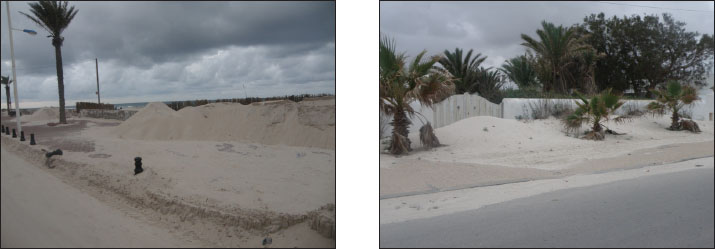
Fig. 1. Geographic position of the main nesting beaches in Chebba. The two beaches of Sidi Messaoud and Essir (Fig. 1) are recognized as significant nesting sites for loggerhead turtles in Tunisia (Jribi, 2017; Jribi et al., 2023; SPA/RAC – ONU Environnement/PAM, 2020). Essir is the main beach of Chebba, extending approximately 600 m in length, extending between 35°14.386'N/11°08.557'E and 35°14.268'N/11°08.892'E. Once shielded by tall dunes, Essir Beach has seen a rise in wind erosion and sand displacement since the construction of a corniche in 1999 (Fig. 2). In response, civil society organizations conducted a dune restoration project using a sand fence in 2012. This beach is adjacent to a corniche and is heavily used during the summer.
Fig. 2. Sand blown onto the corniche (A) and on the road (B). The beach of Sidi Messaoud is shorter, about 300 m in length, and is located behind the fishing port and near the Roman archeological site “Borj Khdija.” It spans the coordinates 35°14.108'N/11°09.442'E and 35°13.998'N/11°09.604'E. Although it is also frequented in summer, this beach experiences less nighttime disturbance than Essir. Field monitoring in Chebba was conducted from early June to late October (2013–2024) to cover the nesting period and hatching of all recorded nests. The author conducted most of the fieldwork as part of his long-term research activities on sea turtle nesting in Tunisia. Monitoring was conducted from 2017 to 2019 within the framework of the “Conservation of Sea Turtles in the Mediterranean Basin” project, coordinated by SPA/RAC and funded by the MAVA Foundation. During this period, fieldwork also benefited from the support of trained assistants and local volunteers. Beachgoers were the primary source of nests or hatchling tracks on Essir Beach, due to their continuous presence on site. The field team intervened to locate and protect new nests or assist hatchlings in reaching the sea in response to these reports. Nests were identified based on adult tracks or visible nest formations. Post-emergence nest excavations were also conducted whenever possible. At Sidi Messaoud Beach, monitoring was conducted twice a week throughout each nesting season, mainly during July and August, and typically between 6:00 and 8:00 AM. The fieldwork aimed to actively search for nesting tracks, distinguish between nesting and non-nesting emergences, and locate potential egg chambers. This effort resulted in at least 20 visits per season. In contrast, monitoring at Essir Beach was reactive, based on public alerts. The author personally responded to each notification, often assisted by on-site local residents. Hatchlings were guided toward the sea, and the nest was located for post-emergence excavation and egg counting when feasible. However, nest identification was not always possible because of trampling or surface disturbances. The number of interventions at Essir exceeded the number of nests officially recorded at this site. We used Fisher’s exact test (two-tailed) to compare the overall proportion of nests with hatchling disorientation between the two beaches (Essir and Sidi Messaoud), which is appropriate for small sample sizes and 2×2 contingency tables. The RR and its 95% confidence interval (CI) were also calculated. Only nests from which hatchlings emerged were considered for this analysis. Nests without emergence (e.g., due to inundation) were excluded. Over the study period, 18 out of 21 analyzed nests out of 21 deposited at Essir Beach and 19 out of 23 at Sidi Messaoud Beach. ResultsEthical approvalNesting activity on Chebba beaches was monitored between 2013 and 2024. A total of 47 loggerhead nests were recorded: 21 on Essir (44.7% of total nests), 23 on Sidi Messaoud (48.9% of total nests), and three on other small beaches. Nesting activity has been stable with consistent nesting patterns since 2013, except in 2017, when no nests were recorded (Fig. 3). The highest number of nests reported in a single season occurred in both 2013 and 2024, with a total of 10 nests for each year compared with lower counts in other years.
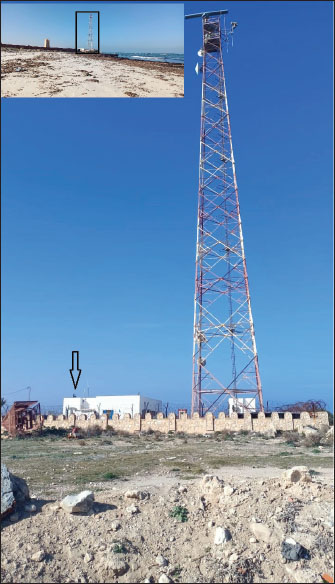
Fig. 3. Number of nests deposited in Chebba since 2013. In Sidi Messaoud, the presence of adult tracks or visible nest formations (e.g., body pits) identified each nest. However, nesting tracks were rarely observed at Essir Beach due to the continuous presence of beachgoers and surface disturbances. In some cases, nests were identified by female tracks early in the morning, but more often, nests were only detected during or after hatchling emergence, either on the beach or on the adjacent road. Once identified, nests were immediately protected. However, at the time of emergence, hatchlings were consistently disoriented due to intense artificial lighting, requiring intervention to guide them toward the sea. During our fieldwork, we observed several changes on the beaches of Sidi Massaoud and Essir. Sidi Massaoud benefits from partial protection against artificial light due to a dune barrier that shields it from the nearby port infrastructure (Fig. 4A and B). However, the recent installation of floodlights in a nearby military base undermines this protection and may pose a risk of disorientation of hatchlings (Fig. 5).
Fig. 4. (A) Light interrupted by dunes on Sidi Messaoud beach and (B) light covering the whole of Essir beach.
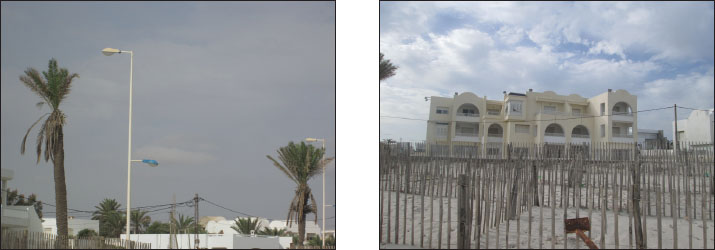
Fig. 5. Military house with a pole carrying a floodlight adjacent to Sidi Messaoud beach. The arrow indicates the floodlight on the military house. A new lighting infrastructure was installed close to Essir beach, which included lamp posts with two lighting systems: one low light facing the beach and one high light for the road (Fig. 6A).
Fig. 6. (A) Pole with lamp oriented to the beach and (B) floodlights installed on houses behind the beach. Additional lighting is provided by private residences, where floodlights are mounted on rooftops facing the shoreline (Fig. 6B). At Essir, these light sources disoriented all observed hatchlings (Table 1). Over the 2013–2024 period, the proportion of nests with disoriented hatchlings was significantly higher at Essir (18/18, 100.0%) than at Sidi Messaoud (4/19, 21.1%) (Fisher’s exact test, p=5.0 × 10⁻⁷). The estimated relative risk was 4.62 (95% CI: 1.93–11.08), indicating that the probability of a nest producing disoriented hatchlings was more than four times higher at Essir than at Sidi Messaoud (Table 2). Many were trapped between the wooden dune fencing and the edge of the promenade, while vehicles on the road behind the beach crushed others. Table 1. Summary of nesting activity, public involvement, and hatchling disorientation at the two beaches in Chebba (2013–2024).
Table 2. Comparison between Essir and Sidi Messaoud (2013–2024).
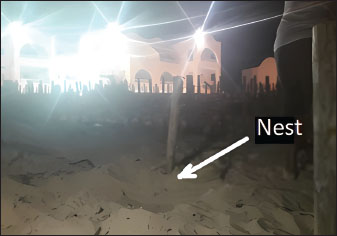
DiscussionThe reproductive cycle of sea turtles encompasses two key terrestrial phases: female nesting and hatchling emergence. Successful orientation toward the sea is a significant factor affecting survival during both stages, as disruptions caused by environmental or anthropogenic factors can significantly impact reproductive success and reduce the viability of local populations (Witherington and Martin, 2003; Lorne and Salmon, 2007). Although the majority of loggerhead turtles (Caretta caretta) nesting in the Mediterranean occur in countries such as Greece, Cyprus, Turkey, and Libya (Casale et al., 2018), smaller nesting sites, which play vital roles in regional conservation, exist in several other countries, including Tunisia. Although less prominent, these sites can still contribute to regional nest abundance and genetic diversity (Jribi et al., 2006). Recent fieldwork conducted under the “Conservation of Sea Turtles in the Mediterranean Basin” project, led by SPA/RAC and funded by MAVA, has revealed over 20 nesting sites distributed along Tunisia’s coastline, from the Algerian border in the north to the Libyan border in the south (Jribi et al., 2023; SPA/RAC - ONU Environnement/PAM, 2020). The physical characteristics and human pressures on these beaches were assessed using a dedicated sea turtle nesting beach indicator tool (Cousins et al., 2017). The findings indicate that 45% of Tunisian sandy beaches are suitable for regular nesting, while 35% have favorable potential. All beaches in Chebba fall within the suitable nesting site category. However, the actual number of nests reported in this study is likely underestimated due to limited monitoring on certain beaches, particularly those with high levels of human activity. Artificial lighting poses significant threats to nesting females by deterring them from laying eggs and disorienting hatchlings. Although it often deters adult turtles from nesting altogether (Johnson et al., 1996), it does not completely prevent nesting. Some females continue to lay eggs even on highly light-polluted beaches, such as Essir in Chebba. However, artificial light can still affect critical nesting behaviors, shortening the ashore time, increasing the likelihood of aborted nesting attempts, and altering nest placement (Witherington, 1992; Silva et al., 2017). In an experimental study, Silva et al. (2017) reported that artificial lighting reduced nesting attempts by at least 20% and significantly prolonged the time required to complete nesting, often leading to more extensive beach crawls. Although artificial lighting heavily affects Essir Beach, some females continue to nest there (Fig. 7) despite the availability of nearby more suitable sites. This paradoxical behavior can be explained by natal homing and nest site fidelity, whereby females return to the same region where they were born to lay their eggs (Bowen et al., 2004). This strong attachment to natal sites may override the avoidance of suboptimal conditions, including high levels of artificial lighting. Similar patterns have been observed in loggerhead turtle populations in other Mediterranean sites and globally (Bowen et al., 2004).
Fig. 7. Loggerhead turtle nest on illuminated Essir beach in 2019. As described in the introduction, artificial lights can strongly disrupt hatchling orientation by overriding natural visual cues (Witherington and Martin, 2003; Salmon, 2003). At Essir Beach, the artificial lighting from streetlamps and residential floodlights is intense and close to the shoreline. These light sources illuminate the entire beach, leaving hatchlings highly vulnerable to disorientation. This artificial glow appears to act as a supernormal stimulus that overrides natural cues (Witherington and Martin, 2003), drawing hatchlings away from the sea. In our case, all the newborns were attracted by the light coming from the direction opposite to the sea, and some of them were crushed on the road. In the summer of 2003, loggerhead hatchlings were also reported on the road behind Essir beach (Ben Hassine and Escoriza, 2013). Note that no luxmeter measurements were conducted to quantify the light intensity. The lighting level was characterized based on field observations, photographs, and local testimonies, which consistently indicated that the lighting at Essir Beach is both intense and omnidirectional. We acknowledge this limitation and recommend that future monitoring should incorporate quantitative light measurements, such as lux readings, spatial mapping of light sources, and standardized field protocols. In addition, future studies should include systematic assessments of hatchling orientation upon emergence and consider measuring sand temperature during the nesting and hatching period, which typically extends from June to September in the Mediterranean region. These data provide a more precise understanding of the interaction between environmental parameters and hatchling success under light-polluted conditions. Although artificial lighting heavily affects Essir Beach, several nesting events were still recorded. This observation contrasts with the lower anthropogenic light levels found at other nearby beaches, where fewer nests were recorded. Sidi Messaoud Beach is less affected by direct lighting due to the presence of dunes and the relative distance from major infrastructure. However, the installation of powerful lights at a nearby military station may present a future risk. Statistical analysis confirmed that hatchling disorientation was significantly more frequent at Essir than at Sidi Messaoud, with a relative risk exceeding four. This result supports the qualitative observations and highlights the direct and severe impact of artificial lighting on the success of hatchling sea-finding. In the literature, differences of this magnitude between sites are often linked to major variations in light exposure and the absence of natural shielding structures (Salmon, 2003; Witherington and Martin, 2003). These results strengthen the case for urgent mitigation measures to reduce light pollution at Essir, thereby improving hatchling survival rates and preserving the ecological value of this nesting beach. Overall, the situation at Essir illustrates how urban development and inadequate lighting management can negatively affect turtle conservation efforts, even when nesting continues. Without intervention, hatchling survival is unlikely, and the ecological value of these beaches may rapidly decline. Over the last decade, the artificial lighting at Chebba’s nesting beaches, especially Essir, has worsened due to the expansion of urban infrastructure, including residential buildings, streetlamps, and a nearby military base. While some lighting may be necessary for safety, most of it appears excessive, unshielded, and poorly oriented, leading to the degradation of natural darkness. This trend is likely to continue without intervention. Public involvement has played a modest but vital role in protecting the nest at Chebba. Beachgoers spontaneously assisted disoriented turtles, conducting most hatchling rescues. However, the lack of structured community-based conservation programs limits these actions’ effectiveness and sustainability. Strengthening partnerships with local civil society, schools, and fishing communities could significantly improve nest monitoring and hatchling survival. From a legal standpoint, Tunisia is a signatory to the Barcelona Convention and has ratified most international and regional conventions related to sea turtle conservation, including the Convention on Biological Diversity, CITES, and the Convention on Migratory Species. Tunisia has also formally adopted the Mediterranean Action Plan for the Conservation of Marine Turtles, coordinated by the SPA/RAC, and has developed its own national action plan to guide local conservation efforts. Despite these important commitments, the practical implementation of laws and regulations that protect marine turtles and their habitats remains limited. There is a pressing need for specific legal provisions addressing issues such as coastal lighting, seasonal beach closures, and restrictions on beach use during the nesting and hatching seasons to ensure the long-term protection of nesting sites. ConclusionArtificial light pollution poses a severe and escalating threat to loggerhead turtles at Chebba, particularly on Essir Beach. While nesting activity continues, the survival of hatchlings is critically compromised by intense and unregulated lighting. A combination of technical, regulatory, and community-based measures should be urgently implemented to improve the situation. These include shielding or removing lights visible from the nesting beach during critical periods, replacing current lighting systems with turtle-friendly alternatives (e.g., red-spectrum LEDs or low-pressure sodium lamps) (Witherington and Bjorndal, 1991), replanting dune vegetation to serve as natural light barriers, and engaging residents in simple mitigation practices, such as closing curtains or using motion-activated lights. Legal frameworks should be strengthened by prohibiting public and vehicle access to nesting beaches at night, banning structures on beaches during the nesting season, and supporting community awareness and education campaigns. These actions can help safeguard this important nesting site while promoting more sustainable coastal development if adopted collaboratively by authorities, residents, and conservation actors. AcknowledgmentsThe author sincerely thanks all individuals who reported hatchling sightings on the beach, enabling timely interventions and improving hatchling survival. He also expressed his gratitude to the field team, particularly members of the “Association Fans of Chebba,” for their crucial assistance in responding to alerts, conducting nest monitoring, and raising public awareness throughout the study period. Special thanks go to the SPA/RAC (Specially Protected Areas Regional Activity Center) and WWF-North Africa, whose long-standing support has been instrumental in advancing sea turtle conservation activities in Tunisia. Conflict of interestThe author declares that there is no conflict of interest. FundingField work was supported by SPA/RAC during 2017–2019 and by WWF-NA during 2024 nesting seasons. Author contributionsImed Jribi led the conceptualization, data collection, and analysis of the study and was responsible for writing the manuscript. Data availabilityAll data were provided in the manuscript. ReferencesAPAL. 2015. Nouveaux chiffres sur le littoral tunisien. (Unpublished report). Ben Hassine, J. and Escoriza, D. 2013. Caretta caretta in Tunisia: natural history and report of a new regular nesting area. Herpetological Rev. 44(4), 557–561. Bourgeois, S., Gilot-Fromont, E., Viallefont, A., Boussamba, F. and Deem, S.L. 2009. Influence of artificial lights, logs and erosion on leatherback sea turtle hatchling orientation at Pongara National Park, Gabon. Biol. Conservation 142(1), 85–93; doi: 10.1016/j.biocon.2008.09.028 Bowen, B.W., Bass, A.L., Chow, S.M., Bostrom, M., Bjorndal, K.A., Bolten, A.B., Okuyama, T., Bolker, B.M., Epperly, S., Lacasella, E., Shaver, D., Dodd, M., Hopkins-Murphy, S.R., Musick, J.A., Swingle, M., Rankin-Baransky, K., Teas, W., Witzell, W.N. and Dutton, P.H. 2004. Natal homing in juvenile loggerhead turtles (Caretta caretta). Mol. Ecol. 13(12), 3797–3808; doi: 10.1111/j.1365-294X.2004.02356.x Bradai, M.N., Jribi, I., Saidi, B., and Enajjar, S. 2024. Sea Turtles in Tunisia: An Overview on their Status and Conservation Effort. 26 pp. https://doi.org/10.5772/intechopen.1008239 Casale, P., Broderick, A., Camiñas, J., Cardona, L., Carreras, C., Demetropoulos, A., Fuller, W., Godley, B., Hochscheid, S., Kaska, Y., Lazar, B., Margaritoulis, D., Panagopoulou, A., Rees, A., Tomás, J. and Türkozan, O. 2018. Mediterranean sea turtles: current knowledge and priorities for conservation and research. Endangered Species Res. 36, 229–267; doi: 10.3354/esr00901 Cousins, N., Rees, A.F. and Godley, B.J. 2017. A sea turtle nesting beach indicator tool to help identify areas with potential for sea turtle nesting. Mar. Turtle Newslett. 153, 13. Depledge, M.H., Godard-Codding, C.A.J. and Bowen, R.E. 2010. Light pollution in the sea. Mar. Pollut. Bull. 60(9), 1383–1385; doi: 10.1016/j.marpolbul.2010.08.002 Ellouze, G. 1996. Contribution à l’étude de la reproduction de la tortue caouanne Caretta caretta Linnaeus, 1758. (DEA Thesis, Tunis II). Encalada, S.E., Bjorndal, K.A., Bolten, A.B., Zurita, J.C., Schroeder, B., Possardt, E., Sears, C.J. and Bowen, B.W. 1998. Population structure of loggerhead turtle (Caretta caretta) nesting colonies in the Atlantic and Mediterranean as inferred from mitochondrial DNA control region sequences. Mar. Biol. 130(4), 567–575; doi: 10.1007/s002270050278 Gaston, K.J., Duffy, J.P., Gaston, S., Bennie, J. and Davies, T.W. 2014. Human alteration of natural light cycles: causes and ecological consequences. Oecologia 176(4), 917–931; doi: 10.1007/s00442-014-3088-2 Jensen, M.P., Fitzsimmons, N.N., Bourjea, J., Hamabata, T., Reece, J. and Dutton, P.H. 2019. The evolutionary history and global phylogeography of the green turtle (Chelonia mydas). J. Biogeography 46(12), 1–11; doi: 10.1111/jbi.13483 Johnson, S.A., Bjorndal, K.A. and Bolten, A.B. 1996. Effects of organized turtle watches on loggerhead (Caretta caretta) nesting behavior and hatchling production in Florida. Conserv. Biol. 10(2), 570–577. Jribi, I., Bradai, M.N. and Bouain, A. 2006. Loggerhead turtle nesting activity in Kuriat Islands (Tunisia): assessment of nine years monitoring. Mar. Turtle Newslett. 112, 12–13. Jribi, I., Hrizi, M. and Ben Nakhla, L. 2023. Uncovering Hidden Gems: exploring New Marine Turtle Nesting Sites and Evaluating Beach Suitability along the Tunisian Coast. MedTurtle Bull. 4, 21–30. Jribi, I. 2017. Loggerhead turtle Caretta caretta nesting activity in Chebba (Centre Tunisia): assessment, problems and recommendations. Indian J. Mar. Sci. 46(1), 163–169. Kamrowski, R.L., Sutton, S.G., Tobin, R.C. and Hamann, M. 2015. Balancing artificial light at night with turtle conservation? Coastal community engagement with light-glow reduction. Environ. Conservation 42(2), 171–181; doi: 10.1017/S0376892914000216 Karaa, S., Maffucci, F., Jribi, I., Bologna, M.A., Borra, M., Biffali, E., Bradai, M.N. and Hochscheid, S. 2016. Connectivity and stock composition of loggerhead turtles foraging on the North African continental shelf (Central Mediterranean): implications for conservation and management. Mar. Ecol. 37, 1103–1115. Kraemer, J.E. and Bennett, S.H. 1981. Utilization of posthatching yolk in loggerhead sea turtles, Caretta caretta. Copeia 2(2), 406; doi: 10.2307/1444230 Kyba, C.C.M., Hänel, A. and Hölker, F. 2014. Redefining efficiency for outdoor lighting. Energy Environ. Sci. 7(6), 1806–1809; doi: 10.1039/C4EE00566J Laurent, L., Casale, P., Bradai, M.N., Godley, B.J., Broderick, G.G.A.A.C., Schroth, W., Schierwater, B., Levy, A.M., Freggi, D., Abd El-mawla, E.M., Hadoud, D.A., Gomati, H.E., Domingo, M., Hadjichristophorou, M., Kornaraky, L., Demirayak, F. and Gautier, C. 1998. Molecular resolution of marine turtle stock composition in fishery bycatch: a case study in the Mediterranean. Mol. Ecol. 7(11), 1529–1542; doi: 10.1046/j.1365-294x.1998.00471.x Limpus, C.J. 1971. Sea turtle ocean finding behaviour. Search 2, 385–387. Lohmann, K.J. and Lohmann, C.M.F. 1996. Orientation and open-sea navigation in sea turtles. J. Exp. Biol. 199(1), 73–81; doi: 10.1242/jeb.199.1.73 Lorne, J. and Salmon, M. 2007. Effects of exposure to artificial lighting on orientation of hatchling sea turtles on the beach and in the ocean. Endangered Species Res. 3, 23–30; doi: 10.3354/esr003023 Lyytimäki, J. and Rinne, J. 2013. Voices for the darkness: online survey on public perceptions on light pollution as an environmental problem. J. Integr. Environ. Sci. 10(2), 127–139; doi: 10.1080/1943815X.2013.824487 Mann, T.M. 1978. Impact of developed coastline on nesting and hatchling sea turtles in Southeastern Florida. Florida Marine Research Publication, 33, 53–55. Mcfarlane, R.W. 1963. Disorientation of loggerhead hatchlings by artificial road lighting. Copeia 1(1), 153; doi: 10.2307/1441283 Mortimer, J.A. 1979. Ascension Island: british jeopardize 45 years of conservation. Mar. Turtle Newslett. 10, 7–8. Mrosovsky, N. 1970. The influence of the sun’s position and elevated cues on the orientation of hatchling sea turtles. Anim. Behaviour 18, 648–651; doi: 10.1016/0003-3472(70)90008-4 Mrosovsky, N. 1972. The water-finding ability of sea turtles. Brain. Behav. Evol. 5(2–3), 202–225; doi: 10.1159/000123748 Osovsky, N. and Shettleworth, S.J. 1968. Wavelength preferences and brightness cues in the water finding behaviour of sea turtles. Behaviour 32(4), 211–257; doi: 10.1163/156853968X00216 Pendoley, K. and Kamrowski, R.L. 2016. Sea-finding in marine turtle hatchlings: what is an appropriate exclusion zone to limit disruptive impacts of industrial light at night?. J. For Nature Conservation 30, 1–11; doi: 10.1016/j.jnc.2015.12.005 Pendoley, K. 2000. The influence of gas flares on the orientation of green turtle hatchlings at Thevenard Island, Western Australia. In: Sea Turtles of the Indo-Pacific: research, management & conservation. Eds., Pilcher, N. and Ismail, G. London: ASEAN Academic Press, pp: 130 -142. Peters, A. and Verhoeven, K.J.F. 1994. Impact of artificial lighting on the seaward orientation of hatchling loggerhead turtles. J. Herpetology 28(1), 112–114; doi: 10.2307/1564691 Philibosian, R. 1976. Disorientation of hawksbill turtle hatchlings, Eretmochelys imbricata, by stadium lights. Copeia 4, 824. Rich, C. and Longcore, T. 2006. Ecological consequences of artificial night lighting. Washington, DC: Island Press. Saied, A., Maffucci, F., Hochscheid, S., Dryag, S., Swayeb, B., Borra, M., Ouerghi, A., Procaccini, G. and Bentivegna, F. 2012. Loggerhead turtles nesting in Libya: an important management unit for the Mediterranean stock. Mar. Ecol. Prog. Ser. 450, 207–218. Salmon, M., Witherington, B.E. and Elvidge, C.D. 2000. Artificial lighting and the recovery of sea turtles. In: Sea Turtles of the Indo-Pacific: research, management & conservation. Eds., Pilcher, N. and Ismail, G. London: ASEAN Academic Press. Salmon, M., Wyneken, J., Fritz, E. and Lucas, M. 1992. Seafinding by hatchling sea turtles: role of brightness, silhouette and beach slope as orientation cues. Behaviour 122(1–2), 56–77; doi: 10.1163/156853992X00309 Salmon. 2003. Artificial night lighting and sea turtles. Biologist 50(4), 163–168. Silva, E., Marco, A., Da Graça, J., Pérez, H., Abella, E., Patino-Martinez, J., Martins, S. and Almeida, C. 2017. Light pollution affects nesting behavior of loggerhead turtles and predation risk of nests and hatchlings. J. Photochemistry PhotoBiol. B. Biol. 173, 240–249; doi: 10.1016/j.jphotobiol.2017.06.006 SPA/RAC - ONU Environnement/PAM. 2020. Prospection des côtes tunisiennes à la recherche des sites de nidification de la tortue marine. Par Jribi I., SPA/RAC, Projet MAVA Tortue Marine : 48p Tolve, L., Iannucci, A., Garofalo, L., Ninni, A., Capobianco Dondona, A., Ceciarini, I., Cocumelli, C., De Lucia, A., Falconi, M., Formia, A., Iacovelli, F., Mancusi, C., Marchiori, E., Marsili, L., Mingozzi, T., Nannarelli, S., Natali, C., Terracciano, G., Zuffi, M.A.L., Novelletto, A. and Ciofi, C. 2024. Whole mitochondrial genome sequencing provides new insights into the phylogeography of loggerhead turtles (Caretta caretta) in the Mediterranean Sea. Mar. Biol. 171, 19; doi: 10.1007/s00227-023-04325-x Van Rhijn, F.A. and Van Gorkom, J.C. 1983. Optic orientation in hatchlings of the sea turtle, Chelonia mydas. III. Sea-finding behaviour: the role of photic and visual orientation under laboratory conditions. Mar. Behaviour. Physiol. 9(3), 211–228; doi: 10.1080/10236248309378594 Verheijen, F.J. 1960. The mechanisms of the trapping effect of artificial light sources upon animals. Arch. Néerlandaises De Zoologie 13(1), 1–107. Verheijen, F.J. 1985. Photopollution: artificial light optic spatial control systems fail to cope with. Incidents, causation, remedies. Exp. Biol. 44(1), 1–18. Witherington, B. 1992. Sea-finding behavior and the use of photic orientation cues by hatchling sea turtles. (PhD Thesis, University of Florida, Gainesville). Witherington, B.E. and Bjorndal, K.A. 1991. Influences of artificial lighting on the seaward orientation of hatchling loggerhead turtles Caretta caretta. Biol. Conservation 55(2), 139–149; doi: 10.1016/0006-3207(91)90053-C Witherington, B.E. and Martin, R.E. 2003. Understanding, assessing, and resolving light-pollution problems on sea turtle nesting beaches. Technical Report TR-2, Florida Marine Research Institute. | ||





| How to Cite this Article |
| Pubmed Style Imed Jribi. Impact of light pollution on the success of loggerhead turtle nesting in Chebba, Tunisia. Open Vet. J.. 2025; 15(10): 5346-5354. doi:10.5455/OVJ.2025.v15.i10.51 Web Style Imed Jribi. Impact of light pollution on the success of loggerhead turtle nesting in Chebba, Tunisia. https://www.openveterinaryjournal.com/?mno=255264 [Access: June 26, 2026]. doi:10.5455/OVJ.2025.v15.i10.51 AMA (American Medical Association) Style Imed Jribi. Impact of light pollution on the success of loggerhead turtle nesting in Chebba, Tunisia. Open Vet. J.. 2025; 15(10): 5346-5354. doi:10.5455/OVJ.2025.v15.i10.51 Vancouver/ICMJE Style Imed Jribi. Impact of light pollution on the success of loggerhead turtle nesting in Chebba, Tunisia. Open Vet. J.. (2025), [cited June 26, 2026]; 15(10): 5346-5354. doi:10.5455/OVJ.2025.v15.i10.51 Harvard Style Imed Jribi (2025) Impact of light pollution on the success of loggerhead turtle nesting in Chebba, Tunisia. Open Vet. J., 15 (10), 5346-5354. doi:10.5455/OVJ.2025.v15.i10.51 Turabian Style Imed Jribi. 2025. Impact of light pollution on the success of loggerhead turtle nesting in Chebba, Tunisia. Open Veterinary Journal, 15 (10), 5346-5354. doi:10.5455/OVJ.2025.v15.i10.51 Chicago Style Imed Jribi. "Impact of light pollution on the success of loggerhead turtle nesting in Chebba, Tunisia." Open Veterinary Journal 15 (2025), 5346-5354. doi:10.5455/OVJ.2025.v15.i10.51 MLA (The Modern Language Association) Style Imed Jribi. "Impact of light pollution on the success of loggerhead turtle nesting in Chebba, Tunisia." Open Veterinary Journal 15.10 (2025), 5346-5354. Print. doi:10.5455/OVJ.2025.v15.i10.51 APA (American Psychological Association) Style Imed Jribi (2025) Impact of light pollution on the success of loggerhead turtle nesting in Chebba, Tunisia. Open Veterinary Journal, 15 (10), 5346-5354. doi:10.5455/OVJ.2025.v15.i10.51 |


