





| Research Article | ||
Open Vet. J.. 2025; 15(6): 2722-2728 Open Veterinary Journal, (2025), Vol. 15(6): 2722-2728 Research Article Phytochemical profiling, bioactive compound isolation, and animal health implications of Calotropis procera in Al-Ahsa, Saudi ArabiaSultan Fadel Al-Haid1, Ahmed M. A. Meligy1*, Sherief M. Abdel-Raheem2, Mahmoud Elalfy1 and Mostafa A. Elmadawy31Department of Clinical Sciences, College of Veterinary Medicine, King Faisal University, Al-Hofuf, Saudi Arabia 2Department of Public Health, College of Veterinary Medicine, King Faisal University, Al-Hofuf, Saudi Arabia 3Department of Forensic Medicine and Toxicology, Faculty of Veterinary Medicine, Kafrelsheikh University, Kafr Elsheikh, Egypt *Correspondence to: Ahmed M. A. Meligy. Department of Clinical Sciences, College of Veterinary Medicine, King Faisal University, Al-Hofuf, Saudi Arabia. Email: amelegi [at] kfu.edu.sa Submitted: 09/05/2025 Revised: 10/05/2025 Accepted: 11/05/2025 Published: 30/06/2025 © 2025 Open Veterinary Journal
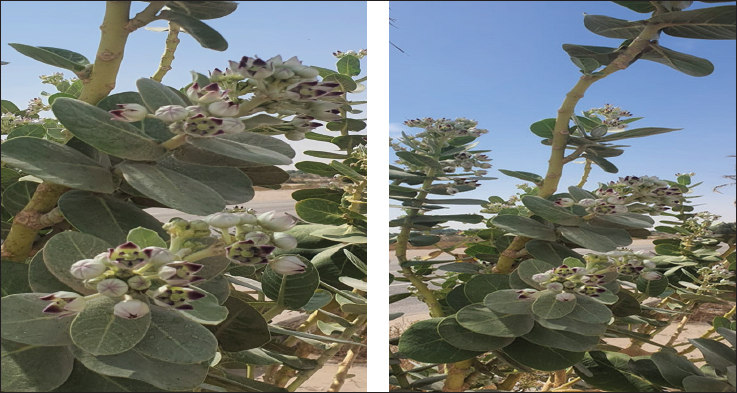
AbstractBackground: Medicinal plants are commonly employed in various ways, including the prevention of infection, alleviation of stress, and stimulation of growth. Calotropis procera is among the classifications of a medicinal plant that has various biological activities but has not received sufficient attention regarding the varying duality of its effects (e.g., beneficial and toxic) when utilized in animals or animal health in Al-Ahsa, Saudi Arabia. Aim: The specific aim of this investigation was to isolate and appraise bioactive compounds from C. procera in Al Ahsa, Kingdom of Saudi Arabia, and their therapeutic as well as toxicological effects on animal health. Methods: Phytochemical constituents of C. procera were extracted using both ethanol and dichloromethane (DCM) and subsequently analyzed using proximate composition, phytochemical analysis, thin-layer chromatography, and gas chromatography/mass spectrometry (GC/MS). Results: GC/MS analysis recorded the main components of C. procera are betulin (58%) and alpha-amyrin (32.87%) in the ethanolic extract; these main components had antioxidant, anticancer, and antimicrobial activities. However, the DCM extract of C. procera, on the other hand, recorded methyl eugenol (38.45%) and Stigmasta-7-16-dien-3-ol 3-beta 5-alpha (40.78%) as the main components. Conclusion: In conclusion, C. procera has both therapeutic and toxic properties. For using it more safely, we need to examine its efficacy and active ingredients with modern laboratory tools to be able to utilize it more consistently as an herbal medicine. More research is needed to confirm its benefits and reduce risks. Keywords: Medicinal plants, Chemical composition, Calotropis procera, Toxic, Compounds. IntroductionA diverse array of bioactive chemical compounds is derived from plant sources, with Calotropis procera being notably utilized due to its well-documented medicinal properties. The pharmacological and toxicological properties of the constituent compounds of plants must be defined. Natural products are supposed to easily extend extremely profitable effects without control, especially ethnopharmacological practice (George, 2011; Habeeb et al., 2024). In some cases of those plant therapies with centuries of long history of use in medicine, some botanical drugs with varying unknown chemical compositions and scientifically unproven biological effect should only be applied carefully (Hoffmann, 2003; Bandaranayake, 2006). The leaves of C. procera contain an enzyme known as calotropain, which facilitates the coagulation of cow or goat milk, forming the basis of certain milk production methods (Ogundola et al., 2021). Plant extracts are the source of herbal medications, which are being used more and more to treat different clinical conditions (Awuchi, 2019). The protective benefits of products and antioxidants against drug-induced toxicity have received more attention, particularly when free radical production is at issue (Shahidi and Camargo, 2016). It has been discovered that flavonoids, particularly in the case of cancer, have a better role in non-enzymatic defense against oxidative stress (Gupta et al., 2014). Fruits, vegetables, tea, and chocolate all contain flavonoids, which are polyphenolic chemicals (Calado et al., 2015). The Apocynaceae family (commonly known as the dogbane family) is indeed a large family of flowering plants, and globally, Apocynaceae consists of around 366 genera and approximately 5,000 species (Aniszewski, 2015). Plants in the genus C. Procera are recognized to have significant antitumor, anticancer, and antioxidant properties (Rabêlo, 2020). The high concentration of total phenolic compounds in C. procera is likely responsible for its pronounced antioxidant activity and its potential to modulate various biological processes (Ihegborom et al., 2022b). Two known subspecies of Calotropis exist (Majeed et al., 2020), varying from annual plants to trees, each featuring unique flower structures and latex. Calotropis procera exhibits antibacterial, anthelmintic, anti-asthmatic, sedative, antispasmodic, antifertility, antifungal, and antimalarial properties (Kumari and Chaudhary, 2021). Calotropis procera is said to have hepatoprotective (Kumari and Chaudhary, 2021), immunostimulant, and anti-inflammatory (Parihar et al., 2011; Bairagi et al., 2022). Calotropis procera has traditionally been employed in the treatment of pain, inflammation, and a range of central nervous system disorders (Alencar et al., 2004), gastric ulcer (Obese et al. 2021), and anticancer (Bharti et al., 2010). It also has been recorded that Calotropis gigantea and C. procera had anti-inflammatory, anti-hemorrhoidal, analgesic, hypolipidemic, antidiabetic, anti-dirroheal, and anti-asthmatic properties (Kumar et al., 2022). The aqueous extract of C. procera though boosts immune-mediated anti-inflammatory activity of root bark extracts of C. procera in rodents. In both qualitative and quantitative phytochemical analyses of crude plant extracts, the identification of active ingredients in medicinal plants is a crucial strategic step (Bairagi et al., 2022). The goal of the current study was to use advanced chromatographic technology (GC-mass spectrometry), phytochemical investigations, proximate composition (food scan device), and TLC to examine various components of C. procera that were present in Saudi Arabia plants creature. Materials and MethodsCollection of samplesCalotropis procera was taxonomically identified by a specialist in the Biological Sciences Department, Faculty of Science, King Faisal University. The plant material—including stems, leaves, and roots—was collected from various locations within the Al-Ahsa region of the Kingdom of Saudi Arabia, KSA (Fig. 1). The identification was confirmed based on morphological characteristics and reference to established botanical keys (Rahman and Wilcock, 1991; Al-Rowaily et al., 2020).
Fig. 1. The Calotropis procera The entire fresh plant of C. procera was oven-dried at 60°C and then ground to a coarse powder using a mechanical grinder using samples that were gathered from the Al Hasa Region of Saudi Arabia. Merck is the supplier of the extraction solvent, dichloromethane (DCM) analytical reagent grade, and ethanol grade (purity 99%). Silica gel 60 mesh, GF254 silica gel plate for thin layer chromatography (TLC) analysis, and Florisil (a U.S. Silica Company trademark) for column chromatography. For GC/MS analysis, a DB-5MS capillary column and 99.9999% pure helium will be utilized. Extraction methodLiquid maceration extractionThe fresh whole dried C. procera plant (500 g) was homogenized at room temperature with 2,000 ml of two different polarity solvents (ethanol and DCM) (Merck) in a rotary mixer set at 45°C and 200 rpm for 48 hours. The extracts were then filtered through filter paper Whatman No. 4, and all of the solvents were evaporated under a vacuum using a rotary evaporator to produce crude extracts that were stored at 30°C for analysis. GC/MS method of analysisPhytochemical profiling of C. procera was performed at the Central Laboratory, Clinical Science Department, College of Veterinary Medicine, King Faisal University, utilizing a Shimadzu (GCMS-QP2010) gas chromatography/mass spectrometry system (Shimadzu, Japan). Utra-high purity helium (He) gas, a grade of 99.9999 % was used as the mobile phase at a constant flow rate of 1.5 ml/minutes. The system was fitted with a DB-5MS capillary column (30 m, 0.25 µm film thickness). A 1 µl of the sample was introduced into the split/splitless injector operating in splitless mode at 260 °C. The interface temperature between the GC/MS units was 220°C. The temperature program was started at 80 °C, followed by 10°C/minutes up to 240°C, with the final temperature held for 20 minutes. Mass spectral data were collected in scan mode within the 50–550 µ range (El Sherif et al., 2020). Fractionation by TLCThin layer chromatography (TLC) silica gel 60 F254 (20 cm × 20 cm) 25 ct (Merek, Italy). The primary active ingredients of medicinal plants, such as alkaloids, cardiac glycosides, coumarins, flavonoids, saponins, and tannins, can be quickly investigated using TLC, a chromatographic technique with a layer thickness of 0.25 mm. According to Suresh kumar (2021), the TLC spot is measured to ascertain the amount of material present. For each dry extract, the spot volume applied to the chromatographic TLC plates was 5 μl or 300 μg. Starting with a nonpolar solvent (100%) and increasing the polarity by combining ethyl acetate to attain the optimal separation (70:30) hexane: ethyl acetate, TLC is carried out in the following solvent systems. The spots were first examined under UV 254 nm and UV 365 nm light without any chemical treatment. After that, the plates were heated to 110°C for 15 minutes to produce a pink spot for chemical organic compounds, and the plates were submerged in a freshly made mixture of vanillin (3 g), 50 ml of ethanol, and 0.5 ml of sulfuric acid. Proximate composition, phytochemical analysis, and TLCThe contents of ash, moisture, crude protein (calculated as nitrogen × 6.25), crude fat, crude fiber, and starch were analyzed using a FOSS, FoodScan near-infrared (NIR) spectrophotometer, employing the FOSS Artificial Neural Network Calibration Model and its associated database. The analyses were according to AOAC (2006). All proximate analyses were performed as percentages on a dry weight (dw) basis. Phytochemical analysisThe fresh dry plant of C. procera was analyzed for its phytochemical constituents at the Central Laboratory, Clinical Sciences Department, Faculty of Veterinary Medicine, King Faisal University. The extract was evaluated for the presence of terpenoids, alkaloids, flavonoids, tannins, phenols, and saponins with standard colorimetric methods described by Sofowora (1993) and Kennedy and Thorley (2000). ResultsThe proximate analysis for leaves and fruits indicated that both leaves and fruits of C. procera contain valuable nutrients such as crude protein which ranges from 18.21% to 21.3%, crude fat from 3.95 to 4.12, starch from 34.65% to 41.23%, and crude fiber from 18% to 18.65% approximately (Table 1). Table 1. Proximate composition (%) of (C. procera) leaves and fruits.
The qualitative phytochemical analysis of C. procera whole plant is presented in Table 2. The terpenoids and flavonoids are highly detectable, while steroids, alkaloids, and saponins and anthraquinones are moderately detectable. However, the tannins are low detectable. Table 2. Qualitative phytochemical analysis of the C. procera.
The GCMS analysis of the ethanolic extract’s primary active ingredients indicated betulin (58 %), α-amyrin (32.87%), 6-Octen-1-ol (4.79%), hexadecanoic acid methyl ester (1.47%), and Squalene (0.99 %) (Table 3, Fig. 2). Table 3. The constituents of ethanol extract of C. procera by GCMS.
Fig. 2. GC/MS chromatogram for ethanol extracts of Calotropis procera. The primary active ingredients for the DCM extract of C. procera are Stigmasta-7,16-dien-3-ol 3 beta 5alpha (40.78%), methyl eugenol (38.45%), isopentyl benzoate (8.74%), 1,2 benzenedicarboxylic acid dipentyl ester (5.86), β-D glucopyranoside, 2,3,4,6 tetra-O-methyl (2.29%), N,N Dimethyl Formamide (1.87%), and Neophytadiene (1.51%), as reported in (Table 4, Fig. 3). TLC profile for extracts of C. procera exhibited that the presence of pink spots confirms the presence of flavonoids, steroids, and alkaloids in line with the results of phytochemical analysis (Fig. 4). Table 4. The constituents of DCM extract of Calotropis procera by GCMS.
Fig. 3. GC/MS Chromatogram for dichloromethane (DCM) extracts of Calotropis procera.
Fig. 4. TLC profile for extracts of Calotropis procera. DiscussionFrom the proximate, GCMS, phytochemical, and TLC analysis results, it is clear that C. procera is a very useful plant because it contains highly effective active ingredients. It has a promising medicinal value when we can extract the beneficial substances and exclude the toxic substances. Our findings are aligned with previously reported findings, indicating that C. procera contains a variety of secondary metabolites, including the abundant of terpenoids, tannins, saponins, alkaloids, and steroids and lined with the results of TLC plate’s analysis as shown in Figure 4 (Al-Rowaily et al., 2020; Sureshkumar, 2021). The results obtained from this study regarding the ethanolic and DCM extracts from Saudi C. procera exhibited a distinct phytochemical profile when compared to previously characterized extracts from the Egyptian C. procera (Wahba and Khalid, 2018) and Indian C. gigantea (Singh and Javed, 2013). One of the main components of C. procera is botulin which has anti-inflammatory, anticancer, and antiviral properties in addition to biologically active protection for HepG2 cells (Joshi et al., 2012). Additionally, the whole plant of C. procera is rich in compounds such as betulin, α-amyrin, Stigmasta-7, 16-dien-3-ol (3b, 5a), and methyl eugenol, along with the presence of steroids, flavonoids, carbohydrates, saponins, phenols, and tannins. According to Sultana (2017), Nogueira et al. (2019), α-amyrin has the ability to combat severe pancreatitis by acting as an antioxidant and anti-inflammatory. Additionally, α- and β-amyrin have the potential to protect the liver from damage and show that oxidation deficiencies cause toxic formation of metabolites, which are likely mechanisms involved in hepatoprotective activity (Nogueira et al., 2019). Previous studies illustrated that Stigmasta-7,16-dien-3-ol (3β-5α) has been associated with potential anti-inflammatory properties (Sindhu et al., 2023). The C. procera has been found to contain methyleugenol. Methyleugenol is a naturally occurring compound found in various plants and essential oils. Studies have shown that methyleugenol can be toxic to the liver in rats when consumed in high doses and considered carcinogenic in 2-year rodent toxicity (Subramanya et al., 2018). It has been linked to hepatic (liver) damage, carcinogenic effects, and DNA damage in laboratory animals. However, its effects in low concentrations and in humans are still being studied. ConclusionThe fascinating C. procera shows the mixed bag of beneficial bioactive compounds and potentially toxic ones in its chemical composition. More studies would include isolation of the active compounds of the plant by column chromatography, followed by characterizing the active compounds of the plant using Fourier transform infrared spectroscopy and nuclear magnetic resonance (NMR), such as ¹H-NMR and ¹³C-NMR. More research is needed to confirm its benefits and reduce risks to be able to utilize it more consistently as an herbal medicine. AcknowledgmentsThis work was supported by the Deanship of Scientific Research, Vice Presidency for Graduate Studies and Scientific Research, King Faisal University, Saudi Arabia [Grant No KFU 251852]. Ethical approvalThis study was conducted according to the guidelines of King Faisal University, Saudi Arabia. Conflict of interestNone. Authors’ contributionsAll authors contributed equally. Data availabilityAll data are included within the manuscript. ReferencesAlencar, N., Figueiredo, I., Vale, M., Bitencurt, F., Oliveira, J. and Ribeiro, R. 2004. Anti-inflammatory effect of the latex from Calotropis procera in three different experimental models: peritonitis, paw edema and hemorrhagic cystitis. Inflamm. Res. 70, 1144–1149. Al-Rowaily, S.L., Abd-ElGawad, A.M., Assaeed, A.M., Elgamal, A.M., Gendy, A.E.-N.G.E., Mohamed, T.A., Dar, B.A., Mohamed, T.K. and Elshamy, A.I. 2020. Essential oil of Calotropis procera: comparative chemical profiles, antimicrobial activity, and allelopathic potential on weeds. Molecules 25, 5203; doi: 10.3390/molecules25215203 Aniszewski, T. 2015. Alkaloids: chemistry, biology, ecology, and applications. Amsterdam: Elsevier. AOAC (Association of Official Analytical Chemists). 2006. Official Methods of Analysis of the AOAC International (18th ed.). Washington, DC: AOAC International. Awuchi, C.G. 2019. Medicinal plants: the medical, food, and nutritional biochemistry and uses. Int. J. Adv. Acad. Res. 5, 220–241. Bairagi, S., Ghule, P. and Gilhotra, R.J. 2022. Molecular docking, in vitro antioxidant, and in vivo hepatoprotective activity of methanolic extract of Calotropis gigantea leaves in carbon tetrachloride- induced liver injury in rats. Clin. Exp. Immunol. 18, 110–126. Bandaranayake, W.M. 2006. Quality control, screening, toxicity, and regulation of herbal drugs. In Modern phytomedicine: turning medicinal plants into drugs. Eds., Ahmad, I., Aqil, F. and Owais, M. Weinheim: Wiley-VCH, pp: 25–57. Bharti, S., Wahane, V. and Kumar, V.J. 2010. Protective effect of Calotropis procera latex extracts on experimentally induced gastric ulcers in rat. J. Ethnopharmacol. 127, 440–444; doi: 10.1016/j. jep.2009.10.017 Calado, J.C.P., Albertão, P.A., de Oliveira, E.A., Letra, M.H.S., Sawaya, A.C.H.F. and Marcucci, M.C. 2015. Flavonoid contents and antioxidant activity in fruit, vegetables and other types of food. Agric. Sci. 6, 426–435. El Sherif, F., Albotnoor, N., Yap, Y-K., Meligy, A.M.A. and Khattab, S. 2020. Enhanced bioactive compounds composition in Lavandula offici-nalis in-vitro plantlets using NaCl and Moringa oleifera, Aloe veraand Spirulina platensis extracts. Indust. Crop Prod. 157, 112890 George, P.J. 2011. Concerns regarding the safety and toxicity of medicinal plants¾An overview. J. Appl. Pharm. Sci. 1, 40–44. Gupta, R.K., Patel, A.K., Shah, N., Choudhary, A.K., Jha, U.K. and Yadav, U.C. 2014. Oxidative stress and antioxidants in disease and cancer: a review. Asian Pac. J. Cancer Prev. 15, 4405–4409. Habeeb, A., Ramesh, S. and Shanmugam, R. 2024. Calotropis procera and the pharmacological properties of its aqueous leaf extract: a review. Cureus 16, e60354; doi: 10.7759/cureus.60354 Hoffmann, D. 2003. Medical herbalism: the science and practice of herbal medicine. New York, NY: Simon and Schuster. Ihegboro, G.O., Owolarafe, T.A., Ononamadu, C.J., Habeeb, B. and Kufre-Akpan, M. 2022. Calotropis procera root extract’s anti-diabetic and hepatoprotective therapeutic activity in alloxan- induced pancreatic toxicity in Wistar rats. Iran. J. Toxicol. 16(4), 285–296. Joshi, D.D. and Joshi, D.D. 2012. TLC: herbal drugs and fingerprints. In: Herbal drugs and fingerprints. Ed., Joshi, D.D. Berlin: Springer, pp: 29–48. Kennedy, J.F. and Thorley, M. 2000. Carbohydrate polymers. Pharmacognosy, Phytochemistry, Medicinal Plants (2nd ed.). Paris: Lavoisier Publishing, pp: 428–429. Kumar, V.L., Verma, S. and Das, P.J. 2022. Anti- inflammatory and antioxidant effect of methanol extract of latex of Calotropis procera in rat model of colorectal cancer. J. Oncol. Res. 296, 115503; doi: 10.1016/j.jep.2022.115503 Kumari, I. and Chaudhary, G.J. 2021. Calotropis procera (Arka): a tribal herb of utmost significance. Int. J. Res. Appl. Sci. Biotechnol. 8, 44–54. Majeed, A., Goel, B., Mishra, V., Kohli, R. and Bhardwaj, P. 2020. Elucidation of genetic diversity base in Calotropis procera - a potentially emerging new fibre resource. Plant Genet. Resour. 18, 159–167. Nogueira, A.O., Oliveira, Y.I.S., Adjafre, B.L., de Moraes, M.E.A. and Aragao, G.F. 2019. Pharmacological effects of the isomeric mixture of alpha and beta amyrin from Protium heptaphyllum: a literature review. Fitoterapia 33, 4–12. Obese, E., Biney, R.P., Henneh, I.T., Anokwah, D., Adakudugu, E.A. and Woode, E. 2021. Antinociceptive effect of the hydroethanolic leaf extract of Calotropis procera (Ait) R. Br. (Apocynaceae): possible involvement of glutamatergic, cytokines, opioidergic and adenosinergic pathways. J. Ethnopharmacol. 278, 114261; doi: 10.1016/j.jep.2021.114261 Ogundola, A.F., Yekeen, T.A., Arotayo, R.A., Akintola, A.O., Ibrahim, A.O., Adedosu, H.O and Bello, M.O. 2021. Evaluation of nutrients in leaves and seeds of Calotropis Procera (linn); a multipurpose plant. J. Pharm. Nutr. Sci. 11, 33–39. Parihar, G., Sharma, A., Ghule, S., Sharma, P., Deshmukh, P. and Srivastava, D. 2011. Anti- inflammatory effect of Calotropis procera root bark extract. Asian J. Pharm. 1, 29–44. Rabêlo, A.C.S. 2020. Evaluation of the antitumor effect of Calotropis procera (Aiton) Dryand (Apocynaceae) in vitro and in vivo. Ph.D. Thesis, São Paulo: Universidade de São Paulo. Rahman, M.A. and Wilcock, C.C. 1991. A taxonomic revision of Calotropis (Asclepiadaceae). Nord. J. Bot. 11, 301–308. Shahidi, F. and De Camargo, A.C. 2016. Tocopherols and tocotrienols in common and emerging dietary sources: occurrence, applications, and health benefits. Int. J. Mol. Sci. 17, 1745; doi: 10.3390/ ijms17101745 Sindhu, H.A., Afzal, M. and Shahid, I. 2023. Pharmacological activities and in-silico studies of bioactive compounds identified in organic fractions of the methanolic extract of citrullus colocynthis. Dose-Response 21, 1–15; doi: 10.1177/15593258231187357 Singh, M. and Javed, K. 2013. Chemical characterization and antimicrobial activity of Calotropis gigantea Linn. flower essential oil collected from northern plain of India. Int. J. Adv. Biotechnol. Res. 4, 533–541. Sofowora, E.A. 1993. Medicinal plants and traditional medicine in Africa (2nd ed.). Ibadan: Spectrum Books Ltd. Subramanya, S.B., Venkataraman, B., Meeran, M.F.N., Goyal, S.N., Patil, C.R. and Ojha, S. 2018. Therapeutic potential of plants and plant derived phytochemicals against acetaminophen-induced liver injury. Int. J. Mol. Sci. 19, 3776; doi: 10.3390/ ijms19123776 Sultana, N.J. 2017. Triterpenes and triterpenoids clinically useful with multiple targets in Cancer, malaria and more treatment: focus on potential therapeutic value. Int. J. Biol. Res. 16, 1–35. Sureshkumar, V. 2021. Phytochemical screening and thin layer chromatography profiling of various extracts of Achyranthes aspera and Cissus quadrangularis. J. Phytopharm. 10, 225–229. Wahba, H.E. and Khalid, A.K. 2018. Comparative study on essential oil composition in various organs of Sodom apple (Calotropis procera) grown wild in Egypt. Asian J. Plant Sci. 17, 85–90. | ||


| How to Cite this Article |
| Pubmed Style Al-haid SF, Meligy AMA, Abdel-raheem SM, Elalfy M, Elmadawy MA. Phytochemical profiling, bioactive compound isolation, and animal health implications of Calotropis procera in Al-Ahsa, Saudi Arabia. Open Vet. J.. 2025; 15(6): 2722-2728. doi:10.5455/OVJ.2025.v15.i6.41 Web Style Al-haid SF, Meligy AMA, Abdel-raheem SM, Elalfy M, Elmadawy MA. Phytochemical profiling, bioactive compound isolation, and animal health implications of Calotropis procera in Al-Ahsa, Saudi Arabia. https://www.openveterinaryjournal.com/?mno=257266 [Access: June 26, 2026]. doi:10.5455/OVJ.2025.v15.i6.41 AMA (American Medical Association) Style Al-haid SF, Meligy AMA, Abdel-raheem SM, Elalfy M, Elmadawy MA. Phytochemical profiling, bioactive compound isolation, and animal health implications of Calotropis procera in Al-Ahsa, Saudi Arabia. Open Vet. J.. 2025; 15(6): 2722-2728. doi:10.5455/OVJ.2025.v15.i6.41 Vancouver/ICMJE Style Al-haid SF, Meligy AMA, Abdel-raheem SM, Elalfy M, Elmadawy MA. Phytochemical profiling, bioactive compound isolation, and animal health implications of Calotropis procera in Al-Ahsa, Saudi Arabia. Open Vet. J.. (2025), [cited June 26, 2026]; 15(6): 2722-2728. doi:10.5455/OVJ.2025.v15.i6.41 Harvard Style Al-haid, S. F., Meligy, . A. M. A., Abdel-raheem, . S. M., Elalfy, . M. & Elmadawy, . M. A. (2025) Phytochemical profiling, bioactive compound isolation, and animal health implications of Calotropis procera in Al-Ahsa, Saudi Arabia. Open Vet. J., 15 (6), 2722-2728. doi:10.5455/OVJ.2025.v15.i6.41 Turabian Style Al-haid, Sultan Fadel, Ahmed M. A. Meligy, Sherief M. Abdel-raheem, Mahmoud Elalfy, and Mostafa A. Elmadawy. 2025. Phytochemical profiling, bioactive compound isolation, and animal health implications of Calotropis procera in Al-Ahsa, Saudi Arabia. Open Veterinary Journal, 15 (6), 2722-2728. doi:10.5455/OVJ.2025.v15.i6.41 Chicago Style Al-haid, Sultan Fadel, Ahmed M. A. Meligy, Sherief M. Abdel-raheem, Mahmoud Elalfy, and Mostafa A. Elmadawy. "Phytochemical profiling, bioactive compound isolation, and animal health implications of Calotropis procera in Al-Ahsa, Saudi Arabia." Open Veterinary Journal 15 (2025), 2722-2728. doi:10.5455/OVJ.2025.v15.i6.41 MLA (The Modern Language Association) Style Al-haid, Sultan Fadel, Ahmed M. A. Meligy, Sherief M. Abdel-raheem, Mahmoud Elalfy, and Mostafa A. Elmadawy. "Phytochemical profiling, bioactive compound isolation, and animal health implications of Calotropis procera in Al-Ahsa, Saudi Arabia." Open Veterinary Journal 15.6 (2025), 2722-2728. Print. doi:10.5455/OVJ.2025.v15.i6.41 APA (American Psychological Association) Style Al-haid, S. F., Meligy, . A. M. A., Abdel-raheem, . S. M., Elalfy, . M. & Elmadawy, . M. A. (2025) Phytochemical profiling, bioactive compound isolation, and animal health implications of Calotropis procera in Al-Ahsa, Saudi Arabia. Open Veterinary Journal, 15 (6), 2722-2728. doi:10.5455/OVJ.2025.v15.i6.41 |


