




| Research Article | ||
Open Vet. J.. 2025; 15(10): 4997-5008 Open Veterinary Journal, (2025), Vol. 15(10): 4997-5008 Research Article Veterinary education and sustainable development goals: A perspective from professional students in IndonesiaRian Hari Suharto*, Baso Yusuf and Anak Agung Putu Joni WahyudaVeterinary Medicine Study Program, Faculty of Medicine, Universitas Hasanuddin, Makassar, Indonesia *Corresponding Author: Rian Hari Suharto, Veterinary Medicine Study Program, Faculty of Medicine, Universitas Hasanuddin Makassar, Indonesia. Email: rianhs [at] unhas.ac.id Submitted: 29/05/2025 Revised: 25/08/2025 Accepted: 12/09/2025 Published: 31/10/2025 © 2025 Open Veterinary Journal
AbstractBackground: Veterinary medicine plays a crucial role in achieving the Sustainable Development Goals (SDGs). However, the integration of SDG-related competencies into veterinary curricula and students’ perceptions of these global goals remain underexplored, particularly in developing country contexts like Indonesia. Aim: This study evaluated how veterinary professional students in Indonesia perceive the interaction between the 17 SDGs and two core veterinary domains: animal welfare and human well-being influenced by animals. It also assessed their perceptions of the contribution of their veterinary education to preparing them for SDG achievement. Methods: A cross-sectional survey was administered to 40 final-year Doctor of Veterinary Medicine students at Universitas Hasanuddin, Indonesia, including quantitative scales and qualitative justifications. Students rated SDG interactions with the two veterinary domains using a 7-point scale (from -3 to +3). The contribution of veterinary education to each SDG was rated on a 5-point scale. Results: Students perceived an overall positive interaction between the SDGs and both animal welfare (+1.53 ± 1.03) and human well-being influenced by animals (+1.47 ± 1.02). SDG 3 (Good Health and Well-Being) and SDG 17 (Partnerships for The Goals) were ranked highest for both domains. In contrast, systemic goals such as SDG 5 (Gender Equality), SDG 13 (Climate Action), and SDG 16 (Peace, Justice, and Strong Institutions) were perceived as having the weakest interactions. The evaluation of the contribution of veterinary education was moderate (3.56 ± 0.97), with the perceived preparedness being highest for health-related goals and lowest for the same systemic goals. Conclusion: Veterinary education at Universitas Hasanuddin moderately prepares students to address SDGs, with a stronger perceived emphasis on health-related goals. Further curricular integration focusing on systemic sustainability principles is recommended to enhance Indonesian veterinarians’ global competence. These findings from a single institution provide a baseline for multi-institutional studies and curriculum reviews across Indonesia. Keywords: Animal Welfare, One Health, Sustainability Education, Veterinary SDGs, Veterinary Students. IntroductionThe Sustainable Development Goals (SDGs), which were adopted by the United Nations in 2015, offer a comprehensive framework for global development that interlinks economic growth, social inclusion, and environmental sustainability (UN, 2015). The achievement of these 17 goals by 2030 requires cross-sectoral collaboration and engagement from all disciplines. The veterinary profession is increasingly recognized for its strategic and multifaceted role in contributing to numerous SDG targets, particularly those intersecting animal health, animal conservation, animal welfare, and veterinary public health (Keeling et al., 2019; Kiran et al., 2022; Nelke et al., 2022). Veterinary medicine’s contributions to sustainable development are often framed within the One Health paradigm, which acknowledges the fundamental interconnectedness of human, animal, and environmental health (UN, 2019 ; Dye, 2022). By addressing issues such as zoonotic diseases, antimicrobial resistance, food safety, and sustainable livestock production systems, veterinarians are at the forefront of efforts that directly support global health security and resilient ecosystems, both of which are critical to achieving the broader SDGs (FAO, 2018; OIE, 2021). This holistic approach underscores the need for veterinary expertise in developing and implementing effective strategies for a sustainable future. Further expanding on this integrated perspective, the "One Welfare" concept emphasizes the intrinsic links between animal welfare, human well-being, and environmental integrity, arguing that these elements must be addressed cohesively to achieve true sustainability (Colonius and Earley, 2013; Pinillos et al., 2016; Tarazona et al., 2019; Broom, 2022). From this viewpoint, promoting good animal welfare is not only an ethical responsibility but also a direct contributor to enhanced human well-being—through improved livelihoods, food quality, and positive human-animal interactions—and supports the foundational goals of sustainable development (Keeling, 2025). To ensure veterinarians are equipped for these diverse roles, global bodies like the World Organisation for Animal Health (WOAH, formerly OIE) have established recommendations on the Competencies of graduating veterinarians, often referred to as “Day 1 graduates”. These guidelines provide an international benchmark for veterinary education programs, ensuring that new veterinarians possess the necessary foundational skills to support national veterinary services (OIE, 2012). These international recommendations are actively integrated into the national educational framework in Indonesia. The Association of Indonesian Veterinary Schools coordinates the country’s 14 veterinary schools, which, together with the Indonesian Veterinary Medical Association, updated the national standards in 2024 by issuing a set of 11 core professional competencies for veterinarians. This update was specifically designed to harmonize with the Day 1 Competencies of the WOAH (AFKHI and PDHI, 2024). Although these updates demonstrate strong alignment with international expectations, little is known about how Indonesian veterinary students perceive the relevance of the SDGs or the adequacy of their education in preparing them for these challenges. Although research on SDG integration in higher education is growing (Leal Filho et al., 2019; Serafini et al., 2022) alongside a general emphasis on Education for Sustainable Development (UNESCO, 2017; UNESCO, 2020), studies focused specifically on the perceptions of veterinary students in developing nations, such as Indonesia, remain scarce. Addressing this knowledge gap is crucial because student perspectives provide direct feedback on curricular effectiveness and can highlight educational blind spots before impacting graduate performance. This study aims to address this gap by evaluating how veterinary professional students in Indonesia perceive the complex interactions between the 17 SDGs and two core veterinary domains: (i) animal welfare and animal health, and (ii) the influence of animals on human well-being. The latter domain is deeply resonant with the Indonesian veterinary motto, "Manusya Mriga Satwa Sewaka," which translates to "serving human well-being through the animal world." Furthermore, this research assesses the students’ perceptions of how effectively their veterinary education, encompassing both academic and professional phases, has equipped them to contribute to the achievement of each SDG. The findings are intended to inform curriculum development and enhance the global competence of future veterinarians, enabling them to address the multifaceted challenges of sustainable development more effectively. Materials and MethodsStudy setting and participantsThis study was conducted at the Universitas Hasanuddin Veterinary Hospital in Makassar, Indonesia. Participants were students enrolled in their final year of the professional Doctor of Veterinary Medicine (DVM) program. In Indonesia, veterinary education typically involves an academic undergraduate phase Bachelor of Veterinary Science, (BVSc) followed by a 3-semester professional DVM phase. The students in this study completed two of the three professional semesters. Two final-year DVM classes were targeted, with a total enrollment of 44 students. A census-based approach was applied, with 40 students ultimately participating (response rate: 90.9%). Four students could not attend the sessions when the survey was administered. Survey instrument and data collectionA structured, paper-based survey instrument, compiled as a 60-page booklet in the Indonesian language, was used for data collection. Before its use, the survey instrument underwent a two-stage validation process to ensure its validity and clarity. First, the three authors reviewed the content, structure, and language for relevance and accuracy. Second, the questionnaire was pilot-tested with five final-year undergraduate veterinary students (who were not part of the final study sample) to confirm that the instructions were clear and the questions were comprehensible. To ensure linguistic and cultural appropriateness, the official Indonesian translations of the SDG titles and targets provided by the Indonesian Ministry of National Development Planning were reviewed by the author team to confirm semantic equivalence. To accommodate the two participating classes, the survey was administered on two separate dates, April 22, 2024, and May 14, 2024, during scheduled class times. Before completing the questionnaire, participants were given a 30-minute introductory lecture on the SDGs, which provided an overview of all 17 goals. The survey booklet (see Supplementary Material S1) provided an overview of all 17 SDGs (slides/infographics) and the full questionnaire; students could consult the booklet while completing the survey. The survey was completed on a self-paced basis. The survey instrument was designed to measure the following three primary elements:
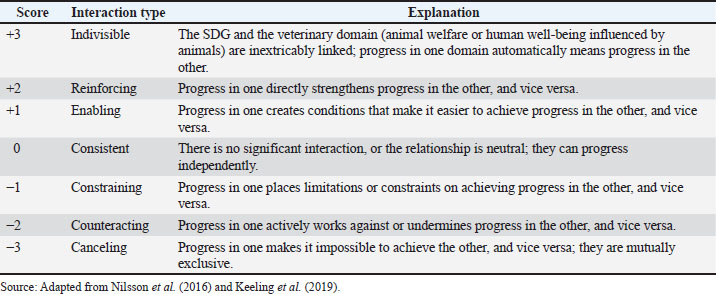
Table 1. Seven-point scale for perceived interaction between SDGs and veterinary domains.
Table 2. Five-point scale for evaluating the contribution of veterinary education to SDGs.
Students were also required to provide a brief written qualitative description justifying their chosen score for each SDG to elaborate on their quantitative ratings for the first two elements (the 7-point interaction scales). Illustrative examples adapted from the Food and Agriculture Organization of the United Nations (FAO, 2015) regarding potential links between livestock and each SDG were included within the questionnaire to further aid comprehension and contextualize these interaction assessment tasks. Additionally, the survey included a preliminary question to ascertain students’ prior awareness of SDGs before the introductory lecture. Data analysisData from the completed questionnaires were manually entered into the Google Spreadsheet for organization and analysis. Figures were generated using RStudio Desktop version 2025.05.0 + 496. Descriptive statistics, including frequencies, means, and standard deviations (SD), were calculated to summarize student responses for prior SDG awareness, the perceived interaction scores for each SDG across the two domains, and the evaluation scores for the contribution of veterinary education to each SDG. Rankings of SDGs within each domain and educational contribution were determined based on their mean scores. In addition to descriptive statistics, inferential analyses were performed. An independent samples t-test was used to compare the mean scores between students with and without prior awareness of the SDGs. Spearman’s rank-order correlation was employed to assess the relationships between the three primary domains. For all inferential tests, a p-value of < 0.05 was considered statistically significant. Ethical approvalAll participants provided informed consent before participating in the study. The survey was administered anonymously to ensure confidentiality and encourage candid responses. Formal ethical approval from an institutional review board was not sought. The investigators viewed this research as an educational needs assessment that utilized non-sensitive, anonymized data regarding student perceptions of the curriculum and broader societal goals. ResultsThis section presents the survey’s quantitative findings. Table 3 presents the detailed mean scores and standard deviations (SDs) for all 17 SDGs across the three assessed components. Figures 1 and 2 provide visual representations of these findings. Table 3. Mean scores and standard deviations of student perceptions of SDG interactions with veterinary domains and veterinary education contribution (n=40).
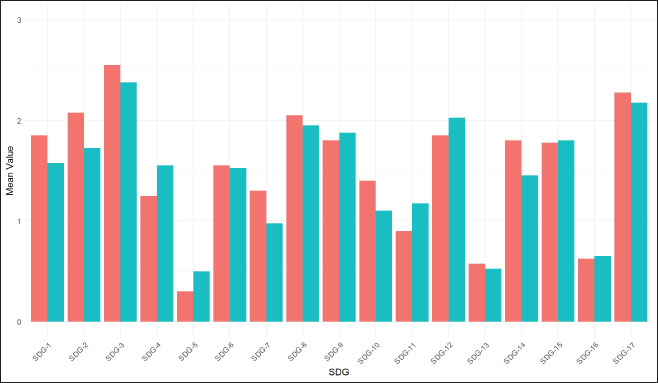
Fig. 1. Grouped bar chart comparing mean scores for perceived interaction between SDGs and animal welfare (red color) and human well-being influenced by animals (cyan blue color).
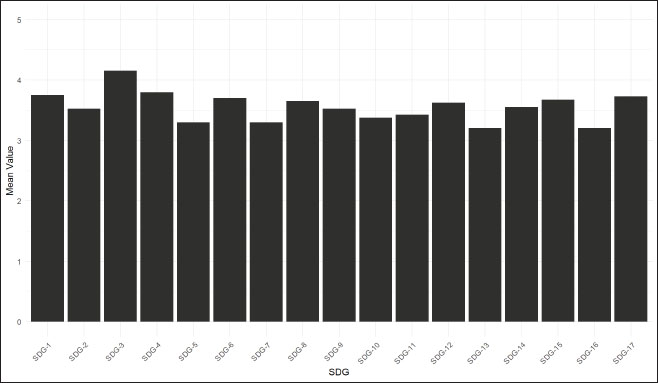
Fig. 2. Bar chart of mean scores for the evaluation of SDG integration into the veterinary curriculum. Participant characteristics and prior SDG awarenessA total of 40 students from the professional Doctor of Veterinary Medicine program participated in the study. Of the 40 participants, 11 (27.5%) reported having previous awareness of the SDGs before the introductory lecture that was part of the survey procedure. These 11 students indicated their sources of information, with some selecting multiple sources. Among the reported sources, activities outside class (such as student organizations) were mentioned 5 times. The internet and/or social media accounted for 4 mentions, activities outside of their formal education (described as off-campus) for 3 mentions, and in-class activities during their academic or professional program for 2 mentions. Perceived interaction between SDGs and animal welfareStudents rated the interaction between each of the 17 SDGs and animal welfare on a 7-point scale (-3 "Canceling" to +3 "Indivisible"). The overall mean score for this perceived interaction across all 17 SDGs was +1.53 ± 1.03, indicating a generally positive (enabling to reinforcing) perceived relationship. As shown in Figure 1 and detailed in Table 3, the SDGs perceived to have the strongest positive interaction with animal welfare were SDG 3: Good Health and Well-Being (2.55 ± 0.59), SDG 17: Partnerships for The Goals (2.28 ± 0.77), and SDG 2: Zero Hunger (2.08 ± 0.98). Conversely, the SDGs with the lowest mean scores for positive interaction, approaching a neutral perception, included SDG 5: Gender Equality (0.30 ± 0.84), SDG 13: Climate Action (0.58 ± 1.56), and SDG 16: Peace, Justice, and Strong Institutions (0.63 ± 0.89). Perceived interaction between SDGs and human well-being influenced by animalsRegarding the interaction between the 17 SDGs and the influence of animals on human well-being, rated on the same 7-point scale, the overall mean score was +1.47 ± 1.02. This also suggests a generally positive (enabling to reinforcing) perceived relationship. Figure 1 and Table 3 illustrate that the SDGs perceived to have the strongest positive interaction with human well-being influenced by animals were SDG 3: Good Health and Well-Being (2.38 ± 0.73), SDG 17: Partnerships for The Goals (2.18 ± 0.83), and SDG 12: Responsible Consumption and Production (2.03 ± 0.82). The SDGs with the lowest mean scores for positive interaction in this domain included SDG 5: Gender Equality (0.50 ± 1.16), SDG 13: Climate Action (0.53 ± 1.16), and SDG 16: Peace, Justice, and Strong Institutions (0.65 ± 1.11). Evaluation of the contribution of veterinary education to SDG achievementStudents evaluated the contribution of their veterinary education to preparing them for each SDG on a 5-point scale (1 "No integration" to 5 "Comprehensive integration"). The overall mean evaluation score across all 17 SDGs was 3.56 ± 0.97, indicating a perceived moderate level of curricular integration. These findings are detailed in Table 3 and visualized in Figure 2. The veterinary curriculum was perceived to contribute most strongly to SDG 3: Good Health and Well-Being (4.15 ± 0.91), SDG 4: Quality Education (3.80 ± 0.90), and SDG 1: No Poverty (3.75 ± 1.09). Conversely, the SDGs for which the curriculum was perceived to contribute least included SDG 13: Climate Action (3.20 ± 1.03), SDG 16: Peace, Justice, and Strong Institutions (3.20 ± 1.08), SDG 5: Gender Equality (3.30 ± 1.12), and SDG 7: Affordable and Clean Energy (3.30 ± 1.08). Comparison of perceptions based on prior SDG awarenessAn independent samples t-test was conducted to compare perception scores between students without prior awareness of the SDGs (n=29) and those with prior awareness (n=11). Students who were previously unaware of the SDGs reported significantly higher average interaction scores for both animal welfare (1.64 ± 0.40 vs. 1.22 ± 0.44, p=0.015) and human well-being influenced by animals (1.63 ± 0.41 vs. 1.04 ± 0.33, p < 0.001), compared to their SDG-aware peers. However, no significant difference was observed in their evaluation of the contribution of the veterinary curriculum to SDG achievement (3.60 ± 0.79 vs. 3.44 ± 0.80, p=0.567). Correlations between the assessed domainsA Spearman correlation analysis was performed to assess the relationships between the primary domains. The analysis revealed a strong positive correlation between students’ perceptions of SDG interactions with animal welfare and human well-being (ρ=0.746, p < 0.001). A weaker but statistically significant correlation was observed between animal SDG scores and evaluation of education (ρ=0.315, p=0.048), whereas the association between human well-being interaction and evaluation of education was not statistically significant (ρ=0.203, p=0.208). DiscussionThe findings of this study offer valuable insights into how final-year veterinary students in Indonesia perceive the intricate relationships between the SDGs and core veterinary domains. Overall, students perceived the interactions between the 17 SDGs and both animal welfare (overall +1.53 ± 1.03) and human well-being influenced by animals (overall +1.47 ± 1.02) as predominantly positive. This generally falls within the "enabling" to "reinforcing" range of the Nilsson et al. (2016) framework, indicating that students largely see progress in SDGs and advancements in veterinary domains as mutually supportive. This general positive perception is consistent with findings from both expert groups and other student populations that have explored these linkages. Keeling et al. (2019) reported a consensus among experts that, on average, achieving SDGs and improving animal welfare are not conflicting but rather mutually beneficial. This view was also shared by postgraduate students in a subsequent study by Olmos Antillón et al. (2021) and further reinforced by a larger global stakeholder consultation that confirmed these expected co-benefits (Keeling et al., 2022). These broad agreements underscore the integral role of veterinary science in achieving sustainable development outcomes (FAO, 2018; Schneider and Tarawali, 2021). The slight variation in overall mean scores between the two domains in the present study suggests a generally similar level of perceived positive interaction, although nuances emerge when examining individual SDGs. Unsurprisingly, the Indonesian veterinary students identified the strongest positive interactions for SDGs, which are traditionally central to veterinary practice. SDG 3 (Good Health and Well-Being) ranked highest in both the animal welfare (2.55 ± 0.59) and the human well-being (2.38 ± 0.73) domains. The notably narrow standard deviation for SDG 3 in the animal welfare domain (SD=0.59), the lowest for any SDG interaction, underscores a strong consensus regarding this fundamental link among students. This high level of agreement reflects the core mission of veterinary medicine in promoting animal health, which directly contributes to public health through zoonosis control and food safety—a cornerstone of the One Health paradigm (UN, 2019; OIE, 2021; Dye, 2022). This perspective was strongly reinforced by the students' qualitative response, which centered on core veterinary public health principles. The justifications extended beyond general zoonosis prevention to include food safety and the systemic threat of antimicrobial resistance. For instance, one student explained that, "Antibiotic residues found in processed livestock products, such as milk, meat, and eggs, can affect human health and can result in resistance." The strong perceived link between SDG 3 and human well-being influenced by animals is further substantiated by extensive evidence demonstrating the positive contributions of animals to human physical and psychological health (Wells, 2019), a nuance also captured by students who noted that animal welfare supports human well-being not only physically but also “mentally (as companion animals).” Similarly, SDG 17 (Partnerships for The Goals) was highly rated for its interaction with both domains (2.28 ± 0.77 and 2.18 ± 0.83, respectively), again with relatively consistent views (narrower SDs), likely reflecting an understanding of the collaborative approaches inherent in modern veterinary work (Nelke et al., 2022). Qualitative data support this, revealing that students interpret “partnerships” at multiple levels, from essential multi-stakeholder collaboration among farmers to public-private partnerships between industry and local farms. Many students identified the One Health approach as the ultimate embodiment of partnership, while others pointed to specific cross-sectoral collaborations as crucial for consumer safety. For example, one student highlighted, "The partnership between the pharmacy and livestock sectors... to avoid residues, antibiotics, and resistance." This aligns with global stakeholder discussions where mapping SDG-animal welfare interactions is viewed as a basis for identifying strategic partnerships to advance both agendas (Keeling et al., 2022). The high ranking of SDG 2 (Zero Hunger) in relation to animal welfare (2.08 ± 0.98) aligns with the findings of Keeling et al. (2019), where experts also saw a strong positive link, noting that improved animal welfare could strongly enable hunger reduction. Furthermore, the students’ high rating of SDG 12 (Responsible Consumption and Production) concerning human well-being (2.03 ± 0.82) resonates with findings from both Keeling et al. (2019) and Olmos Antillón et al. (2021) where experts and postgraduate students, respectively, identified SDG 12 as having one of the strongest mutual reinforcing links with animal welfare, with students in the latter study selecting it as the most promising SDG for integrating animal welfare targets. These perceptions highlight students’ recognition of veterinary roles in sustainable food systems (Herrero et al., 2023), aligning with established views that healthy, well-cared-for animals enhance food security and safety (Keeling, 2025). Conversely, the perception of weaker interactions for certain systemic SDGs is noteworthy and warrants further exploration, with the qualitative data providing crucial insights into the students' reasoning. For SDG 5 (Gender Equality), the low scores (0.30 ± 0.84 and 0.50 ± 1.16) are underpinned by a revealing contradiction in the students’ justifications. The most common theme was perceived irrelevance, with many students simply stating there was "no relationship." However, in direct contrast to this view, many of the students simultaneously described clear gender-based roles and barriers within the profession, noting that large animal fieldwork is often seen as a male domain because, as one student put it, "There are still many farms or businesses that employ men with the reason that they have more strength." A minority of students argued that competence is not gender-dependent, but the prevalence of the contradictory views suggests a curricular gap in educating students on the socio-economic dimensions of their profession. This finding contrasts with the more nuanced view of experts, who perceived that achieving SDG 5 would strongly impact animal welfare (Keeling et al., 2019). SDG 13 (Climate Action) received low mean scores accompanied by some of the widest standard deviations (0.58 ± 1.56 and 0.53 ± 1.16), indicating considerable divergence in student opinion. The qualitative data reveals that this is due to a complex, bidirectional understanding of the issue. On the one hand, students recognized climate change as a threat to animals, with one explaining, "A changing climate triggers a decline in the health condition of animals and increases pathogens that can infect animals." However, they also correctly identified livestock’s contribution to the problem, noting that an increase in production "can result in a greenhouse effect because the waste produced is excessive." This predominantly negative framing, which focuses on problems rather than solutions, aligns closely with documented "educational disconnects" on climate change within veterinary medicine (Kramer et al., 2020) and highlights the challenge of integrating animal welfare into all dimensions of sustainability (Broom, 2019). This contrasts with the findings of Olmos Antillón et al. (2021) where a targeted educational intervention helped students see the links more clearly. Similarly, students struggled to connect their work to SDG 16 (Peace, Justice, and Strong Institutions), reflected in the low mean scores of 0.63 ± 0.89 and 0.65 ± 1.11. The qualitative justifications show that many students saw no link, while those who did creatively re-framed "Peace and Justice" into the more familiar veterinary concepts of "Biosecurity" and "Disease Control." For example, one student linked strict quarantine procedures directly to conflict avoidance, stating it can "prevent the transmission of infectious agents... between areas, which usually causes conflict." Students connected more easily with the "Strong Institutions" component, linking it to the need for robust regulatory bodies for animal trade and food safety. Although this perspective is insightful, it may not capture the full scope intended by the goal. Global stakeholders suggest that achieving SDG 16 itself—through stable governance and peace—could have as significant a positive impact on improving animal welfare as achieving SDG 3 (Keeling et al., 2022). This highlights an opportunity, as demonstrated by Olmos Antillón et al. (2021) to broaden students’ perspectives on the enabling environment that good governance provides for both animal and human well-being. This more holistic view is crucial for integrating veterinary science into the wider sustainable development agenda (Visseren-Hamakers, 2020; Torpman and Röcklinsberg, 2021; Schapper and Bliss, 2023). An interesting finding emerged when students were compared based on their prior awareness of the SDGs. Those with existing knowledge of the goals perceived significantly weaker positive interactions between the SDGs and both veterinary domains compared with their unaware peers. This may suggest that familiarity with the SDGs fosters a more nuanced or critical perspective, allowing students to recognize potential constraints or counteracting factors, whereas students may hold a more uniformly positive view when introduced to the concepts for the first time. Notably, both groups evaluated their education similarly, indicating that prior awareness did not significantly alter their perception of the content of the curriculum. The students’ evaluation of their veterinary education at Universitas Hasanuddin revealed a moderate overall perceived contribution (mean 3.56 ± 0.97 on a 5-point scale) to their preparedness for addressing the SDGs. This finding suggests that while students recognize some integration of SDG-related topics, there is considerable room for improvement to achieve comprehensive preparedness. This moderate level of perceived readiness aligns with broader observations in higher education, where institutions are still systematically embedding SDGs across curricula, often with variable success (Leal Filho et al., 2019; Serafini et al., 2022), and underscores the ongoing need to strengthen education on sustainable development across all disciplines (Leal et al., 2024). Studies such as Olmos Antillón et al. (2021) highlighted the potential for targeted educational programs to enhance this preparedness, where a dedicated course helped postgraduate students broaden their understanding of the links between animal welfare and the SDGs. Students perceived their curriculum to be most effective in preparing them for SDG 3 (Good Health and Well-Being) (4.15 ± 0.91), SDG 4 (Quality Education) (3.80 ± 0.90), and SDG 1 (No Poverty) (3.75 ± 1.09). The strong emphasis on SDG 3 is logical, as human and animal health forms the bedrock of veterinary medicine and is closely aligned with the previously taught One Health concept. The relatively high rating for SDG 4 may reflect students’ positive evaluation of their overall educational experience or, as seen in Olmos Antillón et al. (2021) students may place a high value on the role of education itself in fostering change, with their student group rating the impact of achieving SDG 4 on animal welfare very strongly. The perceived preparedness for SDG 1 (No Poverty) is also encouraging, suggesting an awareness of veterinary roles in supporting livelihoods, particularly in a developing country context like Indonesia, where livestock are crucial economic assets (Herrero et al., 2023). While SDG 3 and SDG 4 showed fairly consistent views among students (SDs 0.91 and 0.90, respectively), the slightly wider SD for SDG 1 (SD=1.09) might indicate more varied perceptions or experiences regarding the curriculum’s effectiveness in addressing poverty-related aspects through veterinary science. In contrast, students perceived the curriculum's contribution to be weakest for SDG 13 (Climate Action) (3.20 ± 1.03), SDG 16 (Peace, Justice, and Strong Institutions) (3.20 ± 1.08), SDG 5 (Gender Equality) (3.30 ± 1.12), and SDG 7 (Affordable and Clean Energy) (3.30 ± 1.08). These lower mean scores, coupled with generally wider standard deviations (e.g., SD=1.12 for SDG 5; SD=1.08 for SDG 16 and SDG 7), suggest not only a perceived lack of coverage but also more diverse student opinions on the limited preparation they did receive. The particularly low rating for SDG 13 (Climate Action) echoes findings from other studies highlighting an "educational disconnect" regarding climate change in veterinary curricula (Kramer et al., 2020), despite the profound implications of climate change for animal health, food security, and zoonoses. Similarly, the limited perceived preparedness for addressing issues such as gender equality (SDG 5) and peace and justice (SDG 16) may indicate that these more socio-political and systemic SDGs are not yet seen as core to veterinary education or are not explicitly integrated. This contrasts with international calls for educational programs to equip graduates with competencies that address the full spectrum of SDGs (UNESCO, 2017; UNESCO, 2020). The findings are also comparable to studies in other health professions where students reported feeling less knowledgeable about broader environmental and societal SDGs compared to health-specific ones (Shehu and Shehu, 2018; Niemi et al., 2025). These identified gaps strongly suggest a clear need for curricular reforms. Olmos Antillón et al. (2021) demonstrated that educational interventions involving reflection and discussion on specific case studies helped postgraduate students identify a broader range of AW-SDG links than they initially perceived, highlighting the value of pedagogical approaches that foster critical and systems thinking. Such strategies could be instrumental in broadening perspectives beyond traditional clinical roles to encompass wider sustainability competencies, potentially drawing on local content and national SDG priorities within Indonesia (Farida et al., 2024; Bohang et al., 2025). Furthermore, beyond enhancing knowledge and attitudes, veterinary curricula should also consider strategies to foster sustainable behaviors among students, a challenge highlighted for higher education institutions (Leal et al., 2024). Comparing these findings with educational trends in European veterinary schools, which have progressively integrated animal welfare science, ethics, and law (De Briyne et al., 2020), might offer insights into pathways for strengthening such transversal competencies. The correlation analysis illuminated the relationship between the assessed domains. The strong positive correlation between perceptions of animal welfare and human well-being interactions (ρ=0.75) suggests that students largely possess a consistent “One Welfare” mindset, recognizing that what is good for animals is also good for people. However, the weak-to-nonsignificant correlation between these professional perceptions and education evaluation highlights a potential disconnect. It suggests that students’ judgments about the effectiveness of their curriculum are not simply an extension of their views on the profession’s importance, indicating a perceived gap between the profession’s responsibilities and its educational preparation. The findings have significant implications for veterinary education in Indonesia, signaling the need for strategic curriculum enhancements to better equip graduates with competencies relevant to a broader array of SDGs, particularly those beyond traditional animal health concerns such as climate action and gender equality. Integrating national SDG priorities and local contexts (Farida et al., 2024; Bohang et al., 2025) could make these global goals more tangible. This study underscores the importance of fostering a more holistic understanding among upcoming professionals regarding their multifaceted roles in sustainable development, championing the One Health and One Welfare frameworks to articulate these expanded responsibilities (Nelke et al., 2022). Globally, this research contributes to understanding how future health professionals in a key sector perceive their capacity to contribute to the 2030 Agenda, highlighting commonalities in recognizing core health-related SDGs and shared challenges in embracing more systemic sustainability issues. This study has several limitations. Its confinement to a single institution and a relatively small sample size (n=40) restricts the statistical generalizability of the findings to all veterinary students in Indonesia. Therefore, caution should be exercised in extrapolating these specific curricular gaps to all 14 veterinary schools in Indonesia without further multi-institutional research. However, the study serves as a crucial in-depth case study that provides a rich, contextualized snapshot of student perceptions, highlighting potential issues that may be prevalent nationwide and establishing a methodological baseline for future studies. Furthermore, the introductory SDG lecture, while standardizing baseline knowledge, could have influenced subsequent responses, and the self-reported data may be subject to inherent biases despite measures such as anonymity. Conclusion and RecommendationsThis study reveals that while final-year veterinary students in Indonesia recognize their profession’s integral role in achieving health-related SDGs, they feel less prepared to address broader, systemic sustainability challenges. A clear disconnect exists between the perceived importance of issues such as climate action, gender equality, and governance and the perceived effectiveness of the curriculum in addressing them. These findings support the need for strategic curricular enhancements to better equip future veterinarians to meet the demands of the 2030 Agenda. The following specific, actionable interventions are recommended:
By strategically integrating these systemic sustainability competencies, veterinary education in Indonesia can empower its graduates to more effectively champion the One Health and One Welfare frameworks and fulfill their multifaceted role in achieving a sustainable future. Future research should broaden the evidence base through multi-institutional studies within Indonesia and comparative investigations in other similar contexts, potentially including other health professions (Shehu and Shehu, 2018; Niemi et al., 2025). Longitudinal studies are needed to track the evolution of student perceptions and the impact of curriculum over time, alongside intervention studies evaluating specific educational strategies designed to enhance SDG-related competencies (UNESCO, 2017; Olmos Antillón et al., 2021). Additionally, in-depth qualitative analysis of the reasoning behind students’ perceptions, alongside research into veterinary faculty’s own preparedness and attitudes toward SDG integration, would provide crucial insights for effective and holistic curriculum reform. AcknowledgmentsThe authors would like to sincerely thank the veterinary professional program students at Universitas Hasanuddin for their time and thoughtful contributions to this study. The authors also thank the Universitas Hasanuddin Veterinary Hospital for facilitating this research. Conflict of interestThe author(s) declare(s) that there are no conflicts of interest. FundingThis study received no specific grant. Authors' contributionRHS: Conceptualization, methodology, investigation (introductory lectures, survey administration, and data collection), data curation, formal analysis, original draft preparation, review, and editing. BY: Investigation (assisted with introductory lectures and survey administration), writing, review, and editing. AAPJW: Investigation (assisted with introductory lectures and survey administration), writing, review, and editing. All authors have read and approved the final version of the manuscript. Data availabilityThe datasets generated and/or analyzed during the current study are not publicly available due to the need to maintain the confidentiality of participant responses, even though anonymized, but are available from the corresponding author on reasonable request. Summarized data supporting the findings of this study are included in Table 3 and Figures 1 and 2. ReferencesAsosiasi Fakultas Kedokteran Hewan Indonesia and Perhimpunan Dokter Hewan Indonesia (AFKHI and PDHI). 2024. Ketetapan Bersama antara Asosiasi Fakultas Kedokteran Hewan Indonesia dengan Perhimpunan Dokter Hewan Indonesia Nomor 58/AFKHI/V/2024 Nomor 007/PBPDHI.KU/PK/V/2024 tentang Kompetensi Utama Dokter Hewan Indonesia [Joint Decree between the Association of Indonesian Veterinary School and the Indonesian Veterinary Medical Association Number 58/AFKHI/V/2024 Number 007/PBPDHI.KU/PK/V/2024 concerning the Core Competencies of Indonesian Veterinarians]. Bohang, M.B.A., Wijaya, M., Miranti, Y.N., Wulandari, R.T., Suparjan. and Sandy, T.A. 2025. Meta-analysis of local content curriculum in Indonesia: a decade of insights and its role in achieving SDGs. J. Lifestyl. SDGs. Rev. 5(3), 4844; doi:10.47172/2965-730X.SDGsReview.v5.n03.pe04844 Broom, D.M. 2019. Animal welfare complementing or conflicting with other sustainability issues. Appl. Anim. Behaviour Sci. 219, 104829. Broom, D.M. 2022. Animal welfare in relation to human welfare and sustainability – a review paper. Vet. Arhiv 92(5), 541–547; doi:10.24099/vet.arhiv.2011 Colonius, T.J. and Earley, R.W. 2013. One welfare: a call to develop a broader framework of thought and action. J. Am. Vet. Med. Assoc. 242(3), 309–310; doi:10.2460/javma.242.3.309 De Briyne, N., Vidović, J., Morton, D.B. and Magalhães-Sant’Ana, M. 2020. Evolution of the teaching of animal welfare science, ethics and law in European veterinary schools (2012–2019). Animals 10(7), 1238; doi:10.3390/ani10071238 Dye, C. 2022. One Health as a catalyst for sustainable development. Nat. Microbiol. 7(4), 467–468; doi:10.1038/s41564-022-01076-1 FAO. 2015. FAO synthesis – Livestock and the Sustainable Development Goals: Global Agenda for Sustainable Livestock (Draft prepared by FAO-AGAL Livestock Information, Sector Analysis and Policy Branch). Food and Agriculture Organization of the United Nations. http://www.livestockdialogue.org/fileadmin/templates/res_livestock/docs/2016/Panama/FAO-AGAL_synthesis_Panama_Livestock_and_SDGs.pdf FAO. 2018. World Livestock: Transforming the livestock sector through the Sustainable Development Goals. Food and Agriculture Organization of the United Nations. Available via https://openknowledge.fao.org/server/api/core/bitstreams/3e7ba7ed-1eb1-48cf-8792-ae4773e9a79b/content Farida, W.M., Iqbal, A. and Iswahyudi, M. 2024. Mapping Sustainable Development Goals (SDGs) research landscape in Indonesia: a bibliometric analysis. J. Pendidik. Akunt. Keuang. 12(2), 162–178; doi:10.17509/jpak.v12i2.69422 Herrero, M., Mason-D’Croz, D., Thornton, P.K., Fanzo, J., Rushton, J., Godde, C., Bellows, A., De Groot, A., Palmer, J., Chang, J., Van Zanten, H., Wieland, B., DeClerck, F., Nordhagen, S., Beal, T., Gonzalez, C. and Gill, M. 2023. Livestock and Sustainable Food Systems: Status, Trends, and Priority Actions. In Science and Innovations for Food Systems Transformation, Eds., Von Braun, J., Afsana, K., Fresco, L.O. and Hassan, M.H.A. Berlin: Springer International Publishing, pp: 375–399; doi: 10.1007/978-3-031-15703-5_20 Keeling, L., Tunón, H., Olmos Antillón, G., Berg, C., Jones, M., Stuardo, L., Swanson, J., Wallenbeck, A., Winckler, C. and Blokhuis, H. 2019. Animal Welfare and the United Nations Sustainable Development Goals. Front. Vet. Sci. 6, 336; doi:10.3389/fvets.2019.00336 Keeling, L.J. 2025. Animal welfare: part of the solution, not part of the problem in the move toward achieving sustainable development in animal agriculture. Anim. Front. 15(2), 8–11; doi:10.1093/af/vfaf009 Keeling, L.J., Marier, E.A., Olmos Antillón, G., Blokhuis, H.J., Staaf Larsson, B. and Stuardo, L. 2022. A global study to identify a potential basis for policy options when integrating animal welfare into the UN Sustainable Development Goals. Front. Anim. Sci. 3, 974687; doi:10.3389/fanim.2022.974687 Kiran, D., Sander, W.E. and Duncan, C. 2022. Empowering veterinarians to be planetary health stewards through policy and practice. Front. Vet. Sci. 9, 775411; doi:10.3389/fvets.2022.775411 Kramer, C.G., McCaw, K.A., Zarestky, J. and Duncan, C.G. 2020. Veterinarians in a changing global climate: educational disconnect and a path forward. Front. Vet. Sci. 7, 613620; doi:10.3389/fvets.2020.613620 Leal Filho, W., Shiel, C., Paço, A., Mifsud, M., Ávila, L.V., Brandli, L.L., Molthan-Hill, P., Pace, P., Azeiteiro, U.M., Vargas, V.R. and Caeiro, S. 2019. Sustainable Development Goals and sustainability teaching at universities: falling behind or getting ahead of the pack?. J. Clean. Prod. 232, 285–294; doi:10.1016/j.jclepro.2019.05.309 Leal, S., Nascimento, J., Piki, A., Tekerek, A., Güzel, A., Loureiro, A., Gonçalves, C., Messias, I., Simons, J., Teunen, L., Barradas, L.C.S., Palmer, N., Mongelli, T.L., Nedelko, Z. and Oliveira, S. 2024. Exploring sustainable development perceptions among higher education students: an empirical study on knowledge, attitudes, and behaviours. Clean. Responsible Consum. 14, 100223; doi:10.1016/j.clrc.2024.100223 Nelke, A., Persson, K., Selter, F. and Weber, T. 2022. Veterinarians as key intermediaries in sustainability discourse(s). In Transforming food systems: ethics, innovation and responsibility. Wageningen, The Netherlands: Wageningen Academic Publishers, pp: 350–355; doi: 10.3920/978-90-8686-939-8_54 Niemi, M., Alvesson, H.M., Helldén, D., Biermann, O., Henje, E., Nordenstedt, H., Sundberg, C.J. and Alfvén, T. 2025. Nursing and medical students’ views on their knowledge related to the Sustainable Development Goals – a mixed methods study at three Swedish universities. BMC. Med. Educ. 25(1), 434; doi:10.1186/s12909-025-06991-5 Nilsson, M., Griggs, D. and Visbeck, M. 2016. Policy: map the interactions between Sustainable Development Goals. Nature 534(7607), 320–322; doi:10.1038/534320a OIE. 2012. OIE recommendations on the Competencies of graduating veterinarians (‘Day 1 graduates’) to assure National Veterinary Services of quality. Paris, World Organisation for Animal Health. OIE. 2021. OIE Seventh Strategic Plan for the period 2021–2025. World Organisation for Animal Health. pp. 3–4, 8, 16. Available via https://web.oie.int/downld/SG/2020/A_88SG_14_StrategicPlan.pdf Olmos Antillón, G., Tunón, H., De Oliveira, D., Jones, M., Wallenbeck, A., Swanson, J., Blokhuis, H. and Keeling, L. 2021. Animal Welfare and the United Nations’ Sustainable Development Goals—broadening students’ perspectives. Sustainability 13(6), 3328; doi:10.3390/su13063328 Pinillos, R.G., Appleby, M.C., Manteca, X., Scott-Park, F., Smith, C. and Velarde, A. 2016. One Welfare – a platform for improving human and animal welfare. Vet. Rec. 179(16), 412–413; doi:10.1136/vr.i5470 Schapper, A. and Bliss, C. 2023. Transforming our world? Strengthening animal rights and animal welfare at the United Nations. Int. Relat. 37(3), 514–537; doi:10.1177/00471178231193299 Schneider, F. and Tarawali, S. 2021. Sustainable Development Goals and livestock systems. Rev. Sci. Tech. Off. Int. Epizoot. 40(2), 585–595; doi:10.20506/rst.40.2.3247 Serafini, P.G., Moura, J.M.D., Almeida, M.R.D. and Rezende, J.F.D.D. 2022. Sustainable Development Goals in Higher Education Institutions: a systematic literature review. J. Clean. Prod. 370, 133473; doi:10.1016/j.jclepro.2022.133473 Shehu, M. and Shehu, H. 2018. Knowledge, attitude and perception about Sustainable Developmental Goals (SDGs) among clinical medical students of Bingham University Teaching Hospital, Jos. J. Health Environ. Res. 4(4), 130. Tarazona, A.M., Ceballos, M.C. and Broom, D.M. 2019. Human relationships with domestic and other animals: one Health, One Welfare, One Biology. Animals 10(1), 43; doi:10.3390/ani10010043 Torpman, O. and Röcklinsberg, H. 2021. Reinterpreting the SDGs: taking animals into direct consideration. Sustainability 13(2), 843; doi:10.3390/su13020843 UN. 2015. Resolution adopted by the General Assembly on 25 September 2015. United Nations. Available via https://docs.un.org/en/A/RES/70/1 UN. 2019. Global Sustainable Development Report 2019: The Future is Now – Science for Achieving Sustainable Development. United Nations. p.124. Available via https://sustainabledevelopment.un.org/content/documents/24797GSDR_report_2019.pdf UNESCO. 2017. Education for Sustainable Development Goals: Learning Objectives. United Nations Educational, Scientific and Cultural Organization; doi: 10.54675/CGBA9153 UNESCO. 2020. Education for Sustainable Development Goals: A Roadmap. United Nations Educational, Scientific and Cultural Organization; doi: 10.54675/YFRE1448 Visseren-Hamakers, I.J. 2020. The 18th Sustainable Development Goal. Earth Syst. Gov. 3, 100047; doi:10.1016/j.esg.2020.100047 Wells, D.L. 2019. The state of research on human–animal relations: implications for human health. Anthrozoös 32(2), 169–181; doi:10.1080/08927936.2019.1569902 Supplementary Material S1Supplementary Material S1 — Survey Booklet (Bahasa Indonesia).pdf (Single PDF, 62 pages: SDG lecture slides/infographics and the full questionnaire; students consulted this booklet while completing the survey). | ||


| How to Cite this Article |
| Pubmed Style Suharto RH, Yusuf B, Wahyuda AAPJ. Veterinary education and sustainable development goals: A perspective from professional students in Indonesia. Open Vet. J.. 2025; 15(10): 4997-5008. doi:10.5455/OVJ.2025.v15.i10.18 Web Style Suharto RH, Yusuf B, Wahyuda AAPJ. Veterinary education and sustainable development goals: A perspective from professional students in Indonesia. https://www.openveterinaryjournal.com/?mno=261496 [Access: June 26, 2026]. doi:10.5455/OVJ.2025.v15.i10.18 AMA (American Medical Association) Style Suharto RH, Yusuf B, Wahyuda AAPJ. Veterinary education and sustainable development goals: A perspective from professional students in Indonesia. Open Vet. J.. 2025; 15(10): 4997-5008. doi:10.5455/OVJ.2025.v15.i10.18 Vancouver/ICMJE Style Suharto RH, Yusuf B, Wahyuda AAPJ. Veterinary education and sustainable development goals: A perspective from professional students in Indonesia. Open Vet. J.. (2025), [cited June 26, 2026]; 15(10): 4997-5008. doi:10.5455/OVJ.2025.v15.i10.18 Harvard Style Suharto, R. H., Yusuf, . B. & Wahyuda, . A. A. P. J. (2025) Veterinary education and sustainable development goals: A perspective from professional students in Indonesia. Open Vet. J., 15 (10), 4997-5008. doi:10.5455/OVJ.2025.v15.i10.18 Turabian Style Suharto, Rian Hari, Baso Yusuf, and Anak Agung Putu Joni Wahyuda. 2025. Veterinary education and sustainable development goals: A perspective from professional students in Indonesia. Open Veterinary Journal, 15 (10), 4997-5008. doi:10.5455/OVJ.2025.v15.i10.18 Chicago Style Suharto, Rian Hari, Baso Yusuf, and Anak Agung Putu Joni Wahyuda. "Veterinary education and sustainable development goals: A perspective from professional students in Indonesia." Open Veterinary Journal 15 (2025), 4997-5008. doi:10.5455/OVJ.2025.v15.i10.18 MLA (The Modern Language Association) Style Suharto, Rian Hari, Baso Yusuf, and Anak Agung Putu Joni Wahyuda. "Veterinary education and sustainable development goals: A perspective from professional students in Indonesia." Open Veterinary Journal 15.10 (2025), 4997-5008. Print. doi:10.5455/OVJ.2025.v15.i10.18 APA (American Psychological Association) Style Suharto, R. H., Yusuf, . B. & Wahyuda, . A. A. P. J. (2025) Veterinary education and sustainable development goals: A perspective from professional students in Indonesia. Open Veterinary Journal, 15 (10), 4997-5008. doi:10.5455/OVJ.2025.v15.i10.18 |


