





| Research Article | ||
Open Vet. J.. 2026; 16(1): 646-652 Open Veterinary Journal, (2026), Vol. 16(1): 646-652 Research Article Biometric evaluation of different limb regions in Iranian Arab horsesBahador Shojaei1, Elahe Mousanejad2, Fatemeh Karimi Afshar2 and Fahimeh Pourjafari2,3*1Department of Basic Sciences, Faculty of Veterinary Medicine, Shahid Bahonar University of Kerman, Iran 2Student Research Committee, School of Medicine, Kerman University of Medical Sciences, Kerman, Iran 3Department of Anatomical Sciences, School of Medicine, Kerman University of Medical Sciences, Kerman, Iran *Corresponding Author: Fahimeh Pourjafari. Student Research Committee, School of Medicine, Submitted: 20/07/2025 Revised: 25/11/2025 Accepted: 08/12/2025 Published: 31/01/2026 © 2025 Open Veterinary Journal
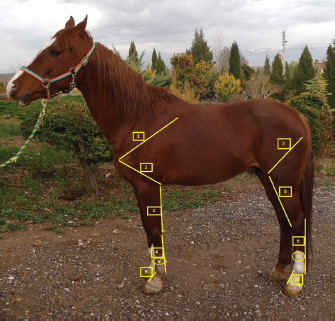
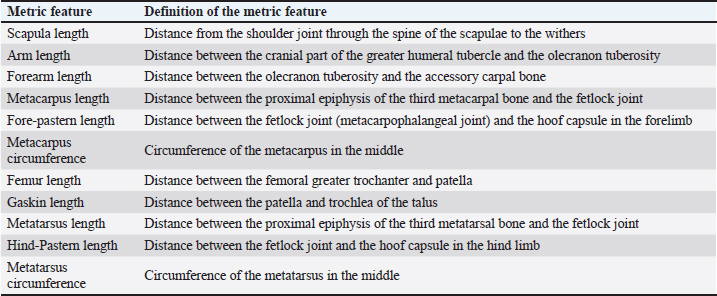
AbstractBackground: Morphological variation in equine limb dimensions provides valuable insight into breed-specific characteristics, with biometric parameters serving as reliable tools for such evaluations. Aim: This study aimed to provide a quantitative characterization of the external morphology of the limbs in Iranian Arab horses. Methods: Morphometric data were collected from 30 adult specimens of this breed, encompassing key anatomical measurements: scapula length, arm length, forearm length, metacarpus length, forepastern length, metacarpus circumference, femur length, gaskin length, metatarsus length, hind pastern length, and metatarsus circumference. Results: Statistical analysis revealed that hind limb length displayed the lowest coefficient of variation, whereas forelimb length exhibited the highest, indicating differing degrees of morphological consistency across limb segments. Furthermore, comparative analysis across age and sex groups identified statistically significant differences in scapula length, arm length, forepastern length, and metacarpus circumference between stallions and mares. Conclusion: These findings underscore the influence of sexual dimorphism on specific limb traits in Iranian Arab horses and contribute to the understanding of breed morphology. Keywords: Iranian Arab horses, Limb, Biometry. IntroductionHorses have played a pivotal role in Iran’s history for many centuries, serving as integral components of agriculture, transportation, warfare, and cultural identity (Hosseini et al., 2016). Among the indigenous equine breeds of Iran, the Persian Arabian, Caspian, Turkmen, Dareshuri, and Kurdish horses are of particular historical and cultural significance due to their long-standing utility in farming, riding, and traditional practices (Gharahveysi et al., 2008; Sobczuk and Komosa, 2012) breeds are used for different purposes. For example, the beauty, endurance, and speed of the Turkoman breed make it a popular choice for jumping and course performances. Caspian, one of the oldest breeds, is used for horse riding and training children because of its small size. These lovely horses possess strength, speed, and great versatility, making them an excellent all-around pony. Kurdish breeds are used in cogan and dressage due to their bravery (Hosseini et al., 2016). The Dareshuri horse is larger than the Arabian horse, has large eyes, and participates in show jumping and beauty contests (Shojaei et al., 2015). The Arabian horse, in particular, is globally renowned, with a documented lineage extending over approximately 3,000 years and a current global population exceeding one million (de Siqueira and Cordeiro, 2024). The high value of the Arabian horse is primarily due to its distinct external morphology, as this breed is commonly showcased in exhibitions and ceremonial contexts (Ghanem et al., 2025; Sadeghi et al., 2019). Predominantly bred in Middle Eastern countries, such as Iran, Egypt, Saudi Arabia, and Syria, the Arabian horse exhibits a wide variety of characteristics. These variations largely arise from breeding in diverse climatic regions and extensive international trade (Cosgrove et al., 2020; Hacan et al., 2024). Considering the breed diversity and the multifaceted applications of Iranian horses, a rigorous scientific assessment of their morphological characteristics is imperative, with particular emphasis on biometric analysis. The biometric evaluation of external morphological traits is a cornerstone in the characterization, management, and selective improvement of domestic animal breeds. In equines—particularly those bred for athletic performance or esthetic purposes—morphometric analysis of limb conformation has been widely employed to distinguish breed-specific features, predict functional capacity, and guide evidence-based breeding strategies (Giontella et al., 2024). Morphometric traits, such as limb lengths, joint angles, and body proportions, are known to exhibit moderate to high heritability, making them reliable phenotypic indicators across generations (Salako and Ngere, 2002). These metrics are also instrumental in the early detection of musculoskeletal disorders, objective assessment of conformation relative to sport-specific demands, and identification of traits associated with environmental adaptability (Ross and Dyson, 2010). Several studies have prioritized the biometric analysis of equine limbs to elucidate the interplay between conformation, athletic aptitude, and adaptation to functional roles. For instance, Pimentel et al. (2011) investigated limb proportions in Brazilian Vaquejada horses and demonstrated their critical role in achieving optimal balance between traction and velocity during competitive events(Pimentel et al., 2011). Similarly, a comparative biometric study of Thoroughbred and Turkoman horses revealed significant interbreed differences in key body indices—including limb proportions and neck width—while also noting the influence of age and sex on certain traits, thus reinforcing the utility of such measurements in breed identification and selection (Nobari et al., 2019). Furthermore, research on Polish Arabian horses has highlighted girth circumference as a principal biometric parameter with strong correlations to strength and overall performance (Pieszka et al., 2006). Despite these valuable contributions to the equine morphology literature, data on limb conformation in Iranian Arabian horses remain scarce. This is particularly noteworthy given the breed’s long-standing historical relevance, unique phenotype, and adaptation to arid and semi-arid environments. Considering these gaps, this study aimed to deliver a comprehensive biometric assessment of fore- and hindlimb morphological traits in the Iranian Arabian horse. The results of this study provide a foundational dataset that supports breed standardization, conservation efforts, and selective breeding programs aimed at preserving and enhancing the functional and genetic integrity of this culturally significant breed. Furthermore, with the advent of AI, recent research highlights the potential of AI tools in anatomical data analysis and education. Integrating AI-based morphometric assessment could enhance accuracy in biometric studies and facilitate automated pattern recognition in equine conformation analysis (Choudhary et al., 2024; Choudhary et al., 2023). Materials and MethodsStudy population and measurementsThe dataset comprised 11 body measurements from the limb region of 30 Iranian Arabian horses, representing various sub-breeds (al-Muanigi, al-Hamadani, al-Kuhailan, al-Saklawi, and al-Obiat). These horses, both male (13 stallions) and female (17 mares), were aged between 3 and 9 years and exhibited a range of coat colors, including white, black, red, and brown. Horses were selected from the Kerman province of Iran in April 2024 (Table 1 and Fig. 1). The breed origin of each horse was verified through genealogical records. Only clinically healthy, purebred Iranian Arabian horses whose pedigree authenticity was confirmed through genealogical documentation were included in this study. Both sexes were eligible, and the animals had to be between 3 and 9 years of age with an acceptable nutritional condition at the time of sampling. Horses that lacked verified pedigree information or failed to meet the pre-measurement health or nutritional screening criteria were excluded. Before measurements, all horses were thoroughly examined for physical health and nutritional status to ensure that they were in optimal condition for measurement. Limb measurements were performed using a horse measuring stick, with each horse being measured individually. A single person took measurements on two separate occasions, and the average of these two readings was recorded for each horse (Cervantes et al., 2009).
Fig. 1. Measurements of the limbs Scapula length [1], arm length [2], forearm length [3], metacarpus length [4], fore-pastern length [5], metacarpus circumference [6], femur length [7], gaskin length [8], metatarsus length [9], hind-pastern length [10], and metatarsus circumference [11] were measured. Table 1. External features of the Iranian Arabian horse.
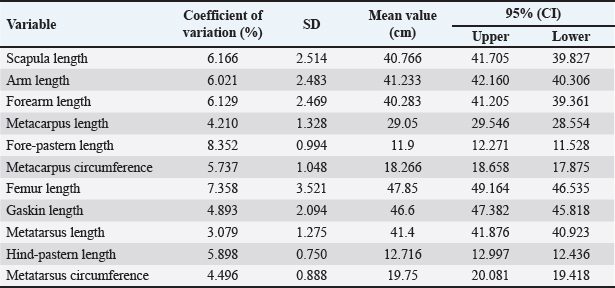
Statistical analysisThe data were analyzed using SPSS software, version 16, for Windows. Initially, descriptive statistics, including the mean, standard deviation, confidence interval (CI), and coefficient of variation, were calculated for each parameter. Comparisons were performed between groups (stallions versus mares, and individuals aged 6 years or younger versus those older than 6 years). The normality of the data distribution was assessed using the One-Sample Kolmogorov–Smirnov test. Parametric data were analyzed using the unpaired two-tailed Student’s T-test, whereas non-parametric data were examined using the Mann–Whitney U test. A significance level of P < 0.05 was considered statistically significant. Ethical approvalAll measurements were conducted with the informed consent of the respective horse owners and under their supervision. As the procedures involved non-invasive and non-experimental biometric measurements, they did not fall under the animal experimentation regulations’ jurisdiction. Consequently, formal ethical approval from an animal experimentation ethics committee was not required. No additional stress or discomfort was imposed on the animals during the data collection process. ResultsEleven biometric traits from the limb region were measured in a sample of 30 Iranian Arabian horses. Table 2 presents descriptive statistics, including mean, standard deviation, coefficient of variation, and 95% CIs for each trait. The analysis revealed minimal variation in metatarsus length, metacarpus length, metatarsus circumference, and gaskin length, indicating high uniformity in these parameters across the sample. In contrast, the remaining measurements exhibited greater variability. Table 2. Descriptive statistics of the biometric parameters.
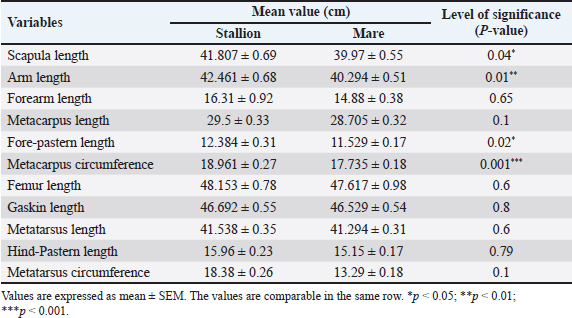
Regarding the effect of sex on biometric parameters, stallions consistently demonstrated higher values than mares. Notably, scapula length, arm length, forecasters length, and metacarpus circumference were significantly greater in stallions than in mares (Table 3). Table 3. Comparison of average biometric parameters in Iranian Arabian horses stallion and mare.
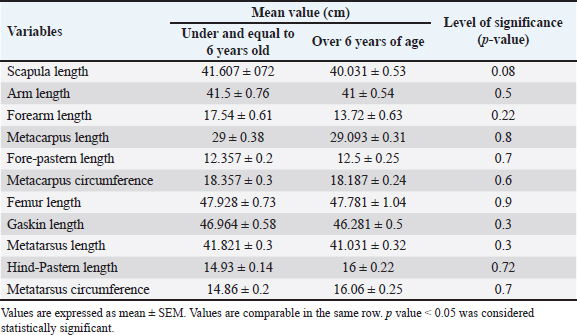
Furthermore, no statistically significant differences were observed between the two age groups assessed, indicating that age did not have a discernible influence on the limb measurements within the study population (Table 4). Table 4. Significant variations in the parameters were studied according to the age of the subject (under and equal to 6 years old and over 6 years old).
DiscussionMorphological standards derived from biometric studies serve as fundamental indicators for determining the phenotypic characteristics of various animal breeds, including horses and dogs. Biometric analyses are widely applied in disciplines such as anthropology, physiology, genetics, medicine, veterinary sciences, paleontology, and related fields (Butkiewicz et al., 2023). The application of animal models has been increasingly emphasized in both research and education, providing valuable frameworks for understanding anatomical variability and improving veterinary teaching methodologies (Choudhary, 2025; Choudhary and Sarkar, 2025). In the context of equine studies, biometric measurements are instrumental in providing a quantitative framework for breed characterization and have broader practical implications. These include estimating body weight, predicting success in speed and show competitions, and even forecasting foals’ future athletic potential (Urbanek and Zebeli, 2023). Horses exhibit diverse physical capabilities that correlate with their external morphological traits. Accordingly, they are categorized into draft breeds (noted for strength), speed breeds, and esthetically appealing show breeds. The skeletal structure of the limbs is particularly significant—not only for determining the horse’s height but also for influencing gait quality and overall performance in various competitive disciplines. Morphological distinctions in traits, such as shoulder length, arm length, and hip length, are critical because they directly impact locomotion and athletic ability(Yıldırım and Erden, 2024). A longer and more obliquely positioned scapula, along with increased arm and hip lengths, contributes to a longer stride, greater forelimb suspension, and enhanced energy efficiency during movement. These characteristics are particularly advantageous for horses involved in high-speed competitions. In contrast, a shorter scapula, a smaller scapular angle, and more vertically aligned forelimbs result in a shorter stride—an adaptation typically observed in horses residing in mountainous terrains, where agility, balance, and weight-bearing capacity take precedence over stride length (Komosa et al., 2013; Komosa and Purzyc, 2009; Sobczuk and Komosa, 2012). Additionally, a longer metacarpus and metatarsus, coupled with a relatively compact body, enhance a horse’s aptitude for riding and galloping (Komosa and Purzyc, 2009). The circumference of the metacarpus is a robust indicator of bone thickness in this region; higher values are associated with increased limb durability and load-bearing capacity (Komosa et al., 2013). A comparative study examining the external morphological traits of Arabian and Thoroughbred horses revealed a significantly lower incidence of limb injuries among Arabian horses than Thoroughbred horses. This resilience is attributed to the anatomically correct limb structure of Arabian horses, particularly in the metacarpus, carpus (wrist), and phalanges (Sobczuk and Komosa, 2012). Not all measured parameters are equally applicable in biometric research. Only a few traits are consistently used by researchers; typically, those that fall within a specific measurable range, are readily accessible, and exhibit statistical normality with a low coefficient of variation. The CV, expressed as a percentage, is the ratio of the standard deviation to the mean of a trait. A lower CV indicates that individual measurements are more tightly clustered around the population mean, implying higher heritability and making such traits reliable for genetic selection (Silva et al., 2002). In our study of purebred Iranian Arabian horses, the forelimb and hindlimb lengths had the lowest coefficients of variation among all limb-related parameters. This suggests that these traits are not only stable and heritable but also suitable benchmarks for comparative studies across different breeds. Conversely, the forelimb length attribute exhibited the highest CV, possibly due to difficulties in identifying precise anatomical landmarks during measurement and the inherent challenges of working with live animals. Similar investigations have assessed the external limb dimensions of Arabian horses and their subtypes—such as Spanish, Polish, Egyptian, and Iraqi strains—to aid in breed identification. These studies also evaluated the influence of sex and age on the morphological features of patients. Consistent with our findings, male horses (stallions) displayed higher average values across most traits than females (mares). However, only the shoulder length, arm length, forelimb length, and forelimb metacarpus girth demonstrated statistically significant differences (Al-Khauzai et al., 2021). These findings align with those reported by Pieszka et al. (2011) and other studies on Spanish Arabian horses, which found that stallions possess more developed limb features than mares. Additionally, it was observed that contemporary Spanish Arabian horses are taller than those from 2 decades ago (Pieszka et al., 2011). This trend is likely attributable to epigenetic influences, shaped by regional environmental conditions and evolving horse usage patterns, which collectively affect biometric traits over time (Cervantes et al., 2009). Recent research underscores the substantial influence of age on the locomotor characteristics of horses. Notably, younger individuals demonstrate distinct stride lengths and walking velocities compared to their older counterparts, reflecting developmental changes similar to those observed in human gait analyses (Richard et al., 1995). Furthermore, biometric evaluations conducted at birth in Arabian foals have revealed significant correlations between early morphometric parameters and future athletic success. These findings suggest that specific physical traits identifiable at an early age may serve as reliable predictors of performance potential in later developmental stages (Benia et al., 2022). Regarding age, our study categorized horses into two groups: those aged ≤6 years and those aged >6 years. No significant anatomical differences in limb features were detected between these two groups of purebred Iranian Arabian horses. This suggests that age does not substantially impact limb morphology within this range. However, in a related study conducted on Iraqi Arabian horses, an increase in limb-related trait averages was noted with age. That study classified horses into narrower age brackets (1–3, 5–7, 7–9, and >9 years), potentially accounting for the observed differences (Allawi et al., 2014). In contrast, our study exclusively included horses aged 3 years, focusing on broader age group comparisons. ConclusionThe morphological characteristics of the animal were systematically examined, and comparative analyses with other horse breeds were conducted to provide a broader context. Traits exhibiting the lowest coefficients of variation were identified as the most reliable indicators of heritability, suggesting their potential utility in selective breeding programs. Furthermore, the measured morphological traits were consistently larger in males than in females. However, no significant differences in trait dimensions were observed across age groups, indicating that age had no obvious effect on the morphological features assessed in this population. AcknowledgmentsWe thank the Student Research Committee of Kerman University of Medical Sciences for their support. Conflicts of interestThe authors have no conflicts of interest to declare. FundingThis study was funded by the Student Research Committee of Kerman University of Medical Sciences. Authors’ contributionsThe SHB supervised the study. PF contributed to material preparation, sampling, laboratory analysis, data collection, and field surveys. ME and KAF wrote the first draft of the manuscript. All authors have read and approved the final version of the manuscript. Data availabilityAll references are open-access, so data can be obtained from the internet. ReferencesAl-Khauzai, A.L., Towfik, A.I. and Munahi, A.K. 2021. Genetic parameters of some conformational traits in Iraqi Arabian horses. In IOP Conference Series: Earth and Environmental Science, IOP Publishing. Allawi, L., Towfik, A.I. and Hamza, A.S.S. 2014. Study the effect of some factors on the conformation of Iraqi Arabian horses. Kufa J. For Vet. Med. Sci. 5, 85–97. Benia, A., Selles, S. and Benamor, N. 2022. Morphometric characterization of purebred Arabian horses for galop racing (born and raised in Algeria). Iraqi J. Vet. Sci. 36, 959–966. Butkiewicz, A.F., Kaźmierczak, P., Frąckowiak, H. and Zdun, M. 2023. Preliminary biometric characteristics of Huacaya alpacas. Anim. Sci. Genet. 19, 9–71. Cervantes, I., Baumung, R., Molina, A., Druml, T., Gutiérrez, J.P., Sölkner, J. and Valera, M. 2009. Size and shape analysis of morphofunctional traits in the Spanish Arab horse. Livestock Sci. 125, 43–49. Choudhary, O.P. and Sarkar, R. 2025. Animal anatomical teaching models for enhanced veterinary anatomy education and learning. Choudhary, O.P. 2025. Animal models for surgeries and implants: a vital tool in medical research and development. Ann. Med. Surg. 87, 4090–4095. Choudhary, O.P., Infant, S.S., As, V., Chopra, H. and Manuta, N. 2024. Exploring the potential and limitations of artificial intelligence in animal anatomy. Ann. Anat. 258, 152366. Choudhary, O.P., Saini, J. and Challana, A. 2023. ChatGPT for veterinary anatomy education: an overview of the prospects and drawbacks. Int. J. Morphol. 41, 1198–1202. Cosgrove, E.J., Sadeghi, R., Schlamp, F., Holl, H.M., Moradi-Shahrbabak, M., Miraei-Ashtiani, S.R., Abdalla, S., Shykind, B., Troedsson, M., Stefaniuk-Szmukier, M., Prabhu, A., Bucca, S., Bugno-Poniewierska, M., Wallner, B., Malek, J., Miller, D.C., Clark, A.G., Antczak, D.F. and Brooks, S.A. 2020. Genome diversity and the origin of the Arabian horse. Scientific. Rep. 10, 9702. Ghanem, N.A., Hagag, N.M., Abdel Gawad, E.M. and Matoock, M.Y. 2025. Estimation of heritability, genetic and phenotypic correlation of head and neck traits of Egyptian Arabian colts. J. Appl. Vet. Sci. 10, 118–131. Gharahveys, S., Kashan, N.E.J., Gerami, A. and Torshizi, R.V. 2008. Estimation of genetic parameters on conformation traits of the Iranian Arab horses population. Pak. J. Biol. Sci. PJBS 11, 280–284. Giontella, A., Silvestrelli, M., Cocciolone, A., Pieramati, C. and Sarti, F.M. 2024. Breeding value estimation based on morphological evaluation of the maremmano horse population through factor analysis. Animals. Open Access J. From MDPI 14, 2232. Hacan, O., Tekerli, M., Çinkaya, S. and Demirtaş, M. 2024. Genetic trends in body measurements at birth for Arabian horse in Türkiye. Arch. Anim. Breeding 67, 561–570. Hosseini, M., Shahrbabak, H.M., Zandi, M.B. and Fallahi, M.H. 2016. A morphometric survey among three Iranian horse breeds with multivariate analysis. Media Peternakan 39, 155–160. Komosa, M. and Purzyc, H. 2009. Konik and Hucul horses: a comparative study of exterior measurements. J. Anim. Sci. 87, 2245–2254. Komosa, M., Frąckowiak, H., Purzyc, H., Wojnowska, M., Gramacki, A. and Gramacki, J. 2013. Differences in exterior conformation between primitive, Half-bred, and Thoroughbred horses: anatomic-breeding approach. J. Anim. Sci. 91, 1660–1668. Nobari, K., Kor, A., -H.., Toghdory, A. and Jelokhani-niaraki, S. 2019. Use of biometric characteristics indices to identify the differences between mares and stallions of Turkoman and Thoroughbred horses. Anim. Prod. 21, 451–459. Pieszka, M., Kulisa, M., Luszczynski, J., Dlugosz, B. and Makiela, K. 2006. Positive and negative trends in biometrical changes among Arabian horses bred in Poland. BSAP Occas. Publ. 35, 263–266. Pieszka, M., Luszcynski, J. and Baranowska, A. 2011. Frequency of limb injuries between thoroughbred and Arabian horses. Pimentel, M.L., Câmara, F.V., Dantas, R.A., Freitas, Y.B., Dias, R.V. and Souza, M.V. 2011. Biometria de equinos de vaquejada no Rio Grande do Norte, Brasil. Acta. Veterinaria. Brasilica. 5, 376–379. Richard, R., Weber, J., Mejjad, O., Polin, D., Dujardin, F., Pasquis, P. and Le Loet, X. 1995. Spatiotemporal gait parameters measured using the Bessou gait analyzer in 79 healthy subjects. Influence of age, stature, and gender. Revue Du Rhumatisme (English. Ed). 62, 105–114. Ross, M.W. and Dyson, S.J. 2010. Diagnosis and Management of Lameness in the HorseElsevier Health Sciences. Sadeghi, R., Moradi-Shahrbabak, M., Miraei Ashtiani, S.R., Schlamp, F., Cosgrove, E.J. and Antczak, D.F. 2019. Genetic diversity of Persian Arabian horses and their relationship to other native Iranian horse breeds. J. Heredity 110, 173–182. Salako, A.E. and Ngere, L.O. 2002. Application of multifactorial discriminant analysis in the morphometric structural differentiation of West African Dwarf (WAD) and Yankasa Sheep in South West. Nigerian J. Anim. Prod. 29, 163–167. Shojaei, B., Sajjadian, S.M. and Moghadam, M.S. 2015. Biometric study of the head region of the Darehshori horse. J. Vet. Res. 70, 95–99. Silva, J.A., Sereno, J., Miserani, M., McManus, C., Mariante, A., Santos, S., Abreu, U. and Mazza, M. 2002. Heritability estimates for biometric measures of the Pantaneiro horse. Archivos De Zootecnia 51(12), 12. Siqueira, R.F.D. and Cordeiro, N.D.M.S. 2024. Linear measurements, body proportions, and biomechanical insights: morphological analysis of Arabian horses in São Paulo, Brazil. Braz. J. Vet. Res. Anim. Sci. 61, e223460. Sobczuk, D. and Komosa, M. 2012. Morphological differentiation of polish Arabian horses-multivariate analysis. Bull. Vet. Inst. Pulawy 56, 623–629. Urbanek, N. and Zebeli, Q. 2023. Morphometric measurements and muscle atrophy scoring as a tool to predict body weight and condition of horses. Vet. Sci. 10, 515. Yıldırım, I.G. and Erden, H. 2024. Quantitative evaluation of limb conformation in various age cohorts of thoroughbreds. Medit. Vet. J. 9, 385–394. | ||
| How to Cite this Article |
| Pubmed Style Shojaei B, Mousanejad E, Afshar FK, Pourjafari F. Biometric evaluation of different limb regions in Iranian Arab horses. Open Vet. J.. 2026; 16(1): 646-652. doi:10.5455/OVJ.2026.v16.i1.60 Web Style Shojaei B, Mousanejad E, Afshar FK, Pourjafari F. Biometric evaluation of different limb regions in Iranian Arab horses. https://www.openveterinaryjournal.com/?mno=271924 [Access: June 26, 2026]. doi:10.5455/OVJ.2026.v16.i1.60 AMA (American Medical Association) Style Shojaei B, Mousanejad E, Afshar FK, Pourjafari F. Biometric evaluation of different limb regions in Iranian Arab horses. Open Vet. J.. 2026; 16(1): 646-652. doi:10.5455/OVJ.2026.v16.i1.60 Vancouver/ICMJE Style Shojaei B, Mousanejad E, Afshar FK, Pourjafari F. Biometric evaluation of different limb regions in Iranian Arab horses. Open Vet. J.. (2026), [cited June 26, 2026]; 16(1): 646-652. doi:10.5455/OVJ.2026.v16.i1.60 Harvard Style Shojaei, B., Mousanejad, . E., Afshar, . F. K. & Pourjafari, . F. (2026) Biometric evaluation of different limb regions in Iranian Arab horses. Open Vet. J., 16 (1), 646-652. doi:10.5455/OVJ.2026.v16.i1.60 Turabian Style Shojaei, Bahador, Elahe Mousanejad, Fatemeh Karimi Afshar, and Fahimeh Pourjafari. 2026. Biometric evaluation of different limb regions in Iranian Arab horses. Open Veterinary Journal, 16 (1), 646-652. doi:10.5455/OVJ.2026.v16.i1.60 Chicago Style Shojaei, Bahador, Elahe Mousanejad, Fatemeh Karimi Afshar, and Fahimeh Pourjafari. "Biometric evaluation of different limb regions in Iranian Arab horses." Open Veterinary Journal 16 (2026), 646-652. doi:10.5455/OVJ.2026.v16.i1.60 MLA (The Modern Language Association) Style Shojaei, Bahador, Elahe Mousanejad, Fatemeh Karimi Afshar, and Fahimeh Pourjafari. "Biometric evaluation of different limb regions in Iranian Arab horses." Open Veterinary Journal 16.1 (2026), 646-652. Print. doi:10.5455/OVJ.2026.v16.i1.60 APA (American Psychological Association) Style Shojaei, B., Mousanejad, . E., Afshar, . F. K. & Pourjafari, . F. (2026) Biometric evaluation of different limb regions in Iranian Arab horses. Open Veterinary Journal, 16 (1), 646-652. doi:10.5455/OVJ.2026.v16.i1.60 |


