





| Research Article | ||
Open Vet. J.. 2026; 16(1): 327-336 Open Veterinary Journal, (2026), Vol. 16(1): 327-336 Research Article Application of essential oils as antibacterial substances in minced meat in Al-Najaf city, IraqMahdia Abedrabba Dhahir Al-Shwuaili1*, Ahmed Kassem1, Asseel Abdulrida Saeed2, Mohammed Jasim Qasim3 and Murtadha Abbas11Department of Public Health, Faculty of Veterinary Medicine, University of Kufa, Najaf, Iraq 2Department of Public Health, College of Veterinary Medicine, University of Al-Qadisiyah, Al-Qadisiyah, Iraq 3Al-Manara College for Medical Sciences, Maysan, Iraq *Corresponding Author: Mahdia Abedrabba Dhahir Al-Shwuaili. Department of Public Health, Faculty of Veterinary Medicine, University of Kufa, Najaf, Iraq. Email: mahdia.dhadir [at] uokufa.edu.iq Submitted: 04/09/2025 Revised: 21/11/2025 Accepted: 02/12/2025 Published: 31/01/2026 © 2025 Open Veterinary Journal
AbstractBackground: Meat has been regarded as a very healthy food because of its nutritional value; minced meat is a popular meal; however, microbial contamination may have negative impacts on meat quality and consumer health. Aim: The study aimed to estimate the bacteriological contamination and use of some chemical and natural preservatives in minced meat. Methods: Approximately 103 samples of minced meat were collected from different butchers in Al-Najaf province from December 2024 to March 2025 to monitor their microbiological quality. Biochemical and polymerase chain reaction techniques for 16S rRNA gene amplification were used to confirm the bacterial identity, and the effects of lactic acid (3%), rosemary volatile oil (2%), thyme oil (1.5%), and the combination of thyme (1.5%) and rosemary (2%) were used as antibacterial after immersing the samples with these substances following bacterial counts. Results: Total coliforms, Escherichia coli, and Staphylococcus aureus were 70%, 58%, and 54%, respectively. Furthermore, the mean values of average bacterial counts of total coliform, E. coli, and S. aureus were 4.35, 3.73, and 3.43 CFU log10/g, respectively. Compared with the control, statistically significant differences (p < 0.05) were observed between the single and combination use of substances and lactic acid. The combination of rosemary and thyme was the most effective, resulting in a reduction of coliform, E. coli, and S. aureus (1.11, 1.95, and 1.42 CFU, respectively) after 7 days. Conclusion: The high levels of contamination detected in the minced meat are an indication of unhygienic production conditions, and the synergistic activity of rosemary and thyme was most effective in reducing contamination. Keywords: Contamination, E. coli, Essential oil, Minced meat, S. aureus. IntroductionMeat is an essential component of the human diet because of its composition. However, its high moisture content, abundance of nitrogenous substances (including proteins and essential amino acids), and availability of minerals, vitamins, and other growth factors make meat and its products a perfect environment for bacterial growth (Hwang et al., 2020). Furthermore, its pH level encourages microbial proliferation (Alahakoon et al., 2015). Minced meat is a popular food frequently used as an ingredient in numerous dishes. After an animal is slaughtered, the meat is prepared into retail or wholesale cuts. The meat is then further processed and ground, often including trim and other cuts. This process significantly expands the surface area of the meat, which in turn promotes bacterial development and enhances their adhesion to the meat (Donsí et al., 2011). High loads of microorganisms, especially pathogens, severely impact the meat’s sanitary quality. These pathogens can contaminate food when handled in unhygienic conditions (Berhanu et al., 2025). These microorganisms may spread through external exposure, a lack of hygiene in the slaughterhouse, tools, clothing, and the operator hands (Bantawa et al., 2018). Inappropriate handling, cooking, and storage of meat and meat products contribute to a chain of food-borne bacterial infections that also includes food consumers (Berhanu et al., 2025). Therefore, detecting and identifying pathogenic bacteria in food as well as determining the overall microbial load of the food are extremely important (Sachindra et al., 2005). Indicator bacteria, such as Escherichia coli and coliform, are commonly used to evaluate the hygienic condition of food and their potential for infection. Moreover, these bacteria are vital indicators of food safety (Kozačinski et al., 2006). Escherichia coli is the most common bacterial contaminant and a reliable indicator of fecal contamination in milk, water, food, and other products (El-Gendi and Mansy, 2017). On the other hand, there are at least 23 species in the staphylococcal genus, the most important of which is Staphylococcus aureus and the meat and its industries are extremely concerned about this pathogen (Hannan et al., 2008). Furthermore, the presence of coliform immediately after production is a sign of fecal contamination in the water used to prepare the meat and human contamination by handlers (Soepranianondo et al., 2019). Several antibacterial compounds have been applied to meat to prolong its shelf life and maintain its freshness (Alparslan et al., 2019). The food industry is now using natural antimicrobial agents from plants, animals, and microbes to combat health issues such as allergies, intoxication, and cancer, which can result from the use of systemic antimicrobial preservation (Field et al., 2015). Rosemary (Rosmarinus officinalis), a member of the Lamiaceae family, is one such plant that is used in food products for its antioxidant and antimicrobial properties (Azizkhani and Tooryan, 2015). Similarly, thyme (Thymus vulgaris) is another plant used for its high content of phenolic compounds, which act as both antimicrobials and antioxidants in meat products (Bensid et al., 2014). Beyond plant-based solutions, the application of 1.5% lactic acid to red meat has been shown to effectively lower E. coli levels (De Martinez et al., 2002). Microbial contamination of whole pieces of meat typically occurs on the exposed surface; however, these surface-active microorganisms become distributed throughout the entire product when meat is minced. Consequently, it is crucial to monitor meat and its products. Therefore, the current study aims to assess the microbiological quality of minced meat and investigate the possibility of reducing the microbial load using natural antimicrobial preservatives in Al-Najaf city. Materials and MethodsStudy duration and locationThis study was conducted in Al-Najaf city from December 2024 to March 2025. All samples were randomly obtained from city’s butcher shops. The samples were sent in a cold box to the University of Kufa/Faculty of Veterinary Medicine/Laboratory of Public Health Department for further analysis. Sample preparation for microbiological analysisUnder aseptic conditions, 103 samples of minced meat were collected (250 grams for each). The samples were homogenized and 10 grams from 250 grams were transferred to a sterile stomacher bag sack containing 90 ml of sterile 0.5% peptone water (Himedia). Using 10-fold serial dilutions, samples were serially diluted up to 10−7 (Erdem et al., 2014). Essential oil (EO) preparationThe EOs of rosemary (Rosemarian officinalis) and thyme (Thymus vulgaris) were extracted using hydrodistillation. Approximately 100 g of each pulverized plant material was added to a 2-l flask containing 1.5 l of double-distilled water. The mixture was then boiled for 4 hours. To extract the EO, the resulting vapor was condensed. The extracted oil was subsequently dried using anhydrous sodium sulfate. All EO was stored at freezing temperatures until its utilization (Abozid and Asker, 2013). Bacterial countsEmpty sterile petridish were filled with 1 ml of the tested sample from each dilution (10−1 to 10−7), which had been previously made from minced meat. Then, 10 to 15 ml of sterile VRB agar (Himedia) was added, after which a covering layer of approximately 3 ml of medium was poured as overly (John et al., 2001). Plates were incubated at 37°C for 24–48 hours to check for total coliform. On VRB agar, dark red colonies were normal coliforms (Mansour et al., 2019). According to Difco-Manual (1984), 0.1 ml of each duplicated dilution was spread on the eosin methylene blue agar (Himedia) using a sterile L-shaped bent glass. The plates were then allowed to dry, inverted, and incubated for 24–48 hours at 37°C. Colonies with a metallic green sheen were positive. Presumptive coagulase-positive staphylococci were isolated from the minced meat using mannitol salt agar and Baird parker agar (Himedia) (Pinamonti et al., 2025). Using a sterile bent glass spreader, 0.1 ml from each of the previously made serial dilutions was applied to duplicate plates of Mannitol salt and Baird parker agars followed by incubation at 37°C for 48 hours. The total staphylococci count per gram was estimated after counting the white, orange, and yellow colonies on mannitol and the black colonies on Baird parker agar (Sadeghian et al., 2025). Biochemical tests were performed on each positive isolate of S. aureus and E. coli, including catalase, coagulase, Latex mast staph, oxidase, and indol production. Staphylococcu aureus produced positive results for coagulase, catalase, and latex mast staph. Escherichia coli and coliform produced positive results for catalase because they all produced catalase enzyme, and produced positive results for oxidase and indol production. Bacterial identificationDNA extractionGenomic DNA was extracted from bacteria using the G-spin DNA extraction kit. A polymerase chain reaction (PCR) experiment using a specific primer was conducted by integrated DNA technologies (Integrated DNA Technologies company/USA) (Table 1). Table 1. The specific primer 16SRNA of gene.
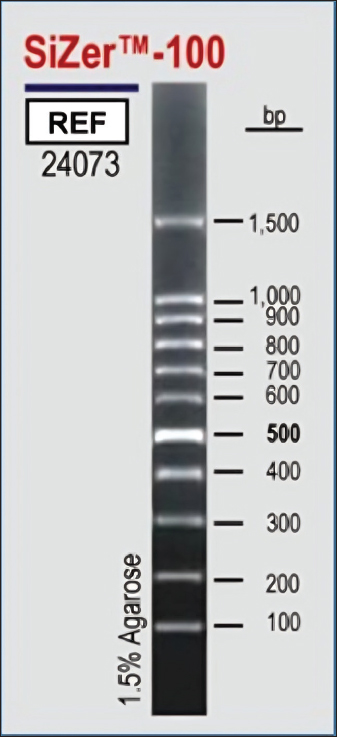
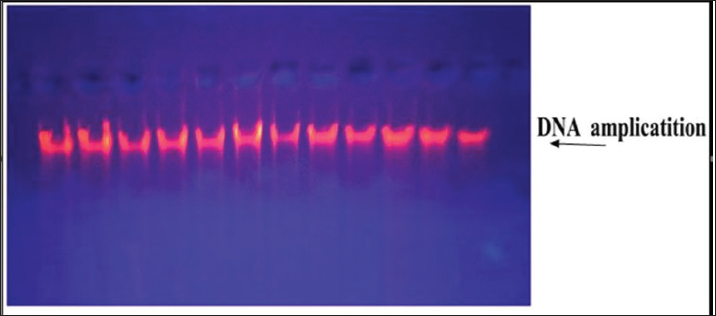
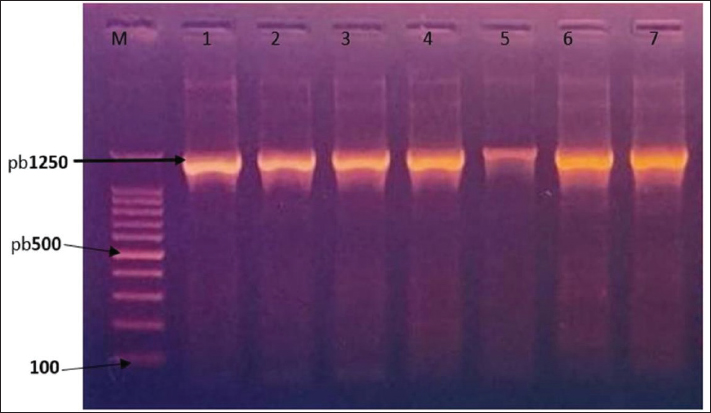
25 µl of PCR amplification mixture containing (5 µl) Taq PCR premix, (1 µl) forward primer, (1 µl) reverse primer, (1.5 µl) DNA, and (16.5 µl) distilled water. 5 minutes for initial denaturation at 94°C was the PCR condition protocol. Denaturation-2 94°C for 45 seconds, annealing 56°C for 45 seconds, extention-1 72°C for 45 seconds, and extention-2 72°C for 7 minutes. The 16S rRNA gene was amplified using the PCR technique to confirm the identification of bacterial species level, and the positive result was detected by 1.5% agarose gel electrophoresis, as shown in (Figs. 1-3).
Fig. 1. 16SrRNA gene (15,00 bp) amplified PCR products: Agarose gel electrophoresis, 1.5% agarose, ethidium bromide staining, and 1.30 hours of electrophoresis at 5 volt/cm2.
Fig. 2. Gel electrophoresis of genomic DNA extraction from bacteria, 1% agarose gel at 5 Vol/cm for 30 minutes.
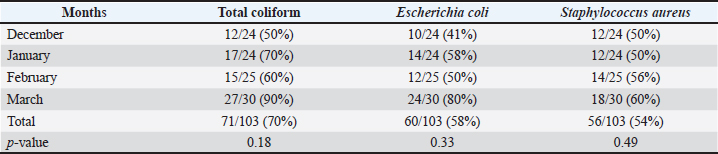
Fig. 3. PCR product the band size 1,250 bp. The product was electrophoresis on 1.5% agarose at 5 volt/cm2. 1× TBE buffer for 1:30 hours. N: DNA ladder (100). Decontamination processIn this study, each sample was divided into five groups after bacterial counts (50g for each) to evaluate the preservatives used as decontamination. A1 as (untreated control group) without any preservative, A2 (positive group) was immersed in 2% rosemary oil (Rosemarian officinalis) for 10 minutes (Abed et al., 2021), A3 was immersed in 1.5% thyme oil (Thymus vulgaris) for 30 minutes (Salán et al., 2006), A4 was immersed in 3% lactic acid for 10 minutes (Khalafalla et al., 2016), and A5 was immersed in a combination of thyme oil 1.5 and rosemary oil 2% for 10 minutes. All groups were stored at 4°C and examined for bacteriological examination after 3 and 7 days. Statistical data analysisThe data were statistically analyzed using Statistical Analysis System (SAS; version 9.1). The t test was used to assess significant differences between the means of the two groups (SAS, 2010). Ethical approvalNo animal-related or animal-handling topics were included in this study. As a result, there was no ethical approval committee requirement. ResultsTable 2 shows the variation in the percentages of total coliform, E. coli and S. aureus isolated from minced meat purchased from butcher shops in Al-Najaf city. The results found that there were significant differences (p < 0.05) among the minced meat samples; among 103 samples, 70% (71/103) were contaminated with total coliform. The incidence of E. coli bacteria was 58% (60/103) and S. aureus was 54% (56/103). The isolation percentage according to the months of total coliform, E. coli and S. aureus showed a significant variation in the minced meat. March showed the highest isolation percentages of all bacterial counts Table 2. Table 2. The isolation percentages % of total coliforms, E. coli, and S. aureus that were isolated from minced meat samples in different regions of Al-Najaf.
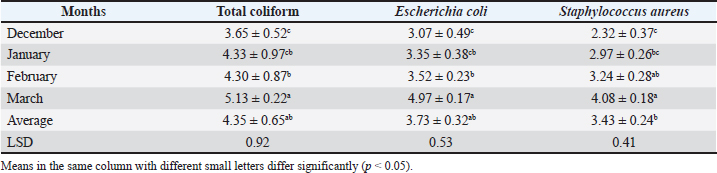
There were significant differences (p < 0.05) in the total coliform in the minced meat according to the months (Table 3). The total coliform was less in December and January than in February and March. The values of total coliform in minced meat in December and January were 3.65 and 4.33 CFU log10/g, respectively, while the highest value was in March at 5.13 CFU log10/g. Table 3. Total coliforms, E. coli, and S. aureus counts (mean ± SE) (CFU log10/g) in the minced meat samples collected from different regions of Al-Najaf according to the months.
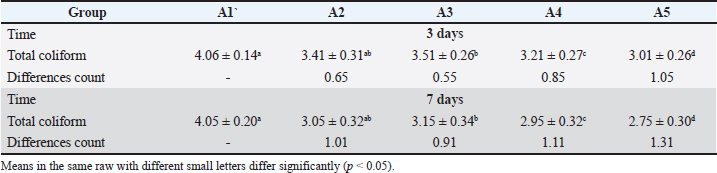
Escherichia coli counts with a mean value in the minced meat were 3.07 and 3.35 CFU log10/g in December and January, respectively, which were less than in March, which was higher significantly (p < 0.05) at 4.97 CFU log10/g (Table 3). The minced meat was significantly more contaminated during March than other months (p < 0.05). There were significant differences between the values of staphylococcus counts according to month (Table 3). The minced meat was significantly (p < 0.05) more contaminated in March (4.08 CFU log10/g) than in other months, while the lowest value was in December (2.32 CFU log10/g). The average value was 3.43 CFU log10/g. Table 4 shows the decontamination effect of EOs (rosemary and thyme) and lactic acid on the inhibition of coliform. The current study found that lactic acid and the EO of rosemary and thyme affected coliform levels, but the combination of EO (A5) showed a static effect (p < 0.05) after 3 and 7 days. Table 4. Total coliform (Log10 CFU/g) decontamination results.
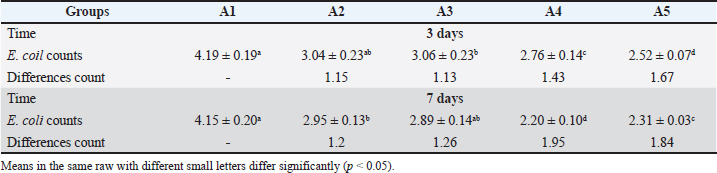
Group A5 had the greatest decrease in coliform (1.05 and 1.31 Log10 CFU/g) after 3 and 7 days, respectively, compared with the control group. Table 5 shows the decontamination effect of lactic acid and EO of rosemary and thyme on the inhibition of E. coli. The decrease in E. coli counts was significant (p < 0.05) in groups A2–A5 when compared to A1 (control group) after 3 and 7 days. The highest decrease was observed in lactic acid (A1) and the combination of rosemary and thyme (A5) (1.43 and 1.67 Log10 CFU/g) (1.95 and 1.84 Log10 CFU/g) after 3 and 7 days, respectively, but the greatest decrease was observed in lactic acid (A4) after 7 days (1.95 Log10 CFU/g) statistically (p < 0.05). Table 5. E. coli (Log10 CFU/g) decontamination results.
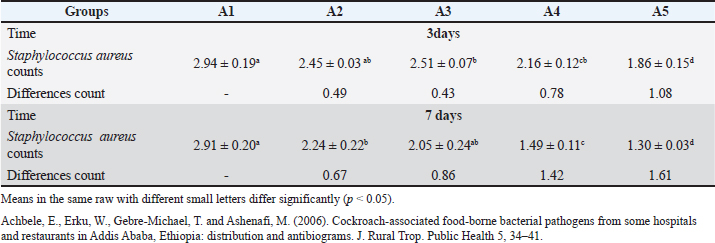
The change of S. aureus counts after using lactic acid and EO is shown in Table 6: All groups significantly exceeded the control group in reducing S. aureus after 3 and 7 days (p < 0.05). The greatest decrease in S. aureus counts was in the combination of rosemary and thyme EO (group A5) after 7 days (1.61 Log10 CFU/g) statistically (p < 0.05). Table 6. Staphylococcus aureus (Log10 CFU/g) decontamination results.
DiscussionMicrobial contamination accounts for one-fourth of the global food supply loss, which has developed into a major ethical and economic issue globally (Huisin't 1998; Gavrilova et al., 2019). Raw meat is one of the sources of foodborne infections in people because of its chemical components, which encourage the growth of a wide variety of bacterial populations (Doulgeraki et al., 2012). In addition, meat may become contaminated during the slaughtering process by bacteria found in water, on floors, in utensils, in slaughter instruments, and through contact with people (Klaharn et al., 2022). The percentage of total coliform, E. coli, and S. aureus showed significant variation according to the months, with the percentage being higher during March than other months. This might be because there are fewer refrigeration conditions and high ambient temperatures, which favor bacterial development and multiplication (Azage and Kibret, 2017). McEvoy et al. (2004) investigated the impact of the season on microbial contamination and found that the peak of bacterial contamination of carcasses increased with increasing ambient temperature. The isolation percentage disagreed with that reported by Ragab et al. (2016), who reported that the percentage of total coliforms was 100%, E. coli was 50%, Staphylococcus was 20%, and Salmonella was 20% of the total of 50 samples of minced meat in Egypt. The coliforms activity was present in all of the samples from the study area. These bacteria are commonly found in water, food, and vegetable waste and cause infections of the bone or joint tissue as well as urinary tract infections in both humans and animals (Drzewiecka, 2016). The increase in coliform counts is consistent with an increase in microbial load, particularly pathogenic species, which causes an increase in coliform counts (Mercy et al., 2022). Minced meat can become contaminated with coliform from a variety of sources, including an unhygienic cutting process; workers' hands; water used to clean meat or cutting tools; improperly cleaned meat grinding equipment (this was also observed as well during sample collection); and the meat itself because the coliform bacteria's natural habitat is the intestines of animals (Said et al., 2021). In recent years, E. coli has been regarded as the leading cause of food poisoning. Our results showed that the total percentage of E. coli from minced meat was 23/40 (57%) with an average value of 3.73 CFU log10/g, which agrees with Othman et al. (2023), who reported that the percentage of E. coli isolated from meat was 21/50 (42%). Our findings were also more significant than those of other research, which found that the prevalence rates of E. coli in meat were 1.5% in Iran (Siavash et al., 2016), 17.8% in Australia, and 21.1% (49/232) in the United States (Othman et al., 2023) and less than that reported by Siavash et al. (2016) who found 50% of E. coli in minced meat and the mean values counts was 6 × 10⁴ in Egyptian retail markets. The difference in values between countries may be due to the high ambient temperature and the poor sanitary conditions in Iraq compared with those in other countries. Contamination of meat with E. coli may occur from the time animals reach the slaughterhouse until it is time to consume the meat. Escherichia coli is spread to meat and its products by a number of different methods, including animal skin, cutting equipment, unclean environments, and personnel who no longer practice good hygiene (Tate et al., 2021). Tables 2 and 3 show the percentage and enumeration of S. aureus isolates from minced meat in Al-Najaf city. The result in the current study was higher than that of Boukary et al. (2012)who found that the S. aureus in minced meat was 25% (2/8) and the mean value was 3.1 CFU/g, and less than that Ragab et al. (2016) who recorded that the S. aureus in minced meat was 20% and the mean average value was 3 × 10³. The high value of S. aureus in March might be due to storage temperature and pH level that increased with increasing ambient temperature (Diyantoro and Wardhana, 2019). Meat plays a role as food for many bacteria, and these bacteria are considered a major source of meat contamination. Meat processing workers are one of the main causes of elevated staphylococcal counts on the surface of studied carcasses because their hands have been discovered to be highly contaminated; this is in agreement with the results of Ercolini et al. (2009), who reported that the main sources of contamination with Staphylococcal spp. during meat preparation are contaminated skin, feces, the contents of digestive organs, butcher’s knives, hands, clothes, and polluted water. In the present study, the bacteriological quality of locally produced minced meat with coliform, E. coli, and S. aureus was investigated to examine the antimicrobial activity of lactic acid, rosemary, and thyme. The reduction percentage in samples immersed in thyme is similar to that obtained by Schlegelová et al. (2004), who found the reduction percentages to be 1.5%, 2%, and 2.5% when thyme oil was added to preserve minced meat. Recently, the antimicrobial activity of plant extracts has been studied in this research (Zaid et al., 2021). The presence of carvacrol and thymol in the Thymus vulgaris and their ability to break down the outer membrane of gram-negative bacteria and increase the permeability of the cytoplasmic membrane have been reported that the EOs had excellent antimicrobial effects against E. coli and S. aureus (Boskovic et al., 2015). Conversely, the reduction of E. coli, S. aureus, and coliform in the group that was immersed with rosemary (A2) was similar to the result found by Abed et al. (2021), who showed no CFU/g after 9 days of preservation when adding rosemary volatile oil to the canned meat sample. The antimicrobial activity of rosemary is attributed to its high levels of phenolic compounds, which have an antimicrobial effect against microorganism (Najem and Ibrahim, 2017). The reduction in counts of coliform, E. coli, and S. aureus in the samples immersed in lactic acid (A4) was similar to that reported by Najem and Ibrahim (2017). They reported that the lactic acid was most effective in decreasing the E. coli count to 1.92 CFU/g in the shrimp sample. In addition, our results agree with those Khalafalla et al. (2016), who found that the lactic acid had the greatest effect on the reduction of coliform in the chicken breasts. Thyme and rosemary and their constituents, such as thymol and carvacrol are preservatives that could significantly affect the shelf life of meat (Boskovic et al., 2015). Rosemary (Rosmarinus officinalis) and thyme (Thymus vulgaris) are safe food preservatives with strong antibacterial action against pathogenic bacteria such as Salmonella enteritidis, Pseudomonas aeruginosa, Bacillus cereus, E. coli, and S. aureus (Gonelimali et al., 2018). The components in EOs, particularly phenolic compounds like carvacrol and thymol, have a unique hydrophobic nature that makes it easier for them to penetrate and divide within the lipid bilayer of the bacterial cell membrane. The structural integrity of the membrane is severely disrupted by this molecule interaction, which increases the membrane's permeability (). The greatest reduction in coliform, E. coli, and S. aureus was observed in the combination of thyme and rosemary oil in group (A4). This may be due to the synergistic mechanism of active ingredients in the both thyme and rosemary EOs, such as eucalyptol, camphor, and thymol (Yalçın and Polat, 2022). Furthermore, the synergistic activity of EO may damage the cell wall by chemical substances (García-Díez et al., 2017). ConclusionThe minced meat was contaminated with more than acceptable levels of total coliform, E. coli, and S. aureus due to the meat being passed through different contamination stages, starting from the slaughterhouse until the sale of meat in the supermarket. This may be related to the lack of implementation of the inspection act and appropriate sanitary procedures in regard to meat, which suggests a possible risk of infection while consuming such food. The contamination was greater in March due to the high temperature and lack of refrigeration than in other months, and this may be because the minced meat is subjected to a lot of processing, starting with cutting the meat and putting it in the mincing machine, and the meat may be mixed with a lot of viscera and internal organs. Rosemary and thyme contain antimicrobial volatile oils that reduce contamination. This combination was more effective than using rosemary, thyme, or lactic acid alone. AcknowledgmentsThe authors would like to give special thanks to the dean of the Faculty of Veterinary Medicine, University of Kufa and extremely grateful to the Head of Veterinary Public Health and all my lecturers for their information, which supported me throughout my study. Conflict of interestThe authors declare that there is no conflict of interest. FundingThe research received no specific grant. Author contributionM.A.R: conceptualization, data collection, and writing of the original manuscript draft. A.A.S.: review and editing. All authors have approved the final manuscript for publication. Data availabilityAll data supporting the findings of this study are available in the manuscript, and no additional data sources are required. ReferencesAbed, I.J., Ahmed, M.E. and Al-Shimmary, S.M.H. 2021. Rosemary volatile oil as a preservative agent in some canned meat food. Iraqi. J. Agricult. Sci. 52(1), 155–162; https://jcoagri.uobaghdad.edu.iq/index.php/intro/article/view/1247/859 Abozid, M.M and Asker, M.M.S. 2013. Chemical composition, antioxidant and antimicrobial activity of the essential oil of the thyme and rosemary. Int. J. Acad. Res. Part A 5(3), 186–195; doi: 10.7813/2075-4124.2013/5-3/A.26 Alahakoon, U., Jayasena, D., Ramachandra, S. and Jo, C. 2015. Alternatives to nitrite in processed meat: up to date. Trends Food Sci. Technol. 45(1), 37–49; https://www.sciencedirect.com/science/article/abs/pii/S0924224415001429 Alparslan, Y., Baygar, T., Metin, C., Hasanhocaoğlu Yapıcı, H. and Baygar, T. 2019. The role of gelatin-based film coating combined with orange peel essential oil on the quality of refrigerated shrimp. Acta. Aquatica. Turcica. 15(2), 197–212; https://dergipark.org.tr/tr/download/article-file/731104 Azage, M. and Kibret, M. 2017. The bacteriological quality, safety, and Antibiogram of Salmonella isolates from fresh meat in retail shops of Bahir Dar City, Ethiopia. Int. J. Food. Sci. 2017, 1–5; doi:10.1155/2017/4317202 Azizkhani, M. and Tooryan, F. 2015. Antioxidant and antimicrobial activities of rosemary extract, mint extract and a mixture of tocopherols in beef sausage during storage at 4C. J. Food Saf. 35, 128–136; doi:10.1111/jfs.12166 Bantawa, K., Rai, K., Subba Limbu, D. and Khanal, H. 2018. Food-borne bacterial pathogens in marketed raw meat of Dharan, eastern Nepal. BMC. Res. Notes. 11, 618; doi:10.1186/s13104-018-3722-x Bensid, A., Ucar, Y., Bendeddouche, B. and Özogul, F. 2014. Effect of the icing with thyme, oregano and clove extracts on quality parameters of gutted and beheaded anchovy (Engraulis encrasicolus) during chilled storage. Food. Chem. 145, 681–686; doi:10.1016/j.foodchem.2013.08.106 Berhanu, L., Gizeyatu, A., Abebe, M., Teshome, D., Aragaw, M. and Berihun, G. 2025. Bacteriological quality and predictors of raw meat collected from municipal slaughterhouse and butcher shops in northeast, Ethiopia. Front. Public Health 12, 1455881; doi:10.3389/fpubh.2024.1455881 Boskovic, M., Zdravkovic, N., Ivanovic, J., Janjic, J. and Djordjevic, J. 2015. Antimicrobial activity of Thyme (Thymus vulgaris) and Oregano (Origanum vulgare) essential oils against some food-borne microorganisms. Procedia. Food. Sci. 5, 18–21; doi:10.1016/j.profoo.2015.09.005 Boukary, A.R., Thys, E., Rigouts, L., Matthys, F., Berkvens, D., Mahamadou, I., Yenikoye, A. and Saegerman, C. 2012. Risk factors associated with bovine tuberculosis and molecular characterization of Mycobacterium bovis strains in urban settings in Niger. Transbound. Emergency. Dis. 59(6), 490–502; doi:10.1111/j.1865-1682.2011.01302.x De Martinez, Y.B., Ferrer, K. and Salas, E.M. 2002. Combined effects of lactic acid and nisin solution in reducing levels of microbiological contamination in red meat carcasses. J. Food. Prot. 65(11), 1780–1783; doi:10.4315/0362-028x-65.11.1780 Difco-Manual. 1984. Dehydrated culture media and reagents microbiological and clinical laboratory procedures, Pub-Difco-LabDetroits Michigan, USA. Diyantoro and Wardhana, D.K. 2019. Risk factors for bacterial contamination of bovine meat during slaughter in ten Indonesian Abattoirs. Vet. Med. Int. 2019, 1–6; doi: 10.1155/2019/2707064 Donsí, F., Annunziata, M., Sessa, M. and Ferrari, G. 2011. Nan encapsulation of essential oils to enhance their antimicrobial activity in foods. Food Sci. Technol. 44, 1908–1914. Doulgeraki, A.I., Ercolini, D., Villani, F. and Nychas, G.J.E. 2012. Spoilage microbiota associated to the storage of raw meat in different conditions. Int. J. Food. Microbiol. 157(2), 130–141; doi:10.1016/j.ijfoodmicro.2012.05.020 Drzewiecka, D. 2016. Significance and Roles of Proteus spp. Bacteria in Natural Environments. Microbial. Ecol. 72(4), 741–758; doi:10.1007/s00248-015-0720-6 El-Gendi, M.A.R.W.A. and Mansy, M. 2017. Microbiological Risks of Milk Shake Sold in Assiut City Restaurants. Assiut. Vet. Med. J. 63(154), 67–74. Ercolini, D., Russo, F., Nasi, A., Ferranti, P. and Villani, F. 2009. Mesophilic and psychrotrophic bacteria from meat and their spoilage potential in vitro and in beef. Appl. Environ. Microbiol. 79(7), 1990–2001; doi:10.1128/AEM.02762-08 Erdem, A.K., Sajlam, D., Ozer, D. and Ozcelik, E. 2014. Microbiological Quality of Minced Meat Samples Marketed in Istanbul. YYU. Veteriner. Fakultesi. Dergisi. 25(3), 67–70; https://bvmj.journals.ekb.eg/article_57736_006a52c73255a4d7908f15c3e04813dc.pdf Field, D., Daly, K., O’Connor, P.M., Cotter, P.D., Hill, C. and Ross, R.P. 2015. Efficacies of nisin A and nisin V semipurified preparations alone and in combination with plant volatile oils for controlling Listeria monocytogenes. Appl. Environ. Microbiol. J. 81, 2762–2769; doi:10.1128/AEM.00070-15 García-Díez, J., Alheiro, J., Pinto, A.L., Falco, V., Fraqueza, M.J. and Patarata, L. 2017. Synergistic Activity of Essential Oils from Herbs and Spices Used on Meat Products against Food Borne Pathogens. Natural. Product. Commun. 12(2), 281–286; doi:10.1177/1934578X1701200236 Gavrilova, E., Anisimova, E., Gabdelkhadieva, A., Nikitina, E., Vafina, A., Yarullina, D., Bogachev, M. and Kayumov, A. 2019. Newly isolated lactic acid bacteria from silage targeting biofilms of foodborne pathogens during milk fermentation. BMC Microbiol. 19, 1–12. Gonelimali, F.D., Lin, J., Miao, W., Xuan, J., Charles, F., Chen, M. and Hatab, S.R. 2018. Antimicrobial Properties and Mechanism of Action of Some Plant Extracts Against Food Pathogens and Spoilage Microorganisms. Front. Microbiol. 9(9), 1639; doi:10.3389/fmicb.2018.01639 Hannan, A., Saleem, S., Chaudhary, S., Barkaat, M. and Arshad, M.U. 2008. Antibacterial activity of Nigella Sativa against clinical isolates of Methicillin resistant Staphylococcus aureus. J. Ayub Med. Coll. Abbottabad 20, 20. Huisin't Veld, J.H.J. 1998. Microbial and biochemical spoilage of foods: an overview. Int. J. Food Microbiol. 33, 1–18; doi: 10.1016/0168-1605(96)01139-7 Hwang, B.K., Choi, H., Choi, S.H. and Kim, B.S. 2020. Analysis of Microbiota Structure and Potential Functions Influencing Spoilage of Fresh Beef Meat. Front. Microbiol. 11, 1657; doi:10.3389/fmicb.2020.01657 John, E.C., Yvonne, J., Nicholas, J.S. and Mary, F.H. 2001. A survey of the prevalence of Escherichia coli O157 in raw meats, raw cow’s milk and raw-milk cheeses in south-east Scotland. Int. J. Food Microbiol. 66, 63–69; doi:10.1016/S0168-1605(00)00490-6 Khalafalla, F.A., Ali, F.H.M. and Hassan, A.H.A.E. 2016. Quality improvement of broiler chicken breasts by nisin and lactic acid. J. World Poultry Res. 6(2), 37–47; http://jwpr.science-line.com Klaharn, K., Pichpol, D., Meeyam, T., Harintharanon, T., Lohaanukul, P. and Punyapornwithaya, V. 2022. Bacterial contamination of chicken meat in slaughterhouses and the associated risk factors: a nationwide study in Thailand. PLos One 17(6), e0269416. Kozačinski, L., Hadžiosmanović, M. and Zdolec, N. 2006. Microbiological quality of poultry meat on the Croatian market. Vet. Arch. 76(4), 305–313; https://www.researchgate.net/publication/27190854 Mansour, A.M.A., Ishlak, A.M.M. and Haj-Saeed, B.A. 2019. Evaluation of bacterial contamination on local and imported mutton in meat markets in Benghazi-Libya. Int. J. Agricult. Sci. 4, 2367–2902; http://iaras.org/iaras/journals/ijas McEvoy, J.M., Sheridan, J.J., Blair, I.S. and McDowell, D.A. 2004. Microbial contamination on beef in relation to hygiene assessment based on criteria used in EU Decision 2001/471/ EC. Int. J. Food Microbiol. 92(2), 217–225; doi: 10.1016/j.ijfoodmicro.2003.09.010 Mercy, E.C., Oliseloke, A.C., Kayode, E.T., Nwachukwu, M. and Ukaga, C.N. 2022. Microbiological Examination of Meat-pie sold in Owerri Municipal. Int. J. Pharm. Bio-Medical Sci. 2(12), 208–211; doi:10.47191/ijpbms/v2-i12-06 Mostafa Abozid, M. and M.s. Asker, M. 2013. Chemical composition, antioxidant and antimicrobial activity of the essential oil of the thyme and rosemary. Int. J. Academic. Res. Part. A. 5(3), 186–195; doi: 10.7813/2075-4124.2013/5-3/A.26 Najem, A.M. and Ibrahim, J.A. 2017. Potential use of Rosemary (Rosmarinus officinalis L.) volatile oil as anti-bacterial and anti-algal. J. Pharm. Biol. Sci. 12(2), 68–71. Othman, S.M., Sheet, O.H. and Al-Sanjary, R. 2023. Phenotypic and genotypic characterizations of Escherichia coli Isolated from veal meats and butchers’ shops in Mosul city, Iraq. Iraqi J. Vet. Sci. 37(1), 253–258; doi:10.33899/ijvs.2022.133819.2306 Pinamonti, D., Manzano, M., Maifreni, M., Bianco, S., Domi, B., Ferrin, A., Anba-Mondoloni, J., Dechamps, J., Briandet, R. and Vidic, J. 2025. Prevalence and Characterization of Staphylococcus aureus Isolated from Meat and Milk in Northeastern Italy. J. Food. Prot. 88(2), 100442; doi:10.1016/j.jfp.2024.100442 Ragab, W.S., Ehsan, A.B.H., Al-Geddawy, M.A. and Albie, A.A. 2016. Bacteriological Quality of Some Meat Products in the Egyptian Retail Markets. Assiut. J. Agriculture. Sci. 47(6-2), 422–429; http://www.aun.edu.eg/faculty_agricalture Sachindra, N.M., Sakhare, P.Z., Yashoda, K.P. and Narasimha Rao, D. 2005. Microbial profile of buffalo sausage during processing and storage. Food Control 16, 31–35; doi:10.1016/j.foodcont.2003.11.002 Sadeghian, A., Hojjati Bonab, Z. and Sefidan, M.A. 2025. Prevalence and Antibiotic resistance pattern of Staphylococcus aureus strains isolated from traditional cheese and pasteurized cheese at Maragheh city of Iran. Int. J. Travel. Med. Global. Health. 13(2), 77–82; doi:10.30491/ijtmgh.2024.470521.1423 Said, N.S., Fahrodi, D.U., Syah, S.P. and Sulmiyati, S. 2021. Evaluation of coliform bacterial contamination in a meat grinding machine at the traditional market Polewali Mandar. Adv. Biol. Sci. Res. 20, 365–368; doi:10.2991/absr.k.220309.071 Salán, O.E., Juliana, A.G. and Marilia, O. 2006. Use of smoking to add value to salmoned trout. Braz. J. Arch. BiolTechnol. 49(1), 57–62; https://www.scielo.br/j/babt/a/83FNh69DCTHTCkv5jDGBdFs/?lang=en SAS. 2010. SAS/STAT users guide for personal computer. Cary, N.C.: SAS Institute, Inc., 9. Schlegelová, J., Nápravnı́ková, E., Dendis, M., Horváth, R., Benedı́k, J., Babák, V., Klı́mová, E., Navrátilová, P. and Šustáčková, A. 2004. Beef carcass contamination in a slaughterhouse and prevalence of resistance to antimicrobial drugs in isolates of selected microbial species. Meat Sci. 66(3), 557–565. Siavash, M., Mehdi, Z. and Mohammadpour, H. 2016. Isolation and molecular characterization of non-sorbitol fermenting Escherichia coli isolated from fresh ground beef. J. Hlth. Sci. 8(1),20–4; doi: 10.17795/jjhs-31195 Soepranianondo, K., Wardhana, D.K., Budiarto. and Diyantoro. 2019. Analysis of bacterial contamination and antibiotic residue of beef meat from city slaughterhouses in East Java Province, Indonesia. Vet. World. 12(2), 243–248; doi:10.14202/vetworld.2019.243-248 Tate, H., Li, C., Nyirabahizi, E., Tyson, G.H., Zhao, S. and Rice-Trujillo, C.A. 2021. National antimicrobial resistance monitoring system survey of antimicrobial-resistant foodborne bacteria isolated from retail veal in the United States. J. Food Prot. 84(10), 1749–1759; doi:10.4315/JFP-21-005 Yalçın, H. and Polat, Z. 2022. The effect of organic matter-based decontamination technique on E. coli inhibition in shrimp. MAE. Vet. Fak. Derg. 7(3), 218–222; doi:10.24880/maeuvfd.1171784 Zaid, M., Mousa, M. and Kamar, A. 2021. Uses of some herbs oils for improving stability of minced meat. Alexandria. J. Vet. Sci. 70(2), 29–39; doi:10.5455/ajvs.98622/ | ||

| How to Cite this Article |
| Pubmed Style Al-shwuaili MAD, Kassem A, Saeed AA, Qasim MJ, Abbas M. Application of essential oils as antibacterial substances in minced meat in Al-Najaf city, Iraq. Open Vet. J.. 2026; 16(1): 327-336. doi:10.5455/OVJ.2026.v16.i1.29 Web Style Al-shwuaili MAD, Kassem A, Saeed AA, Qasim MJ, Abbas M. Application of essential oils as antibacterial substances in minced meat in Al-Najaf city, Iraq. https://www.openveterinaryjournal.com/?mno=282000 [Access: June 26, 2026]. doi:10.5455/OVJ.2026.v16.i1.29 AMA (American Medical Association) Style Al-shwuaili MAD, Kassem A, Saeed AA, Qasim MJ, Abbas M. Application of essential oils as antibacterial substances in minced meat in Al-Najaf city, Iraq. Open Vet. J.. 2026; 16(1): 327-336. doi:10.5455/OVJ.2026.v16.i1.29 Vancouver/ICMJE Style Al-shwuaili MAD, Kassem A, Saeed AA, Qasim MJ, Abbas M. Application of essential oils as antibacterial substances in minced meat in Al-Najaf city, Iraq. Open Vet. J.. (2026), [cited June 26, 2026]; 16(1): 327-336. doi:10.5455/OVJ.2026.v16.i1.29 Harvard Style Al-shwuaili, M. A. D., Kassem, . A., Saeed, . A. A., Qasim, . M. J. & Abbas, . M. (2026) Application of essential oils as antibacterial substances in minced meat in Al-Najaf city, Iraq. Open Vet. J., 16 (1), 327-336. doi:10.5455/OVJ.2026.v16.i1.29 Turabian Style Al-shwuaili, Mahdia Abedrabba Dhahir, Ahmed Kassem, Asseel Abdulrida Saeed, Mohammed Jasim Qasim, and Murtadha Abbas. 2026. Application of essential oils as antibacterial substances in minced meat in Al-Najaf city, Iraq. Open Veterinary Journal, 16 (1), 327-336. doi:10.5455/OVJ.2026.v16.i1.29 Chicago Style Al-shwuaili, Mahdia Abedrabba Dhahir, Ahmed Kassem, Asseel Abdulrida Saeed, Mohammed Jasim Qasim, and Murtadha Abbas. "Application of essential oils as antibacterial substances in minced meat in Al-Najaf city, Iraq." Open Veterinary Journal 16 (2026), 327-336. doi:10.5455/OVJ.2026.v16.i1.29 MLA (The Modern Language Association) Style Al-shwuaili, Mahdia Abedrabba Dhahir, Ahmed Kassem, Asseel Abdulrida Saeed, Mohammed Jasim Qasim, and Murtadha Abbas. "Application of essential oils as antibacterial substances in minced meat in Al-Najaf city, Iraq." Open Veterinary Journal 16.1 (2026), 327-336. Print. doi:10.5455/OVJ.2026.v16.i1.29 APA (American Psychological Association) Style Al-shwuaili, M. A. D., Kassem, . A., Saeed, . A. A., Qasim, . M. J. & Abbas, . M. (2026) Application of essential oils as antibacterial substances in minced meat in Al-Najaf city, Iraq. Open Veterinary Journal, 16 (1), 327-336. doi:10.5455/OVJ.2026.v16.i1.29 |


