





| Research Article | ||
Open Vet. J.. 2026; 16(2): 1204-1212 Open Veterinary Journal, (2026), Vol. 16(2): 1204-1212 Research Article Improving the composition and drying techniques of “Cinnamononi” extract as a natural feed supplement to enhance carcass and broiler performanceAhadiyah Yuniza1*, Montesqrit Montesqrit1, Yuherman Yuherman2, Hera Dwi Triani3 and Ridho Kurniawan Rusli11Department of Nutrition and Feed Technology, Faculty of Animal Science, Universitas Andalas, Padang, Indonesia 2Department of Livestock Technology, Faculty of Animal Science, Universitas Andalas, Padang, Indonesia 3Department of Agricultural Extension, Faculty of Social, Science and Education, Universitas Prima Nusantara, Bukittinggi, Indonesia *Corresponding Author: Ahadiyah Yuniza. Department of Nutrition and Feed Technology, Faculty of Animal Science, Universitas Andalas, Padang, Indonesia. Email: yuniza [at] ansci.unand.ac.id Submitted: 13/09/2025 Revised: 14/01/2026 Accepted: 30/01/2026 Published: 28/02/2026 © 2026 Open Veterinary Journal
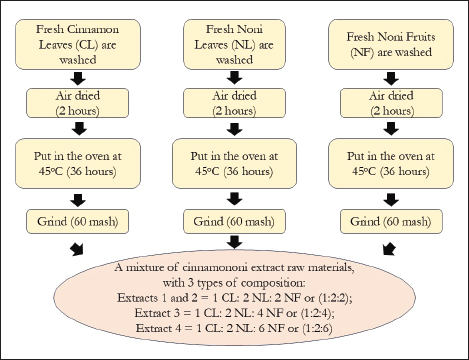
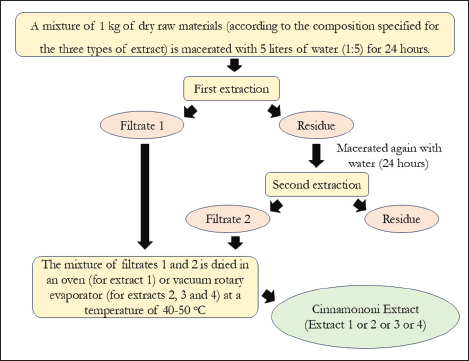
ABSTRACTBackground: Increasing consumer awareness of the health risks associated with antibiotic residues has increased the demand for antibiotic-free broiler meat and eggs produced through organic rearing systems. Aim: As an alternative to antibiotic growth promoters, this study aimed to maximize the production of “Cinnamononi” extract, a natural feed additive made from cinnamon leaves, noni leaves, and noni fruit. Methods: 4 extraction techniques were tested, with varying drying methods and raw material compositions. Extracts 1 and 2 were prepared in a 1:2:2 ratio (cinnamon:noni leaf:noni fruit), dried in an oven, and dried under rotary vacuum evaporation. Extracts 3 and 4 increased the proportion of noni fruit to 1:2:4 and 1:2:6, respectively, both subjected to vacuum drying. A completely randomized design was employed with 100 broilers (strain AA, 21 days old) allocated to five treatments with four replicates each for a 14-day feeding trial. Treatments consisted of a control (T0, commercial diet only) and four groups (T1–T4) receiving the basal diet supplemented with different Cinnamononi extracts administered via drinking water. The basal diet was formulated with the commercial feed to be iso-nitrogenous and iso-caloric. Results: The drying method significantly affected abdominal fat percentage (p ≤ 0.05) T3 (1.14%) and T4 (1.29%) compared with the other treatments (T0 and T2). Furthermore, extract composition (T3 and T4) significantly influenced (p ≤ 0.05) weight gain (77.27 g/d and 77.53 g/d, respectively), final body weight (1,867.25 g and 1,824.75 g, respectively), feed conversion ratio (1.53 and 1.51, respectively), and abdominal fat (1.14% and 1.29%, respectively), but not feed intake or carcass yield (p ≥ 0.05). Conclusion: These findings highlight the potential of Cinnamononi extracts, particularly from techniques 3 and 4, as effective natural feed additives for broiler production. Keywords: Cinnamononi extract, Cinnamon leaves, Extraction technique, Feed additive, Noni. IntroductionIncreasing consumer awareness of the health risks associated with antibiotic residues has increased the demand for antibiotic-free chicken meat and eggs produced through organic rearing systems. Consequently, organic poultry farming has emerged as both a promising business opportunity and a viable alternative to conventional broiler production. The prohibition of antibiotics and other synthetic compounds in feed is one of the fundamental standards in organic farming, as their residues may accumulate in meat and pose serious health risks to consumers (Biswas et al., 2020; Zhu et al., 2021; Kamel et al., 2022; Khan et al., 2022). Indonesia’s wet tropical climate, which is characterized by high temperature and humidity, provides favorable conditions for the proliferation of pathogenic microorganisms. Broiler chickens are particularly vulnerable to bacterial infections, parasites, and helminths under such conditions. Effective strategies are required to ensure carcass quality while preventing bacterial contamination and maintaining production performance in line with the increasing demand for safe, healthy, wholesome, and halal organic chicken meat. Therefore, the development of safe and effective alternatives to antibiotics and natural anthelmintics is urgently needed. At the same time, broiler producers face economic challenges due to rising commercial feed costs, which substantially increase production expenses, whereas live bird market prices often fail to offset these costs. One potential solution is to use on-farm feed supplemented with natural feed additives. Several studies have demonstrated that phytogenic or herbal-based feed additives can improve broiler performance, health, and feed efficiency under antibiotic-free regimes (Phillips et al., 2023). Yuniza and Yuherman (2015) reported that an extract composed of dried cinnamon leaves, dried noni leaves, and dried noni fruit in a 1:2:1 ratio—termed “Cinnamononi extract”—inhibited the growth of Escherichia coli, Salmonella spp., and Ascaridia galli. The noni plant, particularly its fruit, contains proxeronine, a precursor of xeronine, and proxeroninase, an enzyme that converts proxeronine into xeronine in the intestine (Norma Ayunda et al., 2020). Xeronine is an alkaloid that regulates cellular structure and activates inactive proteins, thereby repairing damaged cells and restoring protein activity at the molecular level. Yuniza and Rizal (2021) modified the extract composition to a 1:2:2 ratio by increasing the proportion of noni fruit to increase the amount of xeronine absorbed by the body. When administered to broilers at 250 mg/kg body weight, this formulation improved weight gain, final body weight, and carcass yield while reducing feed conversion ratio, meat cholesterol, and abdominal fat. However, these improvements were lower than those achieved with commercial diets. This limitation may be attributed to prolonged oven drying (2–3 days at 40°C–50°C), which can degrade proxeronine and other phytochemicals. Additionally, the noni fruit content in the 1:2:2 formulation may still be insufficient to maximize xeronine production. Vacuum-based drying techniques, including vacuum drying and vacuum-assisted solvent evaporation, preserve total phenolics, flavonoids, and antioxidant activity better than conventional hot-air or oven drying, thereby reducing the degradation of heat-sensitive bioactive metabolites. For instance, a recent study on mango powder found that vacuum-dried samples exhibited the highest antioxidant capacity compared with those dried using other methods. Vacuum drying preserves higher polyphenol and flavonoid contents as well as more potent antioxidant activity than conventional convection drying (Akther et al., 2023). In functional-feed or food-ingredient applications, extracts prepared under vacuum drying retained superior bioactive compound stability, antioxidant potential, and physicochemical quality traits that are likely to enhance antimicrobial and anthelmintic effects as well as support improved growth performance, better feed efficiency, and reduced fat deposition in livestock. Chaikham et al. (2025) reported that cinnamon leaves (Cinnamomum spp.) contain various bioactive compounds, including cinnamaldehyde, eugenol, and other phenolic constituents, which exhibit potent antimicrobial, antioxidant, and antihelmintic activities. These compounds can reduce gut pathogen load, improve nutrient absorption, and enhance immune function, thereby positively influencing broiler growth performance, Feed conversion ratio (FCR), and fat deposition. Previous studies on noni (Morinda citrifolia) and cinnamon peel have reported similar beneficial effects in poultry diets, including improved body weight gain, feed efficiency, and carcass traits, as well as enhanced antimicrobial and antioxidant activity (Wang et al., 2020). These findings suggest that combining cinnamon leaves with noni leaf and fruit, as in Cinnamononi extract, can synergistically enhance growth performance and reduce abdominal fat while providing natural antibiotic and antihelmintic effects. This study combines two innovative approaches to improve broiler feed additives: adjusting cinnamononi extract by increasing the proportion of noni fruit to maximize xeronine precursor and proxeroninase production and applying vacuum-based extraction techniques, including rotary vacuum evaporation and vacuum drying, to preserve heat-sensitive bioactive compounds. These modifications are designed to produce a natural feed additive that effectively replaces antibiotic growth promoters and anthelmintics while enhancing broiler growth performance, feed conversion, and carcass quality. Based on these findings, the present study was designed to improve the extraction technique by modifying the raw material composition and replacing oven drying with rotary vacuum evaporation at 40°C–50°C. The resulting “new Cinnamononi extract” is expected to serve as a natural feed additive capable of replacing antibiotics and anthelmintics while acting as a growth promoter to improve broiler performance and product quality. Ultimately, the application of this extract in broilers reared on non-commercial diets developed to meet nutrient and energy requirements is anticipated to achieve growth and carcass performance comparable to those of chickens fed commercial diets. Materials and MethodsExtract preparationThe raw materials for making cinnamononi extract were cinnamon leaves, noni leaves, and noni fruit. These materials were obtained from cinnamon and noni plants growing around the Universitas Andalas, Padang, Indonesia.Yuniza and Rizal (2021) referred to the preparation and processing of these raw materials. The raw materials were washed, drained, and then sliced or chopped. The sliced leaves and fruit were air-dried for 2 hours before being placed in an oven at 45°C for 2–3 days. The dried ingredients were ground to produce dried cinnamon leaves, dried noni leaves, and dried noni fruit. To make cinnamononi extract 1 and cinnamononi dried cinnamon leaves, 2 parts dried noni leaves, and 2 parts dried noni fruit were used (composition 1:2:2). The raw materials for cinnamon-noni extract 3 consisted of 1 part dried cinnamon leaves, 2 parts dried noni leaves, and 4 parts dried noni fruit (composition 1:2:4). For cinnamon-noni extract 4, the amount of dried noni fruit was increased to 6 parts (composition 1:2:6). Figure 1 shows the flow chart for raw material preparation. Cinnamon extract was prepared according to Yuniza et al. (2025). A mixture of 1 kg of dry raw materials was dissolved in 5 l of warm water (ratio 1:5), left for 24 hours in a closed container, and then filtered (first extraction). The filter residue was dissolved again in water, and a second extraction was performed. The filtrates obtained from the two extractions were combined and then placed in an oven (for extract 1) and a vacuum rotary evaporator (for extracts 2, 3, and 4) at 40°C–50°C to form a paste. Figure 2 shows the flow chart for making cinnamon-noni extract. This research was conducted to test 4 types of cinnamon oil extract, each having different drying techniques and varying raw material composition. The 4 extraction techniques used were as follows: a. Extraction technique 1 : composition 1:2:2 with oven drying at 40°C–50°C (control) b. Extraction technique 2: composition 1:2:2 with vacuum rotary evaporator drying at 40°C–50°C; c. Extraction technique 3: composition 1:2:4 with vacuum rotary evaporator drying at 40°C–50°C; d. Extraction technique 4: composition 1:2:6 with vacuum rotary evaporator drying at 40°C–50°C Extraction technique 1 (1:2:2) was an extraction technique previously carried out by Yuniza and Rizal (2021) involving a composition of 1 part cinnamon leaves, 2 parts noni leaves, and 2 parts noni fruit, or in percentages, 20% cinnamon leaves, 40% noni leaves, and 40% noni fruit, with a drying technique using an oven at 40°C–50°C. Extraction technique 2 used a different drying technique (vacuum rotary evaporator), but the raw material composition was the same as that of Extract 1 (1:2:2). Extraction techniques 3 and 4 increased the portion of noni fruit used in the composition of the raw material extracted, using the same filtrate drying technique (vacuum rotary evaporator). The composition of the raw materials for Extract 3 (1:2:4) was 1 part cinnamon leaves, 2 parts noni leaves, and 4 parts noni fruit, or 14% cinnamon leaves, 29% noni leaves, and 57% noni fruit. Meanwhile, Extract 4 (1:2:6) comprised 1 part cinnamon leaves, 2 parts noni leaves, and 6 parts noni fruit, or 11% cinnamon leaves, 22% noni leaves, and 67% noni fruit. The phenol (Calvindi et al., 2020) and flavonoid contents of the resulting extracts were then quantitatively analyzed (Chang et al., 2002).
Fig. 1. Stage of preparation of the extracted raw materials
Fig. 2. Stage of maceration with water as the solvent. Animal trialA total of 100 unsexed broiler chickens (Arbor Acres, CP-707 strain; 21 days old) were randomly allocated into 20 cages (5 birds per cage). The experiment lasted for 14 days until the birds were slaughtered at 35 days of age. A completely randomized design was applied with five treatments and four replicates: T0 (commercial diet without extracts), T1 (basal diet + extract 1), T2 (basal diet + extract 2), T3 (basal diet + extract 3), and T4 (basal diet + extract 4). The basal diet was developed to be iso-nitrogenous and iso-caloric with the commercial diet (Table 1). The extracts were administered via drinking water at a concentration of 250 mg/kg body weight. Birds were fasted for 90 minutes before supplementation, received the extract solution until completely consumed, and then refasted for 30 minutes. Performance variables included FI, BWG, final body weight at day 35, FCR, carcass yield, and abdominal fat percentage. Statistical analysisAll data were analyzed by analysis of variance using the Statistical Package for the Social Sciences (IBM SPSS Version 22). Differences among means were compared using Duncan’s multiple range test. Table 1. Formulation and content of research diets.
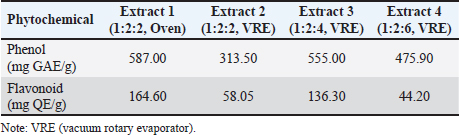
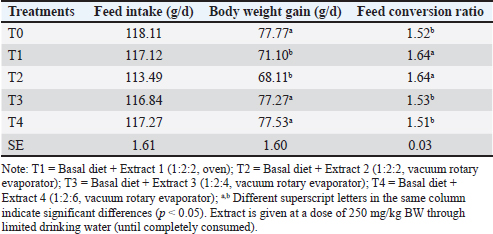
Ethical approvalAll research procedures involving animals were conducted in accordance with the ethical guidelines and regulations of The Ethics Committee of Universitas Perintis Indonesia (No. 1318/KEPK.F1/ETIK/2023). ResultsQuantitative analysis of phenols and flavonoids in Cinnamononi extractsTable 2 presents the quantitative analysis of phenol and flavonoid contents in the four types of cinnamon extracts. Extract 1 contained higher levels of phenols and flavonoids than Extract 2, although both were derived from the same raw material ratio (1:2:2; cinnamon:noni leaf:noni fruit). The difference was attributed to the drying method, as vacuum rotary evaporation (Extract 2) reduced the retention of phenolic and flavonoid compounds compared with oven drying (Extract 1). Extract 3 (1:2:4) exhibited higher phenol and flavonoid contents than Extracts 2 and 4. Effect of the treatment on broiler production performanceTable 3 shows broiler production performance when given four types of drying extracts and different raw material compositions. Broiler production performance is referred to here as FI, BWG, and FCR. The results of the analysis of variance showed that treatment had a highly significant effect (p ≤ 0.01) on BWG and a significant effect (p ≤ 0.05) on FCR, but no significant effect (p ≤ 0.05) on feed intake. After data analysis continued with the Duncan multiple range test (DMRT), BWG and FCR in broilers that received T1 treatment were not significantly different (p ≤ 0.05) from chickens that received T2 treatment. This shows that differences in drying techniques (namely, T1 with an oven and T2 with a vacuum rotary evaporator) at the same drying temperature (40°C–50°C) and the same raw material composition (1:2:2) do not affect BWG and FCR. The non-significant difference in BWG and FCR in broilers treated with T1 and T2 is thought to be due to the use of the same temperature, namely 40°C–50°C, so that it does not damage proxeronine and proxeroninase in the resulting extract. The DMRT results also showed that the weight gain of chickens from the T0 treatment (commercial diet; without extracts) was not significantly different (p ≤ 0.05) from the T3 (1:2:4, VRE) and T4 (1:2:6, VRE) treatments, but it was significantly higher (p ≤ 0.05) than the T1 (1:2:2, oven) and T2 (1:2:2, VRE) treatments. On the other hand, for the FCR variable, the FCR of chickens treated with T3 and T4 was significantly lower (p ≤ 0.05) than that of chickens treated with T1 and T2 but not significantly different (p ≤ 0.05) from that of chickens treated with T0. This shows that increasing the portion of noni fruit in the composition of extract raw materials (T3 and T4) does not affect feed intake but can increase body weight gain and reduce feed conversion ratio so that the response to increased production performance can match the performance of chickens fed commercial diets (T0). Table 2. Quantitative analysis of phytochemicals in four types of cinnamononi extracts.
Table 3. Effect of treatment on performance of broiler.
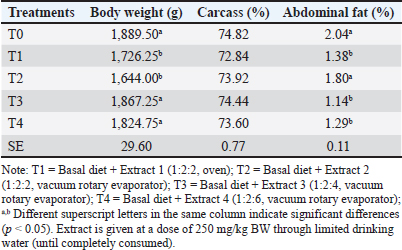
Table 4. Effect of treatment on body weight, carcass percentage, and abdominal fat of broiler.
Effect of the treatment on broiler carcass performanceThe performance of broiler carcass when given 4 types of drying extracts and different raw material compositions is shown in Table 4. Broiler carcass performance is the body weight, carcass percentage, and abdominal fat percentage of 35-day-olds. The results of the analysis of variance showed that treatment had a highly significant effect (p ≤ 0.01) on body weight and abdominal fat percentage but had no significant impact (p ≤ 0.05) on carcass percentage. The DMRT on this data showed that the body weight of chickens that received T1 treatment was not significantly different (p ≤ 0.05) from that of chickens that received T2 treatment. Meanwhile, the percentage of abdominal fat in the T1 group was significantly lower (p ≤ 0.01) than that in the T2 group. DiscussionQuantitative analysis of phenols and flavonoids in Cinnamononi extractsThis suggests that increasing the proportion of noni fruit to 57% improved the phytochemical profile. However, a further increase to 67% (Extract 4) did not enhance these compounds. This may be explained by the fact that phenolic and flavonoid contributions originated not only from noni fruit but also from noni leaves, particularly cinnamon leaves (Liu et al., 2024; Hou et al., 2025). When the noni fruit proportion reached 67%, the contribution of cinnamon leaves decreased to only 11%, thereby reducing the overall phenolic and flavonoid levels. Taken together, extract 1 (oven-dried, 1:2:2) and extract 3 (vacuum rotary evaporator, 1:2:4) demonstrated the highest concentrations of phenolic and flavonoid compounds. These findings indicate that both the drying technique and the proportion of raw materials play a critical role in determining the phytochemical quality of Cannabis sativa extract. The differences in phenol and flavonoid content between oven-dried and vacuum rotary evaporator extracts can be explained by the mechanisms of each drying technique. Oven drying relies on convective heat transfer at 40°C–50°C over a prolonged period, which can lead to the thermal degradation and oxidation of heat-sensitive compounds, such as phenolics and flavonoids. In contrast, vacuum rotary evaporation reduces the ambient pressure, allowing water to evaporate at lower temperatures, which shortens heat exposure and limits oxidative reactions. However, the agitation and repeated solvent removal in rotary evaporation may still cause some loss of certain phenolic compounds, depending on their solubility and stability. Thus, the combination of drying temperature, drying duration, and extraction environment directly influences the retention of bioactive compounds in the Cinnamononi extract. Effect of the treatment on broiler production performanceIncreasing the portion of noni fruit to 6 parts in the composition of the extracted raw material can increase body weight gain to match the response of chickens fed commercial diets. The positive impact of increasing the use of noni fruit in the composition of raw material extraction occurs due to an increase in proxeronine. Noni fruit contains proxeronine (a xeronine precursor), which can increase the amount of xeronine in the body. Xeronine activates enzymes that catalyze metabolic reactions, especially protein synthesis (Sanni et al., 2017). Thus, increasing the consumption of proxeronine can stimulate growth (Tanwiriah et al., 2019). In addition to the proxeronine from noni fruit, the bioactive compounds in cinnamon leaves and peel, such as cinnamaldehyde, eugenol, and other phenolics, may contribute to the observed improvements in feed conversion and body weight gain. These compounds possess antimicrobial and digestive-stimulating properties that can modulate gut microbiota, enhance nutrient absorption, and improve protein utilization. Consequently, even though the proportion of cinnamon leaves or peel decreases in extracts with higher noni fruit content, their remaining bioactive compounds still support metabolic efficiency and contribute to the increased body weight and improved feed conversion observed in T3 and T4 treatments. The significant increase in body weight gain in T3 and T4 treatment without any increase in feed intake (the treatment had no significant effect on feed intake (p ≤ 0.05) resulted in significantly lower feed conversion (p ≤ 0.05) than in T1 and T2 treatment. The lower body weight gain and higher feed conversion ratio observed in T1 and T2 treatments, despite consuming the same ration, can be attributed to differences in extract composition and drying techniques. In T1 and T2, the proportion of noni fruit was lower (1:2:2), resulting in reduced proxeronine content, which limits xeronine production in the small intestine. Xeronine is essential for activating enzymes that catalyze protein synthesis and repair damaged cells; therefore, its low availability reduces growth efficiency. Additionally, the drying technique influenced the retention of phenolic and flavonoid compounds. Oven drying (T1) preserved the phenolic content relatively well, whereas vacuum rotary evaporation (T2) caused partial loss of some heat-sensitive bioactive compounds, such as phenolics and flavonoids. Because these compounds contribute to improved nutrient absorption, antimicrobial activity, and metabolic efficiency, their reduced levels in T2 further lowered growth performance. Consequently, the combined effects of lower proxenine content and variations in bioactive compound retention explain why T1 and T2 had lower body weight gain and higher FCR than T3 and T4. This has a positive impact because chickens become more efficient in using the diet, thereby lowering the cost of procuring diets. This can benefit breeders. Thus, increasing the proportion of noni fruit in the composition of the extracted raw materials can increase the ration efficiency. This study is in accordance with the findings of the previous research conducted by Tanwiriah et al. (2024) on Sentul chicken, which showed that encapsulated noni fruit extract can improve the digestibility of crude protein and the weihg of Sentul chicken. Effect of the treatment on broiler carcass performanceThis shows that using the vacuum rotary evaporator drying technique (T2 treatment) does not significantly affect body weight but increases abdominal fat percentage. The vacuum rotary evaporator drying technique at the same temperature (40°C–50°C) did not damage the proxeronine and proxeroninase content in Extract 2. Therefore, the body weight in the T2 treatment was not significantly different from the T1 treatment. Meanwhile, the phenol and flavonoid contents of Extract 2 obtained using the vacuum rotary evaporator drying technique were lower than those of Extract 2 obtained using the oven drying technique (Table 2). The low content of phenols and flavonoids in Extract 2 causes the activation of the lipase enzyme in the tissue to be low, resulting in fat accumulation in the abdominal cavity (Triani et al., 2025). This causes the percentage of abdominal fat in treatment T2 (vacuum rotary evaporator dryer) to be higher than in treatment T1 (oven dryer). The DMRT results also showed that the body weight of 35-day-old chickens treated with T3 (extract with a raw material composition of 1:2:4) and T4 (extract with a raw material composition of 1:2:6) was not significantly different (p ≤ 0.05) from the body weight of chickens that received treatment T0 (commercial rations without extract), but was significantly higher (p ≤ 0.05) than that of chickens that received treatment T1 (composition 1:2:2, oven) and T2 (composition 1:2:2, rotary evaporator vacuum). Conversely, the percentage of abdominal fat in chickens treated with T3 (1.14%) and T4 (1.29%) was not significantly different (p ≤ 0.05) from that in chickens treated with T1 (1.38%) but was significantly smaller (p ≤ 0.05) than that in chickens treated with T0 (2.04%) and T2 (1.80%). The increase in body weight of 35-day-old chickens in the T3 and T4 treatments was due to an increase in body weight gain (Table 3) due to an increase in the portion of noni fruit in the composition of the raw material extract. Thus, the resulting body weight (BW) was not significantly different from that of chickens fed commercial rations (T0). Increasing the proportion of noni fruit in the composition of the raw material extract will increase the proxeronine content, which will be converted into xeronine in the small intestine. The absorbed xeronine stimulates protein metabolism and replaces damaged cells (Yuniza et al., 2021); thus, the body weight gain and that of a 35-day-old also increase. The results of this research also show that giving cinanamononi extract with a composition of 1:2:2 (T1 and T2) is not enough to produce xeronine, which the body needs, so the body weight gain is lower and causes the body weight of 35-day-old also to be lower. While cinnamon leaves contain various bioactive compounds, such as cinnamaldehyde, eugenol, and other phenolics, they do not contain significant amounts of proxeronine, the xeronine precursor found mainly in noni fruit. The bioactive compounds in cinnamon leaves primarily function as natural antimicrobials, antioxidants, and digestive stimulants, supporting gut health, enhancing nutrient absorption, and improving metabolic efficiency. However, the activation of xeronine-dependent protein synthesis is limited without sufficient proxeronine from noni fruit, resulting in lower body weight gain and overall growth performance in broilers fed extracts with a lower proportion of noni fruit (T1 and T2). The percentage of abdominal fat in broilers (Table 4) that received the T3 and T4 treatments was significantly lower (p ≤ 0.05) than that in the T0 and T2 treatments but was not significantly different (p ≤ 0.05) from the T1 treatment. This research shows that increasing the proportion of noni fruit in the composition of the extract raw materials can reduce the percentage of abdominal fat. The low abdominal percentage in treatments T1, T3, and T4 was due to the relatively high phenol and flavonoid content. Phenols and flavonoids can activate lipase enzymes in tissues (He et al., 2023), thereby preventing fat accumulation in tissues because the fat in the body is converted into free fatty acids and glycerol by tissue lipase (Widyamanda et al., 2013). The high content of phenols and flavonoids in the T3 and T4 treatments is due to the increased portion of noni fruit in the composition of the raw material for the extract produced, while in the T1 treatment, it is because the drying technique carried out using an oven does not damage the phenol and flavonoid content it contains. Cinnamononi extract as a natural feed additive to improve broiler performance and carcass traits. In addition, we have outlined future research directions, including dose optimization under commercial farming conditions, long-term feeding trials, economic feasibility evaluation, and underlying molecular and gut health mechanisms investigation. ConclusionComposition 1:2:4 and 1:2:6 dried with vacuum rotary evaporator (Extracts 3 and 4) is the best formula, as it produces livestock performance comparable to commercial feed, low abdominal fat, and still maintains relatively high levels of phenolic compounds and flavonoids. This formula offers an effective natural alternative to antibiotic growth promoter and can potentially reduce feed costs AcknowledgmentsNone. Conflict of interestThe authors declare no conflicts of interest. FundingThank you to the LPPM Universitas Andalas for the PNBP fund in the RPB scheme from Universitas Andalas with the contract number T/2/UN16.19/PT.01/Pangan-RPB/2023. Authors’ contributionsAhadiyah Yuniza: conceptualized, methodology, and writing original draft; Montesqrit: analysis, validation, and writing original draft; Yuherman: writing review and editing; Hera Dwi Triani: supervision, writing review and editing; Ridho Kurniawan Rusli: visualization, writing review and editing. All authors have read and approved the final version of the manuscript. Data availabilityAll data are available upon request. ReferencesAkther, S., Jothi, J.S., Badsha, M.R., Rahman, M.M., Das, G.B. and Alim, M.A. 2023. Drying methods effect on bioactive compounds, phenolic profile, and antioxidant capacity of mango powder. J. King. Saud. Univ. Sci. 35(1), 102370. Ameen, N.A., Arif, E.D., Umer, D. and Rauf, H.H. 2019. Qualitative detection of antibiotic residues in broiler meat of lokal poultry farms in Slemani. Assiut. Vet. J. 65, 129–132. Biswas, S.S., Mostafa, M. and Saha, S.S. 2020. Effects of neem, tulsi and ginger extract as a growth promoter in broilers production. Int. J. Curr. Micr. Appl. Sci. 93, 1331–1339. Calvindi, J., Syukur, M. and Nurcholis, W. 2020. Investigation of biochemical characters and antioxidant properties of different winged bean (Psophocarpus tetragonolobus) genotypes grown in Indonesia. Biodiversitas 21(6), 2420–2424; doi:10.13057/biodiv/d210612 Chaikham, P., Kingwascharapong, P., Pongsetkul, J., Rawdkuen, S., Jung, Y.H., Zhang, W., Yutsapremanon, S. and Sai-Ut, S. 2025. Comparative evaluation of drying techniques on quality attributes, phytochemicals, and antioxidant capacity of Coffea arabica var. typica pulp. J. Agric. Food. Res. 23, 102274. Chang, C., Yang, M., Wen, H. and Chern, J. 2002. Estimation of Total Flavonoid Content in Propolis by Two Complementary Colorimetric Methods. J. Food Drug Anal. 10(3), 178–182. Edouard, C., Baeza, E. and Berii, C. 2020. Use of Algae in poultry production. World’s. Poult. Sci. J. 76, 1–20. He, X., Chen, L., Pu, Y., Wang, H., Cao, J. and Jiang, W. 2023. Fruit and vegetable polyphenols as natural bioactive inhibitors of pancreatic lipase and cholesterol esterase: inhibition mechanisms, polyphenol influences, application challenges. Food. Bioscience. 55, 1–22. doi: 10.1016/j.fbio.2023.103054 Hou, S., Ma, D., Wu, S., Hui, Q. and Hao, Z. 2025. Morinda citrifolia L.: a comprehensive review on phytochemistry, pharmacological effects, and antioxidant potential. Antioxidants 14, 295. Kamel, A.S., Ahmed, A.M., Helmy Abdou, R. and Shaheen, H.M. 2022. Qualitative and quantitative evaluation of antibiotic residues in broiler meat. SCVMJ 1(1), 1–13. Khan, R.U., Naz, S., Raziq, F., Qudratullah, Q., Khan, N.A., Laudadio, V., Tufarelli, V. and Ragni, M. 2022. Prospects of organic acids as safe alternative to antibiotics in broiler chickens diet. Env. Sci. Pollut. Res. 29, 32594–32604. Liu, X., Lin, X., Hu, X., Li, C., Wang, L. and Fei, T. 2024. Noni (Morinda citrifolia) fruit and by-products: a comprehensive review of its chemical compositions, health-promoting effects, safety assessment and industrial applications. Trends Food Sci. Tech. 153, 104690. Norma Ayunda, M., Zulharmita., Azizah, Z. and Rivai, H. 2020. Review of phytochemical and pharmacological activities of Noni (Morinda citrifolia L.). Scholars. Academic. J. Phar. 9, 340–346. Phillips, C.J.C., Hosseintabar-Ghasemabad, B., Gorlov, I.F., Slozhenkina, M.I., Mosolov, A.A. and Seidavi, A. 2023. Immunomodulatory effects of natural feed additives for meat chickens. Life 13(6), 1287. Sanni, D.M., Fatoki, T.H., Kolawole, A.O. and Akinmoladun, A.C. 2017. Xeronine structure and function: computational comparative mastery of its mystery. Silico Pharmacol. 25(8). Tanwiriah , W., Nurlina, L., Garnida, D. and Sujana, E. Performance and Income Over Feed Cost of Rambon Duck that Given the Ration Containing Gold Snail (Pomaceae canaliculata) and Noni Fruit (Morinda citrifolia L) Flour. In IOP Conf. Ser.: Earth Env. Sci. 2019 334, 12009; doi:10.1088/1755-1315/334/1/012009 Triani, H.D., Yuniza, A., Marlida, Y., Husmaini, H., Astuti, W.D. and Yanti, G. 2025. Potential of fermented cassava peel and leaves as maize substitutes in diets to improve the performance and meat quality of Kamang ducks. J. Anim. Feed Sci. 34, 415–421. Wang, L., Zhang, Y., Liu, H. and Zhao, J. 2020. Noni (Morinda citrifolia) fruit supplementation improves antioxidant status and growth performance in broilers. J. Anim. Physiol. Anim. Nutr. 104, 1534–1542. Widyamanda, L.P, Yunianto, V.D and Estiningdriati, D.I 2013. The effect of addition bangle zingiber cas-sumunar in diet of the total lipid and liver cholesterol on broiler chicken. Anim. Agri. J. 2, 183–190. Yuniza, A. and Yuherman. 2015. Content of Phytochemical Compound and Antibacterial Activity of Cinnamon Leaf (Cinnamomum burmanii) and Noni Fruit and Leaf (Morinda citrifolia L) Mixture Extract to Replace Antibiotics. Pak. J. Nutr. 14: 492–497. Yuniza, A., Septiana, N., Montesqrit, M., Yuherman, Y. and Rusli, R.K. 2025. Optimization of noni fruit addition to “cinnamononi” extract formula on protein efficiency ratio, nitrogen retention, and metabolic energy in broiler chickens. J. Anim. Health Prod. 13(4), 928–933; doi:10.17582/journal.jahp/2025/13.4.928.933 Yuniza, A. and Rizal, Y. 2021. The effect of dosage and method of providing cinnamononi extract to broiler’s performance and carcass’ characteristic. In IOP Conf. Ser.: Earth Environ. Sci. 7091, 012042. Zhu, Q., Sun, P., Zhang, B., Kong, L.L., Xiao, C. and Song, Z. 2021. Progress on gut health maintenance and antibiotic alternatives in broiler chicken production. Front. Nutr. 8, 692839. | ||

| How to Cite this Article |
| Pubmed Style Yuniza A, Montesqrit M, Yuherman Y, Triani HD, Rusli RK. Improving the composition and drying techniques of “Cinnamononi” extract as a natural feed supplement to enhance carcass and broiler performance. Open Vet. J.. 2026; 16(2): 1204-1212. doi:10.5455/OVJ.2026.v16.i2.38 Web Style Yuniza A, Montesqrit M, Yuherman Y, Triani HD, Rusli RK. Improving the composition and drying techniques of “Cinnamononi” extract as a natural feed supplement to enhance carcass and broiler performance. https://www.openveterinaryjournal.com/?mno=283677 [Access: June 26, 2026]. doi:10.5455/OVJ.2026.v16.i2.38 AMA (American Medical Association) Style Yuniza A, Montesqrit M, Yuherman Y, Triani HD, Rusli RK. Improving the composition and drying techniques of “Cinnamononi” extract as a natural feed supplement to enhance carcass and broiler performance. Open Vet. J.. 2026; 16(2): 1204-1212. doi:10.5455/OVJ.2026.v16.i2.38 Vancouver/ICMJE Style Yuniza A, Montesqrit M, Yuherman Y, Triani HD, Rusli RK. Improving the composition and drying techniques of “Cinnamononi” extract as a natural feed supplement to enhance carcass and broiler performance. Open Vet. J.. (2026), [cited June 26, 2026]; 16(2): 1204-1212. doi:10.5455/OVJ.2026.v16.i2.38 Harvard Style Yuniza, A., Montesqrit, . M., Yuherman, . Y., Triani, . H. D. & Rusli, . R. K. (2026) Improving the composition and drying techniques of “Cinnamononi” extract as a natural feed supplement to enhance carcass and broiler performance. Open Vet. J., 16 (2), 1204-1212. doi:10.5455/OVJ.2026.v16.i2.38 Turabian Style Yuniza, Ahadiyah, Montesqrit Montesqrit, Yuherman Yuherman, Hera Dwi Triani, and Ridho Kurniawan Rusli. 2026. Improving the composition and drying techniques of “Cinnamononi” extract as a natural feed supplement to enhance carcass and broiler performance. Open Veterinary Journal, 16 (2), 1204-1212. doi:10.5455/OVJ.2026.v16.i2.38 Chicago Style Yuniza, Ahadiyah, Montesqrit Montesqrit, Yuherman Yuherman, Hera Dwi Triani, and Ridho Kurniawan Rusli. "Improving the composition and drying techniques of “Cinnamononi” extract as a natural feed supplement to enhance carcass and broiler performance." Open Veterinary Journal 16 (2026), 1204-1212. doi:10.5455/OVJ.2026.v16.i2.38 MLA (The Modern Language Association) Style Yuniza, Ahadiyah, Montesqrit Montesqrit, Yuherman Yuherman, Hera Dwi Triani, and Ridho Kurniawan Rusli. "Improving the composition and drying techniques of “Cinnamononi” extract as a natural feed supplement to enhance carcass and broiler performance." Open Veterinary Journal 16.2 (2026), 1204-1212. Print. doi:10.5455/OVJ.2026.v16.i2.38 APA (American Psychological Association) Style Yuniza, A., Montesqrit, . M., Yuherman, . Y., Triani, . H. D. & Rusli, . R. K. (2026) Improving the composition and drying techniques of “Cinnamononi” extract as a natural feed supplement to enhance carcass and broiler performance. Open Veterinary Journal, 16 (2), 1204-1212. doi:10.5455/OVJ.2026.v16.i2.38 |


