





| Research Article | ||
Open Vet. J.. 2026; 16(1): 521-535 Open Veterinary Journal, (2026), Vol. 16(1): 521-535 Research Article Regional epidemiology of fowl adenovirus in China from 1988 to 2024: A meta-analysisMengke Si1†, Yiwei Wang1†, Junxue Qiu1, Xiaoyu Chong1, Baolei Yang1, Mingfeng Chu1, Yuchen Liang1, Wei Cheng1, Huiying Zhang1, Xuelong Chen1,2* and Yanping Qi1,2,31Anhui Province Key Laboratory of Animal Nutritional Regulation and Health, Anhui Science and Technology University, Feng yang, China 2Anhui Engineering Technology Research Center of Pork Quality Control and Enhance, Feng yang, China 3Local Goose Gene Bank in Anhui Province, Feng yang, China *Corresponding Author: Xuelong Chen. Anhui Province Key Laboratory of Animal Nutritional Regulation and Health, Anhui Science and Technology University, Chuzhou, China; Anhui Engineering Technology Research Center of Pork Quality Control and Enhance, China. Email: cxlandqyp [at] 163.com Submitted: 16/09/2025 Revised: 12/12/2025 Accepted: 27/12/2025 Published: 31/01/2026 © 2025 Open Veterinary Journal
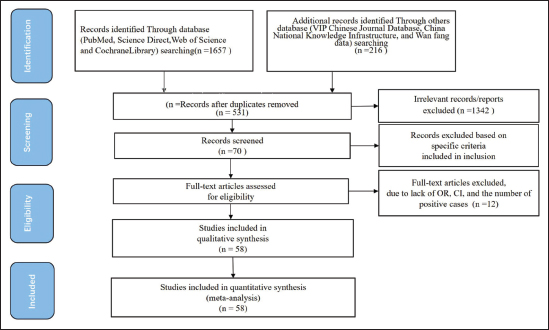
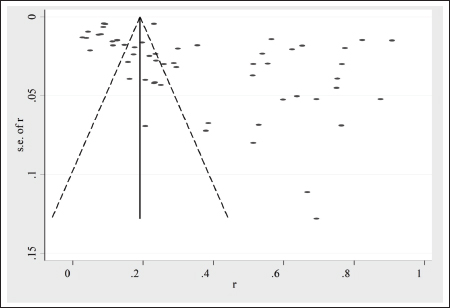
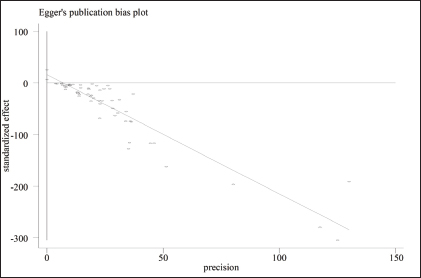
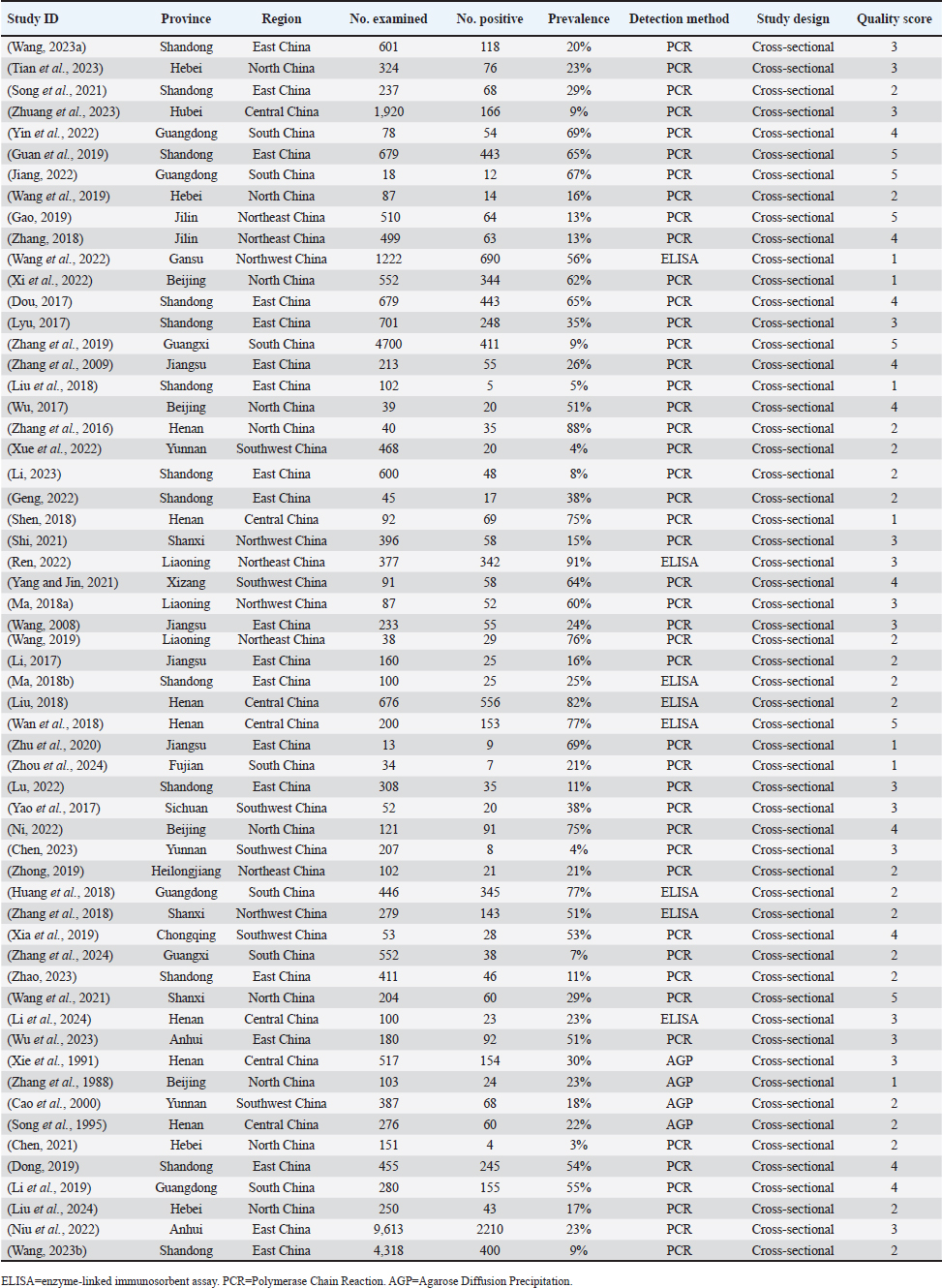
AbstractBackground: Fowl adenovirus (FAdV) induces hydropericardium hepatitis syndrome and inclusion body hepatitis in fowl, causing substantial economic losses to China’s fowl industry. However, nationwide epidemiological data on FAdV remain fragmented. Aim: This meta-analysis aimed to estimate the pooled prevalence of FAdV in Chinese fowl from 1988 to 2024. Methods: In accordance with the Preferred Reporting Items for Systematic Reviews and Meta-Analyses guidelines, 58 cross-sectional studies from databases (PubMed, China National Knowledge Infrastructure, etc.) were included. Pooled prevalence and subgroup analyses were performed using a random-effects model with Stata 12.0. Results: The overall FAdV prevalence was 37% (95% CI: 32.00%–42.00%) with high heterogeneity (I²>97%). Central China had the highest prevalence (50%), and Southwest China had the lowest (28%). Winter (20%) and adult/rearing stages (both 33%) showed higher prevalence; geese had the lowest species rate (12%). Conclusion: FAdV is highly prevalent in Chinese fowl with notable, fowl species, detection method, sample type, seasonal, and developmental stage. Targeted surveillance, detection method, sample type, developmental stage, seasonal biosecurity, and standardized diagnostics are essential for FAdV control. Keywords: China, Fowl adenovirus, Meta-analysis, Prevalence rate, System evaluation. IntroductionFowl adenovirus (FAdV) is a linear, double-stranded Deoxyribonucleic Acid (DNA) virus lacking an envelope, classified within the genus Fowl adenovirus of the Adenoviridae family (Benko et al., 2022). It is a ubiquitous pathogen in fowl species, especially chickens, although ducks, geese, and various wild fowls also serve as natural hosts (Zhuang et al., 2023). The virus can be transmitted both vertically (through infected embryos) and horizontally (via contact with infected fowls or contaminated environments) (Giovanni et al., 2020). First described in the United States in 1963 as an unidentified inclusion body disease, Inclusion Body Hepatitis was later definitively associated with FAdV (Helmboldt and Frazier, 1963). The virus was first isolated in Malaysia in 2005 (Hair-Bejo, 2005). Hydropericardium syndrome, initially named Angara disease, was identified in Pakistan in 1987 and has since spread throughout Asia, parts of the Middle East, and Latin America (SAK et al., 2011). The earliest recorded case of IBH in China was reported in 1976 in Taiwan (Chen, 2016). The disease later emerged in Shandong in 2009 as “yellow liver disease” in white-feather broilers, marked by hepatic discoloration, hemorrhage, and mortality rates of 1%–10% in chicks aged ≤14 days(Dong, 2019). Additional outbreaks followed, including the first recorded IBH case in a fowl farm in Jiangsu in November 2013 (Cui, 2012). By 2015, FAdV had become endemic across Shandong, Hebei, Jiangsu, and Anhui provinces (Guo et al., 2012). The disease’s prevalence continued to grow, correlating with intensified fowl farming; by 2018, detection rates reached as high as 77% in Guangdong and Henan (Huang et al., 2018), resulting in considerable agricultural losses. In Tianjin, the FAdV-positive rate was 6.2% among 3,718 clinical samples in 2023, while in the first quarter of 2024, 60 positive cases were detected among 1,270 collected clinical samples, corresponding to a positive rate of 4.7% (https://www.jbzyw.com/view/382490). However, epidemiological data across various regions remain fragmented and isolated. This not only precludes the establishment of a national FAdV epidemic baseline but also fails to offer robust support for cross-regional prevention and control initiatives, thereby highlighting the urgency and necessity of conducting a meta-analysis in the present study by integrating 36 years of relevant data. Despite numerous localized studies, nationwide data on FAdV prevalence in China remain fragmented. This study aimed to bridge that gap by conducting a systematic meta-analysis of studies published between 1988 and 2024. We sought to uncover comprehensive epidemiological trends and provide a scientific foundation for disease control policies by integrating multivariate analyses, including sampling time, region, seasonality, provinces, sample type, diagnostic methodology, and fowl developmental stages. This study seeks to determine the national positive FAdV in fowl and contribute to the broader understanding of FAdV epidemiology in global fowl production systems. Materials and MethodsSearch strategyThis study conducted a systematic review and meta-analysis in accordance with the Preferred Reporting Items for Systematic Reviews and Meta-Analyses (PRISMA) guidelines (Moher et al., 2015), and the quality (or risk of bias) of the included studies was evaluated using the adapted Risk of Bias Scale (Hartling et al., 2009). We performed an extensive literature search for epidemiological studies on FAdV in China, published between 1988 and 2024. The search spanned multiple English and Chinese databases, including PubMed, China National Knowledge Infrastructure, Chongqing Weipu Information Co., Ltd. Chinese Science and Technology Journal Database, ScienceDirect, the Cochrane Library, Clinical Trials, and Wan fang. Keywords used in the search included combinations of “FAdV” or “fowl adenovirus,” “inclusion body hepatitis,” “epidemiology,” “morbidity,” “prevalence,” “fowl,” “duck,” “goose,” “pigeon,” and “wild fowl.” Data processing and screeningTwo independent researchers screened and extracted the data using a standardized data extraction form. The following information was collected: first author, year of publication, sampling region, total number of fowls examined, number of FAdV-positive cases, species, sample types, seasons, and rearing stages. Additionally, detection methods were recorded where available. Studies were cross-verified, and disagreements were resolved by a third reviewer by consensus or adjudication. A backward citation search of the included studies was also conducted to identify additional relevant literature. The inclusion criteria were as follows: (1) studies assessing FAdV prevalence in fowl within mainland China; (2) Sample size ≥ 13 fowls; (3) clear specification of sampling time, location, and number of positive samples; and (4) an epidemiological study design. Study quality analysisThe methodological quality of the included studies was evaluated using the Grading of Recommendations Assessment, Development, and Evaluation framework (Guyatt et al., 2008). Each study was assessed based on five criteria: clarity of research objectives, appropriateness of diagnostic methods, inclusion of subgroups, detailed sampling methodology, and analysis of potential risk factors. Studies were rated on a 5-point scale, with total scores categorized as high (4–5), medium (2–3), or low (0–1) quality. Two reviewers independently conducted the evaluations, with discrepancies resolved through discussion. A pooled prevalence of FAdV infection was calculated using a random-effects model due to substantial heterogeneity among the included studies. Meta-analyses and forest plots were generated using Stata 12.0 (Stata Corp, College Station, TX, USA), with results reported alongside 95% confidence intervals. Publication bias was assessed using Egger’s test, and the distribution of effect sizes was visually evaluated using funnel plots to identify outliers. Subgroup analyses were conducted based on publication year (before vs. after 2020), geographical region (e.g., North China, East China), sampling time, sample type, detection method, fowl species, rearing stages, and seasonal sampling periods to evaluate their impact on FAdV prevalence. Ethical approvalThis study is based on information obtained from published studies ; therefore, it does not require any ethical approval. ResultsSearch results and study selectionTable 1 summarizes the characteristics of the studies included in the analysis, such as the Chinese provinces where they were conducted, the authors, publication years, and the reported prevalence of FAdV. All 58 studies were cross-sectional in design. Among them, 13 were rated high quality (scoring 4–5 points), 38 as moderate quality (2–3 points), and 7 as low quality (0–1 points). The literature screening process, including the specific exclusion criteria applied, is outlined in detail. Studies reporting exact prevalence data for FAdV in China were rigorously reviewed for inclusion in the meta-analysis (Fig. 1, Table 1). An initial search of electronic databases retrieved 1,657 records. After removing duplicates and studies irrelevant to the meta-analysis scope, 70 articles remained for further assessment. Twelve of these studies were subsequently excluded for the following reasons: small sample sizes (fewer than 13 fowls in 3 studies), incomplete or inconsistent data (5 studies), insufficient detail in prevalence reporting (2 studies), or lack of relevance to fowl (2 studies). Ultimately, 58 full-text articles met the inclusion criteria and were included in the quantitative synthesis. This meta-analysis focused on fowl FAdV prevalence across China, covering studies conducted across 24 provinces between 1988 and 2024. The dataset included 36,146 FAdV-positive fowl cases (Table 2). To assess the risk of publication bias, funnel plot analysis was performed (Fig. 2). Egger’s test further indicated significant publication bias (p < 0.05, Fig. 3), suggesting that the overall asymmetry in prevalence estimates may reflect underlying reporting bias.
Fig. 1. PRISMA flow diagram of the literature search, screening, eligibility assessment, and article selection for the meta-analysis.
Fig. 2. Funnel plot with pseudo 95% confidence limits for examining publication bias.
Fig. 3. Egger’s test for bias in publication. Prevalence of FAdV in China’s administrative regions and provincesTable 1. Studies of FADV infection in fowl in mainland China.
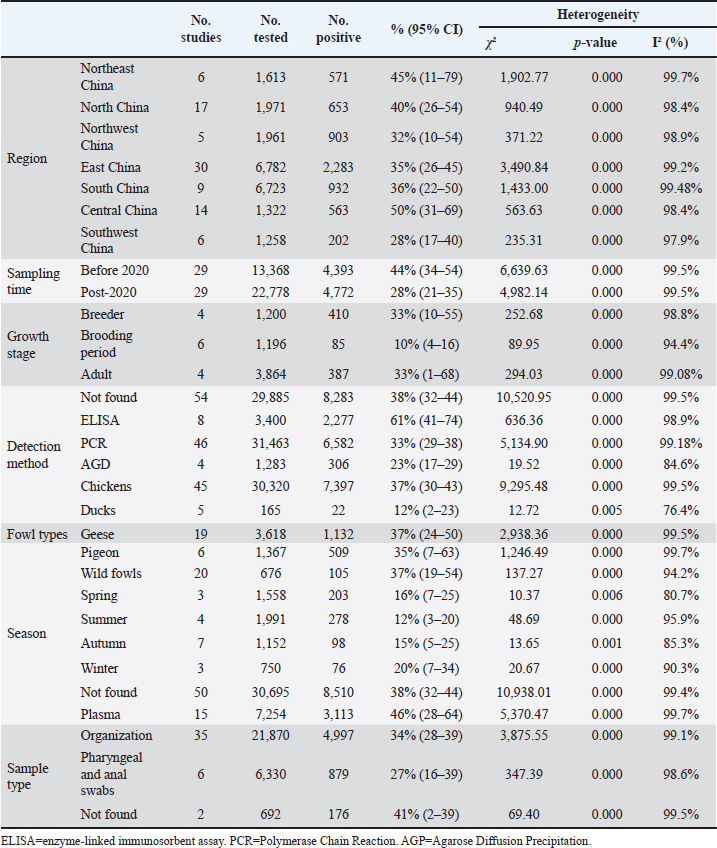
Table 2. Pooled prevalence of FADV infection in mainland Chinese fowl.
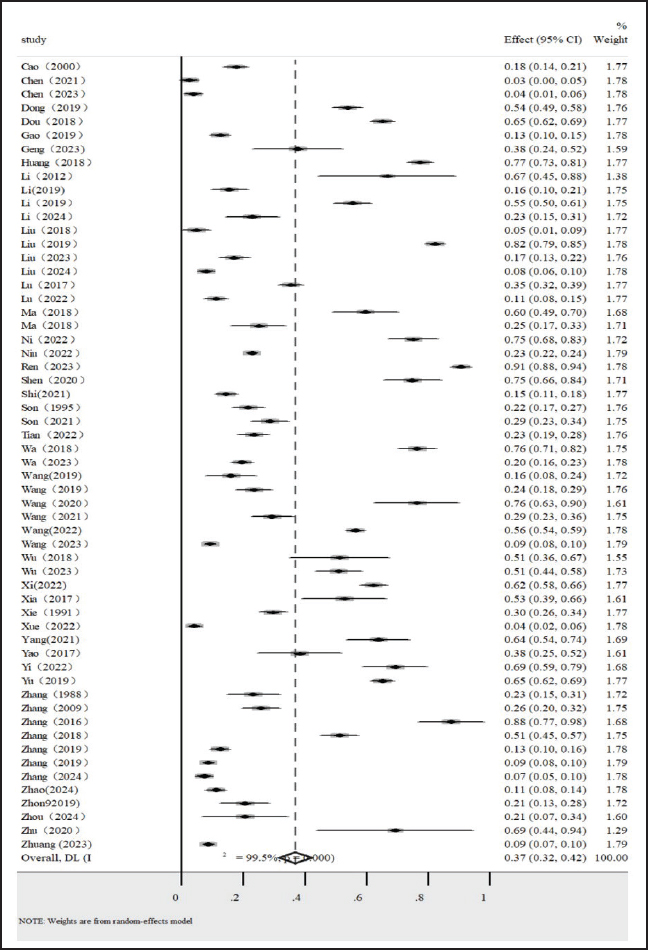
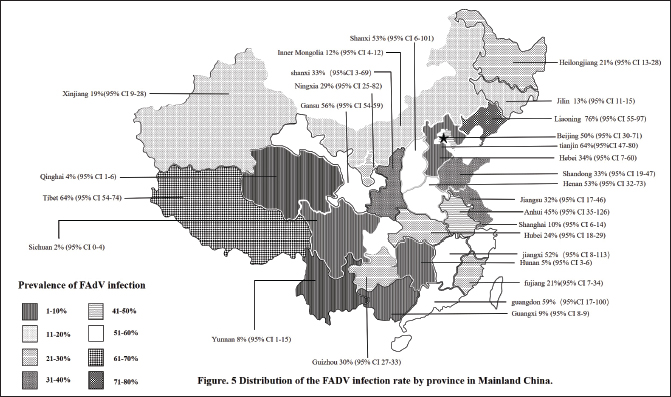
The prevalence of FAdV among fowl varied widely across China, ranging from 3% to 91% (Fig. 4, Table 1). Based on data from 36,146 fowl samples, the pooled national prevalence was estimated at 37% (95% CI: 32.00–42.00; 9,615/36,146) (Fig. 5, Table 2). Among the regional data, Central China reported the highest estimated prevalence at (50%, 95% CI: 31.00–69.00; 563/1,322), while Southwest China had the lowest at (28%, 95% CI: 17.00–40.00; 202/1,250). Epidemiological data revealed that most investigations were concentrated in fowl farms in East and North China. Although fewer studies were conducted in South China, the prevalence was notably high (36%, 95% CI: 22–50; 932/6,323), which exceeded that in Northwest China (32%, 95% CI: 10–54; 903/1,961) (Table 2). At the provincial level, Liaoning recorded the highest prevalence (76%, 95% CI: 55.00–97.00), followed by Tibet and Tianjin (64%, 95% CI: 54.00–74.00 and 47.00–80.00, respectively). Guangdong reported a prevalence of (59%, 95% CI: 17.00–100.00), while Gansu and Shanxi recorded a prevalence of (56%, 95% CI: 54.00–59.00) and (53%, 95% CI: 6.00–10.10). Overall, the FAdV prevalence was over 10%. Provinces with 10% prevalence included Guangxi (9%, 95% CI: 8.00–9.00) and Yunnan (8%, 95% CI: 1.00–15.00) (Fig. 5).
Fig. 4. Random effect meta-analysis of fowl FADV infection in mainland China.
Fig. 5. Distribution of the FADV infection rate by province in Mainland China. Risk factors associated with the prevalence of FAdVSeveral variables, including sampling time, sample type, detection method, fowl species, developmental stage, and season, may have contributed to the observed regional variability in FAdV prevalence across China. Through meta-analysis, we identified multiple influencing factors (Table 2). A total of 58 eligible studies on FAdV were included in this study, with 29 published before 2020 and 29 from 2020 onwards. This balanced sample size distribution minimizes analytical bias arising from differences in data volume. Studies released prior to 2020 reported a higher average prevalence (44%, 95% CI: 34.00–54.00) than those published afterward (28%, 95% CI: 21.00–35.00). The overall prevalence across both periods remained at 37%. The estimated prevalence was 33% (95% CI: 29.00–38.00) for PCR and 23% (95% CI: 17.00–29.00) for agar gel precipitation (AGP) assay, while enzyme-linked immunosorbent assay (ELISA) yielded the highest prevalence at 69% (95% CI: 47.00–74.00). All the aforementioned diagnostic methods were designed for antigen detection. Regarding sample types, the prevalence was higher in serum samples (46%, 95% CI: 28.00–64.00) than in tissue samples (34%, 95% CI: 28.00–39.00) and pharyngeal-anal swabs (27%, 95% CI: 16.00–39.00). Species-specific data indicated equal prevalence (37%) in chickens (37%, 95% CI: 30.00–43.00), ducks (37%, 95% CI: 24.00–50.00), and wild fowls (37%, 95% CI: 19.00–54.00). Pigeons had a slightly lower prevalence at (35%, 95% CI: 7.00–63.00), and geese had exhibited the lowest at (12%,95% CI:2.00–23.00). FAdV prevalence also varied by fowl developmental stage. The highest rates were observed in fowls during the adult and breeding stages (33%). Specifically, adults had a prevalence of 33% (95% CI: −0.01–68.00), while fowls had a prevalence of 33% (95% CI: 10.00–55.00) during the growing period. The lowest prevalence was found in the brooding stage (10%, 95% CI: 4.00–16.00). Seasonal analysis revealed the highest FAdV prevalence in winter (20%, 95% CI: 7.00–34.00), whereas the lowest was observed in summer (12%, 95% CI: 3.00–20.00) (Table 2). Publication bias of prevalence of FAdVIn the Egger test, the p-value for FAdV prevalence was 0.001, indicating a statistically significant publication bias. The funnel plot for prevalence analysis (Fig. 2) revealed an asymmetric distribution of effect sizes, indicating a potential publication bias. The degree of asymmetry is positively correlated with the bias extent. DiscussionSince its initial identification in China in 1976, FAdV has not only established itself as a global concern but has also diversified into 12 serotypes through ongoing circulation and adaptation in fowl populations (Shi and Li, 2017). Despite its widespread impact, a comprehensive vaccine encompassing all 12 serotypes remains unavailable in China, presenting a major challenge for disease prevention and control and contributing to significant economic losses within the fowl sector (Liu et al., 2020). Studies have shown that monovalent vaccines targeting dominant serotypes, such as FAdV-4 and FAdV-8b, are the mainstays of clinical application in China (Zhang et al., 2020), with their vaccination coverage exhibiting a certain correlation with regional prevalence. For instance, the prevalence of FAdV in this study decreased significantly from 44% (before 2020) to 28% (after 2020), which is presumably associated with the promotion of FAdV-4 vaccines and increased immunization coverage in core farms in intensive breeding regions such as East and North China during (Wang, 2023). Future studies should incorporate data on vaccine types, immunization protocols, and serotype distribution to more accurately clarify the regulatory role of vaccines in FAdV prevalence, thereby providing a scientific basis for targeted prevention and control strategies. Our analysis, encompassing 36,146 suspected FAdV cases reported in 58 studies from 1988 to 2024, identified 9,165 positive samples, illustrating the extensive nationwide distribution of FAdV. Detection rates exceeded 40% in Central, Northern, and Northeastern China, whereas lower rates were observed in Eastern, Northwestern, Southwestern, and Southern regions. These geographic differences may be linked to regional climate and management practices (Tian et al., 2023). For instance, cooler temperatures in central and northern areas may enhance viral stability and transmission, while housing practices also play a role—southern farms typically use floor-rearing systems, whereas northern farms are more likely to employ cage systems equipped with environmental controls and stringent biosecurity, reducing fecal–oral transmission (Zhou and Lu, 2021). In contrast, the presence of dense fowl trading activity in southern and coastal regions increases the likelihood of viral dissemination through both direct and airborne pathways (Xing et al., 2022). To date, no previous meta-analysis has systematically assessed FAdV prevalence and associated risk factors across China. This study is the first to synthesize nationwide data and produce pooled prevalence estimates. In this meta-analysis, the funnel plot (Fig. 2) shows more data points on the right side than on the left. The funnel plot for FAdV prevalence exhibits right skewness, indicating a lack of small-sample studies. Regions with high prevalence rates may be more willing to participate in studies by providing larger sample sizes, leading to data clustering. Studies in China tend to report positive results (such as high prevalence rates), whereas studies with negative results may not be published (Masoud, 2025). Small-sample studies require larger effect sizes to reach statistical significance; therefore, they are more likely to report higher prevalence rates (Friese and Frankenbach, 2020). The meta-analysis integrated data from 24 provinces within seven major geographic regions of China. A notable finding was the limited representation of studies from Southwest China, which may partly explain the unexpectedly high FAdV prevalence reported in this region. According to the National Bureau of Statistics of China (2024, https://www.stats.gov.cn/), the region maintains a considerable fowl population of 98.58 million fowls, accounting for 14.5% of the national total. The combination of high fowl density and potentially more rigorous biosecurity protocols in industrial-scale farms may influence regional variation in the prevalence of FAdV. Given these dynamics, targeted surveillance efforts in Southwest China are urgently needed to clarify epidemiological trends and strengthen the foundation for region-specific control strategies. Our findings further highlight fowl age as a key risk factor influencing FAdV infection rates. Prevalence increased with age: 10% during the brooding stage, rising to 33% during the growth phase, and peaking at 33% in adult fowls (Cowen et al., 1978), likely driven by immunological immaturity in younger fowls and increased pathogen exposure in older flocks (Saifuddin and Wilks, 1992). In the future, establishing a precision prevention and control system tailored to the age-related susceptibility differences of poultry is essential. Specifically, during the brooding period, enhanced isolation, disinfection, vaccination, and antibody monitoring should be prioritized. During the growing period, efforts need to be intensified to reinforce immunization and address the gap in group stress management. During the adult period, strict control of pathogen exposure is imperative. It is crucial to consolidate biosecurity barriers, improve surveillance, early warning, and emergency response mechanisms, and complement these with technical training and standardized breeding record documentation. This strategy, which covers growth stages and critical transition periods, is expected to effectively mitigate the risk of FAdV infection. Seasonal variation also emerged as an important factor in the epidemiology of FAdV. The highest prevalence was observed in winter (20%), followed by spring (16%) and autumn (15%). This pattern is consistent with the virological characteristics of FAdV, which demonstrates enhanced environmental persistence under cold conditions and extended survival at low temperatures (Moscoso et al., 2007). In addition, fowl are more susceptible to infection during cold stress (Ishibashi, 1971). Although early studies identified January and July–September as the peak incidence periods (Jiao et al., 2024), discrepancies in seasonal findings may stem from regional differences in sampling efforts or methodological variation among studies. The convergence of suboptimal environmental conditions, such as high stocking densities and inadequate ventilation in winter, may exacerbate the risk of FAdV transmission (Xue et al., 2025). In the future, targeted measures should be implemented based on the epidemiological characteristics of FAdV, including its high prevalence in winter, enhanced environmental persistence under low-temperature conditions, and increased cold stress-induced infection susceptibility. Focusing on the core prevention and control period (winter and spring), key interventions should include strengthening the balanced management of chicken house insulation and ventilation, increasing the frequency of environmental disinfection, optimizing stocking density to avoid overcrowding, and completing booster vaccination and antibody level monitoring before winter. Additionally, prevention and control strategies should be dynamically adjusted considering regional epidemic characteristics, thereby mitigating the risk of seasonal FAdV transmission. This study represents the first comprehensive, nationwide meta-analysis of FAdV prevalence in Chinese fowl, revealing substantial regional heterogeneity. The key potential sources of heterogeneity include four aspects: First, the differences in the diagnostic methods among the included studies, as evidenced by the differences in the estimated prevalence: 33% for Polymerase Chain Reaction, 61% for ELISA, and 23% for AGP assay. Second, differences in avian species characteristics were observed, with significant variations in prevalence: chickens (37%), ducks (37%), wild birds (37%), and pigeons (35%) exhibited the highest prevalence, whereas geese (12%) had the lowest prevalence. Third, discrepancies in rearing stages also showed significant prevalence differences: the growing period (33%) and adult period (33%) had the highest prevalence, whereas the brooding period (10%) had the lowest prevalence. Fourth, seasonal variations resulted in inconsistent sensitivity in FAdV detection: the prevalence was highest in winter (20%), followed by spring (16%) and autumn (15%), with the lowest in summer (12%). Additionally, a random-effects model was employed in this study, which automatically balanced the heterogeneity across different diagnostic methods, avian species, rearing stages, and seasons via inverse variance weighting. These factors were identified as the main influencers of FAdV prevalence. Nonetheless, several methodological limitations must be acknowledged. This study has some limitations, including uneven geographical distribution of samples and the lack of FAdV genotype data. First, Southwest China is underrepresented, which is mainly attributed to the unbalanced distribution of domestic FAdV prevalence studies. Because of the relatively small-scale poultry farming in Southwest China, relevant research remains scarce. Future studies should prioritize expanding sample coverage in data-scarce provinces (e.g., those in Southwest China) to further enhance the generalizability of FAdV epidemiological conclusions at the national level. Second, FAdV genotype data are missing, which stems from insufficient detailed data in some included studies. Future research should systematically collect data on the aforementioned key variables to conduct a more comprehensive analysis of FAdV risk factors. Despite the inclusion of 58 studies from five major academic databases, publication bias remains a possibility because some relevant studies may not have been captured. In addition, sample size variation and incomplete metadata in some reports may limit the reliability of pooled prevalence figures and subgroup analyses. Despite these limitations, the study offers novel insights into the spatiotemporal dynamics of FAdV and provides a valuable epidemiological baseline for designing future surveillance programs and control measures. Targeted prevention and control measures have been implemented across various provinces in China. For instance, Shaanxi Province issued the 2024 Compulsory Animal Immunization Program (http://nynct.shaanxi.gov.cn/xxgk/gknr/zc/qtwj/202403/t20240301_2758202.html) to standardize immunization practices. Shandong Province released local technical specifications for FAdV prevention (https://dbba.sacinfo.org.cn/stdDetail/71abeed4d5ea603d5 dc23e78d0c8728430d587f39_7d37f700d1200255a34b_637), which formalize diagnostic procedures, disinfection protocols, and breeding management standards. To mitigate the risk of transboundary transmission, Yunnan Province integrated FAdV surveillance into cross-border animal disease management (https://nync.yn.gov.cn/html/2025/jjtabl2025_0408/1418219.html?cid=8067). In the future, provinces should strengthen their targeted prevention and control strategies. Central China, which has a high FAdV prevalence, should prioritize the promotion of regionally dominant vaccines. Southwest China must address surveillance gaps to improve the accuracy of epidemic monitoring. All provinces must synchronously enhance farm biosecurity measures, such as strengthening disinfection practices and restricting poultry transportation. Additionally, the implementation of standardized diagnostic technologies should be promoted to establish a coordinated prevention and control system integrating “surveillance-vaccination - biosecurity”. By systematically evaluating the epidemiology of FAdV in China, this study offers critical insights to inform strategic disease management, farm-level interventions, and economic impact mitigation. In conclusion, our analysis estimates a 37% pooled prevalence of FAdV across China’s fowl sector, with significant regional differences, ranging from as high as 50% in central provinces to as low as 28% in the southwest. The multivariate analysis identified fowl age, seasonal trends, and transmission modalities as key infection determinants. Based on these findings, we recommend a targeted, evidence-driven mitigation strategy incorporating: (1) age- and season-specific biosecurity measures, (2) nationwide, real-time epidemiological surveillance, and (3) adaptive, data-informed adjustment of control practices. These approaches could substantially reduce the burden of FAdV and enhance resilience within China’s fowl production systems. In addition, this study proposes a bidirectional linkage between the three recommendations and health promotion: (1) Differential biosecurity measures tailored to bird age and season can reduce the FAdV infection rate in poultry and improve herd health; (2) National real-time surveillance enables early warning of an epidemic and strengthens the biosecurity barrier for poultry farming; (3) Data-driven prevention and control can optimize resource allocation, ensure the safety of poultry products at the source, and indirectly safeguard public and consumer health. These proposals exhibit strong feasibility: differential measures are adaptable to various poultry farms and compatible with existing prevention and control protocols across multiple regions; national surveillance can be networked based on the veterinary epidemic prevention system, with the only supplementation needed being surveillance sites in the southwest region; and data-driven prevention and control can be implemented using provincial surveillance data, featuring controllable costs and national promotion potential. AcknowledgmentsNone. Conflict of interest The authors have no conflicts of interest to declare. Funding This work was supported by the Anhui Education Department Key Projects (2023AH051884), the Grass Feeding Livestock Resource Utilization and Health Science and Technology Innovation Team (2023AH010061), the Veterinary Science Peak Discipline Project of Anhui Science and Technology University (XK-XJGF002), and the Anhui Provincial Quality Engineering Project for the New Era of Educating People (Postgraduate Education) (2024cxcysj188). Authors’ contributions Authors Xuelong Chen and Yanping Qi contributed to the conception and design of this study. Literature search, collection, and analysis of data were performed by Yiwei Wang, Junxue Qiu, Xiaoyu Chong, and Baolei Yang. Yuchen Liang, Wei Cheng, and Huiying Zhang contributed to the design of the geographic maps. Mengke Si wrote the first draft of the manuscript, and all authors commented on earlier versions of the manuscript. All authors have read and approved the final version of the manuscript. Data availability The original contributions presented in the study are included in the article/supplementary material; further inquiries can be directed to the corresponding author. ReferencesBenkő, M., Aoki, K., Arnberg, N., Davison, A.J., Echavarría, M., Hess, M., Jones, M.S., Kaján, G.L., Kajon, A.E., Mittal, S.K., Podgorski, I.I., San Martín, C., Wadell, G., Watanabe, H. and Harrach, B. 2022. ICTV Virus Taxonomy Profile: adenoviridae 2022. J. Gen. Virol. 103, 1; doi:10.1099/jgv.0.001721 Cao, X., Wang, K., Zeng, K., Li, C., Yang, Y., Li, X. and Ma, X. 2000. Survey on Major Infectious Diseases of Chickens in Chuxiong Yi Autonomous Prefecture, Yunnan Province. Chin. Vet. Sci. 30, 16–17; doi:10.16656/j.issn.1673-4696.2000.10.006 Chen, L. 2021. Molecular Epidemiological Survey of Seven Viruses in the Small Intestines of Chickens with Hemorrhagic Enteritis in Partial Regions of Hebei Province. [Master’s Thesis]. Hebei Agricultural University (in Chinese). Chen, L., Yin, L., Zhou, Q., Peng, P., Du, Y., Liu, L., Zhang, Y., Xue, C. and Cao, Y. 2019. Epidemiological investigation of fowl adenovirus infections in poultry in China during 2015–2018. BMC. Vet. Res. 15, 1–7; doi:10.1186/s12917-019-1969-7 Chen, X. 2023. Isolation, Identification of Group I Fowl Adenovirus and Proteomic Analysis of Infected Chicken Hepatocellular Carcinoma Cells in Yunnan Region. [Master’s Thesis]. Yunnan Agricultural University (in Chinese). Chen, X.J. 2016. Isolation, Identification, and Pathogenicity Analysis of Fowl Adenovirus Group I Isolates from Hubei Province. master, [Master’s Thesis]. Yangtze University (in Chinese). Cowen, B., Mitchell, G.B. and Calnek, B.W. 1978. An adenovirus survey of poultry flocks during the growing and laying periods. Avian Dis. 22, 115–121; doi:10.2307/1589514 Cui, Y. 2012. Preparation and epidemiological investigation of DNA probes for partial serotypes of chicken inclusion body hepatitis virus. [Master’s Thesis]. yangzhou university (in Chinese). Dong, Z. 2019. Pathogenicity and Prevention/Control of Fowl Adenovirus Group I in Chickens in the Jiaodong Peninsula, China. [Master’s Thesis]. China Agricultural University (in Chinese). Dou, Y. 2017. Isolation, Identification, and Epidemiological Survey of Fowl Adenovirus Group I Serotype 4. [Master’s Thesis]. Shandong Agricultural University (in Chinese). Franzo, G., Prentza, Z., Paparounis, T., Tsiouris, V., Centonze, G., Legnardi, M., Catelli, E., Tucciarone, C.M., Koutoulis, K. and Cecchinato, M. 2020. Molecular epidemiology of fowl adenoviruses in Greece. Poult. Sci. 99, 5983–5990; doi:10.1016/j.psj.2020.07.019 Friese, M. and Frankenbach, J. 2020. P-Hacking and publication bias interact to distort meta-analytic effect size estimates. Psychol. Methods 25, 456–471; doi:10.1037/met0000246 Gao, L. 2019. Isolation, Identification and Biological Characterization of Epidemic Fowl Adenovirus Serotype 4 (FAdV-4) Strains in Chickens from Jilin Province. [Master’s Thesis]. Jilin University (in Chinese). Geng, H. 2022. Isolation, Identification, and Pathogenicity Analysis of Fowl Adenovirus Serotype 8b Strains Isolated from Shandong Province, China. [Master’s Thesis]. Shandong Agricultural University (in Chinese). Giovanni, F., Zoi, P., Thomas, P., Vasilios, T., Giovanni, C., Matteo, L., Elena, C., Claudia, M. T., Konstantinos, K. and Mattia, C. 2020. Molecular epidemiology of fowl adenoviruses in Greece. Poult Sci, 99, 5983–5990. doi:10.1016/j.psj.2020.07.019 Guo, J., Diao, Y., Xue, C., Wang, J., Li, J., Tang, Y. and Cheng, Y. 2012. Isolation and Identification of Fowl Adenovirus Group I Isolates from Shandong Province, and Cloning and Analysis of the Hexon Gene. J. Vet. Med. China 32, 1773–1777; doi:10.16303/j.cnki.1005-4545.2012.12.005 Guan, l., Yun, L., Yanguo, D., Yi, T. and Youxiang, D. 2019. Prevalence of Fowl Adenovirus Serotype 4 and Co-Infection by Immunosuppressive Viruses in Fowl with Hydropericardium Hepatitis Syndrome in Shandong Province, China. Viruses, 11, 517. doi:10.3390/v11060517 Guyatt, G.H., Oxman, A.D., Vist, G.E., Kunz, R., Falck-Ytter, Y., Alonso-Coello, P. and Schünemann, H.J. 2008. GRADE: an emerging consensus on rating quality of evidence and strength of recommendations. BMJ 336, 924–926; doi:10.1136/bmj.39489.470347.AD Hair-Bejo. and M. 2005. Inclusion body hepatitis in a flock of commercial broiler chickens. J. Vet. Malaysia. 17, 23–26. Hartling, L., Ospina, M., Liang, Y., Dryden, D.M., Hooton, N., Krebs Seida, J. and Klassen, T.P. 2009. Risk of bias versus quality assessment of randomised controlled trials: cross sectional study. BMJ 339, 4012; doi:10.1136/bmj.b4012 Helmboldt, C.F. and Frazier, M.N. 1963. Avian hepatic inclusion bodies of unknown significance. Avian Dis. 7, 446–450. Huang, B., Ouyang, W., Chen, S., Pan, J. and Zhang, X. 2018. Serological Survey of Antibodies Against Fowl Adenoviruses of Group I in Dongguan City. Anim Husb Vet Technol Inf, 17-18 (in Chinese). Ishibashi, M. 1971. Temperature-sensitive conditional-lethal mutants of an avian adenovirus (CELO). I. Isolation and characterization. Virology 45, 42–52; doi:10.1016/0042-6822(71)90111-5 Jiang, X. 2022. Biological Characteristic Analysis and Establishment of a Quantitative Real-Time PCR Assay for a Duck-Derived Group I Serotype 3 Fowl Adenovirus Isolate. [Master’s Thesis]. Foshan University of Science and Technology (in Chinese). Jiao, Y., Shi, W., Li, Y., Yu, H., Zhao, Q., Zhao, Y. and Liu, Y. 2024. Study on the prevalence and pathogenicity of fowl adenovirus group I in yellow chicken in China from 2017 to 2022. Heilongjiang J. Anim. Sci. Vet. Med. Scis. 75–84; doi:10.13881/j.cnki.hljxmsy.2023.09.0182 Liu, Jishan, Sun, P., Yu, X., Cheng, Z., Shen, Z., Liu, Z. and Xiao, Y. 2020. Research progress of fowl adenovirus group I and its vaccine. Chin. J. Anim. Infect. Dis. 28, 108–116). doi:10.19958/j.cnki.cn31-2031/s.2020.01.018 Li, P. 2017. Establishment of Pathogen and Antibody Detection Methods for Group I Fowl Adenovirus Disease and Their Application in Serological Surveys. [Master’s Thesis]. Nanjing Agricultural University (in Chinese). Li, P., Lei, M., Feng, L., Wang, Z., Guan, C., Zheng, H., Wang, J., Wang, L., Li, Y., Wu, X., Liu, X. and Jin, Q. 2024. Establishment of an Indirect ELISA for Detecting Fowl Adenovirus Serotype 4 Antibodies Based on the Penton Protein. Henan. Agric. Sci. 53, 133–141; doi:10.15933/j.cnki.1004-3268.2024.07.015 Li, Z. 2023. Isolation, Identification, and Study on Vertical Transmission Characteristics of Duck-Derived Group I Fowl Adenovirus. [Master’s Thesis]. Shandong Agricultural University (in Chinese). Liu, X., Sun, J., Wu, S., Ju, Z. and Tang, D. 2018. PCR-Based Identification of Group I Adenovirus in Cherry Valley Ducks. Shandong Anim. Husb. Vet. Med. 39, 6–8. Liu, Y. 2018. Isolation, Identification of Epidemic Strains of Fowl Adenovirus Serotype 4 Causing Hepatitis-Hydropericardium Syndrome in China and Development of an Inactivated Vaccine. [Master’s Thesis]. Henan Agricultural University (in Chinese). Liu, Z., Xu, F., Li, Y., Liu, M., Su, J., Li, D., Huang, S. and Mei, K. 2024. Isolation, identification and Hexon gene sequence analysis of group I fowl adenovirus in some areas of China from 2021 to 2022. Chin. Poult. 46, 38–45; doi:10.16372/j.issn.1004-6364.2024.05.006 Lu, X. 2022. Detection of Coinfection with Four Common Vertically Transmitted Viruses in Dead Duck Embryos. [Master’s Thesis]. Shandong Agricultural University (in Chinese). Lyu, H. 2017. Epidemiological Survey of Group I Fowl Adenovirus in Duck Embryos from Partial Regions of Shandong Province. [Master’s Thesis]. Shandong Agricultural University (in Chinese). Ma, H. 2018. Isolation and identification of serotype 4 fowl adenovirus and establishment of indirect ELISA detection method. [Master’s Thesis]. Shandong Agricultural University (in Chinese). Ma, J. 2018. Molecular epidemiological investigation of group I fowl adenovirus in Fuxin area. Heilongjiang Anim. Sci. Vet. Med. 61, 138–140 (in Chinese). doi:10.13881/j.cnki.hljxmsy.2017.03.0219 Masoud, M. 2025. Publication bias in prevalence studies should not be ignored. Syst. Rev. 14, 85. doi:10.1186/s13643-025-02845-9 Moher, D., Shamseer, L., Clarke, M., Ghersi, D., Liberati, A., Petticrew, M., Shekelle, P. and Stewart, L.A. 2015. Preferred reporting items for systematic review and meta-analysis protocols (PRISMA-P) 2015 statement. Syst. Rev. 4, 1; doi:10.1186/2046-4053-4-1 Moscoso, H., Bruzual, J.J., Sellers, H. and Hofacre, C.L. 2007. FTA liver impressions as DNA template for detecting and genotyping fowl adenovirus. Avian. Dis. 51(2007), 118–121. Ni, W. 2022. Establishment of Three Pigeon-Origin Virus Multiplex PCR Detection Methods and Their Preliminary Applications. [Master’s Thesis]. Hebei Agricultural University (in Chinese). Niu, D., Feng, J., Duan, B., Shi, Q., Li, Y., Chen, Z., Ma, L., Liu, H. and Wang, Y. 2022. Epidemiological survey of avian adenovirus in China from 2015 to 2021 and the genetic variability of highly pathogenic Fadv-4 isolates. Infect. Genet. Evol. 101, 105277; doi:10.1016/j.meegid.2022.105277 Ren, C. 2022. Analysis of genetic characteristics of serotype IV fowl adenovirus isolates in Liaoning and establishment of indirect ELISA detection method. [Master’s Thesis]. Shenyang Agricultural University (in Chinese). Saifuddin, M. and Wilks, C.R. 1992. Effects of fowl adenovirus infection on the immune system of chickens. J. Comp. Pathol. 107, 285–294; doi:10.1016/0021-9975(92)90004-e Sak, M., G, A., T, H., SA, F., I, A. and FA, K. 2011. In vivo pathogenicity of hydropericardium hepatitis syndrome Angara disease. Afr. J. Biotechnol. 10, 13664–13671. doi:10.5897/AJB10.2506 Shen, Z. 2018. Isolation and identification of fowl adenovirus serotype 4 and preliminary study on its inactivated vaccine. [Master’s Thesis]. South China Agricultural University (in Chinese). Shi, L. 2021. Investigation of pigeon adenovirus type I infection in surrounding areas of Xi ‘an and establishment of visual LAMP detection method. [Master’s Thesis] northwest a&f university (in Chinese). Shi, X. and Li, C. 2017. Diagnosis of a fowl adenovirus infection. Shandong. J. Anim. Sci. Vet. Med. 38, 34–35. Song, Q., He, H., Wang, Q. and Yu, X. 1995. Serological investigation of avian adenovirus in the Zhengzhou area. Chin J Anim Health Inspect, 12, 31 (in Chinese). Song, Y., Qiu, Y., Liu, K., Zhao, Y., Zhao, J., Niu, Y., Li, N. and Liu, S. 2021. Pathogen detection and genetic evolution analysis of duck-origin avian adenovirus in the central and western regions of Shandong Province from 2019 to 2020. Chin. J. Anim. Health Inspect. 38, 6; doi:10.3969/j.issn.1005-944X.2021.06.002 Tian, T., Liu, L., Lu, W., Pang, H., Liu, X., Cao, L., Lei, B., Zhao, K., Zhang, W. and Yuan, W. 2023. Molecular Epidemiological Survey of Group I Fowl Adenovirus in Partial Regions of China (2015–2022). Chin. Vet. Sci. 53, 57–63; doi:10.16656/j.issn.1673-4696.2023.0004 Wan, W., Liu, Y., Wang, B., Wu, Y., Yang, D., Gao, D., Li, Y., Wang, X., Yang, X., Chang, H., Chen, L., Wang, C. and Zhao, J. 2018. Establishment of an Indirect ELISA for Antibody Detection Based on the Fiber2 Protein of Chinese Epidemic Strains of FAdV-4. Chin. J. Vet. Med. 38, 883–888; doi:10.16303/j.cnki.1005-4545.2018.05.08 Wang, C., Lu, B., Liu, H., Li, T., Tang, J. and Ding, S. 2021. Isolation, Identification and Penton Gene Sequence Analysis of Group I Fowl Adenovirus. Chin. Anim. Health 23, 103–106; doi:10.3969/j.issn.1008-4754.2021.01.075 Wang, D. 2023. Epidemiological Investigation of Fowl Adenovirus Group I and Evaluation of the Protective Efficacy of an Inactivated FAdV-4 Vaccine. [Master’s Thesis]. Shenyang Agricultural University (in Chinese). Wang, L., Zheng, L., Li, F., Li, X., Ren, W., Lu, C., Zhang, L., Dong, Z., Yan. and Minghua. 2019. Establishment and Preliminary Application of a Nano-PCR Assay for Fowl Adenovirus Serotype 4. Chin. J. Prev. Vet. Med. 41, 701–704; doi:10.3969/j.issn.1008-0589.201809018 Wang, T. 2023. Epidemiological Survey and Pathogenicity Study of Group I Fowl Adenovirus in Shandong Province (2021–2022). [Master’s Thesis]. Shandong Agricultural University (in Chinese). Wang, X. 2008. Isolation, Identification and Biological Characterization of Group I Fowl Adenovirus. [Master’s Thesis]. Yangzhou University (in Chinese). Wang, X. 2019. Survey of FAdV-4 Infection in Wild Birds from Liaoning Province and Sequence Analysis of Its Penton Gene. [Master’s Thesis]. Shenyang Agricultural University (in Chinese). Wang, Y., Zhao, B. and Cheng, X. 2022. Epidemiological Survey of Avian Adenovirus Disease (Ankara Disease) in Poultry from Tianshui and Surrounding Areas (2018–2021). Chin. Livest. Poult. Breed. 18, 62–65. Wu, S., Zhang, C., Yuan, H., Dai, L., Lin, M., Wu, Z. and Zhu, S. 2023. Establishment and Application of a TaqMan Probe-Based Real-Time Fluorescence Quantitative PCR Assay for Detecting Fowl Adenovirus Serotype 4. Jiangsu J. Agric. Sci. 39, 134–141. Wu, Y. 2017. Isolation, Identification, and Immunogenicity Evaluation of Fowl Adenovirus Serotype 4. [Master’s Thesis]. Inner Mongolia Agricultural University (in Chinese). Xi, S., Zhao, L., Shi, A., Li, L., Jin, H., Zhang, J., Shen, J., Jiang, B., Peng, P. and Zhang, Z. 2022. Serological Survey of Pigeon Adenovirus Disease in Partial Regions of China. Chin. Poult. 44, 117–120; doi:10.16372/j.issn.1004-6364.2022.06.021 Xia, J., Yao, K.C., Liu, Y.Y., You, G.J., Li, S.Y., Liu, P., Zhao, Q., Wen Rui Wu, Y.P., Huang, X.B., Cao, S.J., Han, X.F. and Huang, Y. 2019. Isolation and molecular characterization of prevalent Fowl adenovirus strains in southwestern China during 2015–2016 for the development of a control strategy. Emerg. Microbes Infect. 6, 1–9; doi:10.1038/emi.2017.91 Xie, M., Li, Y., Chen, R., Zhang, K. and Zheng, L. 1991. Serological Survey of Fowl Adenovirus Infections. Chin J Vet Med, 17, 7-9 (in Chinese). Xing, A., Yu, X., Peng, Z., Jun H, K., Li, Y., Jiang, W., Xu, L., Wang, J. and Liu, H. 2022. Adenovirus detection and genetic evolution analysis of market traded pigeons in some areas of China from 2021 to 2022. Chin. Anim. Health Inspect. 39, 42–46. Xue, X., Zhang, Z., Yang, Q., Wang, W. and Song, J. 2025. Epidemiological investigation and fiber gene genetic analysis of fowl adenovirus serotype 4 from 2017 to 2021 in Yunnan Province, China. J. Vet. Sci. 26, 27; doi:10.4142/jvs.24121 Xue, X., Zhang, Z., Zeng, Y., Ji, J., Dai, H., Li, S. and Song, J. 2022. Isolation, Identification, and Hexon Gene Sequence Analysis of Fowl Adenovirus Serotype 4 Strain Isolated from Yunnan Province, China. Chin. Anim. Husb. Vet. Med. 49, 3932–3942; doi:10.16431/j.cnki.1671-7236.2022.10.026 Yang, J. and Jin, H. 2021. Establishment and Application of a Nested PCR Assay for Detecting Fowl Adenoviruses of Group I. Anim. Husb. Vet. Med. 53, 71–77. Yao, K., Liu, Y., You, G., Li, S., Xia, J., He, X., Li, W., Du, L., Han, X. and Huang, Y. 2017. Molecular Epidemiological Survey and Pathogenicity Study of Fowl Adenoviruses of Group I in Partial Regions of Southwest China. Acta. Agric. Zhejiangensis. 29, 1809–1818. Yin, L., Zhou, Q., Mai, K., Yan, Z., Shen, H., Li, Q., Chen, L. and Zhou, Q. 2022. Epidemiological investigation of duck adenovirus 3 in southern China, during 2018–2020. Avian. Pathol. 51, 171–180; doi:10.1080/03079457.2022.2034737 Zhang, A. 2018. Epidemiological Investigation, Diagnosis and Treatment of Chicken Angara Disease in Changchun Region. [Master’s Thesis]. Jilin Agricultural University (in Chinese). Zhang, J., Xie, Z., Pan, Y., Chen, Z., Huang, Y., Li, L., Dong, J., Xiang, Y., Zhai, Q., Li, X., Sun, M., Huang, S. and Liao, M. 2024. Prevalence, genomic characteristics, and pathogenicity of fowl adenovirus 2 in Southern China. Poult Sci, 103, 103177. doi:10.1016/j.psj.2023.103177 Zhang, L., Chi, L., Li, X., Wang, Y., Ren, S., Zhang, X. and Wu, Y. 2020. Preparation and Immunoprotective Efficacy of Inactivated Vaccines Against Fowl Adenovirus Group I Serotypes 4 and 8. Chin. J. Vet. Med. 40, 1715–1719; doi:10.16303/j.cnki.1005-4545.2020.09.08 Zhang, M., Han, F., Gao, R. and He, Y. 2018. Prokaryotic Expression of the Hexon Protein of Fowl Adenovirus Group I and Establishment and Application of an Indirect ELISA Detection Method. Acta. Agric. Boreali-occidentalis. Sinica. 27, 634–640. Zhang, M., Qian, K., Wang, X. and Qin, A. 2009. PCR Detection and Analysis of Fowl Adenovirus Species A in Chickens, Ducks, and Geese. Chin. J. Anim. Infect. Dis. 17, 39–44. Zhang, M., Xie, Z., Xie, Z., Gao, Y., Xie, L., Liu, J., Deng, X., Luo, S., Zhang, Y. and Zeng, T. 2019. Phylogenetic Analysis of the Loop 1 Gene of Hexon Protein of Fowl Adenovirus Group I in a Healthy Chicken Flock in Guangxi, China. Chin. J. Vet. Med. 53, 8. Zhang, Y., Chen, H., Qiao, H., Yang, X., Han, H. and Zhang, H. Phylogenetic Analysis of the Hexon Gene of Fowl Adenovirus Serotype 4 (FAdV-4) in Henan, China, 2015. Proceedings of the 2016 Academic Annual Meeting of the Chinese Association of Animal Science and Veterinary Medicine & the 18th Academic Seminar of the Poultry Disease Branch of the Chinese Association of Animal Science and Veterinary Medicine, 2016 Beijing, China. Beijing, China: CAAV, 1 (in Chinese). Zhang, Z., Xiao, Y. and Li, Q. 1988. Study on the Preparation Method of Agar Gel Immunodiffusion Antigen for Fowl Adenovirus. Chin. J. Prev. Vet. Med. 53, 53–54 (in Chinese). Zhao, H. 2023. Epidemiological Survey on the Causes of Mortality in Broiler Chicks During the Brooding Period in Shandong and Surrounding Regions. [Master’s Thesis]. Shandong Agricultural University (in Chinese). Zhong, M. 2019. Establishment and Application of Nested PCR and Loop-Mediated Isothermal Amplification Assays for the Detection of Fowl Adenovirus Serotype 4. [Master’s Thesis]. Northeast Agricultural University (in Chinese). Zhou, J., Zhu, C., Chen, Z., Cheng, L., Chen, C., Fu, G., Wan, C., Shi, S., Liang, Q., Chen, H., Fu, Q., Liu, R., Huang, X. and Huang, Y. 2024. Establishment and Application of a Duplex Quantitative Real-Time PCR Assay for the Detection of Aviadenoviruses DAdV-3 and FAdV-4. Chin. J. Vet. Sci. 44, 66–73; doi:10.16303/j.cnki.1005-4545.2024.01.10 Zhou, X. and Lu, Y. 2021. Epidemiology, clinical symptoms and prevention and control measures of chicken adenovirus infection. Mod Anim Husb Sci & Technol, 49, 111-112 (in Chinese). doi:10.19369/j.cnki.2095-9737.2021.10.057 Zhu, C., Qian, Y., Man, C., Liu, Y., Du, Y., Qin, T., Chen, S. and Peng, D. 2020. Isolation, Identification, and Pathogenicity Study of Two Chicken-Derived Fowl Adenovirus Serotype 4 Strains. Chin. J. Prev. Vet. Med. 42, 1282–1286; doi:10.3969/j.issn.1008-0589.202002015 Zhuang, Q., Wang, S., Zhang, F., Zhao, C., Chen, Q., Zhao, R., Guo, P., Ju, L., Li, J., Hou, G., Chen, X., Sun, F. and Wang, K. 2023. Molecular epidemiology analysis of fowl adenovirus detected from apparently healthy birds in eastern China. BMC. Vet. Res. 19; doi:10.1186/s12917-022-03545-5 | ||
| How to Cite this Article |
| Pubmed Style Si M, Wang Y, Qiu J, Chong X, Yang B, Chu M, Liang Y, Cheng W, Zhang H, Chen X, Qi Y. Regional epidemiology of fowl adenovirus in China from 1988 to 2024: A meta-analysis. Open Vet. J.. 2026; 16(1): 521-535. doi:10.5455/OVJ.2026.v16.i1.50 Web Style Si M, Wang Y, Qiu J, Chong X, Yang B, Chu M, Liang Y, Cheng W, Zhang H, Chen X, Qi Y. Regional epidemiology of fowl adenovirus in China from 1988 to 2024: A meta-analysis. https://www.openveterinaryjournal.com/?mno=284230 [Access: June 26, 2026]. doi:10.5455/OVJ.2026.v16.i1.50 AMA (American Medical Association) Style Si M, Wang Y, Qiu J, Chong X, Yang B, Chu M, Liang Y, Cheng W, Zhang H, Chen X, Qi Y. Regional epidemiology of fowl adenovirus in China from 1988 to 2024: A meta-analysis. Open Vet. J.. 2026; 16(1): 521-535. doi:10.5455/OVJ.2026.v16.i1.50 Vancouver/ICMJE Style Si M, Wang Y, Qiu J, Chong X, Yang B, Chu M, Liang Y, Cheng W, Zhang H, Chen X, Qi Y. Regional epidemiology of fowl adenovirus in China from 1988 to 2024: A meta-analysis. Open Vet. J.. (2026), [cited June 26, 2026]; 16(1): 521-535. doi:10.5455/OVJ.2026.v16.i1.50 Harvard Style Si, M., Wang, . Y., Qiu, . J., Chong, . X., Yang, . B., Chu, . M., Liang, . Y., Cheng, . W., Zhang, . H., Chen, . X. & Qi, . Y. (2026) Regional epidemiology of fowl adenovirus in China from 1988 to 2024: A meta-analysis. Open Vet. J., 16 (1), 521-535. doi:10.5455/OVJ.2026.v16.i1.50 Turabian Style Si, Mengke, Yiwei Wang, Junxue Qiu, Xiaoyu Chong, Baolei Yang, Mingfeng Chu, Yuchen Liang, Wei Cheng, Huiying Zhang, Xuelong Chen, and Yanping Qi. 2026. Regional epidemiology of fowl adenovirus in China from 1988 to 2024: A meta-analysis. Open Veterinary Journal, 16 (1), 521-535. doi:10.5455/OVJ.2026.v16.i1.50 Chicago Style Si, Mengke, Yiwei Wang, Junxue Qiu, Xiaoyu Chong, Baolei Yang, Mingfeng Chu, Yuchen Liang, Wei Cheng, Huiying Zhang, Xuelong Chen, and Yanping Qi. "Regional epidemiology of fowl adenovirus in China from 1988 to 2024: A meta-analysis." Open Veterinary Journal 16 (2026), 521-535. doi:10.5455/OVJ.2026.v16.i1.50 MLA (The Modern Language Association) Style Si, Mengke, Yiwei Wang, Junxue Qiu, Xiaoyu Chong, Baolei Yang, Mingfeng Chu, Yuchen Liang, Wei Cheng, Huiying Zhang, Xuelong Chen, and Yanping Qi. "Regional epidemiology of fowl adenovirus in China from 1988 to 2024: A meta-analysis." Open Veterinary Journal 16.1 (2026), 521-535. Print. doi:10.5455/OVJ.2026.v16.i1.50 APA (American Psychological Association) Style Si, M., Wang, . Y., Qiu, . J., Chong, . X., Yang, . B., Chu, . M., Liang, . Y., Cheng, . W., Zhang, . H., Chen, . X. & Qi, . Y. (2026) Regional epidemiology of fowl adenovirus in China from 1988 to 2024: A meta-analysis. Open Veterinary Journal, 16 (1), 521-535. doi:10.5455/OVJ.2026.v16.i1.50 |


