





| Research Article | ||
Open Vet. J.. 2026; 16(1): 589-603 Open Veterinary Journal, (2026), Vol. 16(1): 589-603 Research Article Quality characteristics and economic viability of frozen goat milk kefir fortified with Lactobacillus fermentum 1743 and avocado pulpJames Hellyward1, Endang Purwati2, Afriani Sandra3*, Sri Melia3, Nurazizah Ramadhanti4 and Budi Rahayu Tanama Putri51Department of Animal Science Socioeconomics, Faculty of Animal Science, Universitas Andalas, Padang, Indonesia 2Study Programme of Midwifery, Prima Indonesia College of Health Sciences. Bekasi, Indonesia 3Department of Technology of Animal Product, Faculty of Animal Science, Universitas Andalas, Padang, Indonesia 4Department of Animal Science, Faculty of Agriculture, Universitas Bengkulu, Bengkulu, Indonesia 5Faculty of Animal Science, Universitas Udayana, Bali, Indonesia *Corresponding Author: Afriani Sandra. Department of Technology of Animal Product, Faculty of Animal Science, Universitas Andalas, Padang, Indonesia. Email: afrianisandra [at] ansci.unand.ac.id Submitted: 29/05/2025 Received: 11/11/2025 Accepted: 03/12/2025 Published: 31/01/2026 © 2025 Open Veterinary Journal
AbstractBackground: Kefir, a symbiotic fermentation product of yeast and lactic acid bacteria, offers significant health benefits as a functional food. However, its characteristic sour taste limits consumer acceptance, necessitating product innovation. Aim: This study evaluated the physicochemical, microbiological, sensory, and economic feasibility of frozen goat milk kefir fortified with Lactobacillus fermentum 1,743 and avocado pulp. Methods: A 3 × 3 factorial randomized complete block design (n=27) was employed with Factor A: lactic acid bacteria (LAB) concentrations (2%, 4%, and 6%) and Factor B: avocado pulp concentrations (0%, 10%, and 20%). The parameters assessed included pH, total titrated acids (TTA), antioxidant activity, proximate composition, total LAB count, sensory attributes (taste, flavor, texture), and income analysis. Results: Significant interactions (p < 0.05) were observed between factors A and B for antioxidant activity and all sensory attributes. The optimal formulation (A2B3: 4% LAB + 20% avocado) achieved superior characteristics: pH 4.20, TTA 0.76%, antioxidant activity 56.88%, probiotic viability 119.6 × 10³ CFU/ml, and the highest sensory scores (taste: 4.04/5.0, flavor: 3.78/5.0, texture: 3.54/5.0). Economic analysis demonstrated commercial viability with a net profit of IDR 56,156,850 annually. Conclusion: The integration of 4% L. fermentum 1,743 and 20% avocado pulp produces frozen goat milk kefir with enhanced functional properties, superior sensory acceptance, and positive economic indicators, offering a viable functional food alternative for lactose-intolerant consumers. Keywords: Avocado pulp, Antioxidant activity, Frozen goat milk kefir, Lactobacillus fermentum strain 1743, Income analysis. IntroductionFunctional foods offer numerous health benefits for consumers, including enhanced immune function, improved digestive health, reduced disease risk, and overall nutritional enhancement. Functional food has become increasingly popular as modern society has realized the importance of maintaining health. Dairy products are one of the functional foods that attract consumers today. Milk is processed into various products, such as fermented milk, cheese, and butter. Fermented milk products involve various microorganisms, especially lactic acid bacteria (LAB) and yeast. Some of these fermented products are yogurt and kefir (Melia et al., 2022; Susmiati et al., 2022). Kefir is a fermented milk product that undergoes acid and alcohol chemical reactions during fermentation. Kefir is fermented using a starter grain kefir containing Streptococcus sp., Lactobacillus sp., and several types of non-pathogenic yeast. Acid formation occurs in the presence of LAB, while alcohol and CO2 are formed in the presence of yeast. The quality of kefir varies with the type and amount of starter microbes and starting materials. LABs that work more dominantly are expected to inhibit yeast from producing alcohol. The addition of Lactobacillus to goat milk kefir significantly increased the number of LABs and probiotic viability and decreased pH and alcohol content (Wulansari et al., 2023). Lactobacillus fermentum 1743 was specifically selected for this study due to its superior probiotic characteristics, including high acid tolerance (survival at pH 2.5), bile salt resistance (0.3% oxgall), strong antimicrobial activity against pathogenic bacteria, and documented health benefits in improving gut health and immune function (Ramadhanti et al., 2021). Lactobacillus fermentum has a major advantage over other Lactobacillus strains in its high ability to inhibit pathogens, lower cholesterol, form biofilms, and withstand the digestive tract environment (Aziz et al., 2019). Sensory attributes, such as taste, aroma, texture, and color, are key indicators of consumer liking or disliking and are thus critical in food-purchasing and repurchase decisions. Thus, the combination of sensory evaluation with production process optimization is necessary for producing functional foods that are acceptable to consumers and have the necessary nutritional content. Sensory-support decision systems are widely used in many areas of food manufacturing to improve product quality and consumer acceptance. As an example, Sabbaghi et al. (2019) demonstrated the use of fuzzy logic systems for sensory evaluation in roasted dried apple slices under Infra Red radiation. Similarly, in frozen fermented dairy products, sensory attributes directly correlate with production variables such as starter culture concentration and ingredient supplementation, creating a critical nexus between production efficiency, functional properties, and consumer acceptance that must be systematically evaluated for industrial application. Kefir is beneficial for the body’s health as it stimulates the immune system and has antibacterial properties to prevent digestive disorders and infections. However, kefir tastes very sour, and kefir-based products need further creative innovation and development. One product development that likely attracts consumers is kefir freezing and fruit addition. Avocado (Persea americana Mill) meets the functional food criteria due to its exceptional nutritional profile, containing high fiber content (6.7–17.6 g/100 g), monosaturated fatty acids, particularly oleic acid (65%–85% of total fat), and substantial phenolic compound (100–500 mg GAE/100 g), including chlorogenic acid (67.3 mg/100 g), epicathechin (45.2 mg/100 g), caffeic acid (23.8 mg/100 g), and quercetin (18.5 mg/100 g) (Afzal et al., 2022; Fan et al., 2022; Marra et al., 2024). These bioactive compounds contribute significantly to antioxidant activity and have proven beneficial effects in controlling diabetes, reducing inflammation, and supporting cardiovascular health (Bhuyan et al., 2019). Lactobacillus fermentum 1743 was selected for this study owing to its superior probiotic characteristics, including high acid tolerance (survival at pH 2.5), bile salt resistance (0.3% oxgall), strong antimicrobial activity against pathogenic bacteria, and documented immunomodulatory effects (Ramadhanti et al., 2021). This strain, originally isolated from traditional Indonesian palm sugar fermentation, demonstrates excellent compatibility with goat milk fermentation and maintains high viability during frozen storage. Frozen goat milk-based kefir with a starter concentration of lactic acid bacteria and avocado pulp is expected to improve the quality of goat milk-based frozen kefir. The addition of avocado pulp to fermented dairy products addresses both nutritional enhancement and sensory optimization. Gunawardhana and Dilrukshi (2016) demonstrated that avocado supplementation in yogurt significantly improved nutritional content, antioxidant activity, and sensory acceptance, with enhanced protein (12.3%), fat (8.7%), and total phenolic compounds (45.2 mg GAE/100 g) compared to control yogurt. Their sensory evaluation revealed that avocado addition improved overall acceptability scores, demonstrating the dual role of functional ingredients in enhancing both health benefits and organoleptic properties. This integration of nutritional and sensory optimization is particularly relevant for the development of frozen kefir, where texture modification and flavor masking of the characteristic sour taste can significantly influence consumer preference and market viability. This study aimed to comprehensively analyze the effect of different concentrations of probiotic LAB starter and avocado pulp on the physicochemical properties [pH, total titrated acids (TTA), antioxidant activity, and proximate composition), microbiological characteristics (total LAB count), and sensory attributes (taste, flavor, and texture) of frozen goat milk kefir as critical consumer acceptance indicators and economic feasibility. This research establishes a holistic framework for optimizing frozen fermented dairy products that satisfy both functional food requirements and consumer preferences by integrating sensory evaluation with physicochemical and microbiological assessments, enhancing industrial applicability and commercial success. Materials and MethodsThis research was conducted at the Laboratory of Livestock Products Technology, Faculty of Animal Science, Andalas University, Padang, Indonesia. The materials used were Lactobacillus fermentum strain 1743 obtained from the Culture Collection of the Laboratory of Livestock Product Technology, Faculty of Animal Science, Universitas Andalas, originally isolated from traditional palm sugar fermentation (patent no. SID201804980). The goat milk was purchased from The Etawa El-Fitra Farm in the Tabing Bandar Gadang suburb in Padang, and fresh avocado was purchased from a traditional market in Padang City, West Sumatra, Indonesia. The experimental design used was a randomized complete block design with a 3 × 3 factorial arrangement in triplicate. Two experimental factors were involved: Factor A and the addition of A1 (2%), A2 (4%), and A3 (6%) starter LAB. Factor B involved the addition of avocado (Persea americana) pulp concentration of B1 (0%), B2 (10%), and B3 (20%) into the kefir, resulting in nine treatment combinations with three replications (n=27 total experimental units) for statistical analysis. Preparing L. fermentum strain 1743 starterA starter was prepared following the method proposed by Purwati et al. (2018) (patent no. SID201804980), pasteurizing 200 ml of goat milk at 65°C for 30 minutes before reducing it to 43°C. One milliliter of LAB isolates was taken from palm sugar enriched in MRS Broth (Merck, Germany) and stored for 24 hours at 37°C. Centrifugation of LAB culture from palm sugar at 14.000 rpm lasted 2 minutes at 27oC. The pellets were then washed, inoculated in pasteurized milk, and incubated at 37°C for 12 hours. Production of kefir from frozen goat milkFrozen kefir was prepared using goat milk according to the method of Ferawati et al. (2019): 1,800 ml of goat milk was pasteurized at 62 oC–65oC°C/30 minutes. The temperature was then lowered to 20°C. The pasteurized milk was divided into three portions, each containing 600 ml, to which kefir grains (10%), (60 g) and LAB starter from palm sugar (2%, 4%, and 6%) were added. The mixture was fermented for 24 hours at room temperature under anaerobic conditions. To separate the kefir grains, a filtration is used. The filtered milk was fermented for an additional 12 hours at room temperature under anaerobic conditions. The results indicate the separation of two layers in a stratified fermentation process: the transparent layer (Whey) and the solid layer (Curd). Whey and curd were homogenized again so that they could mix evenly. The 600 ml milk was again divided into three parts (200 ml each). The resulting kefir was put into an ice cream maker, and 0%, 10%, and 20% avocado pulp were added. The kefir was put in the freezer to be frozen and tested. Analyzing the parameterPotential of hydrogen valueThe pH value of goat milk kefir (n=27) was determined following AOAC (2016), in which the sample (50 ml) was measured and put into a glass beaker. The pH meter was standardized using a standard buffer solution with a pH of 7. The electrode was then dipped into a glass beaker containing goat milk kefir. The pH reading was recorded. Total titrable acid contentThe TTA value was determined according to the AOAC (2016) guidelines: 10 ml (n=27) was pipetted into an Erlenmeyer, and then the phenolphthalein (PP) indicator was added and shaken. The solution was titrated using 0.1 N NaOH until the color changed (equivalence point), and the volume was recorded. Antioxidant contentThe antioxidant activity was determined using the 2,2-diphenyl-1-picrylhydrazyl (DPPH) radical scavenging assay according to Huang et al. (2005). A 1 ml sample was mixed with 1 ml of methanol solution containing 80 ppm DPPH. The mixture was then stirred and left to stand in a dark room for 30 minutes. Measurements were performed using a spectrophotometer with absorbance readings at 517 nm. The blank used was methanol. This method uses free radicals of purple DPPH. Antioxidants in the sample will react with DPPH, causing a yellow color change. The stronger the antioxidant activity, the more neutralized DPPH and the greater the color change. The antioxidant activity was calculated as follows: % inhibition=[(A0 - A1)/A0] × 100. Moisture contentThe moisture content was measured using the oven method, following AOAC (2016). The porcelain dish was cleaned and dried in an electric oven (Memmert) at 105°C–110°C for 1 hour. It was then placed in a desiccator (Duran) for 1 hour. After cooling, the porcelain dish was weighed with an analytical balance (X g). The sample (n=27) was weighed (1 g) and placed in a weighed porcelain dish (Y g) before being dried in an electric oven (Memmert) at 110°C for 8 hours. It was placed in a desiccator for 1 hour. After cooling, the sample dish was weighed using an analytical balance (Kern). Weighing continued until the weight was constant (Z g). Protein contentThe protein content was measured using the Kjeldahl method according to AOAC (2016) by measuring the total nitrogen content in the sample (n=27). Protein content was determined in three stages: destruction, distillation, and titration. Fat contentThe fat content was measured using the Soxhlet extraction method following AOAC (2016). A 1-g sample (n=27) was wrapped in filter paper, dried in an electric oven (Memmert) for 12 hours at 105°C–110°C (c/g), weighed (c/g), and weighed individually (b/g). The sample was extracted in petroleum ether for 16 hours until the ether was clear, aerated until dry (evaporation of ether), dried in an electric oven (Memmert) at 105°C–110°C for 4 hours, and weighed (a/g). Total lactic acid bacterial colony countTotal LAB Colonies (n=27) were determined according to Kurnia et al. (2020). One ml sample was put into 9 ml of Broth (Merck, Germany) and vortexed to obtain a homogeneous mixture. A 0.1 ml dilution was added to an Eppendorf tube containing 0.9 ml of MRS Broth (Merck, Germany). The dilution was performed up to 10–7. At the last dilution, 1 ml was plated onto de Man Rogosa Sharpe Agar (Merck, Germany) using the spread method and flattened with a glass rod. The sample was stored in an anaerobic jar and incubated at 370C/48 hours. Sensory evaluationSensory evaluation is a critical quality control tool that quantifies consumer perception and acceptance, serving as a bridge between product development and market success (Sabbaghi et al., 2019). Sensory evaluation was conducted using the hedonic test method according to Suryono et al. (2018). The organoleptic test was a liking (hedonic) test to determine the panelist’s level of preference for a product. Fifty panelists conducted the test. The organoleptic test was conducted using a hedonic scale of 1–5 with 50 untrained panelists aged 18–22 years who had participated in Animal Product Technology practicums and had previous experience in conducting organoleptic tests. The sensory attributes evaluated included taste (sweetness, sourness, and aftertaste balance), aroma (fermented dairy notes, fruity notes, and absence of off-flavors), and texture (creaminess, smoothness, and mouthfeel), which were assessed using a five-point hedonic scale: (1) Very dislike, (2) Dislike, (3) Somewhat like, (4) Like, and (5) Very like. Each attribute was independently evaluated to identify the specific sensory strengths and weaknesses of each formulation, enabling the targeted optimization of production parameters. Samples were randomly coded with three-digit numbers, served at 4°C–6°C in uniform 30-g portions within standardized plastic cups, and evaluated under standardized conditions (white lighting, room temperature 20°C–22°C) to minimize external influences on sensory perception. Panelists were instructed to cleanse their palates between samples with plain water and crackers to prevent carry-over effects. The obtained data were statistically analyzed using the Friedman test with the following calculation:
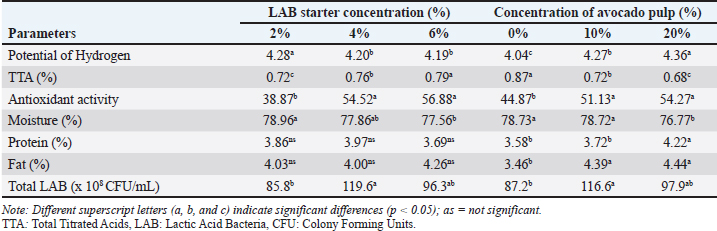
where X²r=Friedman test criteria; r=number of replicates; t=number of treatments; R²=total rank of each treatment group. When the results showed significant differences (X²count > X²table), pairwise comparisons were conducted using the Wilcoxon signed-rank test to identify specific treatment differences. This systematic sensory evaluation approach, integrated with physicochemical and microbiological analyses, provides a comprehensive quality assessment that aligns with industrial requirements for functional food development (Sabbaghi et al., 2019). Income analysis of the frozen goat milk kefir businessIncome analysis was conducted according to Soekartawi (2002) by evaluating the following: (a) total revenue (TR), which is the all proceeds from frozen kefir sales obtained during a certain period, calculated by multiplying the number of products sold (Q) by the selling price (P); (b) Total Cost (TC), these are calculated by adding up the fixed costs/depreciation of assets and the costs of raw materials and variable operational costs; (c) Income/Profit (π), which is the difference between TR and TC. Statistical analysisStatistical analysis was performed using IBM SPSS Statistics version 22.0 (IBM Corp., Armonk, NY, USA, 2020). Data were analyzed using two-way analysis of variance to determine the main effects of factors A and B and their interactions. Duncan’s multiple range test was used for post hoc comparisons when significant differences were detected (p < 0.05). The non-parametric Friedman test was applied for sensory evaluation, followed by the Wilcoxon signed-rank test for pairwise comparisons. Ethical approvalWas obtained from the Research Ethics Committee (No. B/4/UN16.12.D/PT.01.00/2021). All panelists provided informed consent and were screened for dairy allergies and lactose intolerance. Date: January 18, 2024. ResultsThe study demonstrates that the addition of LAB starter and avocado pulp in frozen goat milk kefir significantly affects various quality parameters of physicochemical and microbiological properties of frozen kefir (Table 1), with interaction between both factors occurring only in antioxidant activity. LAB starter at 2% concentration produced the highest pH value, while 6% concentration produced the highest TTA value and lowest moisture content due to increased LAB production. The antioxidant activity showed synergistic effects between the LAB starter (up to 6%) and avocado pulp (20%), where both factors simultaneously enhanced the potential to enhance antioxidant values. For protein and fat content, only the addition of avocado pulp showed a significant influence, whereas LAB starter concentration up to 6% had no significant effect because the pH of the frozen goat milk kefir remained within the isoelectric point range and did not affect lipase enzyme activity. The highest total LAB count was achieved at a 4% starter concentration with a value of 119.6 × 10³ CFU/ml, demonstrating the successful enhancement of LAB population in frozen goat milk kefir by adding L. fermentum 1743 starter. Table 1. Physicochemical and microbiological properties of frozen goat milk kefir with LAB and avocado pulp supplementation.
The LAB starter concentration and avocado pulp did not significantly affect the pH value, TTA, moisture content, protein content, fat content, and total LAB of frozen goat milk kefir, except for the antioxidant activity (Table 1). However, each factor significantly affected most of the parameters tested. The highest pH value was obtained with the 2% starter treatment (A1) because the addition of the starter significantly increased lactic acid and other organic acid production. In comparison, the highest TTA value occurred with the addition of 6% starter, which influenced the increase in the acidity of frozen kefir. The interaction in antioxidant activity occurred because the addition of LAB starter up to 6% and avocado pulp at 20% had a synergistic effect in increasing the antioxidant value. The highest moisture content was observed in the 2% starter treatment, and the lowest in the 6% starter treatment, as the moisture content decreased with increasing LAB starter addition. Factor B (avocado pulp) significantly influenced the protein and fat content of frozen kefir, whereas LAB concentration did not significantly influence these parameters because adding a starter of up to 6% resulted in pH within the isoelectric point range and did not affect lipase enzyme activity in breaking down fats into fatty acids. The highest total LAB was obtained in the 4% starter treatment (A2) with a value of 119.6 × 10³ CFU/ml, where the addition of L. fermentum 1743 starter increased total LAB compared with conventional kefir fermentation, which only uses kefir grains. The organoleptic evaluation of frozen goat milk kefir revealed significant interactions (p < 0.05) between LAB starter concentration and avocado pulp addition across all sensory attributes, including taste, flavor, and texture (Table 2). The optimal sensory characteristics were consistently achieved with the A2B3 treatment (4% LAB starter + 20% avocado pulp), which received the highest scores from the panelists for taste, flavor, texture, and overall acceptability. The statistical equivalence between A2B3 and A3B2 treatments suggests that balanced LAB and avocado combinations can achieve optimal sensory acceptance, where higher LAB concentration (6%) can compensate for lower avocado content (10%). Conversely, treatments with minimal or no avocado pulp (A1B1 and A2B1) scored lowest across sensory parameters, demonstrating that avocado pulp concentration directly correlates with consumer preference. The enhanced sensory appeal is attributed to favorable metabolic byproducts produced by LAB during fermentation, combined with the natural flavor and aroma compounds from avocado pulp, resulting in frozen kefir products that achieved “somewhat like” to “like” ratings from sensory panelists. These findings indicate that LAB starter concentration and avocado pulp addition are crucial factors for developing Frozen Goat Milk Kefir with desirable organoleptic properties. Table 2. Sensory evaluation of frozen goat milk kefir (taste, flavor, texture).
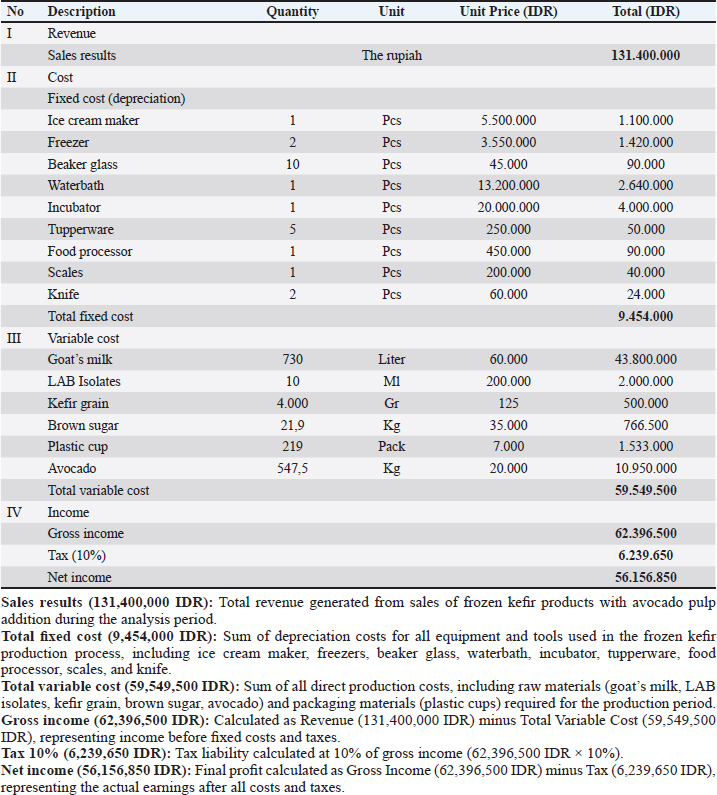
Income is defined as the difference between revenue and costs incurred during the production process (Soekartawi, 2002; Sukirno, 2016). Income is an important indicator in assessing a business’s financial performance, as it shows the business’s ability to generate profits after considering all expenses. This means that the higher the difference between income and costs, the better the business’s profitability. The following is a profit and loss statement for a frozen kefir business. The unit of calculation in the analyzed profit and loss statement is 1 year. Revenue is defined as the difference between income (revenue) and costs incurred during the production process (Soekartawi, 2002; Sukirno, 2016). Revenue is an important indicator in assessing a business’s financial performance, as it shows the business’s ability to generate profits after considering all expenses. This means that the higher the difference between revenue and costs, the better the business’s profitability. The following is a profit and loss statement for a frozen kefir business. The unit of calculation in the profit and loss statement is 1 year, as shown in Table 3. Table 3. Income analysis of a frozen kefir business with avocado pulp addition.
Revenue is the total value of product sales generated from business activities. In this frozen kefir business, revenue is obtained from the sale of 60 cups per day, which are produced from 2 l of goat’s milk. With a selling price of IDR 6,000 per cup, daily revenue reaches IDR 360,000, or IDR 131,400,000 per year (assuming 365 days of production). This agrees with the opinion of Nicholson and Snyder (2012), who state that revenue is a major component of agribusiness production capacity and pricing strategies. The production of 2 l/day used in this study is a small-scale simulation, so further development of industrial capacity is needed to ensure consistency in quality and business sustainability. Meanwhile, cost is defined as all expenditures used in the production process, both for procuring inputs and other operations. According to Soekartawi (2002), costs in business activities can be divided into fixed and variable costs. Fixed costs, such as asset depreciation costs, are costs that do not change even if the volume of production increases or decreases. For the frozen kefir business, the fixed costs per year amount to IDR 9,454,000, which are derived from the depreciation of various production assets, such as ice cream makers, freezers, incubators, and other supporting equipment. This calculation is in accordance with the straight line method commonly used in agricultural business analysis (Arifin, 2004). Variable costs are influenced by the amount of production, such as raw materials for goat milk, sugar, LAB isolate, plastic cups, and other additives. The total variable costs in the frozen kefir business reached IDR 59,549,500 per year, with the largest portion coming from goat milk (IDR 43,800,000 or about 73.5% of total variable costs). This condition reinforces Winahyu and Lestari’s (2021) statement that in the milk processing business, raw material costs are the largest component that determines profitability. The results show that the frozen kefir business generates a gross profit of IDR 62,396,500 and a net profit after tax of IDR 56,156,850. This finding is in line with Aprillya’s (2021) research, which reported that fermented milk processing businesses, such as yogurt and kefir, have significant profit potential because these products have much higher added value than fresh milk. Dewi et al. (2022) also supported this by emphasizing that diversifying dairy products through fermented innovations not only increases producers’ income but also strengthens Small and Medium Enterprise competitiveness in the functional food market. This agrees with production economics theory, which emphasizes that the balance between revenue and costs is the basis for determining business sustainability (Nicholson and Snyder, 2012). Thus, the frozen kefir business has proven to be viable not only because it can provide significant profits but also because it is in line with the growing public demand for probiotic-based healthy foods. DiscussionPotential hydrogen (pH)The pH values obtained in this study (4.19–4.28) are within the acceptable range for fermented dairy products according to the Australian Food Standard Code (2014), which specifies a maximum pH of 4.5 for fermented milk. The decrease in pH with increasing LAB concentration is attributed to enhanced lactic acid production through lactose metabolism, where LAB converts lactose into lactic acid via the glycolytic pathway (Martharini and Indratiningsih, 2017). Martharini and Indratiningsih (2017) demonstrated that the more LABs added, the higher the LAB population, resulting in a lower pH value of kefir. LABs convert lactose into lactic acid and decrease the pH value. One glucose molecule can be fermented into two lactic acid molecules, indicating that during fermentation, lactic acid bacteria degrade milk lactose into lactic acid and decrease the pH of frozen kefir. This decrease contributes to the increase in the TTA of frozen goat milk kefir. The highest pH value was obtained with the 20% avocado pulp addition (B3), and the lowest was obtained with the 0% avocado pulp addition (B1). An increase in the pH value of the frozen goat milk kefir was expected because avocado is an alkaline fruit with a pH ranging from 6.3 to 6.6. Consequently, the higher the percentage of avocado added, the higher the pH value. These results support the findings of Ordonez and Rodriguez (2018), who reported that avocado pH ranges from 6.58 to 7.14. In this study, the pH value of goat milk kefir met the standard pH of industrial-scale fermented milk. Research by Haryadi et al. (2013) showed a higher pH value of goat milk kefir, namely 5.17, which was nearly equal to the results of Chen et al. (2005) using kefir grains from Taiwan, with a pH as low as 4.37. According to the Australian Food Standard Code (2014), the maximum pH value for fermented milk is 4.5. Total titrable acidThe metabolic activity of the LAB starter culture during the fermentation process increases the TTA value due to the high amount of organic acids contained in the starter. The addition of the starter is directly proportional to the increase in the TTA value of frozen goat milk kefir. This finding is consistent with that of Syukur and Purwati (2013), who found that LAB produces organic acids, especially lactic acid, from sugar metabolism (homofermentative bacteria) as well as compounds including other organic acids such as acetic acid, formic acid, propionic acid, and butyric acid. These organic acid compounds decrease the pH and increase the acidity of the substrate. The increase in TTA is attributed to enhanced organic acid production through LAB metabolic pathways, where lactose is converted to lactic acid via the Embden-Meyerhof-Parnas pathway, along with secondary organic acids, including acetic, formic, and propionic acids (Costa and Conte-Junior, 2016). Future studies should include chromatographic analysis to identify and quantify specific organic acid profiles. Frozen goat milk kefir treated with avocado pulp (Factor B) had a significant effect (p < 0.05) on the TTA value. The highest value in the treatment occurred with the addition of 0% avocado pulp (B1), and the lowest value occurred with the addition of 20% avocado pulp (B3). A decrease in the TTA value of frozen kefir was observed when avocado pulp (B) was added compared to frozen goat milk kefir without avocado pulp (B1). This decrease is attributed to the alkaline nature of avocado. The results are consistent with those of Ordonez and Rodriguez (2018), who stated that avocado pH ranges from 6.58 to 7.14. Antioxidant activityMelia (2018) demonstrated that the addition of a starter at 6% and fruit produces a synergistic antioxidant effect in yogurt because both the starter and dragon fruit extract have the potential for antioxidant activity. The addition of avocado pulp in this study was performed after the kefir fermentation process, so that H+ ions from the formation of lactic acid by LAB did not bind to the antioxidant content of phenols and anthocyanins, resulting in no interaction between the addition of starter and avocado pulp. However, each factor had a significant effect (p < 0.05) on the antioxidant activity of frozen kefir. Lactic acid bacteria increase the antioxidant activity of frozen kefir to break down lactose and produce H+ ions to counteract free radicals. The higher the starter concentration, the more H+ ions will be produced from lactose breakdown, which can increase the antioxidant activity of frozen kefir. This finding supports the opinion of Surono (2016) that probiotics, such as lactic acid bacteria, produce various metabolites with antioxidant activity, such as GSH, catalase, butyrate, and folic acid. GSH is a non-enzymatic antioxidant that reduces radicals such as hydrogen peroxide, hydroxyl, and peroxynitrite by interacting with glutathione peroxidase. According to Pereira et al. (2013), the increase in antioxidant activity is related to the increase in total lactic acid bacteria, such as Lactobacillus, which has high antioxidant activity and can increase antioxidant activity in fermented milk products. The increase in antioxidant activity in frozen kefir with the addition of avocado occurs because avocado has a high total phenolic content that functions as an antioxidant; therefore, the higher the avocado addition, the higher the phenolic content in frozen goat milk kefir, resulting in higher antioxidant activity of frozen goat milk kefir. This is supported by Febrianti and Zulfikar (2016), who reported that avocados have a total phenolic content of 50.913 ± 0.424 mg GAE/100 g, which results from phenolic compounds. These compounds have antioxidant activity due to their redox properties. Phenolic compounds function as reducing agents and hydrogen donors and reduce singlet oxygen levels. Therefore, avocado fruit is beneficial for consumption as a source of antioxidants. This is consistent with Bhuyan et al. (2019), who reported that avocado fruit (P. Americana) contains phenolic compounds, flavonoids, vitamin C, and anthocyanins that contribute to antioxidant activity in the most extensively explored avocado varieties in terms of their antioxidant properties. According to Dreher and Davenport (2013), the main antioxidant compounds found in avocado fruit (P. americana) are phenolic compounds (including phenolic and hydroxycinnamic acids, flavonoids, and condensed tannins). Bhuyan et al. (2019) reported a significant positive correlation between phenolic compounds and avocados’ antioxidant capacity. The phenolic compounds found in avocados reduce oxidation, inflammation, and platelet aggregation. The higher the avocado addition to frozen kefir, the higher the antioxidant activity achieved. Moisture contentThe moisture content of frozen kefir decreases due to the breakdown of lactose into lactic acid. The casein micelles’ water-binding capacity is responsible for the thickening in the fermentation process. This finding is supported by Manab (2008), who stated that the condition of casein micelles affects the water-holding capacity. Bezerra et al. (2012) reached the same conclusion, stating that the thickening is related to the increased release of water (syneresis) due to protein denaturation, resulting from a pH reduction that reached the isoelectric point (pH 4.0–4.6). The pH range of 4.0–4.6 represents the isoelectric points of major milk proteins: α-casein (pH 4.1) and β-casein (pH 4.6), where the net charge becomes zero, leading to protein aggregation, gel formation, and syneresis with consequent moisture reduction (Fox and McSweeney, 2003). This further causes instability of casein, resulting in fluid loss and decreased water content. Frozen goat milk kefir supplemented with avocado pulp concentration (B) showed a significant effect (p < 0.05) on the moisture content of the frozen goat milk kefir, ranging from 76.77% to 78.73%. Duncan’s multiple range test showed that frozen kefir supplemented with avocado pulp (B) showed a significant (p < 0.05) difference in the moisture content of frozen goat milk kefir. The highest moisture content in the treatment was observed with the 0% addition of avocado pulp (B1), and the lowest was observed with the 20% addition of avocado pulp (B3). The avocado’s relatively low moisture content of 79.89% decreases the overall moisture content of frozen goat milk kefir. Wardani (2014) stated that the moisture content of avocados is 67.49%–84.30% per 100 g of fruit. If more avocados are added, the moisture content of the frozen goat milk kefir will decrease, and the total solids will increase. The higher the total solids, the higher the protein and fat content of the frozen goat milk kefir. This finding is consistent with that of Buckle (2007), who stated that the addition of fruit pulp is directly proportional to the total solids content, which includes organic acids, pectin, and protein. The more avocado pulp is added, the thicker the texture of frozen goat milk kefir will become. Protein contentThe pH range of 4.0–4.6 represents the isoelectric point of casein proteins. Manfaati and Moehadi (2011) stated that at the isoelectric point pH range (4.0–4.6). The number of positive and negative ions is relatively balanced. At this pH range, the protein is relatively stable and forms positive and negative ions in equal amounts, which does not significantly affect the protein content of frozen goat milk kefir. Frozen goat milk kefir supplemented with different avocado pulp concentrations (B) showed a significant (p < 0.05) effect on the protein content of the frozen goat milk kefir. The highest protein content was obtained by adding 20% avocado pulp (B3). The increase in the protein content was attributed to the protein contribution from the avocado itself. This increase in protein content is associated with a decrease in moisture content, causing an increase in the total solids of frozen goat milk kefir. According to Wardani (2014), the protein content of avocado in 100 g of fruit flesh is 0.27%–1.7%. Therefore, adding avocado pulp contributes to increasing the protein content of frozen goat milk kefir. The protein content in this study was higher than that reported by Hidayat et al. (2015), who found goat milk-based kefir with protein content ranging from 3.19%, but was similar to the Kefir Quality Standard (CODEX) Stan 243-2003, which stated that the minimum protein standard for kefir is at least 2.7%. Fat contentSmith et al. (2005) stated that bacterial fermentation processes undergo three main reactions: decomposing milk components by breaking down lactose into lactic acid (fermentation), hydrolyzing casein into peptides and free amino acids (proteolysis), and breaking down milk fat into free fatty acids (lipolysis). This finding is also supported by Martharini and Indratiningsih (2017), who demonstrated that adding Lactobacillus acidophilus FNCC 0051 did not significantly affect the fat content of goat milk kefir. The addition of avocado pulp concentration (B) showed a significant (p < 0.05) effect on the fat content of frozen goat milk kefir. The highest fat content in the treatment occurred with the addition of 20% avocado pulp (B3), with an average fat content of 4.44%. The increase in the fat content of frozen goat milk kefir with avocado pulp addition was attributed to the avocado fruit’s high fat content. The fat content of avocado pulp from Solok Regency is 8.58%. These findings support the findings of Winardi (2014), who reported that avocados have a 6.5%–25.18% fat content. The increase in the fat content is associated with a decrease in the moisture content, increasing the total solids of frozen goat milk kefir. The higher the total solids, the higher the fat content. Astuti and Rustanti (2014) stated that total solids include all solid materials in the product, including carbohydrates, fats, proteins, vitamins, minerals, and other components. According to Gunawardhana and Dilrukshi (2016), the addition of avocado flesh in yogurt has a significant (p < 0.05) effect on increasing fat content, as avocados contain approximately 14% fat, which directly affects fat levels. This finding is supported by Martharini and Indratiningsih (2017), who also found that adding L. acidophilus FNCC 0051 at a concentration of 3% increased the total LAB content and lowered the pH value. A mixed culture of kefir grains and starter LAB is required to increase the total LAB count. Total lactic acid bacteria colony countThe optimal LAB count achieved with 4% starter and 10% avocado pulp (119.6 × 10³ CFU/ml) can be attributed to the prebiotic effects of avocado components. Avocado contains beneficial saccharides, including polysaccharides (cellulose and pectin, 3.4%–4.2% w/w) and oligosaccharides (fructooligosaccharides and inulin, 0.5%–1.2% w/w), that serve as growth substrates for LAB, while the polysaccharide matrix protects against environmental stress (Villa-Rodriguez et al., 2011; Dreher and Davenport, 2013). Frozen kefir supplemented with different amounts of avocado pulp (B) had a significant (p < 0.05) effect on the total LAB colony count of the frozen goat milk kefir. The highest value was achieved with the addition of 10% avocado pulp (B2). The addition of avocado pulp at 10% (B2) resulted in higher total LAB because the nutrients for LAB growth were appropriately provided. The addition of 20% avocado pulp (B3) resulted in competition for prebiotic nutrients, resulting in competition and a reduction in the number of microbes. Avocado contains beneficial saccharides, including polysaccharides (cellulose and pectin, 3.4%–4.2% w/w) and oligosaccharides (fructooligosaccharides and inulin, 0.5%–1.2% w/w), that serve as growth substrates for LAB (Villa-Rodriguez et al., 2011; Dreher and Davenport, 2013). Polysaccharides protect bacteria from stressful environments, and polysaccharides in avocados form a matrix that protects LAB and helps them survive. According to Tiska et al. (2015) and Purwandhani et al. (2018), avocados contain oligosaccharides, monosaccharides, and disaccharides that function as prebiotic nutrients. The optimal performance of A2B3 treatment (4% LAB + 20% avocado) can be attributed to synergistic effects: (1) 4% LAB concentration provides sufficient probiotic activity without excessive acidification; (2) 20% avocado pulp offers maximum phenolic compounds without compromising texture; and (3) this combination achieves optimal balance between probiotic viability, antioxidant activity, and sensory acceptability. Diminishing returns at 6% LAB likely result from excessive acidification that masks the avocado flavor benefits. Integration of physicochemical properties and sensory attributes for product optimizationThe convergence of physicochemical properties, microbiological characteristics, and sensory attributes represents a critical consideration for the industrial-scale production of functional frozen dairy products. The optimal formulation identified in this study (4% LAB + 20% avocado pulp) exemplifies how the systematic integration of multiple quality parameters can achieve superior product characteristics that satisfy both functional food requirements and consumer preferences. This formulation achieved the optimal balance: adequate acidification (pH 4.20, TTA 0.76%) for microbial safety and shelf-life, high probiotic viability (119.6 × 10³ CFU/ml) exceeding minimum standards for functional foods (103 CFU/g, Codex Stan 243-2003), enhanced antioxidant activity (56.88%), and superior sensory acceptance across all evaluated attributes. As demonstrated by Sabbaghi et al. (2019), the application of sensory-based decision support systems in infrared-dried food products provides a valuable framework for the development of frozen fermented dairy products. Similar to their fuzzy logic approach, which optimizes processing parameters based on sensory feedback, our results demonstrate that systematic sensory evaluation can guide formulation optimization by identifying critical concentration thresholds where functional benefits and sensory acceptance converge. Specifically, the sensory data revealed that 4% LAB concentration represents an optimal threshold where probiotic benefits are maximized without excessive sourness that diminishes acceptance, while 20% avocado addition provides maximum flavor masking and texture enhancement without compromising fermentation efficiency. This integrated approach addresses a fundamental challenge in functional food development: balancing health benefits with consumer acceptability. The synergistic effects observed between LAB fermentation and avocado supplementation demonstrate that multiparameter optimization considering pH dynamics, microbial viability, bioactive compound generation, and sensory characteristics simultaneously is essential for developing commercially viable products. Industrial implementation of such sensory-integrated quality control systems can reduce product development cycles, minimize formulation failures, and enhance market success rates by ensuring that functional foods meet both regulatory standards and consumer expectations from the initial development stages. TasteTaste is the primary sensory determinant of consumer acceptance and repeat purchase behavior in fermented dairy products, making it a critical quality parameter for commercial success (Nemati et al., 2023). The significant interaction (p < 0.05) between LAB concentration and avocado pulp addition on taste acceptability demonstrates that a careful balance between fermentation-derived sourness and fruit-derived sweetness and creaminess is required for an optimal sensory profile. The LAB starter concentration significantly influences taste acceptability by modulating organic acid production and flavor compound development (Pratama, 2020). According to Costa and Conte-Junior (2016), lactose fermentation produces lactic acid. Additionally, during the fermentation process, lactic acid forms proportionally to the amount of lactic acid produced by LAB and creates the typical taste of fermented milk, making frozen goat milk acceptable to panelists. The addition of avocado pulp has a significant (p < 0.05) effect on the taste characteristics of frozen kefir. Atmanaji et al. (2019) demonstrated that the addition of avocado pulp significantly (p < 0.05) improves kefir taste. The taste produced by frozen goat milk kefir with avocado pulp can reduce the sour taste due to the distinctive, mild, and creamy taste of avocado. Ranadheera et al. (2012) found that the addition of fruit pulp affected the acceptance of goat yogurt flavor, improving its taste, and showing the positive influence of natural sugars found in fruit. Consumers prefer fermented beverages with a less sour taste and some sweetness. Therefore, the acidity of kefir also affects the taste preference for frozen kefir. The distinctive flavor of avocado and the balanced acidity from lactic acid bacteria can increase the panelists’ appeal. The superior taste scores achieved by the A2B3 formulation (4.04/5.0, “like” category) compared to the control treatments (2.74/5.0, “dislike” category) demonstrate the effectiveness of the integrated formulation optimization in achieving consumer-acceptable products. This 47.4% improvement in taste acceptability represents a critical threshold for commercial viability, as sensory scores above 4.0 are correlated with strong purchase intention and market success. These findings support the assertion by Sabbaghi et al. (2019) that in functional food development, systematic sensory optimization integrated with processing parameter control can substantially enhance product quality and consumer acceptance. FlavorFlavor, defined as the sensory impression of taste, smell, and trigeminal sensations (ISO 5492:2008), is a multidimensional quality attribute that significantly influences consumer perception and product differentiation in competitive markets. In frozen fermented dairy products, flavor complexity arises from the interaction between LAB-produced volatile metabolites and fruit-derived aromatic compounds, creating unique sensory profiles that distinguish premium functional foods from commodity products. Nemati et al. (2023) reported that LAB can convert milk fat to free fatty acids, casein to peptides and free amino acids, and carbohydrates to lactic acid or other metabolites during fermentation. Ranadheera et al. (2012) found that yogurt with the addition of fruit at a concentration of 15% has a higher aroma value than yogurt without fruit. The addition of avocado pulp to frozen goat milk kefir has a superior aroma profile when compared to the control, making it more preferred by panelists. This is because avocado pulp has volatile compounds that can reduce the characteristic goaty smell of goat milk in frozen goat milk kefir products. Arukwe et al. (2012) reported that avocados contain estragol, methyl eugenol, and caryophyllene, which are volatile compounds. Widodo (2002) stated that LAB-produced substances, such as secondary metabolites, including acetaldehyde compounds and volatile components, can provide aroma characteristics in fermented milk products. Lactic acid bacteria metabolize milk components during fermentation through three main pathways. Free fatty acids are hydrolyzed into milk fat, which contributes to the characteristic aroma and has antibacterial activity. Casein protein is broken down into bioactive peptides and free amino acids, which play a role in the formation of gel texture, flavor, and health benefits. Meanwhile, lactose is fermented into lactic acid and other metabolites, which lower pH, extend shelf life, and produce the characteristic fresh, tangy flavor of fermented dairy products. The preference of the sensory panel for treatments combining moderate-to-high LAB concentrations (4%–6%) with avocado supplementation (10%–20%) reflects consumer demand for fermented dairy products with balanced flavor profiles retaining characteristic fermented notes while minimizing excessive sourness through fruit-derived masking effects. This finding has important implications for industrial production, as sensory-guided formulation strategies can create product differentiation and premium positioning in functional food markets while maintaining probiotic efficacy and health benefits. TextureTexture profoundly influences consumer satisfaction and perceived quality of frozen dairy products, often serving as a decisive factor in product acceptance even when other sensory attributes are favorable. According to Harun (2020), the structure of fermented dairy products is formed due to casein coagulation in the milk, which causes a gel-like structure resulting from bacterial activity. The type and number of microorganisms in the fermented milk starter are instrumental in determining the formation, flavor, and texture of the fermented milk. The texture of frozen kefir is also influenced by the fiber content of avocado, which can make the texture of frozen goat milk kefir creamy and thick, making it more preferred by panelists. The consistent improvement in texture scores with increasing avocado concentration (from 3.08% at 0% to 3.52%–3.54 at 20% avocado) demonstrates the effectiveness of fruit pulp incorporation as a texture modifier in frozen fermented dairy systems. This textural enhancement, combined with improved taste and flavor profiles, illustrates how integrated sensory optimization through multi-ingredient formulation can achieve synergistic quality improvements that individual interventions cannot accomplish alone. From an industrial perspective, such sensory-based formulation optimization, as advocated by Sabbaghi et al. (2019), enables manufacturers to develop differentiated products with superior consumer appeal while maintaining functional food characteristics, thereby enhancing competitiveness in premium functional food market segments. Income analysisAnimal husbandry has excellent prospects as a business sector, with livestock products including meat, milk, and eggs. Goat’s milk contains lower lactose levels than cow’s milk, making it suitable for lactose intolerance. The fluorine content of goat’s milk is 10–100 times greater than that of cow’s milk. Fluorine content is beneficial as a natural antiseptic and can help suppress the growth of pathogenic bacteria. Consuming goat’s milk has not been widely adopted compared to cow’s milk among the public because goat’s milk has a distinctive aroma that is less favored by consumers, although goat’s milk has excellent health properties. Further processing of goat’s milk by making frozen kefir is the solution. This fermented drink has a balanced sour taste, reducing the noticeable goaty smell of goat’s milk. The soft texture of the frozen kefir and the addition of avocado pulp enhance the taste of this product and increase the selling value of goat’s milk products. According to Kasmir and Jakfar (2007), market analysis helps determine the size of the market, the structure and opportunities of the existing market, future market prospects, and appropriate marketing strategies to implement. Frozen kefir products have business opportunities that are still largely open, considering that this product is currently limited in number but has many advantages, particularly in the health sector (digestive system). High-quality frozen kefir products are made with raw materials purchased from reliable producers whose processing processes use pasteurization to ensure that the products sold are always fresh. This frozen kefir provides a fresh flavor through the addition of avocado, making consumers appreciate the taste, texture, and aroma of this product. The frozen kefir business does not have a specific strategy for setting its products’ selling price. Pricing is determined after observing market prices, surveying competitors’ prices around the sales location, and considering the balance between incurred operational costs and expected profits. Public awareness of this frozen kefir product needs to be widely increased. The selling price per cup of frozen kefir with avocado pulp is IDR 6,000. This price is adjusted according to the quality of the product and the raw materials used. This product is targeted at hospitals, government agencies, educational institutions (schools/campuses), traditional markets, supermarkets, and social media. Frozen kefir products can be enjoyed by all ages, including children and adults, because they contain high fluorine content, probiotic bacteria content of 103 CFU/ml, and antioxidant activity of 56.88%, and are suitable for people with lactose intolerance. The frozen kefir business has great opportunities for future growth. The trend toward healthy lifestyles and increasing public awareness of functional foods opens up opportunities for fermented milk products to enter a wider market. Frozen kefir, a probiotic product known for its health benefits, can attract the younger generation and urban communities who are increasingly concerned about healthy eating. With the support of innovation in flavor development, modern packaging, and digital marketing strategies, frozen kefir can become a leading product that is not only competitive in the domestic market but also has the potential to penetrate the international market. ConclusionThis study successfully developed a novel frozen goat milk kefir with enhanced nutritional, functional, and sensory properties through systematic optimization of L. fermentum 1743 concentration and avocado pulp supplementation. The optimal formulation (4% LAB starter + 20% avocado pulp) achieved superior quality parameters, including high probiotic viability (119.6 × 10³ CFU/ml), enhanced antioxidant activity (56.88%), and excellent sensory acceptance (taste: 4.04/5.0, flavor: 3.78/5.0, and texture: 3.54/5.0), demonstrating the successful integration of functional food characteristics with consumer desirability. The convergence of physicochemical properties, microbiological viability, and sensory attributes in this formulation exemplifies how commercially viable functional foods that satisfy both regulatory standards and consumer preferences can be achieved through systematic multi-parameter optimization. Economic analysis confirmed commercial viability with an annual net profit of IDR 56,156,850, supporting scalability for small-scale food entrepreneurs. The scientific contribution of this research includes the following: (1) demonstration of synergistic effects between specific probiotic strains and fruit bioactives in enhancing both functional properties and sensory characteristics of frozen dairy products; (2) establishment of an integrated quality assessment framework combining physicochemical, microbiological, and sensory evaluation that aligns with industrial requirements for functional food development, similar to sensory-based decision support systems successfully implemented in other food processing contexts (Sabbaghi et al., 2019); (3) comprehensive characterization of frozen fermented dairy products with dual optimization of health benefits and consumer acceptance; and (4) validation of economic feasibility for small-scale food entrepreneurs in developing countries. The industrial implementation of this sensory-integrated optimization approach can enhance product development efficiency, reduce formulation failures, and improve market success rates by ensuring that functional foods meet both regulatory standards and consumer expectations from the initial development stages. Future research should focus on extended shelf-life studies under various storage conditions, in vivo evaluation of probiotic efficacy, industrial scale-up optimization with continuous quality monitoring, development of automated sensory-based quality control systems, and investigation of natural preservation systems to enhance product stability and market competitiveness. AcknowledgmentThis study was supported by the Livestock Products Technology Laboratory, Faculty of Animal Husbandry of Andalas University in Padang. The author(s) would like to thank the Andalas University’s Institute for Research and Community Service with contract number T/32/UN.16.17/PT.01.03/Pangan-RPB/2021. Conflict of interestThe authors declare no conflict of interest. FundingInstitute for Research and Community Service Research of Andalas University with contract number T/32/UN.16.17/PT.01.03/Pangan-RPB/2021. Authors contributionsEndang Purwati contributed to the idea and design of the study. James Hellyward and Sri Melia performed the experimental work. Nurazizah performed the laboratory analysis and statistical analysis. Afriani Sandra and Budi Rahayu prepared the manuscript. All authors read and approved the final manuscript. Novelty statementUsing L. fermentum strain 1743 and adding avocado pulp to produce frozen kefir gave the best results. The novelty of this research lies in the application of L. fermentum strain 1743 and avocado pulp in frozen goat milk kefir, which not only improves the product’s functional and sensory properties but also shows promising prospects as a sustainable business product. Data availabilityAll data were provided in the manuscript. ReferencesAfzal, M., Akhtar, A., Bukhari, R.A., Hasan, S.Z.U. and Syed, H. 2022. A review on avocado fruit: description, morphological characteristics, composition, nutritional benefits and propagation technique. Plant Cell Biotechnol. Mol. Biol. 23, 32–41; doi:10.56557/pcbmb/2022/v23i29-307772 AOAC. 2016. Official Methods of Analysis. Association of Official Analytical Chemists. Benjamin Franklin Station, Washington. Aprillya, T. (2021). Pengembangan Unit Bisnis Produk Olahan Susu Pasteurisasi pada Barokah Farm di Kota Bogor. Astuti, S. D., Edi, K., & Nuraeni, I. (2019). Pengembangan diversifikasi produk tiwul instan untuk meningkatkan daya saing UKM di kabupaten Wonosobo. Agrokreatif: Jurnal Ilmiah Pengabdian kepada Masyarakat, 5(2), 123-134. Arifin, B. (2004). Analisis ekonomi pertanian Indonesia. Kompas. Arukwe, U., Amadi, B.A., Duru, M.K.C., Agomuo, E.N., Adindu, E.A., Odika, P.C., Lele, K.C., Egejuru, L. and Anudike, J. 2012. Chemical composition of Persea americana Mill and seed. J. Abia State Univ. 11(2), 346–349. Astuti, I.M. and Rustanti, N. 2014. Kadar protein, gula total, total padatan, viskositas dan nilai pH es krim yang disubstitusi inulin umbi gembili (Dioscorea esculenta). J. Nutr. Coll. 3(3), 331–336. Atmanaji, B., Hertanto, S. and Pramono, A. Physical and hedonic properties of cow milk yogurt containing different levels of avocado pulp (Persea americana Mill). International Conference on Food Science and Engineering,2019 633, pp 1–5. Australian Food Standards Code. (2014). Standard 2.5.3 Fermented Milk Products. Food Standards Australia New Zealand, Australia. Aziz, K., Haseeb Zaidi, A., Fatima, H.N. and Tariq, M. 2019. Lactobacillus fermentum strains of dairy-product origin adhere to mucin and survive digestive juices. J. Med. Microbiol.68(12), 1771–1786. doi:10.1099/jmm.0.001090 Bezerra, M., Souza, D. and Correia, R.T.P. 2012. Acidification kinetics, physicochemical properties, and sensory attributes of yogurts prepared from mixtures of goat and buffalo milks. Int. J. Dairy. Technol. 65(3), 437–443; doi:10.1111/j.1471-0307.2012.00845.x Bhuyan, D.J., Alsherbiny, M.H., Perera, S., Low, M., Basu, A., Devi, O.A., Barooah, M.S., Li, C.G. and Papoutsis, K. 2019. The odyssey of bioactive compounds in avocado (Persea americana) and their health benefits. J. Antioxidants 8(2), 1–53. Buckle K, A.K.A. 2007. Food Science. Jakarta: UI Press. Chen, M.J., Liu, J.R., Lin, C.W. and Yeh, Y.T. 2005. Study of the microbial and chemical properties of goat milk kefir produced by inoculation with Taiwanese kefir grains. Asian-Australasian J. Anim. Sci. 18(5), 711–715. Costa, M.P., Frasao, B.S., Costa Lima, B.R.C., Rodrigues, B.L. and Conte-Junior, C.A. 2016 Simultaneous analysis of carbohydrates and organic acids by HPLC-DAD-RI for monitoring goat’s milk yogurts fermentation. Talanta 152, 162–170. Codex Alimentarius Commission. 2003. Milk and Milk Products (CODEX STAN 243-2003), Vol. 2: 6-16. Rome, Italy: World Health Organization and Food and Agriculture Organization of the United Nations. Dewi, M.P., Millaty, M. and Masitoh, D. 2022. Analisis Profitabilitas Pada Koperasi Pengolahan Susu Sapi Di Kabupaten Sleman, Daerah Istimewa Yogyakarta Profitability Analysis Of Cow Milk Processing Cooperatives In Sleman Regency. Jurnal. Pertanian. Agros. 24(03), 1170–1178. Dreher, M.L. and Davenport, A.J. 2013. Hass avocado composition and potential health effects. Crit. Rev. Food Sci. Nutr. 53(7), 738–750. Fan, S., Qi, Y., Shi, L., Giovani, M., Zaki, N.A.A., Guo, S. and Suleria, H.A.R. 2022. Screening of Phenolic Compounds in Rejected Avocado and Determination of Their Antioxidant Potential. Processes 10(9), 1747; doi:10.3390/pr10091747 Febrianti, N. and Zulfikar, M. Aktivitas antioksidan buah alpukat dan buah stroberi. In Prosiding Symbion (Symposium on Biology Education),2016 Yogyakarta, pp 613–620. Ferawati, F., Erpomen, E., Melia, S., Kurnia, Y. F., Suharto, E. L. S., Rastosari, A. and Suhartati, L. 2019. Diseminasi teknologi pengolahan susu kefir sari buah di kelompok tani sago pratama nagari sungai kamuyang kabupaten limapuluh kota. J. Hilirisasi IPTEKS. 2, 343–353. Fox, P. F., and McSweeney, P. L. H. 2003. Advanced Dairy Chemistry—1 Proteins. 3rd ed. Kluwer Academic/Plenum Publishers, New York. Gunawardhana, W.A.D.C. and Dilrukshi, H.N.N. 2016. Development of yoghurt drink enriched with avocado pulp (Persea americana). Int. J. Adv. Scientific. Res. Manage. 1(9), 97–102. Harun, H., Wirasti, Y., Purwanto, B. and Purwati, E. 2020. Characterization of lactic acid bacteria and determination of antimicrobial activity in dadih from Air Dingin Alahan Panjang District, Solok Regency-West Sumatra. Syst. Rev. Pharm. 11(3), 583–586. Haryadi, Nurliana, and Sugito. 2013. Nilai pH Dan Jumlah Bakteri Asam Laktat Dalam Susu Kambing Kefir Setelah Fermentasi Dengan Penambahan Gula Pada Waktu Inkubasi Yang Berbeda-Beda. J Med Vet. 7(1), 4–7. Hidayat, I.R., Kusnandar, F. and Herawati, D. 2015. Karakteristik fisikokimia dan organoleptik kefir susu kambing dengan penambahan jahe (Zingiber officinale). Jurnal Teknologi Dan Industri Pangan 26(1), 44–54. Huang, Y., Chang. and Yi-Yuan, S. 2005. Effect of Genotype and Treatment on The Antioxidant Activity of Sweet Potato in Taiwan. J. Food Chem. 98, 529–538. ISO 5492:2008. 2008. Sensory analysis — Vocabulary. International Organization for Standardization, Geneva. Kasmir, and Jakfar. 2007. Studi Kelayakan Bisnis Edisi-2. Kencana Prenada Media Group, Jakarta. Kosińska, A., Karamać, M., Estrella, I., Hernández, T., Bartolomé, B. and Dykes, G.A. 2012. Phenolic compound profiles and antioxidant capacity of Persea americana Mill. peels and seeds of two varieties. J. Agricult. Food Chem. 60(18), 4613–4619. Kurnia, M., Amir, H. and Handayani, D. 2020. Isolasi dan identifikasi bakteri asam laktat dari makanan tradisional Suku Rejang di Provinsi Bengkulu: “Remea”. J. Pendidikan dan Ilmu Kimia, 4(1), 25–32. Manab, A. 2008. Teknologi Pengolahan Susu. Universitas Brawijaya Press. Malang. Manfaati, R. and Moehadi, B.I. 2011. Pembuatan keju lunak dengan lemon pulp sebagai koagulan. J. Sigma-Mu 3(1), 73–78. Marra, A., Manousakis, V., Zervas, G.P., Koutis, N., Finos, M.A., Adamantidi, T., Panoutsopoulou, E., Ofrydopoulou, A. and Tsoupras, A. 2024. Avocado and Its By-Products as Natural Sources of Valuable Anti-Inflammatory and Antioxidant Bioactives for Functional Foods and Cosmetics with Health-Promoting Properties. Appl. Sci. 14(14), 5978; doi:10.3390/app14145978 Martharini, D. and Indratiningsih, I. 2017. Kualitas mikrobiologis dan kimiawi kefir susu kambing dengan penambahan Lactobacillus acidophilus FNCC 0051 dan tepung kulit pisang kepok (Musa paradisiaca). J. Agritech 37(1), 22–29; doi:10.22146/agritech.17002 Melia S Juliyarsi. and Kurnia, Y.F. 2022. Physicochemical properties, sensory characteristics, and antioxidant activity of the goat milk yogurt probiotic Pediococcus acidilactici BK01 on the addition of red ginger (Zingiber officinale var. rubrum rhizome). Vet. World. 15, 757–764. Melia, S. (2018). Karakteristik probiotik bakteri asam laktat dan aktivitas antioksidan yogurt susu kambing dengan penambahan ekstrak buah naga merah. Disertasi. Program Pasca Sarjana Universitas Andalas, Padang. Melia, S., Yuherman, F., Purwanto, J. and Purwati, E. 2018. Probiotic characterization of lactic acid bacteria isolated from raw milk (buffalo, cow, and goat) from West Sumatra, Indonesia. Asian. J. Microbiol. Biotechnol. Environ. Sci. 20, 131–139. Nemati, V., Baltork, F.H., Alizadeh, A.M. and Varzakas, T. 2023. Production of traditional Torba yoghurt using lactic acid bacteria isolated from fermented vegetables: microbiological, physicochemical and sensory properties. J. Agriculture Food Res. 14, 1–9. Nicholson, W. and Snyder, C. 2012. Microeconomic theory: basic principles and extensions. Cengage Learning. Australia: South-Western. Ordóñez, C.E.A. and Rodríguez, P. 2018. Physicochemical parameters of avocado Persea americana Mill. cv. Hass (Lauraceae) grown in Antioquia (Colombia) for export. Scientific Technologic Res. Article 19(2), 393–402; doi:10.21930/rcta.vol19_num2_art:694 Pereira Da Costa, M. and Conte-Junior, C.A. 2016. Chromatographic methods for the determination of carbohydrates and organic acids in foods of animal origin. Comprehensive. Rev. Food. Sci. Food. Saf. 14, 586–600. Pereira, E., Barros, L. and Ferreira, I.C.F.R. 2013. Relevance of the mention of antioxidant properties in yoghurt labels: in vitro evaluation and chromatographic analysis. J. Antioxidants 2(8), 62–76. Pratama, D. R. (2020). Karakteristik bakteri asam laktat isolat bekasam asal Sumatera Selatan sebagai starter frozen yogurt dengan penambahan sari buah terung belanda (Solanum betaceum Cav.). Tesis. Fakultas Peternakan, Universitas Andalas, Padang. Purwati, E., Hellyward, J. and Purwanto, H. 2018. Isolation, characterization and identification of DNA’s lactic acid bacteria (Lab) of Dadih Lintau (Tanah Datar District). Antibiotic Resist. 2, 28–31. Purwandhani, S.N., Utami, T., Milati, R. and Rahayu, E.S. 2018. Isolation, characterization and screening of folate-producing bacteria from traditional fermented food (dadih). Int. Food Res. J. 25(2), 566–572. Ramadhanti, N., Melia, S., Hellyward, J. and Purwati, E. 2021. Characteristics of lactic acid bacteria isolated from palm sugar from West Sumatra, Indonesia and their potential as a probiotic. Biodiversitas 22(5), 2610–2616. Ranadheera, C.S., Evans, C.A., Adams, M.C. and Baines, S.K. 2012. Probiotic viability and physico-chemical and sensory properties of plain and stirred fruit yogurts made from goat’s milk. J. Food Chem. 135, 1311–1418. Rodríguez-Carpena, J.G., Morcuende, D., Andrade, M.J., Kylli, P. and Estévez, M. 2011. Avocado (Persea americana Mill.) phenolics, in vitro antioxidant and antimicrobial activities, and inhibition of lipid and protein oxidation in porcine patties. J. Agricult. Food Chem. 59(10), 5625–5635. Sabbaghi, H., Ziaiifar, A.M. and Kashaninejad, M. 2019. Design of Fuzzy System for Sensory Evaluation of Dried Apple Slices Using Infrared Radiation. Iranian. J. Biosystem. Eng. 50(1), 77–89. Smith, G., Smit, B.A. and Engels, W.J.M. 2005. Flavor formation by lactic acid bacteria and biochemical flavor profiling of cheese products. FEMS. Microbiol. Rev. 29, 591–610. Soekartawi. 2002. Analisis usahatani. Jakarta: universitas Indonesia Press. Jakarta. Sukirno. and S. 2016. Pengantar teori mikroekonomi. Jakarta, Indonesia: Rajawali Pers. Sumiati, S., Melia, S., Purwati, E. and Alzahra, H. 2022. Physicochemical and microbiological fermented buffalo milk produced by probiotic Lactiplantibacillus pentosus HBUAS53657 and sweet orange juice (Citrus nobilis). Biodiversitas 23(8), 4329–4335. Surono. 2016. Probiotics and Prebiotics. Universitas Bina Nusantara Press. Universitas Bina Nusantara Press. Suryono, C., Ningrum, L. and Dewi, T.R. 2018. Uji kesukaan dan organoleptik terhadap 5 kemasan dan produk Kepulauan Seribu secara deskriptif. Jurnal. Pariwisata. 5(2), 95–106. Syukur, S. and Purwati, E. 2013. Bioteknologi Probiotik untuk Kesehatan Masyarakat. Penerbit Andi, Yogyakarta, Indonesia. Tiska, F.B., Sustiyah, A. and Al-Baarri, A.N. 2015. Total bakteri asam laktat, nilai pH, dan adhesiveness susu bifidus berbahan baku susu dari peternakan yang berbeda dengan penambahan ekstrak buah-buahan lokal. Jurnal Teknologi Hasil Pertanian 8(1), 56–62; doi:10.20961/jthp.v0i0.12800 Umar. and H. 2001. Strategic Management in Action. Gramedia Pustaka Utama. Jakarta: Gramedia Pustaka Utama. Villa-Rodríguez, J.A., Molina-Corral, F.J., Ayala-Zavala, J.F., Olivas, G.I. and González-Aguilar, G.A. 2011. Effect of maturity stage on the content of fatty acids and antioxidant activity of ‘Hass’ avocado. Food Res. Int. 44(5), 1231–1237. Wardani, Y.A.K. 2014. Potential of avocado (Persea americana mill) to reduce coronary heart disease risk. Jurnal. Kesehatan. Dan. Agromedicine. 1(1), 55–60. Widodo, W. 2002. Bioteknologi Fermentasi Susu. Pusat Pengembangan Bioteknologi, Universitas Muhammadiyah Malang, Malang. Wijayanto, D. 2012. Pengantar Manajemen. Gramedia Pustaka Utama, Jakarta, Indonesia Winahyu, N. and Lestari, R. D. 2021. Analisis Keuntungan Produk Olahan Susu Pasteurisasi Skala Rumah Tangga. J. Sci. Innov. Technol. 2(1), 22–27. Winardi. and W. 2014. Studi kandungan lemak dan asam lemak tak jenuh pada buah alpukat (Persea americana Mill.) varietas lokal. Jurnal Teknologi Kimia Dan Industri 3(3), 35–42. Wulansari, P.D., Widodo, W., Sunarti, S. and Nurliyani, N. 2023. Physicochemical, microbiological, and sensory evaluation of kefir produced from goat milk containing Lacticaseibacillus casei AP and/or oat milk during storage. Food. Sci. Technol. , doi:10.5327/fst.127322 | ||


| How to Cite this Article |
| Pubmed Style Hellyward J, Purwati E, Sandra A, Melia S, Ramadhanti N, Putri BRT. Quality characteristics and economic viability of frozen goat milk kefir fortified with Lactobacillus fermentum 1743 and avocado pulp. Open Vet. J.. 2026; 16(1): 589-603. doi:10.5455/OVJ.2026.v16.i1.55 Web Style Hellyward J, Purwati E, Sandra A, Melia S, Ramadhanti N, Putri BRT. Quality characteristics and economic viability of frozen goat milk kefir fortified with Lactobacillus fermentum 1743 and avocado pulp. https://www.openveterinaryjournal.com/?mno=261482 [Access: June 26, 2026]. doi:10.5455/OVJ.2026.v16.i1.55 AMA (American Medical Association) Style Hellyward J, Purwati E, Sandra A, Melia S, Ramadhanti N, Putri BRT. Quality characteristics and economic viability of frozen goat milk kefir fortified with Lactobacillus fermentum 1743 and avocado pulp. Open Vet. J.. 2026; 16(1): 589-603. doi:10.5455/OVJ.2026.v16.i1.55 Vancouver/ICMJE Style Hellyward J, Purwati E, Sandra A, Melia S, Ramadhanti N, Putri BRT. Quality characteristics and economic viability of frozen goat milk kefir fortified with Lactobacillus fermentum 1743 and avocado pulp. Open Vet. J.. (2026), [cited June 26, 2026]; 16(1): 589-603. doi:10.5455/OVJ.2026.v16.i1.55 Harvard Style Hellyward, J., Purwati, . E., Sandra, . A., Melia, . S., Ramadhanti, . N. & Putri, . B. R. T. (2026) Quality characteristics and economic viability of frozen goat milk kefir fortified with Lactobacillus fermentum 1743 and avocado pulp. Open Vet. J., 16 (1), 589-603. doi:10.5455/OVJ.2026.v16.i1.55 Turabian Style Hellyward, James, Endang Purwati, Afriani Sandra, Sri Melia, Nurazizah Ramadhanti, and Budi Rahayu Tanama Putri. 2026. Quality characteristics and economic viability of frozen goat milk kefir fortified with Lactobacillus fermentum 1743 and avocado pulp. Open Veterinary Journal, 16 (1), 589-603. doi:10.5455/OVJ.2026.v16.i1.55 Chicago Style Hellyward, James, Endang Purwati, Afriani Sandra, Sri Melia, Nurazizah Ramadhanti, and Budi Rahayu Tanama Putri. "Quality characteristics and economic viability of frozen goat milk kefir fortified with Lactobacillus fermentum 1743 and avocado pulp." Open Veterinary Journal 16 (2026), 589-603. doi:10.5455/OVJ.2026.v16.i1.55 MLA (The Modern Language Association) Style Hellyward, James, Endang Purwati, Afriani Sandra, Sri Melia, Nurazizah Ramadhanti, and Budi Rahayu Tanama Putri. "Quality characteristics and economic viability of frozen goat milk kefir fortified with Lactobacillus fermentum 1743 and avocado pulp." Open Veterinary Journal 16.1 (2026), 589-603. Print. doi:10.5455/OVJ.2026.v16.i1.55 APA (American Psychological Association) Style Hellyward, J., Purwati, . E., Sandra, . A., Melia, . S., Ramadhanti, . N. & Putri, . B. R. T. (2026) Quality characteristics and economic viability of frozen goat milk kefir fortified with Lactobacillus fermentum 1743 and avocado pulp. Open Veterinary Journal, 16 (1), 589-603. doi:10.5455/OVJ.2026.v16.i1.55 |


