




| Research Article | ||
Open Vet. J.. 2026; 16(6): 3484-3493 Open Veterinary Journal, (2026), Vol. 16(6): 3484-3493 Research Article Do straddle stance and urination intensities indicate the optimal time to mate the mare?Amel Najjar1*, Siwar Njoumi1, Sofiane Ezzar2, Belgacem Benaoun2 and Sana Khaldi31Laboratory of Animal Genetic and Feed Resources LR15AGR01, National Agronomic Institute of Tunisia, University of Carthage, Tunis, Tunisia 2National Foundation for the Improvement of the Horse Breed, Ministry of Agriculture, Water Resources and Fishes, Ariana, Tunisia 3Laboratory of Epidemiology of Enzootic Infections in Domestic Herbivores LR16AGR01, National School of Veterinary Medicine of Sidi Thabet, University of La Manouba, Ariana, Tunisia *Corresponding Author: Amel Najjar. Laboratory of Animal Genetic and Feed Resources LR15AGR01, National Agronomic Institute of Tunisia, University of Carthage, Tunis, Tunisia. Email: amel.najarbenmaatoug [at] inat.ucar.tn Submitted: 10/12/2025 Revised: 24/04/2026 Accepted: 04/05/2026 Published: 05/06/2026 © 2025 Open Veterinary Journal
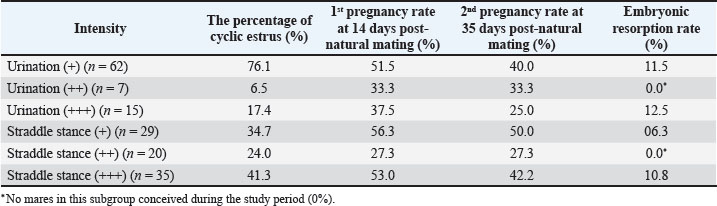
AbstractBackground: Efficient detection of the optimal mating moment is essential for improving the reproductive performance of mares. Traditional methods mainly rely on ultrasonography and hormonal monitoring, but behavioral cues remain widely used in field conditions. Among these, the intensities of the straddle stance and urination are commonly observed; however, their physiological relevance and predictive value for successful mating remain insufficiently documented. Aim: This study aimed to evaluate whether the intensities of the straddle stance and urination can serve as reliable behavioral indicators of follicular maturity, estrous day, and pregnancy rate. Methods: The experiment involved 126 Arabian mares that were monitored throughout the breeding season during the cyclic and foaling estrus. The intensity of both straddle stance and urination was scored on a three-point scale (from + to +++). The estrous mares’ follicular activity was monitored using ultrasonography. Estrus day and pregnancy rates were recorded. Results: Younger mares displayed a high rate of ovarian resumption in March and April of the breeding season, and older mares reached the highest rates in February and March. Mares with an intense straddle stance (+++) had the largest follicles (p < 0.01). However, mares showed intense urination (+++) at later estrus days (p < 0.01). The highest pregnancy rates at 14 and 35 days post-mating (42.9%) were recorded in foaling estrus mares showing intense urination without embryonic resorption. Cyclic estrus mares showing weak straddle stance (+) had the highest pregnancy rates (56.3%), followed by an embryonic resorption rate of 6.3%. Conclusion: These findings indicate that straddle stance intensity reflects optimal follicular size, whereas urination intensity shows a context-dependent association with estrus day and pregnancy rate, particularly in foaling mares. Integrating the intensity of these behavioral indicators with routine reproductive assessments may improve mating decision accuracy and enhance reproductive outcomes in mares. Keywords: Follicle size; Intensity; Pregnancy rate; Straddle stance; Urination. IntroductionAccurately determining the optimal time for mating remains a central challenge in equine reproduction, particularly in natural service-dependent breeding systems. Although ultrasonography is the most reliable method for monitoring follicular development and predicting ovulation (Ginther, 1992; Cuervo-Arango and Newcombe, 2013), its routine use is limited by financial costs, restricted access to trained practitioners, and frequent examinations. Consequently, many breeding decisions still rely on observable behavioral signs of estrus, despite their variable reliability and limited validation (McDonnell, 2000). This challenge is further compounded by the considerable variability in estrus duration, which can range from 3 to 12 days and typically averages about 6 days (Pryor and Tibary, 2005). Because ovulation generally occurs 24–48 hours before the end of estrus, this variability complicates accurate determination of the optimal mating time. Importantly, estrous receptivity represents the behavioral expression of sexual responsiveness under estrogen dominance, whereas ovulation is a physiological event resulting from follicular maturation and endocrine regulation. Although these processes are hormonally linked, their temporal relationship is variable and not strictly synchronous, and behavioral estrus does not always precisely predict the timing of ovulation. Previous studies (Najjar et al., 2019) have investigated factors such as age and physiological status that may influence estrus length; however, duration alone does not fully explain differences in reproductive performance. In addition, the behavioral expression of estrus is also highly individual, and this variability may further hinder the accurate prediction of ovulation timing and mare fertility (Pryor and Tibary, 2005; Lee and Lee, 2021). Among the behavioral signs most commonly considered by breeders, the straddle stance and urination are frequently interpreted as indicators of sexual receptivity. These behaviors are modulated by estrogen-driven changes in neuromuscular activity and sensory responsiveness (Cortés-Vidauri et al., 2018; Stachurska et al., 2023), yet their relationship with follicular maturity, ovulatory timing, and fertility outcomes remains insufficiently documented. Estrogenic stimulation increases vascularization, tissue edema, and sensory sensitivity of the lower reproductive and urinary tract during estrus, which may facilitate postural changes and frequent urination. Urethral sphincter relaxation and heightened perineal sensitivity under estrogen influence may contribute to the intensity and repetition of urination observed during teasing. Furthermore, exposure to a stallion provides visual, olfactory, and tactile stimuli that can amplify these responses, suggesting that urination intensity may reflect both endocrine status and socially induced behavioral modulation rather than being a direct indicator of imminent ovulation (Satué and Gardon, 2013). This issue is particularly relevant in postpartum mares, which may exhibit estrus before the completion of uterine involution (Falomo et al., 2020), and in older mares, whose ovarian dynamics and oocyte quality may be altered (Carnevale et al., 1997; Claes et al., 2017; Rocha et al., 2020; Catandi et al., 2023). Despite their widespread use in practical breeding management, no study has systematically evaluated whether the intensities of straddle stance and urination provide reliable indicators for identifying the optimal time for natural mating. A better understanding of their predictive value could improve reproductive efficiency by reducing unnecessary mating, limiting animal handling, and supporting more targeted and welfare-compatible management practices. Therefore, this study aimed to determine the extent to which these two behavioral signs correspond to ovarian activity, estrus progression, and conception outcomes in mares. This study seeks to clarify the practical relevance of these indicators for reproduction management in mares by integrating behavioral assessments with ultrasonographic findings and reproductive performance data. Materials and MethodsStudy location and animalsThe present study was conducted at the National Stud Farm of Sidi Thabet, which operates under the National Foundation for the Improvement of the Horse Breed based in the North of Tunisia. A total of 126 Arabian mares were randomly used in this study (young mares: mean age 7.7 ± 2.8 years, n=79; old mares: mean age 20.0 ± 3.0 years, n=47), and their estrus behavior was closely monitored for 14 weeks during the breeding season, from February to May. Mares were housed individually in stalls of 4.5 × 3.4 × 2.5 m. The stalls were equipped with an automatic drinking trough, and the bedding was renewed daily, while manure was removed from the stall each morning. The animals were fed twice per day. During the breeding season, the basic ration comprised grass, hay, and barley. Signs and intensity of estrusThe experiment was based on observing estrus behaviors in mares during teasing using a 19-year-old teaser stallion. Teasing conditions were standardized to reduce contextual bias. Estrus was detected daily at 7:00 a.m. in an enclosed sandy yard. The stallion was experienced and habituated to the teasing procedure and was not used in the breeding program. Estrus day was determined based on daily observations of behavioral indicators during teasing, and mares were classified into subgroups according to postpartum status: foaling estrus, which may occur from the fifth postpartum day, or cyclic estrus, which occurs after the completion of uterine involution. Observations focused on two key behavioral indicators during the teasing test: straddle stance and urination behavior. The intensity of each indicator was subjectively scored using the scale presented in Table 1. The scoring criteria were predefined and applied consistently throughout the study. To minimize variability, all behavioral assessments were performed by a single trained observer. Table 1. Scale for evaluating the intensities of straddle stance and urination intensity in mares in response to the teaser test.
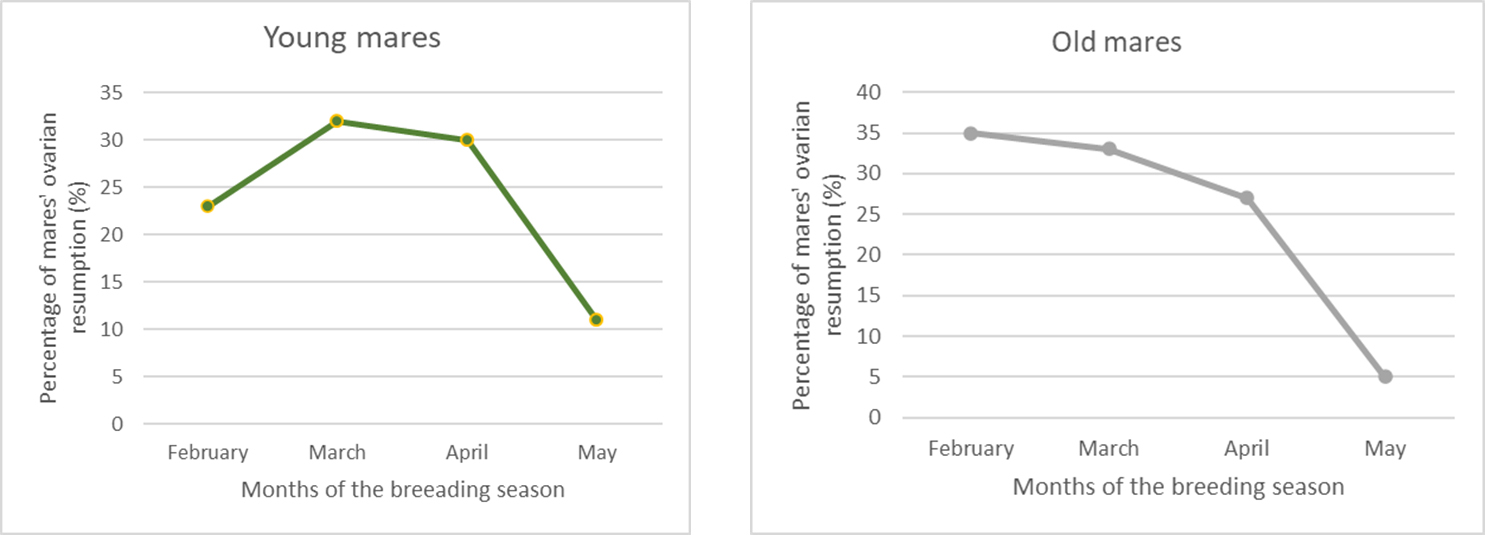
Monitoring of follicular activityFollicular activity was monitored daily using an ultrasound unit (ALOKA SSD-500) equipped with a 5-MHz transrectal linear probe (UST-5871-5) on the third day of estrus. Both ovaries were examined to identify and measure the preovulatory follicle diameter. When the preovulatory follicle reached 35 mm in diameter, the mares were bred every 48 h until a corpus luteum was detected, confirming that ovulation had occurred; breeding was then discontinued. The collected ultrasonographic data were used to determine the date of the first ovulation, which served as an indicator of the resumption of ovarian activity. Pregnancy diagnosis14 days after the last mating, a first pregnancy diagnosis was made by transrectal ultrasonography to detect an embryonic vesicle. A second, confirmatory diagnosis was performed 35 days after the last mating to visualize the embryo within the uterine horn. Pregnancy rates per estrous cycle were then calculated according to the estrus type of the mares (foaling or cyclic estrus). Statistical analysisStatistical analyses were conducted using SAS software version 9.1.3 (SAS Institute Inc., Cary, NC). The frequency of ovarian activity resumption was calculated according to the age of the mares during the breeding season. ANOVA was performed using the GLM procedure to assess the effect of the intensities of urination and straddle stance on the preovulatory follicle diameter and the estrus day. The statistical model included the following fixed effects: Yij=μ + Si + Uj + εij where Yij is the dependent variable representing the preovulatory follicle diameter and estrus day, and μ is the overall mean. The Si and Uj represent the fixed effects of the intensities of the straddle stance and urination (+, ++, +++), respectively. The εij is the random error term. The Student–Newman–Keuls (SNK) test was used to compare the group means for each variable. Statistical significance was set at p < 0.05. Ethical approvalThe study was based exclusively on non-invasive behavioral observations of mares during routine teasing tests and on follicular activity data provided by the Sidi Thabet National Stud Farm as part of their standard reproductive management practices. All procedures adhered to the national regulations governing the use of animals in research and complied with commonly accepted standards for good animal welfare (Livestock Law No. 2005-95, dated October 18, 2005). The study was approved by the Animal Ethics Committee of Sidi Thabet, National School of Veterinary Medicine (Certificate No. Approval Number: 109-CEEA-ENMV/25). ResultsOvarian resumptionFigure 1 shows the percentages of mares exhibiting ovarian resumption. In young mares, the proportion gradually increased from 23% in February to 32% and 30% in March and April, respectively, followed by a decline in May (11%). Older mares also showed an initial increase from February (35%) to March (33%), after which the rates decreased in April (27%) and reached a minimum in May (5%).
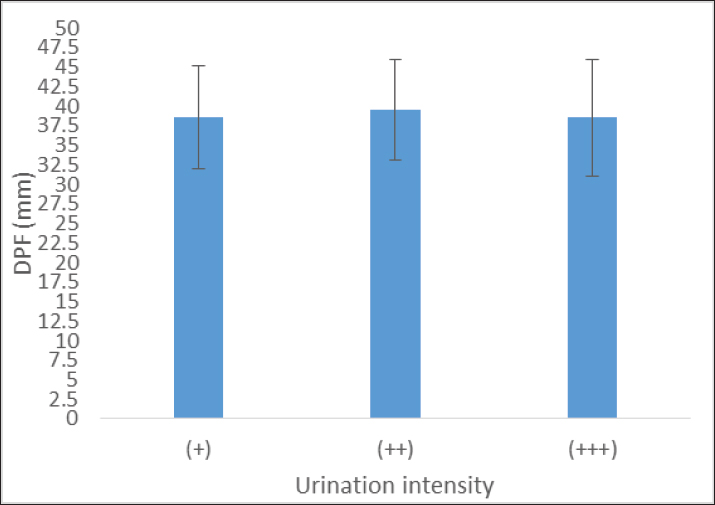
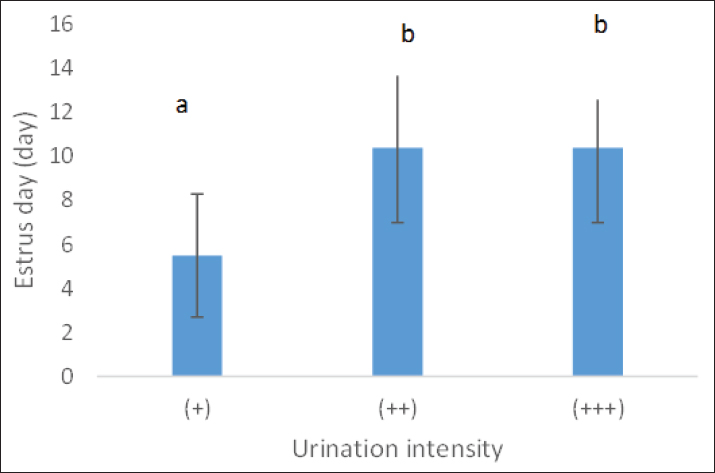
Fig. 1. Variation in the percentage of ovarian resumption in old and young mares during the breeding season. Intensities of straddle stance and urinationNo significant difference (p > 0.05) in preovulatory follicle diameter was observed across urination intensity levels (Fig. 2). In contrast, urination intensity (Fig. 3) was significantly associated with estrus day (p < 0.01): mares exhibiting moderate urination intensity (++) showed a later estrus day (10.4 ± 3.4 days) than those showing low or high intensity (5.5 ± 3.0 and 5.7 ± 2.1 days, respectively).
Fig. 2. Effect of urination intensity on the preovulatory follicle (Means ± SD). DPF: preovulatory follicle diameter.
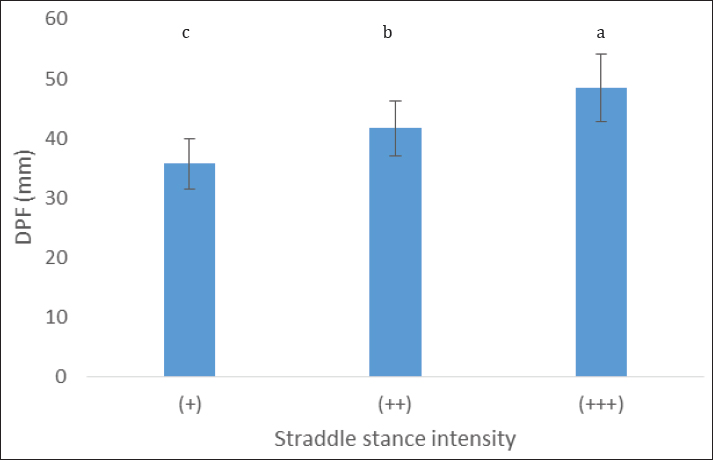
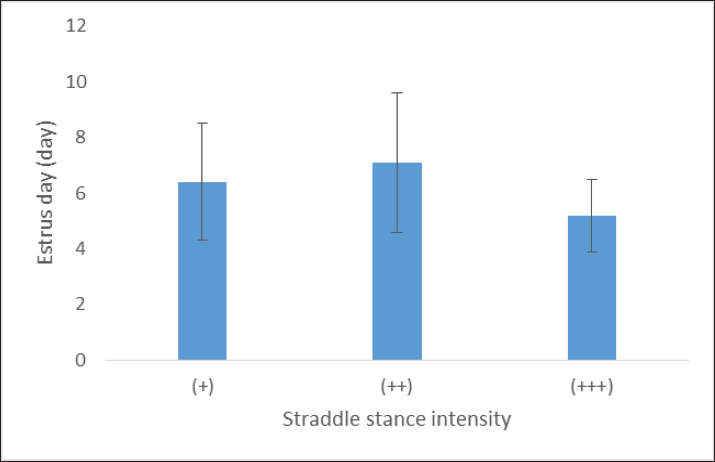
Fig. 3. Effect of urination intensity on estrus day (Means ± SD). a, b, c: p < 0.001. Regarding straddle stance (Figs. 4 and 5), a positive association was found between straddle stance intensity and follicle diameter (p < 0.01). Mares displaying intense straddle stance (+++) had the largest follicles (48.5 ± 5.7 mm), whereas those showing low intensity (+) had the smallest follicles (35.7 ± 4.2 mm). In contrast, straddle stance intensity had no significant effect on estrus day (p > 0.05), indicating that straddle stance intensity does not influence the timing of estrus.
Fig. 4. Effect of straddle stance intensity on the preovulatory follicle (Means ± SD). a, b, c: p < 0.001; DPF: preovulatory follicle diameter.
Fig. 5. Effect of Straddle stance intensity on the estrus day (Means ± SD). Tables 2 and 3 present the results on the effect of urination and straddle stance intensities on pregnancy rates in cyclic and foaling estrus mares. Mares exhibiting the highest straddle stance intensity (+++) showed the greatest proportion of cyclic estrus (41.3%) and the most favorable pregnancy outcomes, with first and second pregnancy rates of 53.0% and 42.2%, respectively. Conversely, moderate straddle stance intensity (++) was associated with the lowest pregnancy rates (27.3 at 14 and 35 days). The highest level of urination intensity (+++) did not correspond to the greatest reproductive performance. Mares with low urination intensity (+) exhibited the highest rates of cyclic estrus (76.1%) and first pregnancy (51.5%), whereas those with higher urination intensities had lower rates. Table 2. Variation in pregnancy rates in mares with cyclic estrus according to the intensities of urination and straddle stance
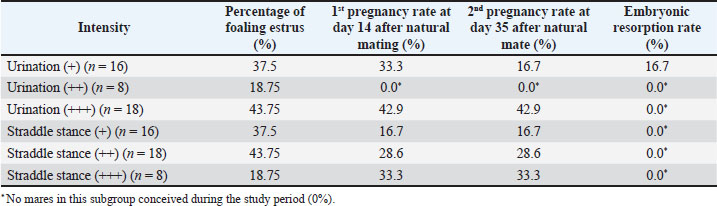
Table 3. Variation in pregnancy rates in foaling estrus mares according to the intensities of urination and straddle stance.
In foaling estrus mares, those showing moderate straddle stance intensity (++) had the highest pregnancy rate at 35 days rate (28.6%), compared with mares showing low (+, 16.7%) or strong (+++, 33.3%) intensity. Regarding urination intensity, mares with strong urination (+++) had the highest pregnancy rate (42.9%), whereas those with moderate intensity (++) had no pregnancies (0%), and those with low intensity (+) had 16.7%. Embryonic resorption was observed only in mares with low urination intensity (+) (16.7%). DiscussionOvarian resumptionThis study revealed distinct patterns of ovarian resumption among young and old mares during the breeding season. Young mares exhibited higher and earlier ovarian activity than older mares, consistent with previous studies reporting that aging is associated with delayed and reduced resumption of ovarian activity (Nagy et al., 2000; Trundell, 2020). During the spring transition, older mares also presented fewer and smaller growing follicles, later first ovulations, and a reduced number of ovulatory cycles per season (Carnevale et al., 1997; Claes et al., 2017). This age-related decrease in follicular activity and ovarian reserve reflects both quantitative and qualitative changes, including a reduced number of antral follicles and impaired oocyte and follicle function (Goncalves et al., 2020; Catandi et al., 2023). In addition, Catandi et al. (2023) demonstrated that age disrupts gene expression patterns essential for oocyte and follicular development, resulting in decreased fertility and a less efficient resumption of ovarian activity. Ginther et al. (2008) and Aboelmaaty et al. (2024) reported that younger mares respond more promptly to the increasing photoperiod, initiating the spring transition earlier and displaying regular estrous cycles of about 21 days by May. Conversely, older mares showed a delayed response, characterized by longer intervals between ovulations and slower follicular development, despite maintaining regular cyclicity (Satué et al., 2019; Alkhadrawy et al., 2024). Zaťková and Hura (2024) highlighted the need for tailored reproductive management strategies for older mares, including early and intensive monitoring of ovarian activity to mitigate delayed or incomplete ovarian resumption and ovulatory failure risk. From a practical perspective, these findings underscore the importance of monitoring both behavioral estrus signs and follicular activity in both ovaries, particularly in older mares and those with variable reproductive histories. Implementation of individualized reproductive monitoring protocols may facilitate timely breeding interventions and improve reproductive efficiency across mare populations of different ages. Effect of the intensities of urination and straddle stance on the preovulatory follicle, estrus day, and pregnancy rateThis study investigated the effects of urination and straddle stance intensities on follicular development, estrus day, and pregnancy rates in mares. Urination intensity did not significantly affect preovulatory follicle diameter. This finding suggests that this behavioral parameter alone is not a reliable indicator of ovulatory status. This finding is consistent with prior studies indicating that hormonal and physiological factors predominantly regulate follicular growth rather than behavioral estrus signs (Ginther, 2017; Ishak et al., 2017). However, in this study, moderate urination intensity (++) tended to occur around estrus day 10.4 (p < 0.01), indicating a potential association between urination patterns and prolonged estrus, which may reflect variation in estrous expression and endocrine dynamics (Ginther, 2017). In contrast, the intensity of the straddle stance significantly influenced follicle diameter (p < 0.01). Mares with the highest straddle stance intensity (+++) exhibited both advanced follicular development and higher rates of cyclic estrus and pregnancy. Moderate intensity of straddle stance (++) was associated with lower conception outcomes. These results suggest that pronounced straddle stance behavior may serve as a behavioral marker of optimal reproductive readiness, aligning with reports in cattle (Madureira et al., 2019; Madureira et al., 2022) and horses (Crowell-Davis, 2007; Stachurska et al., 2023) where stronger estrous expression has been associated with improved fertility outcomes. Interestingly, low urination intensity (+) was associated with higher pregnancy rates in cyclic mares than in those with moderate or high urination intensities. However, high urination intensity (+++) was not consistently associated with improved fertility outcomes, suggesting that urination behavior alone may be an unreliable predictor of reproductive performance due to the influence of additional physiological or environmental factors (Madureira et al., 2019). In this study, the relationship between urination intensity and pregnancy rate was not consistent across groups. While low urination intensity was associated with higher conception rates in cyclic mares, strong urination appeared to be more favorable in foaling estrus mares. This discrepancy likely reflects differences in the physiological context between cyclic and foaling estrus mares. During foaling estrus, ongoing uterine involution, postpartum tissue sensitivity, and distinct endocrine dynamics may modulate behavioral expression independently of follicular maturity. Consequently, urination intensity may reflect context-dependent physiological or environmental influences rather than serving as a uniform predictor of reproductive success. Expanding on this distinction, strong urination (+++) was closely associated with higher conception rates in foaling estrus mares, whereas straddle stance intensity did not significantly predict pregnancy outcomes. Although the straddle stance is a classical estrus indicator (Crowell-Davis, 2007), its expression may be affected by factors such as postpartum pain, foal presence, or incomplete uterine recovery (Ginther, 1992; Nagy et al., 2000). Therefore, urination intensity may offer a more reliable behavioral cue for assessing reproductive readiness in postpartum mares. These observations show that the predictive value of behavioral signs may vary according to the physiological context of the mare. Foaling estrus breeding is challenging due to the short interval between foaling and ovulation (Sharma et al., 2010; Cardona-García et al., 2024). Incomplete uterine involution may compromise conception and increase early embryonic loss even when ovulation occurs (McKinnon et al., 2011; Falomo et al., 2020). Consequently, behavioral indicators, including intense urination, should be interpreted alongside clinical and ultrasonographic assessments to make an appropriate breeding decision. In addition, excessive urination may occasionally result from irritation, infection, or residual postpartum discomfort rather than reproductive readiness alone (Guo et al., 2025). Therefore, while behavioral cues, such as strong urination, can provide valuable information on reproductive readiness in foaling estrus mares, they should be interpreted with caution and within the broader clinical context to ensure accurate assessment and optimize breeding outcomes. The associations between behavioral intensity and reproductive outcomes warrant cautious interpretation. Confounding factors, including parity, postpartum status, individual temperament, and management conditions, may influence behavioral expression. Moreover, the limited size of certain subgroups may reduce statistical power and constrain the generalizability of the findings. Consequently, while behavioral indicators provide valuable field-based information, they should be considered complementary to clinical and ultrasonographic evaluation rather than definitive predictors of ovulation or fertility. Study limitationsThis study has several limitations that should be acknowledged. First, the behavioral scoring was subjective, which may introduce assessment bias. Second, although standardized, the use of a single teaser stallion may limit the generalizability of behavioral responses due to stallion-specific effects. Third, the relatively small size of certain subgroups, especially foaling estrus mares, may reduce statistical power and limit the robustness of subgroup analyses. Finally, the absence of multivariate statistical modeling constrains the ability to simultaneously account for potential confounding variables, which could affect the interpretation of associations between behavioral indicators and reproductive outcomes. Future studies incorporating objective behavioral measures, multiple observers, larger cohorts, and multivariate analytical approaches are needed to confirm and extend these findings. ConclusionThis study indicates that both behavioral and physiological indicators can provide supportive information for determining the optimal mating timing in mares. Younger mares returned to cyclicity faster than older mares, highlighting the importance of age-specific reproductive management. Among behavioral cues, the intensity of the straddle stance was positively associated with ovulatory follicle size, indicating that a pronounced straddle stance may indicate follicular maturity. Urination intensity was related to estrus day and, particularly in foaling mares, was associated with conception success. Overall, the intensities of straddle stance and urination can provide useful supportive information to guide mating decisions, particularly during the early postpartum period. These behavioral cues offer a low-cost, non-invasive tool that can assist breeders and veterinarians in optimizing breeding timing, especially in settings where frequent ultrasonographic monitoring is limited. However, these behavioral indicators should be integrated with hormonal and ultrasonographic assessments to enhance reproductive management and more accurately identify the optimal time to mate the mare. AcknowledgmentsThe authors would like to acknowledge the staff of the Sidi Thabet National Stud Farm of the National Foundation for the Improvement of the Horse Breed, Tunisia, for the valuable support during the study. FundingThe authors received no funding for this study. Authors' contributionsAN: Conceptualization, methodology, data curation, statistical analysis, and original draft writing. SN: Data curation and statistical analysis. SE: Methodology. BB: Conceptualization. SK: Conceptualization and participation in manuscript preparation. All authors have read, reviewed, and approved the final version of the manuscript. Conflict of interestThe authors have no competing interests to declare. Data availabilityData supporting the findings of this study are available from the corresponding author upon reasonable request. ReferencesAboelmaaty, A.M., Elgharieb, A.E.A., El-Debaky, H.A., Alkhadrawy, J.M.H., Abou-Ahmed, M.M. and Ghallab, A.M. 2024. Fluctuations of antimüllerian hormone, ovarian follicular reserve, and antioxidant status throughout the estrous cycle in aged mares. Open. Vet. J. 14(11), 3132–3143. Alkhadrawy, J., Aboelmaaty, A., Ahmed, M. and Ghallab, A. 2024. Effect of breeding season and age on follicular dynamics and hemodynamics in embryo donor mares subjected to luteolysis after embryo flushing. Open Vet. J. 14(3), 852–865. Cardona-García, M., Jiménez-Escobar, C., Ferrer, M. and Maldonado-Estrada, J. 2024. Follicular dynamics and pregnancy rates during foal heat in Colombian Paso Fino mares bred under permanent grazing. Animals 14, 760. Carnevale, E.M., Hermenet, M.J. and Ginther, O.J. 1997. Age and pasture effects on vernal transition in mares. Theriogenology 47, 1009–1018. Catandi, G.D., Bresnahan, D.R., Peters, S.O., Fresa, K.J., Maclellan, L.J., Broeckling, C.D. and Carnevale, E.M. 2023. Equine maternal aging affects the metabolomic profile of oocytes and follicular cells during different maturation time points. Front. Cell. Dev. Biol. 11, 1239154; doi: 10.3389/fcell.2023.1239154 Claes, A., Ball, B.A., Scoggin, K.E., Roser, J.F., Woodward, E.M., Davolli, G.M., Squires, E.L. and Troedsson, M.H.T. 2017. The influence of age, antral follicle count and diestrous ovulations on estrous cycle characteristics of mares. Theriogenology 97, 34–40. Cortés-Vidauri, Z., Aréchiga-Flores, C., Rincón-Delgado, M., Rochín-Berumen, F., López-Carlos, M. and Flores-Flores, G. 2018. Mare reproductive cycle: literature review. Anim. Reprod. Sci. 8, 14–41. Crowell-Davis, S.L. 2007. Sexual behavior of mares. Hormones. Behav. 52, 12–17. Cuervo‐Arango, J. and Newcombe, J. 2013. Ultrasound confirmation of ovulation in mares: a normal corpus luteum or a haemorrhagic anovulatory follicle?. Reprod. Domest. Anim. 48, 105–111; doi: 10.1111/j.1439-0531.2012.02039.x Falomo, M.E., Del Re, B., Rossi, M., Giaretta, E., Da Dalt, L. and Gabai, G. 2020. Relationship between postpartum uterine involution and biomarkers of inflammation and oxidative stress in clinically healthy mares (Equus caballus). Heliyon 6, e03691. Ginther, O.J. 1992. Reproductive biology of the mare: basic and applied aspects. 2nd ed. Cross Plains, Wis.: Equiservices. Ginther, O.J. 2017. Systemic and intrafollicular components of follicle selection in mares. Domest. Anim. Endocrinol. 59, 116–133. Ginther, O.J., Gastal, M.O., Gastal, E.L., Jacob, J.C., Siddiqui, M.A.R. and Beg, M.A. 2008. Effects of age on follicle and hormone dynamics during the oestrous cycle in mares. Reprod. Fertil. Dev. 20(8), 955–963. Goncalves, G.R., Morotti, F., Colombo, A.H.B., Bonato, D.V., Bizarro‐Silva, C., Rosa, C.O., Cavalieri, F.L.B. and Seneda, M.M. 2020. Influence of age and ovarian antral follicle count on the reproductive characteristics of embryo donor mares. Vet. Rec. 186, 564. Guo, L., Holyoak, G.R. and Desilva, U. 2025. Endometrial microbiome in mares with and without clinical endometritis. Front. Vet. Sci. 12, 1588432. Ishak, G.M., Bashir, S.T., Gastal, M.O. and Gastal, E.L. 2017. Pre-ovulatory follicle affects corpus luteum diameter, blood flow, and progesterone production in mares. Anim. Reprod. Sci. 187, 1–12. Lee, S.K. and Lee, I. 2021. Estrous behavior suppression in a Thoroughbred mare. J. Vet. Clin. 38, 199–203. Madureira, A.M.L., Burnett, T.A., Marques, J.C.S., Moore, A.L., Borchardt, S., Heuwieser, W., Guida, T.G., Vasconcelos, J.L.M., Baes, C.F. and Cerri, R.L.A. 2022. Occurrence and greater intensity of estrus in recipient lactating dairy cows improve pregnancy per embryo transfer. J. Dairy. Sci. 105, 877–888. Madureira, A.M.L., Polsky, L.B., Burnett, T.A., Silper, B.F., Soriano, S., Sica, A.F., Pohler, K.G., Vasconcelos, J.L.M. and Cerri, R.L.A. 2019. Intensity of estrus following an estradiol-progesterone-based ovulation synchronization protocol influences fertility outcomes. J. Dairy Sci. 102, 3598–3608. Mcdonnell, S.M. 2000. Reproductive behavior of stallions and mares: comparison of free running and domestic in hand breeding. Anim. Reprod. Sci. 60-61(61), 211–219. McKinnon, A.O., Squires, E.L., Vaala, W.E., Varner, D.D. 2011. Equine Reproduction. 2nd ed. Wiley Blackwell. Nagy, P., Guillaume, D. and Daels, P. 2000. Seasonality in mares. Anim. Reprod. Sci. 60-61, 245–262. Najjar, A., Khaldi, S., Said, S.B., Hamrouni, A., Benaoun, B. and Djemali, M. 2019. Factors influencing the oestrus cycle of Arab mares. Anim. Sci. Pap. Rep. 37, 169–178. Pryor, P. and Tibary, A. 2005. Management of estrus in the performance mare. Clin. Tech. Equine Pract. 4, 197–207. Rocha, C.E., De Carvalho, E.D.C., De Castro, F.C.G.S., Xavier, I.L.G.D.S., Young, R.J., Palhares, M.S., Da Silva Filho, J.M., Carvalho, R.R., Vasconcellos, A.D.S. and Valle, G.R. 2020. Is mare sexual behavior affected by age and can it predict ovulation?. Appl. Anim. Behaviour Sci. 224, 104937. Satué, K. and Gardón, J.C. 2013. A review of the estrous cycle and the neuroendocrine mechanisms in the mare. J. Steroids Horm. Sci. 4(2), 115. Satué, K., Fazio, E., Ferlazzo, A. and Medica, P. 2019. Hematochemical Patterns in Follicular Fluid and Blood Stream in Cycling Mares: a Comparative Note. J. Equine Vet. Sci. 80, 20–26. Sharma, S., Morel, M.C.G.D. and Dhaliwal, G.S. 2010. Factors affecting the incidence of postpartum oestrus, ovarian activity and reproductive performance in Thoroughbred mares bred at foal heat under Indian subtropical conditions. Theriogenology 74, 90–99. Stachurska, A., Kedzierski, W., Kaczmarek, B., Wisniewska, A., Zylinska, B. and Janczarek, I. 2023. Variation of physiological and behavioural parameters during the estrous cycle in mares. Animals 13, 211. Trundell, A.D. 2020. Equine reproduction: seasonality, endometritis, and twinning in the mare. Equine Sci., IntechOpen. Zaťková, M. and Hura, V. 2024. Ovulatory failure in mares during breeding seasons. Folia. Vet. 68, 76–83. | ||

| How to Cite this Article |
| Pubmed Style Najjar A, Njoumi S, Ezzar S, Benaoun B, Khaldi S. Do straddle stance and urination intensities indicate the optimal time to mate the mare?. Open Vet. J.. 2026; 16(6): 3484-3493. doi:10.5455/OVJ.2026.v16.i6.19 Web Style Najjar A, Njoumi S, Ezzar S, Benaoun B, Khaldi S. Do straddle stance and urination intensities indicate the optimal time to mate the mare?. https://www.openveterinaryjournal.com/?mno=302637 [Access: June 26, 2026]. doi:10.5455/OVJ.2026.v16.i6.19 AMA (American Medical Association) Style Najjar A, Njoumi S, Ezzar S, Benaoun B, Khaldi S. Do straddle stance and urination intensities indicate the optimal time to mate the mare?. Open Vet. J.. 2026; 16(6): 3484-3493. doi:10.5455/OVJ.2026.v16.i6.19 Vancouver/ICMJE Style Najjar A, Njoumi S, Ezzar S, Benaoun B, Khaldi S. Do straddle stance and urination intensities indicate the optimal time to mate the mare?. Open Vet. J.. (2026), [cited June 26, 2026]; 16(6): 3484-3493. doi:10.5455/OVJ.2026.v16.i6.19 Harvard Style Najjar, A., Njoumi, . S., Ezzar, . S., Benaoun, . B. & Khaldi, . S. (2026) Do straddle stance and urination intensities indicate the optimal time to mate the mare?. Open Vet. J., 16 (6), 3484-3493. doi:10.5455/OVJ.2026.v16.i6.19 Turabian Style Najjar, Amel, Siwar Njoumi, Sofiane Ezzar, Belgacem Benaoun, and Sana Khaldi. 2026. Do straddle stance and urination intensities indicate the optimal time to mate the mare?. Open Veterinary Journal, 16 (6), 3484-3493. doi:10.5455/OVJ.2026.v16.i6.19 Chicago Style Najjar, Amel, Siwar Njoumi, Sofiane Ezzar, Belgacem Benaoun, and Sana Khaldi. "Do straddle stance and urination intensities indicate the optimal time to mate the mare?." Open Veterinary Journal 16 (2026), 3484-3493. doi:10.5455/OVJ.2026.v16.i6.19 MLA (The Modern Language Association) Style Najjar, Amel, Siwar Njoumi, Sofiane Ezzar, Belgacem Benaoun, and Sana Khaldi. "Do straddle stance and urination intensities indicate the optimal time to mate the mare?." Open Veterinary Journal 16.6 (2026), 3484-3493. Print. doi:10.5455/OVJ.2026.v16.i6.19 APA (American Psychological Association) Style Najjar, A., Njoumi, . S., Ezzar, . S., Benaoun, . B. & Khaldi, . S. (2026) Do straddle stance and urination intensities indicate the optimal time to mate the mare?. Open Veterinary Journal, 16 (6), 3484-3493. doi:10.5455/OVJ.2026.v16.i6.19 |


