Open Veterinary Journal, (2026), Vol. 16(6): 4056-4066
Research Article
10.5455/OVJ.2026.v16.i6.71
Incorporation of different antibiotics on MOF-supported filter paper for control of zoonotic foodborne antibiotic-resistant Salmonella species
Ashraf M. A. Barakat1*, Nawal A. Hassanain1, Hassan A. El Fadaly1,Marwa B. Salman1, Sabry A. S. Sadek1,
Amal M. Aboelmaaty2, Nehal M. Khairy3,4, Mohammed Darwish Mohammed5 and Reda M. Abdelhameed6
1Department of Zoonotic Diseases, National Research Centre, Giza, Egypt
2Department of Animal Reproduction and A.I., National Research Centre, Giza, Egypt
3Department of Microbiology and Immunology, Egypt Drug Authority (EDA), (Formerly NODCAR), Giza, Egypt
4Department of Microbiology and Immunology, Faculty of Pharmacy, Sinai University, Ismailia, Egypt
5Department of Microbiology and Immunology, National Research Centre, Giza, Egypt
6Applied Organic Chemistry Department, Chemical Industries Research Institute, National Research Centre, Giza, Egypt
*Corresponding Author: Ashraf M. A. Barakat. Department of Zoonotic Diseases, National Research Centre, Giza, Egypt. Email: ashrafbarakat2 [at] gmail.com
Submitted: 10/12/2025 Revised: 04/04/2026 Accepted: 20/04/2026 Published: 30/06/2026
© 2025 Open Veterinary Journal
This is an Open Access article distributed under the terms of the Creative Commons Attribution-Non Commercial-No Derivatives License (http://creativecommons.org/licenses/by-nc-nd/4.0/), which permits non-commercial re-use, distribution, and reproduction in any medium, provided the original work is properly cited, and is not altered, transformed, or built upon in any way.
Abstract
Background: Foodborne diseases pose serious public health threats. Salmonella is one of the most significant foodborne pathogens of major public health concern. Metal–organic frameworks (MOFs) exhibit high antimicrobial activity and enable the controlled release of antibiotics, thereby addressing the problem of antibiotic resistance.
Aim: This study aimed to develop a highly effective, stable, and novel antimicrobial surface/material to combat multidrug-resistant Salmonella in food safety applications.
Methods: A total of 615 samples were examined bacteriologically and morphologically characterized. The suspected isolates were identified at the serotype/serovar level. Antibiotic susceptibility testing of the identified Salmonella serovars was performed using commonly used antibiotics, both in the absence and presence of MOF nanoparticles.
Results: The total percentages of Salmonella spp. in the governorates of Cairo, Giza, and Qalyubia were 15.24%, 10%, and 12%, respectively. Salmonella spp. isolated from meat products, including sausage, beef luncheon, beef burger, and minced meat, were 4%, 0%, 0%, and 12%, respectively. The prevalence rates of poultry products, including liver, breast muscle, and wings, were 17.33%, 23.33%, and 41.67%, respectively. Kariesh cheese and yogurt had prevalence rates of 11.67% and 5%, respectively. Salmonella in human stool samples was 10%. Salmonella isolate serotyping showed that Salmonella Kentucky and Salmonella Enteritidis accounted for 35.8% and 64.2%, respectively. Antibiotic sensitivity testing showed that the sensitivity of Salmonella spp. without MOFs was 22.22%, 0%, 19.75%, and 27.16% for levofloxacin, ampicillin, amoxicillin–clavulanic acid, and ciprofloxacin, respectively, whereas in the presence of MOF nanoparticles, sensitivity increased to 84%, 93.8%, 71.6%, and 100% for levofloxacin, ampicillin, amoxicillin–clavulanic acid, and ciprofloxacin, respectively.
Conclusion: MOFs provide a promising platform for developing antibiotic carriers to treat Salmonella and other foodborne pathogens.
Keywords: Meat and milk products, Metal–organic frameworks nanoparticles, Salmonella serotypes, Zoonotic foodborne pathogens.
Introduction
Over 600 million people worldwide become unwell each year as a result of foodborne diseases, which have increased in frequency over time and are now a major threat to public health (Faour-Klingbeil and Todd, 2020). Owing to their detrimental effects on human health and the economy as a whole, foodborne pathogens cause thousands of diseases (Akkina et al., 2022). The prevalence of food contamination has recently increased, creating a complex picture through various channels. However, the repeated use of antimicrobial drugs leads to the development of drug-resistant foodborne bacteria (Moi et al., 2022).
In the veterinary field, antibiotics are mostly used as growth boosters and for both therapeutic and prophylactic purposes. However, widespread abuse of antibiotics is believed to be a major contributor to the development of multidrug-resistant bacteria and the main cause of the emergence or re-emergence of diseases (World Health Organization, 2017; Jans et al., 2018).
Fecal contamination of beef and poultry meat with Enterobacteriaceae, including Salmonella spp., is a significant issue in food hygiene. Salmonella is a pathogenic bacterium that causes gastroenteritis in humans and can be found in mammals, amphibians, and reptiles (Chalker and Blaser, 1988). If infected food or water is consumed, Salmonella can spread to a healthy host (Helmy et al., 2017). Salmonella causes a significant impact on public health and economics worldwide (Baptista et al., 2023).
Non-typhoidal Salmonella is thought to cause approximately 1.35 million infections, 26,500 hospital admissions, and 420 fatalities annually in the US, with an estimated USD 400 million in direct medical expenses. With an annual cost of almost USD 3.3 billion, Salmonella’s economic burden ranks third among the 14 foodborne bacteria that cause sickness (Melegy et al., 2024; Perry et al., 2024; Kishta et al., 2025). The two serovars most commonly isolated from humans are Salmonella typhimurium and Salmonella Enteritidis (Thomas et al., 2015).
Non-typhoidal Salmonella foodborne illnesses cause gastroenteritis in humans. Approximately 5% of gastroenteritis cases develop bacteremia or other extraintestinal complications, such as urinary tract infections, pneumonia, endocarditis, meningitis, and cellulitis, requiring hospitalization (Authority 2015; Thomas et al., 2015; Abd-Rabou et al. 2024; Lamichhane et al., 2024).
Human contact with domestic and wild animals is directly linked to a high human salmonellosis rate. Additionally, some foods, such as contaminated poultry, eggs, cheese, ice cream, and chocolate, have been linked to outbreaks caused by these diseases.
Food handlers are crucial to food production, processing, storage, and preparation; therefore, they need regular follow-up for current infection or carrier status. Improper handling and non-compliance with food hygiene precautions may lead to food contamination, which will undoubtedly have unfavorable side effects (Hassanain, 2008; Elsherbiny et al., 2019).
Because street food is contaminated with bacteria and other pathogens, it poses a health risk to patrons. Street-contaminated food, particularly meat products, may be dangerous in Egypt due to its poor quality. Food can become contaminated with harmful bacteria due to the usage of raw materials, poor worker hygiene, and prolonged storage (Bouafou et al., 2021).
The ongoing development of antibiotic resistance, particularly multidrug resistance, among foodborne bacteria may lead to treatment failures and raise foodborne illness expenses. Salmonella typhimurium was the most common serovar, and Salmonella was the most common foodborne pathogen implicated in antibiotic-resistant outbreaks between 1973 and 2011 (DeWaal and Grooters, 2013).
In recent years, the use of Metal–organic frameworks (MOFs) for drug delivery in biological applications has gained more interest. Nano-MOFs can function as effective nanocarriers to carry drugs for imaging, chemotherapy, photothermal therapy, or photodynamic therapy when the size of MOF particles is reduced to the nanoscale (Horcajada et al., 2012).
Metal–organic framework nanoparticles exhibit several notable benefits, such as high surface area and porosity for high loading of therapeutic agents and facile modification of physical (e.g., pore size and shape) and chemical characteristics of MOFs using organic ligands or inorganic clusters. Additionally, desirable functional groups can be introduced to the organic ligands by predesigning the ligands or using post-synthetic modification techniques.
Additional benefits of MOFs include the ability for substrates to diffuse and interact with the integrated molecules through the MOF’s open windows and pores, as well as the moderate strength of coordination bonds, which make MOFs biodegradable and have well-defined structures that are useful for research on host–guest interactions. MOFs are among the finest options for cancer treatment and medication delivery because of these special qualities (Vilela et al., 2017).
Nanoparticles have antimicrobial properties and play a different function than antibiotics in the battle against harmful microbes. Prospects center on creating novel treatments and methods for treating, preventing, and controlling microbial illnesses in people and other animals, particularly viral diseases that are present in current pandemic scenarios (Da Silva et al., 2018).
The purpose of this study was to determine the extent of contamination of Salmonella species in animal- and human-origin products and the sensitivity and resistance of the isolates to different antibiotics with and without MOF nanoparticles. This study employed novel approaches, such as surface adsorption, pore encapsulation, covalent binding, and functional molecules as the building blocks, to functionalize Ti-based MOFs with medicinal medicines. The prepared materials were tested against various bacterial strains.
Materials and Methods
Preparation of NH2-MIL-125
NH2-MIL-125 was synthesized according to the manufacturer’s instructions (Vilela et al., 2017) with slight modifications. Titanium isopropoxide (1 ml, 3.38 mmol) and 2-aminoterephthalic acid (1 g, 5.5 mmol) were dissolved in a dimethylformamide (DMF)/methanol (2:1 v/v) mixture at room temperature. The resulting slurry was sealed and placed in an oven at 150°C for 20 hours. Finally, a light-yellow product was obtained. The product was filtered and washed with DMF to remove the unreacted organic ligand and then washed again with methanol to exchange the DMF.
Preparation of the antibiotic/NH2-MIL-125 formulation
A total of 0.10 g of NH2-MIL-125 was added to 50 ml of methanol. The mixture was ultrasonicated for 30 minutes and slowly added to the antibiotic discs. The samples were dried under vacuum at 60 C for 12 hours.
Sample characterization
X-ray diffraction (XRD) patterns for NH2-MIL-125 powder samples were obtained using an X’Pert MPD Philips diffractometer with monochromated Cu Kα radiation. X-ray diffraction scanning was performed at room temperature over the 2θ region of 3.5°–80° at a rate of 2°/minute (45 kV, 40 mA). energy-dispersive X-ray spectroscopy measurements were carried out on a scanning electron microscope (Hitachi SU-70, JP) with a field emission gun. Fourier transform infrared spectroscopy (FTIR, Mattson 5,000) was carried out in the range of 4,000–350 cm-1 in transmission mode. The pellets were prepared by adding MOFs (1–2 mg) to 200 mg KBr. Then, the mixture was carefully mixed and pressed at a pressure of 10 kPa to form transparent pellets.
Collection of samples
Between October 2023 and September 2024, 615 samples were collected from various locations in the Cairo, Giza, and Qaluobya regions. Food samples included 215 meat products (50 minced meat, 70 beef luncheon, 75 oriental sausages, and 20 beef burgers), 240 poultry products (30 poultry muscle, 150 chicken livers, and 60 wings) purchased from retail markets, and 120 milk products (60 kariesh cheese and 60 yogurt samples) purchased from markets and small-scale farm outlets (n=575). Human stool samples (n=40) were collected from food handlers and individuals from different areas in contact with food. All samples were collected in a sterile plastic bag, labeled, and placed in an icebox before being immediately transported to the laboratory for further examination.
Identification of collected samples
Salmonella isolation
In a sterile blender jar with 225 ml of 0.1% sterile buffered peptone water, 25 g of each sample was chopped into small pieces using sterile forceps and scissors, mixed for 2 minutes, and incubated at 37°C for 18 ± 2 hours. Subsequently, 0.1 ml of the pre-enrichment culture was transferred into sterile tubes with 10 ml of RVS. The tubes were vortexed and incubated for 24 hours at 41.5°C ± 1°C for 24 hours.
After incubation, a loopful from each tube was streaked onto xylose lysine deoxycholate (XLD) agar plates and incubated at 37°C for 24 hours. The presence of typical Salmonella colonies was checked on the plates. Typical Salmonella colonies on XLD agar appear as pink colonies with or without black centers (Da Silva et al., 2018).
Biochemical identification & serotyping
Pure colonies of suspected Salmonella were biochemically verified using the Gram-negative Bacilli (GNB 12 A) kit (Oxoid, England). Biochemically identified Salmonella isolates recovered from the examined food samples and human specimens were serotyped using standard polyvalent and monovalent Salmonella antisera at the Central Laboratories of the Ministry of Health and Population (Cairo, Egypt) by the slide agglutination test (Edwards and Ewing, 1972).
Determination of the antibiotic resistance of isolated organisms
The disk diffusion method was used to test for Salmonella isolates on Muller-Hinton agar plates (Oxoid) for susceptibility to 13 commonly used antibiotics (Oxoid, UK). Four to five Salmonella strains with similar morphology were transferred using a sterile loop wire to a tube containing 5 mL of Mueller–Hinton broth and incubated at 37°C for 18–24 hours. Culture turbidity was adjusted to match the 0.5 McFarland standard (Humphries et al., 2021).
The antibiotic discs used included ciprofloxacin (CIP 10), tetracycline (TE 30), doxycycline (DO 30), azithromycin (AZM 15), amoxicillin/clavulanic acid (AMC 30), polymyxin B (PB300), streptomycin (S10), nalidixic acid (NA30), cefotaxime (CTX30), imipenem (IPM10), ceftriaxone (CRO30), levofloxacin (LEV5), and ampicillin (AM 10).
Statistical analysis
Data were analyzed using the Statistical Package for the Social Sciences, IBM SPSS Statistics version 20 (2011). A one-way analysis of variance was used to assess the effects of treatments on the parameters under study. Duncan’s multiple range test was used to compare significant means. Quantitative data are expressed as mean ± standard deviation, whereas non-parametric data are expressed as frequency and percentage. Differences were considered statistically significant when p < 0.05.
Ethical approval
The approved medical facility (National Research Center, Giza, Egypt) granted ethical approval for the use of human subjects. No. 19/138. Each individual provided written consent after learning about the usage of samples. Samples from animals were collected upon the owners’ approval after the purpose of the collection was verbally explained to them. Ethical approval date 1-1-2023
Results
Characterization of NH2-MIL-125 nanoparticles
The crystal structure of NH₂-MIL-125 was determined using powder X-ray diffraction (PXRD). NH₂-MIL-125 showed characteristic peaks at 6.7°, 9.7°, 11.6°, 15.2°, 16.6°, 17.9°, 19.5°, 21.5°, 22.6°, and 25.3°, which were in good agreement with the simulated PXRD patterns of MIL-125 (Fig. 1a).
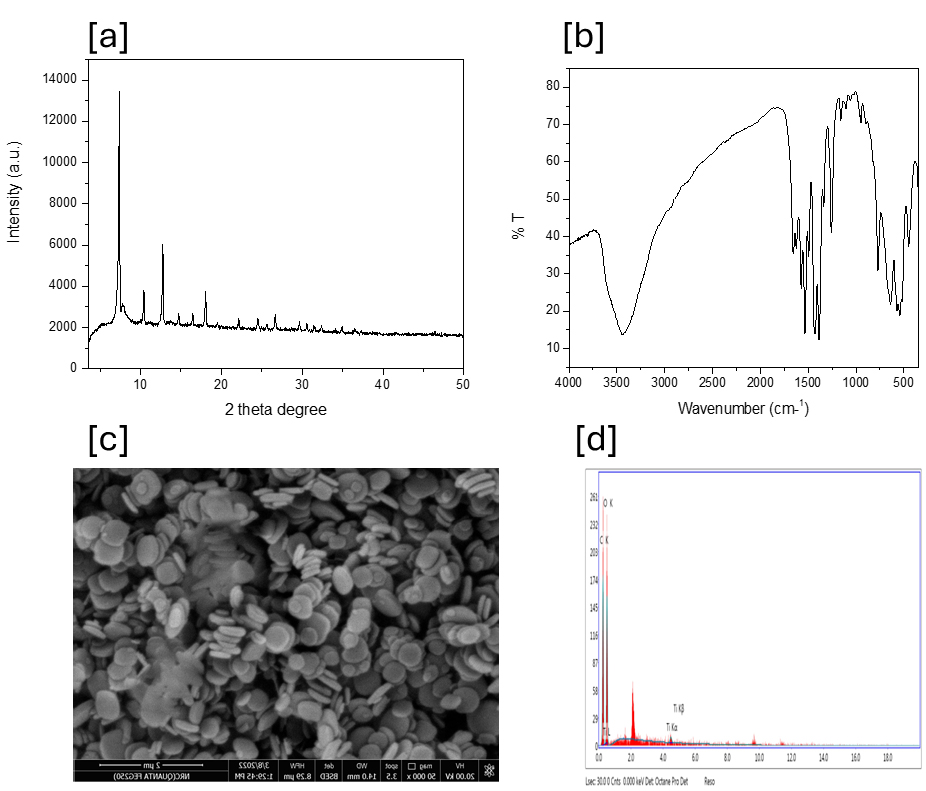
Fig. 1. (a) PXRD of NH2-MIL-125, (b) FTIR of NH2-MIL-125, (c) SEM of NH2-MIL-125, and (d) EDX of NH2-MIL-125.
The FTIR spectra of NH₂-MIL-125 showed peaks at 1,600 and 1,500 cm⁻¹, assigned to asymmetric carbonyl stretching vibrations, and peaks at 1,440 and 1,400 cm⁻¹, assigned to symmetric carbonyl stretching vibrations. The peak at 1250 cm⁻¹ belongs to the benzene ring’s C–H symmetric stretching vibrations. The region between 400 and 800 cm⁻¹ showed Ti–O–Ti vibrations, whereas the bands at 3,500 and 3,380 cm⁻¹ were attributed to the NH₂ group (Fig. 1b).
Scanning electron microscopy (SEM) analysis of MIL-125-NH₂ is shown in Fig. 1c. The particles exhibited a tetragonal plate-like shape with an average particle size of approximately 500 nm. Elemental composition analysis using EDX confirmed the presence of Ti, C, and O in MIL-125-NH₂, indicating successful MOF synthesis (Fig. 1d).
Characterization of antibiotic/NH2-MIL-125 MOF formulations
The most effective formulations were characterized to inspect the surface morphology of both treated and untreated antibiotic discs. All samples were scanned at the same magnification. The morphological structure of untreated antibiotic discs (Fig. 2a,c,e,g) revealed that the surface of native antibiotic discs was smooth, showing no signs of nanoparticle deposition.
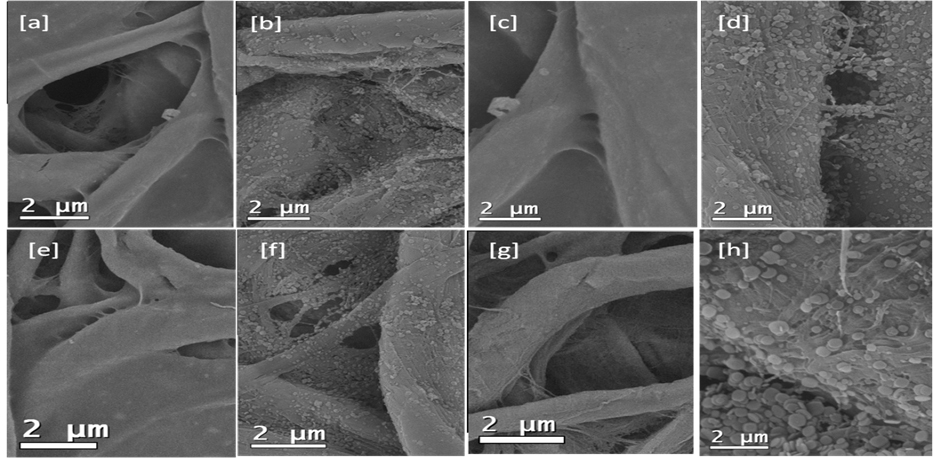
Fig. 2. SEM images of (a) ciprofloxacin, (b) MIL-125-NH2 [at] ciprofloxacin, (c) amoxicillin clavulanic, (d) MIL-125-NH2 [at] amoxicillin clavulanic, (e) ampicillin, (f) MIL-125-NH2 [at] ampicillin, (g) levofloxacin, and (h) MIL-125-NH2 [at] levofloxacin.
Conversely, when a solution of MOF particles was applied, surface modification was observed. The surfaces of the antibiotic discs impregnated with MOF particles (Fig. 2b,d,f,h) were rough because of the deposition and incorporation of MOF particles. The MOF particles deposited on the treated antibiotic discs appeared as well-distributed spherical particles of tiny size.
Prevalence of Salmonella spp. in the different governorates
The overall prevalence of Salmonella spp. in all examined governorates was 13.17% (Table 1). The highest prevalence was observed in the Cairo governorate (15.24%), whereas the lowest prevalence was recorded in the Giza governorate (10%). The Qalyubia governorate showed an intermediate prevalence of approximately 12% (Table 1, Fig. 3).
Table 1. Prevalence of Salmonella isolates in different governorates.

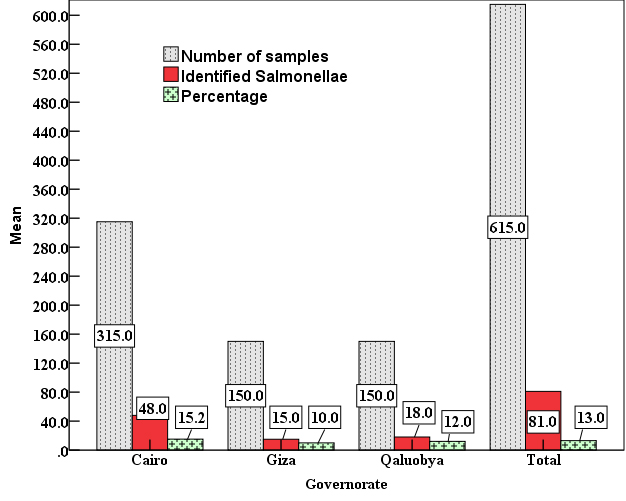
Fig. 3. Salmonella isolate prevalence in different governorates.
Prevalence of Salmonella spp. in the examined samples
The overall prevalence of Salmonella spp. in meat products was 4.19%. Sausage, beef luncheon, beef burger, and minced meat had prevalence rates of 4%, 0%, 0%, and 12%, respectively. The highest prevalence was detected in minced meat (12%), whereas no Salmonella isolates were detected in beef luncheon or beef burger samples (Table 2, Fig. 4).
Table 2. Salmonella occurrence in meat, poultry, and milk products and human stool following bacterial culture and biochemical identification.
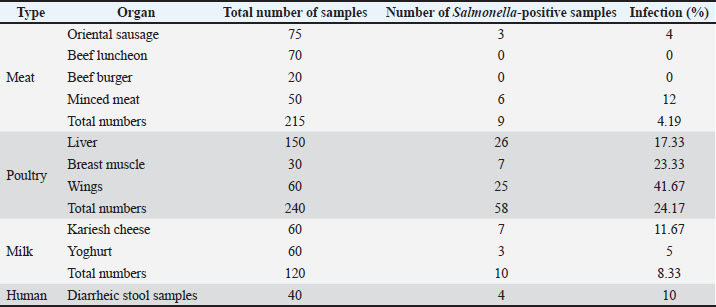
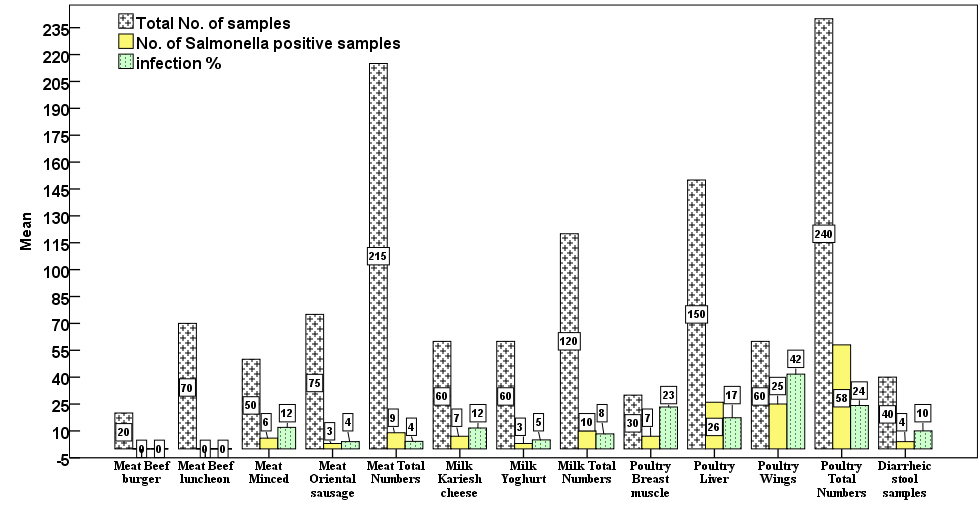
Fig. 4. Occurrence of Salmonella in meat, poultry and milk products, and human stool following bacterial culture and biochemical identification.
The total prevalence of Salmonella spp. in poultry products was 24.17%. The prevalence rates of liver, breast muscle, and wings were 17.33%, 23.33%, and 41.67%, respectively. The highest prevalence was observed in wings (41.67%), while the lowest prevalence was detected in liver samples (17.33%) (Table 2, Fig. 4).
The overall prevalence of Salmonella spp. in milk products was 8.33%. Kariesh cheese and yogurt had prevalence rates of 11.67% and 5%, respectively. The highest prevalence was observed in Kariesh cheese, while the lowest prevalence was detected in yogurt samples (Table 2, Fig. 4).
Pearson’s chi-square, likelihood ratio (PCLR), Fisher’s exact test (FET), and linear-by-linear association (LLA) tests were not significant in meat products, whereas nominal-by-nominal lambda was significant (p=0.006). In poultry products, most tests were not significant, whereas the Nominal-by-Nominal Lambda test was significant (p=0.001). Similarly, in milk products, most tests were not significant, whereas the Nominal-by-Nominal Lambda test was significant (p=0.001) (Table 2).
Salmonella serotyping
The percentages of isolated Salmonella spp. in human stool, meat, milk products, and poultry samples were 4.94%, 11.11%, 12.35%, and 71.60%, respectively. The highest percentage of Salmonella spp. isolation was observed in poultry samples (71.60%), whereas the lowest percentage was detected in human stool samples (4.94%).
Statistical analysis showed that the distribution of Salmonella spp. among human stool, meat, milk products, and poultry samples was not significant using PCLR and FET. However, the LLA test was significant at both the two-sided and one-sided levels (p < 0.05). Nominal-by-Nominal Lambda was significant for both symmetric measures (p=0.0001) and Salmonella isolates (p=0.0001). The Pearson’s correlation coefficient (R) was 0.92, which was statistically significant (p < 0.05).
For S. Kentucky, the distribution among sample types was not significant using PCLR and FET, whereas the LLA test was significant at both two-sided (p < 0.05) and one-sided (p < 0.01) levels. Nominal-by-Nominal Lambda was significant for symmetric measures (p=0.0001) and S. Kentucky isolates (p=0.006). The Somers’ d was also significant (p=0.033), with Pearson’s R=0.90 (p < 0.05).
For S. enteritidis, the PCLR and FET results were not significant, whereas the LLA test was significant at both two-sided (p < 0.05) and one-sided (p < 0.01) levels. Nominal-by-Nominal Lambda was significant for symmetric measures (p=0.0001) and S. Enteritidis isolates (p=0.0001). Somers’ d was significant (p=0.017), with Pearson’s R=0.929 (p < 0.05) (Table 3, Fig. 5).
Table 3. Serotypes of the isolated Salmonella following slide agglutination test in samples collected from processed products and human stool.
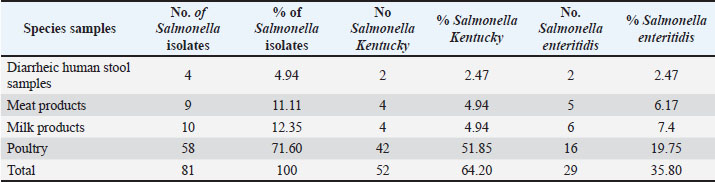
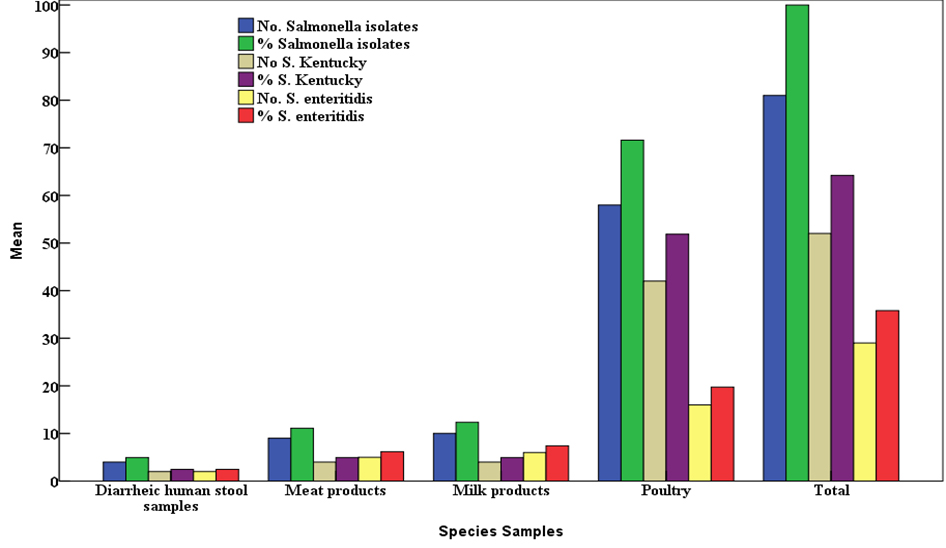
Fig. 5. Serotypes of isolated Salmonella from different food products and human samplesl.
Antibiotic susceptibility of Salmonella as determined by the disk diffusion test
After the addition of nanoparticles, drug-resistant and sensitive Salmonella strains showed low negative correlations, with Pearson’s R=−0.36, while sensitive strains showed very low, non-significant correlations (R=0.14 and −0.14). Resistance to tetracycline, doxycycline, azithromycin, streptomycin, and nalidixic acid did not change after nanoparticle addition. In contrast, resistance to ciprofloxacin, ampicillin, amoxicillin–clavulanic acid, and levofloxacin decreased markedly, with a corresponding increase in sensitivity after nanoparticle addition (p < 0.05). A slight decrease in polymyxin, cefotaxime, imipenem, and ceftriaxone resistance was associated with a slight increase in sensitivity (Table 4, Fig. 6).
Table 4. Antibiotic susceptibility of Salmonella species by disc diffusion test before and after treated with NH2-MIL-125 MOFs.
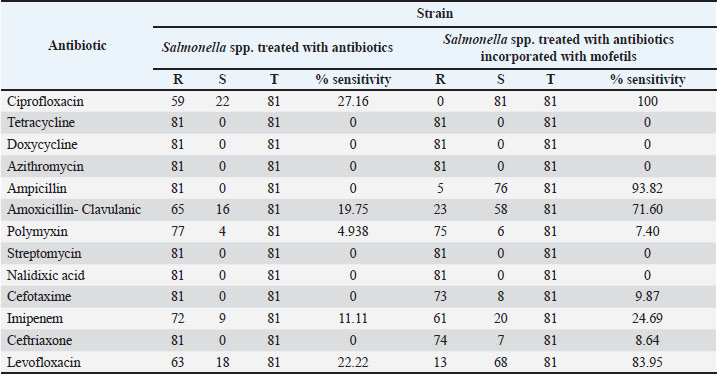
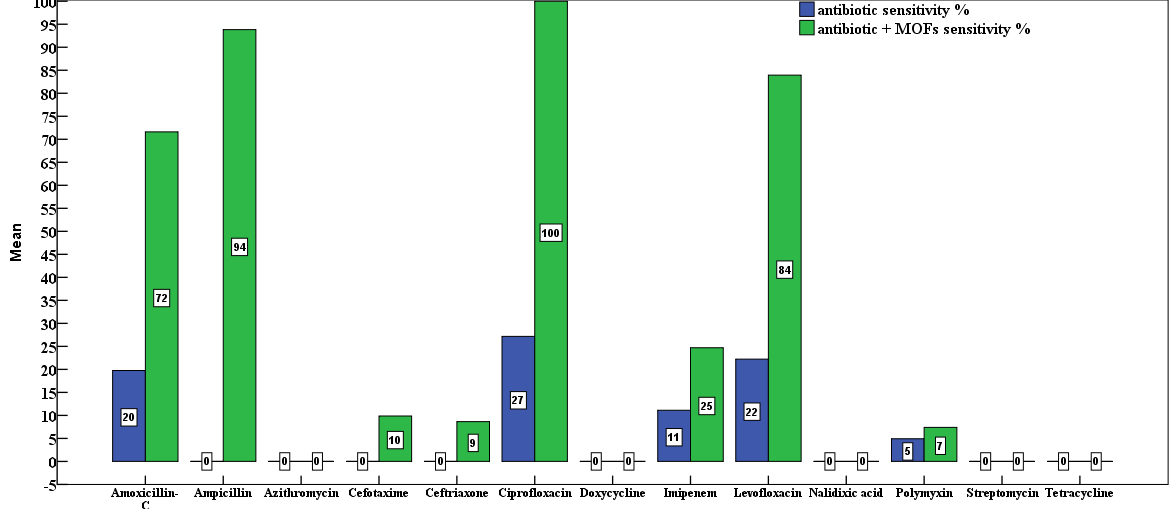
Fig. 6. Drug sensitivity of Salmonella spp. before and after adding nanoparticles.
Discussion
Salmonellosis is one of the most frequently reported foodborne zoonoses. Salmonella can spread from farm to fork to humans, primarily through contaminated food of animal origin (Zhou et al., 2018). Worldwide, Salmonella infections range from 200 million to over 1 billion cases annually, including approximately 155,000 deaths and 93 million episodes of gastroenteritis. Contaminated food accounts for approximately 85% of these infections (Birkenhauer and Neethirajan, 2015).
Salmonella spp. are members of the Enterobacteriaceae family and are primary residents of the digestive tracts of both humans and animals. They are recognized as indicators of fecal contamination and enteric pathogen infection (Islam et al., 2016). Many Salmonella cultures produce large colonies with glossy black centers or an almost entirely black appearance (Islam et al., 2016).
In this study, 81 Salmonella isolates were detected from 615 samples (13.17%) by bacteriological examination. Comparable findings were reported in Germany, where Salmonella was detected at a prevalence of 17.5% (Silano and Silano, 2020). In contrast, lower prevalence rates of 2.7% and 2.8% were reported in other studies (Adesiyun et al., 2014; Tarabees et al., 2017).
In the current study, the examination of poultry products revealed a prevalence of 71.60% of Salmonella spp. Conversely, El-Tawab et al. (2015) and Sedeik et al. (2019) reported lower incidence rates of 14.3% and 12.4% in newly hatched broiler chicks, respectively. The prevalence of Salmonella in broiler farms in Lithuania, Italy, and the Netherlands was reported to be 29%, 20%, and 11%, respectively (Pieskus et al., 2008).
Salmonella spp. is listed as the World Health Organization priority foodborne pathogens. Dairy cattle are a primary source of Salmonella species that cause human salmonellosis (Halimi et al., 2014). A wide range of microorganisms may also proliferate in raw milk (Tasnim and Islam, 2015). Cross-contamination of milk might occur from the animal body, operator’s hands, use of unclean water, and inadequate cooking (Tasnim and Islam, 2015). Milk contamination may occur via animal surfaces, handlers’ hands, unclean water, or inadequate heat treatment, while milking equipment also plays an important role in microbial cross-contamination (Smigic et al., 2016).
In this study, Kariesh cheese and yogurt showed prevalence rates of 11.67% and 5%, respectively, of Salmonella spp. Similar findings were reported by Halimi et al. (2014), who detected Salmonella in 24% of yogurt and 4% of Kariesh cheese samples (Halimi et al., 2014).
Salmonella occurrence in human stool samples was 10%. In a previous study, 16% of human stool samples were positive for Salmonella, and antimicrobial susceptibility testing showed high sensitivity to ciprofloxacin and moderate sensitivity to chloramphenicol, kanamycin, cotrimoxazole, and nalidixic acid, while resistance to erythromycin was observed (Nesa et al., 2011). These findings support the use of ciprofloxacin as a first-line treatment for gastroenteritis caused by Salmonella.
All 81 Salmonella isolates were completely resistant (0% sensitivity) to seven of the 13 tested antibiotics, namely tetracycline, doxycycline, azithromycin, streptomycin, nalidixic acid, cefotaxime, and ceftriaxone. Similar multidrug resistance patterns have been reported in bovine salmonellosis cases in northeastern Iran, where 18 of 19 isolates were resistant to oxytetracycline (Halimi et al., 2014). It was recorded that remove the redundancy 18 out of 30 Salmonella isolates were multidrug-resistant (MDR). Tetracycline and ceftriaxone were the most resistant antibiotics. In addition, 26% of isolates exhibited multidrug resistance to five antibiotics, while enrofloxacin was the most effective antimicrobial agent.
Furthermore, previous surveillance data reported that 18 out of 30 Salmonella isolates were multidrug resistant, with tetracycline and ceftriaxone being the most resistant antibiotics (EFSA, 2015).
Conclusion
Metal–organic framework nanoparticles with antimicrobial activity were used to incorporate antibiotics, enabling controlled antibiotic release and addressing the growing problem of antibiotic resistance, one of the most critical challenges in global public health.
A marked improvement in antibiotic sensitivity was observed following the incorporation of MOFs in the disk diffusion assay. Sensitivity to ciprofloxacin, ampicillin, amoxicillin–clavulanic acid, and levofloxacin increased from 27.16%, 0%, 19.75%, and 22.22%, respectively, to 100%, 93.82%, 71.60%, and 83.95%, respectively.
These findings demonstrate that MOF-based antibiotic delivery systems represent a promising strategy for enhancing antimicrobial efficacy against MDR Salmonella and other foodborne pathogens.
Conflict of interest
The authors have no competing interests to declare.
Funding
No funding was received.
Authors’ contribution
Ashraf M.A. Barakat, Nawal A. Hassanain, Marwa B. Salman, Sabry A. Sabry, Hassan A. El Fadaly, Amal M. Aboelmaaty, Nehal M.Khairy, Mohammed Darwish Mohammed, and Reda M Abdelhameed. Data curation, formal analysis, methodology, and software; Investigation and writing – review and editing; writing-final version and revised form.
Data availability
I have no other research data except for the submitted manuscript file.
References
Adesiyun, A., Webb, L., Musai, L., Louison, B., Joseph, G., Stewart-Johnson, A., Samlal, S. and Rodrigo, S. 2014. Survey of Salmonella contamination in chicken layer farms in three Caribbean countries. J. Food. Prot. 77, 1471–1480.
Akkina, R.C., Payala, V. and Maganti, S.S. 2022. Tools for rapid detection and control of foodborne microbial pathogens. In Foodborne pathogens—recent advances in control and detection. London, UK: IntechOpen.
Authority, E.F.S., 2015. The European Union summary report on trends and sources of zoonoses, zoonotic agents and food-borne outbreaks in 2013.
Baptista, D.D.Q., Borsoi, A., Reischak, D., Nascimento, A., Montesino, L., Camillo, S., Abreu, D. and Pereira, V. 2023. Salmonella serovars isolated from poultry breeding flocks under the Brazilian Official Control Program Between 2016 and 2018. Braz. J. Poultry Sci. 25, 2022.
Birkenhauer , E. and Neethirajan, S. 2015. Prevention and control of biofilms in the food industry and bio‐nanotechnology approaches. Biofilms in the Food Environment. Eds., Lamas A, Abuin, C.M.F. and Regal P. London, UK: Intech Open. pp: 84–130.
Bouafou, K.G.M., Beugré, G.F.C. and Amani, Y.C. 2021. Street food around the world: a review of the literature. J. Service. Sci. Manage. 14, 557–575.
Chalker, R.B. and Blaser, M.J. 1988. Review of human salmonellosis: iII. The magnitude of Salmonella infection in the United States. Rev. Infect. Dis. 10(1), 111–124.
Da Silva, N., Taniwaki, M.H., Junqueira, V.C., Silveira, N., Okazaki, M.M. and Gomes, R.A.R., 2018. Microbiological examination methods of food and water: a laboratory manual CRC Press. Boca Raton, FL: CRC Press.
DeWaal, C.S. and Grooters, S. 2013. Antibiotic resistance in foodborne pathogens Washington, DC: Center for Science in the Public Interest, pp: 1–22.
Edwards, Philip R. and William H. Ewing. 1972. Identification of Enterobacteriaceae. 3rd ed. Burgess Publishing Company.
El-Tawab, A., Ashraf, A., El-Hofy, F.I., Ammar, A.M., Nasef, S.A. and Nabil, N.M. 2015. Studies on different Salmonella serotypes isolated from poultry in different governorates in Egypt. Benha Vet. Med. J. 28, 169–175.
Elsherbiny, N.M., Sobhy, S.A., Fiala, L. and Md, M.A.A. 2019. Knowledge, attitude and practices of food safety among food handlers in Ismailia city hospitals, Egypt. Int. J. Adv. Community. Med. 2, 96–102.
European Food Safety Authority (EFSA) and European Centre for Disease Prevention and Control (ECDC). 2015. The European Union Summary Report on antimicrobial resistance in zoonotic and indicator bacteria from humans, animals and food in 2015. EFSA J. 13(2), 4036.
Faour-Klingbeil, D. and Todd, E.C.D. 2020. Prevention and control of foodborne diseases in Middle-East North African Countries: review of National Control Systems. Int. J. Environ. Res. Public Health 17(1), 70; doi:10.3390/ijerph17010070
Halimi, H.A., Seifi, H.A. and Rad, M. 2014. Bovine salmonellosis in Northeast of Iran: frequency, genetic fingerprinting and antimicrobial resistance patterns of Salmonella spp. Asian Pacific J. Trop. Biomed. 4(14), 1–7.
Hassanain, N.A. 2008. Detection of antibodies against zoonotic food-borne pathogens in food handlers’ sera. Global. Veterinaria. 2, 265–289.
Helmy, Y., El-Adawy, H. and Abdelwhab, E. 2017. A comprehensive review of common bacterial, parasitic and viral zoonoses at the human–animal interface in Egypt. Pathogens 6(3), 33; doi: 10.3390/pathogens6030033
Horcajada, P., Gref, R., Baati, T., Allan, P.K., Maurin, G., Couvreur, P., Férey, G., Morris, R.E. and Serre, C. 2012. Metal–organic frameworks in the field of biomedicine. Chem. Rev. 112, 1232–1268.
Humphries, R.M., Bobenchik, A.M., Hindler, J.A. and Schuetz, A.N. 2021. Overview of changes to the Clinical and Laboratory Standards Institute performance standards for antimicrobial susceptibility testing, M100, 31st edition. J. Clin. Microbiol. 59(10), e00213–21; doi: 10.1128/JCM.00213-21
Islam, M.J., Mahbub-E-Elahi, A., Ahmed, T. and Hasan, M.K. 2016. Isolation and identification of Salmonella spp. from broiler and their antibiogram study in Sylhet, Bangladesh. J. Appl. Biol. Biotechnol. 4, 46–51.
Jans, C., Sarno, E., Collineau, L., Meile, L., Stärk, K.D. and Stephan, R. 2018. Consumer exposure to antimicrobial-resistant bacteria in food at the Swiss retail level. Front. Microbiol. 9, 362; doi:10.3389/fmicb2018.00362
Kishta, M.S., Hafez, A.M., Hydara, T., Hamed, Z., Bahr, M.M., Shamaa, A.A. and Abdallah, A.N. 2025. The transforming role of Wharton’s jelly mesenchymal stem cell-derived exosomes for diabetic foot ulcer healing: a randomized controlled clinical trial. Stem Cell Res. Therapy 16(1), 559; doi:10.1186/s13287-025-04690-y
Lamichhane, B., Mawad, A.M., Saleh, M., Kelley, W.G., Harrington, P.J., Lovestad, C.W., Amezcua, J., Sarhan, M.M., El Zowalaty, M.E. and Ramadan, H. 2024. Salmonellosis: an overview of epidemiology, pathogenesis, and innovative approaches to mitigating antimicrobial-resistant infections. Antibiotics 13(1), 76.
Melegy, W.M., Abd-Rabou, A.A., Kishta, M.S. and El-Ganzuri, M. 2024. Nano-encapsulation and apoptotic impact of green tea polyphenol and epigallocatechin-3-gallate on breast cancer cells in vitro. Egypt. J. Chem. 67(3), 139–150.
Moi, I.M., Ibrahim, Z., Abubakar, B.M., Katagum, Y.M., Abdullahi, A., Yiga, G.A., Abdullahi, B., Mustapha, I., Ali, J. and Mahmud, Z. 2022. Foodborne pathogen properties and their diseases IntechOpen. Properties of Foodborne Pathogens and Their Diseases. London, UK: IntechOpen.
Nesa, M., Khan, M. and Alam, M. 2011. Isolation, identification and characterization of salmonella serovars from diarrheic stool samples of human. Bangladesh. J. Vet. Med. 9, 85–93.
World Health Organization. 2017. Food safety. Available via https://www.who.int/news-room/fact-sheets/detail/food-safety
Perry, J., Arnold, K., Satuchne, C., Koren, O., Kenigswald, G. and Elnekave, E. 2024. Accumulation of resistance genes in Salmonella Typhimurium transmitted between poultry and dairy farms increases public health risk. Appl. Environ. Microbiol. 90, e02297–-02223.
Pieskus, J., Franciosin, M.P., Proietti, P.C., Reich, F., Kazeniausk, E., Butrimaite, C., Mauricas, M. and Bolder, N. 2008. Preliminary investigations on Salmonella spp. incidence in meat chicken farms in Italy, Germany, Lithuania and the Netherlands. Int. J. Poult. Sci. 7, 813–817.
Sedeik, M.E., El-Shall, N.A., Awad, A.M., Elfeky, S.M., Abd El-hack, M.E., Hussein, E.O.S., Alowaimer, A.N. and Swelum, A.A. 2019. Isolation, conventional and molecular characterization of Salmonella spp. from newly hatched broiler chicks. Amb Express 9, 136.
Silano, M. and Silano, V. 2020. Ensuring Food Safety in the European Union. Boca Raton, FL: CRC Press.
Smigic, N., Djekic, I., Martins, M.L., Rocha, A., Sidiropoulou, N. and Kalogianni, E.P. 2016. Level of food safety knowledge in food establishments in three European countries. Food. Control. 63, 187–194.
Tarabees, R., Elsayed, M.S., Shawish, R., Basiouni, S. and Shehata, A.A. 2017. Isolation and characterization of Salmonella enteritidis and Salmonella typhimurium from chicken meat in Egypt. J. Infect. Inf. Developing 11, 314–319.
Tasnim, U. and Islam, M. 2015. Pathogenic and drug resistant bacteria in raw milk of Jessore city: a potential food safety threat. Bangladesh. J. Vet. Med. 13, 71–78.
Thomas, M.K., Murray, R., Flockhart, L., Pintar, K., Fazil, A., Nesbitt, A., Marshall, B., Tataryn, J. and Pollari, F. 2015. Estimates of foodborne illness–related hospitalizations and deaths in Canada for 30 specified pathogens and unspecified agents. Foodborne Pathogens Dis. 12, 820–827.
Vilela, S., Salcedo-Abraira, P., Colinet, I., Salles, F., De Koning, M., Joosen, M., Serre, C. and Horcajada, P. 2017. Nanometric MIL-125-NH2 metal–organic framework as a potential nerve agent antidote carrier. Nanomaterials 7, 321; doi:10.3390/nano7100321
Zhou, X., Xu, L., Xu, X., Zhu, Y., Suo, Y., Shi, C. and Shi, X. 2018. Antimicrobial resistance and molecular characterization of Salmonella enterica serovar Enteritidis from retail chicken products in Shanghai, China. Foodborne Pathogens Dis. 15, 346–352.