





| Research Article | ||
Open Vet. J.. 2026; 16(6): 3777-3785 Open Veterinary Journal, (2026), Vol. 16(6): 3777-3785 Research Article Engineering a multiepitope self-amplifying mRNA vaccine against infectious bronchitis virus infection in chicken: Bioinformatics and molecular modeling approachesAbbas Hadi Jasim Al-Mahmoudi1, Hayder Naji Ayyez2 and Amjed Alsultan3*1Department of Pathology and Poultry Diseases, College of Veterinary Medicine, University of Al-Qadisiyah, Al-Dewanyiah, Iraq 2Zoonotic Diseases Research Unit, College of Veterinary Medicine, University of Al-Qadisiyah, Al-Dewanyiah, Iraq 3Department of Internal and Preventive Medicine, College of Veterinary Medicine, University of Al-Qadisiyah, Al-Diwaniyah, Iraq *Corresponding Author: Department of Internal and Preventive Medicine, College of Veterinary Medicine, University of Al-Qadisiyah, Al-Diwaniyah, Iraq. Email: amjed.talib [at] qu.edu.iq Submitted: 08/12/2025 Revised: 01/05/2026 Accepted: 09/05/2026 Published: 16/06/2025 © 2025 Open Veterinary Journal
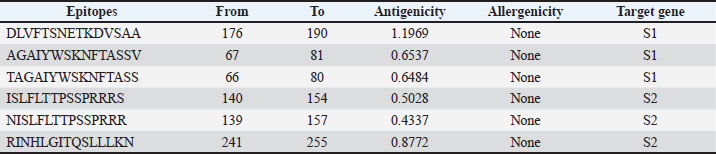
AbstractBackground: Infectious bronchitis is an acute and highly transmissible respiratory illness that causes substantial economic losses in poultry farming. Vaccination remains the primary control strategy; however, frequent mutations in the key structural protein of the virus, specifically the spike glycoprotein, reduce the effectiveness of vaccines. Aim: In this study, we used reverse vaccinology and molecular modeling approaches to design a safe and effective vaccine against infectious bronchitis in chickens. Methods: Infectious bronchitis virus-like protein was selected as the antigen target. Five multiepitope cytotoxic T cell epitopes, 6 helper T cell epitopes, and 4 linear epitopes were selected from the S1 and S2 protein sequences. The nonstructural protein sequence (nsp1-nsp4) from the Venezuelan equine encephalitis virus as a copy machinery system and the cholera toxin B subunit as a build-in adjuvant were added to the proposed vaccine. Results: Based on immunoinformatic analysis, the designed vaccine is predicted to be antigenic (antigenic score of 0.827), non-allergic, nontoxic, and stable with basic PI (9.78). The proposed model exhibits good structural integrity and a favorable binding profile. Analysis of the Ramachandran plot showed that 72% of the amino acids were located in the favored area, which is a strong indicator of a stable protein fold. A Z-score of −10.6 further validates the model’s overall geometry’s high quality. Furthermore, molecular docking showed that the proposed protein has affinity for TLR3 binding in chickens. Conclusion: Our results indicate that the proposed vaccine is a potentially effective solution for chickens with infectious bronchitis. However, additional laboratory studies are required to verify its efficacy and safety. Keywords: Immunoinformatics, Infectious bronchitis, Multiepitope vaccine, Self-amplifying mRNA. IntroductionInfectious bronchitis is a highly contagious viral disease in chickens caused by the infectious bronchitis virus (IBV), which primarily targets the respiratory tract. The disease causes severe economic losses in the poultry industry worldwide due to reduced weight gain, decreased egg production, poor egg quality, and increased mortality, particularly in young or immunocompromised birds (Bhuiyan et al., 2021a,b; Xiang et al., 2023; Woo et al., 2023; Berhanu et al., 2025). The IBV genome is an enveloped, single-stranded, non-segmented, linear, positive-sense RNA that measures approximately 27.6 Kb in length and encodes multiple structural and non-structural proteins (NSPs) crucial for viral replication. Controlling IBV remains a challenging task due to several factors, such as its ability to rapidly mutate, leading to the emergence of new strains. These mutations allow the virus to adapt and evade immunity (Xiong et al., 2024). The virus has several serotypes and genotypes, which means that a single vaccine may not offer broad protection against all circulating strains. Live attenuated and inactivated vaccines have been widely used for the treatment of cancer. Several in vivo and in vitro studies have documented the efficacy of these vaccines. However, in many cases, these vaccines fail to protect poultry farms due to the high mutation rate of IBV, especially in the S1 subunit of the spike protein, which can reduce cross-protection between vaccine strains and circulating field variants. (Yang et al., 2023). In silico methods are efficient for designing and testing new vaccines for various infectious diseases. These computational approaches allow rapid, cost-effective, and accurate assessment of vaccine efficacy. Multiepitope-based vaccines, which are highly specific, stable, and easy to deliver, are a promising strategy for improving immunization against infectious agents. Immunoinformatics has recently become a powerful tool for designing and analyzing vaccine candidates using protein databases (Alawadi et al., 2024; Mortazavi et al., 2024; Al-Fetly et al., 2025). Recently, mRNA vaccines function by encoding a viral protein within the mRNA strand, allowing the host cells to produce the protein and elicit an immune response. Once administered, cells take up the mRNA and use it to produce the viral protein. The immune system recognizes this protein as foreign and generates an immune response, including the production of antibodies (Parveen and Elkordy, 2024). Therefore, the current study aims to identify T- and B-cell epitopes that could be used to create a multiepitope mRNA vaccine for infectious bronchitis in chickens. Materials and MethodsRetrieval sequences of S1 and S2 proteinsThe amino acid sequences of the selected IBV proteins from indigenous Iraqi IBV strains were obtained from the National Center for Biotechnology Information (NCBI). The antigenicity of the S1 (Accession no: ADW11167) and S2 (Accession no: ARE67872) proteins was assessed using the Vixen v2.0 web server. Prediction of cytotoxic T lymphocyte (CTL) and helper T lymphocyte (HTL) and B cell epitopesThe Immune Epitope Database (IEDB) was used to predict CTL, HTL, and linear B cells in the conserved domains of S1 and S2 proteins (Zhao and Li, 2009). The sequence similarity of these predicted epitopes with peptides from Gallus gallus (taxid: 9031) was examined using the NCBI BLAST tool. The conservancy and antigenicity of the identified epitopes were further evaluated using the IEDB conservancy analysis tool and VaxiJen v2.0 (Doytchinova and Flower, 2007). In addition, allergenicity was assessed using the AllerTOP server (Dimitrov et al., 2013). Design and assembly of the proposed vaccineThe selected epitopes were joined using amino acid linkers. Specific linkers were applied to join the epitopes, including GPGPG (glycine–proline–glycine–proline–glycine) for CTL, AAY (alanine–alanine–tyrosine) for HTL, and KK (lysine–lysine) for B-cell epitopes. To enable replication, the NSPs nsp1–nsp4 from Venezuelan equine encephalitis virus were incorporated as the replication machinery, while Cholera Toxin B subunit (Accession No. ADF43019) was included as an intrinsic adjuvant. To enhance mRNA stability, untranslated regions (UTRs) were placed at both construct termini, and a Kozak sequence was added at the 5′ end to promote efficient translation and intracellular processing. Physicochemical profile of the proposed vaccineThe ProtParam web server was used to predict the stability and other important physical properties of the proposed vaccine (Gasteiger et al., 2005). The proposed predicted physicochemicals are listed in Table 1 of the Results section. The stability and half-life of the proposed vaccine within different cell types are critical for the accepted design and for other proposed or rejected designs. In addition, the antigenicity and allergenicity of the whole proposed protein were checked using VaxiJen v2.0 and AllerTOP, respectively. Table 1. Finalized CTL epitopes chosen for inclusion in the vaccine construct.
Forecasting the secondary structure of vaccinesEstimated protein stability, function, folding, and misfolding is required to detect secondary structure. The Prabi web server was used to predict the secondary structure of the vaccine construct (McGuffin et al., 2000). Three-dimensional structural modeling, optimization, and validation of the proposed vaccine constructThree-dimensional of the construct was evaluated in three steps. In the first step, using the trRosetta web server, the 3D structure of the protein was constructed from the amino acid sequence (Du et al., 2021). The GalaxyRefine web server was used to refine the predicted structure (Heo et al., 2013). The validity of the structure was assumed via Ramachandran plot analysis with SAVES v6.1 web server (Colovos et al., 1993). Molecular interaction analysis between chicken TLR3 and the vaccine candidateThe binding of the proposed vaccine to the selective immune cell receptor at low energy indicates that the vaccine can induce an immune response within the host. In silico and structural bioinformatics were used to predict the ability of the designed vaccine candidate (UniProt: Q0PQ88) to inhibit TLR3 expression in chickens. In the first step, the structure of TLR3 was uploaded from the UniProt website, and then the ClusPro v2.0 (Kozakov et al., 2017) web server was used to predict the receptor affinity to the proposed vaccine. mRNA structural modeling and codon optimizationTo optimize the expression of heterogeneous genes within the target host, the protein sequence was optimized using chicken as the target host. Optimization was performed using the JCat web server, considering the GC content and the codon adaptation index (CAI). The RNA fold web server was used to predict the secondary structure of the vaccine because the designed vaccine is mRNA-based (Gruber et al., 2008). Ethical approvalNot needed for this study. The article is based on immunoinformatic and does not include any animal or human samples. ResultsSequence retrievalConservative sequences of the S1 and S2 proteins of the locally recorded strains were obtained from the National Center for Biotechnology Information. Analysis of the antigenicity of both proteins showed antigenicity with antigenic scores of 0.8 and 0.9, respectively. Furthermore, both proteins are nonallergenic and nontoxigenic. Epitopes selectionThe IEDB platform was used to predict the epitope from the conservative sequence of the spike protein. Among 300 predicted B and T cell epitopes, 15 were selected as conservative, antigenic, non-allergic, and non-toxic. Three CTL epitopes from the S1 protein and two CTL epitopes from the S2 protein were selected (Table 1), whereas three HTLs from the S1 protein and three HTLs from the S2 protein were selected (Table 2). Finally, 4 linear B-lymphocyte epitope (LBL) epitopes (2 from each protein). Table 3) are candidates for the proposed vaccine. The default setting was used in all web servers used for epitope mapping, including the antigenic score, which was detected based on a threshold of 0.4. Characterization of each epitope is summarized in Tables 1, 2, and 3. The selected epitopes were passed to the next step for further analysis. Table 2. Finalized HTL epitopes chosen for inclusion in the vaccine construct.
Table 3. The finalized LBL epitopes chosen for inclusion in the vaccine construct.
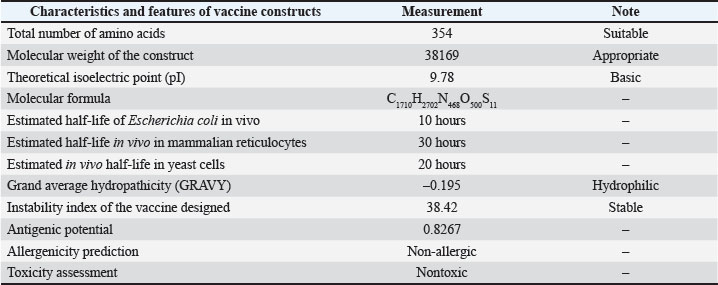
Vaccine assemblyThe candidate vaccine comprises 15 epitopes. The CTL epitopes were linked together via GPGPG, whereas the THL epitope B cells were fused together using AAY and KK linkers. The cholera toxin B subunit was linked as an adjuvant at the N-terminal to enhance the antigenicity of the proposed vaccine. A copying machinery element was added to the construct to increase the efficiency and decrease the required dose of the proposed vaccine. The Venezuelan equine encephalitis virus’s copying machinery element, which consists of four nonstructural proteins (np1-np4), was added to the vaccine to produce a self-amplified mRNA vaccine. Other functional parts, including the UTR and promoter, were incorporated into the proposed vaccine (Fig. 1). The proposed vaccine construct was assessed in terms of antigenicity, allergenicity, and toxicity using a previously mentioned web server. The antigenicity score of the vaccine was 0.8, and it showed no allergenicity to the target host and no evidence of toxicity (Table 4). The proposed vaccine construct was passed for further analysis. Table 4. Immunological and physicochemical properties of the vaccine construct.
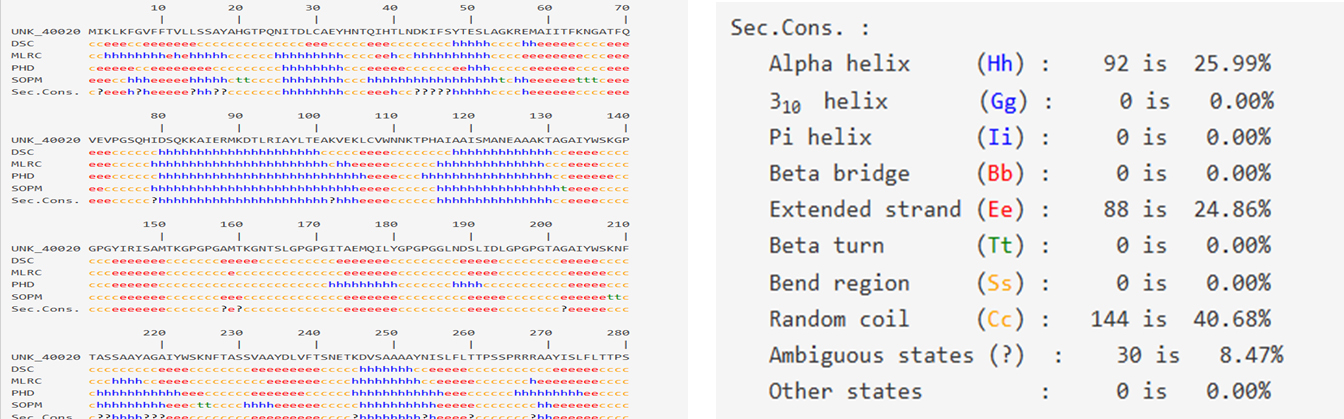
Fig. 1. Graphical representation of the mRNA multi-epitope vaccine construct: The design includes UTRs and NSP sequences (nsp1–nsp4) from the Venezuelan equine encephalitis virus as the replication system. A Kozak sequence is incorporated, along with the cholera toxin B subunit positioned at the N-terminal as an intrinsic adjuvant, connected via an endogenous adenosine amino acid kinase linker. CTL epitopes are joined using GPGPG linkers, HTL epitopes with AAY linkers, and B-cell epitopes with KK linkers. The UTR is connected at the construct’s C-terminal end. Physicochemical analysis of the vaccine modelThe analysis indicated that the construct exhibited strong stability and possessed favorable estimated half-lives across various host cells. As presented in Table 4, the proposed construct can remain in mammalian cells for up to 30 hours and 10 hours in Escherichia coli (E. coli), and it can remain in yeast for around 20 hours. The other predicted properties of the construct included a suitable number of amino acids (354 amino acids), an appropriate molecular weight of 38,196, and a theoretical pI of 9.78, indicating the basic nature of the construct. Table 4 summarizes the proposed vaccine’s physicochemical properties. Analysis of secondary structural elementsAnalysis of the secondary structure of the construct showed that the random coil represented 40% and the alpha helix constituted 25%, whereas the extended strand occupied 24% of the construct (Fig. 2). Overall, the construct is stable and possesses limited unfolded regions, enhancing its recognition by the host’s immune system.
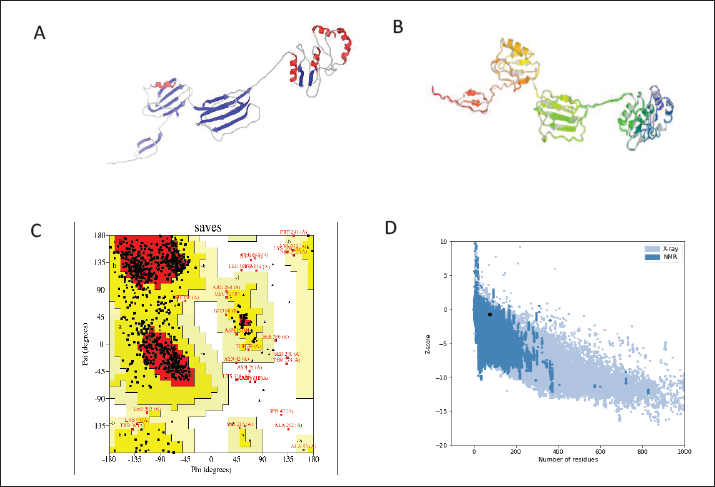
Fig. 2. Secondary structural elements of the vaccine construct: alpha helices (blue), random coils (orange), and extended strands (red). Prediction of the 3D structure of the proposed vaccine constructAmong the 10 models, model 1 with a high confidence score (CS) was chosen (Fig. 3A). The selected model was refined using the Galaxy web server. The refined model (Fig. 3B) demonstrated acceptable structural properties, with the refined structure exhibiting a low root mean square deviation value of 0.473. MolProbity score of 2.4, Clash score of 19.8, and Rama-favorable region of 85.8. After the model was created and refined, the final stage was validity checking. Validity was checked using the SAVE web server. According to the Ramachandran plot (Fig. 3C), 72% of the residue was located in the favored area, whereas 24.4% was located in the additionally allowed area. Fig. 3D shows that the Z-score of the proposed structure was –10.3. Overall, the results revealed that the proposed vaccine construct was stable, flexible, and valid.
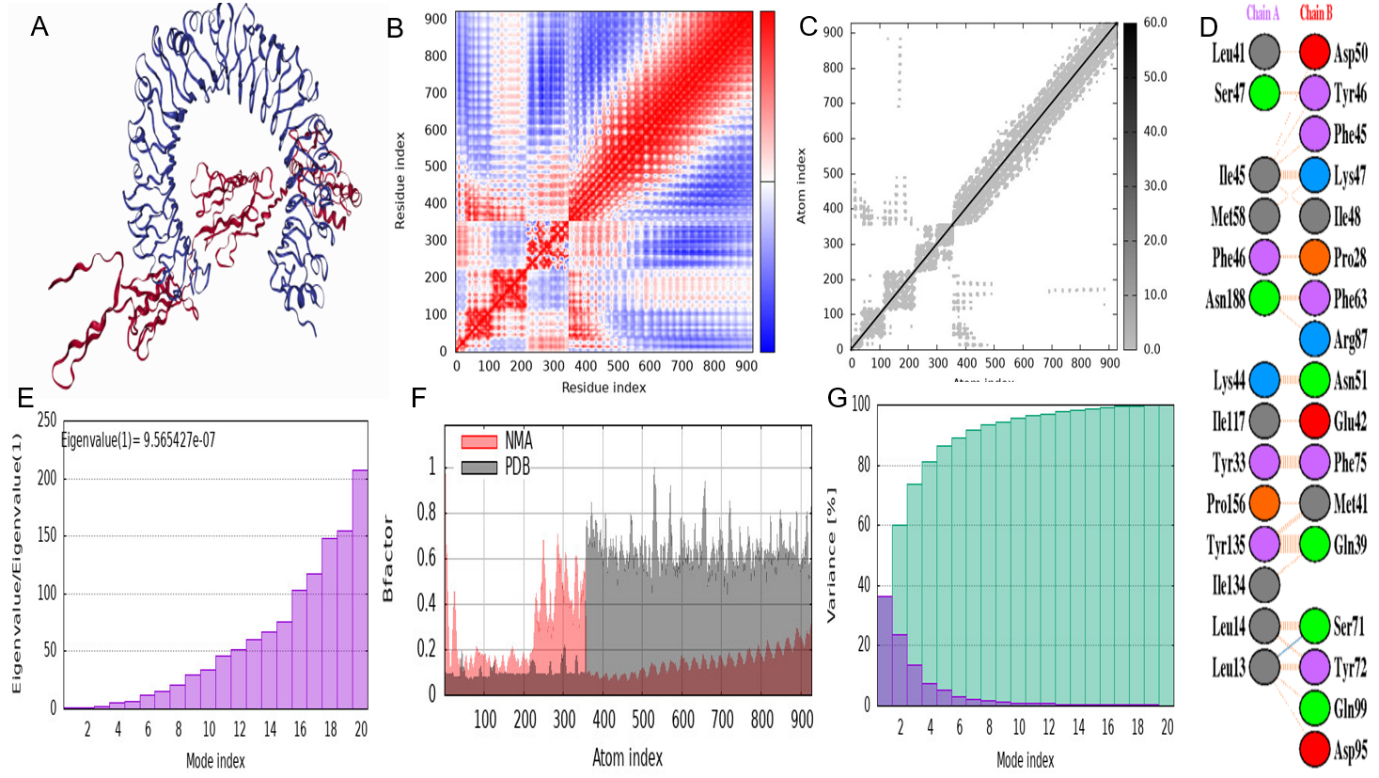
Fig. 3. Three-dimensional modeling, refinement, and validation of the vaccine construct. (A) Initial 3D model generated using trRosetta. (B) Model refinement performed using GalaxyRefine. (C) Ramachandran plot analysis of the refined structure. (D) Validation of the model through Z-score evaluation using the SAVE server. Analysis of the interaction of the proposed vaccine with TLR3 in chickens via molecular dockingTen possible interaction models were generated for the tested molecule. Based on the scoring, model 1 was selected to represent the docking complex (Fig. 4A). Analysis of the complex showed a GOAP score of –103,527.31 and DFIRE score of –78,790.11 which reveal strong binding affinity between the proposed vaccine and receptor at low energy. The PDBsum web server was used to estimate the interaction of amino acids across the interface of the two molecules within the complex. The structural stability and flexibility of the docked vaccine–receptor complex were further investigated using the iMODS server through normal mode analysis. The covariance matrix (Fig. 5b) illustrates the correlated motions among amino acid residues within the complex. In this representation, red regions indicate residues that move in a correlated manner, whereas blue areas correspond to anti-correlated motions. The white regions represent residues with minimal or no dynamic correlation. The interactions between virtual spring-connected residue pairs are further described by the elastic network model (Fig. 5C). In this model, darker or denser gray springs represent stronger mechanical constraints between residues, indicating regions that significantly contribute to maintaining the structural integrity of the complex. As shown in Fig. 4D, a large interface area (1,005 + 846) and 161 non-bounded contacts with one hydrogen bound are present. These results reveal that the binding between chains A and B was stable and strong, suggesting that it is a biological complex. The deformability profile of the docked structure (Fig. 5E) demonstrates the potential flexibility of each residue in the vaccine–receptor complex. The calculated eigenvalue for the complex was 9.565427 × 10⁻⁷.Lower eigenvalues indicate that the complex can undergo conformational movements with relatively low energy requirements.
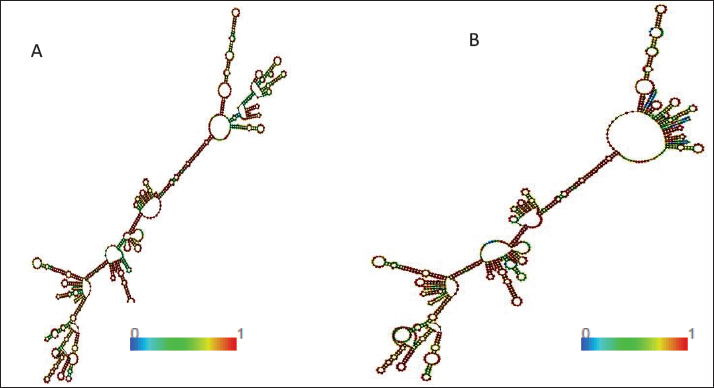
Fig. 4. Modeled vaccine and chicken TRL3 interaction (A) Docking complex. Brown indicates the vaccine, and blue indicates the TLR. (B) ovarian of the complex. (C) Elastic Network (Heatmaps). (D) Detailed mapping of amino acid interactions in the vaccine-TLR complex. (E) Normal Mode Analysis (NMA) eigenvalue plot: eigenvalues value the complex. (F) NMA: B-factor (G): NMA: variance contribution plot. Furthermore, the predicted network model was compared with the experimentally derived structures deposited in the Protein Data Bank (Fig. 5F). The normal mode and B-factor graphs provide insight into the mobility and dynamic behavior of the docked complex. Finally, the variance analysis (Fig. 5G) shows the cumulative and individual contributions of the normal modes to the complex’s overall motion. In this representation, the light green curve corresponds to the cumulative variance, whereas the purple bars represent the variance associated with the individual modes. Collectively, these results indicate that the vaccine–TLR3 complex exhibits appropriate flexibility and structural stability, supporting the reliability of the predicted interaction. Codon optimization and prediction of mRNA vaccine structureThe GC content improved from 59.23% before optimization to 60.51%, whereas the CAI increased from 0.73 to 0.89. The proposed mRNA code could be translated within the target host (chicken). The RNAfold web server was used to predict RNA structure (Fig. 5). The analysis of the mRNA molecule revealed that the free energy of the centroid secondary structure was 336.50 kcal/mol while the optimal secondary structure a minimum free energy was –377.70 kcal/mol. The mRNA molecule exhibited strong thermodynamic stability and was likely to be stably expressed in vivo.
Fig. 5. Structural representation of the mRNA construct proposed. (A) The predicted optimal secondary structure. (B) The centroid secondary structure of the mRNA. DiscussionInfectious bronchitis is an acute respiratory disease that mainly affects chickens and is characterized by severe respiratory symptoms, decreased egg production, and severe economic losses. IB is caused by a single-stranded RNA virus belonging to the Coronaviridae family. The main structure of the virus is composed of four structural proteins: the spike glycoprotein (S), membrane glycoprotein (M), small envelope glycoprotein (E), and nucleocapsid glycoprotein (N) (Khudeir et al., 2024). After translation, the spike protein cleaves into two independent polypeptides, including S1 and S2. Both proteins have highly antigenic properties and the ability to induce an immune response (Bhuiyan et al., 2021a,b). Vaccination with live attenuated/killed vaccines, along with rigorous biosecurity measures, is one of the most important methods for IB control. However, the aforementioned genetic diversity of these viruses is a significant obstacle to the efficient and effective protection of flocks from potential outbreaks, as there is poor cross protection between heterologous strains (DeWit and Cook, 2020). Vaccines do not fully protect chickens from virus infection, and diseases have been reported in vaccinated chickens (Rahman et al., 2019; El-Aried et al., 2019; Ravikumar et al., 2022). The reduced protective efficacy of traditional vaccines is primarily associated with circulating strains and spike protein sequence variability (Khan et al., 2021). A novel vaccine with a wide range of circulating strains is urgently needed to protect chickens from infection (Jordan and B, 2017). During the COVID-19 outbreak, several vaccines based on reverse vaccinology approaches combined with mRNA were developed against several pathogens (Da Silva et al., 2023a,b). Two categories of mRNAs, specifically self-amplifying and nonreplicating mRNA, are commonly used as vaccination vectors. Nonreplicating mRNA only encodes the desired protein antigen(s), whereas self-amplifying mRNA encodes proteins that promote RNA replication. Self-amplifying mRNA vaccines encode a single-stranded RNA virus genome. They are designed to enhance the expression length and intensity, along with the ensuing immunological response elicited by the encoded antigen(s) (Bloom et al., 2021). Following a single replication cycle, they significantly enhance the synthesis of sub-genomic mRNA that encodes the desired antigen(s) (Maruggi et al., 2019). The primary problem in developing mRNA vaccines is optimizing stability and delivery mechanisms due to the instability and ease of mRNA breakdown (Liu et al., 2022). Although some of these problems have been substantially removed by mRNA modification, intracellular mRNA distribution remains a significant obstacle. (Wadhwa et al., 2020). Compared with traditional vaccines, new generation vaccines are characterized by low production cost, high specificity, robust stimulation of humeral and cellular responses, and improved safety (Da Silva et al., 2023a,b; Ponne et al., 2024). In this study, a multiepitope mRNA-based vaccine was designed against the IBV, with S1 and S2 proteins selected as target antigens for vaccine construction. The proposed vaccine consisted of 15 T and B cell epitopes from both spike protein types. A copy machinery system derived from the positive-sense Venezuelan equine encephalitis virus was incorporated into the vaccine construct to enable the mRNA to replicate within the host cell and produce a high amount of antigen. Self-replicating mRNA is considered the next generation of mRNA, which has been developed recently. It increases the efficiency of the vaccine and decreases its required dose compared with the conventional mRNA vaccine. Immunoinformatic analysis of the proposed vaccine indicates that it is highly antigenic, non-allergenic, stable, and probably efficiently expressed within host cells. Additionally, the construct demonstrated structural validity, flexibility, and strong potential to bind the chicken TLR3 immune receptor at low binding energy. Taken together, the proposed vaccine might be a good option for controlling infectious bronchitis in chickens and resolving vaccine failure, which is usually caused by circulating strain and high spike protein variation. However, more laboratory-based studies are needed to confirm the vaccine’s ability to stimulate the immune response, protect against virus infection, and ensure its safety. ConclusionA multiepitope self-replicating mRNA-based vaccine against IBV infection in chickens was designed using immunoinformatic tools. The proposed mRNA vaccine has five CTL epitopes of S1 and S2 proteins, six HTL epitopes, and four B cell epitopes. Other feature including four NSP1-4 as self-replicating elements, build-in adjuvant (Cholera toxin B subunit), and other functional elements that enhance stability and translation within host cells. Immunoinformatic analysis of the assembled vaccine indicates that the proposed vaccine is stable, immunogenic, and capable of binding effectively to the immune receptor of the host cell. The selection of epitope based on the highly conservative region of the spike protein makes the vaccine a promising option against the circulating IBV strain. However, in vitro and in vivo wet-lab experiments are needed to confirm the stability, safety, and ability of the proposed vaccine to induce an immune response and protect chickens from the IBV. AcknowledgmentsThe authors gratefully acknowledge the Deanship of the College of Veterinary Medicine at Al-Qadisiyah University for their support of this study. FundingThis study did not receive any funds. Author’s contributionsAmjed and Hayder designed the study plan while Abbas analyzed the data. All authors contributed to writing the manuscript and approved the final submission. Conflict of interestThe authors declare no conflicts of interest associated with this work. Data availabilityData available on request from the corresponding author. ReferencesAlawadi, Z.I., Alsultan, A., Alsallami, D., Alnomasy, S.F., Alqasmi, M., Almufarriji, F.M., Alotaibi, B.S., Mazhari, B.B.Z. and Alenazy, R., 2024. Designing a multiepitope mRNA-based vaccine against enterotoxigenic Escherichia coli infection in calves: immunoinformatics and molecular modeling approach. Open Vet. J. 14(6), 1417–1425. Al-Fetly, D.R., Alsallami, D. and Alsultan, A. 2025. Immunoinformatic development of a multiepitope messenger RNA vaccine targeting lipoate protein ligase and dihydrolipoamide dehydrogenase proteins of Mycoplasma bovis in cattle. Vet. World 18(6), 1675. Berhanu, N., Hirpa, E., Mohammed, H., Legesse, A., Deresse, G., Assefa, E., Tesgera, T., Akalu, M., Abayneh, T., Bayissa, B. and Tesfaw, L. 2025. Isolation, molecular identification, and phylogenetic analysis of infectious bronchitis virus from commercial chicken farms in Mekele and Bishoftu, Ethiopia, 2023–2024. Virol. J. 22(1), 90. Bhuiyan, M.S., Amin KF Rodrigues., Saallah SM Shaarani., Sarker. and Siddiquee. 2021. Infectious bronchitis virus (gammacoronavirus) in poultry farming: vaccination, immune response, and mitigation measures. Vet. Sci. 8(11), 273. Bhuiyan, M.U., Stiboy, E., Hassan, M.Z., Chan, M., Islam, M.S., Haider, N., Jaffe, A. and Homaira, N. 2021. Epidemiology of COVID-19 infection in young children under five years: a systematic review and meta-analysis. Vaccine 39(4), 667–677; doi:10.1016/j.vacvac.2020.11.003 Bloom, K., Van Den Berg, F. and Arbuthnot, P. 2021. Self-amplifying RNA vaccines for infectious diseases. Gene Therapy 28(3), 117–129. Colovos, C. and Yeates, T.O. 1993. Verification of protein structures: patterns of nonbonded atomic interactions. Protein Sci. 2(9), 1511–1519. Da Silva, M.K., Campos, D.M., Akash, S., Akter, S., Yee, L.C., Fulco, U.L. and Oliveira, J.I. 2023. Advances in reverse vaccinology for the design of mRNA vaccines against SARS-CoV-2: a review of methods and tools. Viruses 15(10), 2130. Da Silva, M.K., Campos, D.M.D.O., Akash, S., Akter, S., Yee, L.C., Fulco, U.L. and Oliveira, J.I.N. 2023. Advances of reverse vaccinology for mRNA vaccine design against SARS-CoV-2: a review of methods and tools. Viruses 15(10), 2130. De Wit, J.J. and Cook, J.K. 2020. Spotlight on avian coronaviruses. Avian Pathol. 49(4), 313–316. Dimitrov, I., Flower, D.R. and Doytchinova, I. 2013. AllerTOP—a server for in silico allergen prediction. BMC. Bioinf. 14(Suppl 6), S4. Doytchinova, I.A. and Flower, D.R. 2007. VaxiJen: a server for predicting protective antigens, tumor antigens, and subunit vaccines. BMC. Bioinf. 8(1), 4. Du, Z., Su, H., Wang, W., Ye, L., Wei, H., Peng, Z., Anishchenko, I., Baker, D. and Yang, J. 2021. The trRosetta server for fast and accurate protein structure prediction. Nature. Protocols. 16(12), 5634–5651. El-Aried, T.A., Mansour, S.M.G., Elbakrey, R.M., N. Ismail, A.E.S. and Eid, A.A.M. 2019. Infectious bursal disease virus: molecular epidemiologic perspectives and impact on vaccine efficacy against avian influenza and Newcastle disease viruses. Avian. Dis. 63(4), 606–618; doi:10.1016/j.avidiandiseases.2019.03.007 Gasteiger, E., Hoogland, C., Gattiker, A., Duvaud, S.E., Wilkins, M.R., Appel, R.D. and Bairoch, A. 2005. Protein identification and analysis tools on the ExPASy server. In The proteomics protocols handbook. Totowa, NJ: Humana Press, pp: 571–607. Gruber, A.R., Lorenz, R., Bernhart, S.H., Neuböck, R. and Hofacker, I.L. 2008. The Viral RNA Websuite. Nucleic. Acids. Res. 36(suppl_2), W70–W74. Heo, L., Park. and Seok. 2013. GalaxyRefine: refined protein structure driven by side-chain repacking. Nucleic. Acids. Res. 41(W1), W384–W388. Jordan. and B. 2017. Vaccination against the infectious bronchitis virus: a continuous challenge. Vet. Microbiol. 206, 137–143. Khan, M.I., Arshad, M., Mahmood, M.S. and Hussain, I. 2021. Factor influences for diagnosis and vaccination of avian infectious bronchitis virus (Gammacoronavirus) in chickens. Vet. Med. Sci. 7(3), 1021–1037. Khudeir, M.A., Alsultan, A.S. and Khudhair, Y.I. 2024. Novel CRISPR/Cas13-based assay for diagnosis of avian infectious bronchitis. Iraqi. J. Vet. Sci. 38(1), 63–69; doi:10.1016/j.ijvs.2024.04.016 Kozakov, D., Hall, D.R., Xia, B., Porter, K.A., Padhorny, D., Yueh, C., Beglov, D. and Vajda, S. 2017. The ClusPro web server for protein–protein docking. Nat. Protoc. 12, 255–278. Liu, A. and Wang, X. 2022. The pivotal role of chemical modifications in mRNA therapeutics. Front. Cell Dev. Biol. 10, 901510. Maruggi, G., Zhang, C., Li, J., Ulmer, J.B. and Yu, D. 2019. MRNA as a transformative technology for vaccine development to control infectious diseases. Mol. Therapy. 27(4), 757–772. Mcguffin, L.J., Bryson, K. and Jones, D.T. 2000. The PSIPRED protein structure prediction server. Bioinformatics 16(4), 404–405; doi:10.1016/j.bioinformatics.2000.09.007 Mortazavi, B., Molaei, A. and Fard, N.A. 2024. Multi-epitope vaccines, from design to expression; an in silico approach. Hum. Immunol. 85(3), 110804. Parveen, A. and Elkordy, A.A. 2024. Brief insights into mRNA vaccines: their successful production and nanoformulation for effective response against COVID-19 and their potential success for influenza A and B. Pathogens 13(6), 500. Ponne, S., Kumar, R., Vanmathi, S.M., Brilhante, R.S.N. and Kumar, C.R. 2024. Reverse engineering protection: a comprehensive survey of reverse vaccinology-based vaccines targeting viral pathogens. Vaccine 42(10), 2503–2518. Rahman, M.A., Rahman, M.M., Abdullah, M.S., Sayeed, M.A., Rashid, M.H., Mahmud, R., Belgrad, J.P. and Hoque, M.A. 2019. Epidemiological assessment of clinical poultry cases through the government veterinary hospital-based passive surveillance system in Bangladesh: a case study. Trop. Anim. Health Prod. 51(4), 967–975; doi:10.1007/s00404-002-0707-4 Ravikumar, R., Chan, J. and Prabakaran, M. 2022. Vaccines against major poultry viral diseases: strategies to improve the breadth and protective efficacy. Viruses 14(6), 1195. Sreejesh, G. (n.d.). A bioinformatics approach using MD to characterize interactions between small biomolecules and myoglobins from mammalian and avian species [Doctoral dissertation, Oklahoma State University]. Wadhwa, A., Aljabbari, A., Lokras, A., Foged, C. and Thakur, A. 2020. Opportunities and challenges in the delivery of mRNA-based vaccines. Pharmaceutics 12(2), 102. Woo, P.C.Y., De Groot, R.J., Haagmans, B., Lau, S.K.P., Neuman, B.W., Perlman, S., Sola, I., Van Der Hoek, L., Wong, A.C.P. and Yeh, S.H. 2023. ICTV Virus Taxonomy Profile: coronaviridae 2023: This article is part of the ICTV Virus Taxonomy Profiles collection. J. Gen. Virol. 104(4), 001843. Xiang, X., Lv, J., Dong, M., Li, N., Li, Y., Wang, A., Shen, Y., Li, S., Xu, J., Cui, M., Han, X., Xia, J. and Huang, Y. 2023. Radix Isatidis polysaccharide (RIP) resists the infection of QX-type infectious bronchitis virus via the MDA5/TLR3/IRF7 signaling pathway. Poultry. Sci. 102(4), 2534. Xiong, T., Xie, H., Li, L., Liang, S., Huang, M., Yu, C., Zhuang, T., Liang, X., Liu, D. and Chen, R. 2024. Prevalence, genotype diversity, and distinct pathogenicity of 205 gammacoronavirus infectious bronchitis virus isolates in China from 2019 to 2023. Viruses 16(6), 930. Yang, C.Y., Peng, P., Liu, X., Cao, Y. and Zhang, Y. 2023. Effect of monovalent and bivalent live-attenuated vaccines against QX-like IBV infection in young chickens. Poultry Sci. 102(4), 102501. Zhao, L. and Li, J. Sequence-based B-cell epitope prediction by using associations in antibody-antigen structural complexes. In 2009 IEEE International Conference on Bioinformatics and Biomedicine Workshop,2009 IEEE, pp 165–172. | ||



| How to Cite this Article |
| Pubmed Style Al-mahmoudi AHJ, Ayyez HN, Alsultan A. Engineering a multiepitope self-amplifying mRNA vaccine against infectious bronchitis virus infection in chicken: Bioinformatics and molecular modeling approaches. Open Vet. J.. 2026; 16(6): 3777-3785. doi:10.5455/OVJ.2026.v16.i6.49 Web Style Al-mahmoudi AHJ, Ayyez HN, Alsultan A. Engineering a multiepitope self-amplifying mRNA vaccine against infectious bronchitis virus infection in chicken: Bioinformatics and molecular modeling approaches. https://www.openveterinaryjournal.com/?mno=304435 [Access: June 26, 2026]. doi:10.5455/OVJ.2026.v16.i6.49 AMA (American Medical Association) Style Al-mahmoudi AHJ, Ayyez HN, Alsultan A. Engineering a multiepitope self-amplifying mRNA vaccine against infectious bronchitis virus infection in chicken: Bioinformatics and molecular modeling approaches. Open Vet. J.. 2026; 16(6): 3777-3785. doi:10.5455/OVJ.2026.v16.i6.49 Vancouver/ICMJE Style Al-mahmoudi AHJ, Ayyez HN, Alsultan A. Engineering a multiepitope self-amplifying mRNA vaccine against infectious bronchitis virus infection in chicken: Bioinformatics and molecular modeling approaches. Open Vet. J.. (2026), [cited June 26, 2026]; 16(6): 3777-3785. doi:10.5455/OVJ.2026.v16.i6.49 Harvard Style Al-mahmoudi, A. H. J., Ayyez, . H. N. & Alsultan, . A. (2026) Engineering a multiepitope self-amplifying mRNA vaccine against infectious bronchitis virus infection in chicken: Bioinformatics and molecular modeling approaches. Open Vet. J., 16 (6), 3777-3785. doi:10.5455/OVJ.2026.v16.i6.49 Turabian Style Al-mahmoudi, Abbas Hadi Jasim, Hayder Naji Ayyez, and Amjed Alsultan. 2026. Engineering a multiepitope self-amplifying mRNA vaccine against infectious bronchitis virus infection in chicken: Bioinformatics and molecular modeling approaches. Open Veterinary Journal, 16 (6), 3777-3785. doi:10.5455/OVJ.2026.v16.i6.49 Chicago Style Al-mahmoudi, Abbas Hadi Jasim, Hayder Naji Ayyez, and Amjed Alsultan. "Engineering a multiepitope self-amplifying mRNA vaccine against infectious bronchitis virus infection in chicken: Bioinformatics and molecular modeling approaches." Open Veterinary Journal 16 (2026), 3777-3785. doi:10.5455/OVJ.2026.v16.i6.49 MLA (The Modern Language Association) Style Al-mahmoudi, Abbas Hadi Jasim, Hayder Naji Ayyez, and Amjed Alsultan. "Engineering a multiepitope self-amplifying mRNA vaccine against infectious bronchitis virus infection in chicken: Bioinformatics and molecular modeling approaches." Open Veterinary Journal 16.6 (2026), 3777-3785. Print. doi:10.5455/OVJ.2026.v16.i6.49 APA (American Psychological Association) Style Al-mahmoudi, A. H. J., Ayyez, . H. N. & Alsultan, . A. (2026) Engineering a multiepitope self-amplifying mRNA vaccine against infectious bronchitis virus infection in chicken: Bioinformatics and molecular modeling approaches. Open Veterinary Journal, 16 (6), 3777-3785. doi:10.5455/OVJ.2026.v16.i6.49 |


