





| Research Article | ||
Open Vet. J.. 2026; 16(6): 3494-3505 Open Veterinary Journal, (2026), Vol. 16(6): 3494-3505 Research Article Four-year surveillance of mycotoxin contamination in animal feedstuffs and feed materials in Thailand (2021–2024)Prakorn Jala1, Sudtisa Laopiem2, Pun Panomwan2, Kraisiri Khidkhan3* and Sittinee Kulprasertsri2*1Kamphaeng Saen Veterinary Diagnostic Center, Faculty of Veterinary Medicine, Kasetsart University, Nakhon Pathom, Thailand 2Department of Farm Resources and Production Medicine, Faculty of Veterinary Medicine, Kasetsart University, Nakhon Pathom, Thailand 3Department of Pharmacology, Faculty of Veterinary Medicine, Kasetsart University, Bangkok, Thailand *Corresponding Author: Kraisiri Khidkhan. Department of Pharmacology, Faculty of Veterinary Medicine, Kasetsart University, Bangkok, Thailand. Email: kraisiri.kh [at] ku.th and Sittinee Kulprasertsri. Department of Farm Resources and Production Medicine, Faculty of Veterinary Medicine, Kasetsart University, Kamphaeng Saen Campus, Nakhon Pathom, Thailand. Email: sittinee.k [at] ku.th Submitted: 12/12/2025 Revised: 22/04/2026 Accepted: 04/05/2026 Published: 05/06/2026 © 2025 Open Veterinary Journal
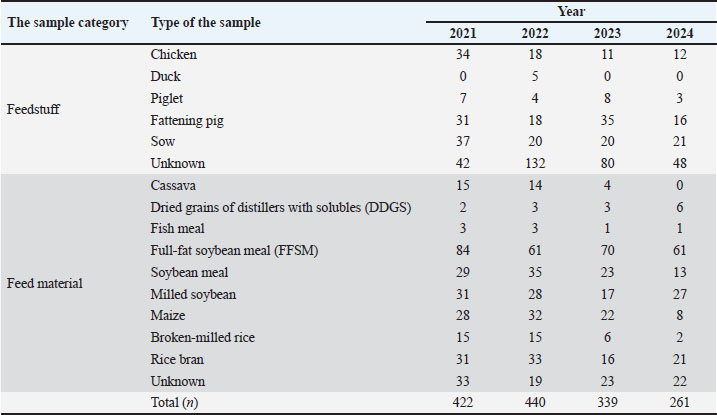
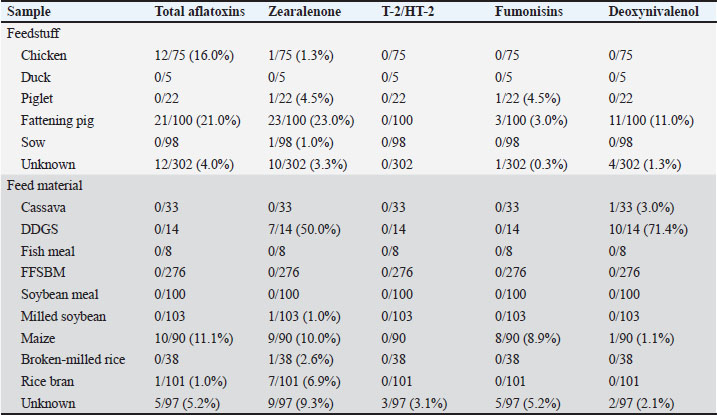
ABSTRACTBackground: Mycotoxin contamination in animal feeds poses a substantial challenge to the livestock sector and poses health risks to food-producing animals. Over the past 4–5 years, there has been an increase in the warnings by experts regarding environmental pollution and global warming, associating these factors with the presence of mycotoxin-producing fungi in food and feed across different geographical regions worldwide, including Thailand. Aim: The contamination levels of aflatoxin, zearalenone, fumonisin, T-2/HT-2, and deoxynivalenol among feed materials and feedstuffs submitted to the Kamphaeng Saen Veterinary Diagnostic Center, Faculty of Veterinary Medicine, Kasetsart University, Thailand were investigated. Methods: All samples (n=1 462) were obtained from several public and private farms across the country between January 2021 and December 2024. Sample preparation and mycotoxin determination were performed using enzyme-linked immunosorbent assay kits, following the manufacturer’s instructions. Results: For the tested feed materials, the maximum mean levels of zearalenone, T-2/HT-2, and deoxynivalenol were detected in distillers’ dried grains with solubles (DDGS), while the greatest mean concentrations of total aflatoxins and fumonisins were recorded in unknown feed materials. Among the feedstuff samples, the fattening pig feedstuff had the highest mean mycotoxins. The analysis of mycotoxin co-contamination showed that most samples within each feed type were contaminated with a single mycotoxin (mainly aflatoxin or zearalenone), except for the DDGS and Full-fat soybean meal (FFSBM). In contrast, most feedstuff samples had multiple co-contaminations of mycotoxin. Conclusion: All mycotoxin levels in the fish meal, FFSBM, and soybean meal samples were below the European Commission’s regulatory limits. In contrast, the DDGS and maize samples were feed materials with high levels of contamination from various mycotoxins, requiring thorough screening before animal feeding. Keywords: Contamination, Enzyme-linked immunosorbent assay (ELISA), Feed material, Feedstuff, Mycotoxins. IntroductionMycotoxins are toxic secondary metabolites produced by fungi that can cause a wide range of health impairments in animals and humans, resulting in economic losses (Awuchi et al., 2021). Thus, mycotoxin contamination of agricultural products during harvest, pre-harvest, and post-harvest is a critical global concern (Hussein and Brasel, 2001). Mycotoxins found in foods and feeds include regulated mycotoxins (aflatoxins, zearalenone, ochratoxin A, deoxynivalenol, fumonisins, T-2 toxin, and HT-2 toxin) and some emerging mycotoxins (including sterigmatocystin, beauvericin, and enniantins) (Muñoz-Solano et al., 2024). These mycotoxins have different adverse effects on animals depending on the type of mycotoxin, contamination level, species, and susceptibility (Khan et al., 2024; Muñoz-Solano et al., 2024). While ruminants have lower sensitivity than pigs and poultry, one of the most sensitive livestock species to mycotoxins is the pig (Pierron et al., 2016; Buszewska-Forajta, 2020). In addition, ducks, especially ducklings, are more sensitive to aflatoxins than other poultry species (Zheng et al., 2022). Livestock, including pigs, chickens, ducks, dairy cattle, sheep, and goats, can be exposed to mycotoxins through several routes; however, the most important route is ingestion through feedstuffs (Alvito et al., 2022). The major problem related to mycotoxin-contaminated animal feed is not acute disease outbreaks, but rather chronic consumption of low-level toxins (Bryden, 2012). The low-level mycotoxin intake in food-producing animals results in liver damage, dehydration, anorexia, vomiting, diarrhea, weakness, respiratory infections and pulmonary edema, nephrotoxicity, stunted growth, diminished productivity (decreased milk yield, egg production, and meat quality), immunosuppression, increased disease susceptibility, and reproductive problems such as infertility, hypoestrogenism, and abortions (Bryden, 2012; Buszewska-Forajta, 2020; Muñoz-Solano et al., 2024). Notably, several studies have demonstrated that these diseases in livestock are related to exposure to common mycotoxins, including aflatoxins, zearalenone, deoxynivalenol, fumonisins, and T-2/HT-2 toxin (Haschek et al., 2001; Wu et al., 2016; Nayakwadi et al., 2020; Paneru et al., 2024; Wang et al., 2024; Kępka-Borkowska et al., 2025). Therefore, surveillance monitoring of animal feed ingredients is required for the detection of these five common mycotoxins. The occurrence of fungal growth and mycotoxin synthesis in tropical areas, such as Thailand, is influenced by climatic factors, including rising temperatures and humidity, altered precipitation patterns, and extreme weather phenomena (Chuaysrinule et al., 2024; George et al., 2025). Thai people and domestic animals have a high risk of mycotoxin exposure from daily diets and feeds (Warth et al., 2014; Kananub et al., 2021; Noppakuadrittidej et al., 2025). Therefore, controlling mycotoxin exposure in humans and animals, as well as the surveillance of mycotoxin contamination in foods and feeds, are of utmost importance in Thailand. To reduce risk to animal health and prevent mycotoxin contamination in animal-derived products, mycotoxin contamination in animal feed should be evaluated and monitored regularly (Muñoz-Solano et al., 2024). Over the past 4–5 years, there has been an increase in the warnings by experts regarding environmental pollution and global warming, associating these problems with mycotoxin-producing fungi in food and feed in different geographical regions worldwide, including Thailand (Kos et al., 2023; Casu et al., 2024). However, data on mycotoxin contamination in animal feed are scarcely reported in Southeast Asia, especially Thailand. Therefore, this study hypothesized that the trend and pattern of mycotoxin contamination in Thailand’s feed materials may have changed during these years. The aims of this study were as follows: 1) to investigate the contamination levels and co-occurrence patterns of major mycotoxins in animal feed materials and feedstuffs in Thailand, and 2) to estimate the stage at which they contaminate the feed materials and feedstuffs. This study used data acquired during 4 years of routine work at the Kamphaeng Saen Veterinary Diagnostic Center, Faculty of Veterinary Medicine, Kasetsart University, Thailand, to investigate the contamination levels of aflatoxin, zearalenone, fumonisin, T-2/HT-2, and deoxynivalenol in 1 462 samples of animal feedstuffs and feed materials. The relationships of mycotoxins among feed materials and feedstuffs were also assessed. However, it was also hypothesized that some feed materials, especially maize and the distillers’ dried grains with solubles (DDGSs), had higher multimycotoxin contamination than other feed materials. Furthermore, the contamination levels of aflatoxin, zearalenone, T-2/HT-2, fumonisin, and deoxynivalenol were expected to be considerably higher in the feedstuffs for pigs than for other species. This study could enhance the understanding of the differences and dynamic fluctuations in the prevalence of mycotoxins in animal feed materials and feedstuffs in Thailand. Materials and MethodsSampleAll samples for diagnostic analysis (n=1 462) were randomly obtained from several public and private farms across the country between January 2021 and December 2024. Samples were categorized into two types: feed material or feed ingredient (n=860) and feedstuff or complete feed (n=602). Details and numbers of samples are shown in Table 1. Since various samples were sent to the diagnostic center for several reasons, including research, development of diagnostic tools, quality control, and validation checks, some samples from companies or farms were concealed due to confidential information. In addition, the source or composition, or both, of some samples could not be identified and were labeled as unknown feed materials and feedstuffs. These unknown samples were typically ground and submitted as fine or coarse powder. During 2021–2024, unknown feedstuffs were collected mainly in the Veterinary Diagnostic Center, whereas duck feedstuffs were rarely acquired. Except for unknown samples, pig feedstuffs, including piglet, fattening pig, and sow feedstuffs, were the most frequently tested for mycotoxin contamination in this accredited veterinary diagnostic center. Full-fat soybean meal (FFSBM) was a common feed source for feed material samples, whereas fish meal has only been submitted rarely in recent years. Samples were analyzed at the Diagnosis Center as soon as possible after the acquisition. All samples were immediately ground, passed through a 20-mesh sieve, and kept in a refrigerator at 2°C–8°C until further preparations within 1–2 days to prevent fungal growth. All processes were thoroughly validated and authorized by the Thai Bureau of Laboratory Accreditation, Department of Science Service, according to ISO/IEC 17025: 2017. Table 1. Number of samples (n) obtained from January 2021 to December 2024.
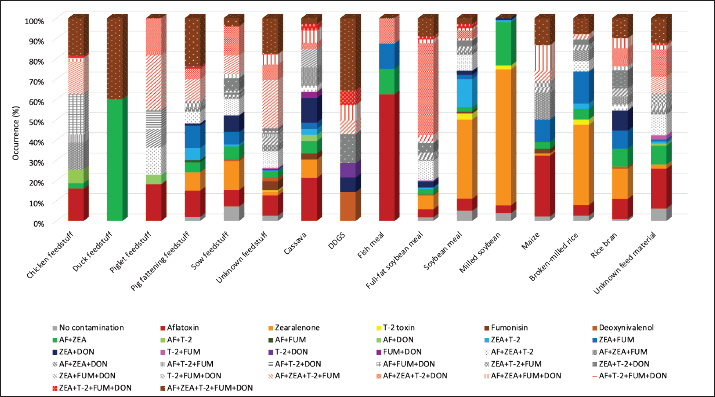
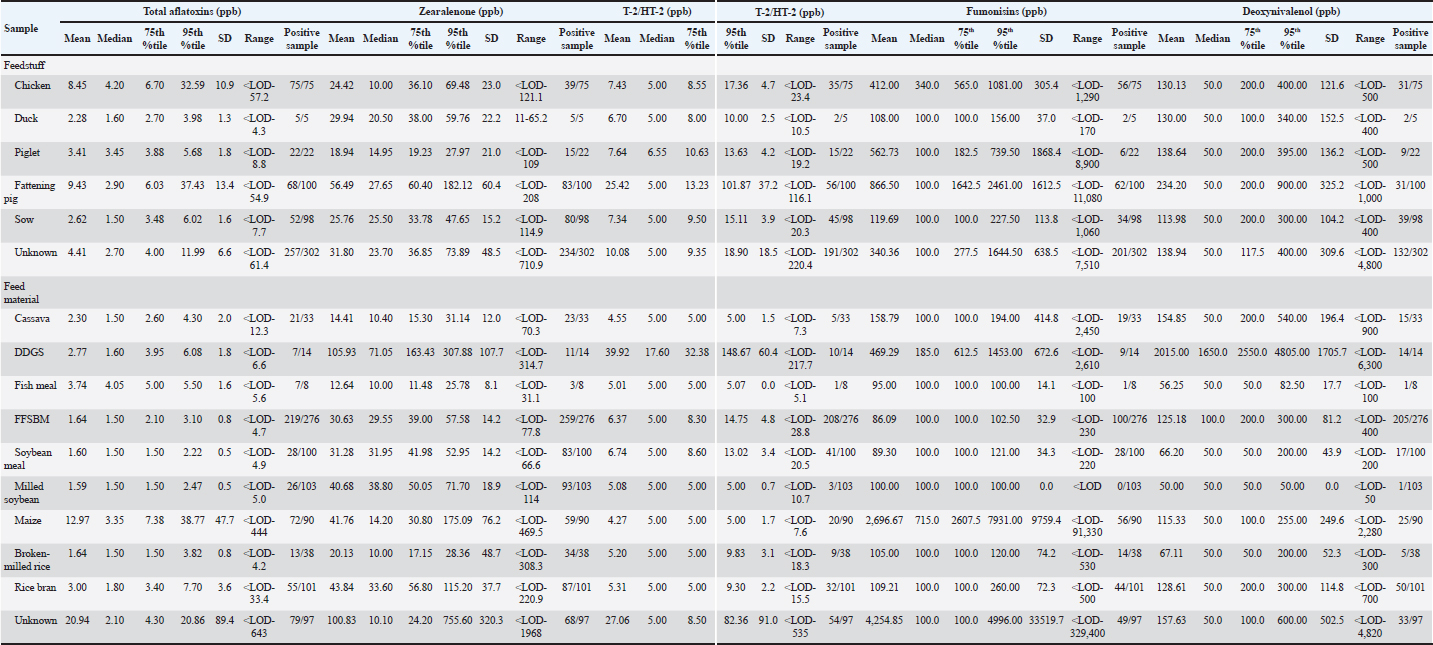
Mycotoxin detectionSample preparation and mycotoxin determination were performed using enzyme-linked immunosorbent assay (ELISA) kits, following the manufacturer’s instructions. For aflatoxin, zearalenone, fumonisin, and T-2/HT-2 detection, a 20-g sample was mixed with 100 ml of 70% methanol, while a 10-g sample was mixed with 100 ml of distilled water for deoxynivalenol detection. The samples were mixed vigorously using a shaker (Benchmark Scientific Incu-Shaker™ 10LR; NY, USA) for 3 minutes, passed through a cellulose filter (Whatman, 1001–090; Darmstadt, Germany), adjusted to a pH of 6–8, and then analyzed for total aflatoxin (B1, B2, G1, and G2), zearalenone, and fumonisin using AgraQuant Total Aflatoxin, AgraQuant Zearalenone Plus, and AgraQuant Fumonisin (Romer Labs, Getzersdorf, Austria), respectively, and Veratox for T-2/HT-2 and deoxynivalenol (Neogen; MI, USA), respectively. All ELISA tests were quantified in duplicates using a microplate reader (Inc. Stat Fax 303 Plus; Awareness Technology, MI, USA). The absorbance of aflatoxin, zearalenone, and fumonisin was measured at a wavelength of 450 nm, and that of T-2/HT-2 and deoxynivalenol was measured at 650 nm. The limits of detection (LODs) for total aflatoxins, zearalenone, T-2/HT-2, fumonisin, and deoxynivalenol were 3, 20, 10, 200, and 100 ppb, respectively. Calibration standards in the ranges of 0–40, 0–1,000, 0–250, 0–5,000, and 0–6,000 ppb were used to quantify total aflatoxins, zearalenone, T-2/HT-2, fumonisin, and deoxynivalenol, respectively. Each calibration curve had a determination coefficient (R2) of ≥ 0.995. Negative samples were spiked with each mycotoxin to determine recovery and matrix effects. The spike recoveries for total aflatoxins (20 ppb), zearalenone (300 ppb), T-2/HT-2 (150 ppb), fumonisin (1,000 ppb), and deoxynivalenol (2,000 ppb) ranged from 73% to 110%. All measurements had coefficients of variation of 10%, with no samples interfering with the matrix effects for each mycotoxin. Sample handling, pipetting, and plate washing techniques are essential measures for preventing cross-contamination that may result in false positive outcomes. A new pipette tip was used when switching between different samples or reagents, and the reagents were applied slowly and directly to the well plates. In addition, the well plates were thoroughly washed to ensure the complete removal of unbound reagents between all steps. Data analysisThe JMP version 17 software (SAS Institute, Cary, NC, USA) was used for the statistical analyses and graphical display. For descriptive statistics such as mean ± standard deviation (SD), median, percentiles, and detection frequency, any data below the detection limit were estimated using the LOD value divided by 2. In addition, the overall value of the Kaiser-Meyer-Olkin test was 0.69, which was deemed sufficient to proceed with the multivariate approach (Vafakhah and Janizadeh, 2021). Principal component analysis (PCA) with varimax rotation was applied as a multivariate method to identify possible sources of mycotoxin contamination in the feed samples. To improve interpretability and reduce the influence of weaker correlations, variables with loadings greater than 0.6 were assessed for determining mycotoxin connections for each principal component (PC) (Iannone et al., 2025). Ethical approvalNot needed for this study. ResultsMycotoxin levels in the feed materialsThe highest and lowest mean concentrations of all mycotoxins were found in the feed materials compared to the feedstuffs (Table 2). The maximum mean levels of zearalenone, T-2/HT-2, and deoxynivalenol were in the DDGS, whereas the greatest mean concentrations of total aflatoxins and fumonisins were in the unknown feed materials. The lowest mean contamination levels of total aflatoxins, fumonisins, and deoxynivalenol were detected in milled soybean, whereas the lowest concentrations of zearalenone and T-2/HT-2 were detected in the fish meal and cassava, respectively. The percentage occurrence of mycotoxin co-contaminations in samples (Fig. 1) showed that most samples within each feed type were contaminated with a single mycotoxin (mainly aflatoxin or zearalenone). The highest percentages of aflatoxin detection were found in fish meal (62.5%), maize (30%), cassava (21.21%), and unknown feed materials (19.59%). The maximum detection rates of zearalenone were found in the milled soybean (66.99%), broken-milled rice (39.47%), soybean meal (39.0%), and rice bran (14.85%). In contrast, the FFSBM had the highest percentages of co-contamination of four mycotoxins (total aflatoxins, zearalenone, T-2/HT-2, and deoxynivalenol; 45.29%), whereas the DDGS had the highest percentage of contamination of five mycotoxins (total aflatoxins, zearalenone, T-2/HT-2, deoxynivalenol, and fumonisin; 35.71%).
Fig. 1. Occurrence of mycotoxin co-contamination in feedstuffs and feed materials. AF=total aflatoxins; ZEA=zearalenone; DON=deoxynivalenol; FUM=fumonisins; T-2=T-2/HT-2 toxins. Table 2. Descriptive information (mean, median, percentiles, standard deviation (SD), range (minimum–maximum), and number
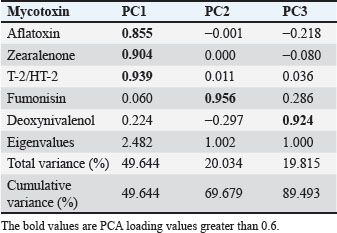
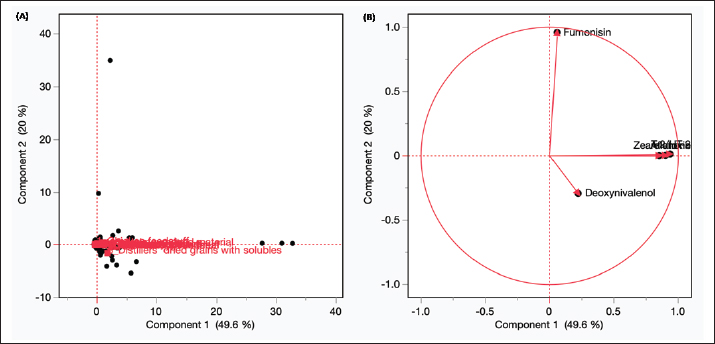
Contamination of mycotoxins in feedstuffsAmong the examined feedstuffs, the fattening pig feedstuff had the highest mean mycotoxins (Table 2). However, the minimum mean contamination levels of total aflatoxins, T-2/HT-2, and fumonisins were in duck feedstuff, zearalenone was in piglet feedstuff, and deoxynivalenol was in sow feedstuff. The percentage of mycotoxin co-contamination (Fig. 1) revealed that most feedstuff samples were contaminated with multiple mycotoxins. Fattening pig feedstuff had the highest percentage of co-contamination with five mycotoxins (24.0%). The highest occurrence of four mycotoxin co-contamination with aflatoxin, zearalenone, T-2/HT-2, and fumonisin was observed in piglets (27.27%) and unknown feedstuffs (23.84%). Chicken feedstuff had the highest (20.0%) occurrence of co-contamination with aflatoxin, fumonisin, and deoxynivalenol, whereas duck feedstuff had the highest (60.0%) co-contamination with aflatoxin and zearalenone. The sow feedstuff had the highest (14.29%) single mycotoxin contamination, specifically zearalenone, and four mycotoxin co-contamination with aflatoxin, zearalenone, T-2/HT-2, and deoxynivalenol. The PCA outcomes (Table 3) presented three factors that contained eigenvalues greater than 1 and accounted for a total variance of 89.49% in the dataset. PC1 accounted for 49.64% of the total variance, with a high positive loading for aflatoxin, zearalenone, and T-2/HT-2. Fumonisin had a high loading in PC2, accounting for 20.03% of the variance. PC3 explained 19.82% of the total variance, with a positive loading for deoxynivalenol. In addition, aflatoxin, zearalenone, and T-2/HT-2 were heavily loaded along with most feed material and feedstuff samples (Fig. 2A and B). Table 3. Loading, eigenvalues, variance, and cumulative variance percentage for PCA, with loading values greater than 0.6.
Fig. 2. PC analysis of the feed materials and feedstuffs. Loading plot for PC1 and PC2 acquired from mycotoxin levels in all samples (A). Score plot indicating the differences in mycotoxin contamination between feed materials and feedstuff samples (B). DiscussionSwine and poultry production are major contributors to Thailand’s livestock (Tisdell et al., 1998; Falvey, 2021). The majority of the samples submitted to this accredited veterinary diagnostic center were pig and chicken feedstuffs. Based on these results, the overall number of tested samples declined over the 4 years. However, the samples were obtained via standard diagnostic submissions instead of a systematic surveillance or randomized sampling methodology, which would increase the possibility of selection bias because samples were most likely submitted because of suspected contamination or quality concerns. This study revealed differences in mycotoxin contamination among feed materials and feedstuffs. Feed materials had the highest and lowest mean levels of all mycotoxins compared with feedstuffs, indicating that the quality and source of feed materials varied more than the complete feeds. These feedstuffs may be produced by mixing several feed materials and applying mycotoxin-reducing processes (physical, thermal, and chemical) to reduce mycotoxins in the final products (Peng et al., 2018; Čolović et al., 2019). Furthermore, the present findings were compared with those of other monitoring studies in Southeast Asia, such as Vietnam (Thieu, 2008; Phuong et al., 2015), Malaysia (Reddy and Salleh, 2011; Nasaruddin et al., 2022), Indonesia (Sumantri et al., 2024), Cambodia, Laos, Myanmar (Chaw, 2017; Siri-Anusornsak et al., 2022), and Thailand (Kananub et al., 2021). These reports indicated that aflatoxin and Fusarium mycotoxins (such as fumonisins, zearalenone, and deoxynivalenol) were dominant in Southeast Asian feed ingredients and feedstuffs, whereas the frequency of mycotoxin detection varied slightly among these countries. These variations may have resulted from the sample’s original country, sampling time and duration, detection method, number of samples, and animal feed type, among others. These reports could enhance the understanding of geographical variations and dynamic fluctuations in the prevalence of mycotoxin within a comparable climate. The European Commission (Commission, 2006; Anukul et al., 2013; Wu et al., 2016; Kananub et al., 2021) has set regulatory limits for total aflatoxins (20 ppb), zearalenone (100 ppb), T-2 toxin (250 ppb), deoxynivalenol (900 ppb), and fumonisin (5,000 ppb) in food and feed commodities to help ensure food and feed security and to protect human and animal health from the detrimental effects of mycotoxins. Although most of the obtained samples were below the regulatory level for T-2 toxin, the concentrations of aflatoxin, zearalenone, deoxynivalenol, and fumonisin in several feedstuffs and feed materials exceeded the permitted levels (Table 4). The contamination levels of these mycotoxins in fish meal, FFSBM, and soybean meal were within the regulatory limits, indicating that the use of these feed materials as primary components in feedstuffs may be safer and could mitigate the toxicity associated with these mycotoxins compared to other feed materials. Table 4. Detection frequencies (%) of samples exceeding regulatory mycotoxin levels. The regulatory limits for total aflatoxins, zearalenone, T-2/HT-2 toxin, fumonisins, and deoxynivalenol in food and feed commodities are 20, 100, 250, 5,000, and 900 ppb, respectively.
Based on the present study, most feed material samples (soybean meal, milled soybean, broken-milled rice, rice bran, cassava, fish meal, maize, and unknown feed materials) were commonly detected with the highest frequency of a single mycotoxin contamination, specifically zearalenone or aflatoxin. Zearalenone is primarily produced by several Fusarium species, whereas aflatoxins are synthesized by Aspergillus species, especially Aspergillus flavus and Aspergillus parasiticus (Keskin and Eyupoglu, 2024; Niaz et al., 2025). Thailand’s topography and climate support the production of these types of toxigenic fungal species and their contamination of several agricultural products (Pitt et al., 1993; Waenlor and Wiwanitkit, 2003). These findings indicate that using these feed materials without zearalenone and aflatoxin contamination would be almost impossible. Most FFSBM and DDGS samples were contaminated with 4 or 5 mycotoxins. Although the contamination levels of the five studied mycotoxins in FFSBM were within regulatory limits, the levels of mycotoxin contamination in most of the DDGS samples exceeded the regulatory limits for zearalenone and deoxynivalenol (Table 4). Based on these results, the use of these feed materials, especially DDGS, could pose a serious threat to livestock compared with other feed materials. Similarly, in other investigations, DDGS presented elevated contamination levels of various mycotoxins, including deoxynivalenol, zearalenone, and fumonisin (Rodrigues and Naehrer, 2012; Khatibi et al., 2014). The high energy content of DDGS is generated primarily from fiber and fat, so there is little risk of developing acidosis (Noblet et al., 2012; Cristobal et al., 2020). Thus, DDGS is a valuable source of digestible protein and energy for pigs, cattle, and poultry (Garbossa et al., 2025). However, the present study revealed that DDGS could be a risk regarding exposure to multiple mycotoxins, whose toxicity could harm animal health and production. The mean concentrations of total aflatoxins and fumonisins were greater in the maize samples than in the other feed material samples, except for the unknown feed materials. Furthermore, some maize samples contained several toxins (aflatoxin, zearalenone, fumonisin, and deoxynivalenol) that exceeded their regulatory levels (Table 4). This finding was consistent with other reports from Thailand and other countries in Southeast Asia, which identified maize as a major source of aflatoxin and fumonisin contamination (Yoshizawa et al., 1996; Afsah-Hejri et al., 2013; Gruber-Dorninger et al., 2019; Kananub et al., 2021). Based on the currently available information investigated in the present study, DDGS and maize continue to be feed materials that have relatively high contamination levels and for which careful screening is recommended before animal feeding. Maize is more sensitive to heightened mycotoxin contamination because it is more vulnerable to mycotoxin-producing fungi than other animal feed commodities, such as barley, oats, soybeans, and wheat (Magnoli et al., 2019; Pokoo-Aikins et al., 2024). Furthermore, DDGS is mostly derived from maize fermentation, which might promote mold growth during storage due to its high moisture content, increasing mycotoxin levels (Khatibi et al., 2014; Kim et al., 2021). However, based on the PCA results from the present study, most feed materials and feedstuffs were greatly influenced by aflatoxin, zearalenone, and T-2/HT-2 contamination, which might have occurred both before and after harvest. Integrated management measures from “farm to fork” are necessary to reduce the risk of contamination with mycotoxin. Such measures could include tillage to reduce inoculum sources, planting resistant cultivars, applying biocontrol agents, and drying and sorting damaged grains (Neme and Mohammed, 2017; Fumagalli et al., 2021; Nada et al., 2022). Among the feedstuff samples in the present study, the fattening pig feed contained the highest mean amounts of all mycotoxins, with some of these samples having levels exceeding the regulatory limits for aflatoxin, zearalenone, fumonisin, and deoxynivalenol (Table 4). In addition, although 100% of the chicken, duck, and piglet feedstuffs had aflatoxin contamination, only the chicken feedstuffs exceeded the aflatoxin regulatory level. Other studies have suggested that feedstuffs for fattening pigs and chickens frequently include substantial amounts of mycotoxin contamination owing to a combination of high-intensity agricultural production methods, specific raw materials in their diets (particularly in maize-based diets), and environmental variables that promote fungal development and mycotoxin production (Guerre, 2016; Mokubedi et al., 2019; Akinmoladun et al., 2025). Therefore, the toxic effects and well-being associated with aflatoxin contamination in these complete feeds should be considered not only for fattening pigs but also for chickens. However, further research on animal biomonitoring and the biomarkers of mycotoxin exposure in the plasma, urine, and feces of fattening pigs and poultry is required. The present study had some limitations that should be addressed in future research, including diagnostic sample bias, ELISA detection range limitations, and the need for confirmation using Liquid Chromatography-Tandem Mass Spectrometry. Furthermore, the lack of clear information regarding the timing and origin of sample collection made determining the relationship between mycotoxin detection and seasonal or environmental variation difficult. However, ELISA serves as a preliminary screening technique to guide subsequent researchers, as High-Performance Liquid Chromatography or LG-MS/MS is advised for confirmed samples that exceed regulatory limits to facilitate informed decision-making. ConclusionThe present study demonstrated that the simultaneous presence of multiple mycotoxins in feedstuffs and feed materials has become common, significantly elevating health risks and production losses among many species. However, the samples used in this study were most likely submitted due to suspected contamination or quality concerns, increasing the likelihood of selection bias. Therefore, it is critical to undertake continuous surveillance and monitoring of mycotoxins in feedstuffs and feed materials, together with the development of new analytical tools. The diverse complications of mycotoxin co-contamination could be addressed by implementing an efficient approach to reducing contamination levels based on improved farming techniques, practical detoxification procedures, and revised regulatory standards. AcknowledgmentsWe sincerely thank the staff of the Kamphaeng Saen Veterinary Diagnostic Center, Faculty of Veterinary Medicine, Kasetsart University, Kamphaeng Saen, Thailand, for their support and facilities. Conflict of interestThe authors declare no conflict of interest. FundingThis study received no specific grant. Authors' contributionsConceptualization: Prakorn Jala, Kraisiri Khidkhan, Sittinee Kulprasertsri; Data curation: Prakorn Jala, Sudtisa Laopiem, Pun Panomwan, Kraisiri Khidkhan, Sittinee Kulprasertsri; Formal analysis: Prakorn Jala, Sudtisa Laopiem, Pun Panomwan; Investigation: Prakorn Jala, Sudtisa Laopiem, Pun Panomwan, Kraisiri Khidkhan, Sittinee Kulprasertsri; Methodology: Prakorn Jala, Sittinee Kulprasertsri; Project administration: Kraisiri Khidkhan, Sittinee Kulprasertsri; Supervision: Kraisiri Khidkhan, Sittinee Kulprasertsri; Validation: Prakorn Jala, Kraisiri Khidkhan; Visualization: Kraisiri Khidkhan, Sittinee Kulprasertsri; Writing - original draft: Prakorn Jala, Kraisiri Khidkhan, Sittinee Kulprasertsri; Writing - review & editing: Pun Panomwan, Kraisiri Khidkhan, Sittinee Kulprasertsri. Data availabilityAll data supporting this study’s findings are available within the manuscript. ReferencesAfsah-Hejri, L., Jinap, S., Hajeb, P., Radu, S. and Shakibazadeh, S. 2013. A review on mycotoxins in food and feed: Malaysia case study. Compr. Rev. Food Sci. Food Saf. 12(6), 629–651; doi: 10.1111/1541-4337.12029 Akinmoladun, O.F., Fon, F.N., Nji, Q., Adeniji, O.O., Tangni, E.K. and Njobeh, P.B. 2025. Multiple mycotoxin contamination in livestock feed: implications for animal health, productivity, and food safety. Toxins 17, 365. Alvito, P., Assunção, R.M., Bajard, L., Martins, C., Mengelers, M.J.B., Mol, H., Namorado, S., Van Den Brand, A.D., Vasco, E., Viegas, S. and Silva, M.J. 2022. Current advances, research needs and gaps in mycotoxins biomonitoring under the HBM4EU—lessons learned and future trends. Toxins 14, 826. Anukul, N., Vangnai, K. and Mahakarnchanakul, W. 2013. Significance of regulation limits in mycotoxin contamination in Asia and risk management programs at the national level. J. Food Drug Anal. 21, 227–241. Awuchi, C.G., Ondari, E.N., Ogbonna, C.U., Upadhyay, A.K., Baran, K., Okpala, C.O.R., Korzeniowska, M. and Guiné, R.P.F. 2021. Mycotoxins affecting animals, foods, humans, and plants: types, occurrence, toxicities, action mechanisms, prevention, and detoxification strategies-a revisit. Foods 10, 1279. Bryden, W.L. 2012. Mycotoxin contamination of the feed supply chain: implications for animal productivity and feed security. Anim. Feed. Sci. Technol. 173, 134–158. Buszewska-Forajta, M. 2020. Mycotoxins, invisible danger of feedstuff with toxic effect on animals. Toxicon 182, 34–53. Casu, A., Camardo Leggieri, M., Toscano, P. and Battilani, P. 2024. Changing climate, shifting mycotoxins: a comprehensive review of climate change impact on mycotoxin contamination. Comprehensive Rev. Food Sci. Food Saf. 23, e13323. Chaw, E. 2017. Analysis of aflatoxin contamination in Myanmar agricultural commodities. Mycotoxins 67, 89–99. Chuaysrinule, C., Roopkham, C., Mahakarnchanakul, W. and Maneeboon, T. 2024. Assessment of mycobiota in Thai pigmented rice: insights into ochratoxin A and citrinin production by Aspergillus and Penicillium species. J. Stored. Prod. Res. 107, 102323. Čolović, R., Puvača, N., Cheli, F., Avantaggiato, G., Greco, D., Đuragić, O., Kos, J. and Pinotti, L. 2019. Decontamination of mycotoxin-contaminated feedstuffs and compound feed. In Toxins. Basel, Switzerland: MDPI. Commission, E. 2006. Commission Recommendation of 17 August 2006 on the presence of deoxynivalenol, zearalenone, ochratoxin A, T-2 and HT-2 and fumonisins in products intended for animal feeding. Off. J. Eur. Union 229, 7–9. Cristobal, M., Acosta, J.P., Lee, S.A. and Stein, H.H. 2020. A new source of high-protein distillers dried grains with solubles (DDGS) has greater digestibility of amino acids and energy, but less digestibility of phosphorus, than de-oiled DDGS when fed to growing pigs. J. Anim. Sci. 98, 1–9. Falvey, Lindsay. 2021. Livestock and Fisheries in Thailand. Available via https://www.researchgate.net/publication/357172318_Livestock_and_Fisheries_in_Thailand Fumagalli, F., Ottoboni, M., Pinotti, L. and Cheli, F. 2021. Integrated mycotoxin management system in the feed supply chain: innovative approaches. Toxins (Basel). 13. Garbossa, P.L.M., Poleti, M.D., Garbossa, C.A.P., Alves, L.K.S., Chaves, R.F., Cantarelli Vd, S. and Ferraz, J.B.S. 2025. Impact of high-protein distiller's dried grains with solubles (HP-DDGS) on early growth benefits and carcass quality trade-offs in pigs. Livestock. Sci. 291, 105621. George, M.E., Gaitor, T.T., Cluck, D.B., Henao-Martínez, A.F., Sells, N.R. and Chastain, D.B. 2025. The impact of climate change on the epidemiology of fungal infections: implications for diagnosis, treatment, and public health strategies. Ther. Adv. Infect. Dis. 12, 20499361251313841. Gruber-Dorninger, C., Jenkins, T. and Schatzmayr, G. 2019. Global mycotoxin occurrence in feed: a ten-year survey. Toxins. (Basel). 11. Guerre, P. 2016. Worldwide mycotoxins exposure in pig and poultry feed formulations. Toxins 8, 350. Haschek, W.M., Gumprecht, L.A., Smith, G., Tumbleson, M.E. and Constable, P.D. 2001. Fumonisin toxicosis in swine: an overview of porcine pulmonary edema and current perspectives. Environ. Health Perspect. 109(Suppl 2), 251–257. Hussein, H.S. and Brasel, J.M. 2001. Toxicity, metabolism, and impact of mycotoxins on humans and animals. Toxicology 167(2), 101–134; doi: 10.1016/s0300-483x(01)00471-1 Iannone, A., Dominech, S., Zhang, C., Pacifico, L.R., De Falco, A. and Albanese, S. 2025. Principal component analysis to discriminate and locate natural and anthropogenic sources of contamination within a strongly anthropized region: a technical workflow. Environments 12, 163. Kananub, S., Jala, P., Laopiem, S., Boonsoongnern, A. and Sanguankiat, A. 2021. Mycotoxin profiles of animal feeds in the central part of Thailand: 2015–2020. Vet. World. 14, 739–743. Kępka-Borkowska, K., Borkowski, M., Chałaśkiewicz, K., Starzyński, R.R., Ogłuszka, M., Kozera, W., Karpiesiuk, K., Okorski, A., Zielonka, Ł. and Pierzchała, M. 2025. Deoxynivalenol toxicity along the gut–liver–brain axis in animal models: mechanisms of action and strategies for mitigation. Food. Chem. Toxicol. 206, 115766. Keskin, E. and Eyupoglu, O.E. 2024. Aflatoxins, fumonisins, citrinin, and zearalenone contents and health risk estimates in bee products in Turkey. Food Bioscience 61, 104724. Khan, R., Anwar, F. and Ghazali, F.M. 2024. A comprehensive review of mycotoxins: toxicology, detection, and effective mitigation approaches. Heliyon 10, e28361. Khatibi, P.A., Mcmaster, N.J., Musser, R. and Schmale, D.G. 2014. Survey of mycotoxins in corn distillers’ dried grains with solubles from seventy-eight ethanol plants in twelve States in the U.S. in 2011. Toxins 6, 1155–1168. Kim, J.H., Park, G.H., Han, G.P. and Kil, D.Y. 2021. Effect of feeding corn distillers dried grains with solubles naturally contaminated with deoxynivalenol on growth performance, meat quality, intestinal permeability, and utilization of energy and nutrients in broiler chickens. Poultry. Sci. 100, 101215. Kos, J., Anić, M., Radić, B., Zadravec, M., Janić Hajnal, E. and Pleadin, J. 2023. Climate change-a global threat resulting in increasing mycotoxin occurrence. Foods 12. Magnoli, A.P., Poloni, V.L. and Cavaglieri, L. 2019. Impact of mycotoxin contamination in the animal feed industry. Curr. Opinion. Food. Sci. 29, 99–108. Mokubedi, S.M., Phoku, J.Z., Changwa, R.N., Gbashi, S. and Njobeh, P.B. 2019. Analysis of mycotoxins contamination in poultry feeds manufactured in selected provinces of South Africa using UHPLC-MS/MS. Toxins 11, 452. Muñoz-Solano, B., Lizarraga Pérez, E. and González-Peñas, E. 2024. Monitoring mycotoxin exposure in food-producing animals (Cattle, Pig, Poultry, and Sheep). Toxins 16, 218. Nada, S., Nikola, T., Bozidar, U., Ilija, D. and Andreja, R. 2022. Prevention and practical strategies to control mycotoxins in the wheat and maize chain. Food Control 136, 108855. Nasaruddin, N., Jinap, S., Samsudin, N.I.P., Kamarulzaman, N.H. and Sanny, M. 2022. Assessment of multi-mycotoxin contamination throughout the supply chain of maize-based poultry feed from selected regions of Malaysia by LC-MS/MS. Food Addit. Contaminants. Part A 39, 777–787. Nayakwadi, S., Ramu, R., Kumar Sharma, A., Kumar Gupta, V., Rajukumar, K., Kumar, V., Shirahatti, P.S., L, R. and Basalingappa, K.M. 2020. Toxicopathological studies on the effects of T-2 mycotoxin and their interaction in juvenile goats. PLos One 15, 229463. Neme, K. and Mohammed, A. 2017. Mycotoxin occurrence in grains and the role of postharvest management as a mitigation strategies. A review. Food. Control. 78, 412–425. Niaz, W., Iqbal, S.Z., Ahmad, K., Majid, A., Haider, W. and Li, X. 2025. Mycotoxins: a comprehensive review of its global trends in major cereals, advancements in chromatographic detections and future prospects. Food Chem. X 27, 102350. Noblet , J., Cozannet, P. and Fabien, S. 2012. Nutritional value and utilization of wheat distillers grain with solubles in pigs and poultry. Biofule co-products as livestock feed-opportunities and challenges. Ed., Makkar, H.P.S. Rome, Italy: FAO, pp: 163–174. Noppakuadrittidej, P., Waesoh, N., Petchkongkaew, A., Karoonuthaisiri, N., Elliott, C., Sriwiang, W., Vlachou, C., Praneenararat, T. and Uawisetwathana, U. 2025. Comprehensive mycotoxin analysis in Thai rice: method development, prevalence, exposure assessment and health risk evaluation. Exposure Health 17, 1337–1356. Paneru, D., Sharma, M.K., Shi, H., Wang, J. and Kim, W.K. 2024. Aflatoxin B1 impairs bone mineralization in broiler chickens. Toxins. (Basel). 16. Peng, W.X., Marchal, J.L.M. and Van Der Poel, A.F.B. 2018. Strategies to prevent and reduce mycotoxins for compound feed manufacturing. Anim. Feed. Sci. Technol. 237, 129–153. Phuong, N., Thieu, N., Ogle, B. and Pettersson, H. 2015. Aflatoxins, Fumonisins and Zearalenone Contamination of Maize in the Southeastern and Central Highlands Provinces of Vietnam. Agriculture 5, 1195–1203. Pierron, A., Alassane-Kpembi, I. and Oswald, I.P. 2016. Impact of mycotoxin on immune response and consequences for pig health. Anim. Nutr. 2, 63–68. Pitt, J.I., Hocking, A.D., Bhudhasamai, K., Miscamble, B.F., Wheeler, K.A. and Tanboon-Ek, P. 1993. The normal mycoflora of commodities from Thailand. 1. nuts and oilseeds. Int. J. Food Microbiol. 20, 211–226. Pokoo-Aikins, A., Mcdonough, C.M., Mitchell, T.R., Hawkins, J.A., Adams, L.F., Read, Q.D., Li, X., Shanmugasundaram, R., Rodewald, E., Acharya, P., Glenn, A.E. and Gold, S.E. 2024. Mycotoxin contamination and the nutritional content of corn targeted for animal feed. Poultry. Sci. 103, 104303. Reddy, K.R.N. and Salleh, B. 2011. Co-occurrence of moulds and mycotoxins in corn grains used for animal feeds in Malaysia. J. Anim. Vet. Adv. 10, 668–673. Rodrigues, I. and Naehrer, K. 2012. A Three-Year Survey on the Worldwide Occurrence of Mycotoxins in Feedstuffs and Feed. Toxins 4, 663–675. Siri-Anusornsak, W., Kolawole, O., Mahakarnchanakul, W., Greer, B., Petchkongkaew, A., Meneely, J., Elliott, C. and Vangnai, K. 2022. The occurrence and co-occurrence of regulated, emerging, and masked mycotoxins in rice bran and maize from Southeast Asia. Toxins. (Basel). 14. Sumantri, I., Hidayat, A.A.A. and Kusumawardhani, E. Co-existence of mycotoxins in the diet of layer farms in Java Provinces of Indonesia. In IOP Conference Series: Earth and Environmental Science, Yogyakarta, Indonesia: IOP Publishing, 2024 1360, p 12016. Thieu, N.Q. 2008. Mycotoxins in Vietnamese pig feeds contamination, excretion in pig urine and reduction of aflatoxins by adsorbents. Available via https://pub.epsilon.slu.se/1886/1/Thieu_Thesis.pdf Tisdell, C., Kehren, T.C. and Murphy, T.D. 1998. The pig and poultry industries in Thailand: development, trade and commerce. SASIN. J. Manage. 4, 1–18. Vafakhah, M. and Janizadeh, S. 2021. Chapter 6—Application of artificial neural network and adaptive neuro-fuzzy inference system in streamflow forecasting. In Advances in Streamflow Forecasting. Eds., Sharma, P. and Machiwal, D. Amsterdam, The Netherlands: Elsevier, pp: 171–91. Waenlor, W. and Wiwanitkit, V. 2003. Aflatoxin contamination of food and food products in Thailand: an overview. Southeast Asian J. Trop. Med. Public Health 34(Suppl 2), 184–190. Wang, L., Deng, Z., Huang, J., Li, T., Jiang, J., Wang, W., Sun, Y. and Deng, Y. 2024. Zearalenone-induced hepatointestinal toxicity in laying hens: unveiling the role of gut microbiota and fecal metabolites. Poultry Sci. 103, 104221. Warth, B., Petchkongkaew, A., Sulyok, M. and Krska, R. 2014. Utilising an LC-MS/MS-based multi-biomarker approach to assess mycotoxin exposure in the Bangkok metropolitan area and surrounding provinces. Food Addit. Contam. Part A. Chem. Anal. Control. Expo. Risk Assess. 31, 2040–2046. Wu, L., Li, J., Li, Y., Li, T., He, Q., Tang, Y., Liu, H., Su, Y., Yin, Y. and Liao, P. 2016. Aflatoxin B(1), zearalenone and deoxynivalenol in feed ingredients and complete feed from different Province in China. J. Anim. Sci. Biotechnol. 7, 63. Yoshizawa, T., Yamashita, A. and Chokethaworn, N. 1996. Occurrence of fumonisins and aflatoxins in corn from Thailand. Food Addit. Contam. 13, 163–168. Zheng, Y., Wu, Y., Zhang, H., Chen, X., Lou, Z., Jing, H. and Wan, C. 2022. Determination of mycotoxins and veterinary medicines in duck flesh and viscera and assessment of their exposure. J. Food Qual. 2022, 2734839. | ||
| How to Cite this Article |
| Pubmed Style Jala P, Laopiem S, Panomwan P, Khidkhan K, Kulprasertsri S. Four-year surveillance of mycotoxin contamination in animal feedstuffs and feed materials in Thailand (2021–2024). Open Vet. J.. 2026; 16(6): 3494-3505. doi:10.5455/OVJ.2026.v16.i6.20 Web Style Jala P, Laopiem S, Panomwan P, Khidkhan K, Kulprasertsri S. Four-year surveillance of mycotoxin contamination in animal feedstuffs and feed materials in Thailand (2021–2024). https://www.openveterinaryjournal.com/?mno=304914 [Access: June 26, 2026]. doi:10.5455/OVJ.2026.v16.i6.20 AMA (American Medical Association) Style Jala P, Laopiem S, Panomwan P, Khidkhan K, Kulprasertsri S. Four-year surveillance of mycotoxin contamination in animal feedstuffs and feed materials in Thailand (2021–2024). Open Vet. J.. 2026; 16(6): 3494-3505. doi:10.5455/OVJ.2026.v16.i6.20 Vancouver/ICMJE Style Jala P, Laopiem S, Panomwan P, Khidkhan K, Kulprasertsri S. Four-year surveillance of mycotoxin contamination in animal feedstuffs and feed materials in Thailand (2021–2024). Open Vet. J.. (2026), [cited June 26, 2026]; 16(6): 3494-3505. doi:10.5455/OVJ.2026.v16.i6.20 Harvard Style Jala, P., Laopiem, . S., Panomwan, . P., Khidkhan, . K. & Kulprasertsri, . S. (2026) Four-year surveillance of mycotoxin contamination in animal feedstuffs and feed materials in Thailand (2021–2024). Open Vet. J., 16 (6), 3494-3505. doi:10.5455/OVJ.2026.v16.i6.20 Turabian Style Jala, Prakorn, Sudtisa Laopiem, Pun Panomwan, Kraisiri Khidkhan, and Sittinee Kulprasertsri. 2026. Four-year surveillance of mycotoxin contamination in animal feedstuffs and feed materials in Thailand (2021–2024). Open Veterinary Journal, 16 (6), 3494-3505. doi:10.5455/OVJ.2026.v16.i6.20 Chicago Style Jala, Prakorn, Sudtisa Laopiem, Pun Panomwan, Kraisiri Khidkhan, and Sittinee Kulprasertsri. "Four-year surveillance of mycotoxin contamination in animal feedstuffs and feed materials in Thailand (2021–2024)." Open Veterinary Journal 16 (2026), 3494-3505. doi:10.5455/OVJ.2026.v16.i6.20 MLA (The Modern Language Association) Style Jala, Prakorn, Sudtisa Laopiem, Pun Panomwan, Kraisiri Khidkhan, and Sittinee Kulprasertsri. "Four-year surveillance of mycotoxin contamination in animal feedstuffs and feed materials in Thailand (2021–2024)." Open Veterinary Journal 16.6 (2026), 3494-3505. Print. doi:10.5455/OVJ.2026.v16.i6.20 APA (American Psychological Association) Style Jala, P., Laopiem, . S., Panomwan, . P., Khidkhan, . K. & Kulprasertsri, . S. (2026) Four-year surveillance of mycotoxin contamination in animal feedstuffs and feed materials in Thailand (2021–2024). Open Veterinary Journal, 16 (6), 3494-3505. doi:10.5455/OVJ.2026.v16.i6.20 |


