





| Research Article | ||
Open Vet. J.. 2026; 16(6): 3770-3776 Open Veterinary Journal, (2026), Vol. 16(6): 3770-3776 Research Article Evaluation of different instructional modalities for final year veterinary students in small animals’ anaesthetic proceduresChiara Di Franco1, Angela Briganti1, Valentina Vitale2 and Irene Nocera1,3*1Department of Veterinary Sciences, Veterinary Teaching Hospital “Mario Modenato”, via Livornese snc, San Piero a Grado, Pisa, Italy 2Universidad CEU Cardenal Herrera, CEU Universities, Alfara del Patriarca, Valencia, Spain 3Institute of Health Sciences, Sant'Anna School of Advanced Studies, Pisa, Italy *Corresponding Author: Irene Nocera. Department of Veterinary Sciences, Veterinary Teaching Hospital “Mario Modenato”, via Livornese snc, Pisa, Italy. Email: irene.nocera [at] unipi.it Submitted: 05/01/2026 Revised: 07/05/2026 Accepted: 17/05/2026 Published: 16/06/2026 © 2025 Open Veterinary Journal
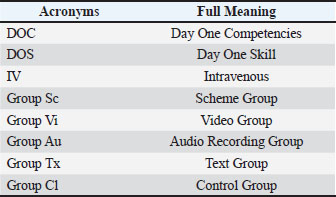
AbstractBackground: Recent studies in veterinary anaesthesia education have highlighted the lack of standardized teaching methods. Aim: This study aimed to compare five different instructional approaches for simulating anaesthesia procedures among 72 fifth-year veterinary students. Methods: The students practiced inserting a peripheral vein catheter and performing endotracheal intubation, divided into five groups, each receiving distinct instructional materials: a scheme, muted video, audio recording, text, and traditional oral explanation with demonstration. Data distribution was assessed using the D’Agostino–Pearson test; between-group comparisons used Kruskal–Wallis with Dunn’s post hoc, and within-group comparisons used Friedman tests. Results: Results indicated that the group using the scheme (GSc) performed significantly worse in several steps compared to those using text (GTx) and audio (GAu) materials. For instance, GSc had lower scores in handwashing and catheter handling steps compared to GTx and GAu, respectively. Similarly, in endotracheal intubation, GSc scored lower than GVi and GTx. The findings suggest that multimedia resources, particularly video and audio, enhance learning outcomes more effectively than traditional methods like schemes. Conclusion: The study highlighted the importance of modern teaching modalities that utilize cognitive aids to improve veterinary education. Keywords: Anaesthesia training; Dog phantom; Instructional modalities; Veterinary students. IntroductionThe university system is currently facing a challenging period in educating students, due to increased expectations, technological advancements, and the expansion of student curriculum content (D’Anselme et al., 2020). In particular, the veterinary undergraduate students are trained for Day One Competencies (DOC), which define the standards and principles they must achieve before graduation in order to become safe practitioners (Duncan et al., 2015; Langton and Blevins, 2021). Within the educational system, the priority has been on teaching and assessing DOCs, achieved by defining innovative teaching strategies and creating interactive and stimulating learning environments (D’Anselme et al., 2020). Recent studies have shown a growing interest in the advancements and development of veterinary anaesthesia education (Langton and Blevins, 2021). However, there is a lack of standardization and worldwide-accepted pedagogical methods for teaching anaesthesia. A recent study reported that teaching methods for veterinary anaesthesia in universities across different geographical regions typically follow the Day One Skills (DOSs) lists established by the relevant regulatory bodies, but teaching strategies remain non-standardized (D’Anselme et al., 2020). Specifically, a significant variability of equine anaesthesia techniques and approaches has been observed within the veterinary community, suggesting the absence of internationally accepted standards for this practice (Wohlfender et al., 2015). Although there is no uniform teaching method across all universities, the use of simulators, already widely used in medicine, has become increasingly popular in the last few years (Grantcharov et al., 2004). Additionally, multimedia supports (such as photos and videos of related material) are considered beneficial for providing clinical scenarios to the students (D’Anselme et al., 2020). Simulation laboratories, platforms, and mannequin-based training are perceived as additional tools that complement the theoretical classes and are associated with a reduction in student stress at the start of their clinical rotation (D’Anselme et al., 2020). Small group tutorial classes provide better assimilations of clinical skills, and better assimilation of theoretical sessions (D’Anselme et al., 2020). Studies in medical training suggest that simulation contributes positively to knowledge acquisition and skill development. Moreover, virtual learning environments have become increasingly popular, particularly after the pandemic, offering flexible learning options that ensure high levels of student satisfaction (Nguyen et al., 2023). In educational programs, it is also fundamental to consider which generation students belong to. Each generation is influenced by the circumstances they grew up in (e.g., economic, social, and cultural conditions), which affect their perception of formal learning (Poláková and Klímová, 2019; Chicca and Shellenbarger, 2023). Nowadays, students who belong to Generation Z (refers referring to the demographic cohort born roughly between 1997; and 2012) prefer an independent learning style with more visual and kinaesthetic learning (Poláková and Klímová, 2019; Shorey et al., 2021), and greatly enjoy and actively take part in all group-based learning styles and active learning environments that meet their learning needs (Poláková and Klímová, 2019; D’Anselme et al., 2020). Moreover, older generations, while not "digital natives", can benefit from educational approaches that integrate different media to overcome the cognitive barriers associated with traditional reading, making learning more accessible and less fatiguing (Trujillo-Torres et al., 2023). We hypothesize that the use of cognitive aids could enhance the learning capacity of veterinary students. Therefore, our study aimed to compare five different teaching methods to teach anaesthesia procedures to last year's veterinary students. Materials and MethodsThe present prospective research was conducted between 2021 and 2024 at the Veterinary Teaching Hospital, Department of Veterinary Sciences, University of Pisa, Italy. Study populationSeventy-two undergraduate students in the final year of a veterinary medicine program participated in the study. To be enrolled in the study, students must be attending the anaesthesiology course training session for the first time, they should not have had any previous experience with the 2 procedures (intravenous catheter placement and endotracheal intubation) evaluated in the study, and they are required to complete the specific anesthetic procedures. Anaesthesia procedure training sessionDuring the training session, the students had to learn two procedures for anaesthesia skill practice: how to insert a peripheral intravenous (IV) catheter and how to perform an endotracheal intubation, in a canine model. Before starting the training session, each group was provided with one of the five different instructional modality materials that explained the anaesthesia techniques step by step, based on the current literature for anaesthesia skill practice (Shelby and Carolyn, 2022). The students were randomly split into five groups, which were provided the learning materials in the following formats: scheme for Group Sc (15/72), muted video for Group Vi (15/72), audio recording for Group Au (13/72), a text for Group Tx (16/72), oral explanation with practical demonstration (the standard method usually used at the present University, “Classic method”) for Group Cl (13/72) (Table 1). Table 1. Summary table of acronyms used throughout the manuscript.
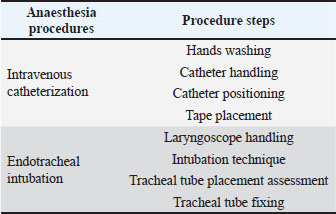
The teaching material for each instructional modality included six key photos depicting the chronological steps of intubation and IV catheter placement for the scheme group; a simulation video of the procedures created by the teacher for Group Vi, and an audio version of a detailed written text describing the procedures for Group Au. Regarding the text group, the same written text as recorded for the audio group was used. A traditional oral explanation delivered by the teacher with concomitant practical demonstration was used for the classic method. To eliminate variations stemming from the instructor's experience, all procedures were delineated by a single anesthesiologist (C.D.F). Video, practical demonstration, and pictures were performed on the same model as the one used by the student during the procedure. The students were allowed to view the educational material before the procedure, but not during. Each student had 10 minutes to understand and memorize the procedure before performing it. The IV catheterization was carried out on an Intravenous Practice Arm Kit (Vevor, indepsale technology limited, Cork, Ireland), and endotracheal intubation simulation was carried out on Canine Basic Life Support Simulator (Veterinary Simulators Industry, vetsimulators.com, Canada). All the students used the same material: 22G peripheral vein catheter, tape, 6.5 mm endotracheal tube, and laryngoscope. During the simulation, each student was evaluated and judged by an experienced operator (AB), who was blinded to the teaching method administered. Table 2 lists the anaesthesia procedure steps that were evaluated for each procedure. Table 2. Anaesthesia procedure steps were evaluated for each procedure.
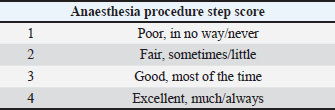
No time limitation was set for the completion of the anaesthesia procedures. Each anaesthesia procedure was scored according to a grading scale specifically designed for this study, from 1 to 4 (Table 3). Table 3. Scores of the anaesthesia procedure steps.
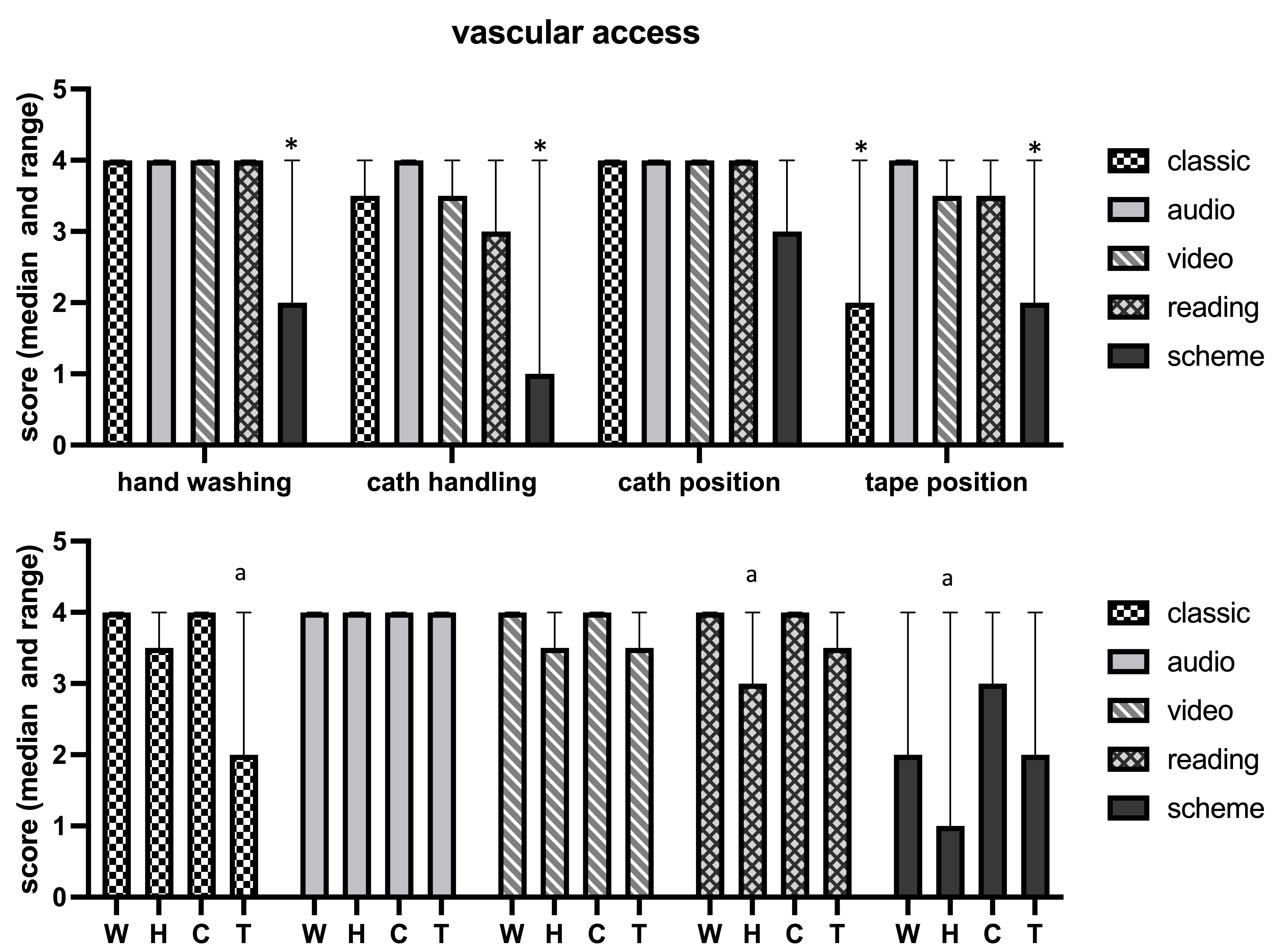
Statistical analysisData were analyzed for distribution with a D’Agostino and Pearson test. The comparison of the 5 teaching methods for both IV catheterization and endotracheal intubation among the groups has been done with a Kruskal-Wallis test and Dunn’s post hoc. A Friedman test for repeated measures with Dunn’s as post hoc was used to compare the scores for each teaching method. Statistical significance was set at P < 0.05. Statistical analysis was performed using commercial software (Graph pad Prism 9.0 California, US). Ethical ApprovalAll students provided informed consent before participating, in accordance with the Declaration of Helsinki, and the study was approved by the Bioethical Committee of the University of Pisa (Review No. 18/2021). ResultsAll the students completed the anaesthesia procedure simulation (72/72 students). Regarding IV catheter placement, Group Sc showed a significantly lower score for the hand washing procedure step in comparison to the other groups (p=0.002), and during the handling of the catheter, the same group of students showed a significantly lower score than students in Group Vi and Au (p < 0.001). No differences were found among the other groups regarding the catheter position, while scores for the tape placement procedures were lower in Groups Sc and Cl compared to Au (p=0.01). In Group Cl, a significantly lower score was detected concerning the last procedure (positioning of the tape) in comparison to the previous procedure (catheter positioning) (p=0.006) (Fig. 1).
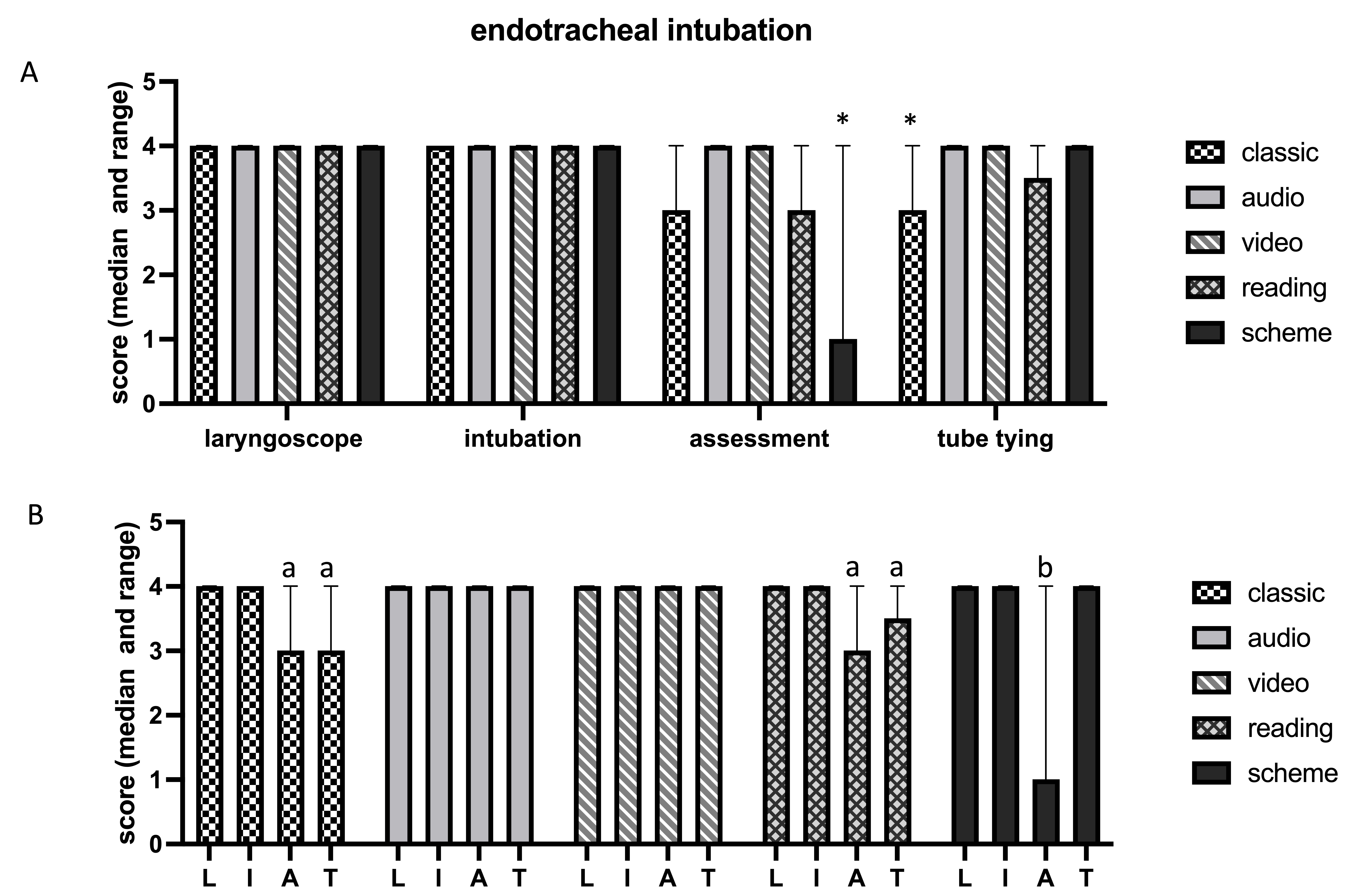
Fig. 1. Scores were obtained for intravenous catheterization for the 5 groups. Upper diagram (A) shows the comparison between groups for scores obtained in each procedure step. Lower diagram (B) shows the comparison between scores obtained for procedure steps within each group. Legend: W, hand washing; H, catheter handling; C, catheter positioning; T, tape positioning. 1, different from all the other groups; 2, different from audio; a: different from tape positioning (classic group); b: different from catheter handling. Regarding the intubation procedure, the endotracheal intubation phase showed significantly lower scores in Group Sc than in Au, Vi, and Tx groups (p < 0.0001). The fixation of the tracheal tube resulted in a significantly lower score for Group Cl than all the others (p=0.003) (Fig. 2). Within each group, Group Cl showed lower scores in the final two phases (intubation technique and fixation of the tube) compared to the previous phases (p=0.01), while Group Sc showed low scores only for the intubation technique phase (p=0.0001).
Fig. 2. Scores were obtained for endotracheal intubation for the 5 groups. Upper diagram (A) shows the comparison between groups for scores obtained in each procedure step. Lower diagram (B) shows the comparison between scores obtained for procedure steps within each group. Legend: L, laryngoscope handling; I, intubation technique; A, assessment of tracheal tube placement; F, fixing the tracheal tube; 1, different from all the other groups; c, different from A and T (classic group); d, different from A. DiscussionThe present study showed that multimedia instructional modalities—particularly the audio recording and muted video—were associated with the highest overall performance among final-year veterinary students. Both approaches produced superior scores across most procedural steps, with no significant differences between them, indicating strong adherence and effectiveness in supporting procedural learning. Although the text-based modality also led to good overall performance, students exhibited slightly lower scores in steps that required visual interpretation, such as catheter handling and intubation technique. These findings suggest that audio and video formats may provide a more intuitive and cognitively supportive framework for learning anaesthetic procedures compared with other modalities. The multimedia instructional modalities were well accepted by our student population, and video and audio groups obtained the best performance. The use of schemes as instructional modalities was the modality that yielded the worst performance in our student population for both the anaesthesia procedures assessed. Generally, students learn better from a scientific text when they are provided with visuals (i.e., multimedia materials) (Mayer and Fiorella, 2014), or when they are able to create drawings to study the provided text (Van Meter and Fioretto, 2013). In the last circumstance, they use their prior knowledge to convert the text into a pictorial display, which encourages students to be engaged in multimodal processing actively, supporting deeper understanding and knowledge transfer (Stern et al., 2003; Leutner and Schmeck, 2014; Fiorella and Mayer, 2016; Zhang and Fiorella, 2019). In contrast, when students learn from provided pre-assembled schemes, as provided in the present study, they often process the materials passively or struggle to integrate the text and corresponding visuals (De Jong et al., 1998). Moreover, the scheme provided in the present study may lack accuracy and comprehensiveness in one or more steps, which may impact the students’ understanding. Thus, this might affect our results and represent a limitation of the present study. Our results showed that the audio recording, multimedia video, and text obtained the best performance scores within the student population, and no significant differences were detected between these different instructional modalities. In particular, the audio recording produced high scores in all phases of both procedures; the video group obtained similar results, and there were no statistically significant differences. In the text group, the catheter handling and intubation assessment phases had lower scores than the other phases. These phases might have been perceived as difficult to understand without visual support. A recent study showed that undergraduate veterinary medicine students exercising surgical procedures were negatively affected by hard copy text modality, leading to a slightly worse performance compared to the other strategies investigated (such as video, drawing, and diagram) (Nocera et al., 2024). A greater efficacy and higher appreciation of videos over texts to communicate scientific information to an audience with a low level of medical education was previously demonstrated (Walthouwer et al., 2015). Video-based learning was tested in medical students for musculoskeletal physical examination, and it was found to be comprehensive and accessible (Alomar, 2022). Learning through videos was recognized as easier compared to text since multimedia environments minimize the cognitive effort needed to acquire information and highly engage audience attention compared with text (Mayer, 2002; Alley et a., 2014; Tarchi et al., 2021). In a group of anaesthesia medical students, multimedia-based teaching was particularly beneficial in the field of central venous pressure monitoring as it resulted in higher post-test scores (Moradimajd et al., 2024). Furthermore, the virtual format was reported as a potentially effective solution in pandemic contexts, providing an opportunity to design a flexible and experiential virtual curriculum for anesthesiology clerkships (Nguyen et al., 2023). The classical method usually applied in our structure did not produce better scores than other modalities, and the scores decreased in the final stages of both procedures. Since the classical method involved verbal explanation with simultaneous practical demonstration, the learner received information from the instructor without engaging in interactive activities or discussions (Mahmood et al., 2011; D’Anselme et al., 2020). This type of learning lacks an experience component, with no interactive elements, sharing, or contributing to a dialogue. It is less engaging for students and may not prepare them to apply their knowledge in real scenarios (Mahmood et al., 2011; D’Anselme et al., 2020). Even though the duration of the learning activity through the different methods was not measured, the classical method took subjectively longer to deliver than the other methods because of the combination of theoretical and practical explanations. This could cause reduced attention in the final phases. It has been demonstrated that after 10–15 minutes, the attention of the students decreases. Additionally, during a lecture, students usually experience 1-minute lapses (at least), which can be responsible for missing specific information (Bunce et al., 2010). Another consideration is that, in the traditional method, students must simultaneously focus on the operator’s verbal explanations and on their actions, which may increase cognitive load and make learning more complex, potentially leading to lower learning efficacy. The use of cognitive aids, such as mannequin simulators and multimedia materials, was well accepted and produced high-level performance within our students’ population. It was reported that clinical anaesthesia practice, for example, on clinical rotations, was a superior technique for understanding and strengthening theoretical knowledge (D’Anselme et al., 2020). The creation of simulation-based instructional clinical scenarios could positively influence the student's familiarity in performing the same procedure on a live patient, as previously supported by a medicine study (Mayer and Fiorella, 2014). A recent review about the use of cognitive aids during emergencies in human anaesthesia reports that cognitive aids need to have the correct content, be well designed, and be accompanied by appropriate training to assist task performance (Marshall, 2013). The paper also reports that the use of group cognitive aids often does not bring benefits, as it could reduce the ability to communicate during anaesthetic emergencies. From our study, it emerged that within a different group of people, there may be substantial differences in learning methods, and not all cognitive aids (i.e., multimedia learning) may have the same positive and/or negative effect on the individual learning curve. It might be beneficial to integrate various approaches in the development of cognitive aids to prevent the dominance of any single teaching method over others. Several studies reported that practical learning for undergraduates in health and medical sciences would be better perceived and enjoyed through videos, audio, and hands-on practice, and that interactive learning had a significant effect in achieving the outcomes and objectives (Mutia et al., 2020; Al-Maroof et al., 2022). Although our results indicate that multimedia resources such as audio, video, and text can meaningfully support the acquisition of anaesthesia procedures, these modalities should be viewed as complementary tools rather than standalone replacements for practical training. Veterinary medicine relies heavily on psychomotor skills, clinical reasoning, and real-time decision-making, all of which benefit from direct interaction with a skilled instructor who can provide immediate feedback and model professional behaviours. Moreover, even though innovative strategies may increase student engagement—particularly among Generation Z learners who are accustomed to digital formats—expert-guided, hands-on experience remains essential to ensure competence, safety, and confidence in clinical settings. Therefore, distance learning can enhance but not replace experiential training within veterinary curricula. ConclusionThe present study highlights how practical learning would improve day-one practical skills in veterinary anaesthesia through videos, audio, and hands-on practice. It provided essential feedback on modern teaching methods, in which cognitive aids play a relevant role. Future research involving students at a similar high educational level could explore how aligning the right student learning profiles with suitable instructional methods may enhance academic outcomes. In particular, it would be valuable to examine the effectiveness of auditory teaching modalities in improving communication and learning. AcknowledgmentNone. FundingThis research did not receive any specific grant from funding agencies in the public, commercial, or not-for-profit sectors. Authors' contributionsChiara Di Franco: Methodology, Data curation, Writing – original draft, Writing – review & editing; Angela Briganti: Conceptualization, Methodology, Writing – review & editing, Formal analysis; Valentina Vitale: Conceptualization, Methodology, Writing – review & editing; Irene Nocera: Conceptualization, Methodology, Data curation, Writing – review & editing, Writing – original draft. All authors contributed to all of the following: (1) the conception and design of the study, or acquisition of data, or analysis and interpretation of data, (2) drafting the article or revising it critically for important intellectual content, (3) final approval of the version to be submitted. Conflict of interestThe authors declare that there is no conflict of interest. Data AvailabilityThe data that support the findings of this study are not openly available due to reasons of sensitivity and are available from the corresponding author upon reasonable request. ReferencesAlley, S., Jennings, C., Persaud, N., Plotnikoff, R.C., Horsley, M. and Vandelanotte, C. 2014. Do personally tailored videos in a web-based physical activity intervention lead to higher attention and recall?–an eye-tracking study. Front. Public Health 2, 13. Al-Maroof, R.S., Alahbabi, N.M.N., Akour, I., Alhumaid, K., Ayoubi, K., Alnnaimi, M., Thabit, S., Alfaisal, R., Aburayya, A. and Salloum, S. 2022. Students’ perception towards behavioral intention of audio and video teaching styles: an acceptance study. Int. J. Data Netw. Sci. 6, 603. Alomar, A.Z. 2022. Undergraduate Medical Studentsu2019 Perceptions of an Online Audio-Visual-Based Module for Teaching Musculoskeletal Physical Examination Skills. Res. Social Work Prac. 9, 675–681. Bunce, D.M., Flens, E.A. and Neiles, K.Y. 2010. How long can students pay attention in class? A study of student attention decline using clickers. J. Chem. Educ. 87, 1438–1443. Chicca, J. and Shellenbarger, T. 2023. A roadmap for improving nursing program outcomes. Teach. Learn. Nurs. 1, 10–15. D’Anselme, O., Pelligand, L., Veres-Nyeki, K., Zaccagnini, A. and Zilberstein, L. 2020. Analysis of teaching methods in anaesthesia in the undergraduate curriculum of four veterinary universities. Vet. Anaesth. Analg. 47, 657–666. De Jong, T., Ainsworth, S., Dobson, M., van der Hulst, A., Levonen, J., Reimann, P., Swaak, J. 1998. Acquiring knowledge in science and mathematics: The use of multiple representations in technology based learning environments, in: van Someren, M.W., Reimann, P., Boshuizen, H.P.A., and de Jong, T. (Eds.), Learning with multiple representations, Pergamon Press, Oxford, UK, pp. 9-40. Duncan, J.C., Ross, M., Rhind, S., Clutton, E. and Shaw, D.J. 2015. Comparison of anaesthesia 'Day 1 skills' expectations between veterinary anaesthetists and general practitioners. Vet. Rec. 176, 230. Fiorella, L. and Mayer, R.E. 2016. Eight ways to promote generative learning. Educ. Psychol. Rev. 28, 717–741. Grantcharov, T.P., Kristiansen, V.B., Bendix, J., Bardram, L., Rosenberg, J. and Funch-Jensen, P. 2004. Randomized clinical trial of virtual reality simulation for laparoscopic skills training. Br. J. Surg. 91, 146–150. Langton, S.D. and Blevins, M.B. 2021. The time required to achieve endotracheal intubation in dogs: a comparison of veterinary students and qualified veterinary surgeons. Vet. Anaesth. Analg. 48, 745–748. Leutner, D. and Schmeck, A. 2014. The generative drawing principle in multimedia learning.In The Cambridge handbook of multimedia learning. Mayer, R.E. and Fiorella, L Cambridge, UK: Cambridge University Press, pp: 433–60. Mahmood, M.A., Tariq, M. and Javed, S. 2011. Strategies for active learning: an alternative to passive learning. Acad. Res. Int. 1, 193. Marshall, S. 2013. The use of cognitive aids during emergencies in anaesthesia: a review of the literature. Anesth. Analg. 117, 1162–1171. Mayer, R.E. and Fiorella, L. 2014. 12 principles for reducing extraneous processing in multimedia learning: coherence, signalling, redundancy, spatial contiguity, and temporal contiguity principles.In The Cambridge handbook of multimedia learning. Mayer, R.E. and Fiorella, L Cambridge, UK: Cambridge University Press, pp: 279–315. Mayer. 2002. Multimedia Learning.In The Psychology of learning and motivation. Ross Cambridge, UK: Academic Press., pp: 85–139. Moradimajd, P., Khonkdar, K., Maroufi, S.S. and Abolghasemi, J. 2024. Effectiveness of multimedia-based teaching on the learning rate of anesthesia technologist students in the field of central venous pressure monitoring: a comparative study. J. Educ. Health Promot. 131, 278. Mutia, L., Gimin, G. and Mahdum, M. 2020. Development of Blog-Based Audio Visual Learning Media to Improve Student Learning Interests in Money and Banking Topic. J. Educ. Sci. 4, 436–448. Nguyen, W., Fromer, I., Remskar, M., Zupfer, E., 2023. Development and Implementation of Video-Recorded Simulation Scenarios to Facilitate Case-Based Learning Discussions for Medical Students' Virtual Anesthesiology Clerkship. MedEdPORTAL, 19, 11306. Nocera, I., Vitale, V., Conte, G., Sgorbini, M. and Barsotti, G. 2024. Evaluation of veterinary students’ suture performance according to three different instructional modalities. Open Vet. J. 14, 1103. Poláková, P. and Klímová, B. 2019. Mobile technology and Generation Z in the English language classroom—A preliminary study. Educ. Sci. 9, 203. Shelby, A.M. and McKune, C.M. 2022. Anesthetic considerations for specific procedures. Small Animal Anesthesia Techniques 93–140. Shorey, S., Chan, V., Rajendran, P. and Ang, E. 2021. Learning styles, preferences and needs of generation Z healthcare students: scoping review. Nurse. Educ. Pract. 57, 103247. Stern, E., Aprea, C. and Ebner, H.G. 2003. Improving cross-content transfer in text processing by means of active graphical representation. Learn. Instr. 13, 191–203. Tarchi, C., Zaccoletti, S. and Mason, L. 2021. Learning from text, video, or subtitles: a comparative analysis. Comput. Educ. 160, 104034. Trujillo-Torres, J.M., Aznar-Díaz, I., Cáceres-Reche, M.P., Mentado-Labao, T. and Barrera-Corominas, A. 2023. Intergenerational learning and its impact on the improvement of educational processes. Educ. Sci. 13, 1019. Van Meter, P., Firetto, C. M., 2013. Cognitive model of drawing construction. Learning through visual displays, 247-280. Walthouwer, M.J.L., Oenema, A., Lechner, L. and De Vries, H. 2015. Comparing a video and text version of a web-based computer-tailored intervention for obesity prevention: a randomized controlled trial. J. Med. Internet. Res. 17, 236. Wohlfender, F.D., Doherr, M.G., Driessen, B., Hartnack, S., Johnston, G.M. and Bettschart‐Wolfensberger, R. 2015. International online survey to assess current practice in equine anaesthesia. Equine Vet. J. 47, 65–71. Zhang, Q. and Fiorella, L. 2019. Role of generated and provided visuals in supporting learning from scientific text. Contemp. Educ. Psychol. 59, 101808. | ||
| How to Cite this Article |
| Pubmed Style Franco CD, Briganti A, Vitale V, Nocera I. Evaluation of different instructional modalities for final year veterinary students in small animals’ anaesthetic procedures. Open Vet. J.. 2026; 16(6): 3770-3776. doi:10.5455/OVJ.2026.v16.i6.48 Web Style Franco CD, Briganti A, Vitale V, Nocera I. Evaluation of different instructional modalities for final year veterinary students in small animals’ anaesthetic procedures. https://www.openveterinaryjournal.com/?mno=305693 [Access: June 26, 2026]. doi:10.5455/OVJ.2026.v16.i6.48 AMA (American Medical Association) Style Franco CD, Briganti A, Vitale V, Nocera I. Evaluation of different instructional modalities for final year veterinary students in small animals’ anaesthetic procedures. Open Vet. J.. 2026; 16(6): 3770-3776. doi:10.5455/OVJ.2026.v16.i6.48 Vancouver/ICMJE Style Franco CD, Briganti A, Vitale V, Nocera I. Evaluation of different instructional modalities for final year veterinary students in small animals’ anaesthetic procedures. Open Vet. J.. (2026), [cited June 26, 2026]; 16(6): 3770-3776. doi:10.5455/OVJ.2026.v16.i6.48 Harvard Style Franco, C. D., Briganti, . A., Vitale, . V. & Nocera, . I. (2026) Evaluation of different instructional modalities for final year veterinary students in small animals’ anaesthetic procedures. Open Vet. J., 16 (6), 3770-3776. doi:10.5455/OVJ.2026.v16.i6.48 Turabian Style Franco, Chiara Di, Angela Briganti, Valentina Vitale, and Irene Nocera. 2026. Evaluation of different instructional modalities for final year veterinary students in small animals’ anaesthetic procedures. Open Veterinary Journal, 16 (6), 3770-3776. doi:10.5455/OVJ.2026.v16.i6.48 Chicago Style Franco, Chiara Di, Angela Briganti, Valentina Vitale, and Irene Nocera. "Evaluation of different instructional modalities for final year veterinary students in small animals’ anaesthetic procedures." Open Veterinary Journal 16 (2026), 3770-3776. doi:10.5455/OVJ.2026.v16.i6.48 MLA (The Modern Language Association) Style Franco, Chiara Di, Angela Briganti, Valentina Vitale, and Irene Nocera. "Evaluation of different instructional modalities for final year veterinary students in small animals’ anaesthetic procedures." Open Veterinary Journal 16.6 (2026), 3770-3776. Print. doi:10.5455/OVJ.2026.v16.i6.48 APA (American Psychological Association) Style Franco, C. D., Briganti, . A., Vitale, . V. & Nocera, . I. (2026) Evaluation of different instructional modalities for final year veterinary students in small animals’ anaesthetic procedures. Open Veterinary Journal, 16 (6), 3770-3776. doi:10.5455/OVJ.2026.v16.i6.48 |


