





| Research Article | ||
Open Vet. J.. 2026; 16(6): 3546-3560 Open Veterinary Journal, (2026), Vol. 16(6): 3546-3560 Short Communication Enhancing rainbow trout resilience: Oral monovalent vaccine with palm oil adjuvant reduces the pathogenicity of Aeromonas salmonicidaAsma Sharif1, Farzana Abbas1*, Muhammad Hafeez-ur-Rehman1, Naveed-ul-Haque2 and Imran Altaf31Department of Fisheries and Aquaculture, University of Veterinary and Animal Sciences, Lahore, Pakistan 2Department of Animal Nutrition, University of Veterinary and Animal Sciences, Lahore, Pakistan 3Quality Operations Laboratory, University of Veterinary and Animal Sciences, Lahore, Pakistan *Corresponding Author: Farzana Abbas. Department of Fisheries and Aquaculture, University of Veterinary and Animal Sciences, Lahore, Pakistan. Email: farzana.abbas [at] uvas.edu.pk Submitted: 05/01/2026 Revised: 28/04/2026 Accepted: 08/05/2026 Published: 05/06/2026 © 2025 Open Veterinary Journal
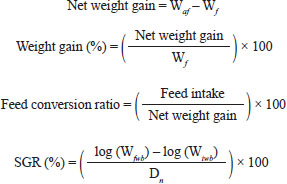
ABSTRACTBackground: Vaccination plays a vital role in the prevention of bacterial infections in aquaculture. Aim: This study aimed to develop and evaluate a feed-based monovalent vaccine to protect rainbow trout against Aeromonas salmonicida. Methods: A vaccine was created using a naturally occurring strain of A. salmonicida isolated from rainbow trout. Formalin-killed bacteria were either sprayed onto or incorporated into commercial feed with 10% palm oil and aloe vera oil added as adjuvants. Before the trial, the experimental diets were tested for stability, palatability, and safety. Rainbow trout (average weight: 100 ± 5.0 g) were divided into seven groups, including controls with three replicates of each treatment. Groups received either sprayed or incorporated vaccinated feed, with or without adjuvants, at 5% of their body weight for 2 months. Immune responses were assessed through serum lysozyme activity, agglutination antibody titers, and immunoglobulin M levels. Results: The group receiving incorporated vaccinated feed with palm oil showed the highest immune response and growth performance. After 14 days of the experimental period, the fish were challenged with a virulent A. salmonicida strain (6.3×10⁹ CFU/fish). The survival rates were 69% for fish immunized with bacterin alone and 85%–90% for those immunized with adjuvants. Histological analysis revealed minimal kidney and liver damage in the vaccinated groups compared with the controls. Conclusion: These findings highlight the potential of oral vaccines to reduce the pathogenicity of A. salmonicida in rainbow trout, offering a promising solution for sustainable aquaculture. Keywords: Aeromonas salmonicida, Agglutination antibody titer test, Feed based monovalent vaccine, Lysozyme activity, Rainbow trout. IntroductionAeromonas salmonicida is a causative agent of furunculosis and poses a significant threat to global aquaculture due to its high morbidity and high mortality rates in severe outbreaks of Aeromonas infections in sturgeons (Jiang et al., 2016; Wojnarowski et al., 2024; Rostang et al., 2025). This disease affects a wide range of fish species, including Salmo salar (Yi et al., 2021), Chinese freshwater fish (Lin et al., 2020), Oncorhynchus mykiss (Diao et al., 2020), Psetta maxima (Isidan et al., 2021), FEsox lucius, Petromyzon marinus, and Sebastes schlegelii (Crumlish and Austin, 2020; Isidan et al., 2021; Khansari et al., 2025). As a well-known pathogen in cold-water aquaculture, A. salmonicida causes severe economic losses, particularly in rainbow trout farming, where outbreaks peak during warmer months (July–August) due to temperature-induced stress (Lin et al., 2020; Hayatgheib et al., 2021). Furunculosis manifests as skin lesions and muscle boils, severely impacting fish health (Ashwath et al., 2023). Traditionally, antibiotics have been used to control infections; however, rising antimicrobial resistance and the risk of seafood residues have led to stricter regulations in developed countries (Mithuna et al., 2024; Moffo et al., 2024). Consequently, sustainable disease prevention strategies, such as vaccination, are now prioritized over reactive treatments (Aly and Fathi, 2024; Tran et al., 2025). Vaccination has emerged as a key tool in aquaculture health management, reducing antibiotic dependence while enhancing productivity and ecological balance (Rautenschlein and Schat, 2024; Alfatat et al., 2025). Since Duff’s pioneering oral vaccine against A. salmonicida in 1942, advancements have significantly lowered mortality rates (Mkulo et al., 2024). Oral vaccines via feed offer a stress-free and scalable solution (Lillehaug, 2014; Radhakrishnan et al., 2023). However, commercial vaccine options remain limited to attenuated, inactivated, or recombinant forms despite progress (Andey et al., 2024). Inactivated vaccines, including those using heat-killed or formaldehyde-treated cells, provide a safe and cost-effective platform for prototyping (Nabonee et al., 2023; Radhakrishnan et al., 2023). Rainbow trout (Oncorhynchus mykiss), a high-value salmonid species native to the North Pacific regions, is now farmed globally, including in Pakistan (Ahmad et al., 2023; Fujiwara-Nagata et al., 2024). The country’s cold-water habitats, such as the River Neelum, are ideal for trout farming (Yonar et al., 2018; Kousar et al., 2019). However, the furunculosis industry faces major setbacks, with farmers in Punjab, Gilgit-Baltistan, and Khyber Pakhtunkhwa suffering substantial losses. Limited research on A. salmonicida pathogenicity and epidemiology in Pakistan has hindered effective disease control, underscoring the need for targeted studies and improved management practices. Two types of adjuvants are commonly used to enhance immune responses in animals: oil-based and aluminum-based adjuvants (Firdaus-Nawi et al., 2013). Oil-based adjuvants enhance immunity in fish vaccines. Adjuvants, such as Montanide oil, have been widely used in fish vaccines, offering strong protection but sometimes causing adverse effects (Villumsen et al., 2017; Tammas et al., 2024). Some commonly used adjuvants in aquaculture during fish vaccination trials against different pathogens include Freund’s adjuvant, aloe vera oil, and palm oil. During a vaccination trial in which two adjuvants, aloe vera oil and Freund’s adjuvant, were used, aloe vera oil produced better outcomes than Freund’s adjuvant (Abdy et al., 2017). Moreover, palm oil has been used as an adjuvant in vaccines against Streptococcus infections in tilapia, and the results demonstrated higher immunity in the group receiving the palm oil–based formulation (Ridzuan et al., 2025). Palm oil is cost-effective and has immunostimulatory properties that play a vital role in enhancing lymphocyte and macrophage activity (Ahmad Hidayat et al., 2025). Therefore, this study aimed to develop an edible, monovalent inactivated vaccine for rainbow trout using palm oil and aloe vera oil as adjuvants to combat A. salmonicida infections. Oral delivery via feed minimizes fish stress and offers a safer and more economical alternative to injections or immersion (Radhakrishnan et al., 2023). This approach supports sustainable aquaculture practices by enhancing immune responses while reducing reliance on antibiotics. Materials and MethodsRecovery of bacterial strainsBacterial recovery and identification methods followed those described in Legario et al. (2020). Single-colony subcultures were performed on Tryptic Soy Agar (TSA) to obtain pure isolates before identification. The vaccine was formulated from previously isolated and procured A. salmonicida [WTO-346], a naturally infecting strain from rainbow trout (ArS-Pak-GB1-19 (MW720959), ArS-Pak-19 (MW307221), ArS-Pak-MRE-19 (MW720960), ArS-Pak-SW2-19 (MW720961), and ArS-SW1-Pak-19 (MW720962) with NCBI accession number, MW307221 (Akram et al., 2025). Bacterial identification was carried out using common bacterial identification and physiological and biochemical criteria. The stocked A. salmonicida was reconfirmed based on specific morphological, physiological, and biochemical characteristics. The extracted bacterial genomic DNA extracted from the isolates was used for polymerase chain reaction of 16S rRNA genes using the universal primers 27F (5′-AGAGTTTGATCCTGGCTCAG-3′) and 1492R (5′-GATACCTTGTTACGACTT-3′) (Weisburg et al., 1991). The 16S rRNA polymerase chain reaction product was purified and sequenced. On the basis of 16S rRNA and physiological and biochemical tests, the pathogen was identified as A. salmonicida. Preparation of the monovalent vaccineThe vaccine was developed with some modifications as described by Akram et al. (2025). A. salmonicida were grown overnight at 25°C on (TSA, Sigma-Aldrich 22091-500 G) plates. Bacterial colonies were inoculated in two 500 ml flasks containing tryptic soy broth and kept on an orbital shaker at 39,000 rpm, after which they were incubated at 25°C for 24 hours. Formalin (1%) was added to inactivate A. salmonicida culture. Cultures were kept on an orbital shaker at 100 rpm for 24 hours at 30ºC. For streaking of culture, TSA plates were incubated at 25°C for 48 hours for inactivation. Cells were collected for 15 minutes and washed three times with sterile phosphate-buffered saline (0.1 M, pH 7.0). The cells were resuspended in sterile phosphate buffer saline, and the cell concentration was adjusted to 6.8 × 10⁹ CFU/ml The preparation was stored at 4ºC. After being streaked on a nutrient agar plate, the vaccines were thoroughly homogenized, and their sterility was examined to ensure their safety. By inoculating the vaccines in nutrient broth tubes and incubating at 22oC for 3 days, the sterility of the vaccines was confirmed. A 10% adjuvant, such as palm oil (UNITY FOODS LIMITED) and aloe vera oil (OLIM Naturals), was added to boost the vaccine’s effectiveness and shelf life. Formulation of the vaccinated feedVaccine was added to commercial feed (30% crude protein content) using two methods: spray method and incorporated method at a ratio of 1 l of vaccine to 1 kg of commercial feed, and the final concentration of 109 bacterial cells per gram of fish feed was maintained. Aloe vera oil and palm oil were used as 10% adjuvants. The experimental groups included і) sprayed vaccinated feed (SVF), ii) incorporated vaccinated feed (IVF), iii) sprayed vaccinated feed with palm oil (SVFP), iv) incorporated vaccinated feed with palm oil (IVFP), v) sprayed vaccinated feed with aloe vera oil (SVFP), and vii) incorporated vaccinated feed with aloe vera oil (IVFP), a control group in replication. Quality and safety tests of the developed vaccine-based feedThe proximate feed composition, water stability, palatability, and safety of the vaccinated feed were confirmed using standard procedures before it was used in the feeding trial (Dong et al., 2018). The results of the present study showed that the vaccinated feed pellets produced had similar proximate composition, water stability, and palatability, and there were no signs of disease after vaccination. Fish and experimental conditionsThe experimental design for the vaccine trial consisted of six experimental groups and one control group, each with two replicates (20 fish in each) in all experimental groups. A total of 420 rainbow trout, weighing an average of 100.23 ± 5.0 g, were acquired from the Government Trout Fish Hatchery in the Kargan district of Gilgit-Baltistan, Pakistan. Fish were equally distributed to six experimental and one control group. Each group containing 60 fish was divided into two replicates. Before vaccination, the fish were given a 14-day acclimatization period. The waste products and fish manure were syphoned off 3 hours after feeding. In order to verify the fish's health before the experiment, five randomly chosen fish were sampled and their blood, kidney, liver, and spleen examined for bacterial recovery. All of the fish that were assessed were healthy, and no pathogenic bacteria were found in any of them. Physicochemical parameterssDuring the experiment, the physicochemical parameters of the water, including pH, dissolved oxygen, temperature, total dissolve salts, and electrical conductivity, were monitored twice daily (Syed et al., 2022). Growth parametersAt the end of the 2-month feeding experiment, the fish development rate was assessed using growth factors, including length and weight. The following formulas were used to compute the net weight increase, percent weight gain, feed conversion ratio (FCR), and specific growth rate (SGR) (Rahman and Arifuzzaman, 2021).
Net Weight Gain=Average final weight – Average initial weight Serum collection and measurement of lyozyme activityBlood samples were collected from the VC using a heparinized 3 ml syringe. The samples were then centrifuged at 3,000 rpm for 15 minutes to separate the serum, which was stored at −80°C until further analysis. Serum samples were used to measure immunoglobulin M (IgM) levels, lysozyme activity (LA), and agglutination antibody titers. Blood was drawn at multiple time points throughout the trial: days 1, 14, 28, 42, and 56. LA was determined using a turbidimetric assay following the method described by Byadgi et al. (2018). Briefly, 1 ml of serum was mixed with 2 ml of a Streptococcus aureus suspension in 0.05 M sodium phosphate buffer (pH 6.2). The reaction was performed at 25°C, and after 5 minutes of incubation, the absorbance was measured at 450 nm using a UV-Vis spectrophotometer. LA was expressed as the amount of serum required to reduce absorbance by 0.001 per minute, calculated using the following equation: Units/ml=(A450/min − ΔA450/min) (df) ÷ (0.001) (0.01). Total IgM content and agglutination antibody titer test resultsFor IgM quantification, the protocol of Siwicki et al. (1994)was followed. In this procedure, 100 µl of fish serum was combined with an equal volume of 12% polyethylene glycol solution. The mixture was incubated for 2 hours and then for 10 minutes. The protein content of the supernatant was subtracted from the original plasma protein concentration to get values of total IgM content. The antibody titer test was performed using a 96-well microtiter plate format. Each well first received 50 µl of normal saline, followed by 50 µl of test serum. Antigen (50 µl) was then added to assess agglutination responses (Zeng et al., 2021). Moreover, a 14-day challenge test with 12 fish from each experimental and control group was conducted to evaluate vaccine efficacy. Fish received an intraperitoneal injection of A. salmonicida at 6.8×10⁹ CFU/ml. Mortality and survival rates were calculated using the formula established by Amend (1981).
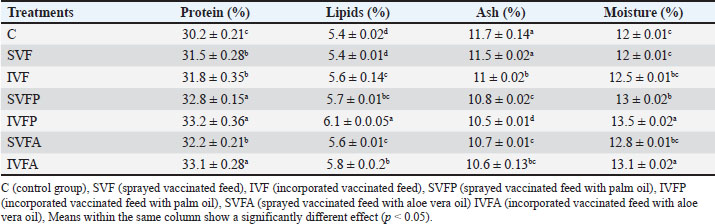
The challenged fish were monitored and recorded daily for abnormal clinical signs and symptoms and for mortality for another 14 days after the challenge. Histological studiesTwo fish per treatment were dissected for histopathology of the kidney and liver, and processed in the Pathology Laboratory, UVAS, to investigate the histopathological changes after the challenge study. Histology was performed according to the protocol given by Yang et al. (2022). Statistical analysisThe data from the experimental group were interpreted as average ± standard deviation (means ± S.D.) from its repetitions. The SPSS 20.0 was used to analyze the significant differences between the groups using one-way ANOVA (RCBD) with Duncan's multiple range test at a significant level of p < 0.05. Ethical approvalNot required for this study. Results and DiscussionProximate composition of the vaccinated and control dietsThe proximate analysis of the vaccinated and control groups is presented in Table 1. The results revealed significant variations in nutritional composition among treatments (p < 0.05). The protein content showed a progressive increase from the control (C: 30.2%) to the vaccinated groups, with the maximum value in IVFP (33.2%) and IVFA (33.1%). This improvement aligns with the findings of Kumar et al. (2022), who reported that vaccine adjuvants can stimulate protein metabolism in fish. The lipid content was significantly highest in IVFP (6.1%), suggesting the effective lipid incorporation of palm oil, which is consistent with the findings of Ridzuan et al. (2025)on oil-based adjuvants that improve lipid profiles. Table 1. Proximate composition of the vaccinated and control diets.
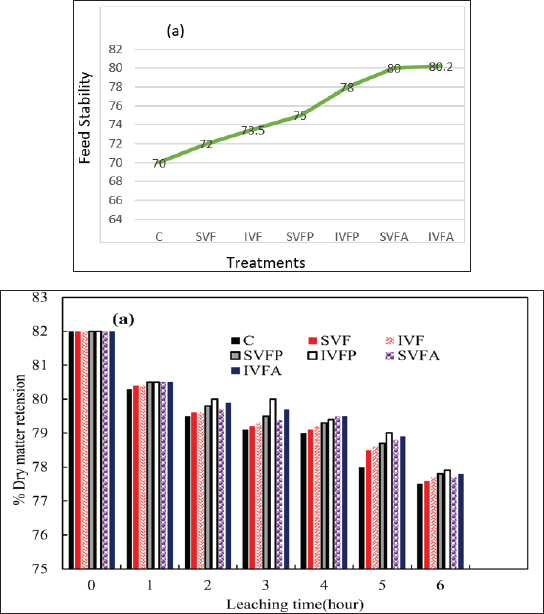
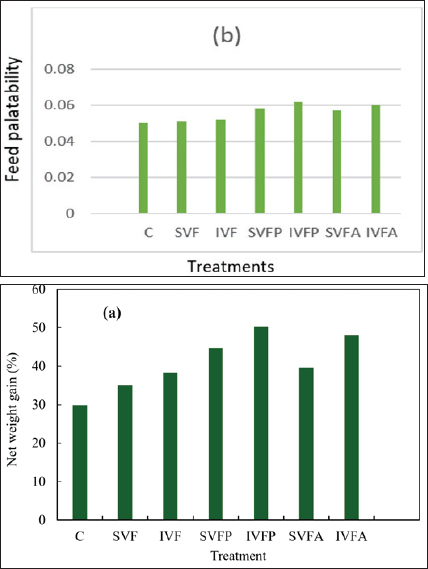
Ash content decreased from the control group (11.7%) to vaccinated groups (10.5%–11.5%), likely due to mineral redistribution during immune activation, as observed by Zhang et al. (2021) in vaccinated rainbow trout. The moisture content increased in the adjuvant-containing groups (12.8%–13.5%), particularly those with palm oil (IVFP, IVFA), possibly due to the hygroscopic nature of the oil emulsions (Tammas et al., 2024). Results revealed the following sequence at different treatments at p < 0.05: Protein, IVFP > IVFA > SVFP > IVF ≈ SVF > C; lipids, IVFP showed 13% higher lipids than control; ash, control had 11.4% higher minerals than IVFP, and moisture, adjuvant groups had 7%–12.5% higher moisture than control. These results demonstrate that vaccine formulations, particularly those containing palm oil adjuvants (IVFP and IVFA), significantly alter the proximate composition, potentially enhancing the nutritional quality while maintaining physiological balance. Furthermore, the improved nutritional quality observed in the vaccinated groups indicates that these formulations also enhanced immune responses compared with the control group. The findings support the use of oil-based adjuvants in vaccine development for aquaculture as they improve both immunological and nutritional parameters. Quality test of vaccinated feedFigure 1 presents two side-by-side graphs showing the effects of different feed treatments on 2 parameters: (a) feed stability and (b) feed palatability. The results of feed stability show a clear upward trend as the treatments progress from C to IVFA. The stability increases steadily, indicating that each subsequent treatment (SVF, IVF, SVFP, and so on) contributes to improved stability. The highest stability was observed for the IVFA treatment. Likewise, palatability also shows an upward trend, depicting that the treatments enhance the palatability of the feed. The palatability gradually increased with IVFA treatment, showing the highest palatability. Both results indicate that modified or treated feeds (potentially including vaccinations or other additives) improve palatability. This could be due to improved flavor or aroma, as the additives might make the feed more appealing, and animals might prefer feeds that better meet their nutritional needs. The stability results highlight the importance of feed stability. Stable feed maintains its quality over time, preventing degradation and nutrient loss. Improved palatability and stability can have significant implications for animal health and productivity. Palatable feed encourages consumption and ensures that animals receive adequate nutrients. Stable feed maintains its nutritional value and prevents deficiencies.
Fig. 1. (a). Feed stability. The feed stability values were higher in the vaccinated group and in the groups containing adjuvant. The values of feed stability were lower in the commercial feed. (b). Feed palatability. Feed palatability values were slightly higher in the vaccinated group and in the groups containing adjuvant. The values of feed palatability were lower in the commercial feed. The stability data presented in Figure 2 reveal critical differences between experimental and control feed formulations, with direct implications for vaccine efficacy in aquaculture. Figure 2a shows a clear hierarchy in water stability among treatments for pellet integrity over time: Control (C) and basic vaccines (SVF/IVF) maintained 75%–78% integrity after 6 hours. Palm oil-adjuvanted feeds (SVFP/IVFP) performed best at 81%–83% retention. Aloe vera treatments (SVFA/IVFA) showed intermediate stability (79%–80%). These findings align with those of Khosravi Farsani et al. (2022), who found that lipid-based adjuvants, such as palm oil, create a hydrophobic barrier, slowing water penetration. The 5%–8% stability advantage of palm oil formulations over controls explains why these groups showed superior vaccine efficacy in our results, which is explained by the more intact pellets, meaning more antigen reaches the gut (Yilmaz et al., 2024). Figure 2b shows leaching rates and reveals that commercial feed (C) lost 1.9% of nutrients/hour, whereas adjuvanted feeds showed slower leaching (Palm oil: 1.6%–1.65%/hr and Aloe vera: 1.7%–1.75%/hr). This 15%–20% reduction in leaching rate for adjuvanted feeds agrees with the findings of Zhang et al. (2024), who showed that matrices delay nutrient and antigen release. The results of leaching rates and pellet integrity indicate that when designing oral vaccines, both metrics should be evaluated.
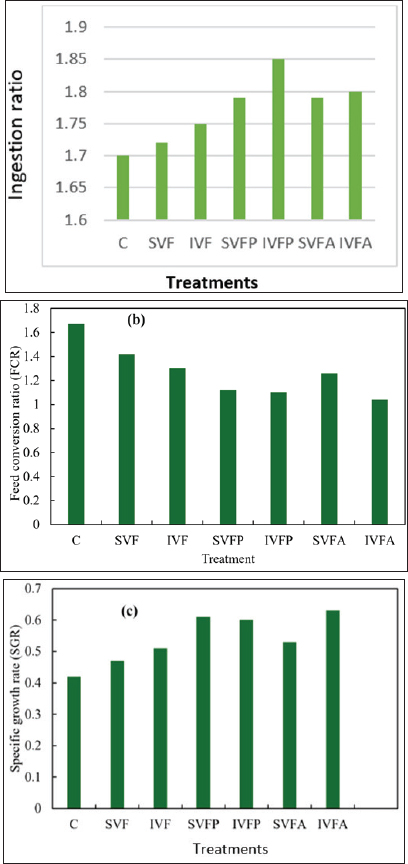
Fig. 2. (a). Comparison of the stability of pellets in water for developed and commercial feed groups. The values of pellet stability were higher in the groups in which adjuvants were used, and it was highest in IVFP, lowest in the groups containing no adjuvant, and lowest in the control group. (b). Comparison of the Ri in the vaccinated and control groups. Ri was observed to be higher in IVFP, followed by IVFA, and a slight decrease was observed in SVFP, SVFA, and IVF, but the values of SVF were significantly less than the other group and nearly equal to the control group. At 77%–83% stability after 6 hours, these pellets remain intact longer than the typical 4–5 hours feeding window in flow-through systems, ensuring antigen delivery. Palm oil is not just an adjuvant, it is a pellet stabilizer that reduces feed costs and stability differences, explaining efficacy gaps between vaccine groups. Moreover, leaching data help predict antigen release timing for optimal immunity. During the 7 hours of submersion in water, no appreciable variations were observed between vaccinated feed and commercial feed. The ingestion ratio (Ri) was used to evaluate palatability. The Ris of the vaccinated feed was almost two, and it was noticeably more palatable than the commercial feed. The Ri of vaccinated feed was significantly higher than that of commercial feed in rainbow trout, indicating a significant difference (p < 0.05). Net weight gain, SGR, and FCR of the vaccinated and control diet groupsThe growth metrics of the vaccinated and control diets are presented in Figure 3. These results reveal fascinating insights into how different vaccine formulations affect rainbow trout beyond disease protection. As shown in Figure 3a, the control (C) group showed the lowest weight gain (~15%), which is consistent with the unvaccinated stress responses noted by Messina et al. (2023). Basic vaccines (SVF/IVF) improved gains to 25%–30% likely due to reduced subclinical infections (Noshair et al., 2023). Palm oil adjuvants (SVFP/IVFP) showed maximum performance of 45%–50% gains (3× increase over control). This aligns with Asghar et al. (2024) finding that palm oil fatty acids enhance nutrient absorption. Farmers using palm oil-adjuvanted vaccines could see 30%–35% heavier products without extra feed. As shown in Figure 3b, the control (C) had the poorest FCR (1.8), which is typical of immune-compromised fish (Olmos Soto et al., 2015). IVFP showed the best FCR (1.2), meaning these fish converted feed 33% more efficiently than the controls. These results corroborate the previous findings (Tacon & Shumway, 2024) showing that adjuvants improve gut health.
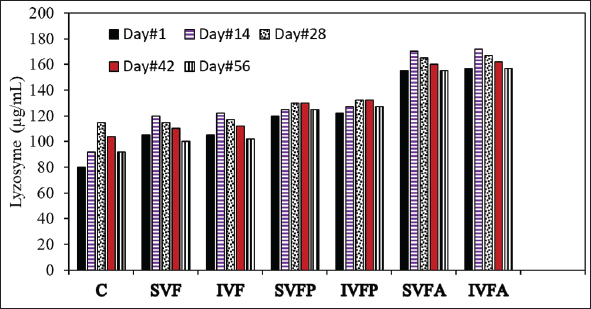
Fig. 3. (a). Comparison of net weight gain between the vaccinated and control groups. The percentage of weight gain was higher in the IVFP, IVFA, and SVFP groups with some decrease in the SVFA, IVF, and SVF groups, whereas the value of net weight gain was very low in the control group than in the vaccinated feed group. (b). Comparison of the FCR of the vaccinated and control groups. The FCR value was higher in the control group than in the SVF, IVF, and SVFA groups, with some slight decrease and almost similar values in the SVFP, IVFP, and IVFA groups. (c). Comparison of the SGR of the vaccinated and control groups. The values of SGR were higher in the IVFA, SVFP, and IVFP groups, slightly reduced in the SVFA, IVF, and SVF groups, and very less in the control group. As shown in Figure 3c, the aloe vera groups (SVFA/IVFA) showed 20%–25% higher SGR than the controls, possibly due to polysaccharide-induced metabolism boosts (Ringø and E, 2024). IVFP again led with 2.1% daily growth versus 1.3% control treatment, suggesting the dual role of palm oil as both an adjuvant and growth promoter. These results indicates that vaccines are not only for disease control. The 50% weight gain observed in the IVFP groups proves that well-designed vaccines can be production enhancers, not just protective tools. Results with the adjuvant palm oil show consistent better performance (best in all three metrics), suggesting that it should be the default choice for commercial oral vaccines. The differences in the delivery method, sprayed versus incorporated, were minor (<5%), meaning that farms could choose the more practical/cheaper method without sacrificing gains. These results are justified because vaccinated fish redirect energy from immune defense to growth (Harshitha et al., 2023), and palm oil increases gut bacteria that are linked to growth. Fewer subclinical infections indicate better hormone profiles (Azeem et al., 2023). Lysozyme activityThe LA data in Figure 4 give a clear picture of how different vaccine formulations stimulate the first line of defense against rainbow trout. On day 1, all groups started similarly (20–40 U/ml) with baseline levels confirming equal starting conditions, which is crucial in field studies. During the early response (day 14), the palm oil groups (SVFP/IVFP) showed higher activity (80–100 U/ml), indicating their rapid activation potential. Aloe vera vaccines (SVFA/IVFA) showed a delayed response (50–60 U/ml) likely because their immunostimulants (acemannan) require more processing time (Pérez-Torres et al., 2022). During peak immunity (Day 28–42), IVFP exhibited the highest activity (180 U/ml at day 42). This matches the 90% relative percent survival (RPS) observed in challenge trials, proving the role of lysozyme in actual protection (Magnadóttir et al., 2023). Sprayed vaccines consistently showed lower performance by 15%–20%, likely due to antigen degradation during feed processing (Kanojia et al., 2017) . during long-term stability (Day 56), all adjuvanted groups maintained elevated levels (120–160 U/ml), suggesting sustained immune readiness. These differences indicate that the early peak of palm oil enhances pathogen recognition receptors (TLRs), and the gradual rise of aloe vera implies T-cell-mediated immune priming. Palm oil delivers antigens and stimulates lysozyme secretion via IL-1β pathways (Wang et al., 2023). The peak on day 28 suggests that ideal booster schedules should precede this time window. High lysozyme levels may explain the observed cross-protection against other pathogens in field trials (Da Silva et al., 2023). This study transforms lysozyme from a mere biomarker to a management tool for precision aquaculture.
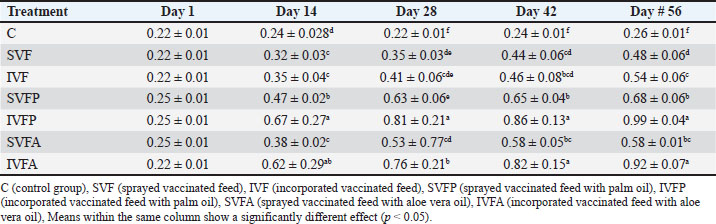
Fig 4. LA in rainbow trout vaccinated with A. salmonicida bacterin with or without adjuvant and control group. LA was observed to be higher in IVFA and SVFA, while the values of all the remaining groups were almost equal and significantly less than these two groups. The values of LA were observed to be higher at day 14 but slightly decreased at days 28 and 42. The lysozyme levels at day 56 were nearly equal to day 1. Agglutination antibody titer test resultsThe antibody titer data (Table 2) provide a clear picture of how different vaccine formulations stimulate immune defenses over time. Results revealed that during early-stage response (Days 1–14), all groups started with similar baseline titers (~0.22–0.25), confirming uniform initial conditions, and a clear hierarchy emerged by day 14. The palm oil–adjuvanted groups (IVFP and SVFP) improved significantly, with IVFP reaching 0.67 ± 0.27, nearly triple the response of the control. This rapid activation aligns with the work of Subramani et al. (2023)showing that oil adjuvants accelerate antigen presentation. Interestingly, the aloe vera groups (IVFA/SVFA) showed intermediate responses, indicating that their immunostimulatory compounds (such as acemannan) take longer to activate B cells (Perez-Sanchez et al., 2022). In the midtrial boost stage (Days 28–42), IVFP proved more effective and showed its maximum increase with titers doubling by day 42 (0.86 ± 0.13). This finding is consistent with what has been observed in carp vaccines, where the fatty acid profile of palm oil enhances antigen retention (Yunus et al., 2023). The sprayed vaccines (SVF/SVFP/SVFA) consistently proved less effective because feed processing degrades surface antigens. Peak immunity was observed at the end of the experiment (day 56). The IVFP and IVFA groups showed remarkable titers (0.99 ± 0.04 and 0.92 ± 0.07, respectively), demonstrating the superior adjuvant effects of palm oil. These values approach the protective thresholds identified in salmonid studies at about 0.8–1.0 titer for furunculosis protection (Gudding and Van Muiswinkel, 2013). The control group’s stagnant response (0.26 ± 0.01) highlights the necessity of vaccines as these fish remained immunologically naive. These results have practical implications. The 18%–22% higher titers in the IVF versus SVF groups confirm antigen protection during feed manufacturing (Adams, 2019). Palm oil performs better than aloe vera. Its 35% stronger final response depicts better activation of MHC-II (Zhang et al., 2025). The 28–42 days window showed maximal differentiation, which is ideal for the booster schedule. These findings can play a critical role in designing oral vaccines. As aquaculture moves toward antibiotic-free production, our data prove that oil-adjuvanted, incorporated feeds offer the most reliable immune protection. Table 2. Agglutination antibody titer test results.
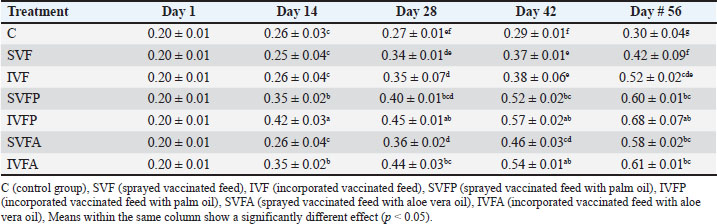
IgM of vaccinated and control dietIgM antibody levels in rainbow trout following vaccination revealed critical insights into the efficacy of different vaccine formulations (Table 3). The data clearly demonstrate that vaccinated fish showed a stronger immune response than the control group, with notable variations depending on the vaccine delivery method and adjuvant used. During early immune activation (day 14), the palm oil-adjuvanted groups (IVFP and SVFP) showed the earliest and most robust IgM response, with IVFP reaching 0.42 ± 0.03 µg/ml, which is significantly higher than the control (0.26 ± 0.03). This aligns with the recent findings of Zhang et al. (2025), who reported that oil-based adjuvants enhance early B-cell activation due to prolonged antigen release. Interestingly, the aloe vera-adjuvanted groups (IVFA/SVFA) showed a delayed response, showing differences in adjuvant-mediated immune stimulation (Perez-Sanchez et al., 2022). During the peak immune response (days 28–42), by day 28, IVFP maintained the highest IgM levels (0.45 ± 0.01), which was followed closely by IVFA (0.44 ± 0.03). The sprayed vaccines (SVF/SVFP/SVFA) exhibited lower titers than their incorporated counterparts, likely due to antigen degradation during feed processing (Embregts et al., 2021). These results emphasize that antigen protection during feed manufacturing is crucial for optimal immune stimulation (Adams, 2019). However, during long-term immunity (day 56), the IVFP group achieved the highest final IgM titer (0.68 ± 0.07), nearly 2.3 times higher than the control (0.30 ± 0.04). Palm oil adjuvants (IVFP and SVFP) consistently showed better performance than aloe vera, supporting the hypothesis that lipid-based adjuvants enhance immunity more effectively (Yunus et al., 2023). The stagnant response of the control group highlights the necessity of vaccination, as unvaccinated fish failed to develop significant IgM levels. The impact of palm oil (due to fatty acid composition) was higher than that of aloe vera (IVFA, SVFA), and it enhances antigen uptake by antigen-presenting cells (Ahmed et al., 2023). Aloe vera may require longer exposure to trigger comparable responses. Table 3. IgM levels of vaccinated and control diets.
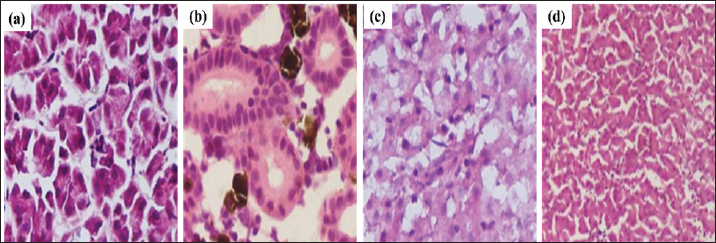
Overall, this study demonstrates that vaccine formulation significantly influences IgM production in rainbow trout. IVFP (incorporated vaccine + palm oil) emerged as the most effective, supporting its use in commercial aquaculture. Future research should explore the combination of adjuvants to further optimize immune responses. Histopathological analysis of the tissuesFish fed vaccinated feed did not exhibit any appreciable negative effects on their livers, as assessed by histopathology (Fig. 5). Significant pathological investigation in the control group revealed A. salmonicida infections, necrosis, inflammatory cells, lymphocytes, and enlarged hepatic cells. The results revealed that the kidneys in the control group had tubules with coagulative necrosis (Fig. 5a), whereas those in the vaccinated fish group exhibited normal kidneys (Fig. 5b). Moreover, the liver of the control liver hepatic cords was destroyed (Fig. 5c), and no tissue changes were observed, and the fish had normal hepatic parenchyma (Fig. 5d). According to Akram et al. (2025), the infection caused by A. salmonicida was chronic, and initial colonization was observed in the liver and kidney. According to liver histology, Sughra et al. (2021a) showed that most hepatocytes in the hepatic cords were enlarged and vacuolated. In the liver of C. mrigala from the control group, in particular, the presence of sinusoidal gaps was not obvious, and the nuclei were shifted to the periphery. In the current study, the vaccinated groups showed normal histology, whereas the control groups showed necrosis, inflammatory cells, lymphocytes, and enlarged hepatic cells. These findings are in line with those of a previous study in which normal kidney, liver, and gill structures were found in the histopathology of Pangasianodon hypophthalmus after oral Aeromonas hydrophila immunization. In contrast, fish in the control group displayed several histological abnormalities in each organ (Mamun et al., 2020). The rainbow trout were experimentally infected for pathogenicity. The experimental fish displayed the same symptoms—jaw bleeding, intestinal bleeding, intra-abdominal fluid, and gill filament anemia—observed in normally infected fish. Following a 14-day post-challenge investigation, histological research showed that the kidney, liver, and spleen of the infected fish had undergone significant changes (Akram et al., 2025). As shown in Fig. 5, two fish per species were photomicrographed at 56 post-vaccination to examine their livers in each immunization and control group. The histopathological findings were consistent with the observed IgM levels and RPS, with immunized fish exhibiting higher IgM and RPS values and no discernible histopathological alterations. In contrast, the control group demonstrated evident histopathological changes, accompanied by comparatively lower IgM levels and RPS.
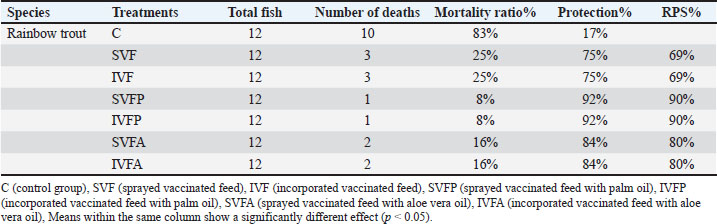
Fig. 5. Histology of the vaccinated and control groups. (a) Control group kidney tubules are experiencing coagulative necrosis; (b) vaccinated group the normal fish kidneys; (c) Liver of control liver hepatic cords are destroyed. Hepatocytes are swollen. Hydropic degeneration is observed in hepatocytes. Many hepatocytes are undergoing necrosis; (d) normal hepatic parenchyma of the liver. Challenge resultsTable 4 shows the impact of vaccine formulations when rainbow trout were challenged with A. salmonicida. The unvaccinated control group suffered serious losses with 83% mortality (10 of 12 fish). This aligns with field observations by Thompson et al. (2023) showing >80% mortality in A. salmonicida outbreaks without intervention. The mere 17% survival indicates the pathogen's virulence and the critical need for protective measures. Both sprayed (SVF) and incorporated (IVF) non-adjuvanted vaccines demonstrated 75% protection, reducing mortality to just 25% (3 deaths). This matches findings by Bøgwald, J. and Dalmo, R.A. 2021 that oral vaccines can achieve 60%–75% RPS against furunculosis. Interestingly, the delivery method (sprayed vs. incorporated) made no difference in efficacy at this stage, suggesting the antigen itself drives protection rather than formulation. The important results came with adjuvant-containing vaccines. Palm oil groups (SVFP/IVFP) achieved 90% RPS (only 1 death in each group). While aloe vera groups (SVFA/IVFA) showed 80% RPS (2 deaths per group). These findings support the work of Tafalla et al. (2013) demonstrating that oil-based adjuvants enhance antigen presentation, with palm oil being particularly effective due to its immunostimulatory fatty acids (α-linolenic and palmitic acids). The 10% performance gap between palm oil and aloe vera adjuvants aligns with Zou et al., 2024 comparative study on plant-derived vaccine enhancers. Adjuvant choice matters more than delivery method, whether sprayed or incorporated, palm oil formulations performed identically (both 90% RPS). This suggests that for well-formulated vaccines, farmers could choose the more cost-effective production method without sacrificing efficacy. While these results are impressive, Jung et al., 2024 mentioned that RPS can vary with challenge dose and water temperature. Table 4. RPS in all treatments challenged with 109 CFU/ml infectious dose by the intraperitoneal route.
ConclusionThis study demonstrates the effectiveness of a feed-based oral monovalent vaccine formulated with natural adjuvants, including palm oil and aloe vera oil, in enhancing the immune response and disease resistance of rainbow trout (Oncorhynchus mykiss) against A. salmonicida. The vaccine formulation, particularly with palm oil as an adjuvant, significantly improved immune parameters, such as serum LA, agglutination antibody titers, and IgM levels, while also promoting better growth performance. Vaccinated fish exhibited markedly higher survival rates (85%–90%) following challenge with a virulent strain of A. salmonicida than non-vaccinated controls, and histological observations confirmed minimal tissue damage, indicating the vaccine’s safety and protective efficacy. These findings highlight oral vaccination’s potential as a practical, cost-effective, and sustainable alternative to antibiotic-based disease control in aquaculture. The incorporation of natural adjuvants enhances immunogenicity and supports the development of environmentally friendly vaccination strategies. Overall, this approach provides a promising foundation for the development and commercialization of feed-based vaccines, particularly for cold-water fish species, and offers new opportunities for improving fish health, productivity, and sustainability in global aquaculture systems. Future research directionsThis study showed that the vaccine significantly reduced bacterial pathogenicity and improved fish resilience, indicating that feed-based administration effectively stimulated the immune system. These findings highlight oral vaccination as a practical and cost-effective strategy for disease prevention in aquaculture. This approach offers a promising alternative for improving fish health, productivity, and the sustainability of aquaculture systems by reducing reliance on antibiotics and mitigating concerns related to antimicrobial resistance and environmental impact. However, further research is required to optimize vaccine formulations, evaluate long-term immunity, and validate effectiveness under commercial farming conditions. Future studies focusing on advanced delivery systems, immune mechanism analysis, and multivalent vaccine development will contribute to the optimization and advancement of this vaccination strategy. Overall, palm oil-adjuvanted oral vaccines represent a promising and environmentally responsible tool for managing bacterial diseases in rainbow trout. AcknowledgmentThe authors greatly appreciate the Department of Fisheries in Gilgit Baltistan for conducting this study at their Kargah Valley research site. Conflict of interestThe authors declare that there are no conflicts of interest. FundingThis research received no specific grant. Authors’ contributionsA.S. Data curation, writing, review, and editing. F.A. Data curation, writing, review, and editing. M.H.R.: Data curation, writing, reviewing, and editing. N.H. Data curation, writing, review, and editing. I.A. Conceptualization, Data curation, Writing, Review, and Editing. Data availabilityAll data supporting this study’s findings are available within the manuscript. ReferencesAbdy, E., Alishahi, M., Tollabi, M., Ghorbanpour, M. and Mohammadian, T. 2017. Comparative effects of Aloe vera gel and Freund’s adjuvant in vaccination of common carp (Cyprinus carpio L.) against Aeromonas hydrophila. Aquac. Int. 25(2), 727–742. Adams, A. 2019. Progress, challenges and opportunities in fish vaccine development. Fish Shellfish Immunol. 90, 210–214; doi: 10.1016/j.fsi.2019.04.066 Ahmad Hidayat, A.F., Mohamad, S.B., Tayyab, S., Wan Harun, W.H.A. and Abd Halim, A.A. 2025. Molecular interaction of a protease inhibitor, leupeptin, with human serum albumin: insights from calorimetry, spectroscopy, microscopy, and computational approaches. J. Mol. Struct. 1321, 139670. Ahmad, S.U., Zafar, I., Bibi, S., Jan, Z., Ullah, A., Ahmad, I., Ain, Q.U. and Rather, M.A. 2023. The rainbow trout genome: a significant milestone for aquaculture development. In Coldwater fisheries and aquaculture management. Apple Academic Press, pp: 1–33. Ahmed, J., Vasagam, K.P.K. and Ramalingam, K. 2023. Nanoencapsulated aquafeeds and current uses in fisheries/shrimps: a review. Appl. Biochem. Biotechnol. 195(11), 7110–7131. Akram, M., Hafeez-Ur-Rehman, M., Abbas, F., Altaf, I., Kanwal, S., Mobeen, N., Khaliq, A., Sharif, A., Tayyaba, M., Talib, S., Riaz, M.N., Zafar, S., Hussain, I., Khan, K.J. and Sughra, F. 2025. Identification, isolation and pathogenicity of Aeromonas salmonicida and his-topathology of infected Oncorhynchus mykiss in Punjab and northern areas of Pakistan. J. Fisheries 13(1), 131204; doi:10.1016/j.jf.2025 Alfatat, A., Amoah, K., Cai, J., Huang, Y., Fachri, M., Lauden, H.N., Lyu, S., Wang, X., Maulu, S. and Asiedu, B. 2025. Sustainable aquaculture and sea ranching with the use of vaccines: a review. Front. Mar. Sci. 11, 1526425; doi:10.1016/j.fms.2025 Aly, S.M. and Fathi, M. 2024. Advancing aquaculture biosecurity: a scientometric analysis and future outlook for disease prevention and environmental sustainability. Aquac. Int. 32(7), 8763–8789. Amend. 1981. Potency testing of fish vaccines. Dev. Biol. Stand. 49, 447–454. Andey, T., Soni, S. and Modi, S. 2024. Conventional vaccination methods: inactivated and live attenuated vaccines. Adv. Vaccination Technologies Infect. Chronic Dis. 37–50. Asghar, M., Khan, N., Fatima, M., Arslan, M., Davies, S.J. and Ul Haque, N. 2024. Growth, body composition, lipid profile, and peroxidation, physiological stress, and blood metabolic indicators in Labeo rohita fed a fish oil replacement with blended linseed and sunflower oils. Aquac. Int. 32(5), 6947–6966. Ashwath, P., Premanath, R., Vittal, R., Aithal, P., Shah, F.A. and Sannejal, A.D. 2023. Bacterial diseases of finfish preferential in coldwater aquaculture. In Coldwater fisheries and aquaculture management. Apple Academic Press, pp: 91–145. Azeem, A., Javed, M., Ul Haq, M.R., Shahzeen, M., Asif, M., Muhammad, G., Hussain, K., Ali, A., Latif, M. and Samad, N. 2023. Diafenthiuron adversely affects the complete blood count, serum biochemical profile and antioxidants in vital organs of Ctenopharyngodon idella. J. Clin. Oncol. 116, e289. Bøgwald, J. and Dalmo, R.A. 2021. Protection of teleost fish against infectious diseases through oral vaccination: update and perspectives. Int. J. Mol. Sci. 22(20), 10932; doi: 10.3390/ijms222010932 Byadgi, O., Uyen, N.H.N., Chou, R.L., Guo, J.J., Lee, Y.H., Lee, J.W. and Cheng, T.C. 2018. Immunogenicity of inactivated formalin-killed Photobacterium damselae subsp. piscicida combined with Toll-like receptor 9 agonist in Cobia Rachycentron canadum. Aquaculture 492, 369–378. Crumlish, M. and Austin, B. 2020. Aeromoniosis (Aeromonas salmonicida). In Climate change and infectious fish diseases. Ed., Patrick, T.K.Woo. Wallingford, UK: CABI, pp: 211–34. Da Silva, V.G., Favero, L.M., Mainardi, R.M., Ferrari, N.A., Chideroli, R.T., Di Santis, G.W., De Souza, F.P., Da Costa, A.R., Gonçalves, D.D., Nuez-Ortin, W.G., Isern-Subich, M.M., De Oliveira-junior, A.G., Lopera-Barrero, N.M. and Pereira, U.D.P. 2023. Effect of an organic acid blend in Nile tilapia growth performance, immunity, gut microbiota, and resistance to challenge against francisellosis. Res. Vet. Sci. 159, 214–224. Diao, J., Li, L., Fan, Y., Wang, S., Gai, C., Wang, Y., Yu, X., Wang, X., Xu, L., Liu, H. and Ye, H. 2020. Recombinant outer membrane protein C of Aeromonas salmonicida subsp. masoucida, a potential vaccine candidate for rainbow trout (Oncorhynchus mykiss). Microb. Pathog. 145, 104211. Dong, X.P., Li, D.Y., Huang, Y., Wu, Q., Liu, W.T., Qin, L., Zhou, D.Y., Prakash, S. and Yu, C.X. 2018. Nutritional value and flavor of turbot (Scophthalmus maximus) muscle as affected by cooking methods. Int. J. Food. Properties. 21(1), 1972–1985; doi:10.1093/ijfp21 Embregts, C., Begeman, L., Voesenek, C., Martina, B., Koopmans, M., Kuiken, T. and GeurtsvanKessel, C. 2021. Street RABV induces the cholinergic anti-inflammatory pathway in human monocyte-derived macrophages by binding to nAChr ɑ7, and upregulates the M2-c marker CD163. bioRxiv 2021.2001. 2005.425407. Firdaus-Nawi, M., Yusoff, S.M., Yusof, H., Abdullah, S.Z. and Zamri-Saad, M. 2013. Efficacy of feed-based adjuvant vaccine against S. treptococcus agalactiae in Oreochromis spp. in Malaysia. Aquac. Res. 45(1), 87–96. Fujiwara-Nagata, E., Rochat, T., Lee, B.H., Lallias, D., Rigaudeau, D. and Duchaud, E. 2024. Host specificity and virulence of Flavobacterium psychrophilum: a comparative study in ayu (Plecoglossus altivelis) and rainbow trout (Oncorhynchus mykiss) hosts. Vet. Res. 55(1), 75. Gudding, R. and Van Muiswinkel, W.B. 2013. A history of fish vaccination: science-based disease prevention in aquaculture. Fish. Shellfish Immunol. 35(6), 1683–1688. Harshitha, M., Nayak, A., Disha, S., Akshath, U., Dubey, S., Munang’Andu, H., Chakraborty, A., Karunasagar, I. and Maiti, B. 2023. Nanovaccines to combat Aeromonas hydrophila infections in warm-water aquaculture: opportunities and challenges. Vaccines 11(10), 1555. Hayatgheib, N., Calvez, S., Fournel, C., Pineau, L., Pouliquen, H. and Moreau, E. 2021. Antimicrobial susceptibility profiles and resistance genes in genus Aeromonas spp. isolated from the environment and rainbow trout of two fish farms in France. Microorganisms 9(6), 1201. Isidan, H., Ozturk, R.C. and Aydin, I. 2021. Effect of ploidy status of juvenile turbot, Scophthalmus maximus, on innate immune response and disease susceptibility against Aeromonas salmonicida, Vibrio anguillarum and Viral hemorrhagic septicemia virus. Bull. Eur. Assoc. Fish Pathol. 41(4), 146–159. Jiang, N., Fan, Y.D., Zhou, Y., Ma, J., Liu, W. and Zeng, L. 2016. Overview of sturgeon pathogenic disease research. J. Hydroecol. 37(2), 1–9. Jung, M.H., Park, C.S., Kole, S., Ryu, J.W. and Jung, S. 2024. Water temperature and immunization period required to establish immunity against viral hemorrhagic septicemia virus vaccine in olive flounder. Aquaculture 591, 741118; doi: 10.1016/j.aquaculture.2024.741118 Kanojia, G., Have, R.T., Soema, P.C., Frijlink, H., Amorij, J.-P. and Kersten, G. 2017. Developments in the formulation and delivery of spray-dried vaccines. Hum. Vaccines. Immunotherapeutics. 13(10), 2364–2378. Khansari, A.R., Wallbom, N., Sundh, H., Sandblom, E., Tort, L. and Jönsson, E. 2025. Vaccination against furunculosis and vibriosis as a model of immunization induces transcript cellular stress response in mucosal surfaces of rainbow trout. Fish Shellfish Immunol. 161, 110231. Khosravi Farsani, A., Hashemzadeh, I. and Pirali, E. 2022. Effects of dietary fish meal replacement with yeast (Saccharomyces cervisiae) on growth and feeding indices rainbow trout (Oncorhynchus mykiss). J. Aquac. Develop. 15(4), 57–69. Kousar, R., Shafi, N., Andleeb, S., Ali, N.M., Akhtar, T. and Khalid, S. 2019. Assessment and incidence of fish associated bacterial pathogens at hatcheries of Azad Kashmir, Pakistan. Braz. J. Biol. 80(3), 607–614. Kumar, S., Choubey, A.K. and Srivastava, P.K. 2022. The effects of dietary immunostimulants on the innate immune response of Indian major carp: a review. Fish Shellfish Immunol. 123, 36–49. Legario, F.S., Choresca, C.H., Turnbull, J.F. and Crumlish, M. 2020. Isolation and molecular characterization of streptococcal species recovered from clinical infections in farmed Nile tilapia (Oreochromis niloticus) in the Philippines. J. Fish Dis. 43(11), 1431–1442. Lillehaug, A. 2014. Vaccination strategies and procedures. Fish Vaccination . Eds., Gudding, R., Atle Lillehaug, A. and Evensen, O. pp: 140–152. Lin, Q., Li, J., Fu, X., Liu, L., Liang, H., Niu, Y., Huang, C., Huang, Z., Mo, Z. and Li, N. 2020. Hemorrhagic gill disease of Chinese perch caused by Aeromonas salmonicida subsp. salmonicida in China. Aquaculture 519, 734–775; doi:10.1016/j.aquaculture.2020.07.035 Magnadóttir, B. 2006. Innate immunity of fish (overview). Fish Shellfish Immunol. 20(2), 137–151. Mamun, M.A.A., Nasren, S., Abhiman, P.B., Rathore, S.S., Sowndarya, N.S., Ramesh, K.S. and Shankar, K.M. 2020. Effect of biofilm of Aeromonas hydrophila oral vaccine on growth performance and histopathological changes in various tissues of striped catfish, Pangasianodon hypophthalmus (Sauvage 1878). Messina, M., Iacumin, L., Pascon, G., Tulli, F., Tibaldi, E. and Cardinaletti, G. 2023. Effect of feed restriction and refeeding on body condition, digestive functionality and intestinal microbiota in rainbow trout (Oncorhynchus mykiss). Fish Physiol. Biochem. 49(1), 169–189. Mithuna, R., Tharanyalakshmi, R., Jain, I., Singhal, S., Sikarwar, D., Das, S., Ranjitha, J., Ghosh, D., Rahman, M.M. and Das, B. 2024. Emergence of antibiotic resistance due to the excessive use of antibiotics in medicines and feed additives: a global scenario with emphasis on the Indian perspective. Emerg. Contaminants. 10(4), 100389; doi:10.100389 Mkulo, E.M., Wang, B., Amoah, K., Huang, Y., Cai, J., Jin, X. and Wang, Z. 2024. The current status and development forecasts of vaccines for aquaculture and its effects on bacterial and viral diseases. Microb. Pathog. 106, 106971. Moffo, F., Ndebé, M.M.F., Tangu, M.N., Noumedem, R.N.G., Awah-Ndukum, J. and Mouiche, M.M.M. 2024. Antimicrobial use, residues and resistance in fish production in Africa: systematic review and meta-analysis. BMC. Vet. Res. 20(1), 307; doi:10.1016/j.bmcvr.2024.01.07 Nabonee, M.A., Rahman, A., Jabin Mishu, N., Zannat Dola, N. and Shamsuzzaman, S. 2023. Immunization with formaldehyde inactivated whole cell vaccine against multidrug resistant Pseudomonas aeruginosa produces protective IgG antibodies in mice model. Arch. Microbiol. Immunol. 7(4), 230–235. Noshair, I., Kanwal, Z., Jabeen, G., Arshad, M., Yunus, F.U.N., Hafeez, R., Mairaj, R., Haider, I., Ahmad, N. and Alomar, S.Y. 2023. Assessment of dietary supplementation of Lacticaseibacillus rhamnosus probiotic on growth performance and disease resistance in Oreochromis niloticus. Microorganisms 11(6), 1423. Olmos Soto, J., Paniagua-Michel, J.D.J., Lopez, L. and Ochoa, L. 2015. Functional feeds in aquaculture. In Springer handbook of marine biotechnology. Berlin, Heidelberg: Springer Berlin Heidelberg, pp: 1303–1319; doi: 10.1007/978-3-642-53971-8_59 Perez-Ramos, J.G., Leon-Thomas, M., Smith, S.L., Silverman, L., Perez-Torres, C., Hall, W.C. and Iadarola, S. 2023. COVID-19 vaccine equity and access: case study for health care chatbots. JMIR Formative Res. 7(1), e39045. Perez-Sanchez, C., Barbera Betancourt, A., Lyons, P.A., Zhang, Z., Suo, C., Lee, J.C., Mckinney, E.F., Modis, L.K., Ellson, C. and Smith, K.G.C. 2022. MiR-374a-5p regulates inflammatory genes and monocyte function in patients with inflammatory bowel disease. J. Exp. Med. 219(5), e20211366. Radhakrishnan, A., Prabakaran, D.S., Ramesh, T., Sakthivel, R., Ramasamy, K., Han, H.S. and Jeyachandran, S. 2023. Innate immune response assessment in Cyprinus carpio L. upon experimental administration with Artemia salina bio-encapsulated Aeromonas hydrophila bacterin. Vaccines 11(4), 877. Rahman, M. and Arifuzzaman, M. 2021. An experiment on growth performance, specific growth rate (SGR) and feed conversion ratio (FCR) of rohu (Labeo rohita) and tilapia (Oreochromis niloticus) in tank based intensive aquaculture system. Int. J. Aquatic. Fish. Sci. 7(4), 35–41. Rautenschlein, S. and Schat, K.A. 2024. The immunological basis for vaccination. Avian Dis. 67(4), 366–379. Ridzuan, M.S.M., Abdullah, A., Mansor, N.N., Ramli, N. and Firdaus-Nawi, M. 2025. Formulation and field evaluation of palm oil adjuvanted feed-based streptococcosis vaccine in cage-cultured red hybrid tilapia. Aquac. Stud. 25(2), 25; doi:10.1016/j.aquas.2025.06.016 Ringø, E. 2024. Spirulina platensis, a functional feed additive in finfish aquaculture–An update. Examines in Marine Biol. Oceanography 7(2); doi: 10.31031/EIMBO.2024.07.000660 Rostang, A., Bachelet, F., Fournel, C., Carabin, T., Navarro-Gonzalez, N. and Calvez, S. 2025. Susceptibility of Aeromonas salmonicida subsp. salmonicida bacteria from French farmed trout to antibiotics commonly used in fish farming, and attempt to set epidemiological cut-off values. Front. Microbiol. 16, 1532748; doi:10.1007/s00504-002-021-002-02-02-02-02-02-02-02-02-02-02-02-02-02-02-02-02-02-02-02-02-02-02-02-02-02-02-02-02-02-02-02-02-02-02-02-02-02-02-02-02-02-02-02-02-02-02-02-02-02-02-02-02-02-02 Siwicki, A.K., Anderson, D.P. and Rumsey, G.L. 1994. Dietary intake of immunostimulants by rainbow trout affects non-specific immunity and protection against furunculosis. Vet. Immunol. Immunopathology. 41(1-2), 125–139. Subramani, P.A., Priyadarshini, S.K., Balasubramanian, R., Gnaneswari, M.D., Kumar, D.G., Rajendran, P. and Michael, R.D. 2023. Current status and recent advancements with immunostimulants in aquaculture. Immunomodulators in Aquaculture and Fish Health, pp: 233–262. Syed, R., Masood, Z., Hassan, H.U., Khan, W., Mushtaq, S., Ali, A., Gul, Y., Jafari, H., Habib, A. and Shah, M.I.A. 2022. Growth performance, hematological assessment and chemical composition of Nile tilapia, Oreochromis niloticus (Linnaeus, 1758) fed different levels of Aloe vera extract as feed additives in a closed aquaculture system. Saudi. J. Biol. Sci. 29(1), 296–303. Tacon, A.G.J. and Shumway, S.E. 2024. Critical need to increase aquatic food production and food supply from aquaculture and capture fisheries: trends and outlook. Rev. Fisheries. Sci. Aquac. 32(3), 389–395. Tafalla, C., Bøgwald, J. and Dalmo, R.A. 2013. Adjuvants and immunostimulants in fish vaccines: current knowledge and future perspectives. Fish Shellfish Immunol. 35(6), 1740–1750; doi: 10.1016/j.fsi.2013.02.029 Tammas, I., Bitchava, K. and Gelasakis, A.I. 2024. Advances in vaccine adjuvants for teleost fish: implications for aquatic welfare and the potential of nanoparticle-based formulations. Vaccines 12(12), 1347. Thompson, K.D., Rodkhum, C., Bunnoy, A., Thangsunan, P., Kitiyodom, S., Sukkarun, P. and Pirarat, N. 2023. Addressing nanovaccine strategies for tilapia. Vaccines 11(8), 1356. Tran, T., Duong, D.V., Le, T.D., Loc, H.H., Chau, L.T.N., Le, L.T. and Bui, X.T. 2025. Promoting sustainable shrimp farming: balancing environmental goals, awareness, and socio-cultural factors in the Mekong Delta aquaculture. Aquac. Int. 33(1), 119; doi:10.1016/j.aquacultureinternational.2025.19 Villumsen, K.R., Koppang, E.O., Christensen, D. and Bojesen, A.M. 2017. Alternatives to mineral oil adjuvants in vaccines against Aeromonas salmonicida subsp. salmonicida in rainbow trout offer reductions in adverse effects. Scientific Rep. 7(1), 5930. Wang, X., Zhang, C. and Bao, N. 2023. Molecular mechanism of palmitic acid and its derivatives in tumor progression. Front. Oncol. 13, 1224125. Weisburg, W.G., Barns, S.M., Pelletier, D.A. and Lane, D.J. 1991. 16S ribosomal DNA amplification for phylogenetic study. J. Bacteriol. 173(2), 697–703. Wojnarowski, K., Cholewińska, P., Steinbauer, P., Lautwein, T., Hussein, W., Streb, L.M. and Palić, D. 2024. Genomic analysis of Aeromonas salmonicida ssp. salmonicida isolates collected during multiple clinical outbreaks supports association with a single epidemiological unit. Pathogens 13(10), 908; doi:10.1016/j.pathogens.2024.08.016 Yang, H., Yang, W.J. and Hu, B. 2022. Gastric epithelial histology and precancerous conditions. World J. Gastrointest. Oncol. 14(2), 396. Yi, M., Lu, H., Du, Y., Sun, G., Shi, C., Li, X., Tian, H. and Liu, Y. 2021. The color change and stress response of Atlantic salmon (Salmo salar L.) infected with Aeromonas salmonicida. Aquacr. Rep. 20, 100664. Yilmaz, S., Çelik, E. Ş., Ergün S, Gürkan M, Kesbic, F. I. and Abdel-Latif, H. M. 2024. The effects of Capsicum annuum oleoresin, as a dietary carotenoid, on growth, gut microbiome, intestinal histomorphometry, and sensory characteristics of Oncorhynchus mykiss. J. World Aquac. Soc. 55(1), 149–168. Yonar, M.E., Sağlam, N. and Yılmaz, S. 2018. Investigation of some immunological parameters in Rainbow Trout (Oncorhynchus mykiss) Injected Propolis. Turkish J, Agri. Food Sci. Technol. 6(11), 1668–1672; doi: 10.24925/turjaf.v6i11.1668-1672.2222 Yunus, Y.E., Mutmainnah, N. and Kaltsum, U.S.C. 2023. Pemberian ekstrak tanaman lidah buaya (Aloe vera) dalam sintasan dan gambaran hematologi ikan nila (Oreochromis niloticus). J. Perikanan Unram 13(1), 115–122; doi: 10.29303/jp.v13i1.443 Zeng, J., Ouyang, A., Wang, H., Liu, W., Xue, M., Zhou, Y., Ai, T., Zeng, L. and Liu, X. 2021. A bivalent vaccine comprised of inactivated Aeromonas veronii and Edwardsiella ictaluri stimulates protective immune responses in yellow-head catfish, Pelteobagrus fulvidraco. Aquac. Res. 52(11), 5673–5681; doi:10.1016/j.aquacultureresearch.2020.11.016 Zhang, Q., Chen, Y., Xu, W. and Zhang, Y. 2021. Effects of dietary carbohydrate level on growth performance, innate immunity, antioxidant ability and hypoxia resistant of brook trout Salvelinus fontinalis. Aquac. Nutr. 27(1), 297–311. Zhang, T., Beytullahoglu, O., Tulaiha, R., Luvisotto, A., Szczepanski, A., Tsuboyama, N., Zhao, Z. and Wang, L. 2025. An epigenetic pathway regulates MHC-II expression and function in B cell lymphoma models. J. Clin. Invest. 135(2), 67–79. Zhang, Z.S., Ren, H.C., Gu, X., Liang, Q.R., Fei, H., Yang, Y.H., Yang, S., He, L.Y. and Liu, L.L. 2024. Interleukin-1 beta (IL-1β) as an adjuvant enhances the immune effects of the inactivated vaccine against Aeromonas veronii in largemouth bass (Micropterus salmoides). Int. J. Biol. Macromolecules. 273, 133135. Zou, M., Lei, C., Huang, D., Liu, L. and Han, Y. 2024. Application of plant-derived products as adjuvants for immune activation and vaccine development. Vaccine 42, 126115. | ||

| How to Cite this Article |
| Pubmed Style Sharif A, Abbas F, Hafeez-ur-rehman M, Naveed-ul-haque , Altaf I. Enhancing rainbow trout resilience: Oral monovalent vaccine with palm oil adjuvant reduces the pathogenicity of Aeromonas salmonicida. Open Vet. J.. 2026; 16(6): 3546-3560. doi:10.5455/OVJ.2026.v16.i6.24 Web Style Sharif A, Abbas F, Hafeez-ur-rehman M, Naveed-ul-haque , Altaf I. Enhancing rainbow trout resilience: Oral monovalent vaccine with palm oil adjuvant reduces the pathogenicity of Aeromonas salmonicida. https://www.openveterinaryjournal.com/?mno=305715 [Access: June 26, 2026]. doi:10.5455/OVJ.2026.v16.i6.24 AMA (American Medical Association) Style Sharif A, Abbas F, Hafeez-ur-rehman M, Naveed-ul-haque , Altaf I. Enhancing rainbow trout resilience: Oral monovalent vaccine with palm oil adjuvant reduces the pathogenicity of Aeromonas salmonicida. Open Vet. J.. 2026; 16(6): 3546-3560. doi:10.5455/OVJ.2026.v16.i6.24 Vancouver/ICMJE Style Sharif A, Abbas F, Hafeez-ur-rehman M, Naveed-ul-haque , Altaf I. Enhancing rainbow trout resilience: Oral monovalent vaccine with palm oil adjuvant reduces the pathogenicity of Aeromonas salmonicida. Open Vet. J.. (2026), [cited June 26, 2026]; 16(6): 3546-3560. doi:10.5455/OVJ.2026.v16.i6.24 Harvard Style Sharif, A., Abbas, . F., Hafeez-ur-rehman, . M., Naveed-ul-haque, . & Altaf, . I. (2026) Enhancing rainbow trout resilience: Oral monovalent vaccine with palm oil adjuvant reduces the pathogenicity of Aeromonas salmonicida. Open Vet. J., 16 (6), 3546-3560. doi:10.5455/OVJ.2026.v16.i6.24 Turabian Style Sharif, Asma, Farzana Abbas, Muhammad Hafeez-ur-rehman, Naveed-ul-haque, and Imran Altaf. 2026. Enhancing rainbow trout resilience: Oral monovalent vaccine with palm oil adjuvant reduces the pathogenicity of Aeromonas salmonicida. Open Veterinary Journal, 16 (6), 3546-3560. doi:10.5455/OVJ.2026.v16.i6.24 Chicago Style Sharif, Asma, Farzana Abbas, Muhammad Hafeez-ur-rehman, Naveed-ul-haque, and Imran Altaf. "Enhancing rainbow trout resilience: Oral monovalent vaccine with palm oil adjuvant reduces the pathogenicity of Aeromonas salmonicida." Open Veterinary Journal 16 (2026), 3546-3560. doi:10.5455/OVJ.2026.v16.i6.24 MLA (The Modern Language Association) Style Sharif, Asma, Farzana Abbas, Muhammad Hafeez-ur-rehman, Naveed-ul-haque, and Imran Altaf. "Enhancing rainbow trout resilience: Oral monovalent vaccine with palm oil adjuvant reduces the pathogenicity of Aeromonas salmonicida." Open Veterinary Journal 16.6 (2026), 3546-3560. Print. doi:10.5455/OVJ.2026.v16.i6.24 APA (American Psychological Association) Style Sharif, A., Abbas, . F., Hafeez-ur-rehman, . M., Naveed-ul-haque, . & Altaf, . I. (2026) Enhancing rainbow trout resilience: Oral monovalent vaccine with palm oil adjuvant reduces the pathogenicity of Aeromonas salmonicida. Open Veterinary Journal, 16 (6), 3546-3560. doi:10.5455/OVJ.2026.v16.i6.24 |


