Open Veterinary Journal, (2026), Vol. 16(6): 3345-3356
Research Article
10.5455/OVJ.2026.v16.i6.6
Occurrence, virulence genotyping, and antimicrobial resistance profiles of paratyphoid Salmonella isolated from domestic pigeons (Columba livia) in Kurdistan, Iraq
Harem Mustafa1, Nasih Ali1*, Yarsan Latif2, Mohammad Faraj2, Aarez Amin2 and
Darya Salih2
1Department of Anatomy and Histopathology, College of Veterinary Medicine, University of Sulaimani, Sulaymaniyah, Iraq
2Research Center, College of Veterinary Medicine, University of Sulaimani, Sulaymaniyah, Iraq
*Corresponding Author: Nasih Ali. Department of Anatomy and Histopathology, College of Veterinary Medicine, University of Sulaimani, Sulaymaniyah, Iraq. Email: nasih.ali [at] univsul.edu.iq
Submitted: 14/01/2026 Revised: 25/04/2026 Accepted: 05/05/2026 Published: 05/06/2026
© 2025 Open Veterinary Journal
This is an Open Access article distributed under the terms of the Creative Commons Attribution-Non Commercial-No Derivatives License (http://creativecommons.org/licenses/by-nc-nd/4.0/), which permits non-commercial re-use, distribution, and reproduction in any medium, provided the original work is properly cited, and is not altered, transformed, or built upon in any way.
Abstract
Background: Paratyphoid Salmonella (PT) in domestic pigeons represents a significant threat to public safety.
Aim: This study investigated the occurrence, virulence genes, and antimicrobial resistance profiles of PT isolated from apparently healthy domestic pigeons (Columba livia) in the Kurdistan region of Iraq.
Methods: A total of 165 cloacal samples were collected from apparently healthy pigeons on private farms in different cities. Salmonella isolation was performed uxsing standard bacteriological culture, including selective enrichment in Rappaport-Vassiliadis broth, and presumptive isolates were subsequently confirmed and serotyped by PCR targeting Salmonella spp., Salmonella typhimurium (fliC), and Salmonella enteritidis (sefA). Virulence genes (invA, spvC, and hilA) and antimicrobial resistance genes (blaTEM, blaIMP, tetA, and qnrA) were identified by PCR, and susceptibility to 10 commonly used antimicrobials was determined by Kirby–Bauer disk diffusion using Clinical and Laboratory Standards Institute breakpoints.
Results: Salmonella spp. were found in 7/165 (4.24%) of the tested samples. All the isolates were identified as Salmonella enterica subsp. enterica serovar typhimurium and S. enteritidis were not found. The invA, spvC, and hilA genes were detected in all isolates. Phenotypically, the highest resistance was found for gentamicin and tetracycline (42.9% each), followed by colistin (28.6%), while complete resistance to ciprofloxacin, cefixime, amoxicillin–clavulanic acid, azithromycin, nalidixic acid, and neomycin was not observed despite a common intermediate susceptibility pattern of these drugs. Genotypically, blaTEM and tetA were found in in 71.4% of isolates, qnrA in 42.9%, and blaIMP in 14.3%. In addition, several multi-resistant gene patterns were found.
Conclusion: These results show that even apparently healthy pigeons in Kurdistan may carry multidrug-resistant S. typhimurium with pathogenic potential, underlining the urgent need for stronger biosecurity measures, responsible antibiotic use, and integrated One Health surveillance strategies to lower the risk of zoonotic disease transmission.
Keywords: Antimicrobial resistance, Iraq, Pigeons, Salmonella, Virulence genes.
Introduction
Paratyphoid Salmonella (PT) is an important bacterial disease globally and is considered one of the most important foodborne zoonotic pathogens to public health worldwide (Sodagari et al., 2020). Poultry and other birds are known as the major reservoir of Salmonella serotypes (Shaji et al., 2023). Within the genus Salmonella, more than 2,500 serotypes have been reported, which can cause disease in both animals and humans, particularly Salmonella typhimurium and Salmonella enteritidis, which are the most prevalent serotypes reported in birds and are strongly associated with foodborne outbreaks and multidrug-resistant (MDR) infections in humans (Jajere, 2019; Al-Ansari et al., 2021).
An estimated 93.8 million human cases and 155,000 deaths annually result from PT Salmonella infections (Majowicz et al., 2010). In 2022, over 60,000 confirmed cases of salmonellosis were reported by the European Food Safety Authority in the European Union, where S. enteritidis was the most frequently identified serovar associated with consumption of poultry products (Authority ECFD Prevention and Control, 2023).
Domestic pigeons (Columba livia) are widely found in both rural and urban areas in Iraq, and due to their close contact with humans, act as a significant reservoir for Salmonella infections in humans (Kaczorek‐Łukowska et al., 2021). Infections of pigeons with Salmonella enterica are usually caused by pigeon-adapted strains of serovar typhimurium variant Copenhagen (phage types DT2 and DT99) (Fu et al., 2023). However, a recent study reported the occurrence of S. enteritidis phage type 4, a major human pathogen, in a feral population of domestic pigeons (Haesendonck et al., 2016). Generally, paratyphoid infection in pigeons causes systemic infection with a wide range of morbidity and mortality. Infected pigeons can also become asymptomatic carriers that intermittently excrete the bacterium in their feces, without showing obvious clinical signs. This may lead to contamination of feeds, water sources, and surrounding environments and consequently a risk for transmission to humans or other birds (Abd El-Ghany, 2025; Wang et al., 2025). Epidemiological studies have shown the ubiquitous prevalence of PT in pigeons worldwide, including China (Zhang et al., 2024), Egypt (Abdein, 2021), Iran (Azizpour and A, 2023), Spain (Vergara et al., 2025), Italy (Gargiulo et al., 2014), and Belgium (Rouffaer et al., 2016).
The pathogenicity of Salmonella depends on virulence genes located on chromosomes or virulence-associated plasmids. These genes encode factors for cell adhesion, invasion, intracellular survival, systemic infection, toxin production, and antibiotic resistance. Each virulence factor has its own importance and can enhance the pathogenesis as well as the severity of infection by the organism (Nazari Moghadam et al., 2023; Mohamed and Habib, 2025). The invA gene plays a role in host recognition and invasion (Abhadionmhen et al., 2024). The spvC gene is involved in intracellular multiplication, systemic infection, and increasing the severity of enteritis (Zhou et al., 2024). In addition, the hilA gene induces apoptosis of macrophages and is also responsible for the regulation of type III secretion system components (Shreya et al., 2025). The identification of such virulence genes is useful for evaluating pathogenic potential and zoonotic relevance, which contributes to the establishment of risk-based surveillance programs.
Antimicrobial resistance of PT has emerged as a serious public health issue, particularly in the intensive poultry production area, where antimicrobial products are frequently used (Hameed et al., 2024). MDR Salmonella strains are zoonotic and can move either directly through the food chain or indirectly through the transfer of their antimicrobial resistance genes to human pathogens by means of the mobile genetic elements associated with conjugative plasmids (Abou Elez et al., 2021). Virulence and Antimicrobial resistance genes are important factors in systemic infections by these Salmonella strains. These strains are often resistant to multiple classes of antimicrobials, such as β-lactams, tetracyclines, and sulfonamides. Such MDR genotypes complicate available therapeutic options and raise concerns that transmission to humans will result in MDR infections that are challenging clinically (Yousef and Mamdouh, 2016; Card et al., 2023).
In Iraq, the rearing of pigeons for racing and meat consumption has recently increased. However, most studies on Salmonella infections in the region have mainly focused on broilers, layers, and poultry products, providing limited information about the potential role of domestic pigeons as reservoirs for MDR PT serotypes carrying virulence-associated genes. Therefore, this study aims to investigate the occurrence, virulence gene profile, and both phenotypic and genotypic antimicrobial resistance patterns of S. typhimurium and S. enteritidis recovered from apparently healthy domestic pigeons in the Kurdistan Region of Iraq.
Materials and Methods
Sampling and study setting
A total of 165 cloacal samples were randomly collected from apparently healthy domestic pigeons in various private pigeon farms in Duhok, Erbil, Kirkuk, and Sulaymaniyah cities in the Kurdistan region of Iraq (Fig. 3). In this study, “apparently healthy” referred to pigeons that showed no obvious clinical signs at the time of sampling; however, this did not exclude asymptomatic Salmonella carriage, including possible intestinal or cecal colonization and intermittent fecal shedding. Each sample was placed in a sterile, labeled polyethylene bag and transported in an icebox at 4°C within 24 hours for bacteriological analysis.
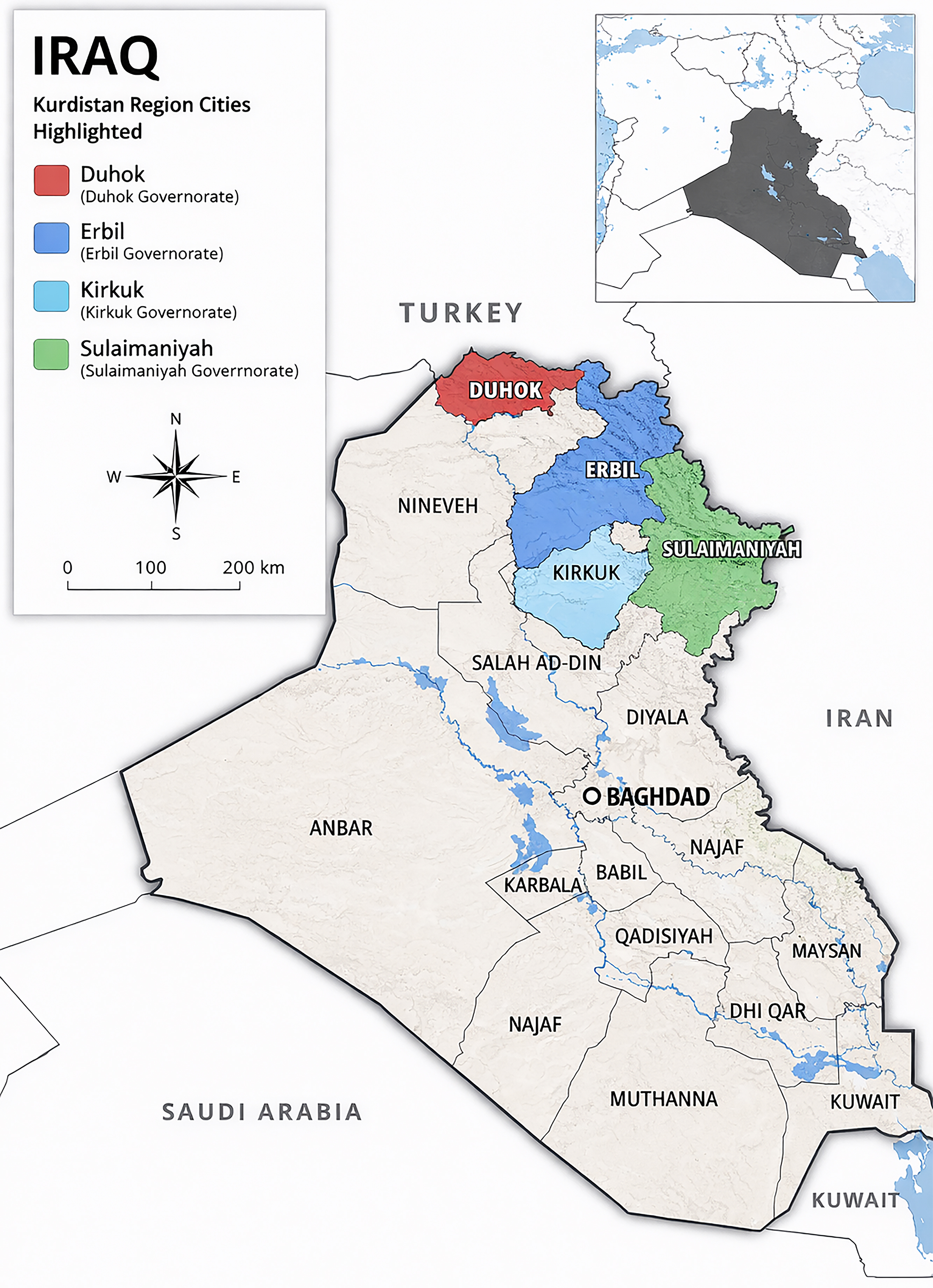
Fig. 3. Geographic map of Iraq showing the study area in the Kurdistan Region, with Duhok, Erbil, Kirkuk, and Sulaymaniyah cities highlighted in different colors.
Bacterial isolates
Isolation and identification of Salmonella serotypes were carried out according to the ISO 6579-1:2017 standard method (Iso and P, 2017). For this, samples were homogenized in 225 ml of sterile Buffered Peptone Water (BPW, 10%) and incubated for 24 hours at 37°C (pre-enrichment). After pre-enrichment, selective enrichment and culture on selective media were performed. For selective enrichment, 1 ml pre-enriched BPW culture was transferred to 10 ml Rappaport-Vassiliadis (RVS) broth and incubated at 42°C for 24 hours. A loopful of the RVS broth culture was then streaked onto Xylose Lysine Deoxycholate agar, incubated at 37°C for 24 hours. Colonies suggestive of Salmonella were pink with a black center. Isolated colonies with such characters were tested by PCR for molecular identification of S. typhimurium and S. enteritidis.
DNA extraction
Bacterial DNA was extracted by the boiling method (Yang et al., 2008). The bacterial samples were suspended in the Tris-HCl buffer, incubated at 100°C for 10 minutes, and immediately cooled. The lysate was centrifuged at 12,000 rpm for 5 minutes, and the supernatant containing genomic DNA was collected and stored at −20°C until use as a PCR template. The concentration and purity of DNA were measured with a NanoDrop spectrophotometer (Thermo Fisher Scientific, USA).
Molecular identification of Salmonella spp.
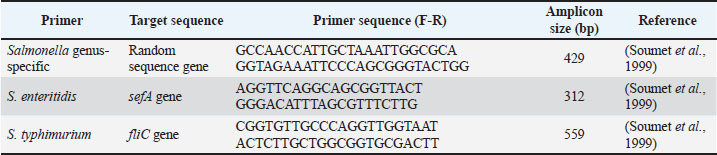
For serotype identification, A specific uniplex PCR assay was used to detect the Salmonella genus, S. typhimurium, and S. enteritidis using genus-specific primers against the random sequence gene, fliC gene, and sefA gene (Table 1). A 20 μl PCR reaction was set using 10 μl of 2× master mix (Genet Bio, Korea), 3 μl of the DNA template, 1 μl of each forward and reverse primers (10 pmol/μl), and the volume was completed by adding 5 μl ultrapure water. Reaction mixtures were subjected to the following thermo-cycler conditions (Prime Thermal Cycler, Bibby Scientific Ltd., UK): initial denaturation at 95°C for 5 minutes, followed by 40 cycles of denaturation at 94°C for 30 seconds, annealing at 55℃–60°C (depending on primer set) for 30 seconds, and extension at 72°C for 45 seconds, with a final extension at 72°C for 5 minutes. Then, the DNA bands were visualized using a 1.5% agarose gel and UV Transilluminator.
Table 1. Primers for detection of the Salmonella genus, S. typhimurium and S.enteritidis.
Virulence gene detection
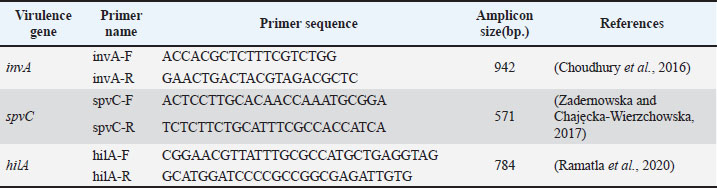
All confirmed Salmonella isolates were screened for the presence of three important virulence genes, including invA, spvC, and hilA genes. The sequences of virulence gene primers are presented in Table 2. The reaction mixture consisted of 2.5 μl DNA template, 10 μl of 2× master mix (Genet Bio, Korea), and 1 μl each of forward and reverse primers (10 pmol/μl). The volume was then completed to 20 µl using nuclease-free water. Amplification reactions were performed in a thermo-cycler with an initial denaturation at 95°C for 5 minutes. Then, 35 cycles of denaturation at 95°C for 30 seconds, annealing at 56°C for 30 seconds, and elongation at 72°C for 30 seconds followed. The final elongation temperature was 72°C for 10 minutes.
Table 2. Primers for the detection of virulence genes.
Phenotypic antimicrobial susceptibility tests
Antimicrobial sensitivity profiling was performed based on the Kirby–Bauer disk diffusion method following the Clinical and Laboratory Standards Institute (CLSI) guidelines (Schuetz et al., 2025). In short, 2–3 fresh bacterial colonies were inoculated into the 3 ml normal saline and adjusted to the standard turbidity of a McFarland standard. The bacterial suspension was spread over the surface of a Mueller–Hinton agar plate, and the antimicrobial disks were placed with a disk dispenser within 15 minutes. Then the plates were incubated at 35℃–37°C for 16–24 hours prior to reading the results. The diameter of the zone of inhibition surrounding the disks was recorded and then compared to CLSI breakpoints. The isolates were tested for resistance to the following 10 antibiotics: Ciprofloxacin, Gentamicin, Neomycin, Cefixime, Amoxicillin/clavulanic acid, Trimethoprim Sulfamethoxazole, Tetracycline, Colistin, Azithromycin, and Nalidixic acid. The susceptibility test results were categorized into three groups: resistant, intermediate, and sensitive. Isolates resistant to three or more classes of antimicrobials are classified as MDR (Rodrigues et al., 2020). Escherichia coli ATCC® 25922 was used as quality control.
Genotypic antimicrobial test
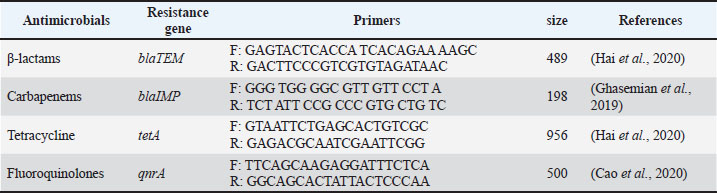
Following the analysis of antimicrobial resistance profiles, all isolates were subjected to PCR to identify the presence of specific resistance genes, including β-lactamase genes blaTEM, carbapenemase genes blaIMP, plasmid-mediated quinolone resistance genes qnrA, and tetracycline-resistant genes tetA. The sequences of antimicrobial resistance gene primers are presented in Table 3.
Table 3. Primers for detection of antimicrobial resistance genes.
Data analysis
Antimicrobial susceptibility test and detection of virulence and antimicrobial resistance genes were analyzed by SPSS software (version 26.0; IBM Corp., USA). Descriptive statistics calculated frequency and percentage for each virulence gene and antimicrobial resistance pattern.
Ethical approval
The study was approved by the Ethics & Research Registration Committee of the College of Veterinary Medicine at the University of Sulaimani (Reference numbers VMUS.EC.Doc 27-2025/in June 2025).
Results
Isolation and identification of Salmonella serotypes
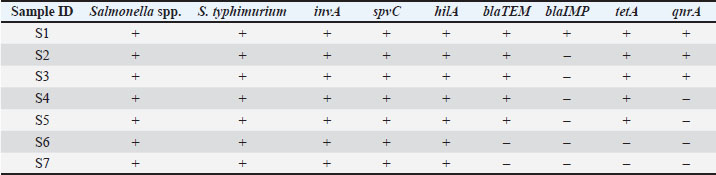
Of the 165 cloacal samples, 7 (4.24%) were detected to be Salmonella positive by bacteriological culture techniques. All seven isolates were further confirmed as Salmonella spp. by PCR with a genus-specific primer set. Molecular serotyping showed that all positive isolates were S. enterica subspecies enterica serotype typhimurium, while S. enterica subspecies enterica serotype enteritidis was not detected in any of the tested samples (Table 4).
Table 4. Bacteriological detection, molecular serotyping, virulence, and antimicrobial resistance genes among the seven Salmonella isolates.
Distribution of virulence genes
The molecular screening of virulence-associated genes showed that all seven isolates harbored the three virulence genes: the invA, spvC, and hilA genes, as shown in Table 4.
Antimicrobial susceptibility profiles
Antimicrobial susceptibility pattern of seven positive isolates revealed different degrees of resistance, as shown in Table 5 and Figure 1. The highest resistance rates were detected for gentamicin and tetracycline (42.9%), followed by colistin (28.6%). In contrast, ciprofloxacin, cefixime, amoxicillin–clavulanic acid, azithromycin, nalidixic acid, and neomycin showed no complete resistance. However, a number of isolates showed intermediate susceptibility (neomycin 100% intermediate). Intermediate rates for colistin and azithromycin were also relatively high (71.4%). Trimethoprim–sulfamethoxazole showed a mixed profile with resistant, intermediate, and sensitive isolates. In general, resistance was predominantly observed for gentamicin and tetracycline, while other tested antimicrobials remain highly effective against the examined isolates.
Table 5. Phenotypic antimicrobial susceptibility profiles of seven isolates of S. enterica serovar typhimurium.
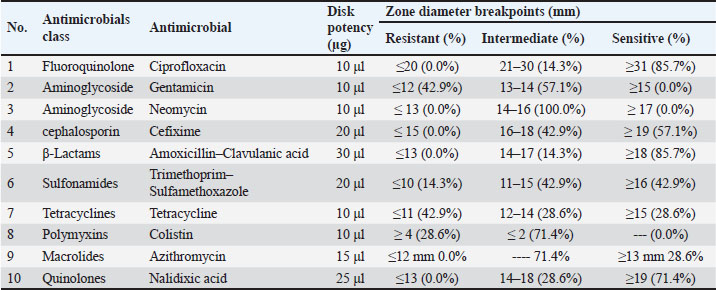
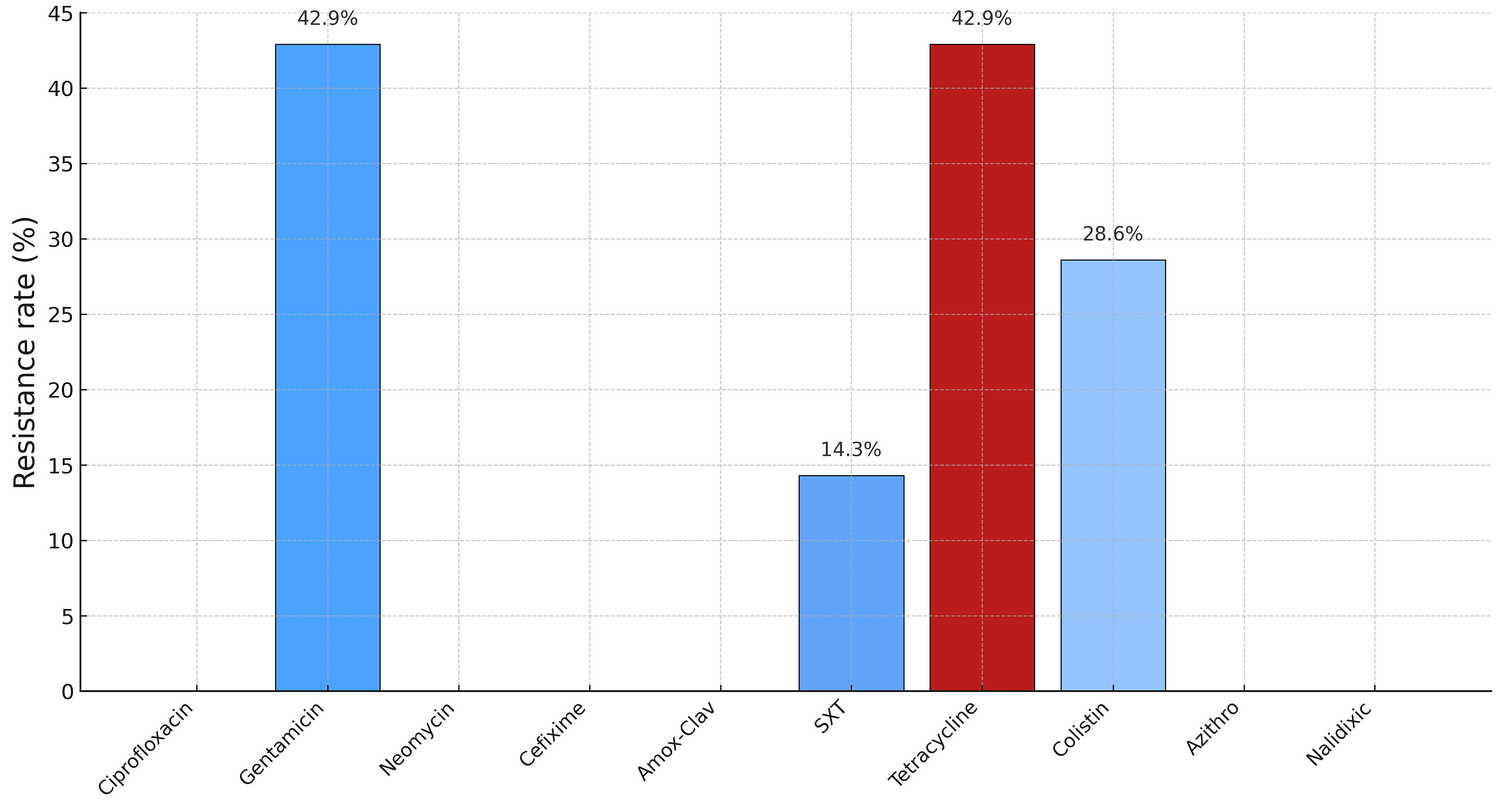
Fig. 1. The resistance rate (%) of S. enterica serovar typhimurium isolates (n=7) against 10 antibiotics.
Detection of antimicrobial resistance genes
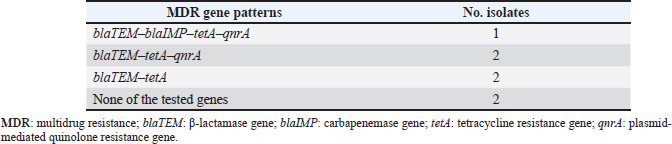
Salmonella typhimurium isolates, which showed phenotypic resistance, were further subjected to molecular confirmation for the presence of antimicrobial resistance genes. The antimicrobial resistance patterns and MAR index of 7 Salmonella isolates are presented in Table 5, Figure 2 and Table 6. The blaTEM gene and tetA gene were found in 71.4% isolates (5/7). The qnrA gene was found in 42.9% isolates (3/7). Additionally, the blaIMP gene was only present in 14.3% isolates (1/7).
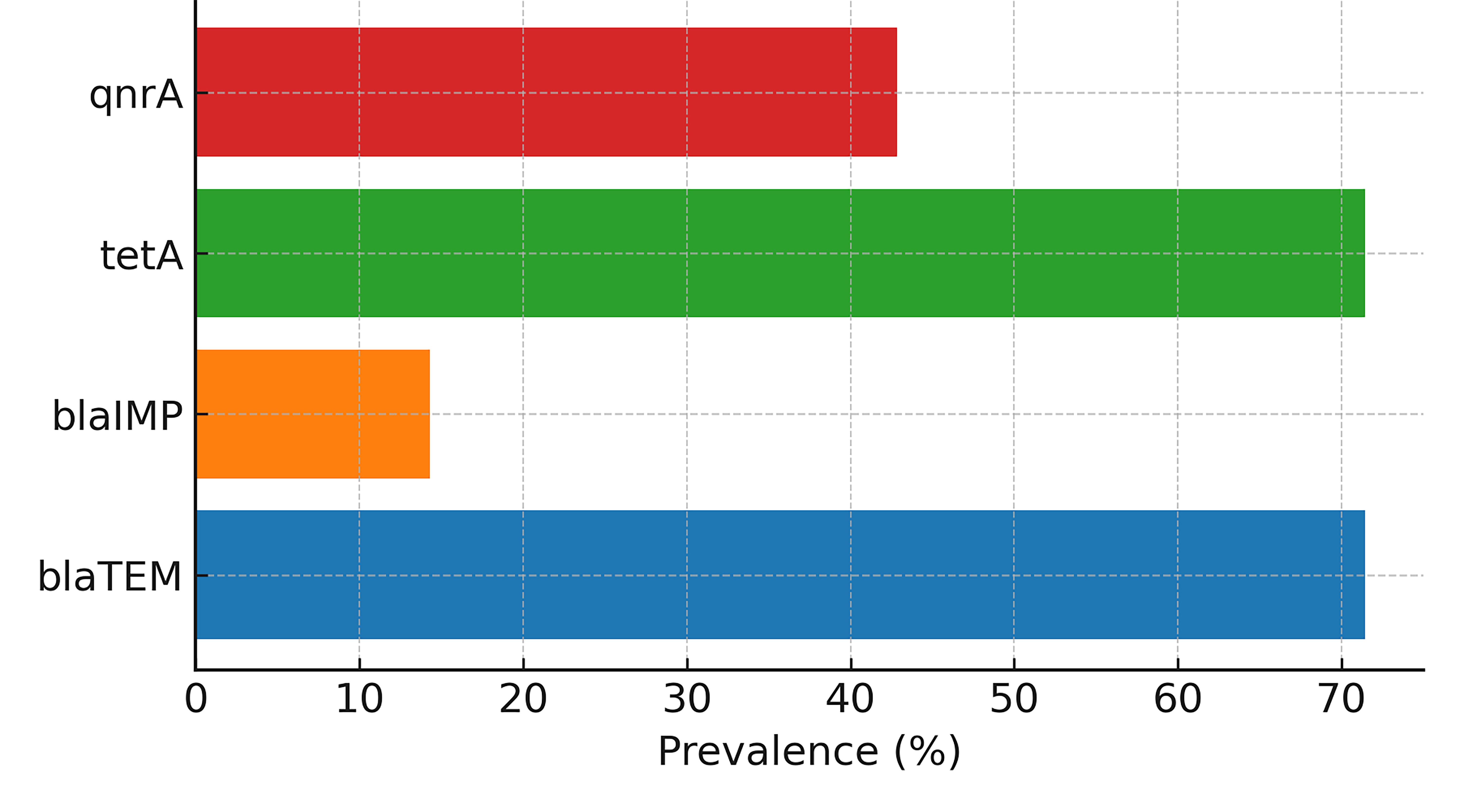
Fig. 2. Genotypic antimicrobial resistance profiles of S. typhimurium isolates.
Table 6. MDR gene patterns of S. typhimurium isolates from domestic pigeon samples in the Kurdistan Region, Iraq.
Discussion
Salmonella remains a major public health problem for both animals and humans globally, resulting in substantial economic losses in the food and veterinary sectors (Mkangara, 2023). The control measures in poultry have successfully reduced farm salmonellosis (Tolooe et al., 2025; Zhou et al., 2025). However, the pigeon industry has the poorest biosecurity and little prevention or immunization against diseases. Consequently, infections with Salmonella in pigeons can be quite serious (Wang et al., 2025). This study aimed to evaluate the prevalence, virulence gene profiles, and antimicrobial resistance patterns of PT serotypes recovered from apparently healthy domestic pigeons in Kurdistan Region/Iraq, and described their potential role as a reservoir for zoonotic MDR strains.
The total prevalence of PT in cloacal samples was 4.24% (7/165), confirming that pigeons can asymptomatically host and excrete Salmonella, hence acting as silent carriers within an urban area. All isolates were confirmed to be S. typhimurium, and no S. enteritidis was detected. This detection in cloacal swabs corresponds to earlier works, proposing that domestic pigeons could act as possible carriers of zoonotic Salmonella. Other significant results from different countries included Spain (3.1%) (Vergara et al., 2025), Egypt and Poland (4.0%) (Ledwoń et al., 2019; Hagag et al., 2022), Iran (5.38%) (Azizpour and A, 2023), and Bangladesh (29%) (Bupasha et al., 2020). The differences in prevalence are closely associated with flock density, hygienic standards, and use of antibacterials (Koutsoumanis et al., 2019).
The characteristic identification of S. typhimurium in the present study is consistent with previous reports, where paratyphoid infection in pigeons was mostly linked to pigeon-adapted variants of S. typhimurium (Kaczorek‐Łukowska et al., 2021; Wang et al., 2025). Our investigation did not reveal S. enteritidis, in contrast to the common identifications of both serovars in other countries (Haesendonck et al., 2016; Abdein, 2021). This absence may suggest geographically or ecologically different serotype distribution (Peruzy et al., 2022).
The virulence gene profile observed in this study indicates the pathogenic potential of pigeon-derived S. typhimurium isolates. All seven isolates harbored invA, spvC, and hilA, which are reported as essential genes for invasion of host cells, systemic infection, and regulatory function in the type III secretion system (Abhadionmhen et al., 2024; Zhou et al., 2024; Shreya et al., 2025). A combination of these virulence genes was reported previously among S. typhimurium isolated from poultry meat, pigeons, and clinical samples, suggesting the circulation of virulence genes within all reservoirs (Ranjbar et al., 2020; Nguyen et al., 2025). Recent investigations have particularly emphasized that paratyphoid salmonellosis is septicemic and a systemic infection in pigeons, with a chronic carrier status shedding virulent strains in their droppings (Wang et al., 2025; Abd El-Ghany, 2025). Therefore, the detection of multiple virulence-associated genes in this work suggests that apparently healthy pigeons may act as reservoirs of isolates with pathogenic potential, representing a possible zoonotic risk for handlers and public health.
Phenotypic susceptibility testing showed a combined pattern of resistance. High resistance rates were observed in gentamicin and tetracycline (each 42.9%), and then in colistin (28.6%). All isolates were fully susceptible to ciprofloxacin, cefixime, amoxicillin–clavulanic acid, azithromycin, nalidixic acid, and neomycin in terms of complete resistance, but many agents indicated high proportions of intermediate susceptibility. The result is consistent with findings from other studies on avian and pigeon populations, indicating that aminoglycoside and tetracycline resistance are prevalent due to the extensive use of these antibiotics in animal production (Bupasha et al., 2020; Abdein and H, 2021). In addition, previous studies in Iraq on Salmonella in pigeons recorded various resistance rates to tetracycline and gentamicin (Al-Aalim and A, 2017; Mohammed and Shareef, 2022). Similarly, studies on pigeon salmonellosis conducted in China, Bangladesh, Egypt, and Iran demonstrated high resistance to tetracycline, sulfadiazine + trimethoprim, colistin, and gentamicin (Bupasha et al., 2020; Abdein, 2021; Azizpour and A, 2023; Zhang et al., 2024).
The prevalence of intermediate resistance categories for neomycin (100% intermediate), colistin (71.4% intermediate), azithromycin (71.4% intermediate), and cefixime (42.9% borderline) may signify the development of resistance, borderline MIC values in relation to CLSI breakpoints, or both. Within a One Health paradigm, the significant prevalence of intermediate phenotypes must not be underestimated, as any reduction in susceptibility may lead to therapeutic failures and the emergence of higher-level resistance under antimicrobial pressure, potentially indicating a gradual decline in drug efficacy (De Mesquita Souza Saraiva et al., 2022; Robertson et al., 2023). The lower phenotypic resistance observed in the present study may suggest differences in the use of antimicrobials in pigeon production in the region, a lower use of certain drug classes, or a higher number of strains that have not yet developed significant resistance determinants.
Genotyping of antimicrobial resistance in this study indicated that isolates from domestic pigeons in Kurdistan may act as reservoirs for clinically significant resistance genes. The β-lactamase blaTEM gene and the tetracycline resistance gene tetA were found in 71.4% of the isolates. The qnrA plasmid-mediated quinolone resistance gene was found in 42.9% of the isolates. Moreover, one isolate (14.3%) harbored the carbapenemase blaIMP gene. These results are consistent with other research on poultry and pigeons, which identified blaTEM and tetA predominantly on mobile genetic elements contributing to the rapid dissemination of resistance (Karim et al., 2020; Mendybayeva et al., 2023). Although there was no phenotypic resistance detected to amoxicillin-clavulanic acid, the emergence of antimicrobial resistance might be related to other mechanisms of beta-lactam resistance, such as efflux pump overexpression, alterations in cell membrane porins, or ribosomal protection strategies (Zhu et al., 2023).
The detection of qnrA in 42.9% of isolates, despite the absence of high-level resistance to ciprofloxacin or nalidixic acid, suggests that the plasmid-mediated qnr genes also contribute to low-level protection against DNA gyrase and topoisomerase IV (Redgrave et al., 2014; Nourozi et al., 2020). The presence of pigeon-derived S. typhimurium indicates a possible source of latent quinolone resistance that could be transmitted to poultry and human pathogens (Teske et al., 2013).
Interestingly, most concerning was the detection of the carbapenemase gene blaIMP in one isolate. Although carbapenems are not used in pigeons in the region, this finding indicates the possible transmission of mobile elements carrying carbapenemase genes, potentially originating from other Enterobacterales, raising public health concerns (Macesic et al., 2023). Nevertheless, in the absence of phenotypic carbapenem susceptibility testing, the detection of blaIMP in the present study should be considered indicative of genetic potential for carbapenem resistance, rather than definitive evidence of phenotypic carbapenem resistance.
The results of this study revealed a high detection of MDR S. typhimurium strains among domestic pigeons in the region, which may have potential zoonotic and public health concerns. The identification of MDR S. typhimurium carrying multiple virulence- associated genes among domestic pigeons highlights a potential zoonotic threat in regions such as Kurdistan, where pigeons are maintained for racing and food purposes. Since these birds are commonly found in urban and semi-urban areas, they can contaminate food and water sources (Kaczorek‐Łukowska et al., 2021). This study also shows that pigeons can harbor and intermittently shed the bacteria without developing signs of illness, silently acting as reservoirs that could transmit infections to people.
A number of limitations are to be considered in the interpretation of these results, including the small sample size and limited geographic scope within Kurdistan. In addition, the methods used in this study could identify major Salmonella serotypes but not their variants or phage types. Furthermore, the isolates were not subjected to strain-level molecular typing methods such as multilocus sequence typing or whole-genome sequencing, which limited the assessment of clonal relatedness and possible transmission patterns. To gain a more comprehensive understanding, future studies should extend sampling to other regions of Iraq and use comparative genomics approaches like whole-genome sequencing. This could assist in tracking the spread of resistance, studying plasmid characteristics, and measuring how resistance develops. In addition, an inspection of environmental contamination and possible human exposure pathways will contribute to a clearer view for evaluating risks to public health.
Conclusion
The current study indicated that apparently healthy domestic pigeons in the Kurdistan Region may harbor MDR S. typhimurium carrying virulence-associated genes, signifying a possible zoonotic reservoir. A relatively low incidence of cloacal swab detection, as well as the ubiquitous detection of invA, spvC, and hilA genes, and high rates of blaTEM, tetA, qnrA, and blaIMP resistance genes, underscore the zoonotic and One Health importance of these findings. Although phenotypic resistance to many important antimicrobials was limited, the widespread presence of intermediate phenotypes and key resistance genes indicates a major potential for future therapeutic failure. These results underscore the importance of improving biosecurity measures, a judicious use of antibiotics, and the implementation of surveillance systems that link animal, environmental, and human health to avoid the dissemination of resistant and virulent strains of Salmonella in Iraq.
Acknowledgment
Not applicable.
Conflicts of interest
The authors declare no conflicts of interest.
Funding
There is no funding in this study.
Authors’ contributions
N.A.: Conceptualization, Formal analysis, Writing the original draft, Project administration. H.M.: Conceptualization, Investigation, Methodology, and Validation. Y.L.: Data collection, Data analysis. M.F.: Clinical investigation and sample collection. A.A.: Data collection, Data analysis. D.S.: Formal analysis and Investigation. Each author acknowledges responsibility for every aspect of the work and has reviewed and approved the final draft of the manuscript.
Data availability
All data were presented in the study.
References
Abd El-Ghany, W.A. 2025. Paratyphoid salmonellosis: a disease of significance in pigeons (Columba livia). J. Adv. Vet. Res. 15(4), 524–528.
Abdein, H. 2021. Virulence-determinants and antibiotic resistance pattern of Salmonella species isolated from fancy pigeons in port-said Governorate, Egypt. Zagazig. Vet. J. 49(1), 42–55; doi:10.21608/zvjz.2021.51547.1125
Abhadionmhen, A.O., Imarenezor, E.P.K., Brown, S.T.C., Lana, O.E. and Usiabulu, O.Q. 2024. Molecular identification of invA gene from Salmonella species isolated from human sources in Southern Taraba, North-East Nigeria. AJRID 15(3), 7–16; doi:10.9734/ajrid/2024/v15i3333
Abou Elez, R.M.M., Elsohaby, I., El-Gazzar, N., Tolba, H.M.N., Abdelfatah, E.N., Abdellatif, S.S., Mesalam, A.A. and Tahoun, A.B.M.B. 2021. Antimicrobial resistance of Salmonella enteritidis and Salmonella typhimurium isolated from laying hens, table eggs, and humans with respect to antimicrobial activity of biosynthesized silver nanoparticles. Animals 11(12), 3554; doi:10.3390/ani11123554
Al-Aalim, A. 2017. Isolation and identification of Salmonella microorganisms from pigeons and their pathogenicity in broiler chicks. Bas. J. Vet. Res. 16(1), 333–347; doi:10.23975/bjvet.2017.2701
Al-Ansari, M.M., Aljubali, M.M., Somily, A.M., Albarrag, A.M. and Masood, A. 2021. Isolation and molecular characterization of multidrug-resistant Salmonella enterica serovars. J. Infect. Public. Health 14(12), 1767–1776; doi:10.1016/j.jiph.2021.10.011
Authority ECFD Prevention and Control. 2023. The European Union One Health 2022 Zoonoses Report. EFSA. J. 21(12), e8442; doi:10.2903/j.efsa.2023.8442
Azizpour, A. 2023. Antibiotic resistance of Escherichia coli and Salmonella spp isolated from domestic pigeons in Ardabil, Iran. Vet. Res. Biol. Prod. 36(4), 20–27; doi:10.22092/vj.2023.360685.2029
Bupasha, Z.B., Begum, R., Karmakar, S., Akter, R., Bayzid, M., Ahad, A. and Sarker, M.S. 2020. Multidrug-resistant Salmonella spp. isolated from apparently healthy pigeons in a live bird market in Chattogram, Bangladesh. World's. Vet. J. 10(4), 508–513; doi:10.54203/scil.2020.wvj61
Cao, Z.Z., Xu, J.W., Gao, M., Li, X.S., Zhai, Y.J., Yu, K., Wan, M. and Luan, X.H. 2020. Prevalence and antimicrobial resistance of Salmonella isolates from goose farms in Northeast China. Iranian J. Vet. Res. 21(4), 287; doi:10.22099/ijvr.2020.37804.5498
Card, R.M., Chisnall, T., Begum, R., Sarker, M.S., Hossain, M.S., Sagor, M.S., Mahmud, M.A., Uddin, A.S.M.A., Karim, M.R., Lindahl, J.F. and Samad, M.A. 2023. Multidrug-resistant non-typhoidal Salmonella of public health significance recovered from migratory birds in Bangladesh. Front. Microbiol. 14(2023), 1162657; doi:10.3389/fmicb.2023.1162657
Choudhury, M., Borah, P., Sarma, H.K., Barkalita, L.M., Deka, N.K., Hussain, I. and Hussain, M.I. 2016. Multiplex-PCR assay for detection of some major virulence genes of Salmonella enterica serovars from diverse sources. Curr. Sci. 111(7), 1252–1258; doi:10.18520/cs/v111/i7/1252-1258
De Mesquita Souza Saraiva, M., Lim, K., Do Monte, D.F.M., Givisiez, P.E.N., Alves, L.B.R., De Freitas Neto, O.C., Kariuki, S., Júnior, A.B., De Oliveira, C.J.B. and Gebreyes, W.A. 2022. Antimicrobial resistance in the globalized food chain: a One Health perspective applied to the poultry industry. Braz. J. Microbiol. 53(1), 465–486; doi:10.1007/s42770-021-00635-8
Fu, Y., M’Ikanatha, N.M. and Dudley, E.G. 2023. Whole-genome subtyping reveals population structure and host adaptation of Salmonella typhimurium from wild birds. J. Clin. Microbiol. 61(6), e01847–e01822; doi:10.1128/jcm.01847-22
Gargiulo, A., Russo, T.P., Schettini, R., Mallardo, K., Calabria, M., Menna, L.F., Raia, P., Pagnini, U., Caputo, V., Fioretti, A. and Dipineto, L. 2014. Occurrence of enteropathogenic bacteria in urban pigeons (Columba livia) in Italy. Vector-Borne. Zoonotic. Dis. 14(4), 251–255; doi:10.1089/vbz.2011.0943
Ghasemian, A., Mohabati Mobarez, A., Najar Peerayeh, S., Talebi Bezmin Abadi, A., Khodaparast, S. and Mahmood, S.S. 2019. Expression of adhesin genes and biofilm formation among Klebsiella oxytoca clinical isolates from patients with antibiotic-associated haemorrhagic colitis. J. Med. Microbiol. 68(7), 978–985; doi:10.1099/jmm.0.000965
Haesendonck, R., Rasschaert, G., Martel, A., Verbrugghe, E., Heyndrickx, M., Haesebrouck, F. and Pasmans, F. 2016. Feral pigeons: a reservoir of zoonotic Salmonella enteritidis strains?. Vet. Microbiol. 195(2016), 101–103; doi:10.1016/j.vetmic.2016.09.017
Hagag, A., Naguib, D., Mohamed, A.A. and El-Gohary, A.H. 2022. Prevalence, virulence genes, and antibiotic resistance of Escherichia coli and Salmonella spp. isolated from pigeons and humans. Mansoura Vet. Med. J. 23(1), 24–30; doi:10.21608/mvmj.2021.88961.1072
Hai, D., Yin, X., Lu, Z., Lv, F., Zhao, H. and Bie, X. 2020. Occurrence, drug resistance, and virulence genes of Salmonella isolated from chicken and eggs. Food Control 113(2020), 107109; doi:10.1016/j.foodcont.2020.107109
Hameed, H., Riaz, A., Khaliq, A., Hussain, Z. and Bhutta, M.M. 2024. Poultry-associated Salmonella: crossroads of pathogenicity and antimicrobial resistance: a comprehensive review. Front. Microbiol. Biotechnol. 2(2024), 1–18; doi:10.54219/fmb.02.2024.151
ISO, P. 2017. Microbiology of the food chain-horizontal method for the detection, enumeration and serotyping of Salmonella-part 1: detection of Salmonella spp. PN-EN ISO. Geneva, Switzerland: International Organization for Standardization (ISO). pp: 6579–6571. Available via https://www.iso.org/standard/56712.html
Jajere, S.M. 2019. A review of Salmonella enterica with particular focus on the pathogenicity and virulence factors, host specificity and antimicrobial resistance including multidrug resistance. Vet. World. 12(4), 504–521; doi:10.14202/vetworld.2019.504-521
Kaczorek‐Łukowska, E., Sowińska, P., Franaszek, A., Dziewulska, D., Małaczewska, J. and Stenzel, T. 2021. Can domestic pigeon be a potential carrier of zoonotic Salmonella?. Transboundary Emerg. Dis. 68(4), 2321–2333; doi:10.1111/tbed.13891
Karim, S.J.I., Islam, M., Sikder, T., Rubaya, R., Halder, J. and Alam, J. 2020. Multidrug-resistant Escherichia coli and Salmonella spp. isolated from pigeons. Vet. World 13(10), 2156–2165; doi:10.14202/vetworld.2020.2156-2165
Koutsoumanis, K., Allende, A., Alvarez‐Ordóñez, A., Bolton, D., Bover‐Cid, S., Chemaly, M., De Cesare, A., Herman, L., Hilbert, F., Lindqvist, R., Nauta, M., Peixe, L., Ru, G., Simmons, M., Skandamis, P., Suffredini, E., Dewulf, J., Hald, T., Michel, V., Niskanen, T., Ricci, A., Snary, E., Boelaert, F., Messens, W. and Davies, R. 2019. Salmonella control in poultry flocks and its public health impact. Efsa. J. 17(2), 5596; doi:10.2903/j.efsa.2019.5596
Ledwoń, A., Rzewuska, M., Czopowicz, M., Kizerwetter-Świda, M., Chrobak-Chmiel, D. and Szeleszczuk, P. 2019. Occurrence and antimicrobial susceptibility of Salmonella spp. isolated from domestic pigeons Columba livia var. domestica in 2007-2017 in Poland. Medycyna Weterynaryjna 75(12), 735–737; doi:10.21521/mw.6280
Macesic, N., Hawkey, J., Vezina, B., Wisniewski, J.A., Cottingham, H., Blakeway, L.V., Harshegyi, T., Pragastis, K., Badoordeen, G.Z., Dennison, A., Spelman, D.W., Jenney, A.W.J. and Peleg, A.Y. 2023. Genomic dissection of endemic carbapenem resistance reveals metallo-beta-lactamase dissemination through clonal, plasmid and integron transfer. Nature. Commun. 14(1), 4764; doi:10.1038/s41467-023-39915-2
Majowicz, S.E., Musto, J., Scallan, E., Angulo, F.J., Kirk, M., O’Brien, S.J., Jones, T.F., Fazil, A. and Hoekstra, R.M. 2010. The global burden of nontyphoidal Salmonella gastroenteritis. Clin. Infect. Dis. 50(6), 882–889; doi:10.1086/650733
Mendybayeva, A., Abilova, Z., Bulashev, A. and Rychshanova, R. 2023. Prevalence and resistance to antibacterial agents in Salmonella enterica strains isolated from poultry products in Northern Kazakhstan. Vet. World 16(3), 657–667; doi:10.14202/vetworld.2023.657-667
Mkangara, M. 2023. Prevention and control of human Salmonella enterica infections: an implication in food safety. Int. J. Food Sci. 1(1), 8899596; doi:10.1155/2023/8899596
Mohamed, M.Y.I. and Habib, I. 2025. Virulence gene landscapes of Salmonella in Eastern and Southern Africa. Front. Microbiol. 16, 1631550; doi:10.3389/fmicb.2025.1631550
Mohammed, M.J. and Shareef, A.M. 2022. Seroprevelance and antibiotic resistance of Salmonella spp. Isolated from pigeons and their environment in Nineveh Governorate. Al-Anbar. J. Vet. Sci. 15(2), 52–65; doi:10.37940/AJVS.2022.15.2.6
Nazari Moghadam, M., Rahimi, E., Shakerian, A. and Momtaz, H. 2023. Prevalence of Salmonella typhimurium and Salmonella enteritidis isolated from poultry meat: virulence and antimicrobial-resistant genes. BMC. Microbiol. 23(1), 168; doi:10.1186/s12866-023-02908-8
Nguyen, T.K., Huynh, L.M., Vo, T.V.D., Tran, D.D., Kha, T.T., Ly, K.T.L. and Nguyen, C.T.H. 2025. Virulent genes and genetic relationship of Salmonella spp. Isolated from chickens and husbandry environments in small-scale farms in the Mekong Delta, Vietnam. World 15(1), 126–133; doi:10.54203/scil.2025.wvj15
Nourozi, M., Mirkalantari, S. and Omidi, S. 2020. Frequency of plasmid-mediated quinolone resistance genes qnrA, qnrB, and qnrS among clinical isolates of Klebsiella pneumoniae. J. Appl. Biotechnol. Rep. 7(4), 203–207; doi:10.30491/jabr.2020.120187
Peruzy, M.F., Proroga, Y.T.R., Capuano, F., Mancusi, A., Montone, A.M.I., Cristiano, D., Balestrieri, A. and Murru, N. 2022. Occurrence and distribution of Salmonella serovars in carcasses and foods in southern Italy: eleven-year monitoring (2011–2021). Front. Microbiol. 13(2022), 1005035; doi:10.3389/fmicb.2022.1005035
Ramatla, T.A., Mphuthi, N., Ramaili, T., Taioe, M.O., Thekisoe, O.M.M. and Syakalima, M. 2020. Molecular detection of virulence genes in Salmonella spp. isolated from chicken faeces in Mafikeng, South Africa. J. South. Afr. Vet. Assoc. 91(1), 1–7; doi:10.4102/jsava.v91i0.1994
Ranjbar, V.-R., Basiri, S. and Abbasi-Kali, R. 2020. Paratyphoid infection caused by Salmonella typhimurium in a pigeon flock (Columbia livia) in Iran. J. Zoonotic. Dis. 4(1), 43–48; doi:10.22034/jzd.2020.10587
Redgrave, L.S., Sutton, S.B., Webber, M.A. and Piddock, L.J.V. 2014. Fluoroquinolone resistance: mechanisms, impact on bacteria, and role in evolutionary success. Trends Microbiol. 22(8), 438–445; doi:10.1016/j.tim.2014.04.007
Robertson, J., Schonfeld, J., Bessonov, K., Bastedo, P. and Nash, J.H. 2023. A global survey of Salmonella plasmids and their associations with antimicrobial resistance. Microbial Genomics 9(5), 1002; doi:10.1099/mgen.0.001002
Rodrigues, I., Silva, R., Menezes, J., Machado, S., Rodrigues, D., Pomba, C., Abreu, D., Nascimento, E., Aquino, M. and Pereira, V. 2020. High prevalence of multidrug-resistant nontyphoidal Salmonella recovered from broiler chickens and chicken carcasses in Brazil. Braz. J. Poultry Sci. 22(01), 2019; doi:10.1590/1806-9061-2019-1206
Rouffaer, L.O., Lens, L., Haesendonck, R., Teyssier, A., Hudin, N.S., Strubbe, D., Haesebrouck, F., Pasmans, F. and Martel, A. 2016. House sparrows do not constitute a significant Salmonella typhimurium reservoir across urban gradients in Flanders, Belgium. PLos One 11(5), 155366; doi:10.1371/journal.pone.0155366
Schuetz, A.N., Ferrell, A., Hindler, J.A., Humphries, R. and Bobenchik, A.M. 2025. Overview of changes in the Clinical and Laboratory Standards Institute Performance Standards for antimicrobial susceptibility testing: m100 32nd and 33rd editions. J. Clin. Microbiol. 63(9), e01623–e01623; doi:10.1128/jcm.01623-23
Shaji, S., Selvaraj, R.K. and Shanmugasundaram, R. 2023. Salmonella infection in poultry: a review on the pathogen and control strategies. Microorganisms 11(11), 2814; doi:10.3390/microorganisms11112814
Shreya., Pant, T., Kailoo, S. and Kumar, Y. 2025. Targeting type III secretion system using Salmonella: a promising candidate for innovative antibacterial therapy. Indian. J. Microbiol. 65, 1–15; doi:10.1007/s12088-025-01486-9
Sodagari, H.R., Wang, P., Robertson, I., Habib, I. and Sahibzada, S. 2020. Non-typhoidal Salmonella at the human-food-of-animal-origin interface in Australia. Animals 10(7), 1192; doi:10.3390/ani10071192
Soumet, C., Ermel, G., Rose, V., Rose, N., Drouin, P., Salvat, G. and Colin, P. 1999. Identification by a multiplex PCR‐based assay of Salmonella typhimurium and Salmonella enteritidis strains from environmental swabs of poultry houses. Lett. Appl. Microbiol. 29(1), 1–6; doi:10.1046/j.1365-2672.1999.00559.x
Teske, L., Ryll, M., Rubbenstroth, D., Hänel, I., Hartmann, M., Kreienbrock, L. and Rautenschlein, S. 2013. Epidemiological investigations on the possible risk of distribution of zoonotic bacteria through apparently healthy homing pigeons. Avian Pathol. 42(5), 397–407; doi:10.1080/03079457.2013.822468
Tolooe, A., Alizadeh, M., Blake, K., Doost, J.S. and Sharif, S. 2025. Control of Salmonella in poultry: the role of host immunity and vaccines. Poultry. Sci. 104(11), 105692; doi:10.1016/j.psj.2025.105692
Vergara, A., Montalvo, T., Sabaté, S., Villanueva-Cañas, J.L., Vilanova, D., Planell, R., Roca, I., Ballesté, C., Hurtado, J.C., Figuerola, J., González, R. and Vila, J. 2025. Prevalence of Salmonella spp. isolated from seagulls and pigeons in Barcelona, Spain and its genetic relatedness with Salmonella human clinical isolates. J. Infect. Public. Health 2025, 102933; doi:10.1016/j.jiph.2025.102933
Wang, Z., Jiang, Z., Cao, Q., Jia, C., Zhou, H., Huang, C., Huang, L., Huang, Y., Li, Y. and Yue, M. 2025. A genomic and phenotypic investigation of pigeon-adaptive Salmonella. PLos Pathogens. 21(3), e1012992; doi:10.1371/journal.ppat.1012992
Yang, J.L., Wang, M.S., Cheng, A.C., Pan, K.C., Li, C.F. and Deng, S.X. 2008. A simple and rapid method for extracting bacterial DNA from intestinal microflora for ERIC-PCR detection. World J. Gastroenterol. WJG. 14(18), 2872; doi:10.3748/wjg.14.2872
Yousef, S. and Mamdouh, R. 2016. Class I integron and β-lactamase encoding genes of multidrug resistance Salmonella isolated from pigeons and their environments. Cellular Mol. Biol. 62(14), 48–54; doi:10.14715/cmb/
Zadernowska, A. and Chajęcka-Wierzchowska, W. 2017. Prevalence, biofilm formation and virulence markers of Salmonella sp. and Yersinia enterocolitica in food of animal origin in Poland. LWT. Food Sci. Technol. 75(2017), 552–556; doi:10.1016/j.lwt.2016.10.007
Zhang, Y., Lu, Z., Zhao, H., Li, S., Zhuang, H., Wang, J., Li, R., Zheng, W., Zhu, H., Xie, P., Hu, Y., Zhou, C., Mao, Q., Sun, L., Li, S., Wang, W., Wang, F., Pan, W. and Wang, C. 2024. Antimicrobial resistance and genomic characterization of Salmonella isolated from pigeons in China. Transboundary. Emerg. Dis. 1(1), 3315678; doi:10.1155/2024/3315678
Zhou, G., Wang, X., Zhang, H., Zhang, Z., Cao, S. and Li, Y. 2025. An LPS-deficient vaccine candidate with steD deletion confers enhanced protection against homologous and heterologous Salmonella. BMC Vet. Res. 21(1), 706; doi:10.1186/s12917-025-05070-7
Zhou, L., Li, Y., You, J., Wu, C., Zuo, L., Chen, Y., Kang, L., Zhou, Z., Huang, R. and Wu, S. 2024. Salmonella spvC gene suppresses macrophage/neutrophil antibacterial defense mediated by gasdermin D. Inflammation Res. 73(1), 19–33; doi:10.1007/s00011-023-01818-9
Zhu, J., Lv, J., Zhu, Z., Wang, T., Xie, X., Zhang, H., Chen, L. and Du, H. 2023. Identification of TMexCD-TOprJ-producing carbapenem-resistant Gram-negative bacteria from hospital sewage. Drug Resist. Updates 70(2023), 100989; doi:10.1016/j.drup.2023.100989