





| Case Report | ||
Open Vet. J.. 2026; 16(6): 3698-3703 Open Veterinary Journal, (2026), Vol. 16(6): 3698-3703 Case Report Long-term persistence of elevated serum amyloid A levels after clinical remission of feline upper respiratory tract disease: Two case reports with adjunctive Huaier administrationMakoto Akiyoshi1,2 and Masaharu Hisasue1*1Laboratory of Small Animal Internal Medicine, School of Veterinary Medicine, Azabu University, Sagamihara City, Japan 2Akiyoshi Animal Clinic, Chuorinkannishi, Yamato City, Japan *Corresponding Author: Masaharu Hisasue. Laboratory of Small Animal Internal Medicine, School of Veterinary Medicine, Azabu University, Japan. Email: hisasue [at] azabu-u.ac.jp Submitted: 28/01/2026 Revised: 10/05/2026 Accepted: 20/05/2026 Published: 11/06/2026 © 2025 Open Veterinary Journal
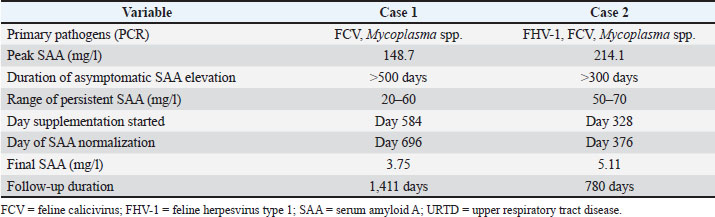
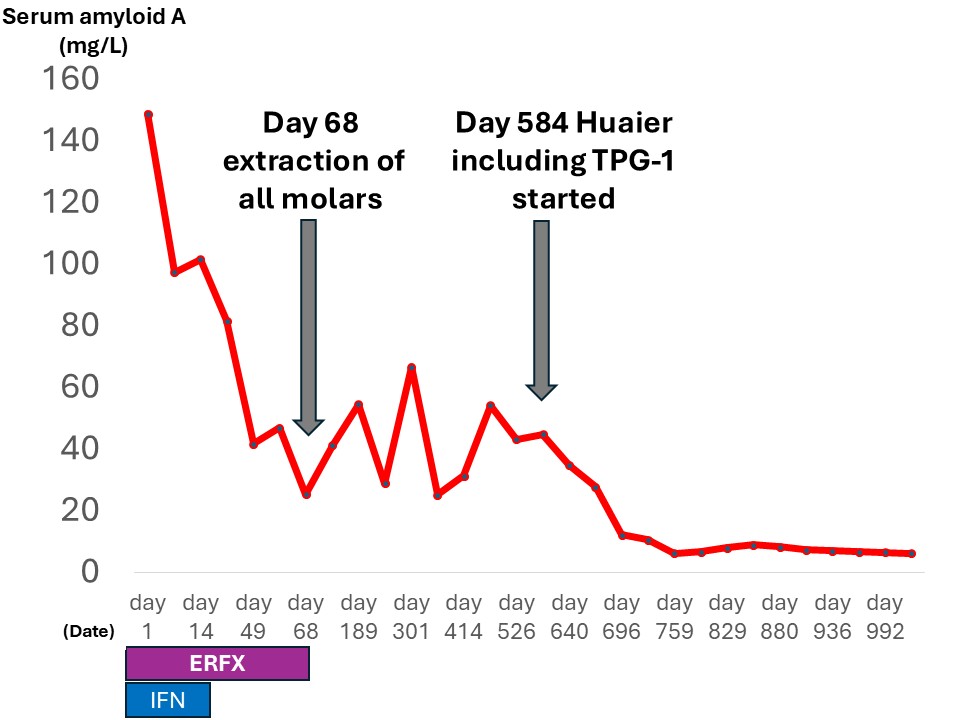
AbstractBackground: Feline upper respiratory tract disease (URTD) is associated with acute inflammatory responses. Serum amyloid A (SAA) is a sensitive biomarker of systemic inflammation in cats. However, despite clear clinical resolution, SAA concentrations may remain elevated, and the optimal management of such cases remains unclear. Huaier, a polysaccharide-rich fungal extract containing the bioactive component TPG-1, has been reported to exhibit immunomodulatory effects in both experimental and clinical studies; however, its potential relevance in feline infectious or inflammatory diseases has not been established. Case Description: This case series describes two cats with confirmed URTD in which serum SAA concentrations remained persistently elevated despite complete clinical resolution and extensive diagnostic evaluation that failed to identify ongoing systemic inflammatory or neoplastic diseases. Polymerase chain reaction testing detected feline upper respiratory pathogens, including feline herpesvirus type 1, feline calicivirus, and Mycoplasma species. Huaier, an orally administered polysaccharide-rich fungal extract containing TPG-1, was introduced at the owner’s request. SAA concentrations gradually normalized in both cats following Huaier administration and remained within the reference interval during the long-term follow-up. No recurrence of clinical signs was observed after normalization of SAA concentrations. Conclusion: These cases describe the normalization of persistently elevated serum SAA concentrations and sustained clinical stability following Huaier administration in cats with URTD. Although a causal relationship cannot be established based on these two cases, the temporal association suggests that Huaier warrants further investigation as a potential adjunctive option for managing persistent subclinical inflammatory activity following feline URTD. These observations should be interpreted as hypothesis generation rather than evidence of therapeutic efficacy. Keywords: Cat, Huaier, Serum amyloid A, Subclinical inflammatory, Upper respiratory tract disease. IntroductionFeline upper respiratory tract disease (URTD) is one of the most common infectious syndromes in domestic cats and is most frequently associated with feline herpesvirus type 1 (FHV-1) and feline calicivirus (FCV) infections (Gaskell et al., 2007; Thiry et al., 2009). Other infectious agents such as Chlamydia felis and Bordetella bronchiseptica may also contribute to URTD (Gaskell et al., 2007; Thiry et al., 2009). Although acute clinical signs, such as sneezing, nasal discharge, conjunctivitis, and oral inflammation, often resolve with supportive therapy, viral persistence and recurrence of clinical signs are well recognized (Gould, 2011). Serum amyloid A (SAA), a major acute-phase protein in cats, is widely used as a sensitive biomarker of systemic inflammation (Sasaki et al., 2003; Cerón, et al., 2005). SAA levels increase rapidly in response to inflammatory stimuli and may reflect increased inflammatory activity, even when clinical signs are mild or absent (Kajikawa et al., 1999; Tamamoto et al., 2013). In clinical practice, SAA concentrations are generally expected to normalize after inflammatory disease resolution; however, persistent elevation is occasionally observed in clinically stable cats without an identifiable underlying cause. The clinical significance of sustained asymptomatic elevations in SAA levels following apparent recovery from URTD remains poorly understood. Whether this elevation represents residual subclinical inflammation, prolonged mucosal immune activation, or clinically insignificant laboratory abnormalities that remain unclear. Thus far, there are limited reports describing the long-term SAA dynamics in cats following URTD, particularly in cases without ongoing clinical signs. Immunomodulatory supplements have recently attracted attention as potential adjunct options for managing chronic or recurrent inflammatory conditions. Huaier, a polysaccharide-rich fungal extract derived from Trametes robiniophila Murr., contains bioactive components such as TPG-1 and has been reported to modulate inflammatory and immune responses in experimental and clinical settings, primarily through the regulation of cytokine signaling pathways (Long and Wu, 2023; Zang et al., 2024; Cao et al., 2025). However, the relevance of these immunomodulatory properties in feline infectious and inflammatory diseases, including URTD, has not yet been established. This case series describes two cats with confirmed URTD, in which serum SAA concentrations remained persistently elevated despite complete clinical resolution and extensive diagnostic evaluation. In both cases, the normalization of SAA concentrations was temporally associated with the initiation of Huaier administration, and clinical stability was maintained during the long-term follow-up. In this report, we describe the clinical course and longitudinal SAA dynamics in these cases and provide preliminary, hypothesis-generating observations regarding the potential role of Huaier as an adjunctive option for persistent subclinical inflammatory activity following feline URTD. Case DetailsCase 1A 13-year-old spayed female Abyssinian cat weighing 3.8 kg presented with acute upper respiratory and oral symptoms. The chief complaints included hypersalivation, halitosis, sneezing, and nasal discharge, which had been present for 7 days before presentation. A kitten was introduced into the household 11 days before the onset of clinical signs. On day 1, physical examination revealed pyrexia (40.1°C), gingival erythema consistent with stomatitis, and purulent nasal discharge. The peripheral oxygen saturation was 100%. Complete blood count and serum biochemistry analyses revealed a markedly elevated serum SAA level (148.7 mg/l, reference interval: 5.74 mg/l). All other parameters were within the reference intervals. Thoracic and abdominal radiography and ultrasonography revealed no abnormalities, and serum feline pancreatic lipase immunoreactivity was within the reference range. Based on these clinical findings, URTD was suspected. A deep oropharyngeal swab was subjected to polymerase chain reaction testing to identify feline calicivirus and Mycoplasma species. Bacterial culture and antimicrobial susceptibility testing of purulent nasal discharge yielded Pseudomonas aeruginosa susceptible to piperacillin and imipenem. The cat was hospitalized and treated with IFNs and imipenem. The clinical signs resolved completely within 6 days, and the cat was discharged on day 7; however, the serum SAA concentrations remained elevated (97 mg/l). Although no recurrence of clinical signs was observed, SAA concentrations persistently increased despite prolonged antimicrobial therapy and subsequent full-mouth premolar and molar extractions performed on day 68 to address gingival inflammation. No further therapeutic interventions were instituted from day 68, and the cat was monitored with serial blood testing and periodic diagnostic imaging every 4–8 weeks. The SAA concentrations continued to fluctuate between approximately 20 and 60 mg/l for >500 days despite the absence of clinical abnormalities and unremarkable imaging findings (Table 1, Fig. 1). Table 1. Clinical characteristics and longitudinal outcomes of two cats with persistent asymptomatic elevation of serum amyloid A following URTD (upper respiratory tract disease).
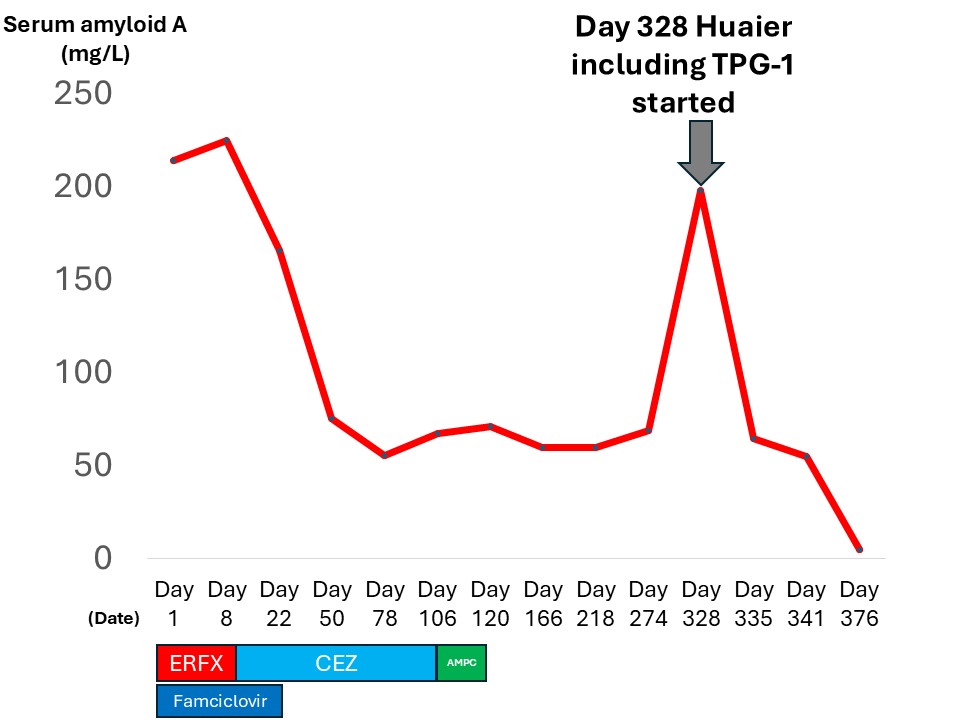
Fig. 1. Longitudinal changes in serum amyloid A concentration in Case 1. Serum amyloid A (SAA) concentrations were measured serially after the initial presentation of feline URTD. Despite complete clinical resolution and repeated unremarkable diagnostic imaging, SAA concentrations remained persistently elevated for >500 days. Full-mouth premolar and molar extractions were performed on day 68. Oral administration of Huaier, including TPG-1, was initiated on day 584. Following supplementation, the SAA concentrations gradually declined and normalized without subsequent elevation. IFN, interferon; SAA, serum amyloid A. Huaier, a polysaccharide-rich fungal extract, was orally administered at a dose of 1 g per cat per day on day 584 at the owner’s request. The supplement was mixed with wet food and voluntarily ingested without obvious difficulty. Following Huaier administration, the SAA concentrations gradually declined without subsequent elevation and normalized to 3.75 mg/l by day 696 (Fig. 1). At the time of writing (Day 1,411), the cat remained clinically well with a stable body weight (3.8 kg). Moreover, there was no recurrence of respiratory or systemic clinical signs, and SAA concentrations remained within the RIs. Case 2A 13-year-old neutered male domestic shorthair cat weighing 5.8 kg presented with acute upper respiratory symptoms. Two weeks before the presentation, the cat escaped from the home and recovered one week later. On the day of recovery, the patient noted ocular discharge, sneezing, nasal discharge, and decreased appetite. The cat had a history of suspected FHV-1-associated URTD during childhood. On day 1, physical examination revealed marked pyrexia (40.5°C), purulent ocular discharge, purulent nasal discharge, and mild stomatitis. Diagnostic imaging revealed no abnormalities. Hematologic and serum biochemical analyses demonstrated a marked increase in serum SAA concentration (214.1 mg/l). All other parameters, including serum feline pancreatic lipase immunoreactivity, were within the reference intervals. Polymerase chain reaction (PCR) analysis of a deep oropharyngeal swab revealed FHV-1, calicivirus, and Mycoplasma species. Bacterial culture of purulent nasal discharge yielded Corynebacterium species resistant to enrofloxacin. Initial enrofloxacin and famciclovir treatment resulted in partial clinical improvement; however, SAA concentrations remained elevated. The antimicrobial therapy was subsequently changed to cefazolin. Following the resolution of clinical signs, SAA concentrations declined but remained persistently elevated (approximately 50–70 mg/l) (Table 1, Fig. 2). Repeated diagnostic imaging failed to identify inflammatory or neoplastic diseases, and all treatments were discontinued for periodic monitoring.
Fig. 2. Longitudinal changes in serum amyloid A concentration in Case 2. Serum amyloid A (SAA) levels were monitored over time in cats with recurrent URTD. The SAA concentrations remained persistently elevated during the asymptomatic period and sharply increased during clinical relapse on day 328. Antimicrobial and antiviral treatments were reinitiated, and Huaier, including TPG-1, was introduced orally on day 328. The SAA concentrations were subsequently normalized and remained within the reference interval throughout the study period. AMPC=amoxicillin; CEZ=cefazolin; ERFX=enrofloxacin; SAA=serum amyloid A. On day 328, the cat experienced a recurrence of URTD clinical signs, accompanied by a marked increase in serum SAA concentration (198.12 mg/l). Treatment with cefazolin and famciclovir was reinitiated for 7 days, and Huaier, an orally administered polysaccharide extract, was administered at a dose of 1 g per cat per day. The supplement was mixed with wet food and voluntarily ingested without obvious difficulty. The clinical signs resolved by day 335; however, SAA concentrations remained elevated and normalized for the first time on day 376 (5.11 mg/l) (Table 1, Fig. 2). At the time of writing (day 780), the cat remained clinically well, with normal SAA concentrations on repeat evaluations. Mild gingival erythema persisted; however, no other abnormalities were identified. Ethical approvalEthical approval was not required for this study. All participants provided informed consent. DiscussionThis case series describes two cats with URTD in which SAA concentrations remained persistently elevated despite clear clinical resolution and extensive diagnostic evaluation. Normalization of persistently elevated SAA concentrations and sustained clinical stability were observed following the initiation of Huaier administration during long-term follow-up in both cases. SAA is a major acute-phase protein in cats and is a sensitive biomarker of systemic inflammation (Sasaki et al., 2003; Cerón, et al., 2005). Compared with leukocyte counts and other routine inflammatory markers, SAA levels increase rapidly in response to inflammatory stimuli and may remain elevated in the presence of ongoing inflammatory activity, even when clinical signs are mild or absent (Kajikawa et al., 1999; Tamamoto et al., 2013). Interpreting persistently elevated SAA concentrations in clinically stable cats can be challenging in clinical practice, particularly after the apparent resolution of the infectious process. Feline upper respiratory pathogens, including FHV-1, FCV, and Mycoplasma species, cause chronic, latent, or recurrent infections and induce prolonged mucosal immune activation (Thiry et al., 2009; Gould, 2011). Localized subclinical inflammation may persist even after clinical recovery in such cases, potentially contributing to sustained acute-phase responses. In the present case, extensive diagnostic evaluation failed to identify alternative causes of inflammation, such as neoplasia, pancreatitis, pneumonia, or other systemic inflammatory conditions, making persistent subclinical URTD-associated inflammatory activity a plausible explanation for the prolonged SAA elevation. The most likely cause of sustained SAA elevation in these cases was chronic viral infection associated with persistent low-grade inflammation. In both cases, persistently elevated SAA concentrations normalized only after Huaier administration. In Case 1, SAA concentrations fluctuated between approximately 20 and 60 mg/l for >500 days in the absence of clinical abnormalities and without specific anti-inflammatory intervention. However, after the introduction of Huaier, SAA concentrations gradually declined and normalized, with no subsequent elevations observed during long-term follow-up. In Case 2, SAA concentrations remained persistently elevated during asymptomatic periods and increased markedly during clinical relapse, but normalized for the first time after Huaier administration and remained within the reference interval after that. In both cases, clinical stability was maintained following normalization of serum SAA concentrations. Huaier is a polysaccharide-rich fungal extract derived from Trametes robiniophila Murr. and contains bioactive components such as TPG-1. Experimental and clinical studies in non-veterinary settings have suggested that certain Huaier components, such as TPG-1, may modulate immune and inflammatory responses primarily through the regulation of cytokine signaling pathways, including interleukin-6 (IL-6), which is a key upstream regulator of hepatic acute-phase protein synthesis, including SAA (Cerón, et al., 2005; Long and Wu, 2023; Zang et al., 2024; Cao et al., 2025). Therefore, we hypothesized that Huaier administration may influence persistent low-grade inflammatory activity following feline URTD, resulting in the gradual normalization of SAA concentrations. However, cytokine concentrations were not measured in this study, and the proposed mechanism remains unclear. In addition to the IL-6-mediated pathways, other inflammatory mechanisms may contribute to sustained SAA elevation. Pro-inflammatory cytokines such as interleukin-1β and tumor necrosis factor-α are recognized regulators of acute-phase protein synthesis and may play a role in maintaining prolonged low-grade inflammatory responses during chronic or subclinical infections (Baumann and Gauldie, 1994; Uhlar and Whitehead, 1999). Persistent activation of innate immune pathways through Toll-like receptor signaling by viral or mycoplasmal components may contribute to ongoing acute-phase responses in the absence of overt clinical signs (Medzhitov, 2001; Akira and Takeda, 2004). These pathways may act independently or synergistically and could explain the persistent asymptomatic elevation of SAA in cats with URTD. Despite the temporal association between Huaier administration and SAA normalization, no causal relationship was established in this case series. Delayed spontaneous resolution of inflammation, biological variability, or unrecognized host or environmental factors may have contributed to the observed changes. The small number of cases and the observational nature of this report limit the generalizability of the findings. These cases suggest that Huaier administration is temporally associated with the normalization of persistently elevated SAA concentrations and the maintenance of clinical stability in cats with URTD. Although these observations do not constitute evidence of therapeutic efficacy, they support further prospective evaluations of Huaier and its bioactive components as potential adjunct options for managing persistent subclinical inflammatory activity following feline URTD. In conclusion, this case series describes two cats with URTD in whom SAA concentrations remained persistently elevated for extended periods despite clinical remission and the absence of identifiable inflammatory lesions. These findings highlight the potential discordance between clinical improvement and inflammatory biomarker dynamics in feline URTD cases. Although no causal relationship could be established, the temporal normalization of SAA following adjunctive Huaier administration warrants further investigation. Long-term monitoring of SAA may provide additional insights into subclinical inflammatory activity in cats recovering from URTD. AcknowledgmentsThe authors would like to thank Masami Akiyoshi and the animal care staff at the Akiyoshi Animal Clinic for their assistance. FundingThis research received no specific grant or funding source. Authors’ contributionsMA conceived and designed the clinical study, analyzed and interpreted the data, and wrote the manuscript. MH analyzed and interpreted the data. Conflicts of interestThe authors declare no conflicts of interest related to this study. Data availabilityAll relevant patient data are included in this manuscript. ReferencesAkira, S. and Takeda, K. 2004. Toll-like receptor signalling. Nat. Rev. Immunol. 4(7), 499–511. Baumann, H. and Gauldie, J. 1994. The acute phase response. Immunol. Today 15(2), 74–80. Cao, J., Zhang, Y., Jiang, Y., Li, G., Zhang, G. and Ling, J. 2025. Trametes robiniophila Murr. extract alleviates influenza-induced lung injury by regulating gut microbiota and metabolites. J. Pharm. Biomed. Anal. 257, 116700. Cerón, J.J., Eckersall, P.D. and Martínez‐Subiela, S. 2005. Acute phase proteins in dogs and cats: current knowledge and future perspectives. Vet. Clin. Pathol. 34(2), 85–99. Gaskell, R., Dawson, S., Radford, A. and Thiry, E. 2007. Feline herpesvirus. Vet. Res. 38(2), 337–354. Gould, D. 2011. Feline herpesvirus-1: ocular manifestations, diagnosis and treatment options. J. Feline Med. Surg. 13(5), 333–346. Kajikawa, T., Furuta, A., Onishi, T., Tajima, T. and Sugii, S. 1999. Changes in concentrations of serum amyloid A protein, alpha 1-acid glycoprotein, haptoglobin, and C-reactive protein in feline sera due to induced inflammation and surgery. Vet. Immunol. Immunopathol. 68(1), 91–98. Long, H. and Wu, Z. 2023. Immunoregulatory effects of Huaier (Trametes robiniophila Murr) and relevant clinical applications. Front. Immunol. 14, 1147098. Medzhitov, R. 2001. Toll-like receptors and innate immunity. Nat. Rev. Immunol. 1(2), 135–145. Sasaki, K., Ma, Z., Khatlani, T.S., Okuda, M., Inokuma, H. and Onishi, T. 2003. Evaluation of feline serum amyloid A (SAA) as an inflammatory marker. J. Vet. Med. Sci. 65(4), 545–548. Tamamoto, T., Ohno, K., Takahashi, M., Nakashima, K., Fujino, Y. and Tsujimoto, H. 2013. Serum amyloid A as a prognostic marker in cats with various diseases. J. Vet. Diagn. Invest. 25(3), 428–432. Thiry, E., Addie, D., Belák, S., Boucraut-Baralon, C., Egberink, H., Frymus, T., Gruffydd-Jones, T., Hartmann, K., Hosie, M.J., Lloret, A., Lutz, H., Marsilio, F., Pennisi, M.G., Radford, A.D., Truyen, U. and Horzinek, M.C. 2009. Feline herpesvirus infection. ABCD guidelines on prevention and management. J. Feline Med. Surg. 11(7), 547–555. Uhlar, C.M. and Whitehead, A.S. 1999. Serum amyloid A, the major vertebrate acute-phase reactant. Eur. J. Biochem. 265(2), 501–523. Zang, Y., Qiu, Y., Sun, Y. and Fan, Y. 2024. Immunomodulatory effects of Huaier granule in cancer therapy: a meta-analysis of randomized controlled trials. Eur. J. Med. Res. 29(1), 467. | ||
| How to Cite this Article |
| Pubmed Style Akiyoshi M, Hisasue M. Long-term persistence of elevated serum amyloid A levels after clinical remission of feline upper respiratory tract disease: Two case reports with adjunctive Huaier administration. Open Vet. J.. 2026; 16(6): 3698-3703. doi:10.5455/OVJ.2026.v16.i6.41 Web Style Akiyoshi M, Hisasue M. Long-term persistence of elevated serum amyloid A levels after clinical remission of feline upper respiratory tract disease: Two case reports with adjunctive Huaier administration. https://www.openveterinaryjournal.com/?mno=308316 [Access: June 26, 2026]. doi:10.5455/OVJ.2026.v16.i6.41 AMA (American Medical Association) Style Akiyoshi M, Hisasue M. Long-term persistence of elevated serum amyloid A levels after clinical remission of feline upper respiratory tract disease: Two case reports with adjunctive Huaier administration. Open Vet. J.. 2026; 16(6): 3698-3703. doi:10.5455/OVJ.2026.v16.i6.41 Vancouver/ICMJE Style Akiyoshi M, Hisasue M. Long-term persistence of elevated serum amyloid A levels after clinical remission of feline upper respiratory tract disease: Two case reports with adjunctive Huaier administration. Open Vet. J.. (2026), [cited June 26, 2026]; 16(6): 3698-3703. doi:10.5455/OVJ.2026.v16.i6.41 Harvard Style Akiyoshi, M. & Hisasue, . M. (2026) Long-term persistence of elevated serum amyloid A levels after clinical remission of feline upper respiratory tract disease: Two case reports with adjunctive Huaier administration. Open Vet. J., 16 (6), 3698-3703. doi:10.5455/OVJ.2026.v16.i6.41 Turabian Style Akiyoshi, Makoto, and Masaharu Hisasue. 2026. Long-term persistence of elevated serum amyloid A levels after clinical remission of feline upper respiratory tract disease: Two case reports with adjunctive Huaier administration. Open Veterinary Journal, 16 (6), 3698-3703. doi:10.5455/OVJ.2026.v16.i6.41 Chicago Style Akiyoshi, Makoto, and Masaharu Hisasue. "Long-term persistence of elevated serum amyloid A levels after clinical remission of feline upper respiratory tract disease: Two case reports with adjunctive Huaier administration." Open Veterinary Journal 16 (2026), 3698-3703. doi:10.5455/OVJ.2026.v16.i6.41 MLA (The Modern Language Association) Style Akiyoshi, Makoto, and Masaharu Hisasue. "Long-term persistence of elevated serum amyloid A levels after clinical remission of feline upper respiratory tract disease: Two case reports with adjunctive Huaier administration." Open Veterinary Journal 16.6 (2026), 3698-3703. Print. doi:10.5455/OVJ.2026.v16.i6.41 APA (American Psychological Association) Style Akiyoshi, M. & Hisasue, . M. (2026) Long-term persistence of elevated serum amyloid A levels after clinical remission of feline upper respiratory tract disease: Two case reports with adjunctive Huaier administration. Open Veterinary Journal, 16 (6), 3698-3703. doi:10.5455/OVJ.2026.v16.i6.41 |


