





| Research Article | ||
Open Vet. J.. 2026; 16(6): 3334-3344 Open Veterinary Journal, (2026), Vol. 16(6): 3334-3344 Research Article Biological trace evidence in human–animal criminal investigations: A retrospective comparative study of attribution in Al-Diwaniyah, Iraq (2021–2025)Ali Saloom Serhan Hadee Al-Hllali1*, Wejdan Thamir Mahdi2, Ali H. Amin3, Syoof Khowman Al-Ramahy4, Mohamed A. El-Missiry3 and Hussein Iddnain Al-Hilali51Department of Police, Ministry of Interior Affairs, Al Diwaniyah, Iraq 2University of Al-Qadisiyah, Al Diwaniyah, Iraq 3Zoology Department, Faculty of Science, Mansoura University, Mansoura, Egypt 4Biology Department, College of Sciences, University of Al-Qadisiyah, Al Diwaniyah, Iraq 5College of Economics, University of Al-Qadisiyah, Al Diwaniyah, Iraq *Corresponding Author: Ali Saloom Serhan Hadee Al-Hllali. Department of Police, Ministry of Interior Affairs, Al Diwaniyah, Iraq. Email: hllali.Alislwmee1141 [at] gmail.com Submitted: 28/01/2026 Revised: 22/04/2026 Accepted: 03/05/2026 Published: 05/06/2026 © 2025 Open Veterinary Journal
AbstractBackground: In criminal investigations, biological trace evidence is one of the most enduring and reliable types of evidence. The reliable identification of biological traces to the correct species in locations where humans and animals live in proximity is of vital importance to the accurate crime reconstruction and legal interpretation. Wrongly identifying nonhuman biological evidence as human biological evidence can lead to fallacies and misdirection of the investigation. Aim: This study analyzed the forensic biological examination of criminal cases in Al-Diwaniyah Governorate, Iraq, from 2021 to 2025. This paper focuses on crime cases, location, time of the crimes, biological traces, forensic utility, and comparative forensics of biological traces through the attribution of biological traces to human and non-human (animal) species. Methods: An officially documented forensic case record was used for the retrospective analysis. Crimes were categorized by type and year and then divided by geographic location. At the crime scenes, biological traces of unknown origin were recovered, and for this study, they were divided by the type of material and evaluated descriptively. In forensic analysis, if documented, species attribution was based on forensic analysis procedures, which include a morphological analysis, plus a species-specific molecular analyte (marker). The association between crime and trace types was analyzed using either Fisher’s exact test or the chi-square test, and where necessary, the effect size was calculated. The temporal data were analyzed with a count-based trend analysis. Results: Homicides comprised the majority of the 140 recorded criminal offenses. Presumptive bloodstains were the most frequently recovered biological traces, followed by contact traces, such as cigarette butts, clothing, and utensils. Most of the biological traces recovered at the scene were human, but records of species attribution showed that a significant number were nonhuman, mostly from domestic dogs. This finding indicates the importance of considering animal biological materials when interpreting human biological materials at crime scenes. A significant temporal decrease in the number of recorded cases was observed across the study period (p < 0.05). Conclusion: These cases illustrate the need for forensic scientists to determine the species of biological traces in mixed human and animal contexts. The presence of nonhuman biological materials indicates that veterinary forensics and forensic anthropology need to be incorporated into traditional forensic science, although the cases analyzed were human crimes. This study highlights the importance of the human–animal interface in forensic science. Keywords: Biological trace evidence, Species attribution, Forensic genetics, Criminal investigation. IntroductionTrace evidence generally means information left behind during a crime, which is an extremely valuable type of evidence. In this case, biological traces, such as stains of blood, hair, body fluids, and other evidence that link suspects to crimes, were referred to. New developments in biological forensics allow for the better collection and analysis of biological traces, which can be used as evidence in a courtroom (Tozzo et al., 2022). Forensics is the first step in the investigation of biological traces. If the impacts of a biological trace after a crime are misjudged and evidence is misattributed, then the whole trace classification stage breaks down and leads to faulty measures in an investigation (Sijen and Harbison, 2021). Tracks left behind to be used as biological traces are affected by other environmental factors in an area where the crime is committed (Hughes et al., 2023; Zhang et al., 2025). Therefore, every crime must be viewed in the forensic analysis on a biological trace level in the ecosystem outside the crime scene. From a biocriminalistics viewpoint, finding biological evidence at a human crime scene could point to several scenarios, including the presence of a biowitness of human or animal origin or a combination of both human and animal biological traces. Criminalistics has recognized the significance of the presence of biological traces of an animal at a human crime scene. This is especially true when human, pet animal, and livestock interactivity areas are dense and fluid. The precise forensic attribution of human and non-human biological materials is a crucial analytical phase in the reconstruction of a crime scene. Accurate species identification also avoids the erroneous interpretation of non-human biological traces as human evidence (Linacre, 2021; Mori and Matsumura, 2021). The standard forensic techniques that exist to determine the species of a sample typically include, but are not limited to, the structural examination (micromorphology) of hair and tissue sample fluorescence, the tissue microarray, the biosystem, the immunological digital assay, and the positive polymerase chain reaction (PCR) amplification (Sato et al., 2010; Tozzo et al., 2011; Vaishnav et al., 2021). The species assay techniques used at the molecular level have been shown to accurately confirm the presence of human DNA compared with that of common domesticated species animals, which can lead to and presumably affect the biological environment of the species, and forensic evidence to be utilized (Kanthaswamy et al., 2012; Mori and Matsumura, 2022). Although these methodologies were originally developed for analyzing human forensic casework, their extension into comparative and/or veterinary forensic casework has been growing, especially in scenarios where the biological material of the animal is present, and it is of potential significance to the criminal evidence (Farag et al., 2020; Linacre, 2021). Retrospective analyses of forensic case records offer practical insight into crime patterns, types of biological traces recovered, and challenges associated with their interpretation, particularly in regions where close human–animal interactions may influence crime scene biology. Despite the recognized importance of species attribution in forensic investigations, empirical data from Middle Eastern settings regarding the distribution and forensic utility of biological traces within mixed human–animal environments remain limited. Therefore, this study retrospectively analyzed criminal cases submitted for forensic biological examination in Al-Diwaniyah Governorate, Iraq (2021–2025), to evaluate crime distribution, characterize recovered biological traces, and assess their forensic utility with emphasis on human–animal species attribution within routine forensic practice. Materials and MethodsStudy design and data sourceA retrospective analytical study design was utilized to examine official police and forensic case documentation for Al-Diwaniyah Governorate from January 2021 to December 2025. The archive contained documents for criminal investigations with human, animal, and mixed human and animal forensic contexts that included biological materials for forensic examinations as part of the routine legal procedure. No experimental documentation was created for the study, as all data were drawn from forensic case documentation. Case definition and scopeEach case of forensic documentation represented one investigated event. Based on the available legal and forensic documentation, the cases were divided into three categories:
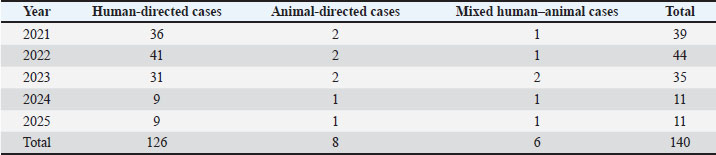
This classification was employed to ensure that human and veterinary forensic aspects were included within a single investigative framework. Inclusion and exclusion criteriaIn the study, 140 cases were included out of 140 cases after completing the exclusion/inclusion criteria. A complete case was defined as a record case containing a year of registration, a geographical location, a legally/administratively defined case type, and one or more biological traces of unknown origin that were submitted for forensic investigation. These records were included as long as they met these criteria during the study registration period. Cases were excluded due to missing key variables, a record containing duplicates for the same event, and a record with insufficient details for standardizing the classification, whether of the crime or the biological trace. Reference or comparator samples from known individuals (victims, suspects, or owners of the animals) needed for inclusion/exclusion were kept separately in documents and were not included in crime scene evidence. Classification of crime types and geographic distributionThe classification of crime was undertaken at the level of legally or investigatively defined categories. Anthropogenic crime and naïve-directed crime were separated for comparative analysis. For geographic distribution, the crime was defined at the administrative division level of the Al-Diwaniyah Governorate. Within each record, animal crimes were further categorized where the context was provided (e.g., humane companion animals, livestock, or illegal slaughtering). Classification of biological tracesThe initial analysis of evidence focused solely on unidentified biological traces from crime scenes. These traces include presumed blood, bodily fluids, hair, cigarette butt, apparel, sharp objects, eating utensils, and other contact substances. Traces found in crimes against animals were classified in the same way to enable direct comparison of human and veterinary forensic analysis. All sample collection procedures were applied for evidence collection. Decomposed samples were excluded in all possible human–animal contaminated trace scenes, to minimize the bias in sample selection. The well-preserved and visible traces were prioritized. The case files provided solid evidence for these sampling decisions and record documentation. Veterinary forensics on evidence of crimesFor mixed animal and other-child crimes, or adult crimes against children, biological traces were assessed to answer veterinary forensic questions pertaining to suspected animal mistreatment, livestock theft, illegal slaughter, or illegal slaughter of livestock and dumping of other species. While veterinary forensic interpretation concentrated on the traces and their biological origins, the injury or blood spatter and the patterns, along with the corresponding forensic report, and the association of the animal material with the crime, the animal and materials were examined. Animals were not examined in this phase of the study. All veterinary forensic assessments were conducted on the forensic documents to conduct a normal veterinary forensic examination during the course of the routine casework. Species attribution of the biological tracesForensic notes in the case files were reviewed to document species attribution. The records describe the use of morphologic methods (e.g., hair microscopy) and the use of DNA (nuclear or mitochondrial) with species-specific primers. The species attribution outcomes were used to substantiate human and nonhuman biological traces and for forensic interpretations in the human and veterinary domains. This study did not involve laboratory testing. Species attribution of biological remains was achieved by combining morphological analysis and species-specific molecular markers. The primary classification involved the microscopic analysis of hair, tissue, or blood fragments to identify morphological features that are suggestive of a human origin versus a non-animal origin. For molecular confirmation, DNA was sampled using standard forensic DNA extraction methods, and species determination was performed using species-specific mitochondrial DNA markers, which are a common tool in forensic species analysis because of their higher copy numbers and persistence in degraded specimens. PCR methods that target mitochondrial genes of interest (e.g., cytochrome b and 12S rRNA), which are routinely used in forensic species differentiation, were executed to assess whether a biological sample was human or non-human, especially in cases where morphological assessment did not provide a definitive result. Molecular analyses were performed in compliance with standard procedures for the mitigation of forensic laboratory contamination, including negative extraction and reagent blank controls, as well as distinctly separated pre- and post-PCR work areas to minimize the potential for cross-contamination. Statistical analysisThe distribution and frequency of human-related crimes, crimes involving animals, and mixed cases of forensics were summarized using descriptive statistics. The association of case type (human, animal, or mixed) and biological trace category was tested using the Pearson chi-square test or Fisher’s exact test in appropriate cases. Cramér’s V was used to estimate the effect size. Trends in the frequency of cases were assessed using trend analysis. A p-value of 0.05 was considered statistically significant. IBM SPSS Statistics version 26.0 (IBM Corp., Armonk, NY), and GraphPad Prism version 10 was used to generate graphical figures. The chi-square (χ²) test of independence was used to evaluate the relationships between categorical variables, and Cramér’s V was used to calculate the effect size. Linear trend analysis was used to evaluate the temporal changes in the occurrence of forensic cases. Significance was determined at p < 0.05. The exact test statistics are provided (χ² values, degrees of freedom, and p-values) in the Results section. Due to the strict adherence to the chain-of-custody regulations, all forensic documentation was done for this research. Trace forensic evidence was recorded on the official case documents. The laboratory processing was performed using cross-contamination controls and strict segregation to preserve the integrity of the evidence. Ethical approvalThe Clinical Research Ethics Committee at Al-Diwaniyah Teaching Hospital, University of Al-Qadisiyah, granted ethical clearance for the use of anonymized forensic records (Approval No. 128/DEC2024). The provided data were analyzed in a summarized form for the purpose of this research, and the research team refrained from accessing direct identifiers of individual human participants, owners of animals, or the investigators. Because the study was solely based on forensic records, no further sampling of humans or animals was undertaken. ResultsTemporally categorizing human, animal, and combined forensic cases (2021–2025)A total of 140 forensic cases involving biological trace examination were recorded during the study period. The majority of these cases were human-directed investigations (126 cases, 97.7%), whereas animal-directed cases accounted for eight cases (6.2%) and mixed human–animal forensic cases accounted for six cases (4.6%) (Table 1). Table 1. Temporal distribution of forensic cases by investigative context (2021–2025).
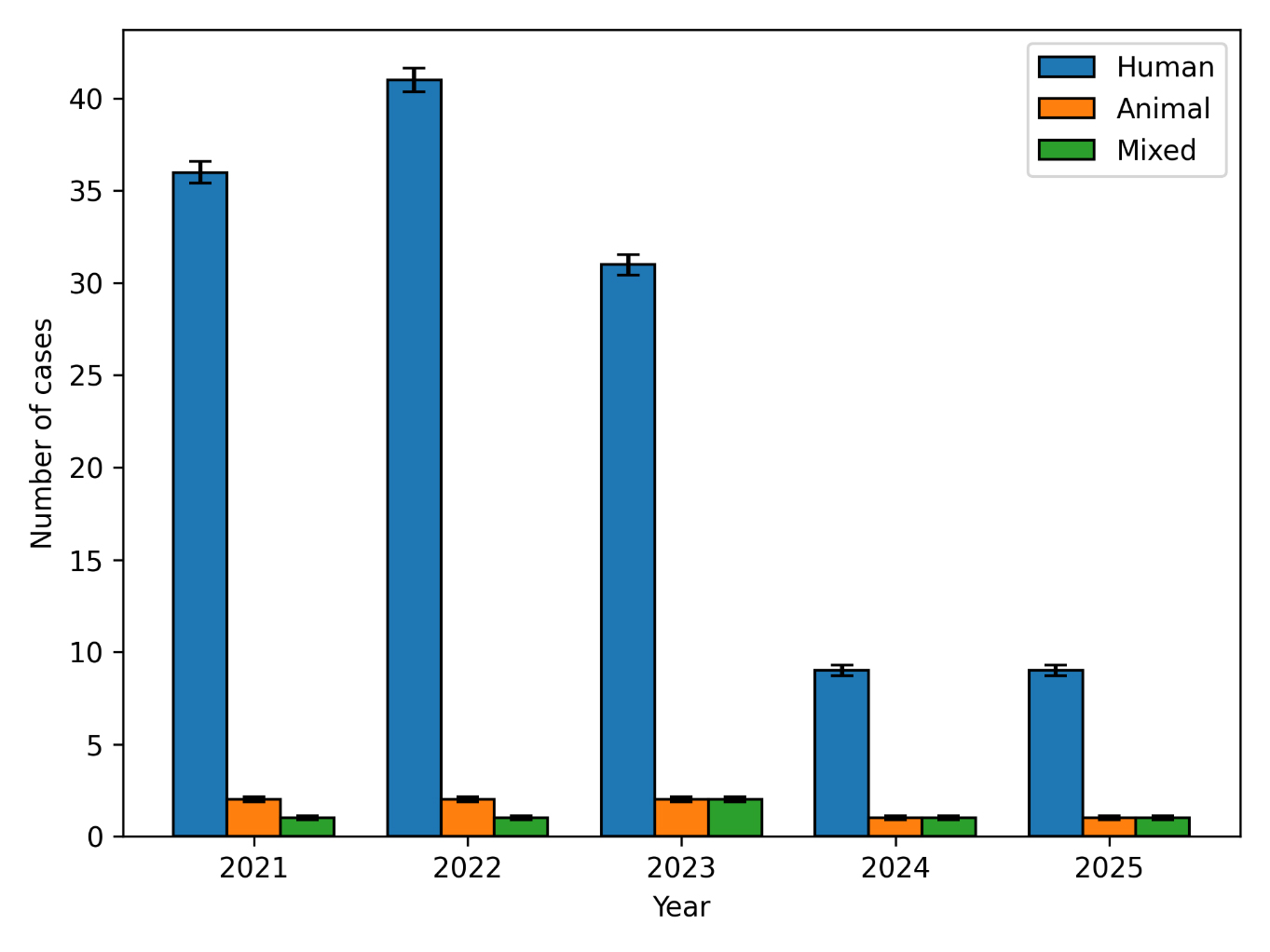
The number of recorded cases varied across the 5-year study period. The highest number of cases was observed in 2022 (44 cases, 34.1%), followed by 2021 (39 cases, 30.2%) and 2023 (35 cases, 27.1%). In contrast, substantially fewer cases were recorded in 2024 and 2025 (11 cases each, 8.5%). The trend analysis demonstrated a statistically significant reduction in the total number of forensic cases over time (p=0.021). This reduction was primarily associated with a decrease in human-directed criminal investigations, whereas animal-directed and mixed human–animal cases remained relatively stable throughout the study period. Despite the overall reduction in case numbers, the continued presence of animal-related forensic cases across all years highlights the persistent relevance of veterinary forensic considerations within routine forensic investigations (Table 1; Fig. 1).
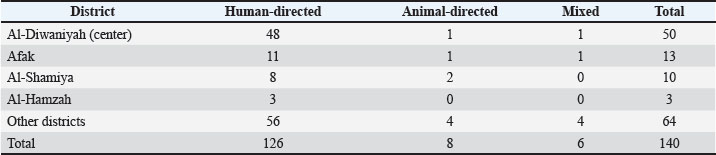
Fig. 1. Temporal trends in human-directed, animal-directed, and mixed forensic cases in the Al-Diwaniyah Governorate from 2021 to 2025. Distribution of forensic cases by geographyThe spatial distribution of forensic cases across the Al-Diwaniyah Governorate demonstrated clear geographic variation (Table 2). Al-Diwaniyah City Center accounted for the highest number of cases with 50 cases (38.8%), including the majority of human-directed investigations and all mixed human–animal cases recorded in the central urban area. Table 2. Geographic distribution of forensic cases by investigative context.
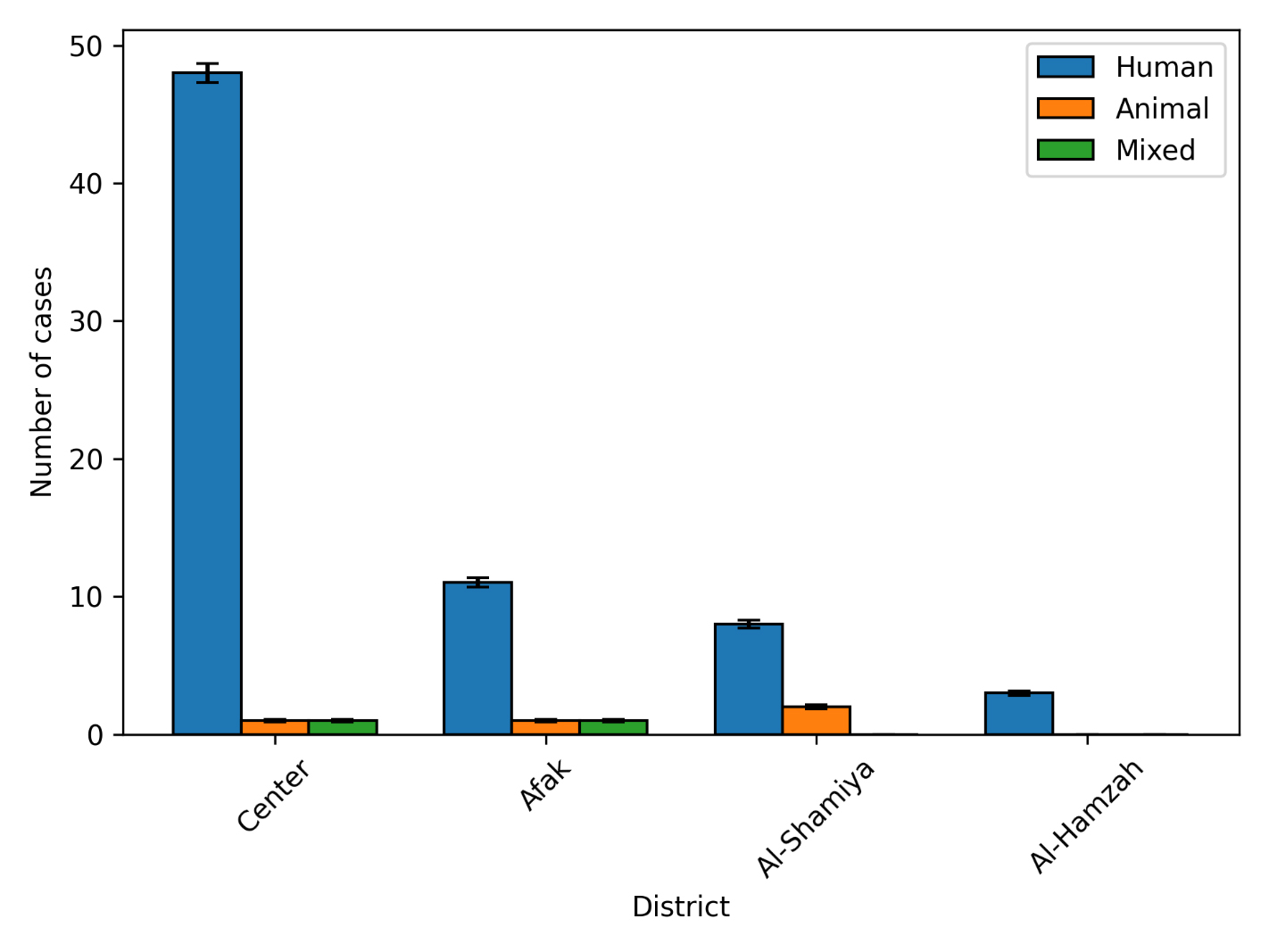
In contrast, Afak district recorded 13 cases (10.1%), and Al-Shamiya recorded 10 cases (7.8%), with a relatively higher proportion of animal-related forensic investigations than the city center. These districts are characterized by high livestock density and high human–animal interaction. Only three cases (2.3%) were reported in the Al-Hamzah district, and notably, no animal-directed forensic cases were recorded in this district during the study period. The remaining 64 cases (49.6%) were distributed across other governorate districts. These findings indicate that geographic and socioeconomic factors may influence both the occurrence of crimes and the likelihood of detecting animal-related biological evidence in forensic investigations (Table 2; Fig. 2).
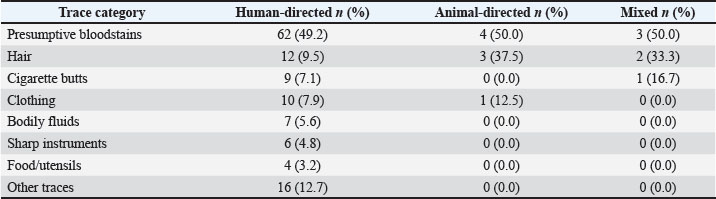
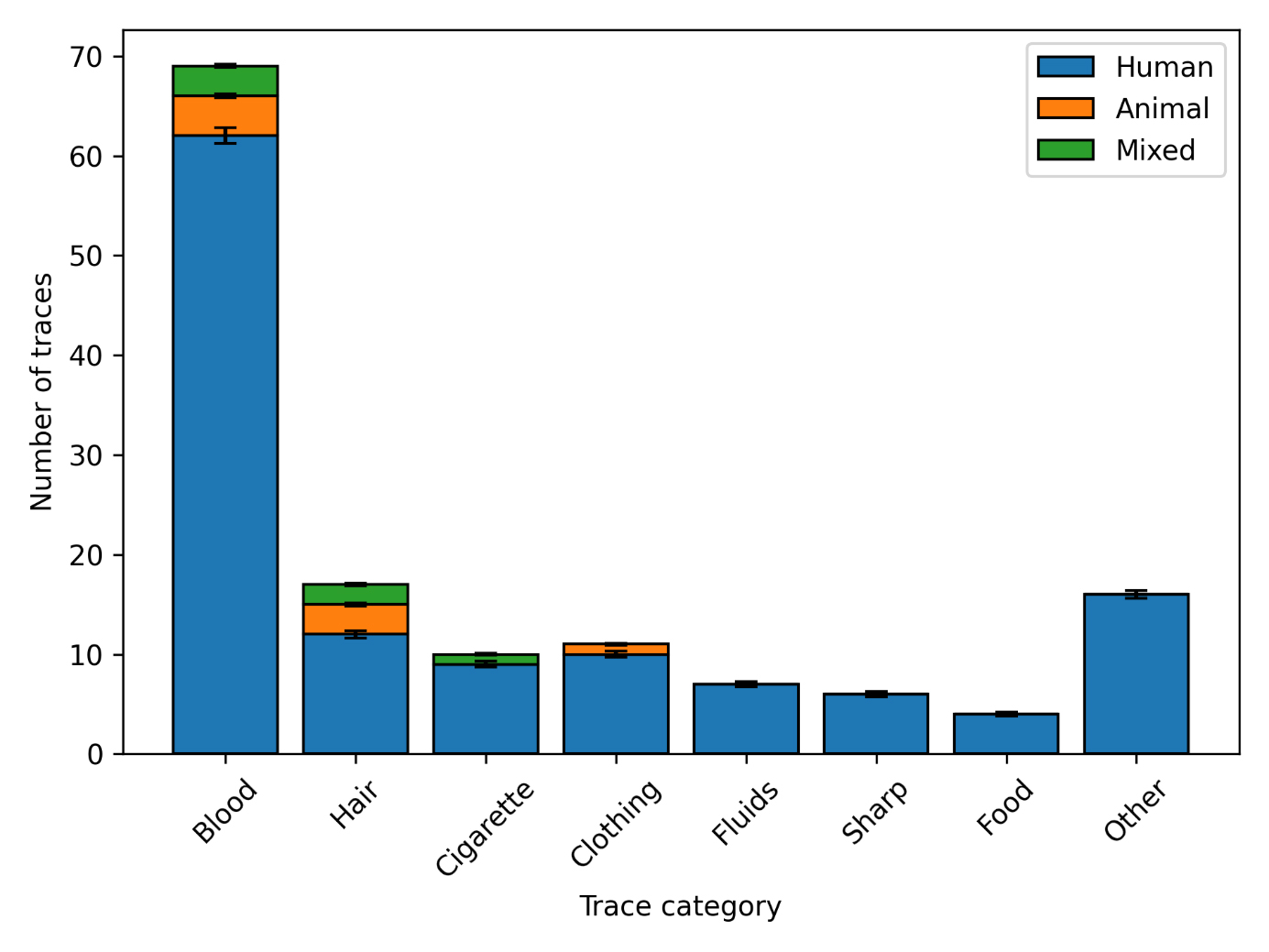
Fig. 2. Geographic distribution of human-directed, animal-directed, and mixed forensic cases across administrative districts in the Al-Diwaniyah Governorate (2021–2025). Distribution of biological traces in relation to the forensic contextAcross all forensic contexts, presumptive bloodstains were the most frequently documented biological trace, accounting for 62 (49.2%) in human-directed cases, 4 (50.0%) in animal-directed cases, and 3 (50.0%) in mixed human–animal cases (Table 3). Table 3. Distribution of biological tracing categories by forensic context.
In human-directed cases, bloodstains represented nearly half of the recovered biological evidence, followed by hair (12 cases, 9.5%), clothing-related traces (10 cases, 7.9%), and cigarette butts (9 cases, 7.1%). Additional trace categories included bodily fluids (7 cases, 5.6%), sharp instruments (6 cases, 4.8%), and food or utensil-related traces (4 cases, 3.2%). In animal-directed forensic cases, presumptive bloodstains (50.0%) and animal hair (37.5%) were the most common trace types, which are consistent with scenarios involving animal injury, slaughter, or animal handling. Mixed human–animal forensic cases demonstrated a broader diversity of trace types, including bloodstains (50.0%), hair (33.3%), and contact-related traces such as cigarette butts (16.7%). Statistical analysis demonstrated a significant association between forensic context (human-directed, animal-directed, or mixed cases) and biological trace category (χ²=18.42, df=14, p=0.018). The effect size indicated a moderate association (Cramér’s V=0.31), suggesting that the type of biological trace recovered varied significantly according to the forensic context (Table 3; Fig. 3).
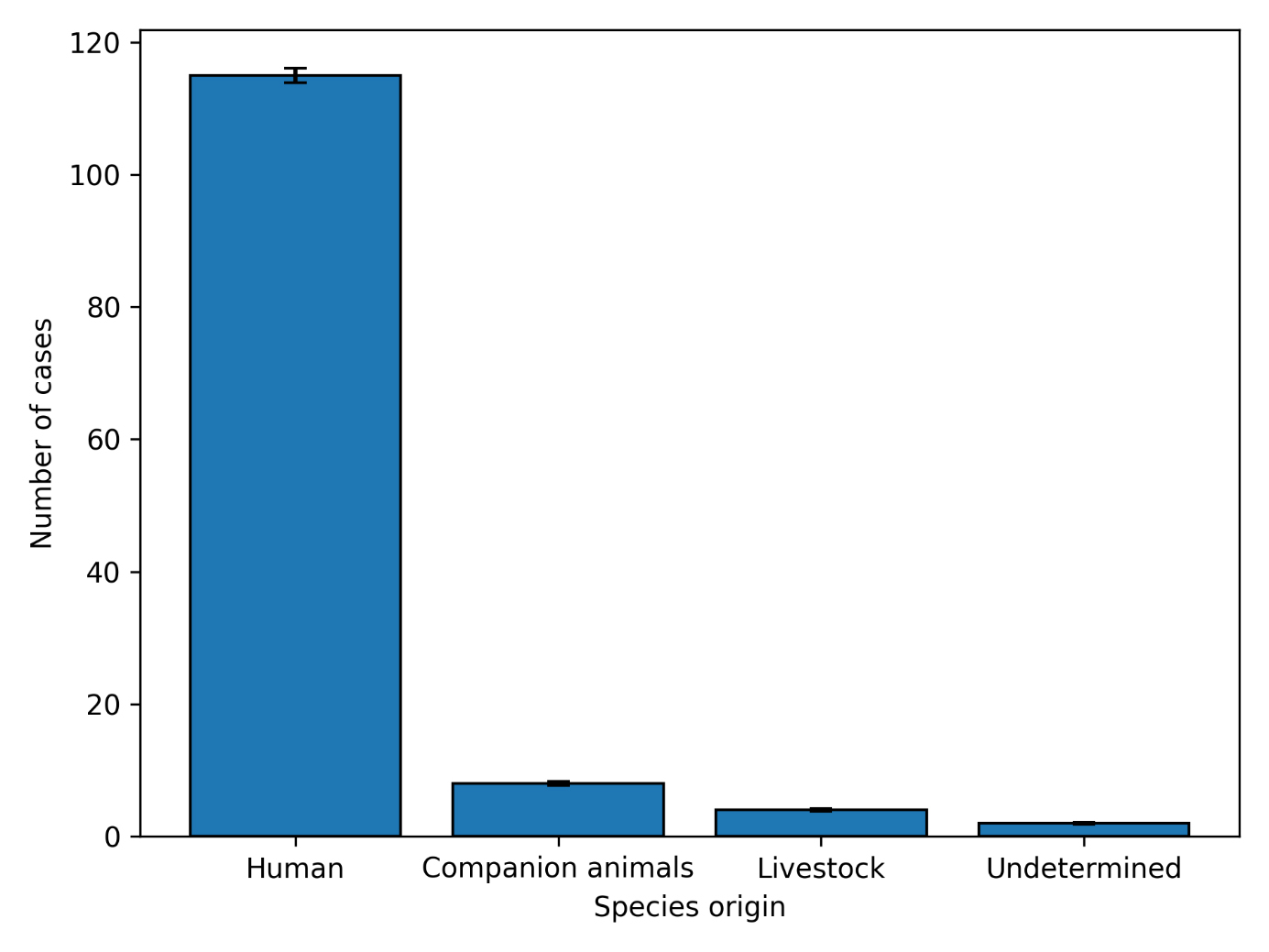
Fig. 3. Distribution of biological tracing categories by forensic context. Attribution of biological traces to speciesSpecies attribution was documented in several forensic case records where biological traces required differentiation between human and nonhuman origins. The majority of confirmed biological traces were derived from humans, which is consistent with the predominance of human-directed criminal investigations in the dataset. However, nonhuman biological traces were also identified in both animal-directed and mixed forensic contexts, including traces attributed to domestic dogs, cats, and other domesticated animals. These findings demonstrate that nonhuman biological material may be encountered not only in animal-related crimes but also within human-directed crime scenes, particularly in close human–animal interactions. The presence of animal-derived biological traces highlights the importance of accurate species attribution procedures in forensic investigations, as misclassification of nonhuman biological material could lead to incorrect interpretation of crime scene evidence. These observations emphasize the complementary role of veterinary forensic science in supporting human forensic investigations, particularly in regions with frequent human–animal contact (Table 4; Fig. 4). Table 4. Species attribution outcomes of documented biological traces.
Fig. 4. Species attribution of biological traces documented in forensic case records. DiscussionContamination or degradation of biological evidence and the subsequent loss of tissue or material affect the interpretation of DNA and the evidence in forensic investigations. Recent forensic research illustrates that, beyond strict adherence to the chain-of-custody protocol, the deterioration of evidence must be avoided to ensure that the forensic biological evidence is valid and can be used in court (Hegde et al., 2025). This retrospective study outlines the species attribution of biological trace evidence examined for forensic purposes in the Al-Diwaniyah Governorate over the past 5 years, with particular emphasis on cases involving mixed human–animal remains. As the study examines documented forensic practice rather than an experimental laboratory setting, the results highlight the practical circumstances of the recovery, sorting, and analysis of biological residues during criminal processes. This practice addresses Sijen and Harbison’s (2021) concerns regarding the practical demand for forensic evidence, whereby the identification and contextual analysis of biological material are paramount for the evidence to be reliable in court. Similar results have been compared with studies in international veterinary forensics, where the nonhuman DNA sample in a mixed biological evidence case has been identified as a key component in a forensic investigation. Research done in Europe and North America has shown that having the correct species identification can prevent the false interpretation of biological evidence and help the forensic investigator in distinguishing between human and non-human biological evidence at a crime scene (Linacre, 2021). According to the trends obtained from the statistical test, there was a major decrease in the overall number of forensic cases during the study, in which the likelihood of the decrease being due to yearly random fluctuations was p=0.021. The majority of cases involving humans in this study align with the manner in which forensic biology operates within criminal justice systems (Mori and Matsumura, 2021). The association between the forensic context and biological trace category was statistically significant (p=0.018, Cramér’s V=0.31), showing that the biological traces obtained differed from those obtained in human, animal, or mixed forensic investigations. Forensic biology is mostly concerned with homicide and violent crime, the areas that require the evaluation of biological traces. Nevertheless, consistently recorded cases each year involving animals and a combination of humans and animals reflect the fact that biological evidence of a nonhuman origin continues to be an integral part of forensic casework. This finding is in support of Linacre (2021), who stated that forensic studies involving animals are not only more prevalent in terms of volume but are also equally important and should be analyzed with the same thoroughness that is used to assess evidence of human origin. Most significantly, the fact that animal-related forensic evidence remains consistently submitted, even when the total number of cases decreases, shows that veterinary forensic elements are central to standard forensic processes and not peripheral. In several forensic probes, especially those involving rural settings or animals, the nonhuman biological sample is often the only biological evidence available. In these instances, precise species identification using molecular approaches is crucial information for the investigation, and it aids in the reconstruction of the case in the absence of human biological evidence (Mori and Matsumura, 2022). In some of the cases analyzed in the current study, species designation was helpful in forensic interpretation by ascertaining whether the biological evidence in question was of human or animal origin. This clarification is especially critical in forensic scenarios where animal biological evidence might be mistakenly interpreted as human evidence (Kanthaswamy et al., 2012). The relevance of identifying cases through comparative forensic examination remains consistent. The geographic spread of mixed and animal-directed cases in rural and semi-rural areas exemplifies the spatial variability in the rural, agricultural, and pastoral dimensions of human–animal relationships, livestock presence, and rural/semi-rural geography. The contextual characteristics of a location also influence the deposition and persistence of biological remains (Hughes et al., 2023; Zhang et al., 2025). These studies emphasize the importance of context in the analysis of biological evidence, especially in settings with prominent human and animal contact. Cramér’s V measure of 0.31 indicates a moderate association between forensic context and trace type, which reinforces the perception that the forensic setting determines a particular trace type’s biological evidence. In all forensic contexts, biological trace analysis showed that presumptive blood stains were the most commonly recovered trace type. Blood-based traces have also been found to be visible and persistent and to have great forensic utility (Tozzo et al., 2022). However, drawing from the above studies, the lack of forensic merit a blood stain elicits nothing more than the presence of visible staining; blood staining is typically present from several species. Doménech-Carbó and Doménech-Carbó (2022)cautioned that presumptive tests, particularly in a context where animal blood may be a background component, do little to substantiate the evidentiary relevance of the results. In several cases, species identification in forensic interpretation was important to exclude the human origin of the traces or to say that an animal hair was present due to the environmental transfer, thus leading to fewer interpretational mistakes and better reconstruction of the crime scene. In one situation, the proportionate contribution of hair traces was greater in mixed and animal-directed forensics than in human-directed forensics. This is in accordance with the function and role of hair structure in differentiating species, as previously reported by Sato et al. (2010) and Mills et al. (2018). The finding that animal hair is also found at human crime scenes speaks to the importance of the basic vet degree (as a supplemental interpretive layer, not as a replacement for human forensic genetics). As noted by Mori and Matsumura (2021, 2022), evidence of species misidentification implies a chronic disorder in forensic studies that have insufficient consideration of nonhuman biotic elements. The sample of animal-directed cases also had geographic variations in the distribution of the cases. However, the small number of animal-directed cases means that the geographic variations should be interpreted with caution, as small sample sizes could influence the contained forensic context. The current study confirms that most documented traces are of human origin, with a measurable number of companion and livestock animal traces. This study also shows that nonhuman biological material is present in animal-directed forensics and human crime scenes. This finding adds support to that of Kanthaswamy et al. (2012) and Liang and Coyle (2021), who proved that species-specific molecular assays are required to analyze mixed or ambiguous forensics. The findings also underscore that veterinary forensic analysis is primarily concerned with species discrimination and the contextual interpretive layer, rather than the direct investigation of animal victims. The temporal decrease in the total number of forensic cases during the study period requires careful consideration. Although the downward trend is statistically significant, it is probably the result of more general sociopolitical, administrative, and reporting structures, rather than one specific cause. Statistical trends in retrospective forensic data, such as the one used in this study, should be treated and emphasized as descriptive rather than causal because of the lack of control of potential confounding attributes (Neuhäuser and Ruxton, 2025). Descriptive studies highlight the lack of explanation, yet the presence of forensic cases involving animals during this period suggests that decreased crime rates do not eliminate the need for veterinary forensic skills, which is valuable in capturing the depth of analysis. The statistically significant drop in the number of forensic cases during the study period (p=0.021) may be the result of more pronounced administrative, reporting, or sociopolitical phenomena, and not necessarily a reduction in the forensic field’s relevance. Given the retrospective nature of this study and the fact that it is based on archived data, definitive causal explanations for the trend remain unavailable. Considering veterinary and human forensics as equals, this study proposes the need for a collective construct for the two fields. As observed by Frankham et al. (2025a,b), standardized frameworks for non-human DNA analysis are important for legal defensibility and consistency across jurisdictions. This study captures the essence of the need for such studies by demonstrating that non-human biological residue is frequently found in routine forensic examinations and impacts the interpretation of evidence, even in cases that are legally classified as human crimes. Several international forensic practices are beginning to use standard practices for evaluating nonhuman DNA and cross-species biological sample analyses. Several forensic laboratories are adopting validated molecular assays and species identification workflows to assist in interpreting biological traces that may originate from animals. Alongside the results of this study, the need for incorporating veterinary forensic practices into traditional forensic investigations has been increasingly emphasized (Farag et al., 2020). Forensic investigations indicate that most large enquiries are human investigations with human samples. Animal investigations and animal samples are less noticeable but still present. Companion animals and livestock are definable contributors in forensic samples, although human forensic investigations are typically not designed to include forensic animal investigations (as evidenced by the current study’s three mixed human and animal investigations). There is little doubt that cross-species evidence can be found and is important in local casework. This is also supported by Bae et al. (2025), who highlighted the use of ddPCR in mixed human, dog, and cat samples. This investigation is also in line with Bae et al. (2025), as the current study outlines the need for further legal investigations of forensic evidence in mixed blood and hair samples. The current results indicated that presumed blood remained the most frequent trace in all forensic situations, whereas hair was the case in most animal-directed and mixed cases, as demonstrated in the human-directed cases. This is significant, as these traces may seem straightforward, but they may lead to a significant interpretive error if the species origin is not established. The findings are in agreement with the outlook presented by Frankham et al. (2025a,b), who stated that non-human DNA evidence is still the case and should be dealt with. The non-human DNA evidence itself should still be validated, and the non-human DNA evidence samples should still be controlled to ensure that it is legitimate and legally defensible. Concerning the above-mentioned international points, the current research demonstrates the actual forensic situation in which the species attribution was already available and where the author identified the non-human DNA, but also highlighted the lack of more advanced and more uniform non-human DNA technology in Iraq, particularly in mixed samples and routine screening in the human–animal interface. These results underline the value of evidence that can be determined when animal traces are recognized early. Study limitationsThere are many limitations to this study that should be considered before drawing conclusions. First, the retrospective nature of the study relies heavily on a set of historical forensic files, and the quality—and uniformity—of record keeping and investigations may have varied considerably over the years. Second, the study examines forensic casework in only one specific location, which may further restrict the findings’ applicability in different locations. Finally, the changes in practice within forensic laboratories over different time periods may account for the observed variations in the number of biological trace detection incidents. Some of the obstacles in this study must first be recognized. Since the study design is retrospective in nature, it relies on the completeness and accuracy of the forensic records in the archives, which is inconsistent across the cases and years. The number of animal forensic cases was also limited, which confined the scope of analysis. In addition, the case specifics and species attribution could only be analyzed where records existed, and this study also lacks any kind of laboratory-independent validation. These limitations notwithstanding, the strength of the study lies in its forensic practice rather than its forensic study. LAMP and other rapid isothermal methods were not considered in this study and should be included in future studies. In the future, sample data from the animal world and digital forensics evidence could be linked. The interpretation of complex biological evidence would be improved, and the reference databases would support the identification of the species. ConclusionThe biological trace evidence that was collected during criminal investigations in Al-Diwaniyah Governorate was used to show the existence of a human–animal interface that requires forensic differentials. Most of the cases were toward humans, and the existence of non-human biological components in these cases shows the need to consider species attribution as a standard practice in forensic investigations. The results also advocate the need to standardize forensic practice to acknowledge the forensic relevance of animal biological remnants and to apply veterinary forensics as an integral part of the multidisciplinary forensic team. AcknowledgmentThe authors extend their gratitude to the forensic and police departments in Al-Diwaniyah Governorate for access to the official documents of crime and forensic data that were used in this retrospective study. Conflict of interestThe authors declare no conflict of interest. FundingThe study was self-funded by the authors. Authors' contributionsAll authors have participated in the current study. Data availabilityThe data could be obtained from the corresponding author upon reasonable request. ReferencesBae, H.J., Jeong, K.S., Kim, J.E., Hwang, E.M. and Yoo, S.Y. 2025. Beyond the mix: advancements in simultaneous detection and quantification of human, dog, and cat DNA. J. Forensic. Sci. 70(1), 38–48; doi:10.1111/1556-4029.15644 Doménech-Carbó, M.T. and Doménech-Carbó, A. 2022. Spot tests: past and present. ChemTexts 8(4), 4; doi:10.1007/s40828-021-00152-z Farag, M.R., El Bohi, K.M., Khalil, S.R., Alagawany, M., Arain, M.A., Sharun, K., Tiwari, R. and Dhama, K. 2020. Forensic applications of mitochondrial cytochrome b gene in the identification of domestic and wild animal species. J. Exp. Biol. Agricult. Sci. 8(1), 1–8; doi:10.18006/2020.8(1).1.8 Frankham, G.J., Ogden, R., Baker, B.W., Ewart, K.M., Johnson, R.N., Kuiper, I., Lindquist, C.D., Moore, M.K., Ndiaye, A. and Webster, L.M.I. 2025a. Standards in wildlife forensic science, with a focus on non-human DNA analysis. Anim. Genet. 56(2), e70005; doi:10.1111/age.70005 Hegde, C., Shekhar, R., Paul, P.M. and Pathak, C. 2025. A review on forensic analysis of bio fluids (blood, semen, vaginal fluid, menstrual blood, urine, saliva): spectroscopic and non-spectroscopic technique. Forensic Sci. Int. 367, 112343; doi:10.1016/j.forsciint.2024.112343 Hughes, D.A., Szkuta, B., Oorschot, R.A.H.V. and Conlan, X.A. 2023. How changes to the substrate's physical characteristics can influence the deposition of touch and salivary deposits. Forensic Sci. Int. 343, 111546; doi:10.1016/j.forsciint.2022.111546 Kanthaswamy, S., Premasuthan, A., Ng, J., Satkoski, J. and Goyal, V. 2012. Quantitative real-time PCR (qPCR) assay for human-dog-cat species identification and nuclear DNA quantification. Forensic. Sci. Int. Genet. 6(2), 290–295; doi:10.1016/j.fsigen.2011.06.005 Liang, J.W. and Coyle, H.M. 2021. A short interspersed nuclear element-based quantitative PCR assay for simultaneous human and dog DNA detection and quantification. Biotechniques 70(3), 175–180; doi:10.2144/btn-2020-0144 Linacre, A. 2021. Animal forensic genetics. Genes 12(5), 717; doi:10.3390/genes12040515 Mills, M., Bonetti, J., Brettell, T. and Quarino, L. 2018. Differentiation of human hair by colour and diameter using light microscopy, digital imaging and statistical analysis. J. Microsc. 270(1), 27–40; doi:10.1111/jmi.12646 Mori, C. and Matsumura, S. 2021. Current issues for mammalian species identification in forensic science: a review. Int. J. Legal. Med. 135(1), 3–12; doi:10.1007/s00414-020-02341-w Mori, C. and Matsumura, S. 2022. Development and validation of simultaneous identification of 26 mammalian and poultry species by a multiplex assay. Int. J. Legal. Med. 136(1), 1–12; doi:10.1007/s00414-021-02711-y Neuhäuser, M. and Ruxton, G.D. 2025. The choice between Pearson's χ2 test and Fisher's exact test for 2 × 2 tables. Pharm. Statist. 24(3), e70012; doi:10.1002/pst.70012 Sato, I., Nakaki, S., Murata, K., Takeshita, H. and Mukai, T. 2010. Forensic hair analysis to identify animal species on a case of pet animal abuse. Int. J. Legal Med. 124, 249–256; doi:10.1007/s00414-009-0383-2 Sijen, T. and Harbison, S. 2021. On the identification of body fluids and tissues: a crucial link in the investigation and solution of crime. Genes 12(11), 1728; doi:10.3390/genes12111728 Tozzo, P., Mazzobel, E., Marcante, B., Delicati, A. and Caenazzo, L. 2022. Touch DNA sampling methods: efficacy evaluation and systematic review. Int. J. Mol. Sci. 23(24), 15541; doi:10.3390/ijms232415541 Tozzo, P., Ponzano, E., Novelli, E., Onisto, M. and Caenazzo, L. 2011. Discrimination between human and animal DNA: application of a duplex polymerase chain reaction to forensic identification. Am. J. Forensic. Med. Pathol. 32(2), 180–182; doi:10.1097/PAF.0b013e31820c2bba Vaishnav, L., Parashar, S., Kumar, A. and Sachdeva, M.P. 2021. A study on hair analysis of different Canidae breeds. Forensic Sci. Int. Rep. 3, 100169; doi:10.1016/j.fsir.2020.100169 Zhang, J., Yu, D., Zhang, L., Wang, T. and Yan, J. 2025. Environmental microbiota from substrate may interfere with microbiome-based identification of forensically relevant body fluids: a pilot study. Forensic. Sci. Int. Genet. 74, 103170; doi:10.1016/j.fsigen.2024.103170 | ||

| How to Cite this Article |
| Pubmed Style Al-hllali ASSH, Mahdi WT, Amin AH, Al-ramahy SK, El-missiry MA, Al-hilali HI. Biological trace evidence in human–animal criminal investigations: A retrospective comparative study of attribution in Al-Diwaniyah, Iraq (2021–2025). Open Vet. J.. 2026; 16(6): 3334-3344. doi:10.5455/OVJ.2026.v16.i6.5 Web Style Al-hllali ASSH, Mahdi WT, Amin AH, Al-ramahy SK, El-missiry MA, Al-hilali HI. Biological trace evidence in human–animal criminal investigations: A retrospective comparative study of attribution in Al-Diwaniyah, Iraq (2021–2025). https://www.openveterinaryjournal.com/?mno=308398 [Access: June 26, 2026]. doi:10.5455/OVJ.2026.v16.i6.5 AMA (American Medical Association) Style Al-hllali ASSH, Mahdi WT, Amin AH, Al-ramahy SK, El-missiry MA, Al-hilali HI. Biological trace evidence in human–animal criminal investigations: A retrospective comparative study of attribution in Al-Diwaniyah, Iraq (2021–2025). Open Vet. J.. 2026; 16(6): 3334-3344. doi:10.5455/OVJ.2026.v16.i6.5 Vancouver/ICMJE Style Al-hllali ASSH, Mahdi WT, Amin AH, Al-ramahy SK, El-missiry MA, Al-hilali HI. Biological trace evidence in human–animal criminal investigations: A retrospective comparative study of attribution in Al-Diwaniyah, Iraq (2021–2025). Open Vet. J.. (2026), [cited June 26, 2026]; 16(6): 3334-3344. doi:10.5455/OVJ.2026.v16.i6.5 Harvard Style Al-hllali, A. S. S. H., Mahdi, . W. T., Amin, . A. H., Al-ramahy, . S. K., El-missiry, . M. A. & Al-hilali, . H. I. (2026) Biological trace evidence in human–animal criminal investigations: A retrospective comparative study of attribution in Al-Diwaniyah, Iraq (2021–2025). Open Vet. J., 16 (6), 3334-3344. doi:10.5455/OVJ.2026.v16.i6.5 Turabian Style Al-hllali, Ali Saloom Serhan Hadee, Wejdan Thamir Mahdi, Ali H. Amin, Syoof Khowman Al-ramahy, Mohamed A. El-missiry, and Hussein Iddnain Al-hilali. 2026. Biological trace evidence in human–animal criminal investigations: A retrospective comparative study of attribution in Al-Diwaniyah, Iraq (2021–2025). Open Veterinary Journal, 16 (6), 3334-3344. doi:10.5455/OVJ.2026.v16.i6.5 Chicago Style Al-hllali, Ali Saloom Serhan Hadee, Wejdan Thamir Mahdi, Ali H. Amin, Syoof Khowman Al-ramahy, Mohamed A. El-missiry, and Hussein Iddnain Al-hilali. "Biological trace evidence in human–animal criminal investigations: A retrospective comparative study of attribution in Al-Diwaniyah, Iraq (2021–2025)." Open Veterinary Journal 16 (2026), 3334-3344. doi:10.5455/OVJ.2026.v16.i6.5 MLA (The Modern Language Association) Style Al-hllali, Ali Saloom Serhan Hadee, Wejdan Thamir Mahdi, Ali H. Amin, Syoof Khowman Al-ramahy, Mohamed A. El-missiry, and Hussein Iddnain Al-hilali. "Biological trace evidence in human–animal criminal investigations: A retrospective comparative study of attribution in Al-Diwaniyah, Iraq (2021–2025)." Open Veterinary Journal 16.6 (2026), 3334-3344. Print. doi:10.5455/OVJ.2026.v16.i6.5 APA (American Psychological Association) Style Al-hllali, A. S. S. H., Mahdi, . W. T., Amin, . A. H., Al-ramahy, . S. K., El-missiry, . M. A. & Al-hilali, . H. I. (2026) Biological trace evidence in human–animal criminal investigations: A retrospective comparative study of attribution in Al-Diwaniyah, Iraq (2021–2025). Open Veterinary Journal, 16 (6), 3334-3344. doi:10.5455/OVJ.2026.v16.i6.5 |


