





| Review Article | ||
Open Vet. J.. 2026; 16(6): 3281-3303 Open Veterinary Journal, (2026), Vol. 16(6): 3281-3303 Review Article Bridging surveillance and policy: Regulatory strategies for controlling zoonotic diseasesEen Kurnaesih1*, Yunita Amraeni1, Muhammad Nirwan2, Aswin Rafif Khairullah3, Adelia Suryani1, Agung Raharjo1, Siti Zaenab Nurul Haq4, Bima Putra Pratama5, Syahputra Wibowo6 and Sri Suryatmiati Prihandani31Department of Public Health, Faculty of Health Sciences, Universitas Pembangunan Nasional "Veteran" Jakarta, South Jakarta, Indonesia 2Research Center for Public Health and Nutrition, National Research and Innovation Agency (BRIN), Bogor, Indonesia 3Research Center for Veterinary Science, National Research and Innovation Agency (BRIN), Bogor, Indonesia 4Department of Electrical Engineering, Faculty of Engineering, Universitas Kahuripan, Kediri, Indonesia 5Research Center for Process Technology, National Research and Innovation Agency (BRIN), Bogor, Indonesia 6Eijkmen Research Center for Molecular Biology, National Research and Innovation Agency (BRIN), Bogor, Indonesia *Corresponding Author: Een Kurnaesih. Department of Public Health, Faculty of Health Sciences, Universitas Pembangunan Nasional "Veteran" Jakarta, Indonesia. Email: eenkurnaesih [at] upnvj.ac.id Submitted: 10/02/2026 Revised: 25/04/2026 Accepted: 04/05/2026 Published: 05/06/2026 © 2025 Open Veterinary Journal
AbstractZoonotic diseases (ZDs) represent a major global health threat due to their ability to spread across species and across national borders, with substantial impacts on animal health, human well-being, and socioeconomic stability, driven by factors such as intensified livestock production, global trade and movement, environmental disruption, and the expanding human–animal–ecosystem interface. This review examines how surveillance systems aid in the formulation and execution of health policies pertaining to the control of ZDs, with a focus on the shift from epidemiological detection to regulation and policy response. Rather than repeating the broader significance of One Health, this review specifically emphasizes how surveillance outputs are translated into actionable policy instruments, preparedness plans, and regulatory decisions. The assessment discusses interdisciplinary governance models, data-sharing mechanisms, and policy coordination pathways at national and international levels involving public health and animal health sectors. A qualitative literature synthesis was conducted using publications retrieved from databases such as PubMed, Scopus, Web of Science, and Google Scholar, together with international guidelines and official policy documents from organizations including WHO, FAO, and WOAH, with inclusion criteria focusing on scientific articles, technical reports, and policy frameworks relevant to ZD surveillance and health policy implementation. The analysis demonstrates that despite the rapid advancement of zoonotic monitoring systems, several challenges remain in translating surveillance data into policy decisions, including institutional fragmentation, technical capacity limitations, and inadequate risk-based response mechanisms. Although both national and international regulatory frameworks provide comprehensive guidance, their effectiveness is largely dependent on institutional operational alignment, regulatory consistency, and context-specific implementation capacity. Integrated multisectoral governance frameworks have emerged as a key mechanism for strengthening the link between surveillance evidence and regulatory action. Overall, strengthening interoperable surveillance networks, harmonizing policy frameworks, and improving interagency coordination are critical to building a resilient and proactive global health security architecture for effective and sustainable ZD control. Keywords: Health policy, One Health, Regulation, Surveillance, Zoonotic diseases. IntroductionThe extensive effects of zoonotic infections on human and animal health and social and economic stability make them a significant global health concern (Rahman et al., 2020). Most newly discovered infectious diseases in humans are derived from domestic and wild animals and can spread across nations and regions (Ahmed et al., 2025a). Not only can zoonoses affect rates of sickness and mortality, but they also put strain on healthcare systems, impair food security, and cause economic losses through decreased livestock output, trade restrictions, and public health expenditures (Yoh et al., 2025). Therefore, zoonoses are a complicated and multifaceted health policy issue rather than just a medical or veterinary issue (Rodriguez, 2024). In recent decades, the expansion of animal agricultural systems, globalization, and climate change have all had a greater impact on the emergence and transmission of zoonotic diseases (ZDs) (Chandipwisa et al., 2025). Although ZD surveillance systems have advanced significantly, many obstacles remain to be overcome before using surveillance data to describe and execute health policies (Shen et al., 2025). The currently available epidemiological data have not always been properly converted into prompt and efficient policy measures in many nations (Astbury et al., 2023). Institutional fragmentation, a lack of risk-based decision-making processes, and low analytical capacity often cause the gap between early identification and policy response (Gabriel et al., 2025). As a result, zoonotic control measures are frequently reactive, being put into place only after an outbreak or spike occurs. This decreases the efficacy of preventive interventions and worsens the negative effects on health and the economy. These recurring policy failures—including fragmented governance structures, delayed intersectoral communication, and predominantly reactive outbreak responses—highlight critical weaknesses in the surveillance-to-policy continuum that warrant detailed examination in this review (He et al., 2022). Under these circumstances, implementing One Health-based policies becomes more crucial and urgent (Adnyana et al., 2023). The One Health concept stresses the interdependence of animal, human, and environmental health and the necessity of cross-sector cooperation in addressing health risks (Vidal et al., 2025). This method offers a conceptual and practical framework for combining risk assessment, surveillance systems, and health laws into a unified, coherent policy approach (Dumet et al., 2025). Adopting One Health concepts can help the health system better prepare for emerging and re-emerging illnesses while also making zoonotic control programs more evidence-based, preventative, and sustainable (Ghai et al., 2022). In light of this, this review aims to critically examine the relationship between ZD surveillance systems and the creation of health regulations, with an emphasis on the efficient conversion of epidemiological data into policies. In addition, it examines the obstacles and policy deficiencies that impede the transition from illness identification to the proper response are examined, and how the One Health strategy has strengthened zoonotic control governance is assessed. Importantly, this review offers a novel synthesis by systematically deconstructing the “surveillance-to-policy pipeline,” with a particular emphasis on how epidemiological evidence is translated into regulatory action and by proposing an integrated governance perspective that moves beyond conventional sector-based recommendations. This translational focus distinguishes this review from previous studies that have primarily addressed ZD from a disease-centered or surveillance-only perspective. MethodologyThis review was conducted using a Preferred Reporting Items for Systematic Reviews (PRISMA)-like approach to ensure a transparent and systematic literature selection process. We identified relevant articles through structured searches in major scientific databases, including PubMed, Scopus, Web of Science, and Google Scholar. The search strategy combined keywords and Boolean operators related to ZDs, surveillance systems, health policy, One Health, regulatory frameworks, and disease control (e.g., “ZD” AND “surveillance” AND “policy”; “One Health” AND “regulation”; “animal-human interface” AND “outbreak response”). The inclusion criteria were as follows: (1) peer-reviewed original research articles, review articles, policy papers, and international technical reports; (2) publications addressing ZD surveillance, regulatory policy, One Health governance, or outbreak response frameworks; (3) articles published in English; and (4) studies published within the last 10 years, except for seminal references considered essential for conceptual background. The exclusion criteria were as follows: (1) articles unrelated to ZD surveillance or policy frameworks; (2) duplicate records across databases; (3) conference abstracts without full text; (4) non-English publications; and (5) studies focused exclusively on clinical case management without policy or surveillance relevance. Duplicate records were removed after the initial search, followed by title and abstract screening based on relevance to the review objectives. Subsequently, full-text screening was performed to assess methodological suitability and thematic alignment. Articles that met the eligibility criteria were included in the qualitative synthesis. The final selection process emphasized studies that provided evidence on surveillance-to-policy translation, intersectoral coordination, and practical implementation of One Health strategies. Overview of zoonotic diseases and their public health significanceZoonotic illnesses are a class of infectious diseases that significantly affect public health because of their connections to human, animal, and environmental health, as well as their wide-ranging effects on health systems and socioeconomic circumstances. Figure 1 shows a conceptual framework outlining the interrelated connections between zoonotic illnesses, human, animal, and environmental health within the One Health paradigm. As illustrated in Figure 1, the bidirectional arrows between “Human Health” and “Animal Health” represent multiple transmission pathways, including direct contact, foodborne exposure, and vector-mediated spread, whereas the arrows linking both sectors to the “Environment” reflect ecological drivers that modulate disease emergence and transmission dynamics. This interconnected framework highlights that ZD control cannot be addressed through a single-sector response, but instead requires coordinated policy action across public health, veterinary, and environmental governance systems.
Fig. 1. Conceptual framework of zoonotic diseases, One Health interfaces, and their global impacts. Definition and classification of ZDsZoonotic illnesses can naturally spread from vertebrate animals to humans through direct contact or by biological or environmental agents (Rabozzi et al., 2012). Numerous pathogens, including bacteria, viruses, parasites, and fungi, are responsible for these diseases. These pathogens interact intricately at the interface between humans, animals, and the environment (Zubair et al., 2024). Zoonoses pose a serious threat to global public health due to the intricacy of these relationships, especially regarding policy-based prevention and management (Seimenis and Battelli, 2018). Classic, emerging, and reemerging ZDs can be distinguished based on their epidemiological patterns (Weiss and Sankaran, 2022). Classic zoonoses include well-known illnesses, such as rabies and brucellosis, which are still endemic in some areas and have rather stable transmission routes (Qiu et al., 2023). The persistence of these classic zoonoses in endemic regions should not be viewed solely as a scientific or biomedical challenge but also as a policy failure resulting from weak veterinary public health infrastructure, inconsistent vaccination coverage, limited surveillance capacity, and insufficient cross-sector investment (Qiu et al., 2023). Emerging zoonoses are new illnesses that either emerge in human populations or rapidly increase in incidence and dissemination. These diseases are typically caused by changes in the environment, interactions between humans and wildlife, animal traffic, and livestock production (Villarroel et al., 2023). From a policy perspective, the emergence of these diseases often reflects delayed regulatory adaptation to ecological and agricultural changes, including inadequate wildlife monitoring and insufficient biosafety governance (Militzer et al., 2023). Re-emerging zoonoses, on the other hand, are illnesses that were formerly under control but are now resurfacing as a result of factors such as weakening health systems, lower vaccination rates, and the development of antibiotic resistance (Marie and Gordon, 2023). This resurgence frequently indicates failures in long-term policy sustainability and reactive rather than preventive health governance. Zoonoses have various transmission channels, which reflect the capacity of the pathogen to adapt to different hosts and conditions (Li et al., 2025a). The spread of foodborne illnesses, which happens when infected animal products are consumed, is a significant factor in the burden of foodborne illness (Das et al., 2024). In vector-borne transmission, biological intermediaries such as mosquitoes and ticks are involved (Swei et al., 2020). While direct contact transmission occurs through contact with diseased animals, bodily secretions, or contaminated settings, airborne transmission enables the fast spread of infections, particularly in crowded areas (Esposito et al., 2023). This variety of transmission paths highlights the need for integrated, cross-sectoral control techniques in accordance with the One Health philosophy when developing health policies (Qiang et al., 2025). The global and regional burden of zoonotic diseasesGlobally and regionally, ZDs significantly affect morbidity, mortality, and financial strain on health systems (Banik and Basu, 2025). Approximately 60% of known human infectious diseases and up to 75% of newly emerging infectious diseases are zoonotic in origin, underscoring their substantial contribution to the global disease burden (Sharan et al., 2023). According to epidemiology, zoonoses have a high potential for international dissemination and account for a sizable share of newly and reemerging infectious diseases (Kobayashi, 2018). Global variables, including climate change, trade in animals and animal products, and human mobility, increase the risk of regional outbreaks and possibly pandemics by accelerating the spread of zoonotic infections and enlarging endemic areas (Sharan et al., 2023). Zoonoses affect not only the medical field but also the social and economic domains (Martins et al., 2014). ZD outbreaks can compromise food security, lower cattle productivity, and result in financial losses because of trade and mobility limitations (Bose and Kumar, 2025). Zoonoses worsen poverty in low- and middle-income nations by causing people to lose their means of subsistence, driving up healthcare expenses, and restricting access to veterinary and medical treatment (Leahy et al., 2022). This case emphasizes the close relationship between zoonoses, health disparities, and social vulnerability (Asaaga et al., 2023). The load severity is reflected in certain ZDs. Rabies continues to cause a large number of human deaths in Asia and Africa, mainly due to inadequate canine population control and restricted access to post-exposure treatment (Khairullah et al., 2023). Globally, rabies is responsible for approximately 59,000 human deaths annually, most of which occur in low-resource settings, illustrating the consequences of persistent policy and implementation gaps in prevention programs (Yang et al., 2025). The poultry industry and human health are both seriously threatened by avian influenza, which can have a major negative economic impact through trade restrictions and livestock culling (Ayuti et al., 2024). A common bacterial zoonosis in many nations, brucellosis lowers animal reproductive production and causes chronic illness in people (Khairullah et al., 2024). Meanwhile, COVID-19 has glaringly illustrated how zoonotic infections can intensify into worldwide health emergencies with a variety of effects, from strain on healthcare systems to disturbances in public policy and the economy (Bardhan et al., 2023). System surveillance for ZDsThe ZD surveillance system is the primary basis for early detection, tracking patterns of transmission, and supplying scientific data to support the creation of risk-based health policy. Epidemiological surveillance in both humans and animalsEpidemiological surveillance is an essential component of ZD control because it offers crucial data for early detection, tracking disease patterns, and evaluating public health concerns (Zhang et al., 2025). Given the intimate connection between the dynamics of disease in animals and the prevalence of infection in humans, zoonose surveillance systems must simultaneously cover both human and animal populations (Halliday et al., 2012). An integrated surveillance method enables more accurate identification of infection sources and transmission pathways, which supports the development of evidence-based health policy (Tiwari et al., 2025). The key differences and complementary roles of human and animal surveillance systems are summarized in Table 1 to improve clarity. Table 1. Comparison of human and animal epidemiological surveillance in the control of zoonotic diseases.
Operational zoonotic surveillance can be implemented through 2 principal approaches: passive and active surveillance (Sharan et al., 2023). Passive surveillance refers to the routine collection of disease data based on reports that are voluntarily or routinely submitted by health care facilities, diagnostic laboratories, and veterinary services without direct case-seeking by surveillance authorities. This approach is inexpensive and provides broad geographic coverage because it relies on existing reporting networks from medical and veterinary institutions (Shapiro et al., 2025). However, its main limitation is that it depends heavily on the awareness, compliance, and reporting capacity of frontline personnel, which may result in delayed notification and underreporting, particularly in resource-limited settings (Stufano et al., 2025). Active surveillance involves the deliberate and systematic search for cases by public health or veterinary authorities through field investigations, targeted sampling, serological screening, outbreak tracing, or regular monitoring of high-risk animal populations (Mhlongo et al., 2025). Unlike passive surveillance, which waits for cases to be reported, active surveillance seeks evidence of infection proactively, even in the absence of routine notifications. Active monitoring provides more sensitive, timely, and comprehensive epidemiological data, making it particularly useful for the early detection of emerging zoonoses and shifts in transmission patterns. However, this method is substantially more resource-intensive, requiring greater financial investment, trained personnel, and laboratory support (Wang et al., 2023). Laboratory studies are essential for epidemiological surveillance by confirming diagnoses, characterizing pathogens, and tracking genetic alterations in zoonotic organisms (Sykes et al., 2022). Accurate pathogen identification, especially the early discovery of novel strains or variations with potentially increased virulence and transmissibility, is made possible by adequate laboratory capability (Pronyk et al., 2023). Furthermore, laboratory results must be integrated into a standardized reporting system to guarantee accurate and timely data flow from the local to the national level (Schwarz et al., 2017). In addition to bolstering public health response, an efficient reporting system helps prioritize actions, inform policy decisions, and assess the success of zoonotic control initiatives (Qiang et al., 2025). Integrated and 1-health surveillance modelsAs the main basis for controlling ZDs, the One Health-based integrated surveillance model highlights the significance of methodically integrating environmental, animal, and human health data (Kuhn et al., 2024). This method is predicated on the knowledge that epidemiological shifts in animal populations or environmental factors frequently cause the onset of human disease (Stufano et al., 2025). Therefore, including cross-sectoral data enhances the ability of the health system to identify possible zoonotic threats early and enables more thorough risk analysis (Oltean et al., 2025). Data integration in One Health-based surveillance entails standardizing data collection techniques, reporting guidelines, and information sharing systems throughout the environmental, veterinary, and public health sectors (George et al., 2020). An integrated analysis of data from health services, animal health monitoring, and environmental indicators—such as ecosystem change, vector density, and climate factors—is performed to find trends and connections that are challenging to find using distinct sectoral systems (Grieve et al., 2026). This method promotes the creation of more adaptable and evidence-based health policies and strengthens the validity of epidemiological data (Stephen et al., 2004). Real-time surveillance and early warning system deployment are crucial components of an integrated surveillance paradigm (Li et al., 2025a). Using longitudinal data and predictive analytics, early warning systems identify epidemiological irregularities that could develop into epidemics (Wang et al., 2023). On the other hand, real-time surveillance uses digital technology, health information systems, and cross-sector data sharing platforms to facilitate quick data reporting and analysis (Redman-White et al., 2023). Combining these 2 strategies reduces the socioeconomic and health effects of zoonotic outbreaks by accelerating policy responses and health interventions (Lâm et al., 2025). Challenges in the surveillance of ZDsNumerous operational and structural obstacles to ZD surveillance could reduce the efficacy of early identification and health policy interventions (Zhang et al., 2023). Data fragmentation among the environmental, animal, and human health sectors is one of the main challenges. Compartmentalized information systems with disparate reporting standards and metrics limit data interoperability (Suo et al., 2025). Consequently, epidemiological data are frequently not integrated as well as they may be, which hinders the ability to fully assess risks and delays the use of evidence-based decision-making (Winkler et al., 2025). This fragmentation is not merely a technical issue but is often embedded within governance and legal frameworks. In several countries, human health data systems are regulated under strict privacy and data protection laws, whereas animal health databases are governed by separate ministries and reporting mandates, thereby limiting cross-sector data linkage (Pham, 2025). For example, within the European context, the separation of human and animal surveillance data across health and agricultural data spaces has been identified as a major barrier to integrated One Health surveillance, despite ongoing efforts to harmonize data through common European data spaces (Yopa et al., 2023). Similarly, in many low- and middle-income countries (LMICs), surveillance fragmentation reflects institutional silos between Ministries of Health, Agriculture, and Environment, as reported in countries, such as Burkina Faso, Tanzania, Malawi, and Indonesia, where separate reporting platforms and sector-specific mandates have historically hindered integrated outbreak intelligence. However, recent DHIS2-based One Health initiatives in these countries illustrate both the scale of the challenge and the potential for system integration (Hanson et al., 2022). This fragmentation reflects not only technical incompatibility but also deeper governance weaknesses, including sectoral silos, inconsistent reporting mandates, and the absence of shared accountability mechanisms. Consequently, surveillance systems may generate large volumes of data without effectively translating them into timely early warning signals or coordinated policy responses (Hržica, 2025). Capacity constraints in underdeveloped nations about financing, human resources, and infrastructure present another difficulty (Belay et al., 2021). Many nations still lack access to sophisticated diagnostic equipment, sufficient laboratory space, and skilled surveillance and epidemiological analytic personnel (Sharan et al., 2023). Low surveillance system sensitivity, a higher chance of underreporting, and delays in identifying ZDs—especially newly and reemerging ones—are the outcomes of this circumstance (Calero and Monti, 2022). From a critical perspective, these weaknesses often lead to reactive rather than preventive surveillance systems, thereby limiting their value as early warning tools. In such settings, surveillance functions frequently only after outbreak escalation, reducing the opportunities for preemptive intervention. Obstacles to technological and digital implementation Despite the increasing emphasis on DSTs, substantial technological barriers continue to limit their implementation, particularly in low-resource settings. One major challenge is the digital divide, where disparities in internet connectivity, electricity reliability, hardware availability, and trained personnel constrain the routine use of RTRS (Agbeyangi and Suleman, 2024). These barriers are especially evident in rural areas across Sub-Saharan Africa and parts of Southeast Asia, where frontline veterinary and public health facilities may still rely on paper-based notification systems (do Nascimento et al., 2023). The lack of interoperability standards is another critical hurdle. Human and animal health systems frequently use different data structures, terminologies, and software architectures, making automated data exchange difficult (Torab-Miandoab et al., 2023). Studies have highlighted the absence of standardized vocabularies, HL7-compatible frameworks, and semantic interoperability as major barriers to integrated zoonotic surveillance in countries such as Iran and across multiple European surveillance networks (Saberi et al., 2025). The long-term financial burden of maintaining a digital surveillance infrastructure remains a major policy concern. Beyond initial deployment costs, countries must sustain expenditures for server maintenance, software updates, cybersecurity, laboratory information systems, cloud storage, and workforce training (Yu et al., 2025). This is particularly challenging for LMICs, where donor-funded pilot platforms often struggle to remain operational after project completion. Malawi’s recent experience with rabies and One Health surveillance systems demonstrates how infrastructure limitations and maintenance costs can delay the scaling of otherwise promising digital tools (Mastala et al., 2026). The integrated influenza surveillance systems implemented in countries such as the United Kingdom and Singapore, where human clinical reporting, laboratory confirmation, and animal health monitoring are linked through centralized digital dashboards and standardized alert thresholds, are a good example. These systems demonstrate how interoperable data platforms and predefined response triggers can substantially shorten the interval between detection and policy action (Hammond et al., 2022). Cross-sectoral coordination is a major obstacle to establishing efficient zoonotic surveillance (Yasobant et al., 2025). Disparities in sector-specific institutional mandates, policy agendas, and regulatory frameworks frequently hampered sustainable cooperation (Ghai et al., 2022). In response to zoonotic threats, overlapping operations or gaps may result from the absence of established coordination structures and structured data interchange (Kayembe-Mulumba et al., 2025). This issue highlights a critical weakness in many early warning systems: the presence of surveillance data alone does not guarantee effective preparedness unless supported by formal communication pathways, joint risk assessment teams, and rapid multisectoral decision-making protocols. For example, Indonesia’s One Health response framework for avian influenza provides a practical model of cross-sectoral surveillance integration by linking veterinary outbreak reports, public health case detection, and rapid policy communication between ministries. Recent DHIS2-based e-Zoonosis initiatives in Indonesia further demonstrate progress toward interoperable digital surveillance, although nationwide standardization and sustainability challenges remain (Gupta et al., 2026). Therefore, a crucial precondition for resolving these issues and enhancing the health system’s resilience is to improve surveillance oversight through a clear One Health framework that is backed by strong rules (Li et al., 2024). Transforming surveillance data into health policyConversion of surveillance data into efficient health policies is a crucial stage in the control of ZDs, which establishes the degree to which epidemiological findings may be promptly, appropriately, and risk-based. Figure 2 depicts the translational pipeline connecting evidence-based policy responses within a One Health framework to integrated zoonotic surveillance across the human, animal, and environmental sectors.
Fig. 2. Translational pathway from integrated zoonotic surveillance to policy response under a One Health framework: A systematic review Evidence-based policymakingThe development of health policies for managing ZDs heavily relies on epidemiological data (Santos and Monteiro, 2013). Policy priorities and distribution of health resources are based on incidence, prevalence, geographic distribution, and at-risk demographic categories (Wang et al., 2024). By using reliable and consistent monitoring data, policymakers can determine the most urgent zoonotic threats and create measures that are suitable for the risk level (Shanbehzadeh et al., 2022). This strategy guarantees that, in the context of public health, the adopted policies will continue to be applicable, efficient, and effective (Sharan et al., 2023). In decision-making, risk assessment acts as a bridge between policy action and scientific evidence (Boden et al., 2020). This procedure includes assessing the probability of zoonotic transmission and any possible negative effects on health and society (Rahman et al., 2020). Importantly, risk assessment can be conducted using both qualitative and quantitative approaches. Qualitative risk assessment is generally used when epidemiological data are limited, particularly for novel or emerging pathogens, and it relies on expert judgment to categorize risk levels (e.g., low, moderate, or high) (Krewski, 2022). In contrast, quantitative risk assessment employs numerical estimates, probabilistic modeling, and transmission parameters to project the likelihood and potential impact of an outbreak. Although quantitative approaches provide stronger support for policy thresholds, they are often difficult to apply during the early stages of emergence when critical data—such as basic reproduction number (R₀), case fatality rate, and host range—remain uncertain (Molenberghs et al., 2020). The findings of the evaluation provide decision-makers with a logical framework for weighing different action alternatives, such as strengthening biosecurity, limiting the transportation of animals, or enacting particular health laws (Belay et al., 2021). This ensures that policies prioritize long-term risk prevention and reduction rather than responding only to disease outbreaks (Astbury et al., 2023). A major challenge in this process is establishing actionable thresholds for intervention, especially for novel zoonotic pathogens. In many settings, uncertainty regarding what constitutes a sufficient epidemiological signal for action contributes to delayed policy activation (Yoh et al., 2025). For example, thresholds for culling, market closure, or movement restrictions during avian influenza outbreaks often differ substantially across countries, reflecting both scientific uncertainty and policy discretion (Di Pillo et al., 2020). In addition, including risk assessments and epidemiological data into the decision-making process improves accountability and openness of health policy (Zhou et al., 2024). Stakeholders from all sectors and the public are more likely to accept scientific data-based decisions because they have a clear justification (Peterson et al., 2006). An evidence-based policy approach in zoonotic control also enables ongoing policy evaluation and modification in response to shifting epidemiological conditions (Borham et al., 2025). Therefore, evidence-based policymaking is a key element in connecting monitoring systems with flexible and long-lasting health legislation (Rai et al., 2025). Policy gaps between detection and response strategiesAlthough zoonotic surveillance systems offer more thorough epidemiological data, these results are frequently used in policy responses (Shen et al., 2025). This gap arises when appropriate preventive or control actions are not promptly implemented in response to EW signals (Maddah et al., 2023). Reactive policies that are only implemented following a spike in cases or a significant outbreak are typically the result of multistage data validation procedures, ambiguous risk thresholds for initiating action, and a lack of rapid response mechanisms (Sharan et al., 2023). This circumstance increases the negative effects of zoonotic illnesses on human health and the economy while decreasing the efficiency of surveillance as a preventive measure (Nana et al., 2022). From a public policy perspective, this detection-to-response gap can be interpreted through Kingdon’s Multiple Streams Framework, in which effective policy action occurs only when the problem stream (epidemiological signal), policy stream (available intervention options), and political stream (governmental willingness and institutional readiness) converge within a policy window. Consequently, unless coupled with a politically feasible response pathway, strong surveillance evidence alone may be insufficient to trigger action (Hoefer, 2022). A clear example of this detection-to-response gap can be observed in avian influenza outbreaks, where viral circulation in poultry is often identified through veterinary surveillance before substantial control measures, such as movement restrictions, culling, or market closure, are implemented (Alvarez et al., 2025). For example, Indonesia and Vietnam have historically experienced delays between the detection of poultry outbreaks and market-level interventions due to concerns regarding economic disruption, compensation mechanisms, and inter-ministerial coordination challenges (Alders et al., 2014). Delays in translating surveillance alerts into field interventions have allowed spillover transmission to humans and wider regional spread in several instances. Similarly, in rabies control, surveillance systems may detect increasing animal bite cases or confirmed infections in dogs, yet delayed vaccination campaigns and post-exposure prophylaxis access frequently prolong human exposure risk and mortality (Bakhsh et al., 2026). Comparable policy gaps have also been documented in India and several Sub-Saharan African countries, where epidemiological alerts were not rapidly matched by dog vaccination deployment or human PEP availability due to fragmented financing structures and local governance delays (Abbas and Kakkar, 2015). The delay between detection and response is widened by political and bureaucratic obstacles in addition to technical ones (Talwar et al., 2025). Policy agendas across sectors, overlapping laws, and agency authority fragmentation frequently impede quick and coordinated decision-making (van Roode et al., 2024). Political and economic factors, such as worries about the effects of trade or societal stability, may occasionally delay the adoption of necessary control measures (Banik and Basu, 2025). Consequently, the urgency of the epidemiological risk detected by monitoring is not necessarily reflected in the health response (He et al., 2022). This policy gap emphasizes the necessity of enhancing responsive and adaptable health governance, including creating precise risk-based response guidelines and efficient cross-sectoral coordination systems (Rai et al., 2025). For example, predefined response triggers for influenza outbreaks and rapid dog vaccination deployment protocols for rabies could substantially shorten the interval between detection and intervention (Townsend et al., 2013). By reducing the gap between early detection and policy intervention, health systems can enhance readiness for zoonotic risks while reducing their detrimental effects on public health and socioeconomic resilience (Rodriguez, 2024). Economics of inaction and prevention cost-effectiveness The economic consequences of delayed policy response represent a critical argument for strengthening surveillance-to-policy translation. The cost of inaction during zoonotic outbreaks frequently exceeds the investment required for preventive surveillance and early intervention (Sharan et al., 2023). For example, the COVID-19 pandemic demonstrated how, on a global scale, delayed containment responses can lead to severe macroeconomic disruption, healthcare system overload, trade restrictions, and long-term productivity losses (Filip et al., 2022). Similarly, failure to intervene early in livestock-associated zoonoses such as avian influenza and brucellosis can result in substantial economic losses through mass culling, reduced livestock productivity, trade embargoes, and compensation expenditures (Dadar et al., 2021). In contrast, preventive investments, such as routine surveillance, vaccination campaigns, and early warning systems, have consistently been shown to be more cost-effective than outbreak response expenditures (Hossain et al., 2018). This economic framing strengthens the policy argument by demonstrating that surveillance is not only a scientific tool but also a strategic investment in health security and economic resilience. Role of the stakeholdersThe intricate relationships between biological, social, and policy aspects necessitate the active participation of multiple stakeholders in controlling ZDs (Aljabali et al., 2025b). Establishing regulatory frameworks, organizing monitoring systems, and guaranteeing the successful execution of public health and veterinary policies are all major responsibilities of the government (Zhang et al., 2023). The government plays a crucial role in connecting surveillance results with coordinated policy responses by creating evidence-based rules and allocating sufficient funding (Milazzo et al., 2025). Academics and research institutes contribute to the provision of scientific data to support policy decisions through epidemiological studies, risk analysis, and policy evaluation (Stephen et al., 2004). This position is essential for identifying patterns in ZDs, evaluating the success of interventions, and developing novel diagnostic and control methods (Kuhn et al., 2024). Academic participation also increases the credibility of health policies by guaranteeing that rules are implemented in a responsible and scientifically sound manner (Zhou et al., 2024). The private sector is essential to the implementation of health and biosecurity regulations, especially in the food, pharmaceutical, and livestock sectors (Mehmedi et al., 2025). The execution of zoonotic policies can be made more effective by following legislation, investing in disease control technologies, and participating in public-private collaborations (Ahmed et al., 2025a). Through early disease case reporting, engagement in prevention initiatives, and behavioral changes, the public simultaneously acts as a recipient and an actor of policy. Enhancing health literacy is essential for maintaining community involvement (Vlaanderen et al., 2024). Addressing zoonoses that cross administrative borders requires cross-sector and cross-national cooperation (Qiang et al., 2025). The global capacity to prevent and control ZDs is improved by data sharing, policy harmonization, and international response coordination (Shiferaw et al., 2017). In this situation, the One Health strategy offers a cooperative framework that unifies the interests of various stakeholders, promoting more efficient, flexible, and long-lasting ZD control (Ghai et al., 2022). Stakeholder alignment also determines whether surveillance evidence successfully enters the policy stream and reaches the agenda-setting phase required for an actionable response (Balane et al., 2020). Regulatory frameworks for controlling zoonotic diseasesThe regulatory framework is essential for controlling zoonotic illnesses because it offers a legal foundation, operational guidelines, and coordination tools that connect scientific data, public health policy, and practical application. Figure 3 depicts the complementary functions of international regulatory frameworks and national biosecurity policies in the management of ZDs. As illustrated in Figure 3, these frameworks should be interpreted as a cyclical governance model rather than a simple hierarchy, in which international regulations provide normative standards and reporting obligations, national frameworks translate them into operational laws and field protocols, and surveillance outcomes at the local level feed back into international risk assessment and policy revision. This bidirectional cycle emphasizes the continuous flow of information, regulatory adaptation, and policy reinforcement across governance levels.
Fig. 3. Complementary roles of national biosecurity policies and international regulatory frameworks in the control of zoonotic diseases Operationally, these frameworks function at different but interconnected governance levels: international frameworks establish overarching standards, reporting obligations, and technical guidance, whereas national frameworks translate these standards into country-specific laws, surveillance protocols, and response mechanisms. National health policies and regulationsThe national health strategy integrates public and animal health to play a strategic role in reducing ZDs (Ghanbari et al., 2022). This policy seeks to balance illness event response, detection, and prevention to lower the danger of zoonotic transmission (Ahmed et al., 2025a). In practice, veterinary health policy prioritizes reducing disease origins in animals and the environment, whereas public health policy focuses on safeguarding the human population through enhanced surveillance, expanded health service capacity, and public education (Stufano et al., 2025). The countrywide implementation of the One Health approach is primarily based on merging these 2 sectors (Adnyana et al., 2023). At the national level, regulatory frameworks are primarily operational and implementation-oriented, focusing on enforceable laws, institutional responsibilities, surveillance workflows, outbreak response protocols, and field-level biosecurity measures. These frameworks define the coordination of ministries of health, veterinary authorities, laboratories, and local governments during detection, reporting, and intervention processes (Saegerman et al., 2026). Biosecurity regulations are essential for stopping the entry and spread of zoonotic agents, especially in food production chains and animal systems (Wahyuwardani et al., 2025). Implementing biosecurity standards includes limiting animal movement, keeping facilities clean, and regulating how people, domestic animals, and wildlife interact (Huber et al., 2022). Furthermore, quarantine laws limit the movement of animals, animal products, and disease-carrying agents, especially at ports of entry or in regions with particular epidemiological status, acting as a risk control mechanism (Li et al., 2021). Coordination between relevant agencies and the backing of a strong surveillance system are necessary for the effective implementation of quarantine regulations (Sharan et al., 2023). Since mandatory illness reporting facilitates early detection and quick response to disease outbreaks, it is an essential component of zoonotic regulatory systems (Zhang et al., 2023). The timely collection and analysis of epidemiological data, made possible by mandatory and uniform reporting, support evidence-based policy decision-making (Vrbova et al., 2010). Adherence to reporting requirements improves regional and international health security in addition to bolstering national health systems (Mohamed, 2024). Therefore, national health policies and laws provide the operational framework that connects epidemiological surveillance to efficient and long-lasting zoonotic control actions (Ghai et al., 2022). International guidelines and agreementsInternational frameworks are essential for controlling ZDs, especially transboundary health threats. Unlike national frameworks, international frameworks are normative and coordination-oriented rather than directly enforceable at the local operational level. Their main role is to provide harmonized standards, reporting obligations, and inter-country coordination mechanisms (Desvars-Larrive et al., 2024). The World Health Organization coordinates the International Health Regulations (IHR), a global legal framework that requires member states to improve their ability to identify, evaluate, report, and address public health incidents that could be considered international emergencies (Gostin and Katz, 2016). However, despite its strong legal and normative role, the IHR has a major limitation in the absence of robust enforcement mechanisms for noncompliance. Member states may delay reporting outbreaks, underreport cases, or fail to develop core surveillance capacities without facing direct legal sanctions (Gostin and Katz, 2016). This has been observed in multiple public health emergencies, where political concerns, economic implications, and national sovereignty considerations have weakened timely compliance. The IHR stresses the importance of timely and open reporting of disease outbreaks that can spread globally in the context of zoonotic management. This allows for the quick and uniform coordination of international actions (Sharan et al., 2023). A persistent gap also exists between international standards and local implementation capacity, particularly in low- and middle-income countries where diagnostic infrastructure, laboratory networks, trained workforce, and intersectoral coordination mechanisms remain limited. Consequently, the effectiveness of international frameworks is often constrained not by regulatory design but by uneven national capacity to operationalize these standards (Malebana et al., 2025). The World Organization for Animal Health and the Food and Agriculture Organization offer operational guidelines and technical standards in the field of food and animal health that concentrate on preventing and controlling animal diseases, such as zoonoses (Prasarnphanich et al., 2025). WOAH standards are important for reporting animal diseases, standardizing surveillance systems, and controlling international trade in animals and animal products (Thompson et al., 2024). Meanwhile, the FAO encourages the development of risk-based strategies for the reinforcement of safe and sustainable food production systems, especially in the chain of production and distribution of animal-based foods (Hosseini et al., 2025). The FAO and WHO co-developed the Codex Alimentarius, which establishes food safety standards to safeguard consumer health and promote fair food commerce, as an addition to the global regulatory system (Lee et al., 2021). The inclusion of Codex Alimentarius is particularly relevant because foodborne zoonoses frequently arise from weak regulation at the human–animal–food interface, especially in informal food supply chains and live animal markets (Leahy et al., 2022). Codex offers guidelines for the control of biological risks in foods of animal origin in the context of zoonoses to assist in breaking the chain of pathogen transmission from animals to people through food (LeJeune, 2025). Operationally, the interaction between international and national frameworks occurs through a top-down and feedback-based mechanism: international bodies provide standards and reporting requirements, whereas national authorities adapt them into legal instruments, field protocols, and response plans; surveillance outcomes from the national level are then reported back to international agencies to support global risk assessment and coordinated action (Alvarez et al., 2025). All things considered, the harmonization of the IHR, FAO–WOAH standards, and Codex Alimentarius creates a worldwide basis that fortifies the integration of policy, regulation, and monitoring in the control of ZDs using a One Health approach (Aguiar et al., 2025). Enforcement and compliance issues The effectiveness of ZD management policies is largely dependent on the cooperation of stakeholders and the caliber of law enforcement (McPake et al., 2022). Although many nations have implemented policy and regulatory frameworks, operational and structural obstacles to their execution are frequently encountered (Gabriel et al., 2025). The presence of informal economies, particularly in smallholder livestock systems, wet markets, and unregulated food chains, where regulatory oversight is weak, is a major reason why compliance fails. Biosecurity standards, quarantine requirements, and disease reporting obligations are frequently bypassed in these settings because compliance may increase operational costs and reduce short-term profitability (Nontu et al., 2025). Inadequate institutional capacity, including the quantity of supervisory officers, funding, and cross-sectoral authority, might make local regulations more difficult to apply (Wiethoff et al., 2025). Moreover, the influence of agricultural lobbies and producer interest groups can undermine the strict enforcement of biosecurity regulations. For example, movement restrictions, culling policies, or market closures may be delayed due to economic pressure from livestock producers and trade stakeholders, creating perverse incentives that prioritize economic continuity over epidemiological control. Therefore, rules for biosecurity, quarantine, and disease reporting are not always followed consistently, especially in rural and informal settings (Halton et al., 2013). Social and economic variables also impact regulatory compliance (Martins et al., 2014). In particular, small-scale livestock and food chain operators frequently incur additional expenses to comply with health regulations, which leads to low compliance rates in the absence of incentives or technical support (Brozek and Falkenberg, 2021). This finding indicates that enforcement failure is not solely a legal issue but also a governance and incentive problem. Therefore, future policy frameworks should combine COER with economic incentives, compensation schemes, stakeholder education, and participatory compliance mechanisms. In addition, the lack of regulatory literacy and knowledge of zoonotic dangers among the public and enterprises undermines the efficacy of policies (Vlaanderen et al., 2024). This illustrates that a coercive enforcement strategy alone is inadequate and must be paired with participative and instructive tactics (Rodriguez, 2024). Monitoring and assessing policies are essential to guarantee that zoonotic regulations are applied as intended (Dumet et al., 2025). This procedure involves evaluating the degree of compliance, intervention efficacy, and policy effect on reducing zoonotic risk (Vanlangendonck et al., 2021). Early identification of implementation flaws and a foundation for policy modifications are made possible by a monitoring system built on surveillance data and performance indicators (Sharan et al., 2023). By fortifying continuous and transparent review processes, policymakers can enhance regulatory responsibility and guarantee more flexible and long-lasting ZD control (Astbury et al., 2023). Case studies of policy responses to zoonotic diseasesAccording to an analysis of case studies from different nations, the capability of the health system, the standard of governance, and the degree of cross-sectoral integration all have a significant impact on policy responses to zoonotic illnesses (Qiang et al., 2025). In general, strong monitoring systems, established regulatory frameworks, and effective collaboration between the environmental, veterinary, and human health sectors assist zoonotic management in developed nations (Shiferaw et al., 2017). The majority of policy responses are risk-based and preventative, using real-time surveillance data to facilitate quick decision-making (Zhang et al., 2025). Although this strategy has been successful in halting the spread of illness and reducing the negative effects on health and the economy, sustainability and policy compliance issues still exist (Esposito et al., 2023). Table 2 presents the key conclusions from case studies on policy responses to zoonotic illnesses in industrialized and developing nations. Table 2. Comparative case studies of policy responses to zoonotic diseases across country contexts.
For example, the United Kingdom provides a well-documented high-income country case in which integrated surveillance and strict regulatory frameworks were effectively applied during bovine spongiform encephalopathy (BSE) and avian influenza outbreaks (Lestari et al., 2025). Rapid movement restrictions, animal tracing systems, mandatory reporting, and coordinated communication between veterinary and public health authorities exemplify the preventive and risk-based policy approach summarized in Table 2. Similarly, Australia’s Hendra virus response framework demonstrates a strong integration of animal surveillance, occupational health guidance, and risk communication, highlighting the importance of proactive multisectoral governance. For example, Indonesia provides a relevant real-world case in which zoonotic policy responses have evolved through repeated efforts to control avian influenza and rabies. In response to H5N1 outbreaks, national authorities implemented poultry surveillance, culling policies, market biosecurity measures, and multisectoral coordination involving public health and veterinary services (Sudarnika et al., 2026). Similarly, rabies control programs in several provinces have relied on mass dog vaccination, bite surveillance, and public awareness campaigns, illustrating the dependence of policy effectiveness on local implementation capacity and community compliance (Rehman et al., 2021). Beyond Indonesia, the Philippines’ national rabies elimination program provides another strong example of successful mass vaccination and integrated public health policy, where sustained dog vaccination, school-based awareness campaigns, and improved post-exposure prophylaxis access contributed significantly to the reduction of human rabies deaths (Suseno et al., 2019). This example strengthens the category of “good practice” presented in Table 2 by demonstrating how sustained political commitment and local health service integration support the long-term control of ZDs. However, in many developing nations, legislative responses to zoonoses are typically reactive and only become more robust following a major outbreak (Enns and Bersaglio, 2024). A lack of resources, institutional fragmentation, and limited surveillance capacity hamper the best possible policy execution (Abuzerr et al., 2021). A clear example of policy fragmentation leading to response failure can be seen in the early West African Ebola outbreak, where delayed intergovernmental coordination, weak surveillance capacity, and limited cross-border information sharing contributed significantly to the rapid spread of the disease (Heymann et al., 2015). This case illustrates how institutional fragmentation and delayed policy activation can transform a local outbreak into a regional health emergency. A lack of integration between human and animal health programs, poor regulatory enforcement, and low business and public compliance can cause control measures to fall short of their goals (Abukhattab et al., 2022; Yopa et al., 2023). Therefore, zoonotic control is unsustainable, and outbreaks could return (Rahman et al., 2020). This pattern is reflected in several low- and middle-income countries where rabies control measures, such as dog vaccination and post-exposure surveillance, are frequently intensified only after an increase in human fatalities, thereby illustrating the reactive response category presented in Table 2. However, a number of case studies show that programs in developing nations can succeed when cross-sector cooperation and strong political commitment are in place (Asaaga et al., 2024; Bongono et al., 2025). Significantly lowering zoonotic risks has been achieved through the use of tactics, including mass vaccination of reservoir animals, improved illness reporting systems, and community involvement in preventive initiatives (Halton et al., 2013). Asaaga et al. (2024) and Bongono et al. (2025) demonstrated that successful implementation in LMIC settings was enabled by a combination of donor-supported financing mechanisms, strong local government leadership, and community-based reporting networks. Village-level health volunteers and animal health workers played a critical role in early case reporting and vaccination campaign coverage, providing an actionable community engagement model for resource-limited settings. The Indonesian rabies control program in Bali is a notable example, where coordinated dog vaccination campaigns substantially reduced human rabies cases and demonstrated the value of integrated One Health implementation (Suseno et al., 2019). This success was facilitated not only by technical intervention but also by strong provincial government commitment, international collaboration, targeted external funding support, and intensive community education campaigns that improved compliance with dog vaccination and bite reporting. These enabling factors provide practical lessons for other LMICs seeking to replicate the successful implementation of the One Health policy. These achievements demonstrate that risk-based contextualized policy planning can effectively meet resource constraints (Marzouk and Alajaji, 2025). This Bali case serves as a concrete example of the “good practice” category in Table 2, which supports the policy lesson that strong political commitment and risk-prioritized planning can overcome resource limitations. These case studies demonstrate that the quality of execution and cross-sectoral collaboration are just as important to the success of zoonotic control strategies as the existence of rules (Tegegne et al., 2024). The gap between surveillance and response has been more successfully closed by flexible, evidence-based policies that agree with the One Health concept (Ahmed et al., 2025a). The evidence consistently indicates that implementation quality, intersectoral communication, and response timeliness are the principal determinants of policy success across all contexts, as summarized in Table 2. Therefore, learning from the successes and failures of policies in different nations is a key foundation for creating future zoonotic control measures that are more efficient, inclusive, and sustainable (Astbury et al., 2023). Future directions and recommendations for policy The surveillance system must be changed to a more integrated, adaptable, and risk-based paradigm to strengthen ZD control. As the highest operational priority, countries should establish a legally mandated One Health Data Fusion Unit composed of representatives from health ministries, agriculture/veterinary services, environmental agencies, and national laboratories (Gerilovych et al., 2026). This unit should be formally tasked with producing quarterly joint risk assessments, coordinating cross-sectoral data validation, and issuing predefined EWAs linked to policy response triggers. This recommendation moves beyond the general concept of integrated surveillance by providing a clear institutional mechanism for routine ETP. As a first priority, countries should establish interoperable One Health surveillance platforms that integrate real-time data from human, animal, and environmental health sectors. This recommendation should be prioritized as the core operational foundation for early warning and rapid response (Danasekaran, 2024). This platform should include standardized reporting templates, interoperable metadata standards, automated data linkage protocols, and legally approved data-sharing agreements to ensure secure and sustainable information exchange across ministries. Integrating data from the human, animal, and environmental health sectors must be a top focus when creating a national surveillance system. A regulatory framework that permits safe and long-lasting cross-sectoral data sharing should support this. In addition to being a tool for early detection, integrated monitoring forms the foundation for developing preventative measures that can foresee the emergence of zoonotic illnesses before they become a public health emergency (Oltean et al., 2025). The second priority should focus on strengthening rapid response capacity through clearly defined risk thresholds, automated alert systems, and pre-established multisectoral response protocols. Specifically, countries should define actionable epidemiological thresholds—such as sudden increases in animal mortality, unusual syndromic clusters, or geographic expansion of vectors—that automatically trigger field investigation, laboratory confirmation, and interministerial emergency meetings within a predefined response window (e.g., 24–72 hours) (Shen et al., 2025). These measures will ensure that the outputs of surveillance are directly translated into timely field interventions and policy action. Addressing transboundary zoonoses requires coordinating national and international strategies (Aguiar et al., 2025). For a coordinated and consistent response to zoonotic risks, national policies must align with international norms and standards (Astbury et al., 2023). This alignment covers emergency response protocols, illness reporting systems, and laws governing animal and animal product transportation (Li et al., 2024). Through efficient policy harmonization, countries can improve international trust and collaboration while solidifying their place in the global health security system (Belay et al., 2021). The third priority is sustained investment in laboratory infrastructure, molecular diagnostic capacity, and workforce training, particularly for frontline veterinary and public health personnel (Qiang et al., 2025). Rapid and precise case confirmation, including the detection of newly emerging infections and variations, is made possible by laboratories with sufficient diagnostic capability (Yimer et al., 2024). Enhancing human resource capacity via training, education, and cross-sector competency development will raise the standard of risk analysis, policy decision-making, and surveillance (Sharan et al., 2023). Instead of being a reaction to an outbreak, these investments should be seen as a long-term plan to increase the resilience of the health system (Nyokabi et al., 2023). Digital tools should be highlighted as strategic enablers across all priority areas. Digital reporting platforms, mobile-based field surveillance applications, geographic information systems (GISs), cloud-based dashboards, and artificial intelligence-assisted outbreak prediction tools can substantially improve the speed, accuracy, and usability of surveillance data (Ahmed et al., 2025b). There are several opportunities to improve the effectiveness and reactivity of zoonotic control through the application of digital health technologies and innovative strategies (Guo et al., 2023). For example, mobile applications can facilitate real-time case reporting from remote veterinary and healthcare facilities, whereas artificial intelligence (AI)-based analytics can identify unusual epidemiological patterns and generate automated alerts for decision-makers (Villanueva-Miranda et al., 2025). Real-time monitoring, artificial intelligence-based data processing, and digital reporting systems can speed up the flow of information from the field to decision-makers (Almuzaini and Alajaji, 2025). However, to support the adoption of new technologies, regulations that guarantee data governance, privacy protection, and institutional preparedness must be in place (Dong et al., 2025). Therefore, digital transformation should be considered an immediate policy priority rather than a supplementary component of the modernization of surveillance. ZD control can become more proactive, evidence-based, and sustainable in the face of upcoming health issues by incorporating digital advances into a strong policy framework (Ahmed et al., 2025a). From a political economy perspective, the success of these reforms depends not only on technical feasibility but also on political acceptability and institutional incentives. Therefore, explicit performance indicators, budget-linked incentives, and shared accountability frameworks across ministries should support cross-sectoral collaboration (Hanson et al., 2022). For example, demonstrable compliance with One Health reporting standards could be linked to access to national emergency preparedness funds or international donor financing (Milazzo et al., 2025). Building reform coalitions with the private livestock sector, food industry stakeholders, and community-based organizations is also essential for improving policy legitimacy and compliance (Avalos et al., 2024). In many settings, politically feasible reform is more likely when the economic benefits of prevention—such as reduced livestock losses, protected trade access, and lower outbreak response costs—are clearly communicated to both policymakers and industry actors (Li et al., 2026). Furthermore, leveraging international financing mechanisms, including WHO, FAO, WOAH, and global health security funding initiatives, may increase the political palatability of reform by reducing the immediate fiscal burden on national governments while rewarding measurable progress in compliance and preparedness (Witter et al., 2025). ConclusionTwo complementary aspects of controlling ZDs are surveillance and regulation. Surveillance provides the epidemiological evidence base for risk assessment, disease trend tracking, and early detection, while regulation translates this evidence into structured and legally binding policy measures. When these 2 components are not effectively integrated, zoonotic control initiatives frequently become reactive and fail to reach their full preventive potential. A One Health-based policy approach is essential to address the complexity of zoonoses, which involve dynamic interactions among humans, animals, and the environment. Cross-sectoral integration improves response coordination, enables more comprehensive use of surveillance data, and enhances policy coherence at both national and international levels. Through a One Health framework, zoonotic control can shift toward long-term preventive strategies and strengthen the resilience of the health system. This manuscript’s unique contribution lies in its integrative synthesis of how surveillance data are operationally translated into regulatory and policy responses within a One Health governance framework. Unlike conventional disease-centered reviews, this study bridges the gap between epidemiological detection, regulatory mechanisms, and policy implementation across human and animal health sectors, thereby offering a practical governance-oriented perspective for ZD control. Authorities must establish integrated surveillance governance and implement risk-based response mechanisms to improve the effectiveness of zoonotic regulations. Researchers must continue to contribute relevant scientific evidence to support policy development. Designing flexible, evidence-based, and sustainable zoonotic control strategies requires a strong collaboration between science and policy. Future research should prioritize evaluating the real-world effectiveness of integrated One Health surveillance systems, particularly in resource-limited settings, as well as exploring the role of digital surveillance tools, predictive modeling, and AI in accelerating detection-to-response pathways. Further comparative studies across countries are needed to identify best practices in regulatory implementation, policy compliance, and multisectoral coordination for zoonotic preparedness and response. Without a fundamental shift toward politically supported, fully integrated One Health governance, the global community risks remaining trapped in a recurring cycle of panic, delayed response, and policy neglect—continually reacting to the last zoonotic crisis rather than preventing the next. Successful integration of surveillance, regulation, and cross-sectoral governance offers a forward-looking vision of resilient health systems capable of anticipating emerging threats, minimizing socioeconomic disruption, and strengthening global health security for future generations. AcknowledgmentsThe authors would like to express their sincere gratitude to the Department of Public Health, Faculty of Health Sciences, Universitas Pembangunan Nasional “Veteran” Jakarta, South Jakarta, Special Capital Region of Jakarta, Indonesia, for the institutional support and academic environment that facilitated the completion of this work. Conflict of interestThe authors declare no conflict of interest. FundingThe author independently funded all writing and manuscript preparation activities. Authors' contributionsEK and ARK drafted the manuscript. YA, SW, and BPP revise and edit the manuscript. AS, SSP, and AR prepared and critically checked this manuscript. MN and SZNH edit the references. All authors have read and approved the final version of the manuscript. Data availabilityAll references are open access, so data can be obtained from the internet. ReferencesAbbas, S.S. and Kakkar, M. 2015. Rabies control in India: a need to close the gap between research and policy. Bull. World. Health. Organ. 93(2), 131–132. Abukhattab, S., Kull, M., Abu-Rmeileh, N.M.E., Cissé, G., Crump, L., Hattendorf, J. and Zinsstag, J. 2022. Towards a One Health food safety strategy for Palestine: a mixed-method study. Antibiotics 11(10), 1359. Abuzerr, S., Zinszer, K. and Assan, A. 2021. Implementation challenges of an integrated One Health surveillance system in humanitarian settings: a qualitative study in Palestine. SAGE. Open. Med. 9(1), 20503121211043038. Adnyana, I.M., Utomo, B., Eljatin, D.S. and Sudaryati, N.L. 2023. One Health approach and zoonotic diseases in Indonesia: urgency of implementation and challenges. Narra J. 3(3), 257. Agbeyangi, A. and Suleman, H. 2024. Advances and Challenges in Low-Resource-Environment Software Systems: a Survey. Informatics 11(4), 90. Aguiar, R., Gray, R., Gallo-Cajiao, E., Ruckert, A., Clifford Astbury, C., Labonté, R., Tsasis, P., Viens, A.M. and Wiktorowicz, M. 2025. Preventing zoonotic spillover through regulatory frameworks governing wildlife trade: a scoping review. PLos One. 20(1), e0312012. Ahmed, M.M., Okesanya, O.J., Olaleke, N.O., Adigun, O.A., Adebayo, U.O., Oso, T.A., Eshun, G., Lucero-Prisno, D.E. and rd. 2025b. Integrating Digital Health Innovations to Achieve Universal Health Coverage: promoting Health Outcomes and Quality Through Global Public Health Equity. Healthcare. (Basel). 13(9), 1060. Ahmed, M.M., Okesanya, O.J., Othman, Z.K., Ibrahim, A.M., Adigun, O.A., Ukoaka, B.M., Abdi, M.I. and Lucero-Prisno, D.E. 2025a. Holistic approaches to zoonoses: integrating public health, policy, and One Health in a dynamic global context. Zoonotic. Dis. 5(1), 5. Alders, R., Awuni, J.A., Bagnol, B., Farrell, P. and De Haan, N. 2014. Impact of avian influenza on village poultry production globally. Ecohealth 11(1), 63–72. Aljabali, A.A.A., Alqudah, A., Bashatwah, R.M., Alsharedeh, R., Qnais, E., Gammoh, O., Mishra, V., Mishra, Y., El-Tanani, M. and Hatahet, T. 2025. Navigating zoonotic landscapes: from genomic insights to ethical frontiers. Zoonotic Dis. 5(4), 35. Almuzaini, A.M. and Alajaji, A.I. 2025. The role of artificial intelligence in combating zoonotic and public health infectious diseases: a One Health perspective on challenges and future directions. Pak. Vet. J. 45(4), 1532–1542. Alvarez, J., Boklund, A., Dippel, S., Dórea, F., Figuerola, J., Herskin, M.S., Michel, V., Miranda Chueca, M., Nannoni, E., Nielsen, S.S., Nonno, R., Riber, A.B., Stegeman, J.A., Ståhl, K., Thulke, H., -H.., Tuyttens, F., Winckler, C., Brugerolles, C., Wolff, T., Parys, A., Lindh, E., Latorre-Margalef, N., Rameix Welti, M., -A.., Dürrwald, R., Trebbien, R., Van Der Werf, S., Gisslén, M., Monne, I., Fusaro, A., Guinat, C., Bortolami, A., Alexakis, L., Enkirch, T., Svartström, O., Willgert, K., Baldinelli, F., Preite, L., Grant, M., Broglia, A. and Melidou, A. 2025. Preparedness, prevention and control related to zoonotic avian influenza. EFSA. J. 23(1), e9191. Asaaga, F.A., Purse, B.V., Rahman, M., Srinivas, P.N., Kalegowda, S.D., Seshadri, T., Young, J.C. and Oommen, M.A. 2023. The role of social vulnerability in improving interventions for neglected zoonotic diseases: the example of Kyasanur Forest Disease in India. PLos Glob. Public Health 3(2), 758. Asaaga, F.A., Shakeer, I., Sriram, A., Chhotaria, K., Dutta, S., Narayanaswamy, D., Amankwaa, G., Chanda, M.M., Hoti, S.L., Young, J.C. and Purse, B.V. 2024. Ties that bind: understanding One Health networks and participation for zoonoses prevention and control in India. One Health Outlook 6(1), 24. Astbury, C.C., Lee, K.M., Mcleod, R., Aguiar, R., Atique, A., Balolong, M., Clarke, J., Demeshko, A., Labonté, R., Ruckert, A., Sibal, P., Togño, K.C., Viens, A.M., Wiktorowicz, M., Yambayamba, M.K., Yau, A. and Penney, T.L. 2023. Policies to prevent zoonotic spillover: a systematic scoping review of evaluative evidence. Global. Health. 19(1), 82. Avalos, I., Sepulveda, C., Betanzos, J.E., Jimenes-Trujillo, J.A., Perez-Sanches, E. and Escobedo, A. 2024. Institutional arrangements in the promotion of sustainable livestock: an approach from the case of beef and dairy cattle production chains in Jalisco, Chiapas, and Campeche. Front. Sustain. Food Syst. 8(1), 1310507. Ayuti, S.R., Khairullah, A.R., Lamid, M., Al-Arif, M.A., Warsito, S.H., Silaen, O.S.M., Moses, I.B., Hermawan, I.P., Yanestria, S.M., Delima, M., Ferasyi, T.R. and Aryaloka, S. 2024. Avian influenza in birds: insights from a comprehensive review. Vet. World 17(11), 2544–2555. Baker, R.E., Mahmud, A.S., Miller, I.F., Rajeev, M., Rasambainarivo, F., Rice, B.L., Takahashi, S., Tatem, A.J., Wagner, C.E., Wang, L.F., Wesolowski, A. and Metcalf, C.J.E. 2022. Infectious disease in an era of global change. Nat. Rev. Microbiol. 20(4), 193–205. Bakhsh, E., Doumi, R., Alqahtani, N., Althubiti, S., Hagr, J., Alnujide, A., Alobaid, S., Allaboon, J., Alotaibi, S., Aljuhaymi, D., Alotaibi, M. and Assiri, A. 2026. A Nationwide Cross-Sectional Survey of Knowledge, Attitudes, and Practices on Rabies in Saudi Arabia. Trop. Med. Infect. Dis. 11(2), 55. Balane, M.A., Palafox, B., Palileo-Villanueva, L.M., Mckee, M. and Balabanova, D. 2020. Enhancing the use of stakeholder analysis for policy implementation research: towards a novel framing and operationalised measures. BMJ. Glob. Health 5(11), 2661. Banik, A. and Basu, S. 2025. Drivers and consequences of viral zoonoses: public health and economic perspectives. Zoonotic. Dis. 5(4), 32. Bardhan, M., Ray, I., Roy, S., Bhatt, P., Patel, S., Asri, S., Shariff, S., Shree, A., Mitra, S., Roy, P. and Anand, A. 2023. Emerging zoonotic diseases and COVID-19 pandemic: global perspective and Indian scenario. Ann. Med. Surg. (Lond). 85(8), 3997–4004. Belay, S., Giday, M. and Manyazewal, T. 2021. Harnessing clinical trial capacity to mitigate zoonotic diseases: the role of expert scientists in Ethiopia. Front. Public. Health. 9(1), 621433. Boden, L.A., Auty, H.K., Delgado, A., Grewar, J.D., Hagerman, A.D., Porphyre, T. and Russell, G.C. 2020. Editorial: risk-based evidence for animal health policy. Front. Vet. Sci. 7(1), 595. Bongono, E.F., Sidibé, S., Hounmenou, C.G., Mbaye, A., Kadio, K.J.J.O., Nabé, A.B., Diaby, M., Beavogui, F.T., Doumbouya, M.I., Delamou, A., Touré, A., Camara, A. and Keita, A.K. 2025. Performance of the One Health platform in zoonotic disease surveillance in Guinea. Front. Public. Health. 13(1), 1634641. Borham, A., Abdel Motaal, K., Elsersawy, N., Ahmed, Y.F., Mahmoud, S., Musaibah, A.S. and Abdelnaser, A. 2025. Climate change and zoonotic disease outbreaks: emerging evidence from epidemiology and toxicology. Int. J. Environ. Res. Public Health 22(6), 883. Bose, B. and Kumar, S.S. 2025. Economic burden of zoonotic and infectious diseases on livestock farmers: a narrative review. J. Health Popul. Nutr. 44(1), 158. Brozek, W. and Falkenberg, C. 2021. Industrial animal farming and zoonotic risk: cOVID-19 as a gateway to sustainable change? A scoping study. Sustainability 13(16), 9251. Calero, M.L. and Monti, G. 2022. Assessment of the current surveillance system for human leptospirosis in Ecuador by decision analytic modeling. Front. Public. Health. 10(1), 711938. Chandipwisa, C., Uwishema, O., Debebe, A., Abdalmotalib, M.M., Barakat, R., Oumer, A., John, M., Taa, L. and Onyeaka, H. 2025. Climate change and the global food chain: a catalyst for emerging infectious diseases? Int. J. Emerg. Med. 18(1), 149. Dadar, M., Tiwari, R., Sharun, K. and Dhama, K. 2021. Importance of brucellosis control programs of livestock on the improvement of one health. Vet. Q. 41(1), 137–151. Danasekaran, R. 2024. One Health: a holistic approach to tackling global health issues. Indian J. Community Med. 49(2), 260–263. Das, M., Ojha, A.K., Albert, V., Borah, S., Ramamurthy, T., Das, S., Dutta, T.K., Kylla, H., Mandakini, R. and Devi, S.I. 2024. Threats of zoonotic pathogens in food chain: current status and gaps in India. Heliyon 11(1), e41240. Desvars-Larrive, A., Vogl, A.E., Puspitarani, G.A., Yang, L., Joachim, A. and Käsbohrer, A. 2024. A One Health framework for exploring zoonotic interactions demonstrated through a case study. Nature Commun. 15(1), 5650. Di Pillo, F., Jimenez-Bluhm, P., Baumberger, C., Marambio, V., Galdames, P., Monti, G., Schultz-Cherry, S. and Hamilton-West, C. 2020. Movement Restriction and Increased Surveillance as Efficient Measures to Control the Spread of Highly Pathogenic Avian Influenza in Backyard Productive Systems in Central Chile. Front. Vet. Sci. 7(1), 424. Do Nascimento, I.J.B., Abdulazeem, H., Vasanthan, L.T., Martinez, E.Z., Zucoloto, M.L., Østengaard, L., Azzopardi-Muscat, N., Zapata, T. and Novillo-Ortiz, D. 2023. Barriers and facilitators to utilizing digital health technologies by healthcare professionals. NPJ. Digit. Med. 6(1), 161. Dong, C., Liu, Y., Nie, J., Zhang, X., Yu, F. and Zhou, Y. 2025. Artificial intelligence in infectious disease diagnostic technologies. Diagnostics 15(20), 2602. Dumet, L., Kenzie, E.S., Merino, V., Cruz, V., Atto, R., Vilchez, P., O’Neal, S. and Goodman, J. 2025. Applying the One Health approach to study the policy and institutional determinants to control and prevent zoonoses in a low-resource setting. Health Res. Policy Syst. 23(1), 148. Enns, C. and Bersaglio, B. 2024. Infrastructuring zoonoses: zoonoses, infrastructures, and the life-giving and taking politics of pandemic prevention. Prog. Hum. Geography 48(5), 575–594. Esposito, M.M., Turku, S., Lehrfield, L. and Shoman, A. 2023. The impact of human activities on zoonotic infection transmissions. Animals (Basel). 13(10), 1646. Filip, R., Gheorghita Puscaselu, R., Anchidin-Norocel, L., Dimian, M. and Savage, W.K. 2022. Global Challenges to Public Health Care Systems during the COVID-19 Pandemic: a Review of Pandemic Measures and Problems. J. Pers. Med. 12(8), 1295. Gabriel, R.N., Shilunga, A.P.K. and Hemberger, M.Y. 2025. Key drivers, challenges, and opportunities for the operationalization of the One Health approach in Africa: a systematic review. Discov. Public Health 22(1), 627. George, J., Häsler, B., Mremi, I., Sindato, C., Mboera, L., Rweyemamu, M. and Mlangwa, J. 2020. A systematic review on integration mechanisms in human and animal health surveillance systems with a view to addressing global health security threats. One. Health. Outlook. 2(1), 11. Gerilovych, A., Shevchenko, N., Pishchanskyi, O., Aliekseieva, H., Rosada, M., Gerilovych, I. and Okaievych, O. 2026. Operationalizing the One Health approach in a conflict-affected setting: a scientometric review of policy foundations, systemic gaps, and future pathways in Ukraine. Vet. World. 19(1), 389–408. Ghai, R.R., Wallace, R.M., Kile, J.C., Shoemaker, T.R., Vieira, A.R., Negron, M.E., Shadomy, S.V., Sinclair, J.R., Goryoka, G.W., Salyer, S.J. and Barton Behravesh, C. 2022. A generalizable One Health framework for the control of zoonotic diseases. Sci. Rep. 12(1), 8588. Ghanbari, M.K., Gorji, H.A., Behzadifar, M., Shoghli, A. and Martini, M. 2022. Strategic planning, components and evolution in zoonotic diseases frameworks: one Health approach and public health ethics. J. Prev. Med. Hygiene 62(4), E981–E987. Gostin, L.O. and Katz, R. 2016. The International Health Regulations: the governing framework for global health security. Milbank Quart. 94(2), 264–313. Grieve, H., Epp, T., Greer, A.L., Weese, J.S. and Grant, L.E. 2026. Companion animal health surveillance systems: an environmental scan. Prev. Vet. Med. 247(1), 106749. Guo, W., Lv, C., Guo, M., Zhao, Q., Yin, X. and Zhang, L. 2023. Innovative applications of artificial intelligence in zoonotic disease management. Sci. One Health 2(1), 100045. Gupta, N., Grobusch, M.P., Drexler, J.F., Paño-Pardo, J.R., Pellejero-Sagastizabal, G., Tsiodras, S., Barac, A., Lescure, F.X., Jokelainen, P., Bulescu, C., Gkrania-Klotsas, E. and Mora-Rillo, M. 2026. Endemic avian influenza landscape in Asia: sustained zoonotic risks. Infection 54(1), 85–102. Halliday, J., Daborn, C., Auty, H., Mtema, Z., Lembo, T., Bronsvoort, B.M., Handel, I., Knobel, D., Hampson, K. and Cleaveland, S. 2012. Bringing together emerging and endemic zoonoses surveillance: shared challenges and a common solution. Philos. Trans. R. Soc. Lond. B. Biol. Sci. 367(1604), 2872–2880. Halton, K., Sarna, M., Barnett, A., Leonardo, L. and Graves, N. 2013. A systematic review of community-based interventions for emerging zoonotic infectious diseases in Southeast Asia. JBI Database Systematic Rev. Implement. Rep. 11(2), 1–235. Hammond, A., Kim, J.J., Sadler, H. and Vandemaele, K. 2022. Influenza surveillance systems using traditional and alternative sources of data: a scoping review. Influenza Other Respir. Viruses 16(6), 965–974. Hanson, K., Brikci, N., Erlangga, D., Alebachew, A., De Allegri, M., Balabanova, D., Blecher, M., Cashin, C., Esperato, A., Hipgrave, D., Kalisa, I., Kurowski, C., Meng, Q., Morgan, D., Mtei, G., Nolte, E., Onoka, C., Powell-Jackson, T., Roland, M., Sadanandan, R., Stenberg, K., Vega Morales, J., Wang, H. and Wurie, H. 2022. The Lancet Global Health Commission on financing primary health care: putting people at the centre. Lancet Global Health 10(5), e715–e772. He, J., Guo, Z., Yang, P., Cao, C., Xu, J., Zhou, X. and Li, S. 2022. Social insights on the implementation of One Health in zoonosis prevention and control: a scoping review. Infect. Dis. Poverty 11(1), 48. Heymann, D.L., Chen, L., Takemi, K., Fidler, D.P., Tappero, J.W., Thomas, M.J., Kenyon, T.A., Frieden, T.R., Yach, D., Nishtar, S., Kalache, A., Olliaro, P.L., Horby, P., Torreele, E., Gostin, L.O., Ndomondo-Sigonda, M., Carpenter, D., Rushton, S., Lillywhite, L., Devkota, B., Koser, K., Yates, R., Dhillon, R.S. and Rannan-Eliya, R.P. 2015. Global health security: the wider lessons from the west African Ebola virus disease epidemic. Lancet 385(9980), 1884–1901. Hoefer, R. 2022. The Multiple Streams Framework: understanding and Applying the Problems, Policies, and Politics Approach. J. Pol. Pract. Res. 3(1), 1–5. Hossain, A., Politi, C., Mandalia, N. and Cohen, A.L. 2018. Expenditures on vaccine-preventable disease surveillance: analysis and evaluation of comprehensive multi-year plans (cMYPs) for immunization. Vaccine 36(45), 6850–6857. Hosseini, E., Tsegay, Z.T., Smaoui, S., Elfalleh, W., Antoniadou, M., Varzakas, T. and Caraher, M. 2025. One Health approaches to ethical, secure, and sustainable food systems and ecosystems: plant-based diets and livestock in the African context. Foods 15(1), 85. Hržica, R. 2025. From Fragmented Criteria to a Structured Decision Support Mode: designing a DEX-Based DSS for Assessing Organizational Readiness for Co-Creation. Systems 13(9), 806. Huber, N., Andraud, M., Sassu, E.L., Prigge, C., Zoche-Golob, V., Käsbohrer, A., D'Angelantonio, D., Viltrop, A., Żmudzki, J., Jones, H., Smith, R.P., Tobias, T. and Burow, E. 2022. What is a biosecurity measure? A definition proposal for animal production and linked processing operations. One. Health. 15(1), 100433. Kayembe-Mulumba, B., N’Gattia, A.K. and Belizaire, M.R.D. 2025. One Health, many gaps: rethinking epidemic intelligence in resource-limited settings to prepare for the global threat of Disease X. Microorganisms 13(11), 2615. Khairullah, A., Kurniawan, S., Hasib, A., Silaen, O., Widodo, A., Effendi, M., Ramandinianto, S., Moses, I., Riwu, K. and Yanestria, S. 2023. Tracking lethal threat: in-depth review of rabies. Open Vet. J. 13(11), 1385–1399. Khairullah, A., Kurniawan, S., Puspitasari, Y., Aryaloka, S., Silaen, O., Yanestria, S., Widodo, A., Moses, I., Effendi, M., Afnani, D., Ramandinianto, S., Hasib, A. and Riwu, K. 2024. Brucellosis: unveiling the complexities of a pervasive zoonotic disease and its global impacts. Open. Vet. J. 14(5), 1081–1097. Kobayashi, N. 2018. Impact of emerging, re-emerging and zoonotic viral infectious diseases, in a virologist's perspective. Open Virol. J. 12(1), 131–133. Krewski, D. 2022. Development of an Evidence-Based Risk Assessment Framework. ALTEX 39(4), 667–693. Kuhn, C., Hayibor, K.M., Acheampong, A.T., Pires, L.S.A., Costa-Ribeiro, M.C.V., Burrone, M.S., Vásquez-Almazán, C.R., Radon, K., Soto, M.T.S., Salini, A.P.L., Marcia, A., Soledad, B.M., Vieira, D.C.R.M.C., Araújo, D.A.G., Siqueira, D.C.D., Paulo, D.T.P., Veronica, E.Z., Astrid, G.M., Carolina, G.Q.M., Caroline, K., Da Cruz, M.B.M., Macarena, M.V.P., Martin, M.H.D., Marcela, P.M.F., Fernando, P.N.C., Katja, R., De Almeida Tatjana Queiroz, R., Teresa, S.S.M. and Roberto, V.A.C. 2024. How studies on zoonotic risks in wildlife implement the One Health approach: a systematic review. One. Health. 19(1), 100929. Lâm, S., Dang-Xuan, S., Unger, F., Meeyam, T., Pham-Duc, P., Wacharapluesadee, S. and Nguyen-Viet, H. 2025. Operationalizing regional One Health initiatives in Southeast Asia: ways forward. One. Health. 20(1), 101034. Leahy, E., Mutua, F., Grace, D., Lambertini, E. and Thomas, L.F. 2022. Foodborne zoonoses control in low- and middle-income countries: identifying aspects of interventions relevant to traditional markets which act as hurdles when mitigating disease transmission. Front. Sustain. Food Syst. 6(1), 913560. Lee, J.G., Lee, Y., Kim, C.S. and Han, S.B. 2021. Codex Alimentarius Commission on ensuring food safety and promoting fair trade: harmonization of standards between Korea and Codex. Food Sci. Biotechnol. 30(9), 1151–1170. Lejeune, J.T. 2025. Predicting and preventing the next viral disease transmitted through food. Food. Microbiol. 130(1), 104782. Lestari, T.D., Khairullah, A.R., Utama, S., Mulyati, S., Hernawati, T., Damayanti, R., Rimayanti, R., Wardhani, B.W.K., Fauzia, K.A., Moses, I.B., Ahmad, R.Z., Wibowo, S., Fauziah, I., Kurniasih, D.A.A., Baihaqi, Z.A., Wasito, W., Kusala, M.K.J. and Lisnanti, E.F. 2025. Bovine spongiform encephalopathy: a review of current knowledge and challenges. Open Vet. J. 15(1), 54–68. Li, H., Chen, Y., Machalaba, C.C., Tang, H., Chmura, A.A., Fielder, M.D. and Daszak, P. 2021. Wild animal and zoonotic disease risk management and regulation in China: examining gaps and One Health opportunities in scope, mandates, and monitoring systems. One. Health. 13(1), 100301. Li, H., Henrichfreise, B., Keil, J., Nagel, M., Stephen, C. and Reaser, J.K. 2026. From commitment to action: lessons from 18 transdisciplinary projects addressing health risks in wildlife trade. One Health Outlook 8(1), 11. Li, N., Ruan, S. and Tian, H. 2025. Interactions between zoonotic pathogens and infectious disease spread: why understanding mechanisms and modelling matters more than ever. Biosaf. Health 7(5), 267–274. Li, X., Zhang, Y., Zhang, Q., Liu, J., Zhu, Z., Feng, X., Han, L. and Zhang, X. 2024. Strategy and mechanism of One Health governance: case study of China. Sci. One. Health. 4(1), 100098. Li, Z., Li, D., Dong, J., Zhu, Q., Zuo, Y., Pu, J., Wang, L., Lei, W., Cai, J., Cheng, Q., Li, Y., Yang, J., Ju, Y. and Wu, Z. 2025. Integrated health surveillance and early warning systems in China under the One Health perspective: progress and challenges. Sci. One. Health. 4(1), 100132. Lu, H., Xie, Y., Chen, L., Song, Y., Zhang, L., Li, R., Nie, X., Liu, Y., Zhu, G., Ding, X. and Wang, L. 2025. Microbial aerosols in livestock farming environment: a threat that cannot be ignored. Vet. Sci. 12(12), 1147. Maddah, N., Verma, A., Almashmoum, M. and Ainsworth, J. 2023. Effectiveness of public health digital surveillance systems for infectious disease prevention and control at mass gatherings: systematic review. J. Med. Internet. Res. 25(1), e44649. Malebana, L.F., Sepadi, M.M. and Mokgobu, M.I. 2025. Communicable Disease Surveillance in South Africa and LMICs: a Systematic Review of Systems, Challenges, and Integration with Environmental Health. Trop. Med. Infect. Dis. 10(11), 314. Marie, V. and Gordon, M.L. 2023. The (re-)emergence and spread of viral zoonotic disease: a perfect storm of human ingenuity and stupidity. Viruses 15(8), 1638. Martins, S.B., Häsler, B. and Rushton, J. 2014. Economic aspects of zoonoses: impact of zoonoses on the food industry. Zoonoses. –. Infections. Affecting. Humans. Animals. 1(1), 1107–1126. Marzouk, E. and Alajaji, A.I. 2025. Preventive immunology for livestock and zoonotic infectious diseases in the One Health era: from mechanistic insights to innovative interventions. Vet. Sci. 12(10), 1014. Mastala, P.I., Kalonde, P.K., Chikhola, E., Bailey, J.B., Nkhoma, J., Lohr, F., Hiwa, T., Phiri, B., Wood, C., Kapalamula, T.F., Bickton, F., Chiepa, B., Jørgensen, H.J., Mazeri, S. and Musaya, J. 2026. Challenges and potential opportunities for improving One Health surveillance in low-resource settings: insights from rabies surveillance in Malawi. One Health Outlook 8(1), 5. Mcpake, B., Gilbert, K., Vong, S., Ros, B., Has, P., Khuong, A.T., Phuc, P.D., Hoang, Q.C., Nguyen, D.H., Siengsounthone, L., Luangphaxay, C., Annear, P. and Mckinley, J. 2022. Role of regulatory capacity in the animal and human health systems in driving response to zoonotic disease outbreaks in the Mekong region. One Health 14(1), 100369. Mehmedi, B., Iatrou, A.M., Yildiz, R., Lamont, K., Da Costa, M.R., De Nardi, M., Allepuz, A., Niine, T., Niemi, J.K. and Saegerman, C. 2025. Economic perspectives on farm biosecurity: stakeholder challenges and livestock species considerations. Agriculture 15(21), 2288. Mhlongo, S., Naicker, N. and Singh, T. 2025. Assessing zoonotic disease exposure and occupational health and safety practices among veterinary services fieldworkers in North West Province, South Africa. Int. J. Environ. Res. Public Health 22(10), 1577. Milazzo, A., Liu, J., Multani, P., Steele, S., Hoon, E. and Chaber, A.L. 2025. One Health implementation: a systematic scoping review using the Quadripartite One Health Joint Plan of Action. One. Health. 20(1), 101008. Militzer, N., McLaws, M., Rozstalnyy, A., Li, Y., Dhingra, M., Auplish, A., Mintiens, K., Sabirovic, M., Von Dobschuetz, S. and Heilmann, M. 2023. Characterising Biosecurity Initiatives Globally to Support the Development of a Progressive Management Pathway for Terrestrial Animals: a Scoping Review. Animals (Basel). 13(16), 2672. Mohamed, A. 2024. The synergies between international health regulations and One Health in safeguarding global health security. Sci. One Health 3(1), 100078. Molenberghs, G., Buyse, M., Abrams, S., Hens, N., Beutels, P., Faes, C., Verbeke, G., Van Damme, P., Goossens, H., Neyens, T., Herzog, S., Theeten, H., Pepermans, K., Abad, A.A., Van Keilegom, I., Speybroeck, N., Legrand, C., De Buyser, S. and Hulstaert, F. 2020. Infectious diseases epidemiology, quantitative methodology, and clinical research in the midst of the COVID-19 pandemic: perspective from a European country. Contemp. Clin. Trials 99(1), 106189. Nana, S.D., Caffin, J.H., Duboz, R., Antoine-Moussiaux, N., Binot, A., Diagbouga, P.S., Hendrikx, P. and Bordier, M. 2022. Towards an integrated surveillance of zoonotic diseases in Burkina Faso: the case of anthrax. BMC. Public. Health. 22(1), 1535. Nontu, Y., Mbelebele, Z., Mdoda, L., Dumisa, B.M., Ndwandwe, N., Gidi, L.S. and Xaba, M. 2025. Determinants and risk mitigation in livestock management practices among smallholder farmers in the Eastern Cape Province of South Africa. Front. Sustain. Food Syst. 9(1), 1636417. Nyokabi, N.S., Moore, H., Berg, S., Lindahl, J., Phelan, L., Gimechu, G., Mihret, A. and Wood, J.L.N. 2023. Implementing a One Health approach to strengthen the management of zoonoses in Ethiopia. One Health 16(1), 100521. Oltean, H.N., Lipton, B., Black, A., Snekvik, K., Haman, K., Buswell, M., Baines, A.E., Rabinowitz, P.M., Russell, S.L., Shadomy, S., Ghai, R.R., Rekant, S., Lindquist, S. and Baseman, J.G. 2025. Developing a One Health data integration framework focused on real-time pathogen surveillance and applied genomic epidemiology. One. Health. Outlook. 7(1), 9. Peterson, M.N., Mertig, A.G. and Liu, J. 2006. Effects of zoonotic disease attributes on public attitudes towards wildlife management. J. Wildl. Manage. 70(6), 1746–1753. Pham, T. 2025. Ethical and legal considerations in healthcare AI: innovation and policy for safe and fair use. R. Soc. Open Sci. 12(5), 241873. Prasarnphanich, O.O., Berger, C., Abdikadir, M.I., Alfonso-Dilley, C.S., Belot, G., Boniol, M., Kyzy, K.D., Dunkle, S., Errecaborde, K., Fevre, S., Gongal, G., Hoejskov, P.S., Ismayilova, G., Kane, Y., Laing, G., Lopes, J.K., Mahrous, H., Muehlen, M., Monagin, C., Okuthe, S., Sherman, D., Scheuermann, L., Song, J., Traore, T., Wannous, C., Xinxo, A. and De La Rocque, S. 2025. Developing a Tripartite Tool to Strengthen the Workforce for Effective Management of Zoonotic Diseases. BMC. Global. Public. Health. 3(1), 75. Pronyk, P.M., De Alwis, R., Rockett, R., Basile, K., Boucher, Y.F., Pang, V., Sessions, O., Getchell, M., Golubchik, T., Lam, C., Lin, R., Mak, T.M., Marais, B., Twee-hee Ong, R., Clapham, H.E., Wang, L., Cahyorini, Y., Polotan, F.G.M., Rukminiati, Y., Sim, E., Suster, C., Smith, G.J.D. and Sintchenko, V. 2023. Advancing pathogen genomics in resource-limited settings. Cell. Genom. 3(12), 100443. Qiang, N., Li, T., Jia, L., Zhang, X., Feng, X., Yin, K., Zhu, Z., Ran, J., Bergquist, R., Han, L. and Zhou, X.N. 2025. Capacity building for zoonosis control in China: assessing needs and gaps by the One Health lens. One Health 21(1), 101231. Qiu, Y., Guitian, J., Webster, J.P., Musallam, I., Haider, N., Drewe, J.A. and Song, J. 2023. Global prioritization of endemic zoonotic diseases for conducting surveillance in domestic animals to protect public health. Philos. Trans. R. Soc. Lond. B. Biol. Sci. 378(1887), 20220407. Rabozzi, G., Bonizzi, L., Crespi, E., Somaruga, C., Sokooti, M., Tabibi, R., Vellere, F., Brambilla, G. and Colosio, C. 2012. Emerging zoonoses: the One Health approach. Saf. Health At Work 3(1), 77–83. Rahman, M.T., Sobur, M.A., Islam, M.S., Ievy, S., Hossain, M.J., El Zowalaty, M.E., Rahman, A.T. and Ashour, H.M. 2020. Zoonotic diseases: etiology, impact, and control. Microorganisms 8(9), 1405. Rai, B.D., Tenzin, T., Tshering, D., Dahal, N., Tessema, G.A., Fritschi, L., Nyadanu, S.D. and Pereira, G. 2025. Examining Bhutan's zoonotic disease policies through a One Health lens: a qualitative policy analysis using the policy triangle framework. One Health Outlook 7(1), 45. Redman-White, C.J., Loosli, K., Qarkaxhija, V., Lee, T.N., Mboowa, G., Wee, B.A. and Muwonge, A. 2023. A digital One Health framework to integrate data for public health decision-making. Int. J. Infect. Dis. One Health 1(1), 100012. Rehman, S., Rantam, F.A., Rehman, A., Effendi, M.H. and Shehzad, A. 2021. Knowledge, attitudes, and practices toward rabies in three provinces of Indonesia. Vet. World 14(9), 2518–2526. Rodriguez, J. 2024. One Health ethics and the ethics of zoonoses: a silent call for global action. Vet. Sci. 11(9), 394. Saberi, M.A., Mcheick, H. and Adda, M. 2025. From Data Silos to Health Records Without Borders: a Systematic Survey on Patient-Centered Data Interoperability. Information 16(2), 106. Saegerman, C., Wielick, C., Renault, V., Burnotte, P., Grignet, C., Leinartz, L., Harmegnies, M., Tasnier, S., Remy, C., Bayrou, C., Ochelen, N., Art, T., Lekeux, P., Stull, J.W. and Humblet, M.F. 2026. Animal biosecurity framework development, implementation and evaluation in a veterinary education establishment. Vet. Q. 46(1), 262–257. Santos, R. and Monteiro, S. 2013. Epidemiology, control, and prevention of emerging zoonotic viruses. Viruses. Food. Water. 1(1), 442–457. Schwarz, N.G., Loderstaedt, U., Hahn, A., Hinz, R., Zautner, A.E., Eibach, D., Fischer, M., Hagen, R.M. and Frickmann, H. 2017. Microbiological laboratory diagnostics of neglected zoonotic diseases (NZDs). Acta. Trop. 165(1), 40–65. Seimenis, A. and Battelli, G. 2018. Main challenges in the control of zoonoses and related foodborne diseases in the South Mediterranean and Middle East region. Vet. Ital. 54(2), 97–106. Shanbehzadeh, M., Nopour, R. and Kazemi-Arpanahi, H. 2022. Designing a standardized framework for data integration between zoonotic diseases systems: towards One Health surveillance. Inf. Med. Unlocked. 30(1), 100893. Shapiro, J.T., Cazeau, G., DiBiagio, R., Dupuy, C., Morignat, E., Dórea, F., Hénaux, V. and Amat, J.P. 2025. Current practice and future directions in syndromic surveillance for animal health: a scoping review and analysis. Prev. Vet. Med. 241(1), 106532. Sharan, M., Vijay, D., Yadav, J.P., Bedi, J.S. and Dhaka, P. 2023. Surveillance and response strategies for zoonotic diseases: a comprehensive review. Sci. One Health 2(1), 100050. Shen, Y., Liu, Y., Krafft, T. and Wang, Q. 2025. Progress and challenges in infectious disease surveillance and early warning. Med. Plus. 2(1), 100071. Shepon, A., Wu, T., Kremen, C., Dayan, T., Perfecto, I., Fanzo, J., Eshel, G. and Golden, C.D. 2023. Exploring scenarios for the food system–zoonotic risk interface. Lancet Planet. Health 7(4), e329–e335. Shiferaw, M.L., Doty, J.B., Maghlakelidze, G., Morgan, J., Khmaladze, E., Parkadze, O., Donduashvili, M., Wemakoy, E.O., Muyembe, J.J., Mulumba, L., Malekani, J., Kabamba, J., Kanter, T., Boulanger, L.L., Haile, A., Bekele, A., Bekele, M., Tafese, K., Mccollum, A.A. and Reynolds, M.G. 2017. Frameworks for preventing, detecting, and controlling zoonotic diseases. Emerg. Infect. Dis. 23(13), S71–S76. Stephen, C., Artsob, H., Bowie, W.R., Drebot, M., Fraser, E., Leighton, T., Morshed, M., Ong, C. and Patrick, D. 2004. Perspectives on emerging zoonotic disease research and capacity building in Canada. Can. J. Infect. Dis. Med. Microbiol. 15(6), 339–344. Stufano, A., Schino, V., Plantone, D. and Lucchese, G. 2025. Occupational zoonoses, neurological diseases, and public health: a One Health approach. Infect. Med. 4(2), 100184. Sudarnika, E., Pisestyani, H., Idris, S., Setiaji, G., Iryawati, D., Hardianti, N., Mayasari, N.L.P.I., Poetri, O.N., Basri, C., Ridwan, Y. and Agungpriyono, S. 2026. District-level joint risk assessment of highly pathogenic avian influenza H5N1 at the human-animal-environment interface in live bird markets of Bogor, Indonesia. Vet. World 19(1), 210–223. Suo, Y., Zhang, K., Zhao, J., Lyu, J., Zhang, C., Tan, Z., Zhao, G. and Chen, Y. 2025. Advancing One Health implementation and technological innovation in China: a technology assessment approach. Sci. One. Health. 4(1), 100131. Suseno, P.P., Rysava, K., Brum, E., De Balogh, K., Diarmita, I.K., Husein, W.F., McGrane, J., Rasa, F.S.T., Schoonman, L., Crafter, S., Sumantra, I.P. and Hampson, K. 2019. Lessons for rabies control and elimination programmes: a decade of One Health experience from Bali, Indonesia. Rev. Sci. Tech. 38(1), 213–224. Swei, A., Couper, L.I., Coffey, L.L., Kapan, D. and Bennett, S. 2020. Patterns, drivers, and challenges of vector-borne disease emergence. Vector Borne Zoonotic Dis. 20(3), 159–170. Sykes, J.E., Reagan, K.L., Nally, J.E., Galloway, R.L. and Haake, D.A. 2022. Role of diagnostics in epidemiology, management, surveillance, and control of leptospirosis. Pathogens 11(4), 395. Talwar, A., Sayeed, M.A., Housen, T., Katz, R. and Kirk, M.D. 2025. Barriers and facilitators of infectious disease outbreak reporting: a One Health scoping review. One Health Outlook 7(1), 35. Tegegne, H.A., Freeth, F.T.A., Bogaardt, C., Taylor, E., Reinhardt, J., Collineau, L., Prada, J.M. and Hénaux, V. 2024. Implementation of One Health surveillance systems: opportunities and challenges—lessons learned from the OH-EpiCap application. One Health 18(1), 100704. Thompson, L., Cayol, C., Awada, L., Muset, S., Shetty, D., Wang, J. and Tizzani, P. 2024. Role of the World Organisation for Animal Health in global wildlife disease surveillance. Front. Vet. Sci. 11(1), 1269530. Tiwari, S., Dhakal, T., Kim, B.J., Jang, G.S. and Oh, Y. 2025. Genomics in epidemiology and disease surveillance: an exploratory analysis. Life 15(12), 1848. Torab-Miandoab, A., Samad-Soltani, T., Jodati, A. and Rezaei-Hachesu, P. 2023. Interoperability of heterogeneous health information systems: a systematic literature review. BMC Med. Informat. Decis. Making 23(1), 18. Townsend, S.E., Lembo, T., Cleaveland, S., Meslin, F.X., Miranda, M.E., Putra, A.A.G., Haydon, D.T. and Hampson, K. 2013. Surveillance guidelines for disease elimination: a case study of canine rabies. Comparative. Immunol. Microbiol. Infect. Dis. 36(3), 249–261. Van Roode, M.Y., Dos S. Ribeiro, C., Farag, E., Nour, M., Moustafa, A., Ahmed, M., Haringhuizen, G., Koopmans, M.P.G. and Van De Burgwal, L.H.M. 2024. Six dilemmas for stakeholders inherently affecting data sharing during a zoonotic (re-)emerging infectious disease outbreak response. BMC. Infect. Dis. 24(1), 185. Vanlangendonck, C., Mackenzie, J. and Osterhaus, A. 2021. Highlights from science policy interface sessions at the One Health Congress 2020. One. Health. Outlook. 3(1), 1. Vidal, B., Verger, L. and Nagy, G.J. 2025. Exploring the One Health–One Welfare nexus and zoonoses. Sci. One. Health. 4(1), 100128. Villanueva-Miranda, I., Xiao, G. and Xie, Y. 2025. Artificial intelligence in early warning systems for infectious disease surveillance: a systematic review. Front. Public. Health. 13(1), 1609615. Villarroel, P.M.S., Gumpangseth, N., Songhong, T., Yainoy, S., Monteil, A., Leaungwutiwong, P., Missé, D. and Wichit, S. 2023. Emerging and re-emerging zoonotic viral diseases in Southeast Asia: one Health challenge. Front. Public. Health. 11(1), 1141483. Vlaanderen, F., Mughini-Gras, L., Bourgonje, C. and Van Der Giessen, J. 2024. Attitudes towards zoonotic disease risk vary across sociodemographic, communication and health-related factors: a general population survey on literacy about zoonoses in the Netherlands. One. Health. 18(1), 100721. Vrbova, L., Stephen, C., Kasman, N., Boehnke, R., Doyle-Waters, M., Chablitt-Clark, A., Gibson, B., Fitzgerald, M. and Patrick, D.M. 2010. Systematic review of surveillance systems for emerging zoonoses. Transboundary Emerg. Dis. 57(3), 154–161. Wahyuwardani, S., Bakrie, B., Priyanto, D., Siti Rohaeni, E., Sehat Tan, S., Diana, E., Tarigan, H., Martindah, E. and Damayanti, R. 2025. Biosecurity implementation and disease occurrence in duck farming in the peri-urban area of Bekasi. E3S Web Conferences 665(1), 03001. Wang, C.X., Xiu, L.S., Hu, Q.Q., Lee, T.C., Liu, J., Shi, L., Zhou, X.N., Guo, X.K., Hou, L. and Yin, K. 2023. Advancing early warning and surveillance for zoonotic diseases under climate change: interdisciplinary systematic perspectives. Adv. Clim. Change Res. 14(6), 814–826. Wang, K.C., Chang, C.L., Wei, S.H. and Chang, C.C. 2024. The study on setting priorities of zoonotic agents for medical preparedness and allocation of research resources. PLos One. 19(4), 299527. Weiss, R.A. and Sankaran, N. 2022. Emergence of epidemic diseases: zoonoses and other origins. Fac. Rev. 11(1), 2. Wiethoff, J.P., Omar, K.N., Othman, O.J., Moh’D, A.Z., Suleiman, T.S., Mlenge, M.H., Mussa, T.A., Reimer, C., Menge, C., Knauf, S. and Fahrion, A.S. 2025. Situation analysis and prospects for One Health implementation in Zanzibar, Tanzania. One. Health. 21(1), 101198. Winkler, A.S., Brux, C.M., Carabin, H., Das Neves, C.G., Häsler, B., Zinsstag, J., Fèvre, E.M., Okello, A., Laing, G., Harrison, W.E., Pöntinen, A.K., Huber, A., Ruckert, A., Natterson-Horowitz, B., Abela, B., Aenishaenslin, C., Heymann, D.L., Rødland, E.K., Berthe, F.C.J., Capua, I., Sejvar, J., Lubroth, J., Corander, J., May, J., Roth, L.F., Thomas, L.F., Blumberg, L., Lapinski, M.K., Stone, M., Agbogbatey, M.K., Xiao, N., Hassan, O.A., Dar, O., Daszak, P., Guinto, R.R., Senturk, S., Sahay, S., Samuels, T.A., Wasteson, Y. and Amuasi, J.H. 2025. The Lancet One Health Commission: harnessing our interconnectedness for equitable, sustainable, and healthy socioecological systems. Lancet 406(10502), 501–570. Witter, S., Palmer, N., Jouhaud, R., Zaidi, S., Carillon, S., English, R., Loffreda, G., Venables, E., Habib, S.S., Tan, J., Hane, F., Bertone, M.P., Hosseinalipour, S.M., Ridde, V., Shoaib, A., Faye, A., Dudley, L., Daniels, K. and Blanchet, K. 2025. Understanding the political economy of reforming global health initiatives - insights from global and country levels. Global. Health. 21(1), 40. Yang, C., Dang, M., Wu, L., Jin, G., Deng, Q., Chen, Y., Jin, S., Chen, W. and Zhang, C. 2025. Disparities in Global Rabies Burden from GBD 2021: children, older adults, and low-SDI countries at continued risk. PLos Negl. Trop. Dis. 19(10), 13630. Yasobant, S., Tadvi, R. and Saxena, D.B. 2025. Preparedness for One Health surveillance system: a qualitative in-depth exploration in Gujarat, India. IJID. One Health 6(1), 100055. Yimer, S.A., Booij, B.B., Tobert, G., Hebbeler, A., Oloo, P., Brangel, P., L'azou Jackson, M., Jarman, R., Craig, D., Avumegah, M.S., Mandi, H., Endy, T., Wooden, S., Clark, C., Bernasconi, V., Shurtleff, A. and Kristiansen, P.A. 2024. Rapid diagnostic test: a critical need for outbreak preparedness and response for high priority pathogens. BMJ. Global Health 9(4), e014386. Yoh, N., Bron, G.M., Ickowitz, A., Spira, C., Thorne, L.G., Nouvellet, P. and Ingram, D.J. 2025. Challenges in understanding and communicating the risk of zoonotic disease spillover from wild animal meat. PNAS. Nexus 4(12), 364. Yopa, D.S., Massom, D.M., Kiki, G.M., Sophie, R.W., Fasine, S., Thiam, O., Zinaba, L. and Ngangue, P. 2023. Barriers and enablers to the implementation of One Health strategies in developing countries: a systematic review. Front. Public. Health. 11(1), 1252428. Yu, D., Tao, Q., Liu, Q., Jin, Y., Sun, Y. and Fu, P. 2025. Lifecycle management of urban renewal enabled by Internet of Things: development, application, and challenges. Results Eng. 27, 105706. Zhang, L., Guo, W. and Lv, C. 2023. Modern technologies and solutions to enhance surveillance and response systems for emerging zoonotic diseases. Sci. One. Health. 3(1), 100061. Zhang, Y.F., Li, S.Z., Wang, S.W., Mu, D., Chen, X., Zhou, S., Zhou, H.J., Qin, T., Liu, Q., Lv, S., Lu, Y., Wang, J.C., Qin, Y., Yang, G.B., Li, Y.J., Sun, J.Y., Zhou, X.N., Zhou, M.G., Zheng, C.J., Kan, B. and Zhang, S.X. 2025. Zoonotic diseases in China: epidemiological trends, incidence forecasting, and comparative analysis between real-world surveillance data and Global Burden of Disease 2021 estimates. Infect. Dis. Poverty 14(1), 60. Zhou, Y., Frutos, R., Bennis, I. and Wakimoto, M.D. 2024. One Health governance: theory, practice and ethics. Sci. One Health 3, 100089. Zubair, A., Mukhtar, R., Ahmed, H. and Ali, M. 2024. Emergencies of zoonotic diseases, drivers, and the role of artificial intelligence in tracking epidemics and pandemics. Decoding Infect. Transmissions 2(1), 100032. | ||
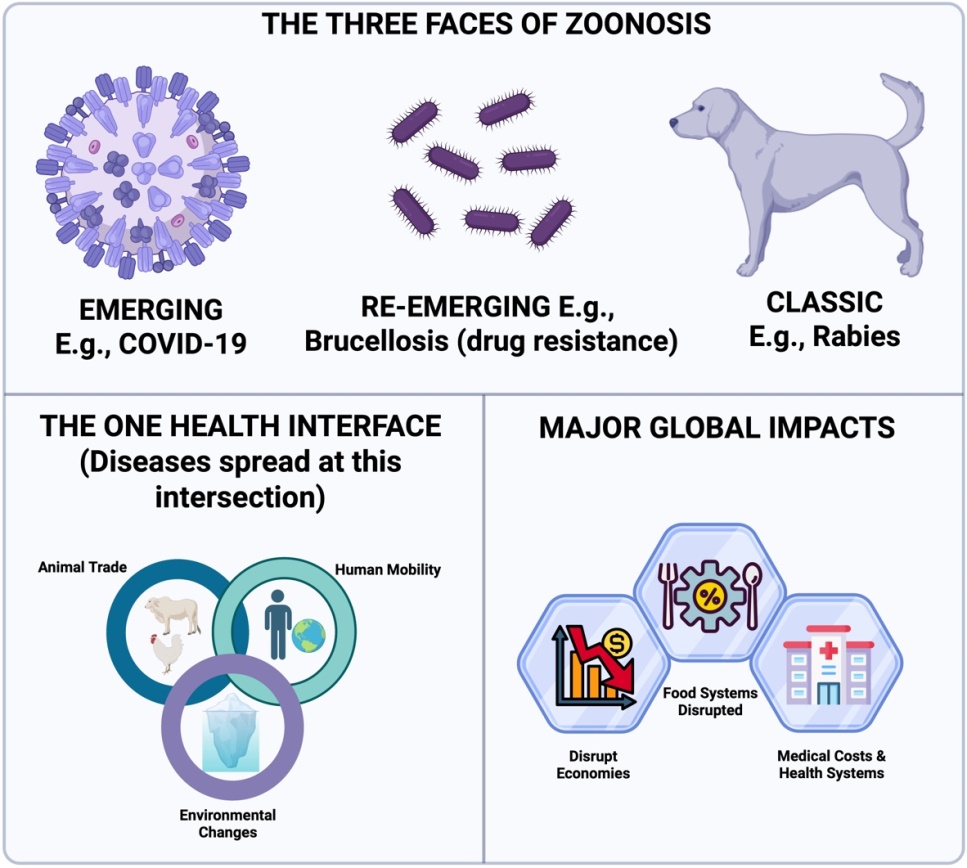
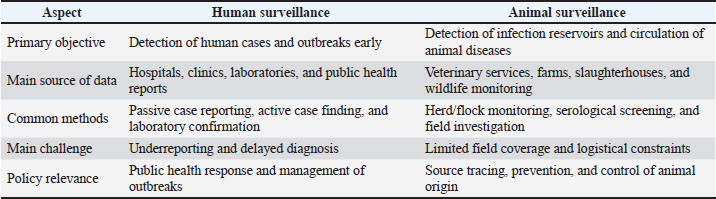
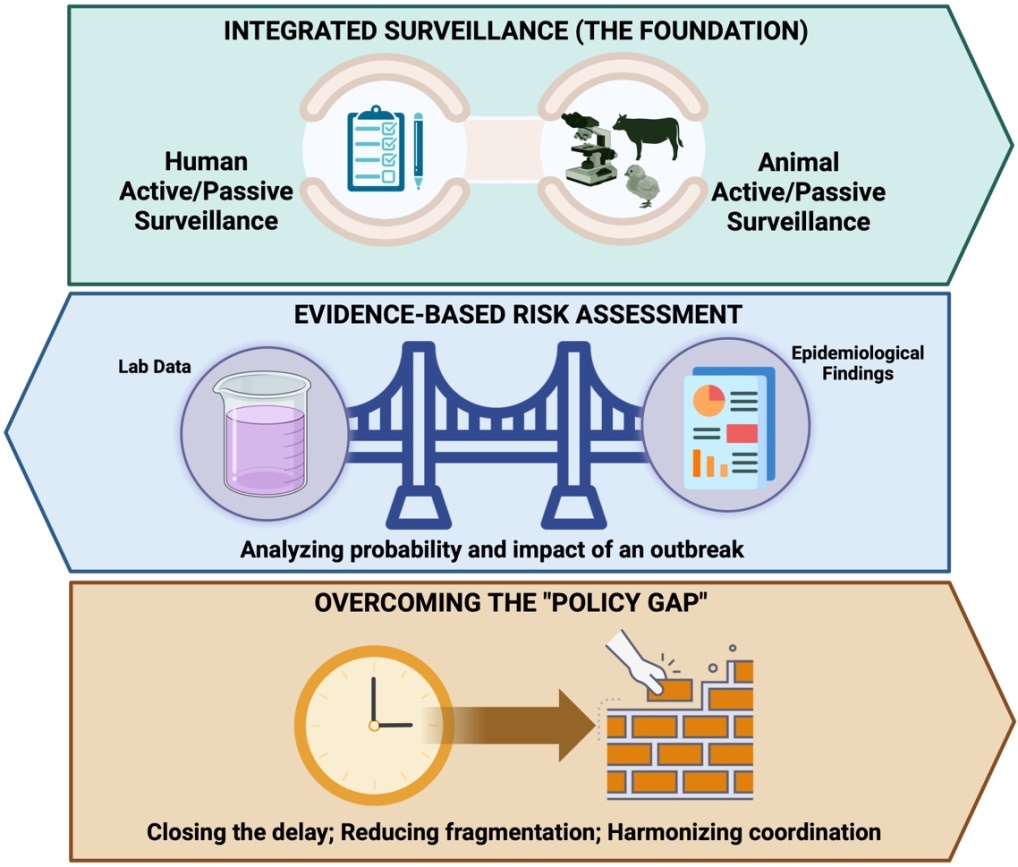
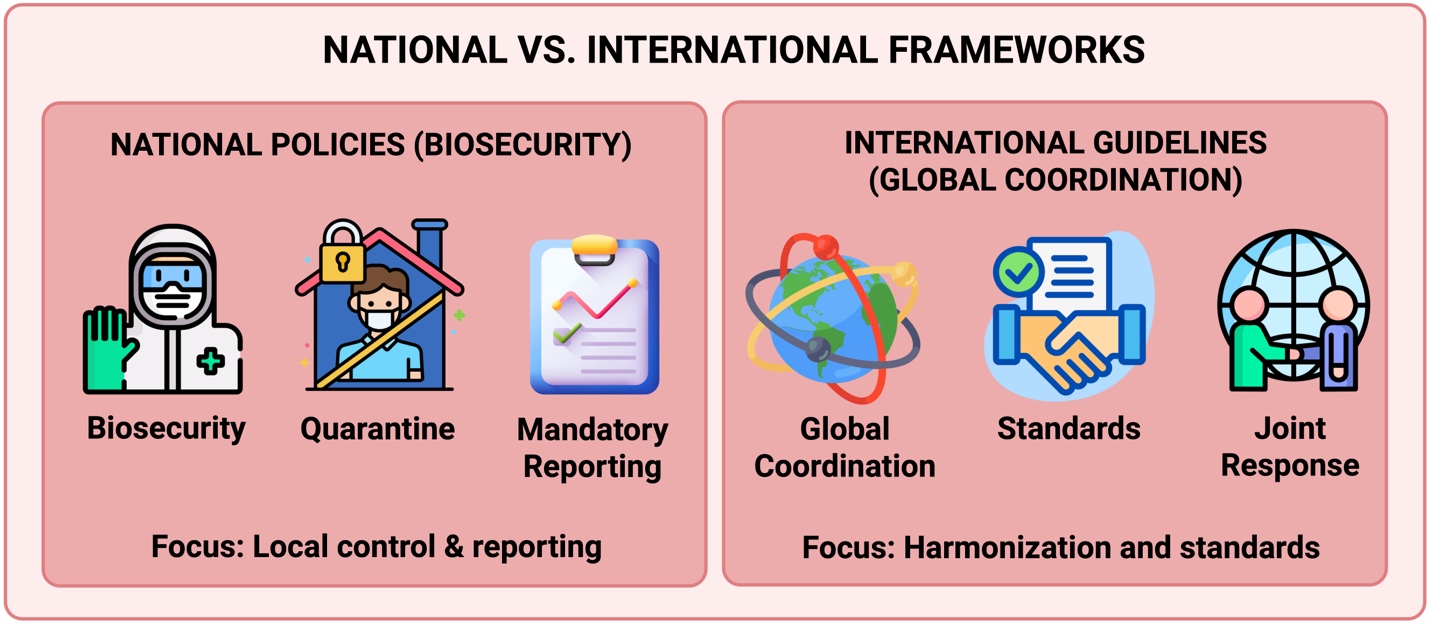
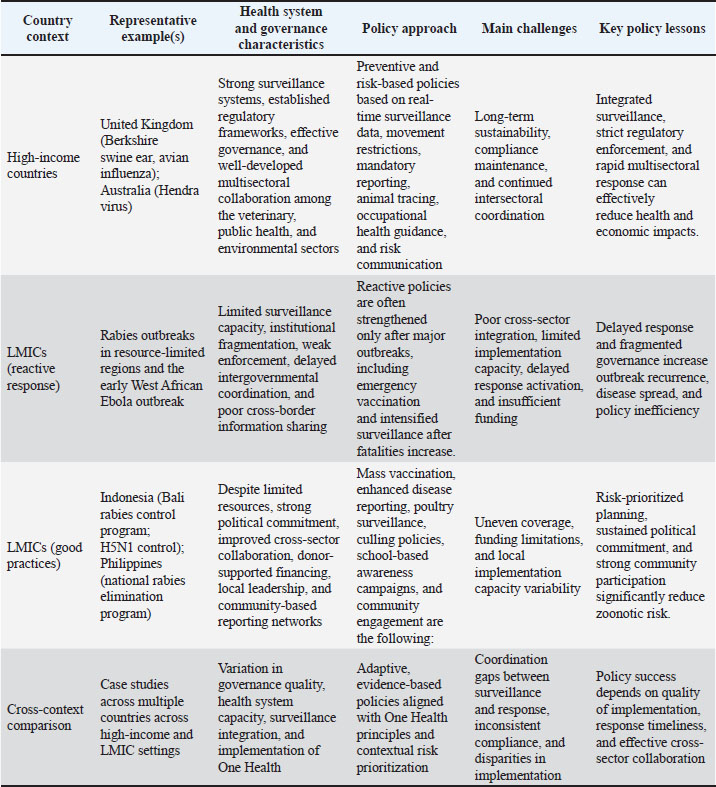
| How to Cite this Article |
| Pubmed Style Kurnaesih E, Amraeni Y, Nirwan M, Khairullah AR, Suryani A, Raharjo A, Haq SZN, Pratama BP, Wibowo S, Prihandani SS. Bridging surveillance and policy: Regulatory strategies for controlling zoonotic diseases. Open Vet. J.. 2026; 16(6): 3281-3303. doi:10.5455/OVJ.2026.v16.i6.1 Web Style Kurnaesih E, Amraeni Y, Nirwan M, Khairullah AR, Suryani A, Raharjo A, Haq SZN, Pratama BP, Wibowo S, Prihandani SS. Bridging surveillance and policy: Regulatory strategies for controlling zoonotic diseases. https://www.openveterinaryjournal.com/?mno=310031 [Access: June 26, 2026]. doi:10.5455/OVJ.2026.v16.i6.1 AMA (American Medical Association) Style Kurnaesih E, Amraeni Y, Nirwan M, Khairullah AR, Suryani A, Raharjo A, Haq SZN, Pratama BP, Wibowo S, Prihandani SS. Bridging surveillance and policy: Regulatory strategies for controlling zoonotic diseases. Open Vet. J.. 2026; 16(6): 3281-3303. doi:10.5455/OVJ.2026.v16.i6.1 Vancouver/ICMJE Style Kurnaesih E, Amraeni Y, Nirwan M, Khairullah AR, Suryani A, Raharjo A, Haq SZN, Pratama BP, Wibowo S, Prihandani SS. Bridging surveillance and policy: Regulatory strategies for controlling zoonotic diseases. Open Vet. J.. (2026), [cited June 26, 2026]; 16(6): 3281-3303. doi:10.5455/OVJ.2026.v16.i6.1 Harvard Style Kurnaesih, E., Amraeni, . Y., Nirwan, . M., Khairullah, . A. R., Suryani, . A., Raharjo, . A., Haq, . S. Z. N., Pratama, . B. P., Wibowo, . S. & Prihandani, . S. S. (2026) Bridging surveillance and policy: Regulatory strategies for controlling zoonotic diseases. Open Vet. J., 16 (6), 3281-3303. doi:10.5455/OVJ.2026.v16.i6.1 Turabian Style Kurnaesih, Een, Yunita Amraeni, Muhammad Nirwan, Aswin Rafif Khairullah, Adelia Suryani, Agung Raharjo, Siti Zaenab Nurul Haq, Bima Putra Pratama, Syahputra Wibowo, and Sri Suryatmiati Prihandani. 2026. Bridging surveillance and policy: Regulatory strategies for controlling zoonotic diseases. Open Veterinary Journal, 16 (6), 3281-3303. doi:10.5455/OVJ.2026.v16.i6.1 Chicago Style Kurnaesih, Een, Yunita Amraeni, Muhammad Nirwan, Aswin Rafif Khairullah, Adelia Suryani, Agung Raharjo, Siti Zaenab Nurul Haq, Bima Putra Pratama, Syahputra Wibowo, and Sri Suryatmiati Prihandani. "Bridging surveillance and policy: Regulatory strategies for controlling zoonotic diseases." Open Veterinary Journal 16 (2026), 3281-3303. doi:10.5455/OVJ.2026.v16.i6.1 MLA (The Modern Language Association) Style Kurnaesih, Een, Yunita Amraeni, Muhammad Nirwan, Aswin Rafif Khairullah, Adelia Suryani, Agung Raharjo, Siti Zaenab Nurul Haq, Bima Putra Pratama, Syahputra Wibowo, and Sri Suryatmiati Prihandani. "Bridging surveillance and policy: Regulatory strategies for controlling zoonotic diseases." Open Veterinary Journal 16.6 (2026), 3281-3303. Print. doi:10.5455/OVJ.2026.v16.i6.1 APA (American Psychological Association) Style Kurnaesih, E., Amraeni, . Y., Nirwan, . M., Khairullah, . A. R., Suryani, . A., Raharjo, . A., Haq, . S. Z. N., Pratama, . B. P., Wibowo, . S. & Prihandani, . S. S. (2026) Bridging surveillance and policy: Regulatory strategies for controlling zoonotic diseases. Open Veterinary Journal, 16 (6), 3281-3303. doi:10.5455/OVJ.2026.v16.i6.1 |


