





| Research Article | ||
Open Vet. J.. 2026; 16(6): 3678-3689 Open Veterinary Journal, (2026), Vol. 16(6): 3678-3689 Research Article Growth performance, intestinal morphometrics, and nutrient digestibility of betaine-supplemented Kedu chickens reared at different altitudesSalma Aulia Rahma1, Adi Ratriyanto2*, Sigit Prastowo2 and Ahfath Difni Sayogo21Master Program of Animal Science, Faculty of Animal Science, Universitas Sebelas Maret, Surakarta, Indonesia 2Department of Animal Science, Faculty of Animal Science, Universitas Sebelas Maret, Surakarta, Indonesia *Corresponding Author: Adi Ratriyanto. Department of Animal Science, Faculty of Animal Science, Universitas Sebelas Maret, Surakarta, Indonesia. Email: ratriyanto [at] staff.uns.ac.id Submitted: 13/02/2026 Revised: 11/05/2026 Accepted: 18/05/2026 Published: 11/06/2026 © 2025 Open Veterinary Journal
AbstractBackground: Kedu chicken is a local variety found in Indonesia. Its development is mostly limited to its natural habitat in Temanggung. Aim: This study aimed to investigate the effects of rearing altitude and dietary betaine supplementation on the growth performance, nutrient digestibility, and intestinal morphometrics of Kedu chickens. Methods: A total of 240 male Kedu chickens were allocated to a 2 × 2 factorial design with 6 replicates, each consisting of 10 birds. The first factor was rearing altitude (HA in situ vs LA ex situ), and the second factor was betaine supplementation (0 vs. 0.15%). Growth performances, intestinal morphometric data, and nutrient digestibility data were analyzed using two-way analysis of variance (ANOVA). Results: There was no significant interaction between altitude and betaine supplementation (p > 0.05). Chickens reared in HA exhibited lower feed intake and feed conversion than those reared in LA (p < 0.05). They also showed longer ileum and greater intestinal weights, as well as higher dry matter, organic matter (OM), and crude protein (CP) digestibility (p < 0.05). Dietary betaine increased the average and final body weights and reduced feed conversion compared with control (p < 0.05). These improvements are associated with enhanced OM and CP digestibility and increased jejunal weight and villus height (p < 0.05). Conclusion: Both rearing altitude and dietary betaine supplementation independently affected the performance and digestive physiology of Kedu chickens, with no interactive effects observed. Betaine can be considered an effective nutritional strategy for enhancing growth and improving digestive efficiency in Kedu chickens reared at various altitudes. Keywords: Altitudes, Betaine, Intestinal morphometry, Kedu chicken, Nutrient digestibility. IntroductionIndonesia has a wide variety of local chicken varieties, both native breeds and those adapted over decades or centuries. This diversity represents a significant genetic resource that could be further explored to enhance productivity. A notable local breed is the Kedu chicken, which is recognized for its dual-purpose capabilities in meat and egg production (Sutopo et al., 2021; Sartika et al., 2023). Kedu chickens hold significant genetic, economic, and cultural value, particularly in their native region of Temanggung Regency, Indonesia. The most common varieties of Kedu chickens are black, with fewer white and striped varieties (Mustaqiem et al., 2024). Kedu chickens weigh approximately 30 g at hatching. By 12 weeks of age, they can grow to approximately 1.1 kg, with a feed conversion ratio of 4.4. Adult roosters can weigh up to 2.4 kg, whereas adult hens can weigh up to 1.7 kg. Kedu hens lay approximately 160 eggs per year, with each egg weighing between 35 and 40 g. During peak production, hen-day production can reach up to 68% (Sutopo et al., 2021; Mustofa et al., 2026). Temanggung Regency is situated at a high altitude (HA), between 500 and 1450 meters above sea level (asl), with temperatures ranging from 20 °C to 30 °C. The in situ rearing of Kedu chickens has demonstrated stable production performance, supported by suitable environmental conditions, climate, and locally developed husbandry practices (Mustofa et al., 2026). However, Kedu chicken development remains relatively limited to Temanggung (Mustaqiem et al., 2024). Kedu chicken development outside their native habitat (ex situ) faces significant challenges, primarily due to their low adaptability to high temperatures in low-altitude (LA) regions (Siddiqui et al., 2022; Mustofa et al., 2026). Hot environments create significant stress for chickens and pose a major challenge for poultry production (Siddiqui et al., 2022; Mangan and Siwek, 2024). Heat stress adversely affects physiology, growth, egg production, and immune response (Gheyas et al., 2021; Nayak et al., 2023; Kebede et al., 2024). Ex situ-raised Kedu chickens exhibited high mortality rates and low productivity (Hidayat and Asmarasari, 2015; Ismoyowati et al., 2022). Therefore, managing ex situ rearing requires strategies to enhance tolerance to environmental conditions, particularly heat (Bhawa et al., 2023). Supplementation with osmolytic compounds, such as betaine, is a promising nutritional approach. Betaine has the potential to act as an anti-heat stress agent by helping cells maintain osmotic balance, preventing damage from oxidative stress, and stabilizing body pH, particularly under high-temperature conditions (Ratriyanto and Mosenthin, 2018; Al Sulaiman et al., 2024). Additionally, betaine’s osmolytic function stabilizes intestinal cells and microflora, thereby improving nutrient digestibility and contributing to optimal performance (Ratriyanto and Mosenthin, 2018). Including betaine in feed can enhance the feed intake (FI), efficiency, and productivity of chickens exposed to heat stress (Al‐Sagan et al., 2021; Elmahdy et al., 2025; Rahman et al., 2025). Moreover, betaine supplementation can lower rectal temperature and respiratory rate in poultry, indicating its positive effects on heat-stressed birds (Rantau et al., 2022). Most research on hot environments has focused on commercial chickens, highlighting a gap in understanding the responses of natural varieties. Despite evidence that native chickens in hot regions face higher mortality and reduced productivity (Hidayat and Asmarasari, 2015; Ismoyowati et al., 2022), information on raising Kedu chickens in LA with temperatures >30 °C and relative humidity (RH) 64% to 94%, particularly with betaine supplementation, is limited. It is hypothesized that dietary betaine supplementation would improve the performance of Kedu chickens by mitigating heat stress, particularly in LA. Therefore, this study investigated the effects of different altitudes and betaine supplementation on the growth performance, intestinal morphometry, and nutrient digestibility of Kedu chickens. Materials and MethodsExperimental design, animals, and dietInitially, 600 1-day-old black Kedu chicken (mixed sex) obtained from a single-batch hatchery were reared in Temanggung until 4 weeks of age to allow them to grow in their natural habitat. At 4 weeks of age, 240 male chickens were selected, with an average initial body weight of 412.75 ± 9.39 g. Chickens were selected at 4 weeks of age to facilitate sex separation and ensure greater uniformity among the experimental birds. Sex separation was conducted through vent sexing, and differences in comb size, wattles, and tail feather growth were examined. Birds were distributed in a completely randomized design to four treatment groups in a 2 × 2 factorial design with 6 replicates, each consisting of 10 birds, totaling 24 experimental units. The first factor was rearing altitude, with 2 sites: Temanggung (representing HA) and Karanganyar (representing LA). The second factor was betaine supplementation: a control diet without betaine and a diet supplemented with 0.15% betaine (anhydrous betaine powder with 96% purity; Betafin, Danisco, Finland). Betaine was added on top, and the selected level was based on previous studies (Awad et al., 2014; Ratriyanto et al., 2014). The birds were raised in pens for 8 weeks (until 12 weeks of age) under standardized management conditions to assess the effects of the treatment, and the birds were ready for harvest at 12 weeks of age (Suthama et al., 2025; Tiya et al., 2026). The experiment was conducted from November 2024 to January 2005, coinciding with the rainy season. The experiment in Temanggung was conducted at the Local Chicken Farming Unit (altitude: 615 m asl, latitude: 7°17'47.5"S, longitude: 110°10'47.5"E). The other experiment was performed at the Experimental Farm of Sebelas Maret University in Karanganyar (altitude: 135 m asl, latitude: 7°31'03.0"S, longitude: 110°50'43.7"E). The temperature and RH were continuously recorded using a Lutron HT-3027SD (Lutron, Taiwan) placed at the bird level inside the housing units. The temperature-humidity index (THI), which integrates the effect of temperature and humidity, was calculated as follows: THI=0.85Tdb + 0.15 Twb, where Tdb=dry-bulb temperature and Twb=wet-bulb temperature, respectively (Tao and Xin, 2003). The microclimate conditions during the study, particularly in LA, were mostly outside the poultry thermoneutral zone (Table 1). A THI of 76 indicates the onset of heat stress, whereas a THI above 80 indicates severe heat stress (Nayak et al., 2023; Kenchaiwong et al., 2025). Table 1. Microclimate conditions at HA and LA.
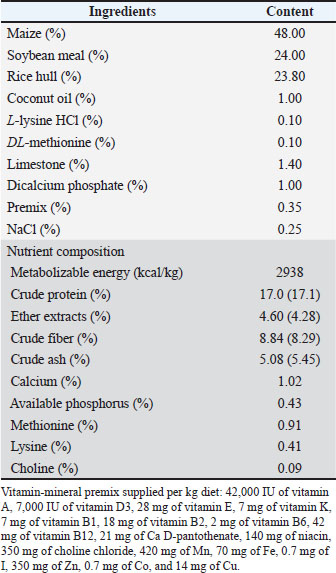
Diet and water were provided ad libitum. A basal diet was developed according to the nutrient requirements of local chickens (Table 2) (Indonesian National Standard, 2013). Table 2. Composition and nutrient content of the basal diet.
Growth performance measurementsDietary treatments lasted for 8 weeks under natural temperature conditions at each site. FI was recorded daily, and body weight gain was measured weekly. The FCR was calculated as the ratio of FI to weight gain (Elsherbeni et al., 2025). FI and FCR were corrected for mortality. Intestinal morphometric measurementsAt the end of the experiment, two chickens per replicate (with body weights close to the replicate mean) were selected for intestinal morphometric evaluation. The birds were humanely euthanized by cervical dislocation, and their digestive tracts were carefully excised. The small intestine was removed, and the length of the duodenum, jejunum, and ileum was measured using a flexible measuring tape. The weight of each segment was measured using a digital balance with a precision of 0.01 g. Total intestinal length and weight were calculated as the sum of all measured segments (Ratriyanto and Sunarto, 2020). The villus height and crypt depth were determined using a 1-cm section of each distal segment (Santos et al. 2018). Subsequently, the samples were immersed in a 10% formalin solution for 24 to 48 hours to preserve the cellular structures. Following fixation, the tissues were transferred to a series of ethanol solutions and then cleaned by transferring to two stages of xylene. The samples were embedded in paraffin, sectioned to 5 µm using a microtome, mounted on adhesive glass, and stained with hematoxylin-eosin. A cross-section of each sample was captured at 40X magnification using a digital camera (OptiLab Viewer) mounted on a microscope. The villus/crypt ratio was calculated as the villus height divided by the mucosal crypt depth (Santos et al., 2018). The absorptive surface area of the villus was calculated using the following formula: 2π × (average villus width/2) × villus height (Prakatur et al., 2019). Measurement of nutrient digestibilityAt the end of the experiment, 48 chickens (2 per replicate) were randomly selected to measure the digestibility of each treatment for a 5-day total collection (Attia et al., 2021). The chickens were reared in individual cages, and their FI was measured daily. The adaptation period before collection was 3 days. During collection, the excreta were periodically spread with 0.2-N H2SO4 to reduce additional bacterial fermentation. Excreta were collected daily, pooled, homogenized within each replicate, and sun-dried until completely dry and ground. Diet and excreta samples were ground using a 1.0-mm screen before analysis. Crude protein (CP) was determined using the Kjeldahl method, ether extracts (EE) were determined using the Soxhlet extraction method, crude fiber (CF) was determined using the gravimetry method (AOAC 962.09), and crude ash (CA) was determined by dry ashing (AOAC 942.05) as outlined by the Association of Official Analytical Chemists (2004). Nutrient digestibility coefficients were calculated according to Emamzadeh and Yaghobfar (2009), as follows:
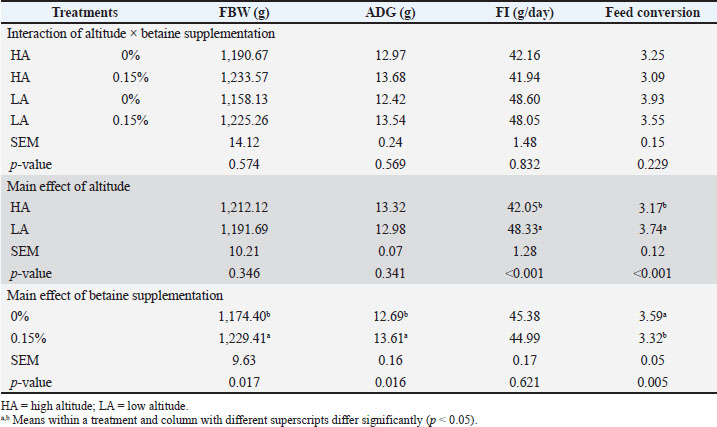
Statistical analysisData were assessed for normal distribution using the Shapiro-Wilk test and for homogeneity using Levene’s test. The data were subjected to a two-way analysis of variance based on the following model: yijk=µ + αi + βj + αβij + Ԑijk, where µ=the general mean, αi=the effect of altitude, βj=the effect of betaine supplementation, αβij=the interaction effect of altitude and betaine supplementation, and Ԑijk=an experimental error. If the variance analysis showed a significant effect, the data were subjected to Tukey’s test at p < 0.05. All analyses were performed using R version 3.5.3 (R Core Team, 2019). Ethical approvalAll procedures involving animals were conducted in accordance with the institutional guidelines for the care and use of animals. This study was approved by the Animal Ethics Committee at the Faculty of Animal Science, Universitas Sebelas Maret in Surakarta, Indonesia (No. 699/UN27.14/TA.00.03/2025). ResultsGrowth performancesNo interaction was observed between rearing altitude and betaine supplementation on the growth performance of Kedu chickens (Table 3). The final body weight (FBW) and average daily gain (ADG) did not differ between altitudes; however, the chickens reared in HA consumed less feed than those reared in LA, resulting in a lower feed conversion (p < 0.01). Furthermore, dietary betaine supplementation enhanced growth performance, as indicated by higher FBW and ADG, and was associated with a lower FCR compared with that in birds without betaine supplementation (p < 0.05). Table 3. Effects of rearing altitude and dietary betaine supplementation on Kedu chicken growth performance.
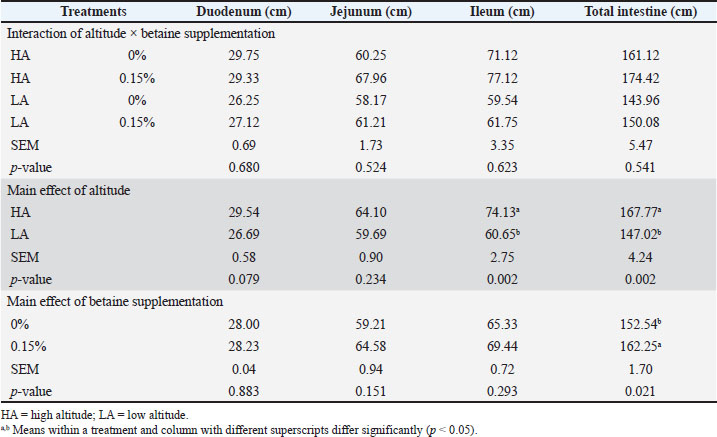
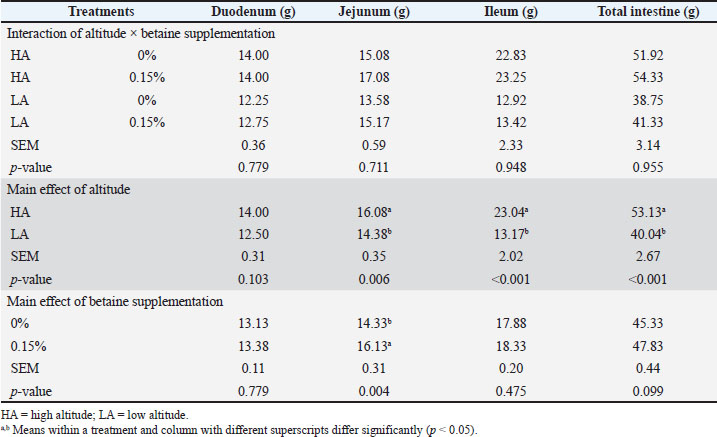
Intestinal morphometricNo interaction was observed between rearing altitude and betaine supplementation on intestinal length (Table 4) and weight of Kedu chickens (Table 5). Birds reared in HA exhibited a longer intestine, with a longer ileum (p < 0.05), and a tendency toward a longer duodenum than those reared in LA (p=0.079). Accordingly, the birds reared in HA had a heavier jejunum, ileum, and total intestine than those reared in LA (p < 0.05). Betaine supplementation increased small intestinal length (p=0.021) without affecting segment length. Betaine supplementation also increased the jejunum weight (p=0.04) and tended to increase the total intestinal weight (p=0.099). Table 4. Effects of altitude and dietary betaine supplementation on intestinal length in Kedu chickens.
Table 5. Effects of rearing altitude and dietary betaine supplementation on intestinal weight of Kedu chickens.
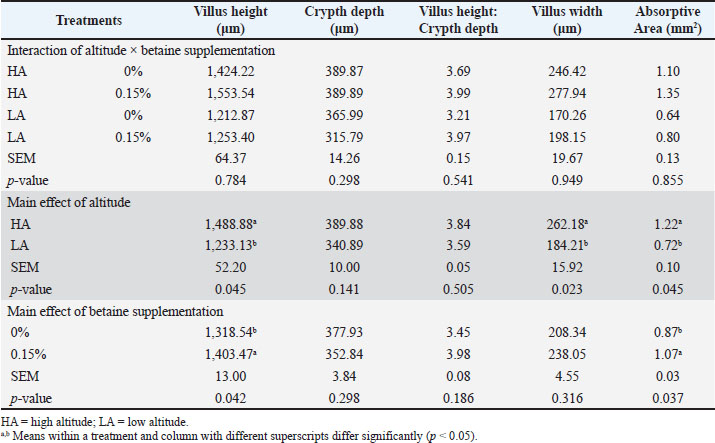
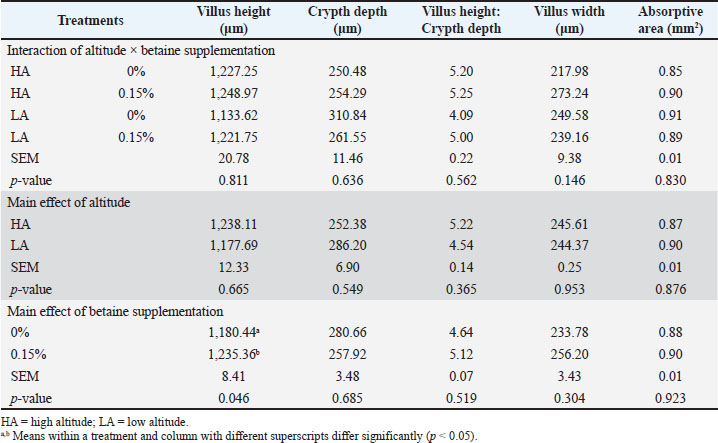
No interaction was observed between rearing altitude and betaine supplementation on the morphometry of the duodenum (Table 6), jejunum (Table 7), and ileum (Table 8). The birds reared in HA showed higher and wider villi, as well as an increased surface area for absorption (p < 0.05), compared with those reared in LA (Table 6; Fig. 1). However, the rearing altitude did not affect jejunum and ileum morphometry. Furthermore, betaine supplementation increased the villus height in the duodenum and jejunum and the surface absorption area in the duodenum (p < 0.05). Table 6. Effects of rearing altitude and dietary betaine supplementation on duodenum morphometry in Kedu chickens.
Table 7. Effects of rearing altitude and dietary betaine supplementation on the jejunum morphometry of Kedu chickens.
Table 8. Effects of altitude and dietary betaine supplementation on ileum morphometry in Kedu chickens.
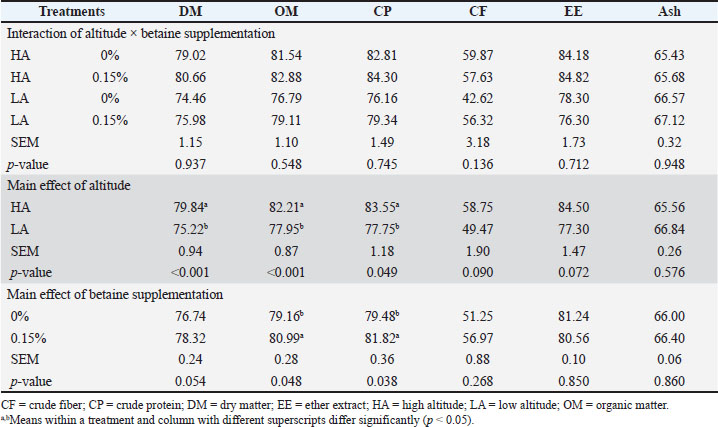
Fig. 1. Example of duodenal morphometry of Kedu chickens fed the control diet (A) and betaine-supplemented diet (B); CD=crypt depth; VH=villus height; VW=villus width. Nutrient digestibilityNo interaction was observed between the effect of rearing altitude and betaine supplementation on nutrient digestibility in Kedu chickens (Table 9). Birds raised in HA exhibited higher digestibility of DM, organic matter (OM), and CP (p < 0.05), and there was a tendency for improved digestibility of CF and EE than in LA (p < 0.1). Additionally, betaine supplementation enhanced the digestibility of OM, CP (p < 0.05), and DM (p=0.054). Table 9. Effects of rearing altitude and dietary betaine supplementation on nutrient digestibility (%) in Kedu chickens.
DiscussionAltitude and dietary betaine supplementation independently influenced growth performance, intestinal development, and nutrient digestibility in Kedu chickens. The absence of an interaction between environmental and nutritional factors indicates that they operate through distinct physiological pathways. Differences in altitude primarily reflect variations in thermal load and humidity (Mustofa et al., 2026), whereas betaine acts as an osmolyte and a methyl donor at the cellular and metabolic levels (Uyanga et al., 2022; Onagbesan et al., 2023). Chickens raised at HA exhibited lower FI while maintaining similar ADG and FBW, resulting in lower FCR. This finding is associated with more efficient nutrient use in thermally favorable HA environments. The high temperature and THI observed in LA areas indicate chronic heat stress exposure, which suppresses appetite, alters physiological responses, and increases energy expenditure for thermoregulation, thereby impairing growth performance (Liu et al., 2020; Rostagno, 2020). The lower FCR in HA chickens appears to be associated with enhanced intestinal development, particularly greater intestinal length and weight, which may increase nutrient absorption. Cooler microclimates at HA reduce thermal stress, preserving intestinal blood flow and mucosal health, allowing more dietary energy to be utilized for growth rather than for thermoregulation (Brugaletta et al., 2022; Teyssier et al., 2022). Similar responses have been observed in Sentul chickens raised in hot lowland production systems, where heat stress indicators were higher than those in temperate regions (Mushawwir et al., 2025). In line with these findings, Mulyawan et al. (2026) reported that broiler chickens reared at HA (>600 m) have lower FI and FCR than those reared at LA (<300 m). The growth performance improvements, as indicated by enhanced FBW and ADG and decreased FCR due to betaine supplementation, were associated with increased intestinal morphometry and enhanced nutrient digestibility, indicating greater intestinal functional capacity. The beneficial impacts of betaine on broiler performance, as reflected in higher FBW and lower FCR, have been reported previously (Chen et al., 2018). Betaine donates its methyl group, thereby promoting protein deposition and enhancing muscle growth (Chen et al., 2018). Additionally, betaine stabilizes intestinal cells and microbes, leading to improved nutrient use (Uyanga et al., 2022). The superior growth performance of HA chickens was accompanied by pronounced intestinal morphometric changes. HA birds exhibited longer intestines and heavier jejunum and ileum, indicating enhanced digestive and absorptive capacity. Increased villus height, width, and absorptive surface area in the duodenum indicate improved mucosal activity (Liu et al., 2022). These morphometric changes are consistent with higher digestibility values and highlight the role of intestinal structure in mediating the environmental effects on growth performance. Heat stress conditions in LA can impair epithelial proliferation, shorten villi, and disrupt mucosal integrity through oxidative and inflammatory pathways (Liu et al., 2020; Ayo and Ogbuagu, 2021). Similarly, previous reports revealed that heat stress negatively affects villus structure and digestive function in broilers (Liu et al., 2022; Nanto-Hara et al., 2020). Furthermore, betaine supplementation enhanced intestinal development, as evidenced by increased total intestinal length, jejunal weight, villus height, and absorptive area in the proximal segments. These improvements facilitate the digestion and absorption of nutrients. Betaine supplementation increases villus height and villus-to-crypt ratio, demonstrating enhanced intestinal development and function (Awad et al., 2022; Du et al., 2025). Similarly, betaine improves gut function and nutrient use without inducing excessive morphological changes under environmental stress (Alhotan et al., 2021; Awad et al., 2022). Moreover, betaine protects the intestinal epithelium against osmotic disturbances, allowing for improved digestion and absorption (Ratriyanto and Mosenthin, 2018). In addition, neither altitude nor betaine significantly affected crypt depth or villus-to-crypt ratio, indicating that intestinal adaptations occurred without disrupting epithelial balance. The stable crypt morphometry suggests that improvements in absorptive capacity were achieved through enhancements in the villus structure rather than through increased epithelial turnover, which is associated with inflammation or stress (Marchewka et al., 2021; Gaweł et al., 2025). This stability in indigenous Kedu chickens indicates that betaine acts primarily as a protective agent (Ratriyanto et al., 2024). The enhanced nutrient digestibility observed in HA birds corresponded to improved intestinal morphometry. Furthermore, betaine administration selectively enhanced the digestibility of OM and CP, possibly due to its osmolytic properties by stabilizing intestinal cell structure and promoting intestinal microbiota growth (Hafeez et al., 2026). Previous studies have shown that nutrient digestibility is closely related to intestinal morphometry (Ratriyanto and Sunarto, 2020). Betaine acts as an osmolyte and accumulates in enterocytes to help maintain cell volume, protect membrane integrity, and preserve protein structure under osmotic and environmental stress. This stabilization enhances the integrity of the epithelial layer, leading to improved villus morphology and increased villus-to-crypt ratios in poultry (Metzler-Zebeli et al., 2009; Ratriyanto and Mosenthin, 2018; Ratriyanto and Sunarto, 2020). Additionally, as a methyl donor, betaine supports the synthesis of S-adenosylmethionine, which regulates the expression of genes involved in tight junction formation, such as occludin and claudins, thereby strengthening the intestinal barrier function (Liu et al., 2021). These enhancements in epithelial integrity foster a more stable luminal environment that supports beneficial microbiota. Improved epithelial integrity reduces the leakage of oxygen and inflammatory metabolites into the lumen, creating conditions that favor obligate anaerobic commensals while limiting facultative pathogenic bacteria. Dietary betaine has been linked to increased microbial diversity and a greater abundance of short-chain fatty acid (SCFA)-producing bacteria, along with reductions in pathogenic bacteria (Song et al., 2021; Pradista et al., 2022; Wang et al., 2025; Wahid et al., 2025). Thus, betaine promotes the growth of beneficial intestinal microbiota and supports overall gut health by stabilizing enterocyte structure and reinforcing barrier function. The influence of altitude on nutrient digestibility was more pronounced than that of dietary factors, highlighting the preeminent role of environmental conditions in modulating gastrointestinal function (Gheyas et al., 2021). In summary, these findings advance our understanding of the physiology of tropical poultry and demonstrate that strategically aligning the rearing environment with betaine can substantially improve the growth performance of indigenous chickens. This study has limitations because it did not observe stress indicators in chickens. Future research should focus on observing performance and stress indicators in chickens. ConclusionRearing chickens at HAs and betaine supplementation independently enhanced the growth performance and digestive function of Kedu chickens. Birds raised at HAs exhibited lower feed conversion rates despite lower feed consumption. This improvement is attributed to greater intestinal development and enhanced duodenal villus structure, resulting in higher DM, OM, and CP digestibility. Dietary betaine supplementation consistently increased FBW and ADG and lowered FCR, regardless of altitude. These benefits were associated with enhanced intestinal development and improved digestibility of nutrients. This demonstrates that betaine primarily acts through cellular and metabolic mechanisms, including osmoprotection and epithelial integrity preservation. Overall, high-altitude rearing enhances intestinal structure and digestive efficiency, whereas betaine supplementation supports intestinal function and nutrient use. These complementary strategies offer a sustainable approach to enhancing the productivity of indigenous chickens in tropical environments. AcknowledgmentsThe authors would like to thank Rahayu Kusumaningrum from the Local Chicken Farming Unit in Temanggung for granting permission for the experiment. Conflicts of interestThe authors have no conflicts of interest to declare. Funding This research was funded by the Directorate of Research and Community Service, Directorate General of Research and Development of the Ministry of Higher Education, Science, and Technology, with Contract Number: 105/C3/DT.05.00/PL/2025 and Research Assignment Agreement Number of LPPM UNS: 1186.1/UN27.22/PT.01.03/2025. Authors’ contributionsSAR conducted the experiment and data collection, ADS conducted the data analyses, and AR participated in the study design, conception, and funding acquisition. SP participated in the study design and conception. All authors are involved in the drafting of the manuscript and have read and approved the final version of the manuscript. Data availabilityAll data supporting the findings of this study are available within the manuscript. ReferencesAl Sulaiman, A.R., Abudabos, A.M. and Alhotan, R.A. 2024. Protective influence of supplementary betaine against heat stress by regulating intestinal oxidative status and microbiota composition in broiler chickens. Int. J. Biometeorol. 68, 279–288; doi:10.1007/s00484-023-02589-y Alhotan, R.A., Al Sulaiman, A.R., Alharthi, A.S. and Abudabos, A.M. 2021. Protective influence of betaine on intestinal health by regulating inflammation and improving barrier function in broilers under heat stress. Poult. Sci. 100, 101337; doi:10.1016/j.psj.2021.101337 Al-Sagan, A.A., Al-Yemni, A.H., Abudabos, A.M., Al-Abdullatif, A.A. and Hussein, E.O. 2021. Effect of different dietary betaine fortifications on performance, carcass traits, meat quality, blood biochemistry, and hematology of broilers exposed to various temperature patterns. Animals 11, 1565; doi: 10.3390/ani11061555 Association of Official Analytical Chemists, AOAC. 2004. Official Methods of Analysis of the Association of Official Analytical Chemists. 18th ed. Washington, DC: AOAC. Attia, Y.A., Bovera, F., Al-Harthi, M.A., El-Din, A.E.R.E.T. and Said Selim, W. 2021. Supplementation of microbial and fungal phytases to low protein and energy diets: effects on productive performance, nutrient digestibility, and blood profiles of broilers. Agric 11, 414; doi:10.3390/agriculture11050414 Awad, A.L., Ibrahim, A.F., Fahim, H.N. and Beshara, M.M. 2014. Effect of dietary betaine supplementation on growth performance and carcass traits of domati ducklings under summer conditions. Egypt. Poult. Sci. J. 34, 1019–1038. Awad, W.A., Ruhnau, D., Gavrău, A., Dublecz, K. and Hess, M. 2022. Comparing effects of natural betaine and betaine hydrochloride on gut physiology in broiler chickens. Poult. Sci. 101, 102173; doi:10.1016/j.psj.2022.102173 Ayo, J.O. and Ogbuagu, N.E. 2021. Heat stress, haematology and small intestinal morphology in broiler chickens: insight into impact and antioxidant-induced amelioration. Worlds. Poult. Sci. J. 77, 949–968; doi:10.1080/00439339.2021.1959279 Bhawa, S., Morêki, J.C. and Machete, J.B. 2023. Poultry management strategies to alleviate heat stress in hot climates: a Review. J. World’s. Poult. Res. 13, 1–19; doi:10.36380/jwpr.2023.1 Brugaletta, G., Teyssier, J.R., Rochell, S.J., Dridi, S. and Sirri, F. 2022. A review of heat stress in chickens. Part I: insights into physiology and gut health. Front. Physiol. 13, 1–15; doi:10.3389/fphys.2022.934381 Chen, R., Zhuang, S., Chen, Y.P., Cheng, Y.F., Wen, C. and Zhou, Y.M. 2018. Betaine improves the growth performance and muscle growth of partridge shank broiler chickens via altering myogenic gene expression and insulin-like growth factor-1 signaling pathway. Poult. Sci. 97, 4297–4305; doi:10.3382/ps/pey303 Du, X., Pian, H., Zhao, D., Zhang, Y., Wu, X., He, J., Chen, L., Liu, F. and Yu, D. 2025. Enhancing gut-ovary health in aged laying hens: the impact of dietary betaine supplementation. Poult. Sci. 104, 104894; doi:10.1016/j.psj.2025.104894 Elmahdy, M.I., El-Kholy, M.S., Bassiony, S., Abolmaaty, S.M., Azzam, M.M., El-Kassas, S., Alagawany, M. and Lestingi, A. 2025. Effect of dietary betaine (CH3)3N+CH2CO−2 fortifications on growth performance, carcass traits, and blood biochemistry of broilers under heat stress condition. Results. Chem. 15, 102178; doi:10.1016/j.rechem.2025.102178 Elsherbeni, A.I., Aldhalmi, A.K., Youssef, I.M., Kamal, M., Ashour, E.A., Moustafa, M., Al-Kahtani, A., Al-Shehri, M. and Abd El-hack, M.E. 2025. The role of trimethylglycine (betaine) as an anti-heat stress agent in sustainable poultry production: enhancing growth, stress resilience, and nutrient utilization. J. Therm. Biol. 130, 104152; doi:10.1016/j.jtherbio.2025.104152 Emamzadeh, N.A. and Yaghobfar, A. 2009. Evaluation of protein digestibility in canola meals between caecectomised and intact adult cockerels. World. Acad. Sci. Eng. Technol. 3, 113–115. Gaweł, A., Bobrek, K. and Madej, J.P. 2025. Early posthatch feeding influences small intestine development in broiler chickens. Poult. Sci. 104, 105861; doi:10.1016/j.psj.2025.105861 Gheyas, A.A., Vallejo-Trujillo, A., Kebede, A., Lozano-Jaramillo, M., Dessie, T., Smith, J. and Hanotte, O. 2021. Integrated environmental and genomic analysis reveals the drivers of local adaptation in African indigenous chickens. Mol. Biol. Evol. 38, 4268–4285; doi:10.1093/molbev/msab156 Hafeez, A., Saleem, U., Naz, S., Khan, R.U., Israr, M., Abudabos, A. and Alhidary, I.A. 2026. Effects of betaine on performance, blood biochemistry, nutrient utilization and gut health in coccidia-infected broilers. Vet. Med. Sci. 12, e70779; doi:10.1002/vms3.70779 Hidayat, C. and Asmarasari, S.A. 2015. Native chicken production in Indonesia: a Review. J. Peternak. Indones. 17(1), 1–11. Indonesian National Standard. 2013. Native Chicken Feed for Grower (4-20 Weeks - SNI 7783.2:2013). Jakarta: Indonesian National Standardization Agency. Ismoyowati, I., Tugiyanti, E., Indrasanti, D., Setianto, N.A. and Armelia, V. 2022. Developing strategy to reduce the mortality of native chicken using qualitative modeling. Bul. Peternak. 46, 54–62; doi:10.21059/buletinpeternak.v46i1.70195 Kebede, F.G., Derks, M.F.L., Dessie, T., Hanotte, O., Barros, C.P., Crooijmans, R.P.M.A., Komen, H. and Bastiaansen, J.W.M. 2024. Landscape genomics reveals regions associated with adaptive phenotypic and genetic variation in Ethiopian indigenous chickens. BMC Genomics 25(1), 1–20; doi:10.1186/s12864-024-10193-6 Kenchaiwong, W., Promket, D., Sirisan, V., Chankitisakul, V., Kananit, S. and Boonkum, W. 2025. Genetic evaluation of growth traits in black-boned and Thai native synthetic chickens under heat stress. Animals 15, 2314; doi:10.3390/ani15152314 Liu, G., Zhu, H., Ma, T., Yan, Z., Zhang, Y., Geng, Y., Zhu, Y. and Shi, Y. 2020. Effect of chronic cyclic heat stress on the intestinal morphology, oxidative status and cecal bacterial communities in broilers. J. Therm. Biol. 91, 102619; doi:10.1016/j.jtherbio.2020.102619 Liu, W.C., Guo, Y., An, L.L. and Zhao, Z.H. 2021. Protective effects of dietary betaine on intestinal barrier function and cecal microbial community in indigenous broiler chickens exposed to high temperature environment. Environ. Sci. Pollut. Res. 28, 10860–10871; doi:10.1007/s11356-020-11326-6 Liu, W.C., Pan, Z.Y., Zhao, Y., Guo, Y., Qiu, S.J., Balasubramanian, B. and Jha, R. 2022. Effects of heat stress on production performance, redox status, intestinal morphology and barrier-related gene expression, cecal microbiome, and metabolome in indigenous broiler chickens. Front. Physiol. 13, 1–13; doi:10.3389/fphys.2022.890520 Mangan, M. and Siwek, M. 2024. Strategies to combat heat stress in poultry production-A Review. J. Anim. Physiol. Anim. Nutr. (Berl). 108, 576–595; doi:10.1111/jpn.13916 Marchewka, J., Sztandarski, P., Zdanowska-Sąsiadek, Z., Adamek-Urbańska, D., Damaziak, K., Wojciechowski, F., Riber, A.B. and Gunnarsson, S. 2021. Gastrointestinal tract morphometrics and content of commercial and indigenous chicken breeds with differing ranging profiles. Animals 11, 1881; doi:10.3390/ani11071881 Metzler-Zebeli, B.U., Eklund, M. and Mosenthin, R. 2009. Impact of osmoregulatory and methyl donor functions of betaine on intestinal health and performance in poultry. World’s. Poult. Sci. J. 65, 419–442; doi:10.1017/S0043933909000300 Mulyawan, A., Utama, C.S., Mariyono, J. and Fawaid, M.Z. 2026. Production and economic performance of broiler farms at different altitude: a case study of Paranje partnership in West Java. J. Adv. Vet. Res. 16, 12–15. Mushawwir, A., Adriani, L., Permana, R. and Sahara, E. 2025. Egg production and physiological assessment of Sentul hens in temperate and lowland regions of West Java, Indonesia. Adv. Anim. Vet. Sci. 13, 413–420; doi:10.17582/journal.aavs/2025/13.2.413.420 Mustaqiem, M., Pradista, L.A., Pambuko, G., Kusumaningrum, R., Sumarno, L., Widyas, N., Ratriyanto, A. and Prastowo, S. 2024. Variation and inheritance pattern of exterior characteristics in Kedu chicken (Gallus gallus domesticus) population. J. Sains. Teknol. Peternak. 6(1), 29–36; doi:10.31605/jstp.v6i1.4197 Mustofa, F., Setiatin, E.T., Lestari, D.A., Sutopo, S., Alfaruq, M.N., Shinta, N., Hasna, F.N., Fadlilah, R., Ariyanti, D.T., Awwalin, R., Samsudewa, D. and Setiaji, A. 2026. Characteristics of production, reproduction, and sperm quality in Kedu chickens. J. Adv. Vet. Res. 16, 72–75. Nanto-Hara, F., Kikusato, M., Ohwada, S. and Toyomizu, M. 2020. Heat stress directly affects intestinal integrity in broiler chickens. J. Poult. Sci. 57, 284–290; doi:10.2141/jpsa.0190004 Nayak, N., Bhanja, S.K., Chakurkar, E.B., Sahu, A.R., Ashitha, K., Shivasharanappa, N. and D’Mello, A.D. 2023. Impact of bioclimatic factors on physio-biochemical and molecular response of slow-growing poultry reared in tropics. Trop. Anim. Health. Prod. 55, 253; doi:10.1007/s11250-023-03668-3 Onagbesan, O.M., Uyanga, V.A., Oso, O., Tona, K. and Oke, O.E. 2023. Alleviating heat stress effects in poultry: updates on methods and mechanisms of actions. Front. Vet. Sci. 10, 1–12; doi:10.3389/fvets.2023.1255520 Pradista, L.A., Prastowo, S., Widyas, N. and Ratriyanto, A. Metagenomic analysis of non-pathogenic and pathogenic cecal bacteria profiles in quail supplemented with betaine. In IOP Conf. Ser. Earth Environ. Sci., Bristol, UK: IOP Publishing, 2022, Vol. 1114, pp 1–2008. doi: 10.1088/1755-1315/1114/1/012008. Prakatur, I., Miskulin, M., Pavic, M., Marjanovic, K., Blazicevic, V., Miskulin, I. and Domacinovic, M. 2019. Intestinal morphology in broiler chickens supplemented with propolis and bee pollen. Animals 9, 301; doi:10.3390/ani9060301 R Core Team. 2019. R: a Language and Environment for Statistical Computing. Vienna, Austria: R Core Team. Rahman, S., Ahmed, T., Lahiry, A., Afrin, A., Dey, B., Paul, M. and Das, S.C. 2025. Ameliorative effects of different additives on growth, meat quality, and histological indices in heat-stressed broilers exposed to prolonged fasting. Livest. Sci. 298, 105750; doi:10.1016/j.livsci.2025.105750 Rantau, G.M., Ratriyanto, A. and Widyas, N. Effects of different floor spaces and betaine supplementation on performance and physiology of quails. In IOP Conf. Ser. Earth Environ. Sci., Bristol, UK: IOP Publishing, 2022 Vol. 1114, p 012011. doi:10.1088/1755-1315/1114/1/012011 Ratriyanto, A. and Mosenthin, R. 2018. Osmoregulatory function of betaine in alleviating heat stress in poultry. J. Anim. Physiol. Anim. Nutr. (Berl). 102, 1634–1650; doi:10.1111/jpn.12990 Ratriyanto, A. and Sunarto, S. 2020. Small intestine characteristics and nutrient retention in broiler chickens submitted to different protein regimes and betaine supplementation. Buletin. Peternak. 44, 15–21; doi:10.21059/buletinpeternak.v44i1.51142 Ratriyanto, A., Prastowo, S., Sofyan, A., Widyas, N. and Pradista, L.A. Osmoprotective function of betaine maintains the physiological parameters of quail raised in tropical environments. In IOP Conf. Ser. Earth Environ. Sci., Bristol, UK: IOP Publishing, 2024, Vol. 1360, p 12034; doi:10.1088/1755-1315/1360/1/012034 Rostagno, M.H. 2020. Effects of heat stress on the gut health of poultry. J. Anim. Sci. 98(1), 1–9; doi:10.1093/jas/skaa090 Santos, T.T.D., Dassi, S.C., Franco, C.R.C., Costa, C.R.V.D., Lee, S.A. and Fisher Da Silva, A.V. 2018. Influence of fibre and betaine on development of the gastrointestinal tract of broilers between hatch and 14 d of age. Anim. Nutr. 5, 163–173; doi:10.1016/j.aninu.2018.06.005 Sartika, T., Saputra, F. and Takahashi, H. 2023. Genetic diversity of eight native Indonesian chicken breeds on microsatellite markers. Hayati J. Biosci. 30, 122–130; doi:10.4308/hjb.30.1.122-130 Siddiqui, S.H., Khan, M., Kang, D., Choi, H.W. and Shim, K. 2022. Meta-analysis and systematic review of the thermal stress response: gallus gallus domesticus show low immune responses during heat stress. Front. Physiol. 13, 1–11; doi:10.3389/fphys.2022.809648 Song, Y., Chen, R., Yang, M., Liu, Q., Zhou, Y. and Zhuang, S. 2021. Dietary betaine supplementation improves growth performance, digestive function, intestinal integrity, immunity, and antioxidant capacity of yellow-feathered broilers. Ital. J. Anim. Sci. 20, 1575–1586; doi:10.1080/1828051X.2021.1986681 Suthama, N., Mangisah, I., Krismiyanto, L., Yunianto, V.D. and Mulyono, M. 2025. Feeding dietary inclusion of inulin on immune status, protein metabolism, and growth performance of Kedu chicken. J. Indones. Trop. Anim. Agric. 50, 22–23; doi:10.14710/jitaa.50.1.22-32 Sutopo, S., Ayu Lestari, D., Kurnianto, E. and Setiaji, A. 2021. Egg weight, sex and variety effects on body weights and growth ability of kedu chickens. Adv. Anim. Vet. Sci. 10, 1017–1022; doi:10.17582/journal.aavs/2022/10.5.1017.1022 Tao, X. and Xin, H. 2003. Acute synergistic effects of air temperature, humidity, and velocity on homeostasis of market-size broilers. Trans. Am. Soc. Agric. Eng. 46, 491–497. Teyssier, J.R., Preynat, A., Cozannet, P., Briens, M., Mauromoustakos, A., Greene, E.S., Owens, C.M., Dridi, S. and Rochell, S.J. 2022. Constant and cyclic chronic heat stress models differentially influence growth performance, carcass traits and meat quality of broilers. Poult. Sci. 101, 101963; doi:10.1016/j.psj.2022.101963 Tiya, N.A.D., Suprijatna, E., Mangisah, I., Agusetyaningsih, I., Pandupuspitasari, N.S. and Sugiharto, S. 2026. Kedu chickens exhibit better resilience to thermal stress during the two weeks prior to market age compared to broiler chickens. Trop. Anim. Sci. J. 49(2), 150–159; doi:10.5398/tasj.2026.49.2.150 Uyanga, V.A., Oke, E.O., Amevor, F.K., Zhao, J., Wang, X., Jiao, H., Onagbesan, O.M. and Lin, H. 2022. Functional roles of taurine, L-theanine, L-citrulline, and betaine during heat stress in poultry. J. Anim. Sci. Biotechnol. 13, 1–20; doi:10.1186/s40104-022-00675-6 Wahid, Z.A., Pradista, L.A., Prastowo, S., Soumeh, E.A. and Ratriyanto, A. 16s rRNA analysis revealed that betaine reduces pathogenic bacteria in growing pullets raised in a tropical environment. In IOP Conf. Ser. Earth Environ. Sci., Bristol, UK: IOP Publishing, 2025, Vol. 1490, p 12036; doi:10.1088/1755-1315/1490/1/012036 Wang, Y., Ma, S., Wu, L. and Zhao, R. 2025. Betaine promotes chicken growth through modulating gut microbiota and FXR-mediated activation of IGF genes. Poult. Sci. 104, 105455; doi:10.1016/j.psj.2025.105455 | ||



| How to Cite this Article |
| Pubmed Style Rahma SA, Ratriyanto A, Prastowo S, Sayogo AD. Growth performance, intestinal morphometrics, and nutrient digestibility of betaine-supplemented Kedu chickens reared at different altitudes. Open Vet. J.. 2026; 16(6): 3678-3689. doi:10.5455/OVJ.2026.v16.i6.39 Web Style Rahma SA, Ratriyanto A, Prastowo S, Sayogo AD. Growth performance, intestinal morphometrics, and nutrient digestibility of betaine-supplemented Kedu chickens reared at different altitudes. https://www.openveterinaryjournal.com/?mno=310346 [Access: June 26, 2026]. doi:10.5455/OVJ.2026.v16.i6.39 AMA (American Medical Association) Style Rahma SA, Ratriyanto A, Prastowo S, Sayogo AD. Growth performance, intestinal morphometrics, and nutrient digestibility of betaine-supplemented Kedu chickens reared at different altitudes. Open Vet. J.. 2026; 16(6): 3678-3689. doi:10.5455/OVJ.2026.v16.i6.39 Vancouver/ICMJE Style Rahma SA, Ratriyanto A, Prastowo S, Sayogo AD. Growth performance, intestinal morphometrics, and nutrient digestibility of betaine-supplemented Kedu chickens reared at different altitudes. Open Vet. J.. (2026), [cited June 26, 2026]; 16(6): 3678-3689. doi:10.5455/OVJ.2026.v16.i6.39 Harvard Style Rahma, S. A., Ratriyanto, . A., Prastowo, . S. & Sayogo, . A. D. (2026) Growth performance, intestinal morphometrics, and nutrient digestibility of betaine-supplemented Kedu chickens reared at different altitudes. Open Vet. J., 16 (6), 3678-3689. doi:10.5455/OVJ.2026.v16.i6.39 Turabian Style Rahma, Salma Aulia, Adi Ratriyanto, Sigit Prastowo, and Ahfath Difni Sayogo. 2026. Growth performance, intestinal morphometrics, and nutrient digestibility of betaine-supplemented Kedu chickens reared at different altitudes. Open Veterinary Journal, 16 (6), 3678-3689. doi:10.5455/OVJ.2026.v16.i6.39 Chicago Style Rahma, Salma Aulia, Adi Ratriyanto, Sigit Prastowo, and Ahfath Difni Sayogo. "Growth performance, intestinal morphometrics, and nutrient digestibility of betaine-supplemented Kedu chickens reared at different altitudes." Open Veterinary Journal 16 (2026), 3678-3689. doi:10.5455/OVJ.2026.v16.i6.39 MLA (The Modern Language Association) Style Rahma, Salma Aulia, Adi Ratriyanto, Sigit Prastowo, and Ahfath Difni Sayogo. "Growth performance, intestinal morphometrics, and nutrient digestibility of betaine-supplemented Kedu chickens reared at different altitudes." Open Veterinary Journal 16.6 (2026), 3678-3689. Print. doi:10.5455/OVJ.2026.v16.i6.39 APA (American Psychological Association) Style Rahma, S. A., Ratriyanto, . A., Prastowo, . S. & Sayogo, . A. D. (2026) Growth performance, intestinal morphometrics, and nutrient digestibility of betaine-supplemented Kedu chickens reared at different altitudes. Open Veterinary Journal, 16 (6), 3678-3689. doi:10.5455/OVJ.2026.v16.i6.39 |


