





| Research Article | ||
Open Vet. J.. 2026; 16(6): 3414-3421 Open Veterinary Journal, (2026), Vol. 16(6): 3414-3421 Research Article Effect of omega-3 injections on the characteristics of fresh semen during the breeding season in Awassi RamsAbd Alkader Saflo1*, Mahmod Alrashed1, Mohamad Zuher Al-Ahmad2 and Abdul-Mounem Al-Yasen31Department of Animal Production, Faculty of Veterinary Medicine, Hama University, Hama, Syria 2Department of Surgery and Obstetrics, Faculty of Veterinary Medicine, Hama University, Hama, Syria 3The Arab Center for the Studies of Arid Zones and Dry Lands (ACSAD), Damascus, Syria *Corresponding Author: Abd Alkader Saflo. Department of Animal Production, Faculty of Veterinary Medicine, Hama University, Hama, Syria. Email: abdsv93 [at] gmail.com Submitted: 08/03/2026 Revised: 01/05/2026 Accepted: 07/05/2026 Published: 05/06/2026 © 2025 Open Veterinary Journal
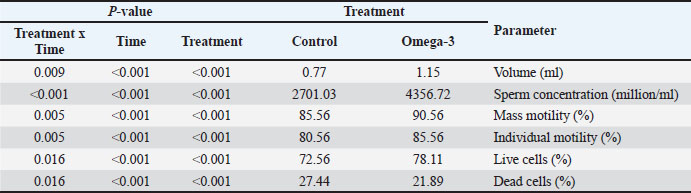
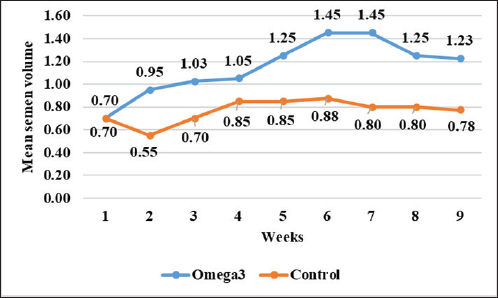
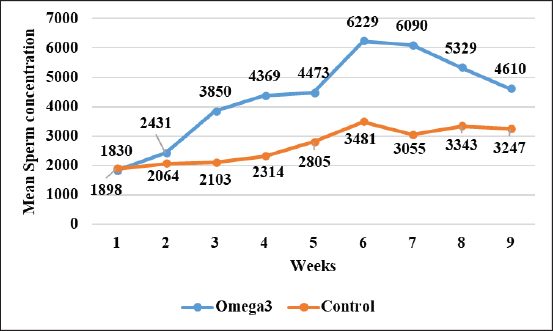
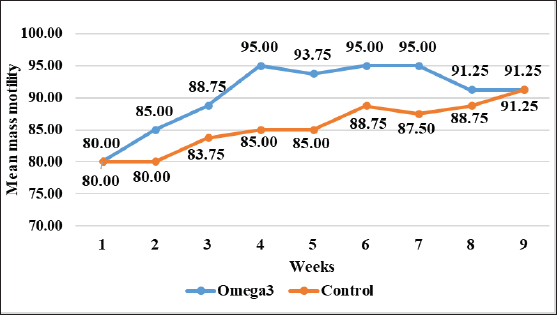
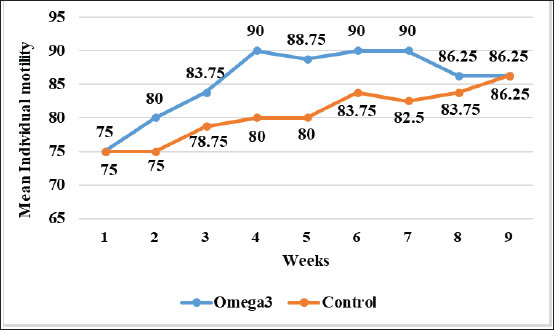
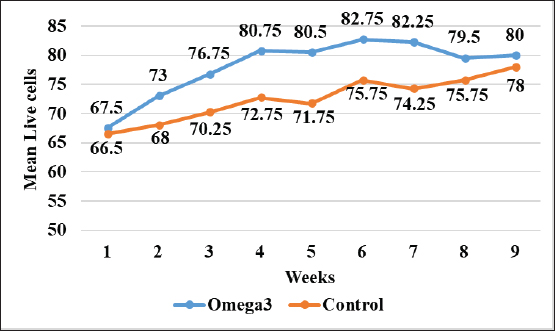
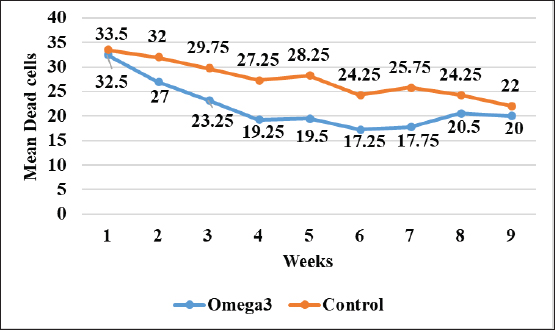
ABSTRACTBackground: Omega-3 polyunsaturated fatty acids (n-3) are essential fatty acids that are crucial for general health and reproduction. They cannot be synthesized by the body and must be obtained from dietary sources. Aim: This study aimed to evaluate the effect of intramuscular injection of omega-3 fatty acids on improving the quality of fresh semen during the breeding season in Syrian Awassi rams. Methods: The research was conducted at the Izra' Research Station, affiliated with the Arab Center for the Studies of Arid Zones and Dry Lands (ACSAD). The experiment used 8 rams with an average age of 3 to 5 years and an average weight of 89 ± 5 kg. The experimental animals were examined and confirmed to be free from reproductive diseases. The rams were randomly divided into 2 equal groups (4 rams/group). The rams in the first study group were injected with omega-3 polyunsaturated fatty acids at a dose of 3 ml three times at 15-day intervals, while the rams in the control group were left without receiving any polyunsaturated fatty acids and were injected with physiological saline following the same schedule as the first group. Semen samples were collected weekly for 9 weeks. The characteristics of the semen samples, including volume, sperm concentration (density), descriptive estimates, and the percentage values of mass and individual motility, as well as sperm viability, were determined. Results: The results showed significant differences (p ≤ 0.05) in favor of the Omega-3 group in all studied indicators, with a significant interaction between treatment and time. The improvement peaked in the 6th and 7th weeks of the experiment. Conclusion: We conclude that intramuscular injection of omega-3 fatty acids significantly improves the fresh semen indicators of Awassi rams, which positively reflects their reproductive efficiency. Keywords: Omega 3, Awassi rams, Semen. IntroductionLivestock represents a fundamental pillar of diverse agricultural systems, playing a pivotal role in securing human food supplies through various products, including meat, milk, and hides. The agricultural sector contributes an estimated 30% to 40% of the total global agricultural economy (Bélanger and Pilling, 2019). Among sheep breeds, the Awassi is one of the most prominent in Syria and is primarily distributed throughout the Levant, Iraq, and southern Turkey. This breed is distinguished by its dual-purpose production characteristics for both milk and meat, as well as its superior adaptability to harsh environmental conditions (Suliman et al., 2022). Reproductive efficiency is fundamental to sheep breeding productivity, directly impacting offspring numbers and consequently economic returns (Mamiru et al., 2024). Improving male reproductive performance, especially semen quality, is essential for maximizing flock productivity and relies heavily on appropriate nutritional and management strategies (Martin et al., 2010). Nutritional interventions, including omega-3 fatty acid supplementation, have shown promise in enhancing male fertility by improving semen parameters and sperm function (El-Desoky et al., 2023). Unsaturated fatty acids, including omega-3 (n-3), are essential fatty acids crucial for general health and reproduction; however, they cannot be synthesized in the body and must be supplied externally through the diet. They influence reproduction in males by converting alpha-linolenic acid (ALA, n-3) to eicosapentaenoic acid (EPA), both of which are precursors to eicosanoids, including prostaglandins (PGs). PGs play an important role in reproductive functions, with numerous effects of PGs on sperm motility and quality (Wathes et al., 2007). Furthermore, unsaturated fatty acids in sperm play a significant role in energy metabolism (Zaniboni et al., 2006), plasma membrane fluidity (Conquer et al., 2000), and several functions related to fertilization. Docosahexaenoic acid (DHA) and EPA, both members of the omega-3 family, affect the sperm membrane (Gulliver et al., 2012), thereby improving sperm quality and their ability to withstand storage and cryopreservation. Omega-3 fatty acids act on the phospholipid bilayers of the sperm plasma membrane, leading to an increased conversion between the extended and loop conformations, improving the flexibility of the sperm plasma membrane and conferring better viability (Speake et al., 2003). This is in contrast to saturated fatty acids, which reduce plasma membrane flexibility and consequently increase the number of dead sperm (Akhigbe et al., 2021). In addition, their antioxidant properties protect sperm from reactive oxygen species (ROS)-induced lipid peroxidation, which can impair motility and cause DNA damage (Akhigbe et al., 2021). However, in ruminants, rumen microbial biohydrogenation leads to the loss of more than 80% of unsaturated fatty acids such as omega-3 (Dock, 2022), with DHA disappearing by 80% within 6 hours of incubation with rumen fluid (Aldai et al., 2018). Therefore, the present study adopted intramuscular injection of omega-3 supplements instead of dietary supplementation to bypass this issue and provide a direct route for delivering EPA and DHA to plasma and membrane phospholipids, thereby potentially avoiding the effects of biohydrogenation. This study aimed to evaluate the effect of omega-3 injections on the parameters and quality of fresh semen in Awassi rams during the breeding season by examining semen volume, sperm concentration, mass, and individual motility, as well as viability (percentage of live and dead sperm cells). Materials and MethodsThis study was conducted on 8 Awassi rams with an average age of 3.5 years and an average body weight of 89 ± 5 kg. All animals’ management, housing, and feeding conditions were standardized. The research was conducted at the Izra'a Research Station in Daraa Governorate, affiliated with the Arab Center for the Studies of Arid Zones and Dry Lands (ACSAD), between May and June 2024. The rams were randomly divided into 2 equal groups (4 rams/group). The treatment group received intramuscular injections with a 3 ml dose of an omega-3 compound (HAT-VET Lab, Turkey) containing 125 mg DHA and 105 mg EPA three times at 15-day intervals. The control group was injected with physiological saline (3 ml) following the same intervals as the omega-3 injections administered to the first group. Semen collection and evaluationSemen was collected from each ram once weekly for 9 consecutive weeks using an artificial vagina. Semen volume was measured using graduated conical tubes. Sperm concentration was determined using an Accucell Photometer (IMV Technologies). For mass motility evaluation, a drop of fresh semen was placed on a clean, dry, pre-warmed slide without a coverslip and examined under a light microscope equipped with a heated stage at low magnification (4×). Motility was assessed and categorized according to the following standard criteria: Individual motility was evaluated by placing a drop of semen (10 μl) into a drop of sodium chloride solution (40 μl) on a clean, prewarmed slide. The mixture was covered with a coverslip and examined at 20× or 40× magnification, where sperm exhibited movement within an open circular path. Sperm viability was assessed using the eosin-nigrosin staining. A drop of semen (20 μl) was placed on a clean, dry, and cooled slide. Two drops of eosin stain were added, mixed thoroughly with a wooden stick, and allowed to stand for 20 seconds. Subsequently, 2 drops of nigrosin stain were added and mixed well. Smears were prepared from the mixture using 2 blank slides and examined under a microscope at 60× magnification. A total of 200 spermatozoa were counted per sample, with dead sperm staining red and live sperm appearing white or colorless. Percentages of live and dead sperm were then calculated. Statistical analysisStatistical analysis was performed using the Statistical Package for the Social Sciences software (Version 13.0). After verifying the test assumptions, an independent samples t-test was employed to compare the means between the two ram groups (injected and control) for each time period separately. A significance level of P ≤ 0.05 was used to determine the presence of significant differences. Ethical approvalThe Arab Center for the Studies of Arid Zones and Dry Lands (ACSAD), Damascus, Syria, provided ethical approval (No. 354, dated 20/5/2024). This study was conducted on 8 Awassi rams to evaluate the effect of omega-3 on semen parameters in accordance with ethical standards and local and international laws for animal welfare. ResultsThe administration of Omega-3 resulted in significant improvements in all evaluated fresh semen quality parameters (volume, concentration, mass, and individual motility, as well as viability) compared to the control group (Table 1). Moreover, a significant interaction between treatment and time was detected; as illustrated in Figures 1–6, these parameters showed a progressive increase, reaching their highest values at week 6 of the experiment, with an average semen volume of 1.45 ml, total motility of 95%, progressive motility of 90%, sperm concentration of 6229.25 million/ml, live cells of 82.75%, and dead cells of 17.25%. Table 1. shows the effect of omega-3 on fresh semen parameters and the interaction between time and treatment.
Fig. 1. Mean semen volume (ml) in the sperm sample of rams according to the period studied and injected with Omega-3.
Fig. 2. Mean sperm concentration (million/ml) in ram sperm samples according to the period studied and injected with Omega-3.
Fig. 3. Mean mass motility (%) in ram sperm samples according to the period studied and injection with Omega-3.
Fig. 4. Mean individual motility (%) in the sperm of a sample of rams according to the study period and injection with Omega-3.
Fig. 5. Mean number of live cells (%) (%) in the sperm of a sample of rams according to the period studied and injection with Omega-3.
Fig. 6. Mean number of dead cells (%) in the sperm of a sample of rams according to the period studied and injection with Omega-3. DiscussionThe present study demonstrated a significant improvement in the quality of all semen parameters, including semen volume, sperm concentration, mass, and individual motility, as well as viability, following the administration of three doses of omega-3 supplements via intramuscular injections at 15-day intervals. This finding aligns with Masoudi and Dadashpour (2021), who reported a significant increase in mean semen volume in rams fed with fish oil (3% of the diet) as a source of unsaturated fatty acids (omega-3) compared with rams fed with palm oil (3% of the diet) as a source of saturated fatty acids over a 70-day feeding period. They also observed that the highest mean semen volume was recorded in the 6th week. This result is also consistent with that of Esmaeili et al. (2014) in which the mean semen volume increased significantly in rams receiving fish oil (2.5% of the diet) compared with those receiving sunflower oil (2.5% of the diet) and control rams for 15 weeks, with the highest mean semen volume recorded in the sixth week. This improvement may be attributed to the contribution of omega-3 in activating the accessory glands (seminal vesicles, prostate, and bulbourethral glands) and maintaining their health and efficiency through its anti-inflammatory mechanisms (Gulliver et al., 2012). These glands contribute substantially to the total semen volume; the seminal vesicle secretes approximately 70% of the total semen volume along with biochemical components such as fructose, enzymes, and proteins in mammals. Any inflammatory condition in the aforementioned glands would impair their secretory capacity (La Vignera et al., 2011). Additionally, omega-3 fatty acids are incorporated into the membrane phospholipids of the epithelial cells lining the accessory glands and red blood cells, increasing their fluidity and thereby improving the blood flow carrying nutrients and oxygen necessary for activating secretion from the accessory glands, as well as enhancing the removal of harmful metabolic by-products (Swanson et al., 2012). The results of the present study differ from those of Fair et al. (2014) who did not observe a clear significant difference in semen volume when using omega-3 (2.5% of the diet) for 9 weeks, despite a numerical difference. This discrepancy may be attributed to the inclusion of multiple breeds and ages ranging from 11 to 36 months. In this study, intramuscular injection of omega-3 fatty acids was shown to improve sperm concentration. This finding aligns with that of Masoudi and Dadashpour (2021) and Esmaeili et al. (2014). This improvement may be attributed to the role of omega-3 in increasing sperm concentration through several mechanisms, including spermatogenesis regulation and structure (De Carvalho and Caramujo, 2018). Omega-3, particularly DHA, integrates intensively into the spermatozoa membrane structure and is important for the formation of both the plasma membrane and the development of the acrosomal membrane (Ofosu et al., 2023). Additionally, omega-3 contributes to improving the sensitivity of Leydig cells to the LH hormone secreted from the anterior pituitary gland; consequently, Leydig cells are activated, and testosterone production, the primary hormone responsible for proper spermatogenesis, division, and differentiation, is increased (Esmaeili et al., 2014). These results differ from those of Moallem et al. (2015) who found no clear significant difference in sperm concentration when using fish oil (45 g/d per bull providing) and flaxseed oil (450 g/d per bull) as sources of omega-3 for 13 weeks. This discrepancy may be attributed to species differences, as the researchers conducted their experiment on bulls, whereas the present study used Awassi rams aged between 3 and 4 years, or perhaps to the inclusion of a mix of adult and young bulls with an age difference exceeding 4 years. Rams administered intramuscular omega-3 fatty acids exhibited significantly higher mass and individual sperm motility compared with the control groups. This finding aligns with those of Masoudi and Dadashpour (2021) and Esmaeili et al. (2014). Mass and individual motility are fundamental criteria for semen quality, representing the sperm’s ability to move progressively and in a straight line toward the ovum (Van De Hoek et al., 2022). Omega-3, particularly DHA and EPA, plays a pivotal role in determining the functional and structural characteristics of spermatozoa by modulating the fluidity and flexibility of the plasma membrane through the incorporation of DHA and EPA into phospholipids, which are the primary components of the plasma membrane (Gulliver et al., 2012). This incorporation increases the spacing between phospholipid molecules, thereby reducing membrane rigidity and increasing fluidity and flexibility (Stillwell and Wassall, 2003). Sperm rely on the undulating movement of the tail to propel themselves forward dynamically and continuously. If the membrane surrounding the tail lacks flexibility, it resists tail movement, thereby slowing motility or rendering it irregular. Conversely, a more flexible membrane allows for easy and effective flagellar undulations, improving progressive motility. This highlights the importance of the flexibility property resulting from omega-3 (Yuan et al., 2023), which may explain the improved mass and individual motility percentages in the experimental ram group. These results differ from those of Habibi et al. (2017) who found no clear significant difference in mass and individual sperm motility when using omega-3 (2.5% dry matter basis) for 11 weeks. The researchers attributed this to elevated oxidative stress indicators, as they observed increased malondialdehyde concentrations in the seminal plasma, which prevented omega-3-induced improvement in general semen characteristics induced by omega-3. The intramuscular injection of omega-3 fatty acids enhanced live sperm cells and decreased dead sperm cells, aligning with the findings of Masoudi and Dadashpour (2021) and Esmaeili et al. (2014). This improvement may be attributed to the effect of omega-3 on sperm viability by reducing apoptosis and directly influencing cellular signaling pathways. First, omega-3 activates the NF-kB pathway, which is crucial for cell viability and survival; activation of this pathway leads to increased production of BCL-2 protein, which inhibits apoptosis. Second, omega-3 inhibits caspase enzymes, which are responsible for apoptosis (Odetayo et al., 2024). Our results differed from those of Habibi et al. (2017) who found no clear significant difference in sperm viability when omega-3 was used. Researchers attributed this to elevated oxidative stress indicators, which negatively reflect sperm viability. The improvement in semen parameters gradually occurred in both groups, possibly due to the experiment being conducted at the beginning of the breeding season for Awassi rams (June). However, there was a clear and gradual significant difference in semen parameters in the experimental group, peaking in the sixth week. This may be attributed to the spermatogenesis cycle, which takes approximately 45 days on average, indicating a significant interaction between time and treatment, as observed in the experimental results. ConclusionIntramuscular injection of omega-3 fatty acids resulted in a significant improvement in all semen quality parameters in Awassi rams (volume, concentration, mass, individual motility, and live sperm percentage) compared with the semen of rams in the control group. This improvement in semen parameters was gradual and peaked during the sixth and seventh weeks from the start of the experiment, which corresponds to the spermatogenesis cycle (approximately 45 days). AcknowledgmentsThe authors are thankful to the Arab Center for the Studies of Arid Zones and Dry Lands (ACSAD), Damascus, Syria, for their help in this work. Conflict of interestThe authors have no conflicts of interest to declare. FundingThe main funder of this research is the Arab Center for the Studies of Arid Zones and Dry Lands, Damascus, which provided the animals and laboratories in which the research was conducted. Authors’ contributionsAbd alkader saflo is the primary researcher, implementer, and writer of this research, which is part of the doctoral thesis that is currently being prepared. Dr. Mahmod Alrashed supervises the research as a scientific supervisor and assistant in directing and writing the thesis. Dr. Mohamad Zuher Al-Ahmad is the assistant practical supervisor during the implementation of the research. Dr. Abdul-Mounem Al-Yasen is a cooperating supervisor who helped secure the logistics of the research. Data availabilityAll data are provided in the revised manuscript. ReferencesAkhigbe, R.E., Hamed, M.A., Odetayo, A.F., Akhigbe, T.M., Ajayi, A.F. and Ajibogun, F.A.H. 2021. Omega-3 fatty acid rescues ischaemia/perfusion-induced testicular and sperm damage via modulation of lactate transport and xanthine oxidase/uric acid signaling. Biomed. Pharmacother. 142, 95–117. Aldai, N., Delmonte, P., Alves, S.P., Bessa, R.J.B. and Kramer, J.K.G. 2018. Evidence for the initial steps of DHA biohydrogenation by mixed ruminal microorganisms from sheep involves formation of conjugated fatty acids. J. Agricult. Food Chem. 66, 842–855. Bélanger, J. and Pilling, D. 2019. The State of the World’s Biodiversity for Food and Agriculture. FAO: Rome, Italy, 350–355. Conquer, J.A., Martin, J.B., Tummon, I., Watson, L. and Tekpetey, F. 2000. Effect of DHA supplementation on DHA status and sperm motility in asthenozoospermic males. Lipids 35, 149–154. De Carvalho, C.C. and Caramujo, M.J. 2018. The various roles of fatty acids. Molecules 23, 25–83. Dock, L. 2022. Evaluation of lipid metabolism in the rumen. B.S. thesis, Kansas State University Manhattan, Kansas. El-Desoky, A.M., Shewita, R.S., El-Katcha, M.I., Abdel-Monem, R.M., El-Naggar, K., Elmaghraby, M.M. and Soltan, M.A. 2023. Reproductive performance of Barki rams fed on different omega-6: omega-3 ratios. J. Adv. Vet. Res. 13, 707–713. Esmaeili, V., Shahverdi, A.H., Alizadeh, A.R., Alipour, H. and Chehrazi, M. 2014. Saturated, omega-6 and omega-3 dietary fatty acid effects on the characteristics of fresh, frozen–thawed semen and blood parameters in rams. Andrologia 46, 42–49. Fair, S., Doyle, D.N., Diskin, M.G., Hennessy, A.A. and Kenny, D.A. 2014. The effect of dietary n-3 polyunsaturated fatty acids supplementation of rams on semen quality and subsequent quality of liquid stored semen. Theriogenology 81, 210–219. Gulliver, C.E., Friend, M.A., King, B.J. and Clayton, E.H. 2012. The role of omega-3 polyunsaturated fatty acids in reproduction of sheep and cattle. Anim. Reprod. Sci. 131(9), 9–22. Habibi, M., Zamiri, M.J., Akhlaghi, A., Shahverdi, A.H., Alizadeh, A.R. and Jaafarzadeh, M.R. 2017. Effect of dietary fish oil with or without vitamin E supplementation on fresh and cryopreserved ovine sperm. Anim. Prod. Sci. 57, 441–447. La Vignera, S., Vicari, E., Condorelli, R.A., d'Agata, R. and Calogero, A.E. 2011. Male accessory gland infection and sperm parameters. Int. J. Androl. 34, 330–347. Mamiru, M., Melesse, A., Haile, A. and Getachew, T. 2024. The multifaceted contributions of community‐based breeding program of Bonga sheep to flock dynamics, animal performance, and socio‐economic benefits of beneficiaries in Kafa Zone, Ethiopia. Adv. Agri. 1, 93179. Martin, G.B., Blache, D., Miller, D.W. and Vercoe, P.E. 2010. Interactions between nutrition and reproduction in the management of the mature male ruminant. Animal 4,, 1214–1226. Masoudi, R. and Dadashpour Davachi, N. 2021. Effect of dietary fish oil on semen quality and reproductive performance of Iranian Zandi rams. Arch. Razi. Inst. 76, 621–629. Moallem, U., Neta, N., Zeron, Y., Zachut, M. and Roth, Z. 2015. Dietary α-linolenic acid from flaxseed oil or eicosapentaenoic and docosahexaenoic acids from fish oil differentially alter fatty acid composition and characteristics of fresh and frozen-thawed bull semen. Theriogenology 83, 1110–1120. Odetayo, A.F., Akhigbe, R.E., Hamed, M.A., Balogun, M.E., Oluwole, D.T. and Olayaki, L.A. 2024. Omega-3 fatty acids abrogate oxido-inflammatory and mitochondrial dysfunction-associated apoptotic responses in testis of tamoxifen-treated rats. Front. Nutr. 1, 43–80. Ofosu, J., Nartey, M.A., Mo, X., Ye, J., Zhang, Y., Zeng, C., Zhang, M., Fang, Y. and Zhou, G. 2023. Ram sperm cryopreservation disrupts metabolism of unsaturated fatty acids. Theriogenology 204, 8–17. Speake, B.K., Surai, P.F., Rooke, J.A., De Vriese, S. and Christophe, A. 2003. Regulation of avian and mammalian sperm production by dietary fatty acids.In Male fertility and lipid metabolism. pp: 96–117. Stillwell, W. and Wassall, S.R. 2003. Docosahexaenoic acid: membrane properties of a unique fatty acid. Chem. Phys. Lipids 126, 1–27. Suliman, G.M., Al-Atiyat, R.M., Abu-Alruz, K.H., Mamkagh, A.M., Al-Zyoud, F.A., Al-Owaimer, A.N. and Alshamiry, F.A. 2022. Application of multivariate discriminant analysis for differentiation between Saudi sheep (Ovis aries) breeds based on physical and histochemical meat characteristics. Vet. World 15, 2665–2672. Swanson, D., Block, R. and Mousa, S.A. 2012. Omega-3 fatty acids EPA and DHA: health benefits throughout life. Adv. Nutr. 3, 1–7. Van De Hoek, M., Rickard, J.P. and De Graaf, S.P. 2022. Motility assessment of ram spermatozoa. Biology 11, 1715. Wathes, D.C., Abayasekara, D.R. and Aitken, R.J. 2007. Polyunsaturated fatty acids in male and female reproduction. Biol. Reprod. 77, 190–201. Yuan, C., Wang, J. and Lu, W. 2023. Regulation of semen quality by fatty acids in diets, extender, and semen. Front. Vet. Sci. 10, 1119153. Zaniboni, L., Rizzi, R. and Cerolini, S. 2006. Combined effect of DHA and α-tocopherol enrichment on sperm quality and fertility in the turkey. Theriogenology 65, 1813–1827.
| ||


| How to Cite this Article |
| Pubmed Style Saflo AA, Alrashed M, Al-ahmad MZ, Al-yasen A. Effect of omega-3 injections on the characteristics of fresh semen during the breeding season in Awassi Rams. Open Vet. J.. 2026; 16(6): 3414-3421. doi:10.5455/OVJ.2026.v16.i6.12 Web Style Saflo AA, Alrashed M, Al-ahmad MZ, Al-yasen A. Effect of omega-3 injections on the characteristics of fresh semen during the breeding season in Awassi Rams. https://www.openveterinaryjournal.com/?mno=313114 [Access: June 26, 2026]. doi:10.5455/OVJ.2026.v16.i6.12 AMA (American Medical Association) Style Saflo AA, Alrashed M, Al-ahmad MZ, Al-yasen A. Effect of omega-3 injections on the characteristics of fresh semen during the breeding season in Awassi Rams. Open Vet. J.. 2026; 16(6): 3414-3421. doi:10.5455/OVJ.2026.v16.i6.12 Vancouver/ICMJE Style Saflo AA, Alrashed M, Al-ahmad MZ, Al-yasen A. Effect of omega-3 injections on the characteristics of fresh semen during the breeding season in Awassi Rams. Open Vet. J.. (2026), [cited June 26, 2026]; 16(6): 3414-3421. doi:10.5455/OVJ.2026.v16.i6.12 Harvard Style Saflo, A. A., Alrashed, . M., Al-ahmad, . M. Z. & Al-yasen, . A. (2026) Effect of omega-3 injections on the characteristics of fresh semen during the breeding season in Awassi Rams. Open Vet. J., 16 (6), 3414-3421. doi:10.5455/OVJ.2026.v16.i6.12 Turabian Style Saflo, Abd Alkader, Mahmod Alrashed, Mohamad Zuher Al-ahmad, and Abdul-mounem Al-yasen. 2026. Effect of omega-3 injections on the characteristics of fresh semen during the breeding season in Awassi Rams. Open Veterinary Journal, 16 (6), 3414-3421. doi:10.5455/OVJ.2026.v16.i6.12 Chicago Style Saflo, Abd Alkader, Mahmod Alrashed, Mohamad Zuher Al-ahmad, and Abdul-mounem Al-yasen. "Effect of omega-3 injections on the characteristics of fresh semen during the breeding season in Awassi Rams." Open Veterinary Journal 16 (2026), 3414-3421. doi:10.5455/OVJ.2026.v16.i6.12 MLA (The Modern Language Association) Style Saflo, Abd Alkader, Mahmod Alrashed, Mohamad Zuher Al-ahmad, and Abdul-mounem Al-yasen. "Effect of omega-3 injections on the characteristics of fresh semen during the breeding season in Awassi Rams." Open Veterinary Journal 16.6 (2026), 3414-3421. Print. doi:10.5455/OVJ.2026.v16.i6.12 APA (American Psychological Association) Style Saflo, A. A., Alrashed, . M., Al-ahmad, . M. Z. & Al-yasen, . A. (2026) Effect of omega-3 injections on the characteristics of fresh semen during the breeding season in Awassi Rams. Open Veterinary Journal, 16 (6), 3414-3421. doi:10.5455/OVJ.2026.v16.i6.12 |


