





| Research Article | ||
Open Vet. J.. 2026; 16(6): 3894-3902 Open Veterinary Journal, (2026), Vol. 16(6): 3894-3902 Research Article Optimizing brown, green, and red tropical seaweed supplementation levels as ruminant feed additives for methane mitigation: An in vitro studyLaras Sukma Sucitra1, Mardiati Zain2*, Fauzia Agustin2, Yetti Marlida2, Despal Despal3, Bella Veliana Utami1 and Rifa Ratna Sari111Doctoral Program, Faculty of Animal Science, Universitas Andalas, Padang, Indonesia 2Department of Animal Nutrition, Faculty of Animal Science, Universitas Andalas, Padang, Indonesia 3Department of Animal Nutrition and Feed Technology, Faculty of Animal Science, IPB University, Bogor, Indonesia *Corresponding Author: Mardiati Zain. Department of Animal Nutrition, Faculty of Animal Science, Universitas Andalas, Padang, Indonesia. Email: mardiati [at] ansci.unand.ac.id Submitted: 12/03/2026 Revised: 15/05/2026 Accepted: 25/05/2026 Published: 20/06/2026 © 2025 Open Veterinary Journal
AbstractBackground: Tropical seaweeds show promise as methane (CH₄)-reducing feed additives; however, optimal levels of supplementation remain undefined. Aim: This study aimed to determine the optimal dose of three tropical seaweed species (brown, green, and red) for suppressing the production of enteric CH₄. Furthermore, the study evaluated their impact on nutrient digestibility and rumen fermentation characteristics using in vitro methods. Methods: The experiment followed a 3 × 5 factorial, completely randomized design. Factor A consisted of the following seaweed species: brown (Sargassum binderi), green (Kappaphycus striatum), and red (Gracilaria sp.). Factor B represents the supplementation levels: 0%, 2.5%, 5%, 7.5%, and 10% of the substrate. Parameters measured included nutrient digestibility, total gas and CH₄ production, and rumen fermentation profiles [pH, ammonia, microbial protein synthesis (MPS), protozoa populations, and volatile fatty acid (VFA) profiles]. Results: In vitro supplementation with tropical seaweeds significantly reduces CH₄ production, although the optimal dose is species-specific. At a 5% inclusion rate, brown seaweed emerged as the most effective candidate for CH₄ mitigation, reducing CH₄ production to 11.21 ml/g dry matter (DM) (a 30.1% decrease) while maintaining the highest organic matter digestibility (74.44%). Conversely, low doses of green seaweed (2.5%–5%) increased CH₄ (+35.7% to +41.2%); however, a 7.5% dose optimized mitigation, lowering CH₄ to 10.72 ml/g DM (a 33.1% decrease) while preserving peak crude protein digestibility (74.09%). Red seaweed at 7.5% reduced CH₄ production (13.51 ml/g DM, a 15.7% decrease) and enhanced MPS by 41.7% and total VFA production by 86.5%. All optimal doses maintained the rumen pH within physiological ranges (7.02–7.29). Conclusion: The optimal inclusion levels for CH₄ mitigation are species-dependent: S. binderi (5%), K. striatum (7.5%), and Gracilaria sp. (7.5%). These findings provide a scientific basis for developing local seaweed-based feed supplements. However, further in vivo validation is required to confirm their efficacy and safety for sustainable, low-emission dairy production. Keywords: Feed supplementation, In vitro, Methane mitigation, Tropical seaweed. IntroductionThe increasing demand for sustainable livestock production has driven research into alternative feed strategies that enhance productivity while reducing environmental impacts, particularly methane (CH₄) emissions from ruminants (Palangi and Lackner, 2022). CH₄, a potent greenhouse gas, accounts for approximately 30% of global agricultural emissions (Gupta et al., 2018), with enteric fermentation being the primary source. Consequently, it is critical to identify natural feed additives that suppress methanogenesis without compromising rumen fermentation efficiency (Abd El Tawab et al. 2024). Red seaweed, particularly Asparagopsis taxiformis, is the most studied seaweed in ruminants and exhibits a strong CH₄ mitigation effect both in vitro (66%–99%) and in vivo (30%–99%). Numerous studies have demonstrated that even low levels (2%–10% dietary organic matter, OM) of A. taxiformis supplementation could exhibit strong CH₄ mitigation capabilities (Liu et al., 2025). Mihaila et al. (2022) evaluated the effects of several red seaweed species on CH₄ reduction under in vitro conditions. Their findings showed that supplementation with Asparagopsis armata at 2% OM completely suppressed CH₄ production and led to a marked increase in hydrogen (H₂) accumulation. However, tropical seaweeds remain underexplored despite their abundance and diversity in regions such as Indonesia. As the world’s second-largest seaweed producer, Indonesia possesses abundant tropical marine resources with exceptional biodiversity (Sucitra et al., 2025). Unlike temperate seaweeds, which require cold-water cultivation, tropical seaweeds can be cultivated year-round in coastal waters, offering a more sustainable and economically viable source of feed additives for local livestock systems. Furthermore, the unique bioactive compounds produced by tropical seaweeds under high solar radiation and temperature stress may differ from those in temperate species, potentially offering novel mechanisms for CH₄ mitigation. The initial study (Phase 1) characterized the nutritional and bioactive profiles of two tropical seaweeds—brown seaweed (Sargassum binderi) and green seaweed (Kappaphycus striatum)—revealing their high protein, amino acid, and secondary metabolite contents, supporting their potential as functional feed additives (Sucitra et al., 2025). Building on these findings, this study expands the investigation to include red seaweed (Gracilaria sp.) and evaluates the dose-dependent effects of all three seaweeds (0%, 2.5%, 5%, 7.5%, and 10% supplementation) on CH₄ production and rumen fermentation parameters using an in vitro system. Although Asparagopsis has shown remarkable efficacy, its limited availability and potential iodine toxicity necessitate alternatives (Camer-Pesci et al., 2023). Tropical seaweeds, such as S. binderi, K. striatum, and Gracilaria sp., may offer a sustainable, locally sourced solution, but their optimal inclusion levels remain unclear. This study aims to:
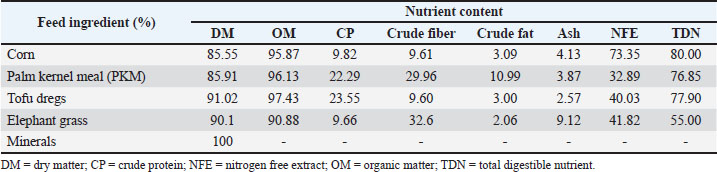
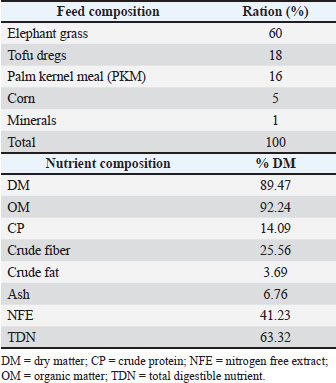
The outcomes of this study will provide critical insights into the practical application of tropical seaweeds as CH₄-mitigating feed additives to advance sustainable ruminant production in tropical ecosystems. Materials and MethodsStudy duration and locationThis study was conducted from June 2025 to August 2025 at the Ruminant Nutrition Laboratory, Faculty of Animal Sciences, Universitas Andalas, Padang, West Sumatra, Indonesia and the Dairy Nutrition Laboratory, Faculty of Animal Sciences, Bogor Agricultural Institute, Bogor, West Java, Indonesia. Study designThis study employed a laboratory-based experimental approach using a completely randomized design in a 3 × 5 factorial arrangement, comprising three treatments and four replications for in vitro trials. The treatments involved three tropical seaweed species: brown seaweed (S. binderi), green seaweed (K. striatum), and red seaweed (Gracilaria sp.). The composition and nutritional content of the treatment diets are shown in Tables 1 and 2. Table 1. Nutritional content of the feed ingredients.
Table 2. Composition and nutritional content of treatment rations.
SamplingBrown seaweed (S. binderi) was collected from Sungai Nipah, Pesisir Selatan, West Sumatra, and green (K. striatum) and red (Gracilaria sp.) seaweeds were obtained from Pallette Village, East Taneteriattang Subdistrict, Bone Regency, South Sulawesi. After collection, the seaweed samples were washed with freshwater to eliminate salts and contaminants, then sun-dried and oven-dried at 60°C for another 48 hours until they reached a constant weight. The dried samples were ground and sieved through a 1-mm mesh for chemical analysis and a 20-mesh sieve for in vitro fermentation studies. The resulting powder was stored in airtight containers at 26.8°C. In vitro proceduresRumen fluid was obtained from four goats slaughtered at a licensed slaughterhouse and used as a source of rumen microbial inoculum. Rumen fluid was collected before the morning feeding (0 hour) to ensure relatively stable microbial conditions. The collected rumen fluid was immediately filtered through four layers of gauze into a warm thermos (39°C) that had been flushed with CO₂ gas to maintain anaerobic conditions, then immediately transported to the laboratory for in vitro incubation. The in vitro rumen fermentation procedure was conducted following the method described previously (Tilley and Terry, 1963). A 2.5-g sample was placed in a 250-ml Erlenmeyer flask containing 200 ml of McDougall’s solution and 50 ml of rumen fluid. CO2 was added for 30–60 seconds to preserve anaerobic conditions before sealing the flask. The samples were incubated in a shaker incubator (Series 126, New Brunswick Scientific, Shanghai, China) at 39°C for 48 hours and then placed on ice to halt microbial activity. The pH was measured before centrifuging the samples at 3,200 rpm for 20 minutes. The supernatant was collected for ammonia (NH3), VFA, and microbial protein analysis. Each treatment was replicated three times, and two duplicate samples (duplo) were prepared for each replicate to ensure analytical accuracy and sufficient sample volume for all analyses. Nutrient digestibilityNutrient digestibility was determined by examining the chemical composition of feeds and residues. The dry matter (DM), OM, and crude protein (CP) contents of the feed samples and residues were analyzed via proximate analysis (Aoac, 2005).
Characteristics of rumen fermentation After incubation, a Jenway Model 305 pH meter (Keison Products, England) was used to measure the pH of the rumen fluid. The pH meter was calibrated with a pH 7 solution before use. The NH3 concentration was determined via the Conway and Malley method (Conway and O'Malley, 1942). The NH3 concentration was calculated using the following formula:
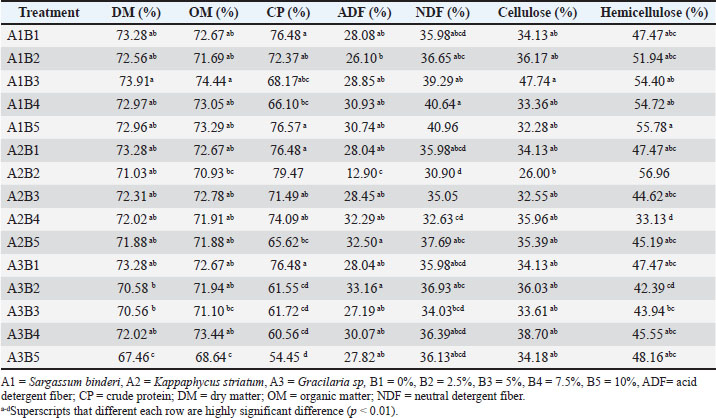
Partial VFAThe partial VFA profile was determined using GC (Hewlett-Packard 5890, USA) equipped with a flame ionization detector. A stainless steel column (0.20-cm inner diameter, 0.40-cm outer diameter) was used for the separation. Pure nitrogen served as the carrier gas at a flow rate of 0.5 ml/s, while H2 and oxygen were supplied at 0.5 and 5 ml/s, respectively, for combustion. The column temperature was maintained isothermally at 125°C, and the injector and detector temperatures were set at 160°C and 200°C, respectively. A standard mixture of acetate, propionate, and butyrate (Supelco®) was used for calibration. Individual VFA components were identified by comparing retention times with those of standard mixtures. Total gas and CH4 productionCH4 production was measured using the gas syringe technique developed by Fievez et al. (2003). CH4 is separated from other gases using a sodium hydroxide (NaOH) solution. CH4 was measured by passing the collected gas through 10 ml of NaOH solution (10 M), which absorbs CO2 and other acidic gases. The remaining gas was considered as CH4, and its volume was recorded. The CH4 value was then calculated based on 1 g of digested DM and expressed as g/ml of digested DM. Protozoa populationThe Ogimoto and Imai (1980) method was used to calculate the protozoan population. Microbial protein synthesisMicrobial protein synthesis (MPS) was estimated using the Lowry method (Lowry et al. 1951), and absorbance was measured at 650 nm using an ultraviolet-visible spectrophotometer. The standard curve was obtained using bovine serum albumin. Statistical analysisStatistical analysis was performed using a two-way analysis of variance (ANOVA) with SPSS software version 27 (IBM Corp., Armonk, NY). When significant differences (p < 0.05) were observed, post hoc comparisons were performed using Duncan’s multiple range test. Ethical approvalThis study did not require ethical approval. ResultsNutrient digestibilityTable 3 presents the nutrient digestibility of the three tropical seaweeds at different levels of supplementation. ANOVA results indicate that both the type of seaweed (Factor A) and the supplementation level (Factor B) have a significant effect on nutrient digestibility (p < 0.01). Dry matter (DM) digestibility ranged from 70.79% to 73.12%, with brown seaweed having the highest mean value. The OM digestibility followed a similar pattern (71.56%–73.03%). The digestibility of CP varied among species; green seaweed at 7.5% supplementation showed the highest CP digestibility (74.09%), while red seaweed exhibited the lowest (60.56%). The digestibility of the fiber fraction differed by species, with the highest NDF digestibility recorded in brown seaweed at 5% (39.29%). Table 3. Effect of tropical seaweed supplementation on nutrient digestibility.
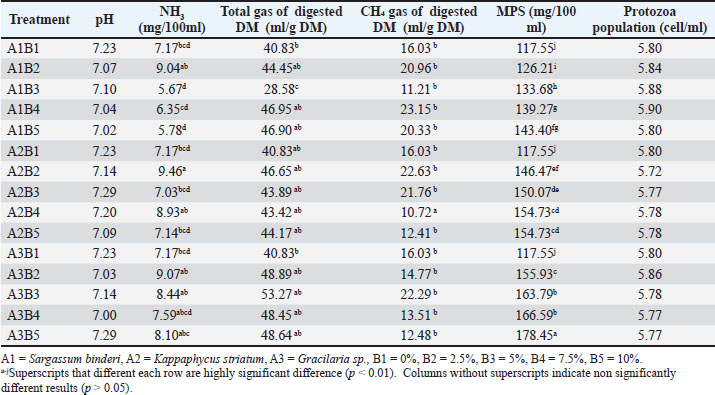
CH₄ production and total gas productionANOVA showed that neither the type of seaweed (Factor A) nor the supplementation level (Factor B) had a significant effect on CH₄ production (p > 0.05) but had a significant effect on total gas production (p < 0.01). Table 4 shows that brown seaweed reached its lowest CH₄ output at 5% supplementation (11.21 ml/g DM), green seaweed at 7.5% (10.72 ml/g DM), and red seaweed at 7.5% (13.51 ml/g DM). The dose-response pattern for green seaweed was biphasic, with lower doses (2.5%–5%) increasing CH₄ production before declining at 7.5%. The highest total gas production was observed in the 7.5% red seaweed treatment (53.27 ml/g DM) and the lowest in the 7.5% brown seaweed treatment (28.58 ml/g DM). Table 4. Effect of tropical seaweed supplementation on rumen fermentation characteristics.
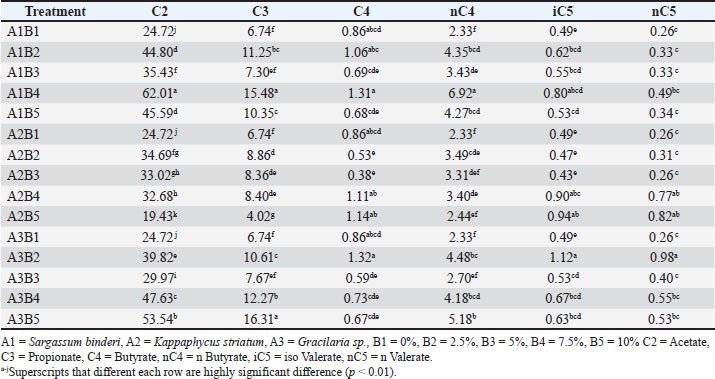
Characteristics of rumen fermentationANOVA showed that neither the type of seaweed (Factor A) nor the supplementation level (Factor B) had a significant effect on rumen pH (p > 0.05), but had a significant effect on NH3 production, MPS, and protozoa population (p < 0.01). Table 4 shows that the rumen pH remained stable across all treatments (7.02–7.29). The highest NH₃ concentration was observed with 2.5% green seaweed (9.46 mg/100 ml), while the lowest was found with 5% brown seaweed (5.67 mg/100 ml). MPS peaked at 10% red seaweed (178.45 mg/100 ml) compared with the control (117.55 mg/100 ml). The highest protozoa population was found in the 7.5% brown seaweed treatment (5.90 cells/ml), whereas the lowest concentration was found in the 2.5% green seaweed treatment (5.72 cells/ml). VFA profilesThe results of the ANOVA indicate that both the type of seaweed (Factor A) and the supplementation level (Factor B) significantly affected the VFA profile (p < 0.01). Table 5 shows that total VFA productiontotal VFA production peaked at 5% red seaweed (53.27 mM). The lowest acetate-to-propionate (A:P) ratios were observed in red seaweed (3.88%) and green seaweed (3.89%) (7.5%). The highest propionate production was achieved with 7.5% brown seaweed (15.48 mM) and 10% red seaweed (16.31 mM). Table 5. Effect of tropical seaweed supplementation on partial VFA.
DiscussionNutrient digestibilityDigestibility of DM and OMThe results demonstrate that seaweed supplementation across various doses maintains DM and OM digestibility within the optimal range for ruminants (70.79%–73.91% for DM and 71.56%–74.44% for OM). Aligned with Hidayat et al. (2025) who reported that in vitro supplementation of Gracilaria spp., Gelidium spp., and Sargassum spp. can enhance DM digestibility. This increase may be due to the presence of fermentable polysaccharides, which provide an additional substrate for rumen microbes, thereby enhancing the breakdown of fiber and OM. The peak OM digestibility observed in the 5% brown seaweed (S. binderi) treatment (74.44%) suggests that this species is an efficient energy source that does not compromise overall ration fermentability. This is consistent with previous research indicating that S. binderi is rich in polyunsaturated fatty acids and bioactive metabolites that support rumen fermentation (Sucitra et al., 2025). The stability of DM and OM digestibility across all levels suggests that these tropical seaweeds are not toxic to rumen microbes at the tested dosages. Using the RUSITEC technique, Roskam et al. (2022) similarly reported that brown and green seaweed supplementation up to 10 g/kg DM exerted no negative digestibility effects. However, de la De la Harpe (2025) found that marine algae supplementation in high-concentrate diet-fed sheep could decrease OM digestibility, particularly in high-energy contexts. This discrepancy likely stems from differences in basal diets and host species. Digestibility of CPAt 7.5%, green seaweed (K. striatum) successfully maintained high CP digestibility (74.09%), falling only slightly below the control (76.48%). In contrast, Gracilaria sp. showed significantly lower CP digestibility (60.56%) at the same dose. This reduction is attributed to sulfated polysaccharides, such as agar, which can bind proteins and form complexes resistant to microbial degradation in the rumen (Natsir et al., 2025). These variations are caused by differences between species in the composition of polysaccharides, bioactive compounds, and nitrogen fractions. The low digestibility of CP in Gracilaria sp. does not always have a negative impact because of the high MPS achieved, indicating good nitrogen utilization efficiency in the rumen ecosystem (Putri et al., 2021). Digestibility of fiber fractions (NDF, ADF, cellulose, and hemicellulose)In this study, fiber digestibility falls within the typical ranges for seaweed-based diets. The highest NDF digestibility was achieved with 5% brown seaweed (39.29%), followed by 7.5% red seaweed (36.39%) and 7.5% green seaweed (32.63%). These results are consistent with the findings of Dewi et al. (2015) who evaluated five brown seaweed species from Sungai Nipah Beach, South Pesisir, and demonstrated significant interspecies variation in the in vitro digestibility of NDF, ADF, and cellulose. These findings are consistent with the current study, which confirms that fiber fraction digestibility is species-dependent. Notably, S. binderi exhibited the highest digestibility for both NDF and hemicellulose. CH₄ productionSeaweed supplementation at optimal dosages significantly reduces CH₄ production through species-specific response patterns. At a 5% inclusion rate, brown seaweed (S. binderi) reduced CH₄ output to 11.21% per g DM (a 30.1% decrease), whereas green seaweed (K. striatum) achieved its peak reduction at a 7.5% dose, lowering CH₄ to 10.72% per g DM (a 33.1% decrease). These findings align with those of Hidayat et al. (2025), who observed that 15% of Sargassum spp. Supplementation effectively lowered in vitro CH₄ concentrations in beef cattle. This study further confirmed that seaweed type significantly affects (p < 0.05) CH₄ levels, with Sargassum spp., Eucheuma spp., and Gracilaria spp. demonstrating mitigative potential. Phlorotannins prevalent in brown seaweeds are particularly promising for suppressing ruminant CH4 emissions (Min et al., 2021). These compounds may inhibit methanogens directly by binding to microbial cell wall proteins or indirectly by sequestering dietary proteins, thereby modulating their ruminal degradability (Miller et al., 2023). The green seaweed (K. striatum) exhibited a distinct biphasic response. At lower inclusion levels (2.5%–5%), the fermentable polysaccharides in the seaweed likely serve as additional substrates for rumen microbes, stimulating overall fermentation activity and consequently increasing H₂ availability for methanogenesis, which led to a 35.7%–41.2% increase in CH₄ production. However, at the 7.5% threshold, the concentration of bioactive compounds (e.g., sulfated polysaccharides and secondary metabolites) reaches a critical level, where they begin to directly inhibit methanogenic archaea and redirect H₂ toward propionate formation, resulting in a sharp decline in CH₄ production (33.1% reduction). This dose-dependent pattern mirrors observations by Widiawati et al. (2025) regarding Eucheuma cottonii, where an 8% inclusion level optimized the CH₄-to-total-gas ratio. Red seaweed (Gracilaria sp.) moderately reduced CH₄ by 15.7% (13.51% per g DM) at a dose of 7.5%. Hidayat et al. (2025) reported that while Gracilaria spp. and Gelidium spp. effectively lower CH₄ concentrations, their efficacy differs from that of Sargassum spp. The metabolomic analysis identified distinct bioactive compounds in each seaweed type that contribute to antimetanogenic activity. The Gracilaria sp. mitigative mechanism appears to be more closely linked to microbial community modulation and H₂ competition. Furthermore, Othman et al. (2025) suggested that red seaweed phytochemicals could be synergistic with additives, such as zeolites, to enhance CH₄ suppression without compromising OM degradation. Total gasThe total gas production in this study varied across treatments, with red seaweed (7.5%) yielding the highest output (53.27 ml/g DM), followed by red seaweed (2.5%) (48.89 ml/g DM). Widiawati et al. (2025) previously reported that total gas production correlates positively with DM digestibility and VFA production. In their study, the treatment with the highest gas production (maize straw without seaweed) also exhibited the highest DM digestibility, short-chain fatty acids, metabolizable energy, and microbial protein. Interestingly, this study demonstrates that CH₄ reduction does not necessarily lead to a decrease in total gas production. This suggests that seaweed supplementation diverts fermentation toward more energetically favorable products, such as propionate, without inhibiting overall fermentation. Hidayat et al. (2025) confirmed that while variation in seaweed species does not significantly alter total VFA production, it influences NH₃ concentrations and CH₄ levels. This finding is critical because it indicates that CH₄ mitigation can be achieved without compromising the basal diet’s fermentability. Characteristics of rumen fermentationRumen pHThe observed pH values remained within the physiological norm regardless of the seaweed type or inclusion level, indicating that supplementation supports a healthy rumen environment. This range is consistent with the 6.92–7.42 pH interval reported by Rosani et al. (2025). In this study, maintaining pH within the optimal range (6.8–7.2) correlated positively with fiber digestibility—particularly in the 5% brown seaweed treatment, which showed the highest NDF digestibility (39.29%). NH3 concentrationNH3 concentration varied significantly between treatments, peaking at 9.46 mg/100 ml with 2.5% green seaweed and reaching a minimum of 5.67 mg/100 ml with 5% brown seaweed. The highest NH₃ value observed at 2.5% green seaweed likely reflects increased protein deamination due to the readily fermentable nitrogen content of K. striatum at low inclusion levels, which stimulates microbial activity without providing sufficient energy (carbon skeleton) for efficient MPS, leading to excess NH₃ accumulation in the rumen. In contrast, the lowest NH₃ concentration at 5% brown seaweed suggests more efficient nitrogen utilization by rumen microbes, where the fermentable carbohydrates in S. binderi provided adequate energy for microbes to capture NH₃ for their own protein synthesis. NH3 is a protein fermentation product that is easily broken down by rumen microbes (Zain et al., 2020). Othman et al. (2025) noted that supplementation with red seaweed phytochemical-zeolite nanocomposites tended to lower NH₃ production (p=0.08) compared with the control. Such reductions in NH₃ are often correlated to more efficient nitrogen capture for MPS—a phenomenon evidenced in this study by the 7.5% red seaweed treatment, which yielded the highest MPS (166.59 mg/100 ml). Protozoa populationProtozoa populations remained relatively stable across all treatments, ranging from 5.77 to 5.88 × 10⁵/ml. The lack of a decline indicates that the CH₄-reduction mechanisms of S. binderi, K. striatum, and Gracilaria sp. do not rely on defaunation (the elimination of protozoa). Instead, mitigation likely occurs through alternative pathways, such as the diversion of H₂ toward propionate production or the direct inhibition of methanogens. This is supported by VFA profiles showing a decreased A:P ratio at optimal doses (3.88–3.89) despite stable protozoa numbers. While monensin typically decreases protozoal populations (p=0.08), seaweed-derived phytochemical nanocomposites have been shown to increase these populations linearly and quadratically (Othman et al., 2025). These findings suggest that the effects of seaweed on protozoa are species-specific and bioactive composition-dependent. A previous study (Sucitra et al., 2025) identified a diverse array of bioactive compounds in tropical seaweeds that modulate fermentation without negatively disrupting microbial equilibrium. Microbial protein synthesisThe dramatic increase in MPS observed with 7.5% red seaweed (Gracilaria sp.) was a cornerstone finding of this study, reaching 166.59 mg/100 ml—a 41.7% increase over the control (117.55 mg/100 ml), surpassing both 7.5% green (154.73 mg/100 ml) and 5% brown (133.68 mg/100 ml) seaweeds. This is consistent with the findings of Hidayat et al. (2025) who reported that Gracilaria sp. supports microbial growth by providing essential metabolic precursors. The mechanism likely involved complex polysaccharides acting as selective prebiotics for proteolytic and cellulolytic bacteria, while the high total VFA production (66.03 mM) provided the necessary ATP to drive protein synthesis. This is a vital compensatory mechanism, as elevated MPS can offset the lower CP digestibility (60.56%) observed in this treatment, given that microbial protein possesses high biological value for the ruminant host (Sucitra et al., 2025). VFA profileThe results demonstrate that seaweed supplementation significantly affects total VFA production, although the magnitude of this effect depends on the species and inclusion level. The highest total VFA concentrations were observed in the treatment with 7.5% red seaweed (Gracilaria sp.) (66.03 mM) and 7.5% brown seaweed (Sargassum binderi) (87.01 mM). In contrast, the optimal 7.5% dose of green seaweed (K. striatum) yielded a total VFA concentration of approximately 42.19 mM. The elevated VFA production in the red and brown seaweed groups indicates that these species provide highly fermentable substrates for the rumen microbiota. This is consistent with the findings of Yousaf et al. (2024), who reported that supplementing diets with the red seaweed E. cottonii at up to 4% DM significantly enhances total VFA production and OM and DM degradation. Similarly, Ahmed et al. (2022) noted that brown seaweed inclusion in ruminant rations stimulates rumen fermentation, thereby increasing overall VFA yields. Propionate serves as a primary energy precursor in ruminants and is the dominant VFA synthesized during efficient fermentation (Cheong et al., 2023). Consequently, the A:P ratio is a vital indicator of shifts in fermentation pathways. The lowest A:P ratios were achieved with 7.5% red seaweed (3.88) and 7.5% green seaweed (3.89), both of which were lower than the control. This decline suggests a diversion of metabolic H₂ away from methanogenesis and toward propionate production—a mechanism frequently referred to as a " H₂ sink." These results are consistent with those of Barnes et al. (2025), who found that Himanthalia elongata extracts reduced CH₄ by up to 42.8% while simultaneously fostering a favorable VFA profile. Such a shift is critical, as increasing the propionate proportion effectively restricts the H₂ available for CH₄ synthesis (Wang et al., 2023). The peak acetate production observed with 7.5% brown seaweed (62.01 mM) corresponds with the high NDF digestibility (39.29%) recorded for this treatment, suggesting sustained cellulolytic bacterial activity. Furthermore, the highest propionate yields—found in the 7.5% brown seaweed (15.48 mM) and 10% red seaweed (16.31 mM) groups—support host energy availability through increased gluconeogenesis. The minimum CH₄ outputs recorded for 5% brown seaweed (11.21%) and 7.5% green seaweed (10.72%) strongly correlate with reduced A:P ratios and higher propionate concentrations, confirming the occurrence of H₂ redirection. Barnes et al. (2025) further substantiated that brown seaweeds, such as Fucus vesiculosus and H. elongata, primarily mitigate CH₄ through their high phlorotannin content. ConclusionThe optimal inclusion levels for CH₄ mitigation are species-specific: 5% for S. binderi and 7.5% for both K. striatum and Gracilaria sp. These findings provide a scientific basis for formulating local seaweed-based feed supplements, although further in vivo validation is required to confirm their efficacy and safety for sustainable, low-emission dairy production. AcknowledgmentsWe gratefully acknowledge the financial support provided for this study. We also extend our sincere gratitude to the laboratory staff and technicians whose expertise and assistance were instrumental in the completion of this research. Conflict of interestThe authors declare no conflict of interest. FundingThis research was supported by a 2024 PMDSU grant from the Ministry of Education, Culture, Research, and Technology of the Republic of Indonesia under Master Contract No. 060/C3/DT.05.00/PL/2025 and Subsidiary Contract No. 157/ UN16.19/PT.01.03/PL/2025. Authors' contributionsL.S.S. and M.Z.: Conceptualization and design of the study F.A., Y.M., and D.D.: Technical assistance and supervision. L.S.S., B.V.U., and R.R.S.: Laboratory observations, data analysis, and preparation of the original draft. All authors have reviewed and approved the final version of the manuscript. Data availabilityAll data supporting this study’s findings are available within the manuscript. ReferencesAbd El Tawab, A.M., Liu, Q., Xu, G. and Han, X. 2024. Feed additives strategies to control methanogenesis in ruminants, review. Arch. Zootechn. 27(2), 90–125. Ahmed, E., Batbekh, B., Fukuma, N., Hanada, M. and Nishida, T. 2022. Evaluation of different brown seaweeds as feed and feed additives regarding rumen fermentation and methane mitigation. Fermentation 8(10), 504. AOAC. 2005. Official methods of analysis of AOAC International, Barnes, K., Hayes, M., Miller, F., Yanez‐Ruiz, D., Jimenez, E., Dillon, L., Campbell, E., Mccarron, P., Pickup, J., Huws, S. and Theodoridou, K. 2025. Temperate seaweeds Himanthalia elongata and Fucus vesiculosus significantly reduce rumen methane emissions in vitro due to their high phlorotannin content. J. Sci. Food. Agriculture. 105(13), 7522–7534. Camer-Pesci, B., Laird, D.W., Van Keulen, M., Vadiveloo, A., Chalmers, M. and Moheimani, N.R. 2023. Opportunities of Asparagopsis sp. cultivation to reduce ruminant methanogenesis: a critical review. Algal. Res. 76, 103308. Cheong, K.L., Zhang, Y., Li, Z., Li, T., Ou, Y., Shen, J., Zhong, S. and Tan, K. 2023. Role of polysaccharides from marine seaweed as feed additives for methane mitigation in ruminants: a critical review. Polymers 15(15), 3153; doi:10.1016/j.polymers.2023.10.3153 Conway, E.J. and O'Malley, E. 1942. Microdiffusion methods. Ammonia and urea using buffered absorbents (revised methods for ranges greater than 10μg. N). Biochem. J. 36(7-9), 655–661. De la Harpe, J.E. 2025. The effect of Saccharomyces cerevisiae and calcareous marine algae supplementation on the performance of feedlot lambs. M.Sc. thesis, Stellenbosch University, Stellenbosch, South Africa. Dewi, Y.L., Herawati, R. and Mahata, M.E. 2015. In vitro degradation of fiber fraction (NDF, ADF and cellulosa) of five species of brown seaweeds from Sungai Nipah Beach Kabupaten Pesisir Selatan West Sumatra. Indonesian. J. Anim. Sci. 17(3), 210–218. Fievez, V., Dohme, F., Danneels, M., Raes, K. and Demeyer, D. 2003. Fish oils as potent rumen methane inhibitors and associated effects on rumen fermentation in vitro and in vivo. Anim. Feed. Sci. Technol. 104(1-4), 41–58. Gupta, M., Mondal, T., Lokesha, E., Singh, A., Ashwin, K., Perween, S. and Sahoo, J.K. 2018. Methane emission by ruminants and its measurement- a review. Int. J. Curr. Microbiol. Appl. Sci. 7(7), 3120–3126. Hidayat, R., Pazla, R., Natsir, A., Ginting, N. and Rosani, U. 2025. Methane concentration, ruminal fermentation, digestibility, and microbial protein synthesis of beef cattle with the addition of various types of seaweed from West Java-Banten with different levels in the ration (in vitro). J. Anim. Behav. Biometeorol. 13(1), 2025004; doi:10.1007/s00504-020-021-016-022-016-X Liu, Y., Zhou, M., Diao, Q., Ma, T. and Tu, Y. 2025. Seaweed as a feed additive to mitigate enteric methane emissions in ruminants: opportunities and challenges. J. Integr. Agric. 24(4), 1327–1341. Lowry, O., Rosebrough, N., Farr, A.L. and Randall, R. 1951. Protein measurement with the Folin phenol reagent. J. Biol. Chem. 193(1), 265–275. Mihaila, A.A., Glasson, C.R.K., Lawton, R., Muetzel, S., Molano, G. and Magnusson, M. 2022. New temperate seaweed targets for mitigation of ruminant methane emissions: an in vitro assessment. Appl. Phycol. 3, 274–284; doi:10.1016/j.apphy.2022.02.024 Miller, G.A., Bowen, J.M., Dewhurst, R.J., Zweifel, B., Spengler, K. and Duthie, C.A. 2023. Enteric methane emissions from dairy–beef steers supplemented with the essential oil blend Agolin Ruminant. Animals 13(11), 1826. Min, B.R., Parker, D., Brauer, D., Waldrip, H., Lockard, C., Hales, K., Akbay, A. and Augyte, S. 2021. The role of seaweed as a potential dietary supplementation for enteric methane mitigation in ruminants: challenges and opportunities. Anim. Nutr. 7(4), 1371–1387. Natsir, A., Pazla, R., Hidayat, R., Ginting, N., Ismartoyo., Syahrir, S. and Fitriawaty, F. 2025. Enhancing rumen efficiency and reducing methane emissions with South Sulawesi Seaweed as feed additives. Int. J. Agric. Biosci. 14(4), 529–538. Ogimoto, K. and Imai, S. 1980. Atlas of rumen microbiology. Tokyo, Japan: Japan Scientific Societies Press. Othman, A., Taha, T., Al-Shafii, M., Deskoy, T., Ratib, M., Youssef, M., Mohammed, E. and Soltan, Y.A. 2025. Use of red seaweed phytochemicals-zeolite nanocomposite as a feed additive to reduce ruminal methane emissions in vitro. Trop. Anim. Health. Prod. 57(5), 266–269; doi:10.1016/j.tmhp.2025 Palangi, V. and Lackner, M. 2022. Management of enteric methane emissions in ruminants using feed additives: a review. Animals 12(24), 3452. Putri, E.M., Zain, M., Warly, L. and Hermon, H. 2021. Effects of rumen-degradable-to-undegradable protein ratio in ruminant diet on in vitro digestibility, rumen fermentation, and microbial protein synthesis. Vet. World. 14(3), 640–648. Rosani, U., Hernaman, I., Hidayat, R. and Hidayat, D. 2025. Fermentability, digestibility, and gas production of Garut sheep fed maize straw silage-based rations balanced with rice bran and rice husks (in vitro). J. Anim. Feed. Sci. 34(1), 87–97; doi: 10.1016/j.jafs.2025.01.016 Roskam, E., Kirwan, S.F., Kenny, D.A., O’Donnel, C., O’Flaherty, V., Hayes, M. and Waters, S.M. 2022. Effect of brown and green seaweeds on diet digestibility, ruminal fermentation patterns, and enteric methane emissions. Front. Anim. Sci. 3, 1021631. Sucitra, L.S., Zain, M., Agustin, F., Marlida, Y., Despal, D., Utami, B.V. and Asmairicen, S. 2025. Nutritional composition, bioactive potential, and in vitro rumen fermentation of tropical brown (Sargassum binderi) and green (Kappaphycus striatum) seaweeds as functional feed additives for ruminants. Vet. World 18(11), 3335–3351. Tilley, J.M.A. and Terry, R.A. 1963. A two-stage technique for the in vitro digestion of forage crops. Grass Forage Sci. 18(2), 104–111. Wang, K., Xiong, B. and Zhao, X. 2023. Could propionate formation be used to reduce enteric methane emission in ruminants?. Sci. Total. Environ. 855, 158867. Widiawati, Y., Widodo, S., Adegbeye, M.J., Saputra, F., Alvarado-Ramírez, E.R., Sánchez Guerra, N.A., Anggraeny, Y.N., Puastuti, W., Yulistiani, D., Rohaeni, E.S., Handiwirawan, E. and Praharani, L. 2025. Potential of seaweed (Eucheuma cottonii) supplementation to reduce methane production, improve fermentation, and modulate the microbial composition of forages and crop by-products during in vitro rumen fermentation. Front. Vet. Sci. 12, 1607879; doi:10.1016/j.fvs.2018.01.015 Yousaf, M.R., Widiawati, Y., Purnomoadi, A., Widodo, S., Shakeel, F., Rakhmani, S.I.W., Rohaeni, E.S., Parastiwi, H., Andreas, E.M.W., Miraya, N. and Ahmed, B. 2024. The effectiveness of dried seaweed Eucheuma cottonii on in vitro rumen fermentation and enteric methane production. Braz. J. Biol. 84, e286929. Zain, M., Putri, E.M. and W.S.N, R. 2020. Effects of supplementing Gliricidia sepium on ration-based ammoniated rice straw in ruminant feed to decrease methane gas production and to improve nutrient digestibility (in vitro). Int. J. Adv. Sci. Eng. Technol. 10, 724–729. | ||


| How to Cite this Article |
| Pubmed Style Sucitra LS, Zain M, Agustin F, Marlida Y, Despal D, Utami BV, Sari RR. Optimizing brown, green, and red tropical seaweed supplementation levels as ruminant feed additives for methane mitigation: An in vitro study. Open Vet. J.. 2026; 16(6): 3894-3902. doi:10.5455/OVJ.2026.v16.i6.58 Web Style Sucitra LS, Zain M, Agustin F, Marlida Y, Despal D, Utami BV, Sari RR. Optimizing brown, green, and red tropical seaweed supplementation levels as ruminant feed additives for methane mitigation: An in vitro study. https://www.openveterinaryjournal.com/?mno=313611 [Access: June 26, 2026]. doi:10.5455/OVJ.2026.v16.i6.58 AMA (American Medical Association) Style Sucitra LS, Zain M, Agustin F, Marlida Y, Despal D, Utami BV, Sari RR. Optimizing brown, green, and red tropical seaweed supplementation levels as ruminant feed additives for methane mitigation: An in vitro study. Open Vet. J.. 2026; 16(6): 3894-3902. doi:10.5455/OVJ.2026.v16.i6.58 Vancouver/ICMJE Style Sucitra LS, Zain M, Agustin F, Marlida Y, Despal D, Utami BV, Sari RR. Optimizing brown, green, and red tropical seaweed supplementation levels as ruminant feed additives for methane mitigation: An in vitro study. Open Vet. J.. (2026), [cited June 26, 2026]; 16(6): 3894-3902. doi:10.5455/OVJ.2026.v16.i6.58 Harvard Style Sucitra, L. S., Zain, . M., Agustin, . F., Marlida, . Y., Despal, . D., Utami, . B. V. & Sari, . R. R. (2026) Optimizing brown, green, and red tropical seaweed supplementation levels as ruminant feed additives for methane mitigation: An in vitro study. Open Vet. J., 16 (6), 3894-3902. doi:10.5455/OVJ.2026.v16.i6.58 Turabian Style Sucitra, Laras Sukma, Mardiati Zain, Fauzia Agustin, Yetti Marlida, Despal Despal, Bella Veliana Utami, and Rifa Ratna Sari. 2026. Optimizing brown, green, and red tropical seaweed supplementation levels as ruminant feed additives for methane mitigation: An in vitro study. Open Veterinary Journal, 16 (6), 3894-3902. doi:10.5455/OVJ.2026.v16.i6.58 Chicago Style Sucitra, Laras Sukma, Mardiati Zain, Fauzia Agustin, Yetti Marlida, Despal Despal, Bella Veliana Utami, and Rifa Ratna Sari. "Optimizing brown, green, and red tropical seaweed supplementation levels as ruminant feed additives for methane mitigation: An in vitro study." Open Veterinary Journal 16 (2026), 3894-3902. doi:10.5455/OVJ.2026.v16.i6.58 MLA (The Modern Language Association) Style Sucitra, Laras Sukma, Mardiati Zain, Fauzia Agustin, Yetti Marlida, Despal Despal, Bella Veliana Utami, and Rifa Ratna Sari. "Optimizing brown, green, and red tropical seaweed supplementation levels as ruminant feed additives for methane mitigation: An in vitro study." Open Veterinary Journal 16.6 (2026), 3894-3902. Print. doi:10.5455/OVJ.2026.v16.i6.58 APA (American Psychological Association) Style Sucitra, L. S., Zain, . M., Agustin, . F., Marlida, . Y., Despal, . D., Utami, . B. V. & Sari, . R. R. (2026) Optimizing brown, green, and red tropical seaweed supplementation levels as ruminant feed additives for methane mitigation: An in vitro study. Open Veterinary Journal, 16 (6), 3894-3902. doi:10.5455/OVJ.2026.v16.i6.58 |


